Complaint regarding Fall from Steps
Overview of this form
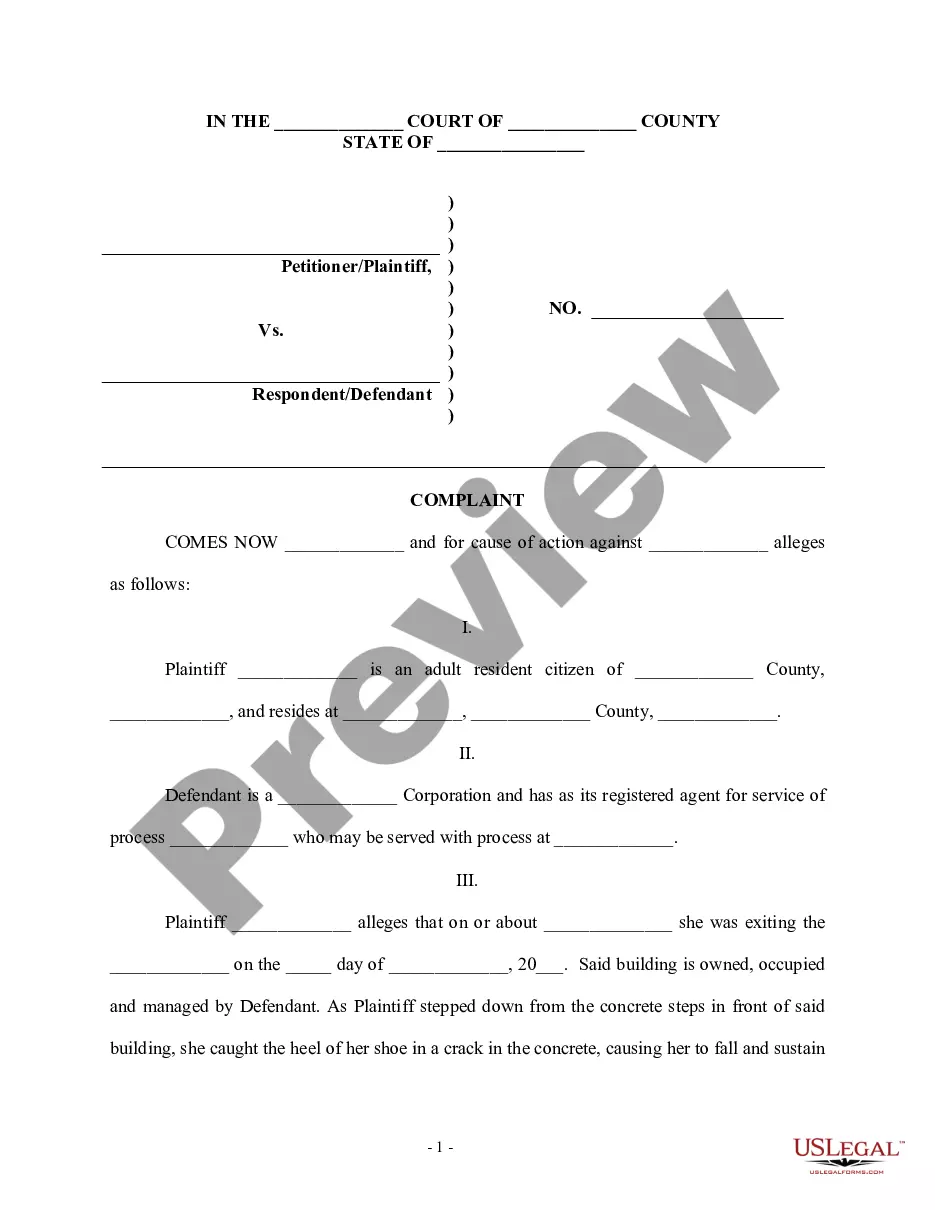
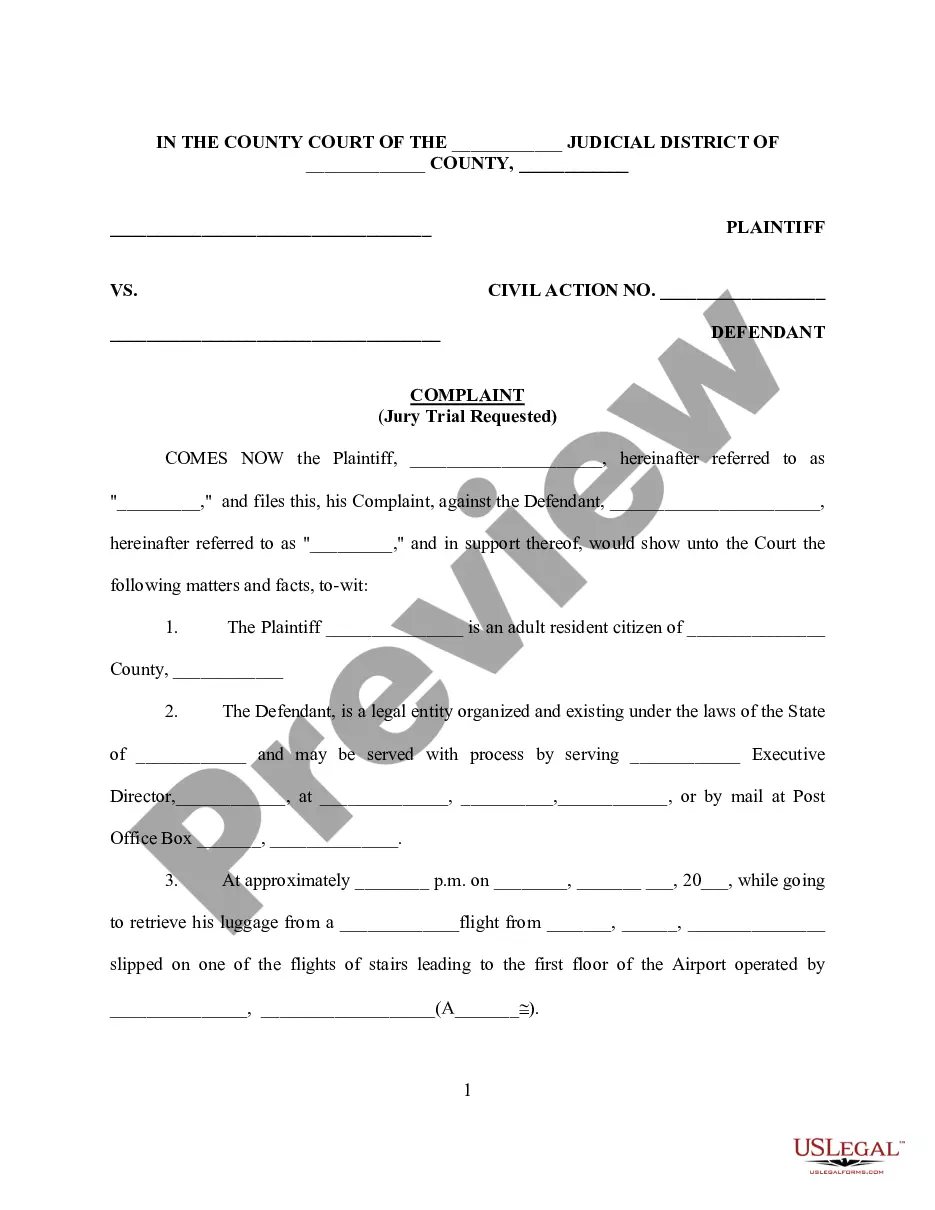
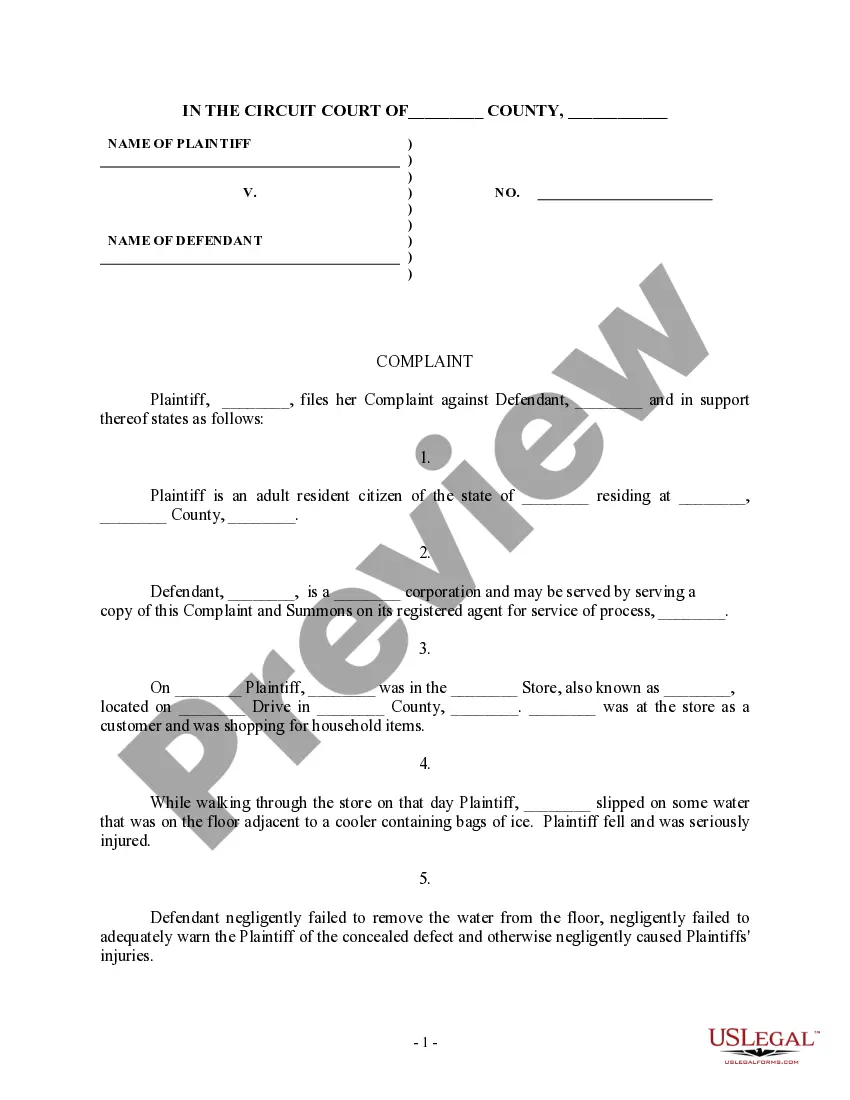
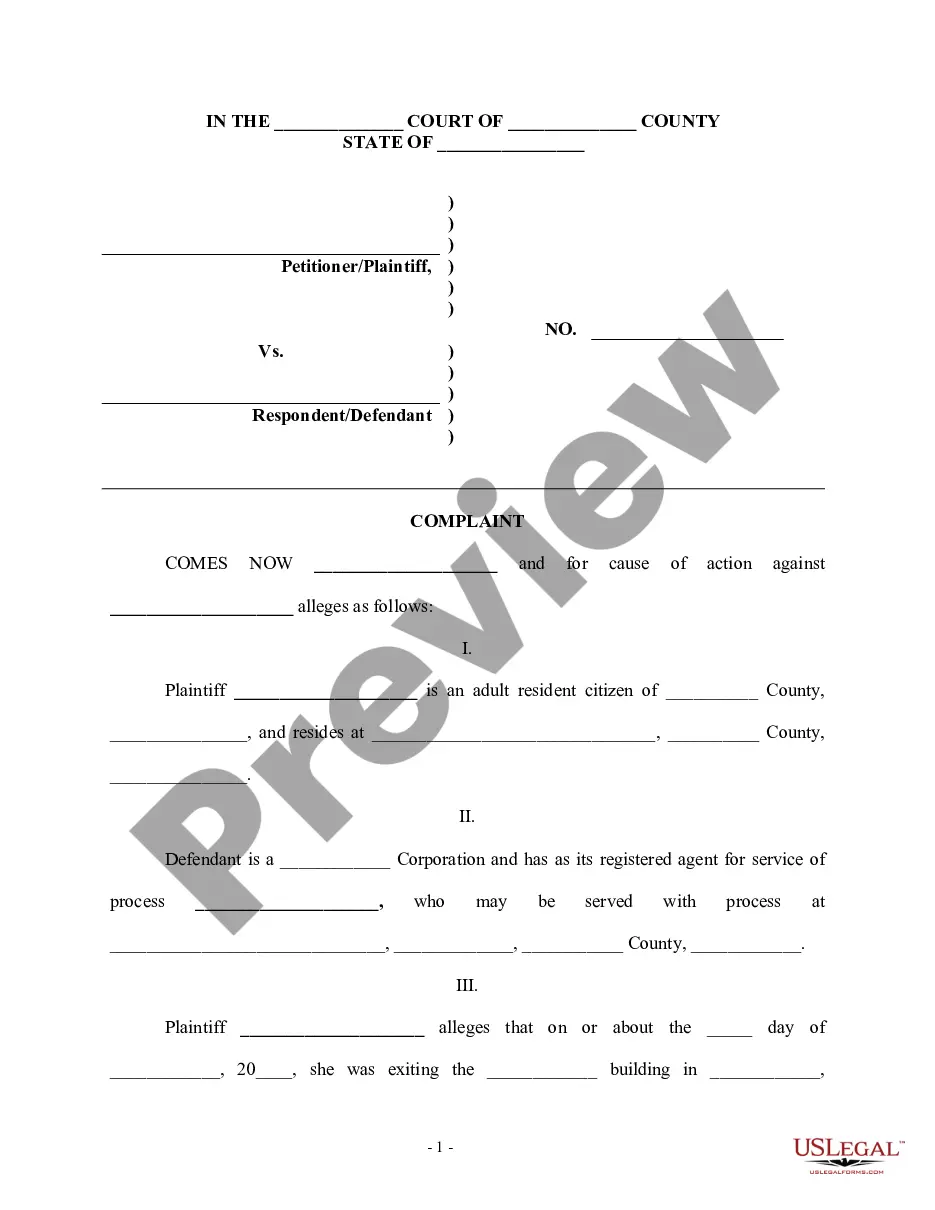
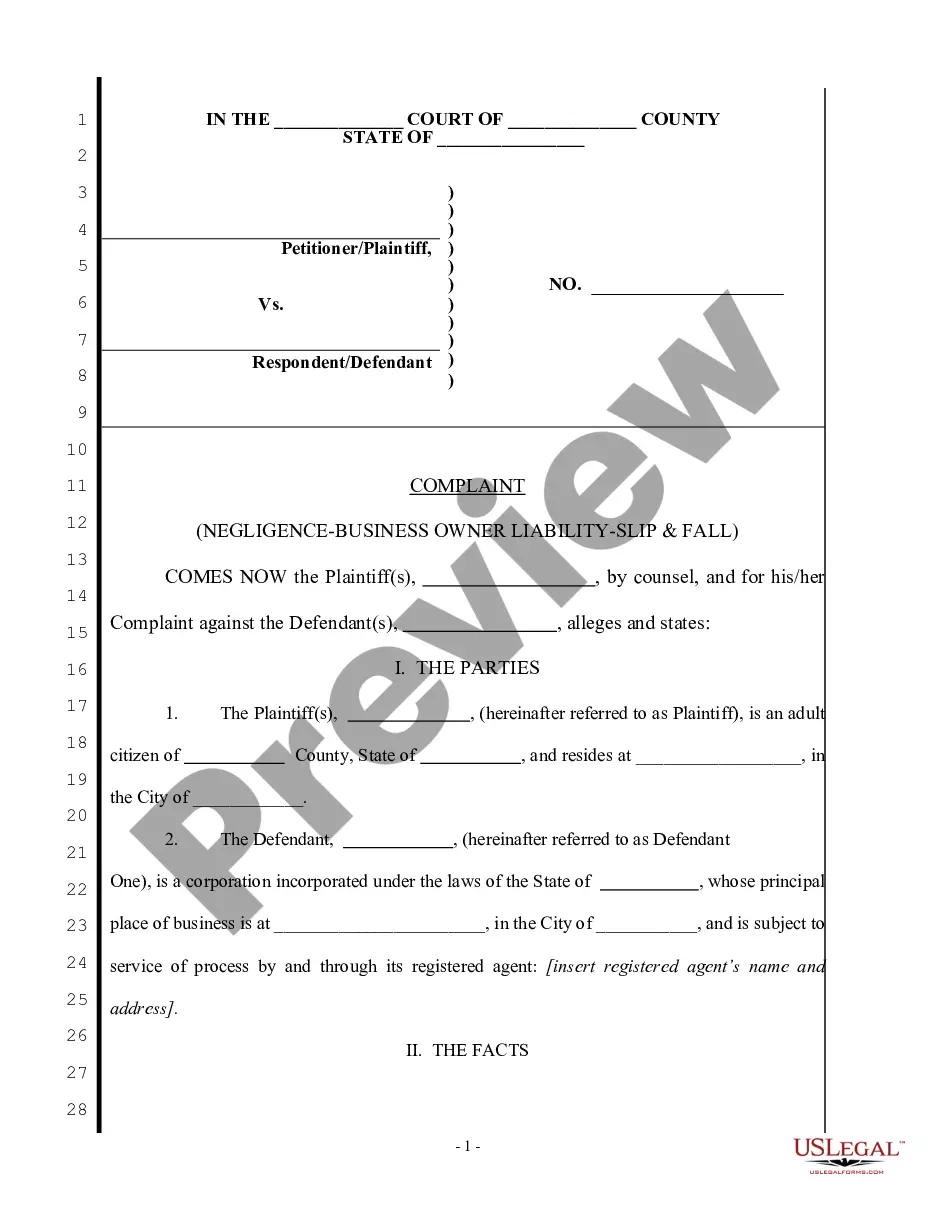
This Complaint regarding Fall from Steps is a legal document used in personal injury cases. It outlines the plaintiff's allegations against a defendant for injuries sustained due to a fall caused by unsafe steps. Unlike other forms, this complaint specifically addresses issues related to trip and fall accidents, providing a structured approach to present the case in court.
What’s included in this form
- Defendant's identification, including their corporate status and registered agent for service.
- Details of the incident, including time, location, and nature of the injury sustained by the plaintiff.
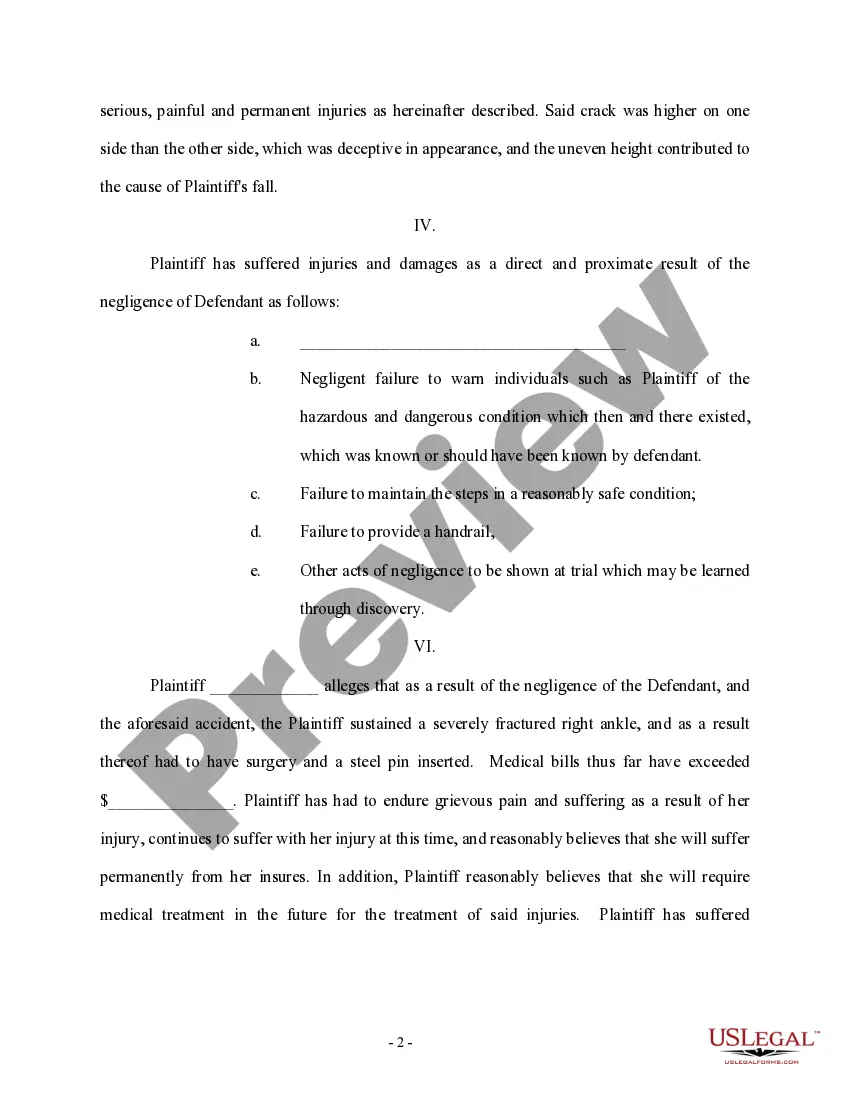
- Legal claims made against the defendant related to their negligence, including failure to maintain safe premises.
- Specifications of injuries and damages incurred, including medical treatment and financial implications.
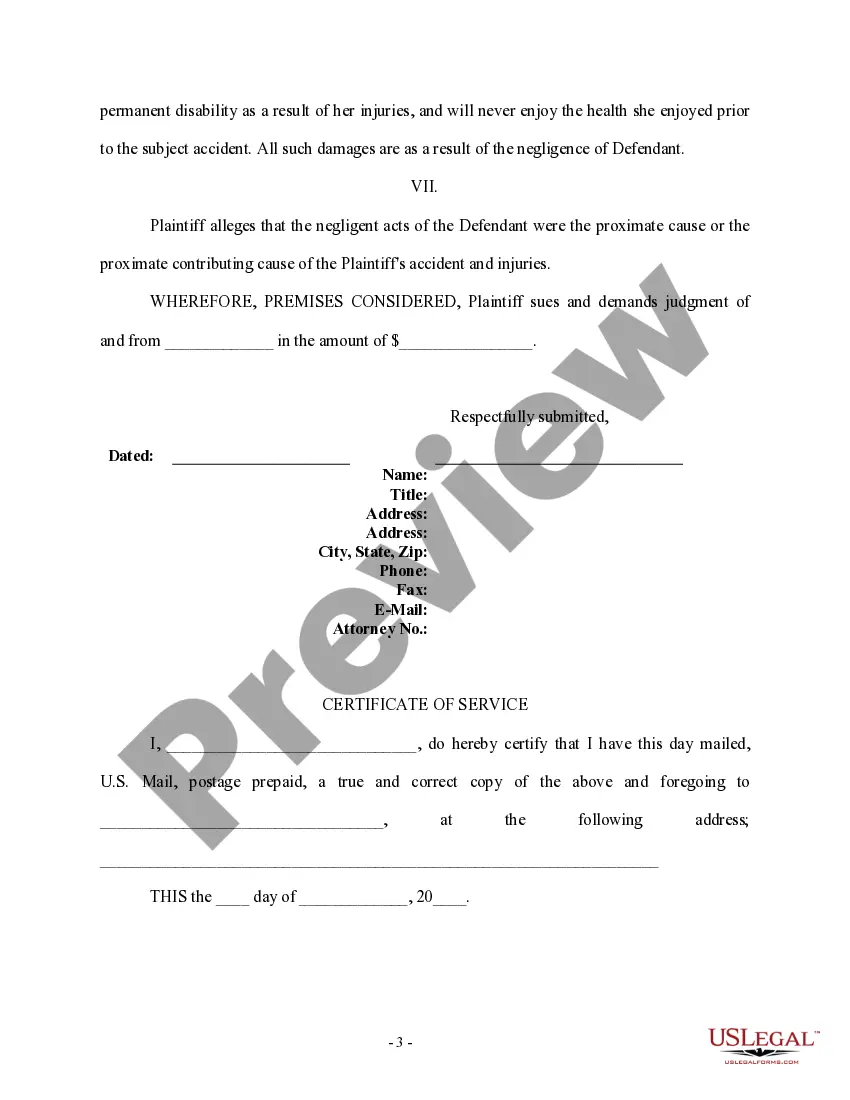
- A section for prayer or demands for judgment, specifying the compensation sought.
- Certificate of service indicating the delivery of the complaint to the defendant.

Situations where this form applies
This form should be used when an individual has suffered injuries because of a fall due to unsafe conditions on someone else's property, such as cracked steps. It is ideal for situations where the plaintiff seeks to hold the property owner accountable for negligence leading to the injury. Common scenarios include falls in residential buildings, commercial establishments, or public spaces where maintenance was neglected.
Who should use this form
- Individuals who have sustained injuries from slipping or tripping on unsafe property conditions.
- People looking to seek compensation for medical bills, pain, and suffering due to the negligence of a property owner.
- Litigants who require a formal structure to present their personal injury claim in court.
How to prepare this document
- Identify the defendant by entering their complete corporate name and registered agent details.
- Provide the date and specifics of the incident, including the location where the injury occurred.
- Describe the nature of the plaintiff's injuries and any medical treatment received or anticipated.
- List all claims of negligence against the defendant that contributed to the fall.
- Specify the amount of damages being sought in the case.
- Sign the complaint and include contact information to establish representation.
Notarization requirements for this form
Notarization is generally not required for this form. However, certain states or situations might demand it. You can complete notarization online through US Legal Forms, powered by Notarize, using a verified video call available anytime.
Get your form ready online
Our built-in tools help you complete, sign, share, and store your documents in one place.
Make edits, fill in missing information, and update formatting in US Legal Forms—just like you would in MS Word.
Download a copy, print it, send it by email, or mail it via USPS—whatever works best for your next step.
Sign and collect signatures with our SignNow integration. Send to multiple recipients, set reminders, and more. Go Premium to unlock E-Sign.
If this form requires notarization, complete it online through a secure video call—no need to meet a notary in person or wait for an appointment.
We protect your documents and personal data by following strict security and privacy standards.

Make edits, fill in missing information, and update formatting in US Legal Forms—just like you would in MS Word.

Download a copy, print it, send it by email, or mail it via USPS—whatever works best for your next step.

Sign and collect signatures with our SignNow integration. Send to multiple recipients, set reminders, and more. Go Premium to unlock E-Sign.

If this form requires notarization, complete it online through a secure video call—no need to meet a notary in person or wait for an appointment.

We protect your documents and personal data by following strict security and privacy standards.
Mistakes to watch out for
- Failing to accurately identify the defendant and their mailing address.
- Not providing sufficient details about the injuries and medical costs.
- Omitting specific instances of negligence that led to the accident.
- Not signing the document or failing to include contact information.
Benefits of using this form online
- Convenient access to a professionally drafted template accessible from anywhere.
- Editability allows users to customize the form to fit their unique circumstances.
- Reliability ensures that the form meets legal standards necessary for filing a complaint.
Legal use & context
- This form establishes the basis for a legal claim against a property owner for negligence.
- The complaint must be well-documented to withstand potential disputes during litigation.
- Adhering to proper filing procedures is essential to ensure that the claim is valid and actionable in court.
Summary of main points
- The Complaint regarding Fall from Steps is essential for those injured in slip and fall accidents.
- The form must accurately reflect the details of the incident and the plaintiff's injuries.
- Users should be aware of their state's requirements when filing a complaint.
Looking for another form?
Form popularity
FAQ
The following are some red flags that you should seek medical attention as soon as possible, whether you hit your head in a falling accident or sustain a potential injury to another body part: Severe or lingering pain. Headaches. Obvious swelling.
Seek medical help immediately, if someone is experiencing a severe headache, nausea and vomiting, or confusion. Some injuries may cause severe bleeding that won't stop after at least 15 minutes of pressure or there may be an obvious fracture.
If your employer neglected any one of these aspects and you fell down stairs at work as a result, you may be eligible to file a compensation claim. For example, you can claim compensation for your injuries if there was no hazard sign warning you that the stairs were wet or there was an oil spills on the stairs.
Prevent overcrowding around the casualty; Make space so that he or she can breathe better. Do not move the casualty unless there are life-threatening hazards; He or she may have suffered a neck or spinal injury from the fall.
Can You Sue for Falling Down the Stairs?If you were clumsy on a perfectly safe set of stairs, then you cannot hold the property owner liable for your injuries. However, if there was a hazardous stair condition that caused the fall and your injuries, you should talk with a premises liability lawyer about your options.
Place a cold compress or ice pack on any bumps or bruises. Give acetaminophen or ibuprofen for pain if your child is alert. Let your child rest, as needed, for the next few hours. Watch your child closely for the next 24 hours for any unusual symptoms or behavior.
Sprains and strains (32.3% according to the above study) Fractures (19.3%) such as to the face, hands and wrists. Spinal cord damage. Deep lacerations. Head and neck injuries (21.6%) Injury to the brain. Injuries to the back or neck. Broken bones.