Interrogatories to Defendant - First Set - Personal Injury
Overview of this form
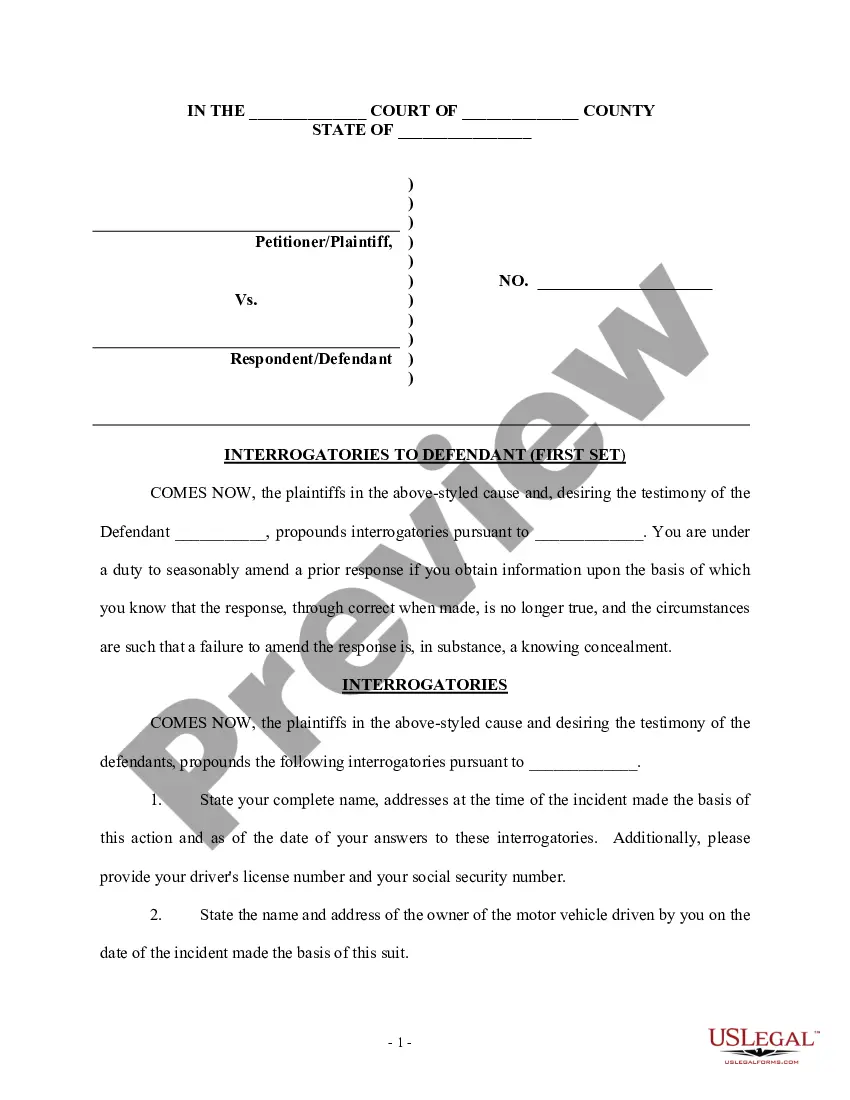
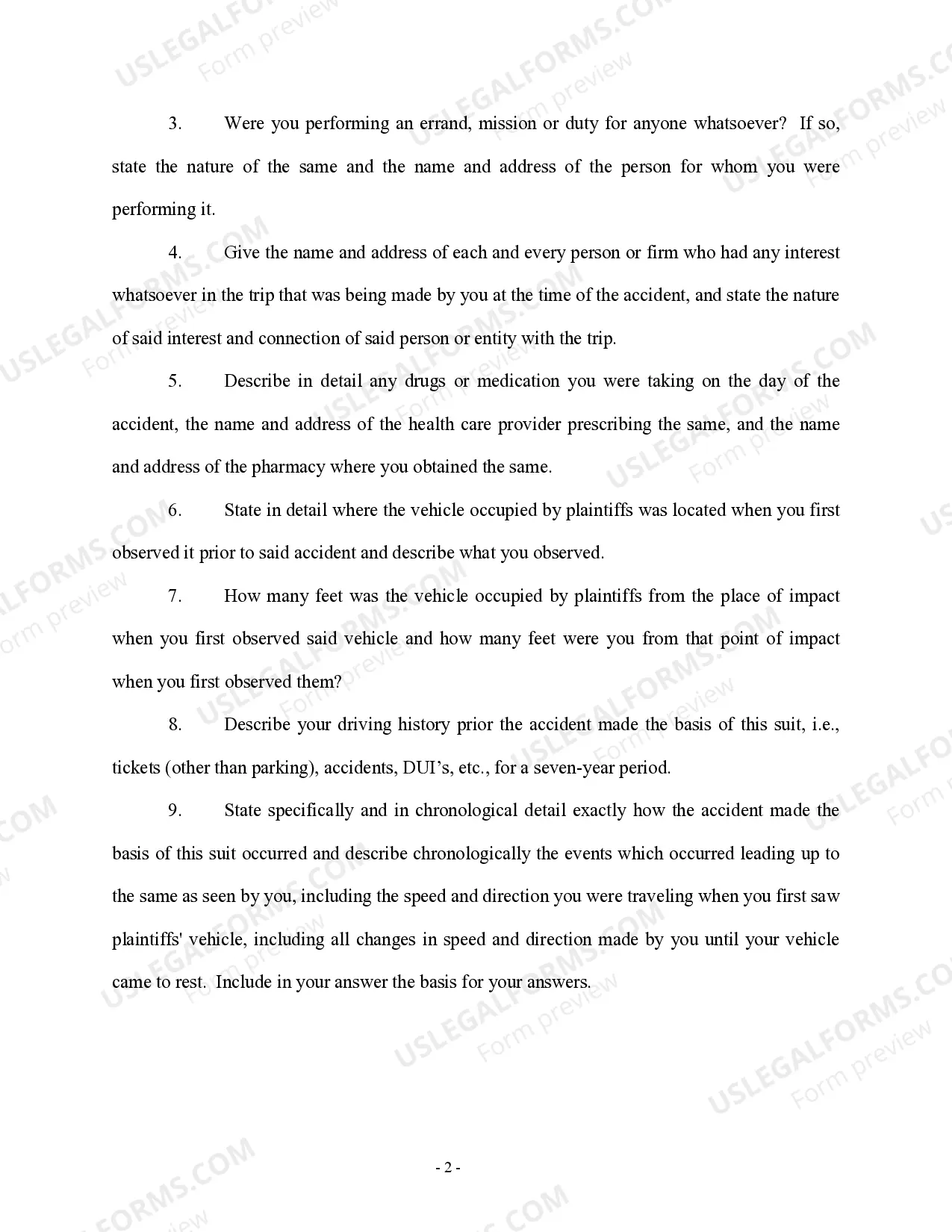
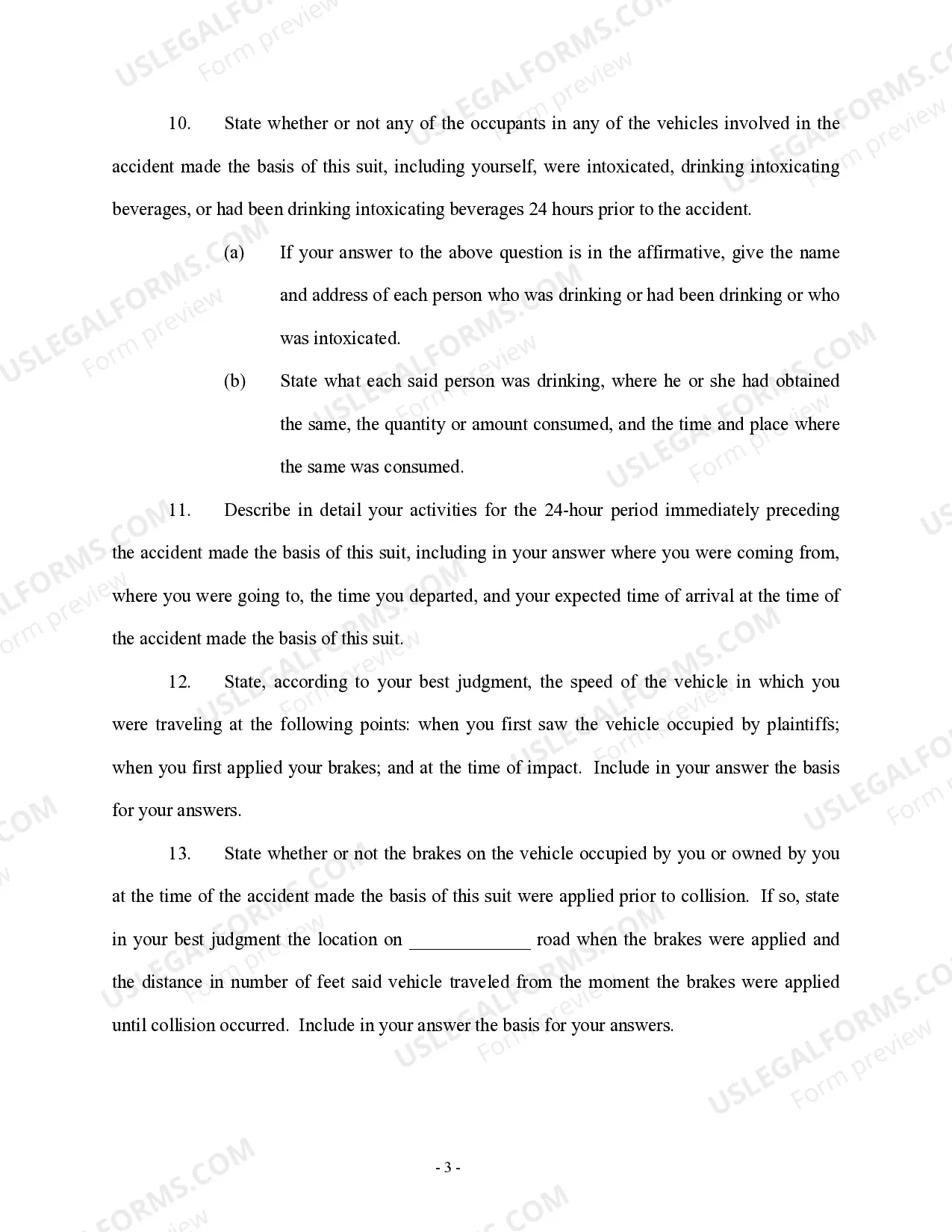
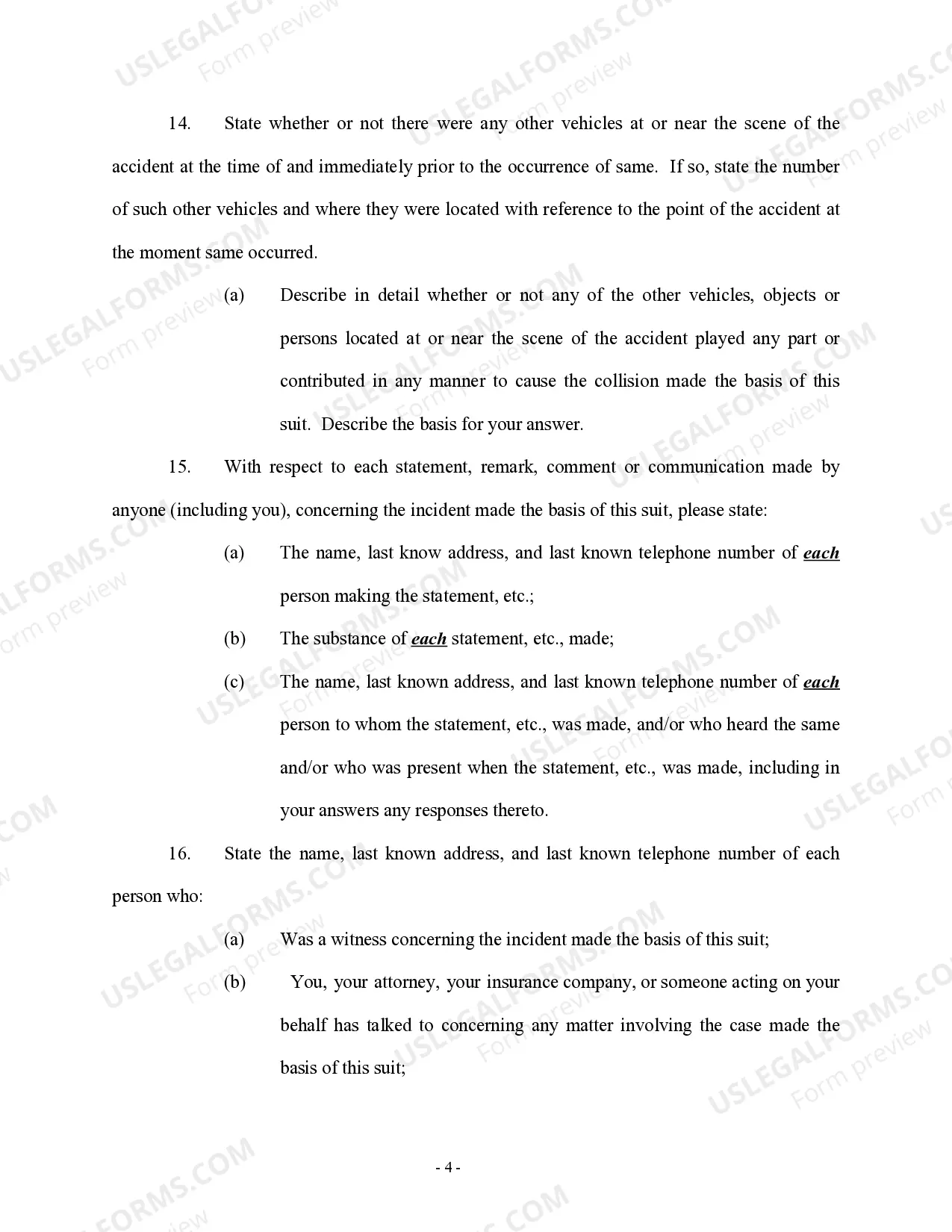
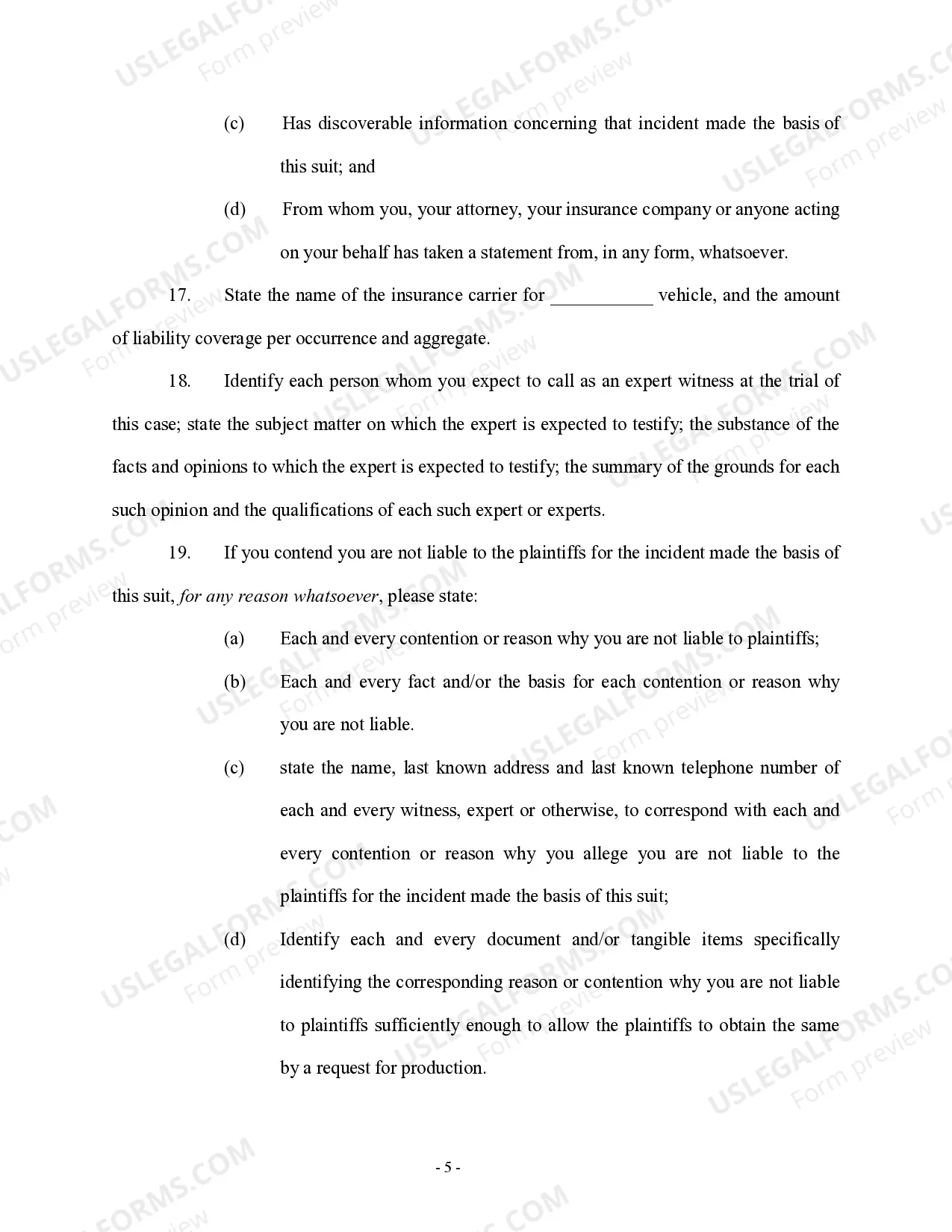
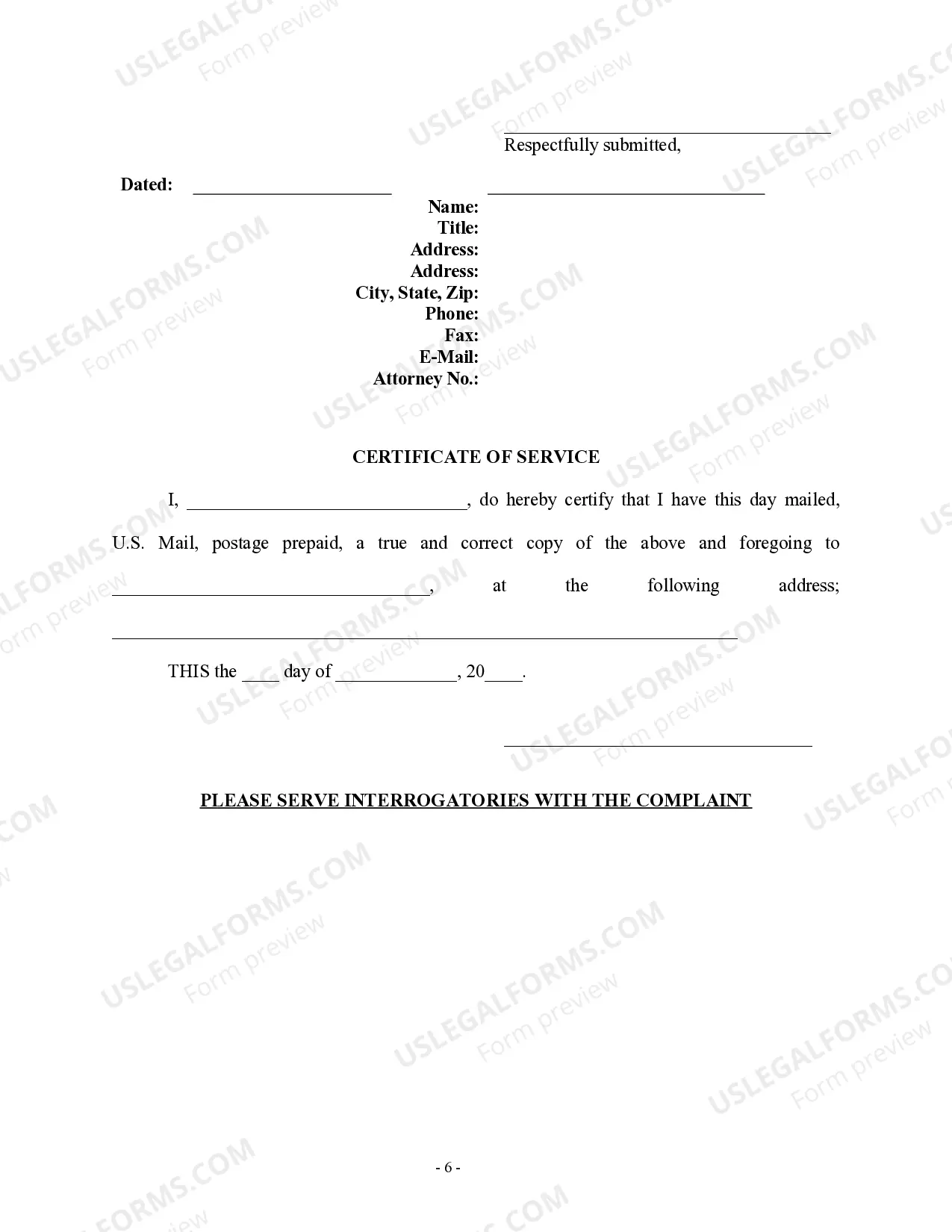
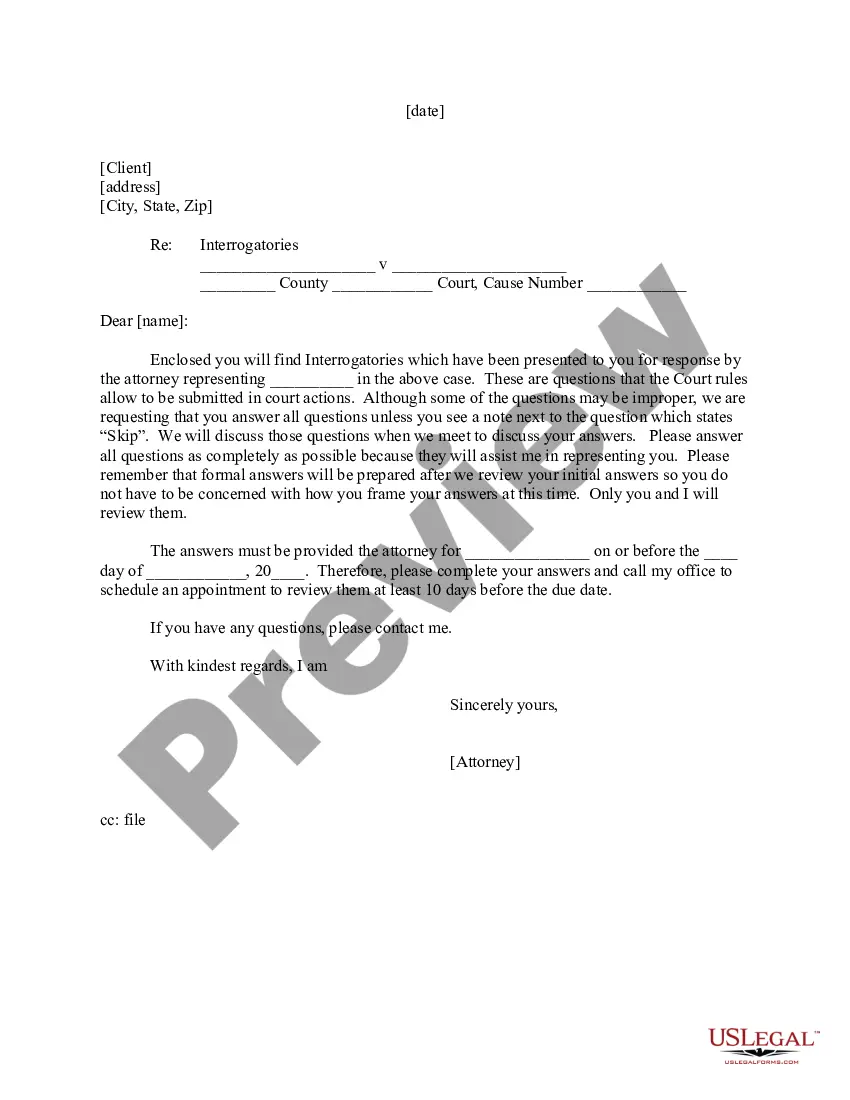
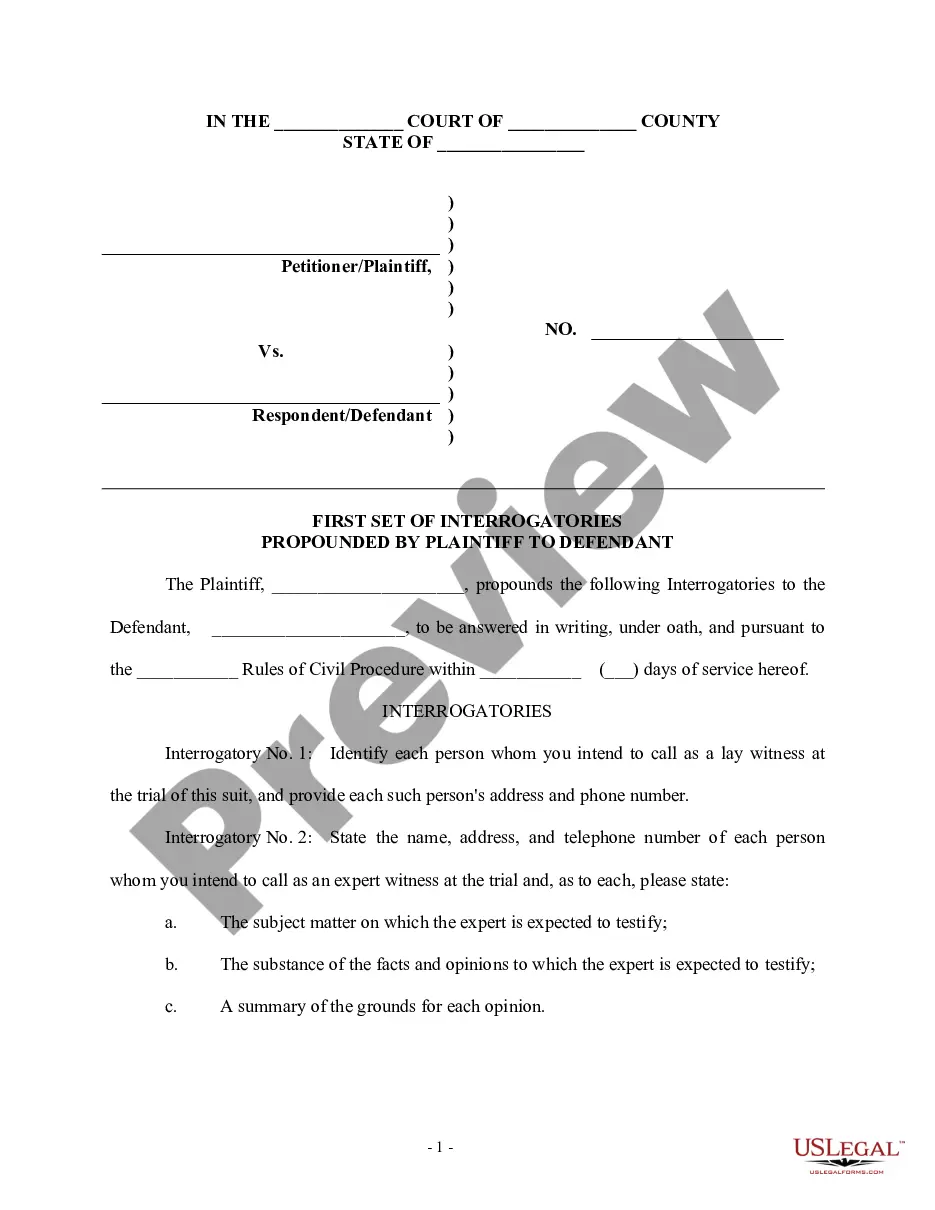
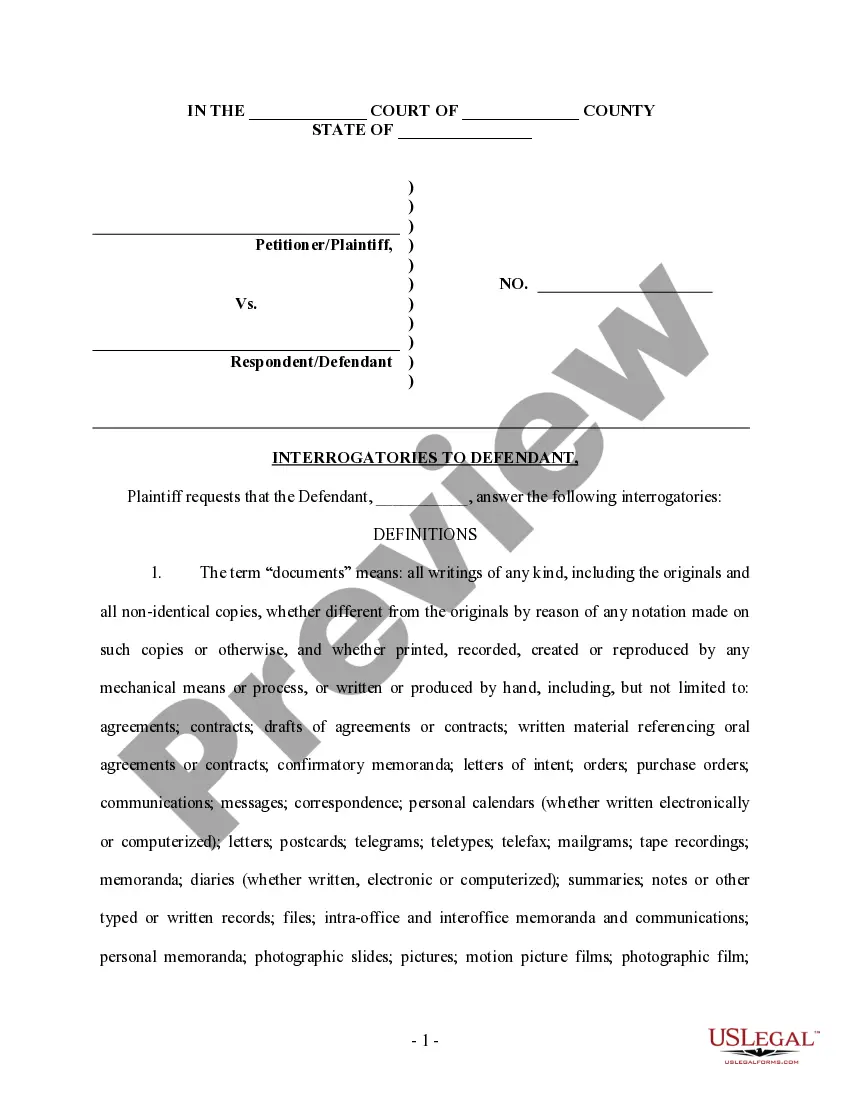
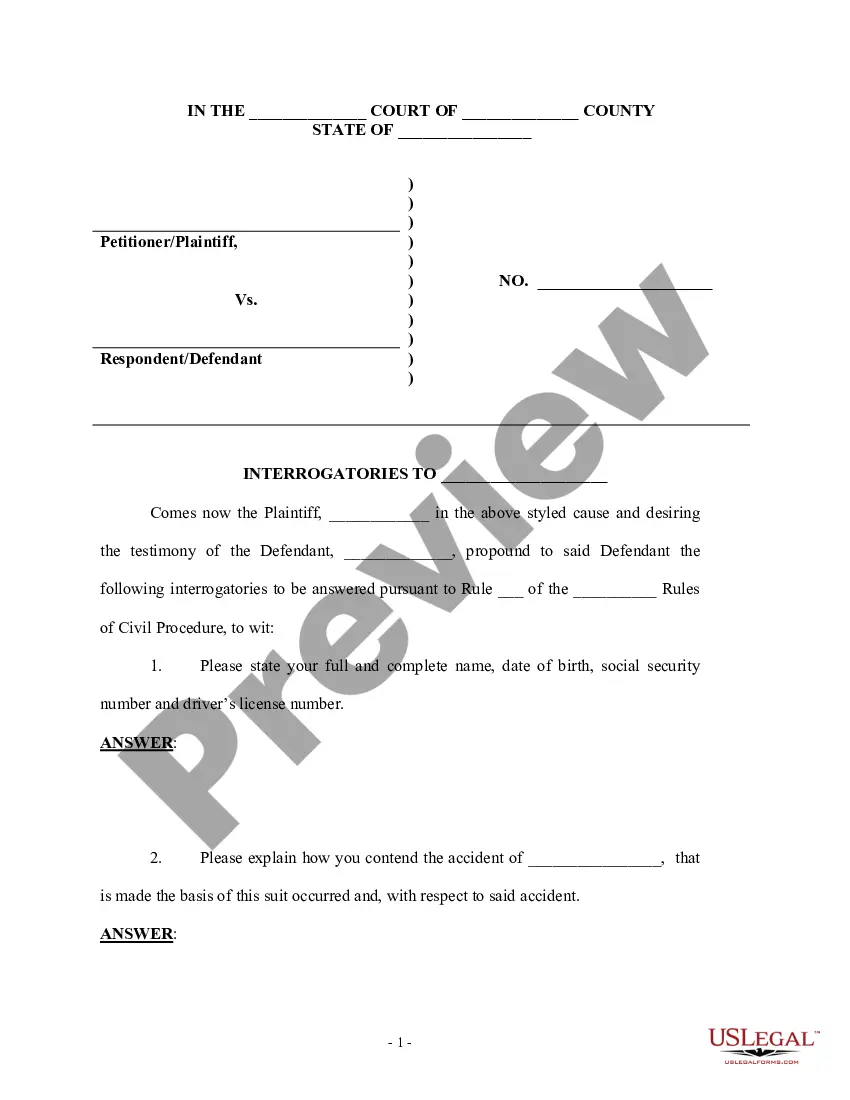
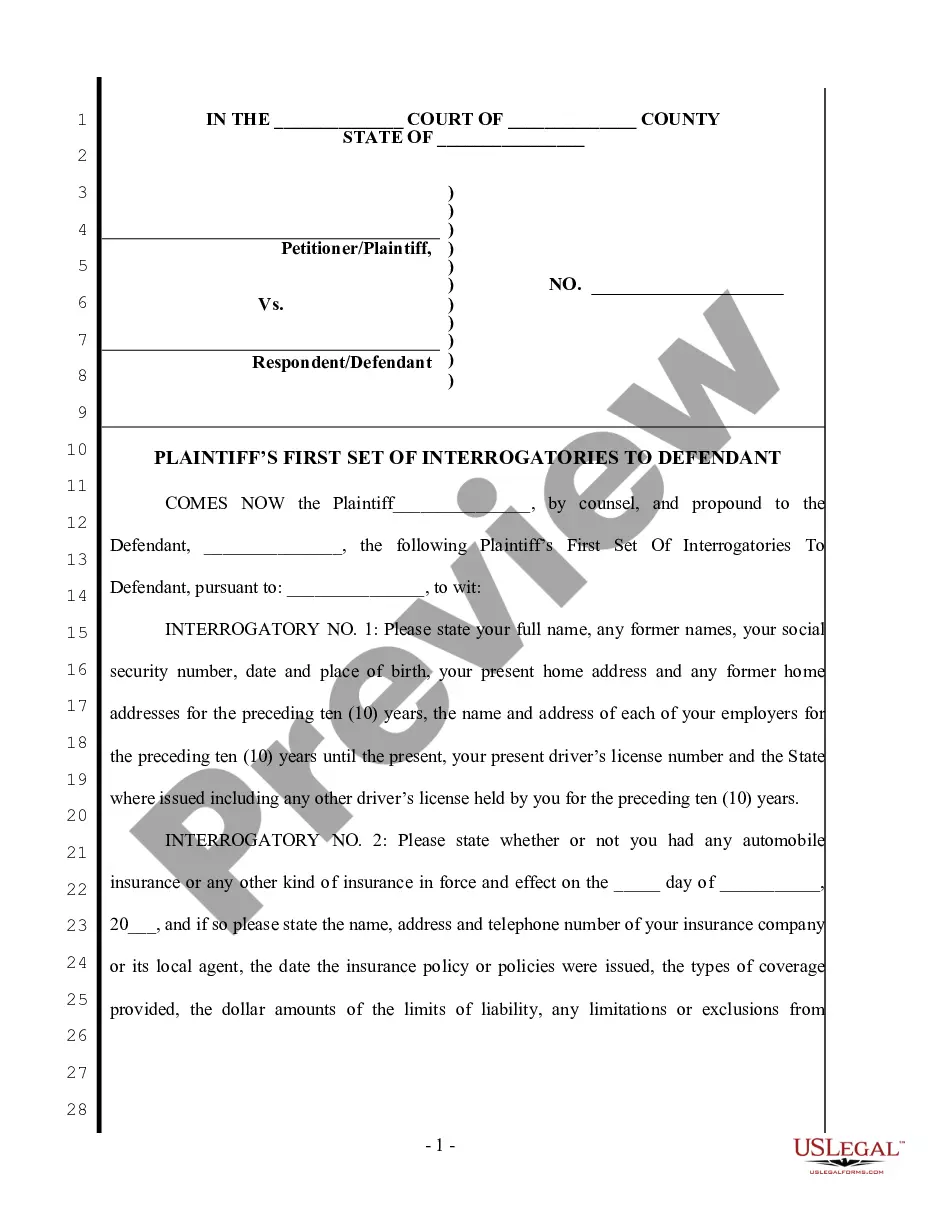
The Interrogatories to Defendant - First Set - Personal Injury is a legal document used in personal injury cases, particularly those involving automobile accidents. This form allows a plaintiff to gather detailed information from the defendant about the incident, their driving history, potential witnesses, and any relevant insurance details. It is an essential tool for establishing the facts and circumstances surrounding the event in question.
Key components of this form
- Identifying Information: Require the defendant's full name, addresses, driver's license number, and social security number.
- Accident Details: Ask the defendant to describe the accident, including their driving actions leading up to the collision.
- Witnesses: Gather names and contact information of anyone who has information about the incident.
- Insurance Information: Request details about the defendant's insurance coverage related to the vehicle involved in the accident.
- History of Controlled Substances: Inquire about any medications or substances the defendant was using at the time of the accident.
Situations where this form applies
This form should be used when a plaintiff needs to obtain specific information from the defendant in a personal injury lawsuit stemming from an automobile accident. It is particularly useful in situations where the plaintiff wants to clarify the details of the accident, establish liability, or identify potential witnesses who may be relevant to the case.
Who can use this document
- Individuals filing a personal injury claim against a defendant involved in a car accident.
- Attorneys representing plaintiffs in personal injury cases.
- Parties seeking to clarify facts and gather evidence for upcoming court proceedings.
Completing this form step by step
- Begin by entering the full name and contact details of the defendant.
- Submit detailed questions regarding the circumstances of the accident, including observations made at the time.
- Collect information about the defendant's driving record and any prior accidents or tickets.
- Request that the defendant provide the names and contact information of all relevant witnesses.
- Ensure all fields are filled out clearly and accurately before submission.
Notarization guidance
This form does not typically require notarization unless specified by local law. However, it is advisable to check the rules of the jurisdiction where the case is being filed to ensure compliance with any specific requirements.
Get your form ready online
Our built-in tools help you complete, sign, share, and store your documents in one place.
Make edits, fill in missing information, and update formatting in US Legal Forms—just like you would in MS Word.
Download a copy, print it, send it by email, or mail it via USPS—whatever works best for your next step.
Sign and collect signatures with our SignNow integration. Send to multiple recipients, set reminders, and more. Go Premium to unlock E-Sign.
If this form requires notarization, complete it online through a secure video call—no need to meet a notary in person or wait for an appointment.
We protect your documents and personal data by following strict security and privacy standards.

Make edits, fill in missing information, and update formatting in US Legal Forms—just like you would in MS Word.

Download a copy, print it, send it by email, or mail it via USPS—whatever works best for your next step.

Sign and collect signatures with our SignNow integration. Send to multiple recipients, set reminders, and more. Go Premium to unlock E-Sign.

If this form requires notarization, complete it online through a secure video call—no need to meet a notary in person or wait for an appointment.

We protect your documents and personal data by following strict security and privacy standards.
Typical mistakes to avoid
- Failing to provide complete identifying information for the defendant.
- Neglecting to include necessary questions or inquiries relevant to the case.
- Omitting details about the incident that could support the plaintiff's claims.
- Not following the proper legal formatting required by the state jurisdiction.
Benefits of completing this form online
- Immediate access to professionally drafted legal templates.
- Convenience of completing the form from any location at your own pace.
- Ability to easily edit and customize the form to fit specific case needs.
- Secure storage of your completed documents for legal reference.
Looking for another form?




Form popularity
FAQ
So, can you refuse to answer interrogatories? The answer is, no, you may not.That answer must either permit inspection of the requested information or object to the production of the information for a specific reason.
(1) Number. Unless otherwise stipulated or ordered by the court, a party may serve on any other party no more than 25 written interrogatories, including all discrete subparts.
The interrogatories must not exceed 30, including all subparts, unless the court permits a larger number on motion and notice and for good cause.
(2) In addition to section (b)(1), any party may serve upon any other party not more than two sets of written interrogatories containing not more than 20 questions per set without prior permission of the court.
Unless otherwise stipulated or ordered by the court, a party may serve on any other party no more than 25 written interrogatories, including all discrete subparts. Leave to serve additional interrogatories may be granted to the extent consistent with Rule 26(b)(1) and (2).
Personal/Corporate information of opposing party. Identifying information of witnesses. Contact information & background of expert witnesses. Insurance information.
No party may serve upon any other party, at any one time or cumulatively, more than thirty written interrogatories, including all parts and sub-parts without leave of court for good cause shown.
The purpose of interrogatories is to learn a great deal of general information about a party in a lawsuit. For example, the defendant in a personal injury lawsuit about a car accident might send you interrogatories asking you to disclose things like: Where you live.
In law, interrogatories (also known as requests for further information) are a formal set of written questions propounded by one litigant and required to be answered by an adversary in order to clarify matters of fact and help to determine in advance what facts will be presented at any trial in the case.