Affidavit Correcting Defective Acknowledgment by Notary- Scriveners
Overview of this form
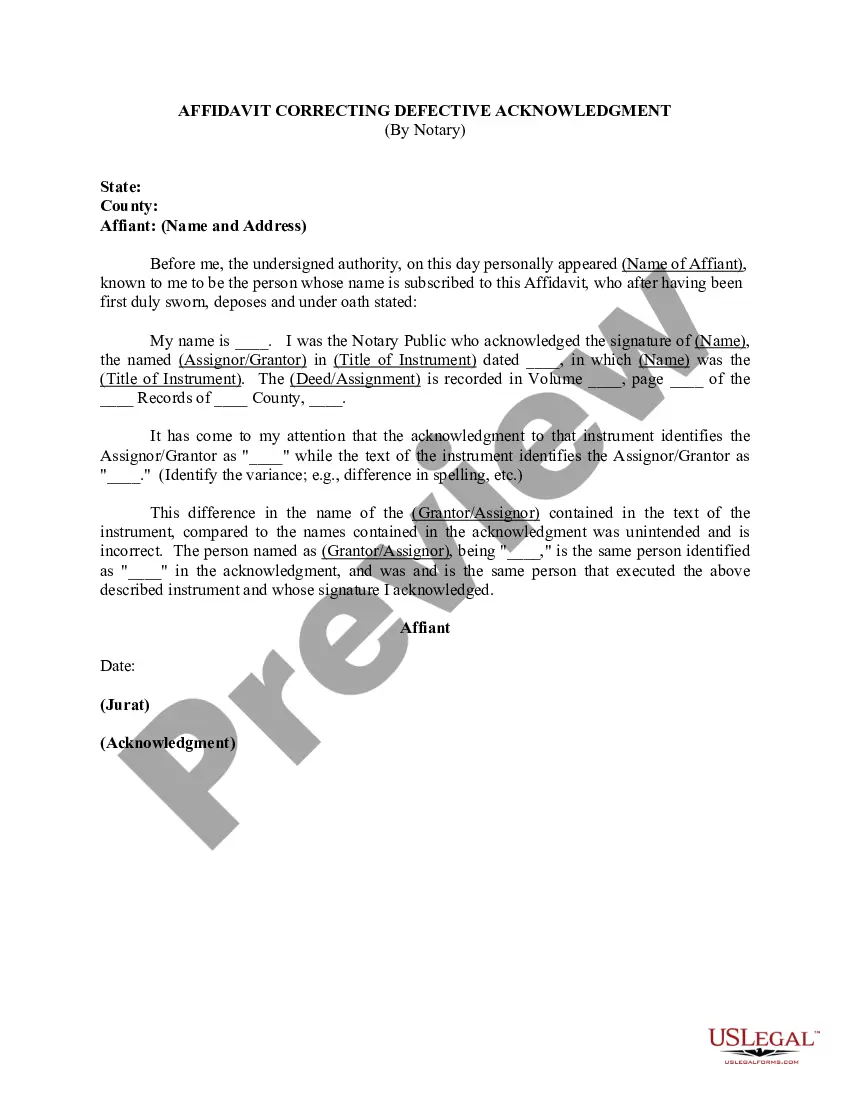
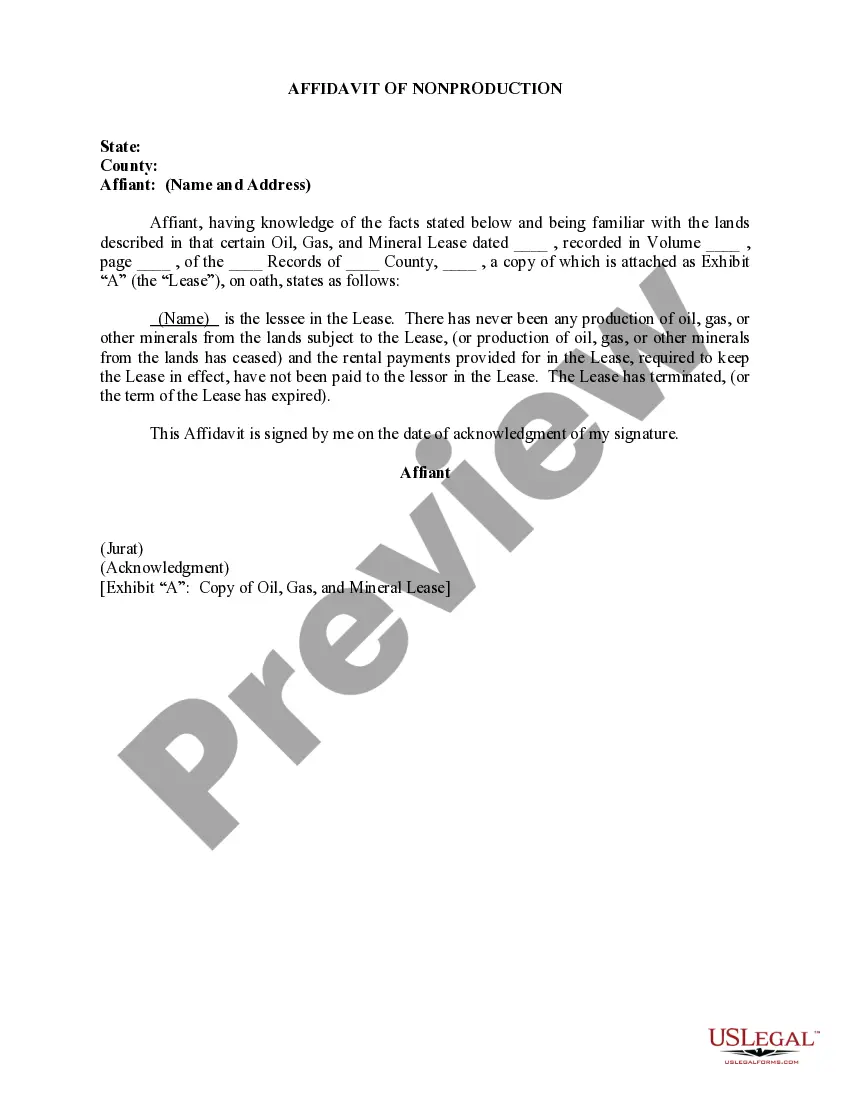
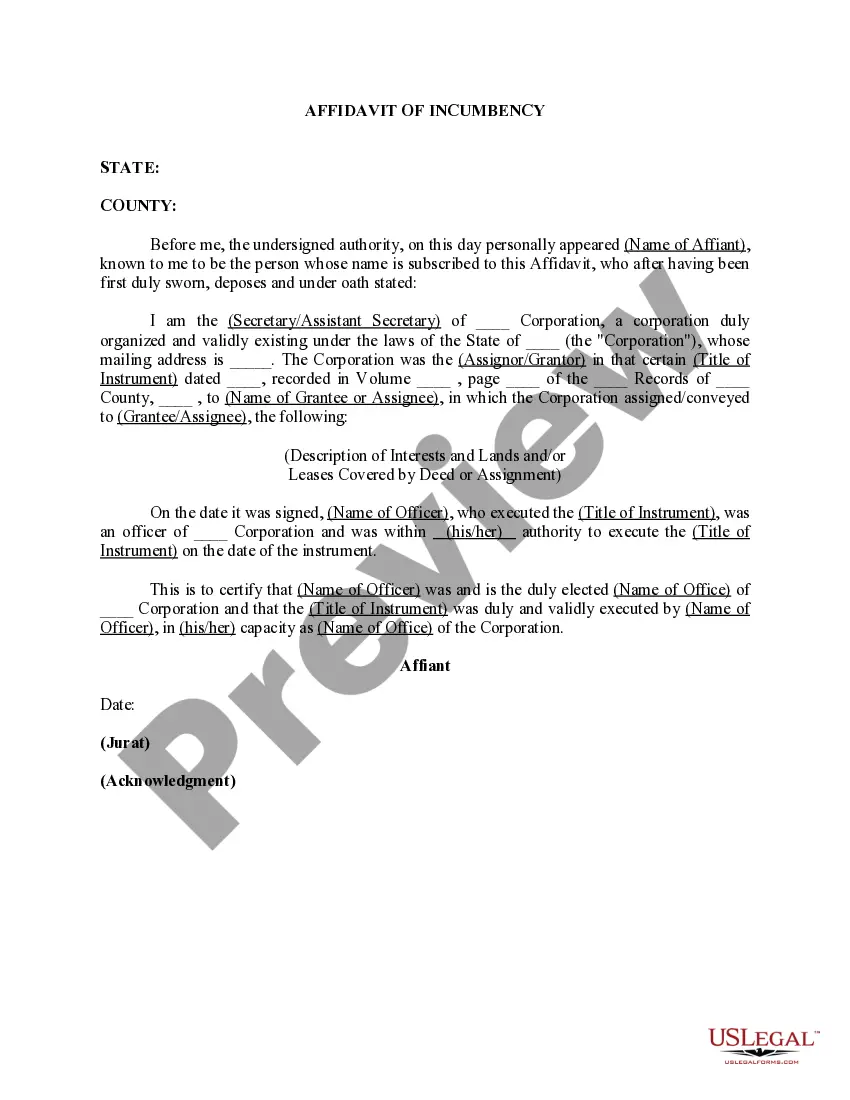
The Affidavit Correcting Defective Acknowledgment by Notary is a legal document used to rectify errors in the acknowledgment made by a notary public. This affidavit serves as a sworn statement that corrects discrepancies in the identification of parties involved in a legal instrument, ensuring the validity of property transfers, contracts, or other legal documents. Unlike standard acknowledgments, this form specifically addresses errors that can affect the enforceability of the recorded document.
Form components explained
- State and county of acknowledgment
- Name and address of the affiant (notary)
- Identification of the instrument and parties involved
- Statement outlining the discrepancies in names
- Affiant's sworn statement affirming the correction
- Date and jurat (oath verification by the notary)
When to use this form
This affidavit should be used when a notary public recognizes that an acknowledgment contains an error, such as a misspelled name or incorrect title. Correcting these discrepancies is crucial for maintaining accurate public records and ensuring that legal documents can be enforced without complications in the future.
Who this form is for
- Notary publics who have acknowledged a document with errors
- Individuals or entities involved in transactions requiring corrected acknowledgments
- Legal practitioners managing errors in recorded instruments
Completing this form step by step
- Enter the state and county where the acknowledgment took place.
- Provide the name and address of the affiant (notary public).
- Identify the parties and the legal instrument involved, including dates and titles.
- State the specific discrepancies found in the acknowledgment.
- Conclude with the affiant's signature and date of swearing.
Does this form need to be notarized?
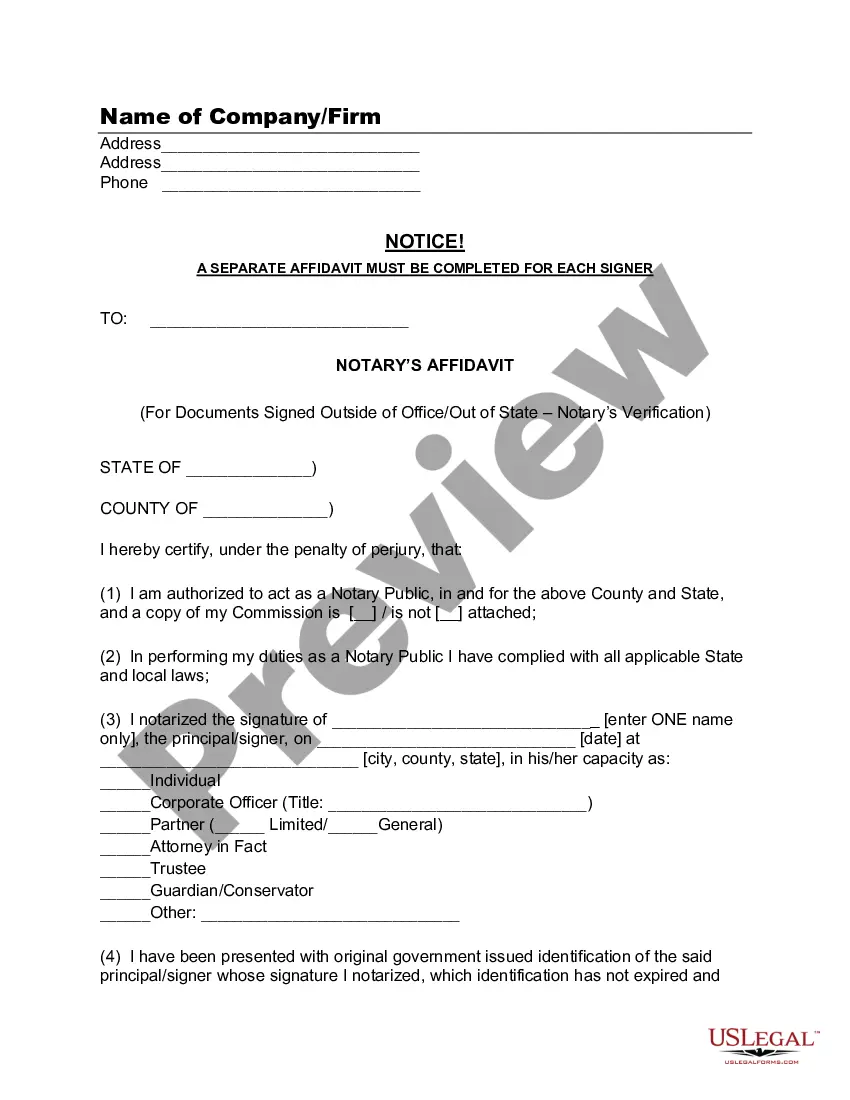
To make this form legally binding, it must be notarized. Our online notarization service, powered by Notarize, lets you verify and sign documents remotely through an encrypted video session.
Get your form ready online
Our built-in tools help you complete, sign, share, and store your documents in one place.
Make edits, fill in missing information, and update formatting in US Legal Forms—just like you would in MS Word.
Download a copy, print it, send it by email, or mail it via USPS—whatever works best for your next step.
Sign and collect signatures with our SignNow integration. Send to multiple recipients, set reminders, and more. Go Premium to unlock E-Sign.
If this form requires notarization, complete it online through a secure video call—no need to meet a notary in person or wait for an appointment.
We protect your documents and personal data by following strict security and privacy standards.

Make edits, fill in missing information, and update formatting in US Legal Forms—just like you would in MS Word.

Download a copy, print it, send it by email, or mail it via USPS—whatever works best for your next step.

Sign and collect signatures with our SignNow integration. Send to multiple recipients, set reminders, and more. Go Premium to unlock E-Sign.

If this form requires notarization, complete it online through a secure video call—no need to meet a notary in person or wait for an appointment.

We protect your documents and personal data by following strict security and privacy standards.
Avoid these common issues
- Failing to fully identify all parties involved in the instrument.
- Not clearly specifying the discrepancies in names or titles.
- Omitting the signature of the notary public in the jurat.
Advantages of online completion
- Accessibility: Easily download and complete the affidavit from anywhere.
- Editability: Make revisions as needed before finalizing.
- Reliability: Use professionally drafted templates to ensure legal compliance.
What to keep in mind
- The Affidavit Correcting Defective Acknowledgment by Notary resolves discrepancies in legal documents.
- It is essential for maintaining accurate records and preventing legal disputes.
- Complete the form carefully to avoid common errors and ensure proper notarization.
Looking for another form?


Form popularity
FAQ
A corrective affidavit is a statutory device under Cal.Gov. Code 27201, used to correct a minor error in a document that has been recorded at an earlier date. Minor errors are those that, when corrected, cause no actual change in the substance of the document.
Re-recording of the original document. With corrections made in the body of the original document. A cover sheet detailing the changes. Must be re-signed and re-acknowledged. Correction Deed. A new deed reflecting the corrections/changes. Must meet all recording requirements of a deed.
If there is a mistake or omission in the affidavit, the proper way is to file an affidavit expla...the affidavit filed by him in lieu of examination in chief. The said application was dismissed by the learned Magistrate, against which the petitioner preferred revision before the Court of Session...
Only you, as the notary, may make corrections to the notary certificate. Illegible/ Expired Notary Seal: Stamp impressions that are too dark, too light, incomplete, smudged, or in any way unreadable may cause an otherwise acceptable document to be rejected for its intended use.
Draw line through entry (thin pen line). Make sure that the inaccurate information is still legible. Initial and date the entry. State the reason for the error (i.e. in the margin or above the note if room). Document the correct information.
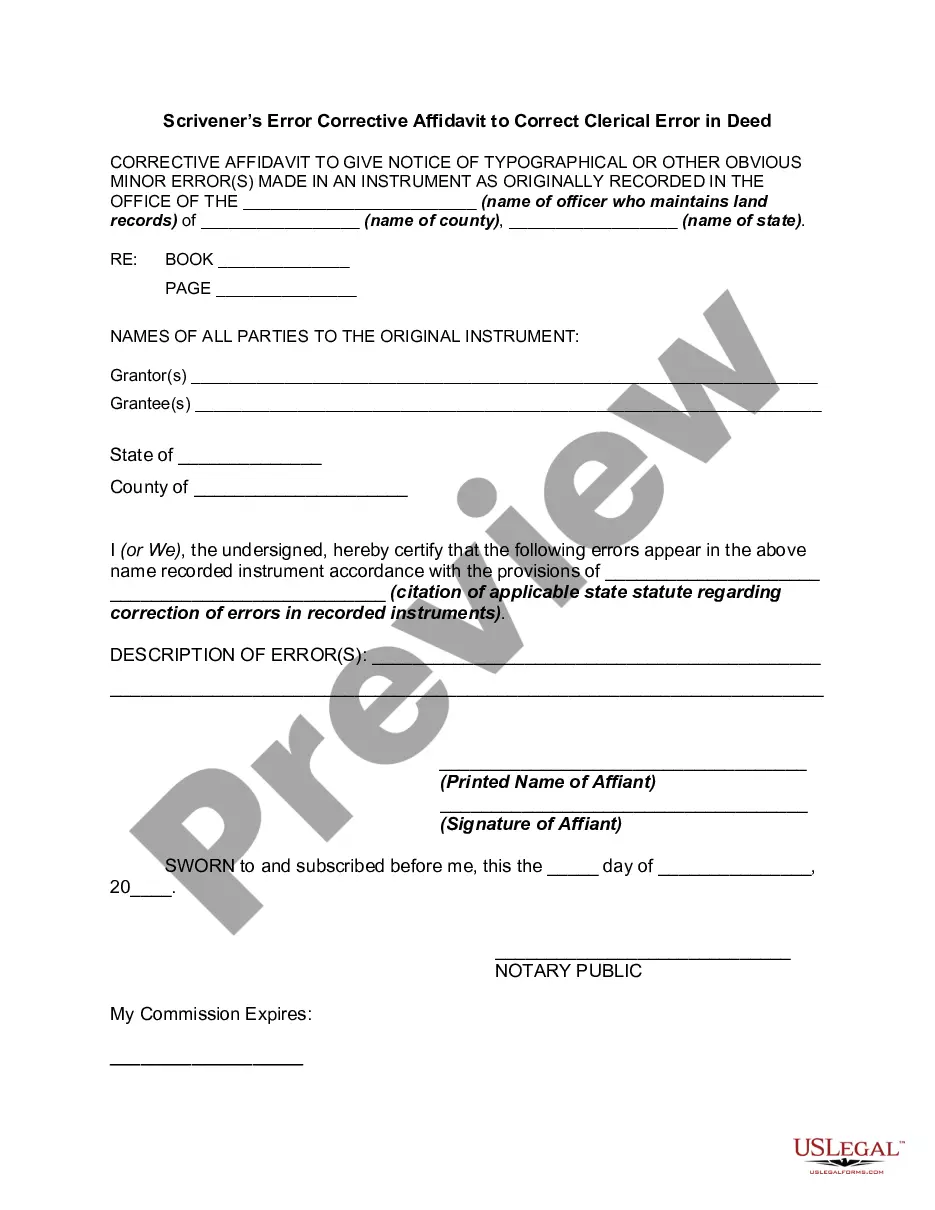
A corrective deed is an instrument filed in the public record in addition to the incorrect deed. It's known as a confirmatory instrument since it perfects an existing title by removing any defects, but it doesn't pass title on its own.
A correction deed is a new deed signed and acknowledged by the grantor. A correction affidavit can be signed by either party but is used in limited situations. This press release was authorized by Mark W. Bidwell, an attorney licensed in California.