Release of Judgment Lien - Full Release
About this form
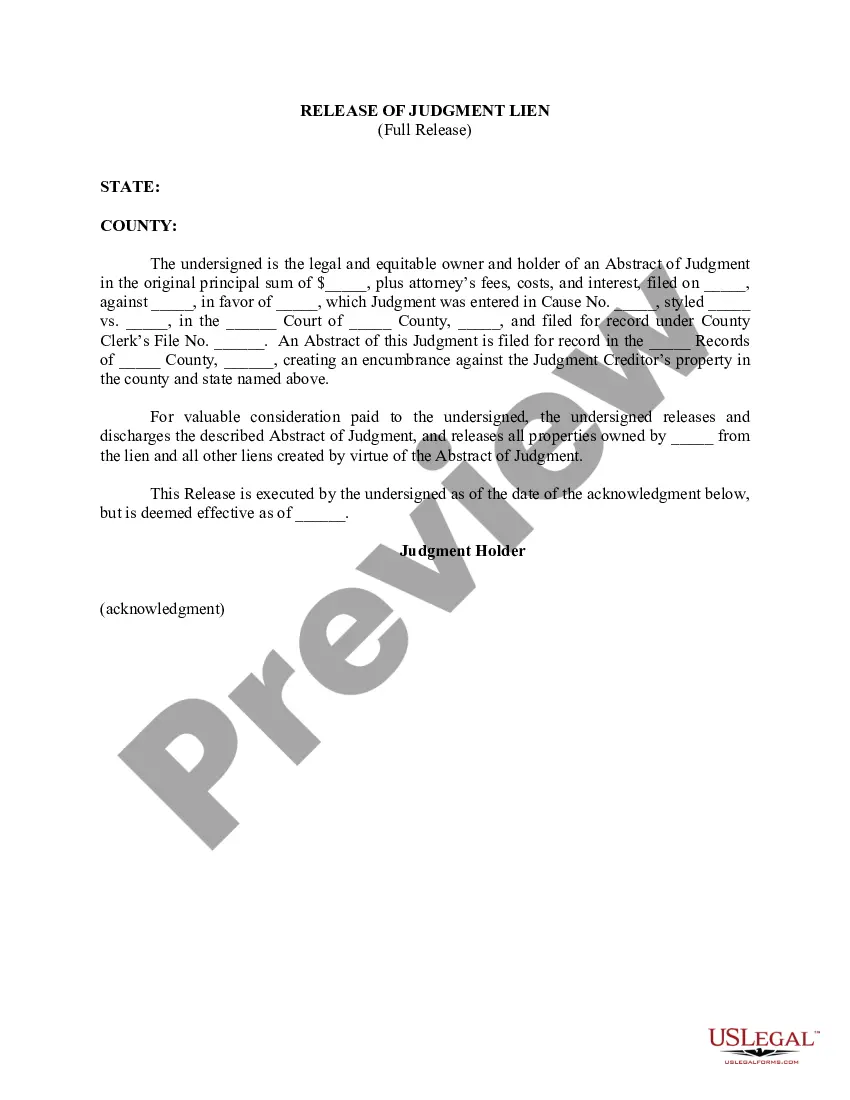
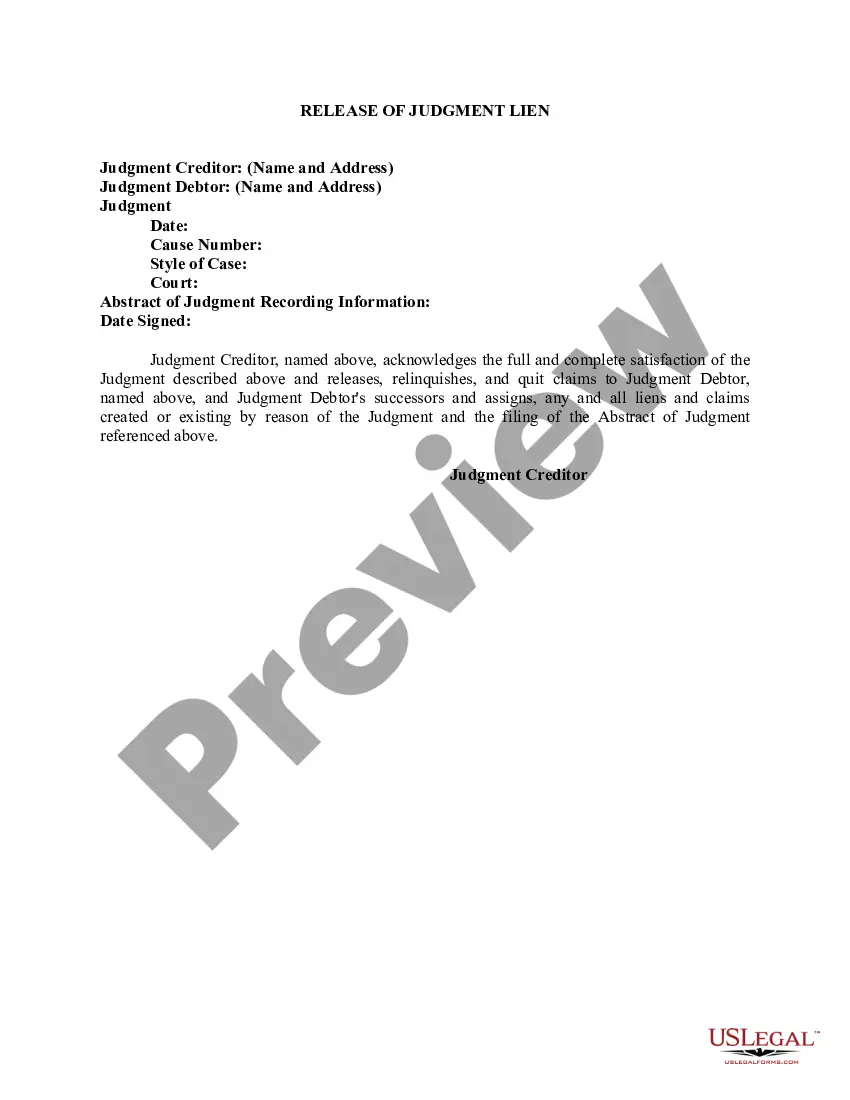
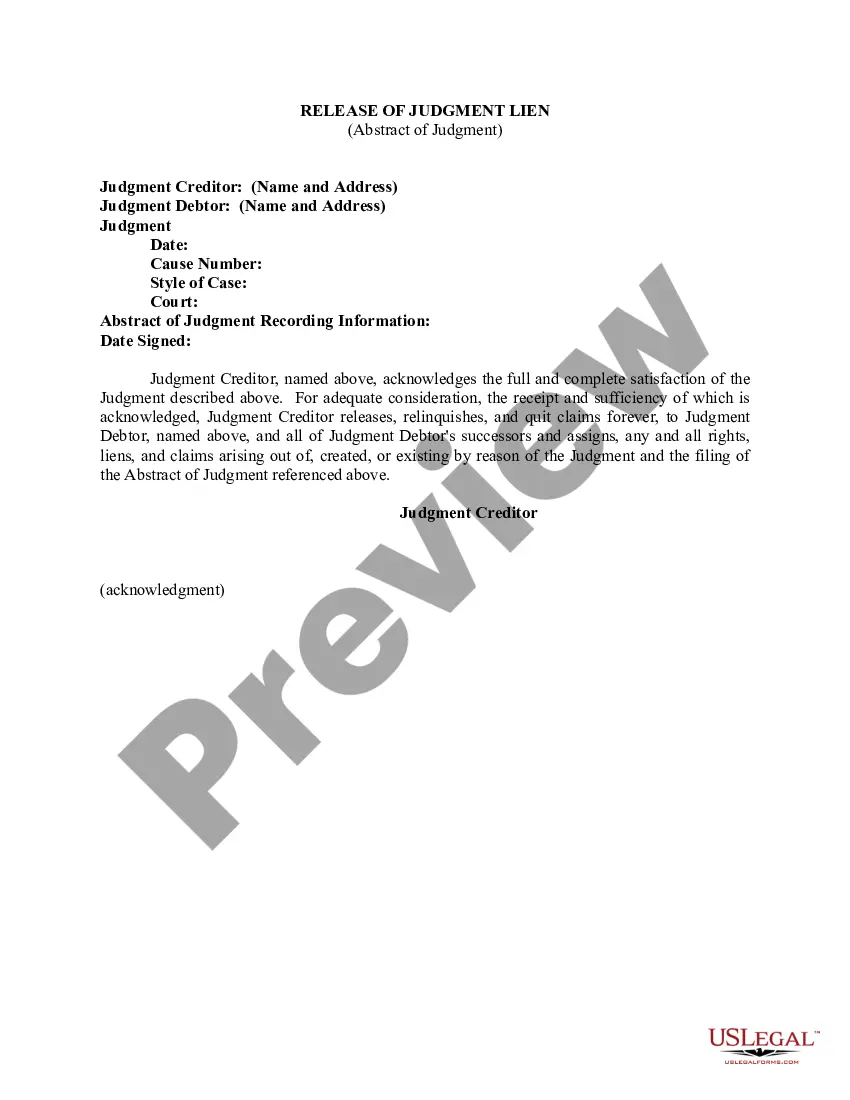
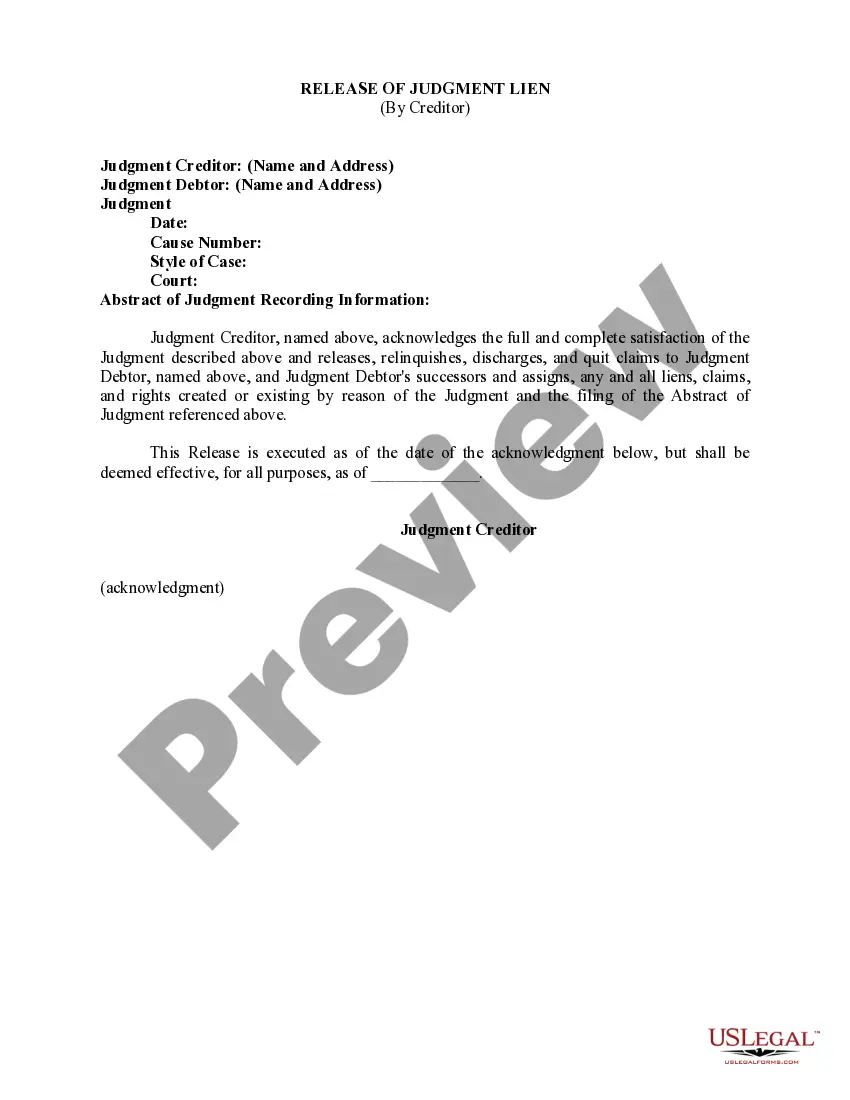
The Release of Judgment Lien - Full Release is a legal document that serves to remove a lien placed on a debtor's property due to an unpaid judgment. This form indicates that the judgment holder has received full payment or satisfactory arrangements and releases the debtor from any claims against their property related to the specific judgment. Unlike other forms which may only partially release a lien, this particular document confirms complete release, ensuring that the property is no longer encumbered by the previous judgment lien.
Main sections of this form
- Identification of the parties involved, including the judgment holder and debtor.
- Details about the original judgment, including the principal amount, court information, and case number.
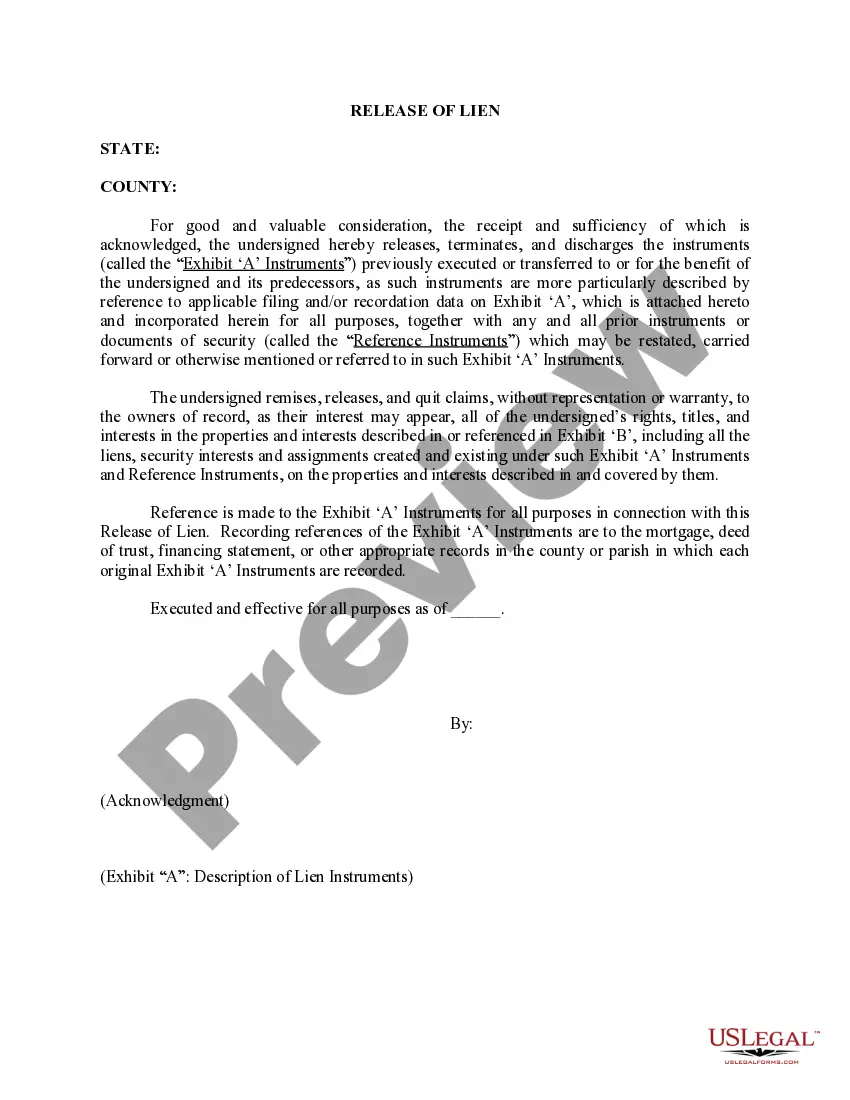
- Statement confirming the release of the judgment lien and any encumbrances on the debtor's property.
- Date of acknowledgment and effective date of the release.
- Signature section for the judgment holder to authenticate the release.
Common use cases
This form is necessary when a judgment has been paid in full or otherwise settled, and the judgment creditor agrees to release the lien on the debtor's property. It is commonly used in scenarios such as debt repayment, settlement agreements, or when initiating a refinance on a property encumbered by a judgment lien.
Who can use this document
- Judgment creditors seeking to formally release a debtor from a lien.
- Debtors who have fully settled their debts and require proof of lien release.
- Real estate professionals assisting clients with property transactions affected by judgment liens.
How to prepare this document
- Identify and enter the names and contact information of all parties involved, including the judgment holder and debtor.
- Provide the details of the original judgment, including the amount, date filed, and court information.
- Clearly state the consideration paid that leads to the release of the lien.
- Fill in the effective date of the release.
- Obtain the signature of the judgment holder and ensure proper acknowledgment if necessary.
Does this form need to be notarized?
This form does not typically require notarization unless specified by local law. However, adding a notarized acknowledgment can add an extra layer of legal validation, which might be beneficial in some jurisdictions.
Get your form ready online
Our built-in tools help you complete, sign, share, and store your documents in one place.
Make edits, fill in missing information, and update formatting in US Legal Forms—just like you would in MS Word.
Download a copy, print it, send it by email, or mail it via USPS—whatever works best for your next step.
Sign and collect signatures with our SignNow integration. Send to multiple recipients, set reminders, and more. Go Premium to unlock E-Sign.
If this form requires notarization, complete it online through a secure video call—no need to meet a notary in person or wait for an appointment.
We protect your documents and personal data by following strict security and privacy standards.

Make edits, fill in missing information, and update formatting in US Legal Forms—just like you would in MS Word.

Download a copy, print it, send it by email, or mail it via USPS—whatever works best for your next step.

Sign and collect signatures with our SignNow integration. Send to multiple recipients, set reminders, and more. Go Premium to unlock E-Sign.

If this form requires notarization, complete it online through a secure video call—no need to meet a notary in person or wait for an appointment.

We protect your documents and personal data by following strict security and privacy standards.
Common mistakes to avoid
- Failing to accurately provide the judgment details or case number.
- Not having the form signed or dated by the judgment holder.
- Leaving out the acknowledgment portion if required by local law.
Advantages of online completion
- Immediate access to a professionally drafted legal document.
- Editability allows for customization to fit specific needs.
- Convenient download option available, reducing the time needed for document preparation.
Legal use & context
- This form serves as proof that a lien has been released, protecting the debtor's property rights.
- Ensures clarity in property ownership, especially during subsequent sales or refiling processes.
- Failure to properly file this form could lead to continued encumbrance of the property.
Key takeaways
- The Release of Judgment Lien - Full Release is essential for clearing debts attached to properties.
- Accurate completion and proper filing of this form safeguard property rights.
- Users should be aware of state-specific requirements that may apply.
Looking for another form?






Form popularity
FAQ
In most cases, getting a judgment release will require you to pay off the debt, including any interest and court costs. Once the final payment is received by the lender, they will issue the judgement release. It is also possible to get a judgement released by making special arrangements with the lender.
You will need one original, notarized copy for the judgment debtor. If you recorded an abstract of judgment to place a lien against the debtor's real property, you will need an original, notarized copy of your Acknowledgment of Satisfaction of Judgment (EJ-100) for each county where you placed a lien.
Contact the creditor that filed the lien. Make payment arrangements if you cannot pay in full. Pay the lien amount in full or as agreed. Request a satisfaction of lien. File the satisfaction of lien if mailed to you. Consult a bankruptcy attorney.
The defendant should ask for a letter confirming that the entire amount of the judgment has been paid. He or she may do so by sending a demand letter to the plaintiff. The release and satisfaction form is filed with the court clerk and entered into the case record.
A judgment may allow creditors to seize personal property, levy bank accounts, put liens on real property, and initiate wage garnishments. Generally, judgments are valid for several years before they expire. The statute of limitations dictates how long a judgment creditor can attempt to collect the debt.
A document signed by the party who is owed money under a court judgment (called the judgment creditor) stating that the full amount due on the judgment has been paid.
If the judgment creditor does not immediately file an Acknowledgement of Satisfaction of Judgment (EJ-100) when the judgment is satisfied, the judgment debtor may make a formal written demand for the creditor to do so. The judgment creditor has 15 days after receiving the debtor's request to serve the acknowledgement.
The debtor must get a discharge or release of the abstract of judgment to remove the lien from the home. Contact the judgment creditor shown on the abstract. Arrange to pay the debt in full or negotiate payments. Ask the creditor for a discharge if paying in full.
In order to vacate a judgment in California, You must file a motion with the court asking the judge to vacate or set aside the judgment. Among other things, you must tell the judge why you did not respond to the lawsuit (this can be done by written declaration).