Negotiating and Drafting Confidentiality Provisions
Overview of this form
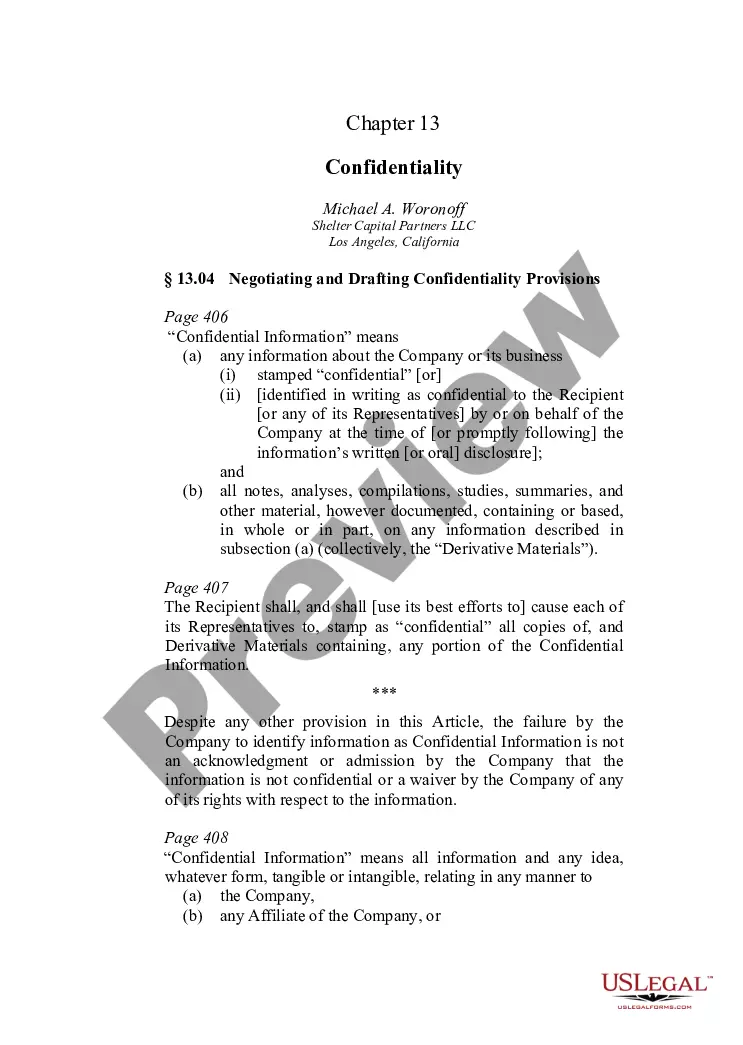
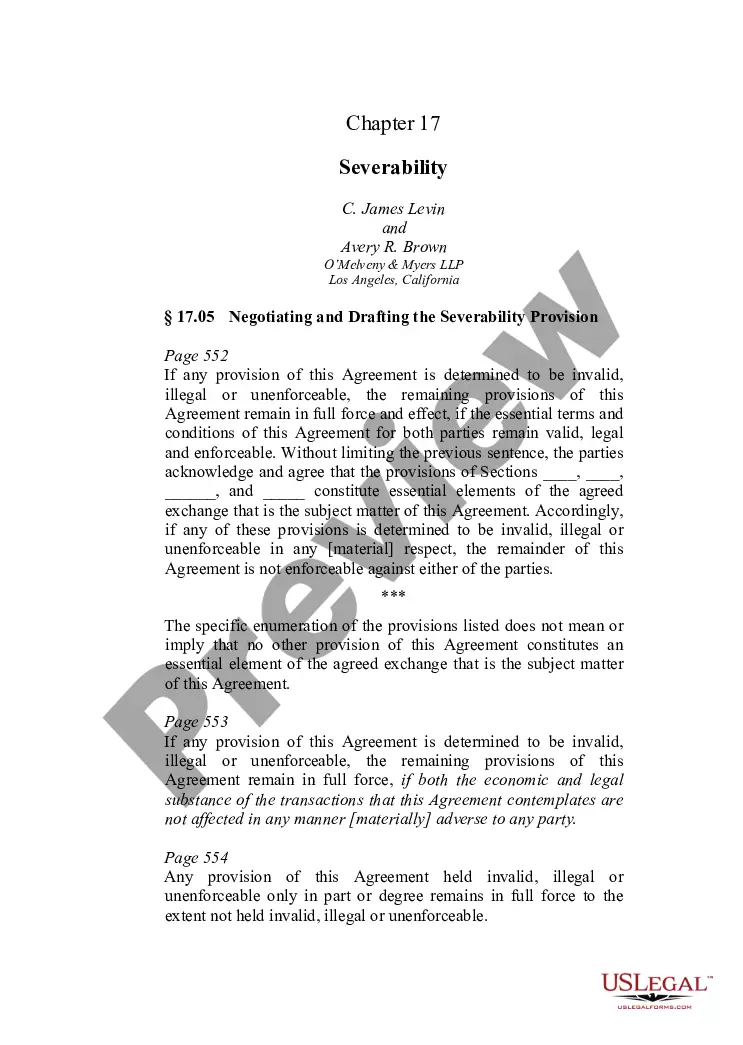
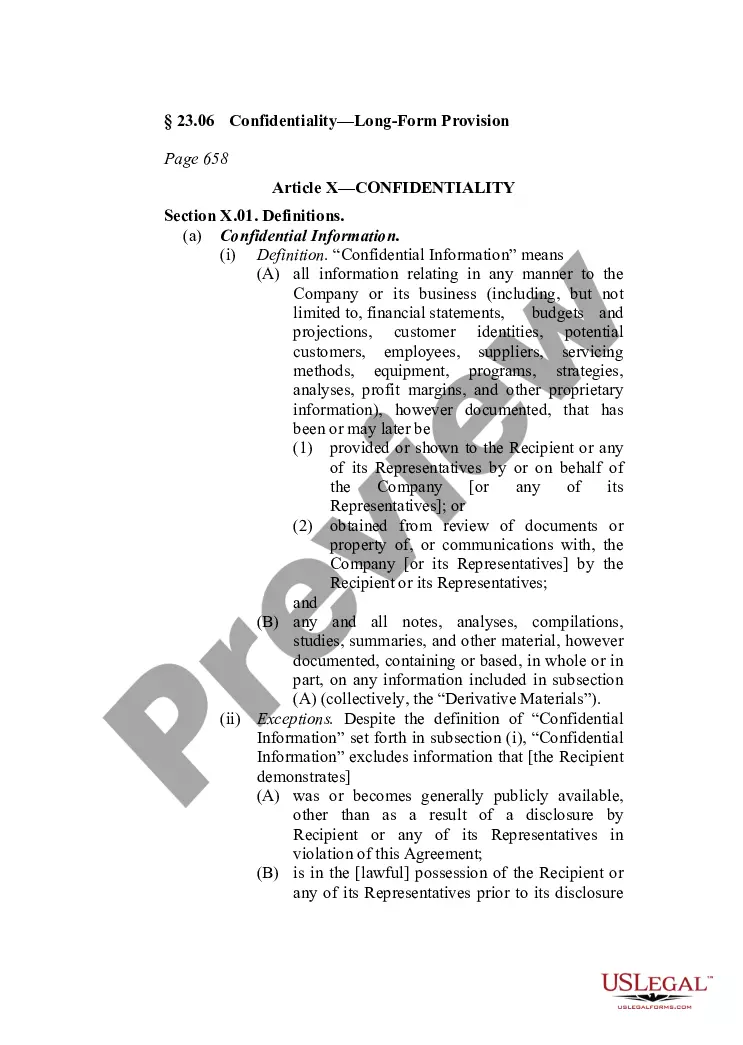
The Negotiating and Drafting Confidentiality Provisions form is designed to establish confidentiality obligations between parties involved in a contractual agreement. This form includes various clauses that define what constitutes confidential information and the responsibilities of the recipient to protect that information. Unlike other legal forms, this document specifically focuses on confidentiality terms, allowing for tailored language options to fit different situations and needs.
What’s included in this form
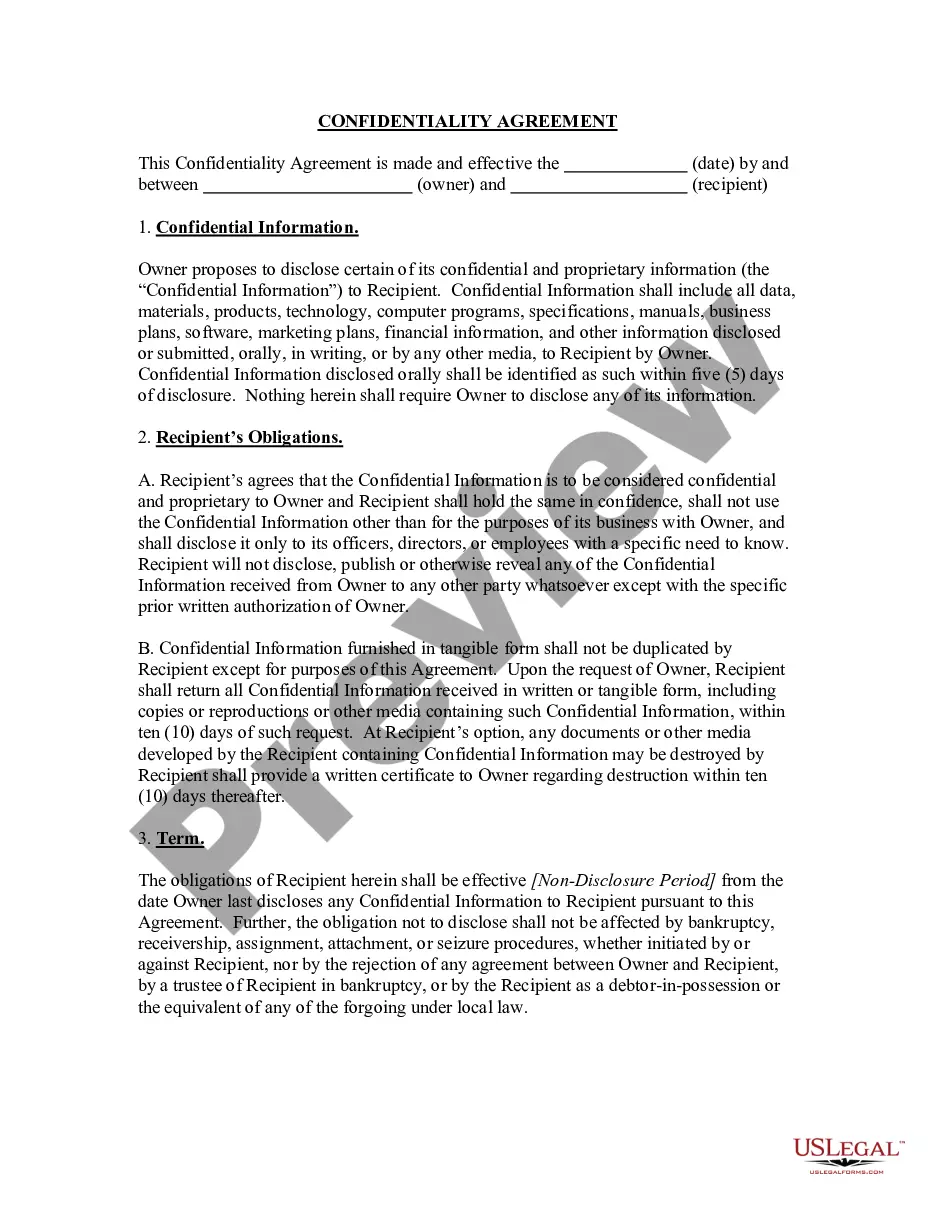
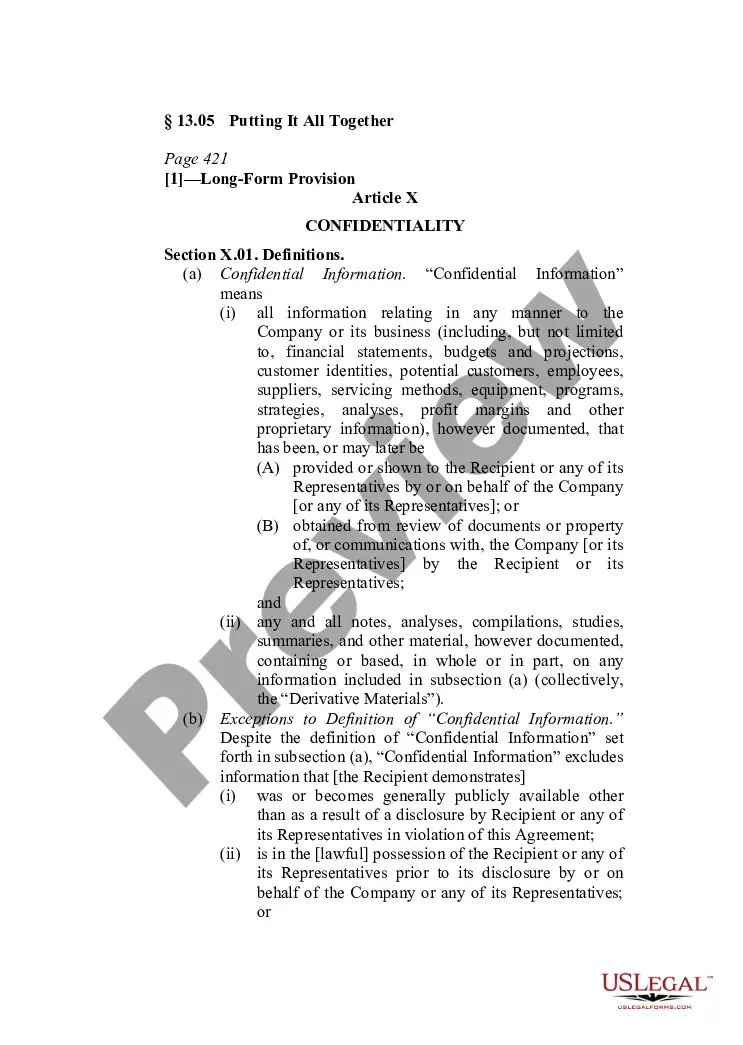
- Definition of confidential information, including tangible and intangible data.
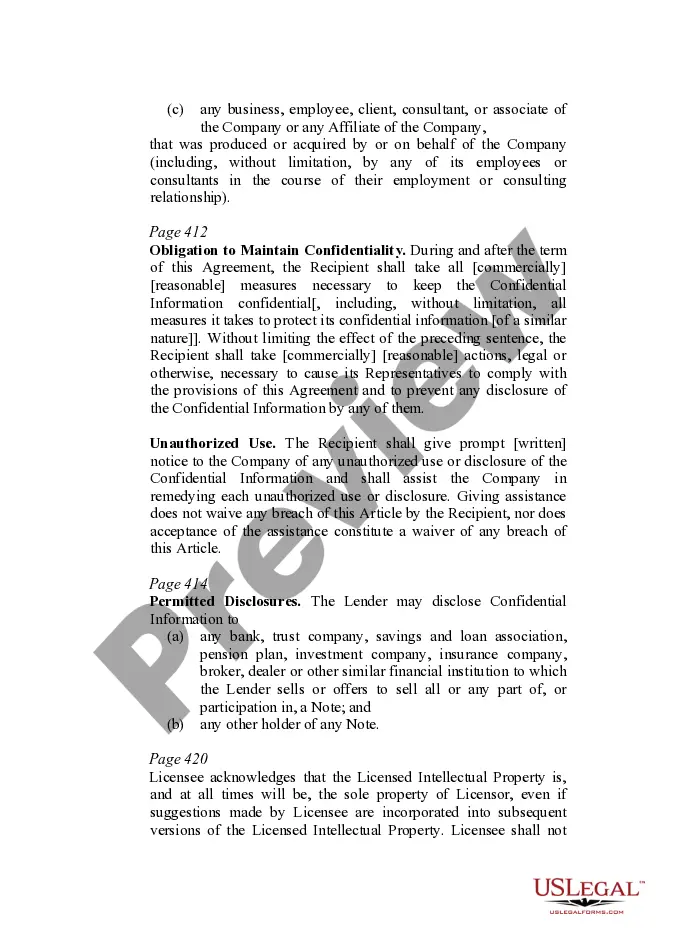
- Obligation of the recipient to maintain confidentiality during and after the agreement.
- Procedures for identifying and marking confidential information.
- Conditions under which confidential information can be disclosed.
- Requirements for notifying the company of unauthorized disclosures.
When this form is needed
This form is essential when two or more parties are entering a business relationship that involves sharing sensitive information. Typical scenarios include negotiations for mergers and acquisitions, joint ventures, research collaborations, and when engaging consultants or contractors who will access proprietary information. By using this form, parties can protect their confidential data from unauthorized disclosure and misuse.
Who needs this form
- Businesses negotiating partnerships or contracts that require the sharing of confidential information.
- Consultants who need to establish confidentiality with clients.
- Individuals or organizations involved in research or development that exchanges proprietary information.
- Legal professionals drafting contracts to ensure confidentiality provisions are effectively communicated.
How to complete this form
- Identify all parties involved in the agreement, including their roles.
- Define what information is to be kept confidential explicitly.
- Specify the obligations the recipient has to protect the confidential information.
- Include any permitted disclosures and circumstances that would allow such disclosures.
- Ensure that all parties sign and date the agreement to indicate their consent.
Notarization requirements for this form
This form does not typically require notarization to be legally valid. However, some jurisdictions or document types may still require it. US Legal Forms provides secure online notarization powered by Notarize, available 24/7 for added convenience.
Get your form ready online
Our built-in tools help you complete, sign, share, and store your documents in one place.
Make edits, fill in missing information, and update formatting in US Legal Forms—just like you would in MS Word.
Download a copy, print it, send it by email, or mail it via USPS—whatever works best for your next step.
Sign and collect signatures with our SignNow integration. Send to multiple recipients, set reminders, and more. Go Premium to unlock E-Sign.
If this form requires notarization, complete it online through a secure video call—no need to meet a notary in person or wait for an appointment.
We protect your documents and personal data by following strict security and privacy standards.

Make edits, fill in missing information, and update formatting in US Legal Forms—just like you would in MS Word.

Download a copy, print it, send it by email, or mail it via USPS—whatever works best for your next step.

Sign and collect signatures with our SignNow integration. Send to multiple recipients, set reminders, and more. Go Premium to unlock E-Sign.

If this form requires notarization, complete it online through a secure video call—no need to meet a notary in person or wait for an appointment.

We protect your documents and personal data by following strict security and privacy standards.
Common mistakes
- Failing to adequately define what constitutes confidential information.
- Not including a procedure for how to handle unauthorized disclosures.
- Overly broad or vague language that could lead to misunderstandings.
- Not obtaining signatures from all involved parties, making the agreement unenforceable.
Benefits of using this form online
- Convenient access to legally drafted templates tailored by licensed attorneys.
- Editable fields allow for customization to meet specific needs.
- Instant downloads make it easy to complete and distribute copies as necessary.
- Secure online format ensures information is protected and confidential during use.
Legal use & context
- This form helps establish legally binding confidentiality agreements that protect sensitive information.
- Properly executed confidentiality agreements can deter information leaks and establish accountability.
- Enforceability may depend on local laws governing contracts and confidentiality.
- Failure to use appropriate terminology may affect the rights of the parties involved.
Key takeaways
- Clearly outline confidentiality obligations when sharing sensitive information.
- Understand the circumstances under which disclosures may be permitted.
- Review the form thoroughly to ensure all necessary elements are included.
Looking for another form?








Form popularity
FAQ
The agreement should identify the purpose to which the recipient can put the confidential information. All other uses of the confidential information should be prohibited.This is the only effective way in which a recipient that is a company can consider the confidential information.
A confidentiality agreement is a written legal contract between an employer and an employee. The confidentiality agreement lays out binding terms and conditions that prohibit the employee from disclosing company confidential and proprietary information.
The party to be charged must have signed the contract. Since the NDAs benefit you, so long as the other party has signed, that ishould be sufficient.
A definition of confidential information. Who is involved. Why the recipient knows the information. Exclusions or limits on confidential information. Receiving party's obligations. Time frame or term. Discloser to the recipient.
Don't Release Information Before the Agreement Is Signed. Work With a Professional. Use a Unilateral NDA, if Possible. Choose an End Date. Define the Confidential Information. Provide Extra Protection for Trade Secrets. Define How the Information Will Be Used. Require Return of the Information.
A confidentiality clause (also referred to as a nondisclosure agreement) is a legally binding contract where an individual or enterprise guarantees to deal with particular data as a commercial secret and guarantees to not disclose such information to others without correct authorization.
Use a standard format for contracts. Decide what type of confidentiality statement you should use. Identify the involved parties in the agreement. Define the information to keep confidential. List the information excluded from the agreement.
A confidentiality agreement is a legal contract or clause that is used to protect the owner proprietary or sensitive information from disclosure by others.