Nonbinding Dispute Resolution Provisions
What is this form?
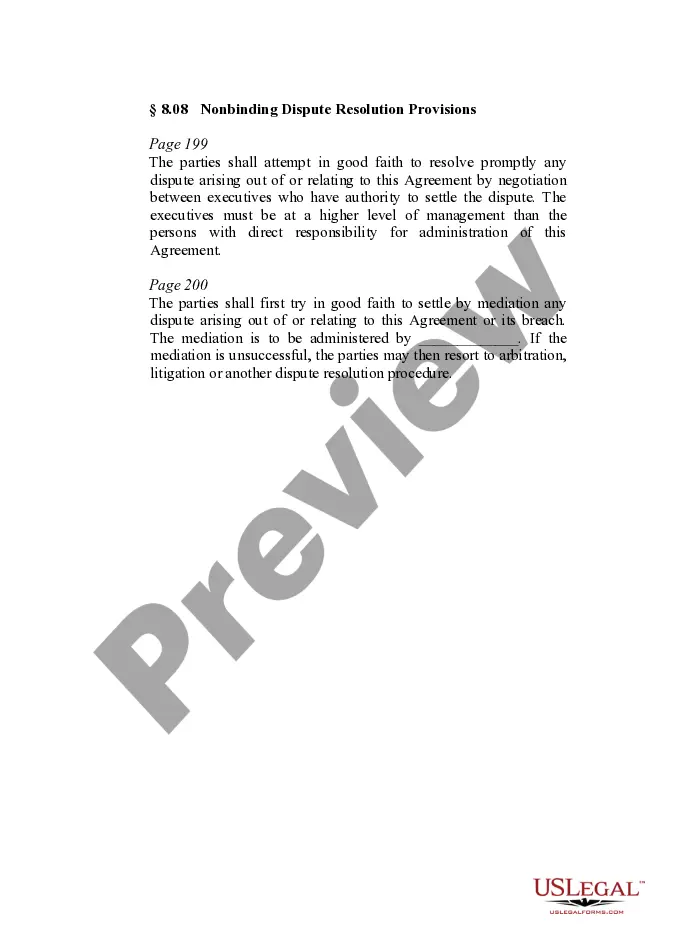
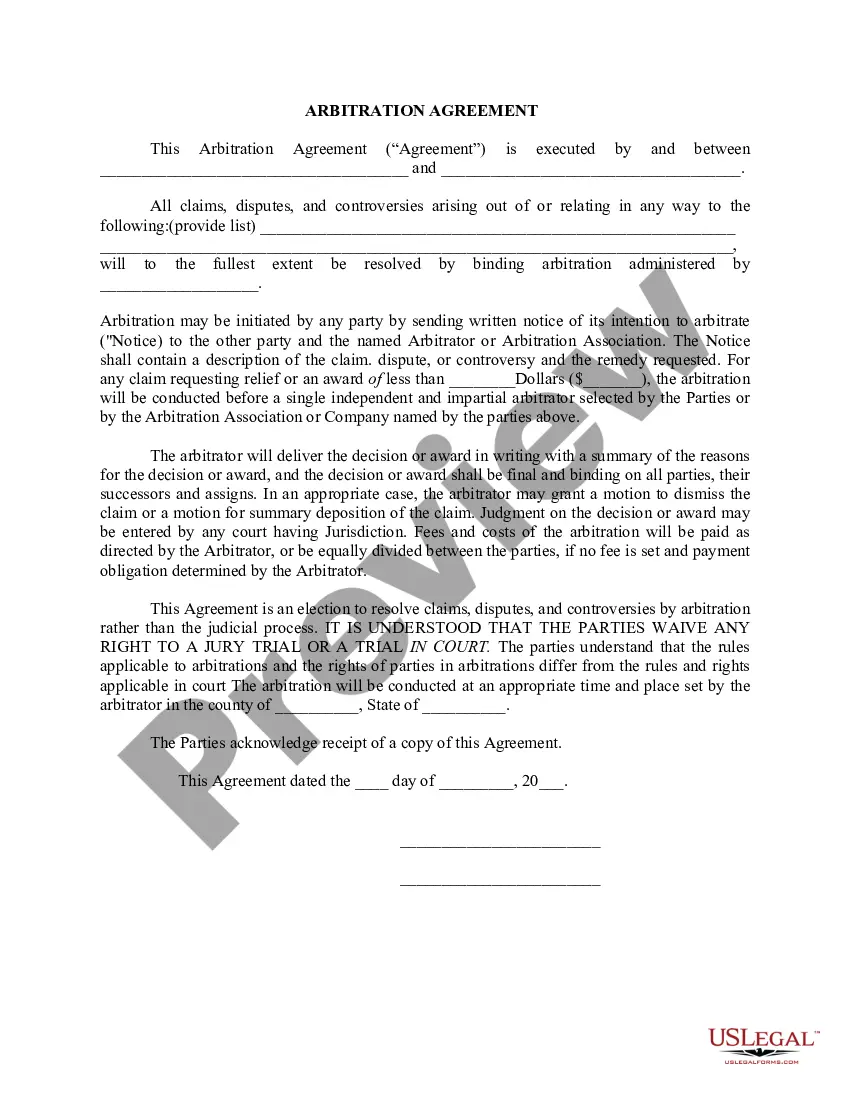
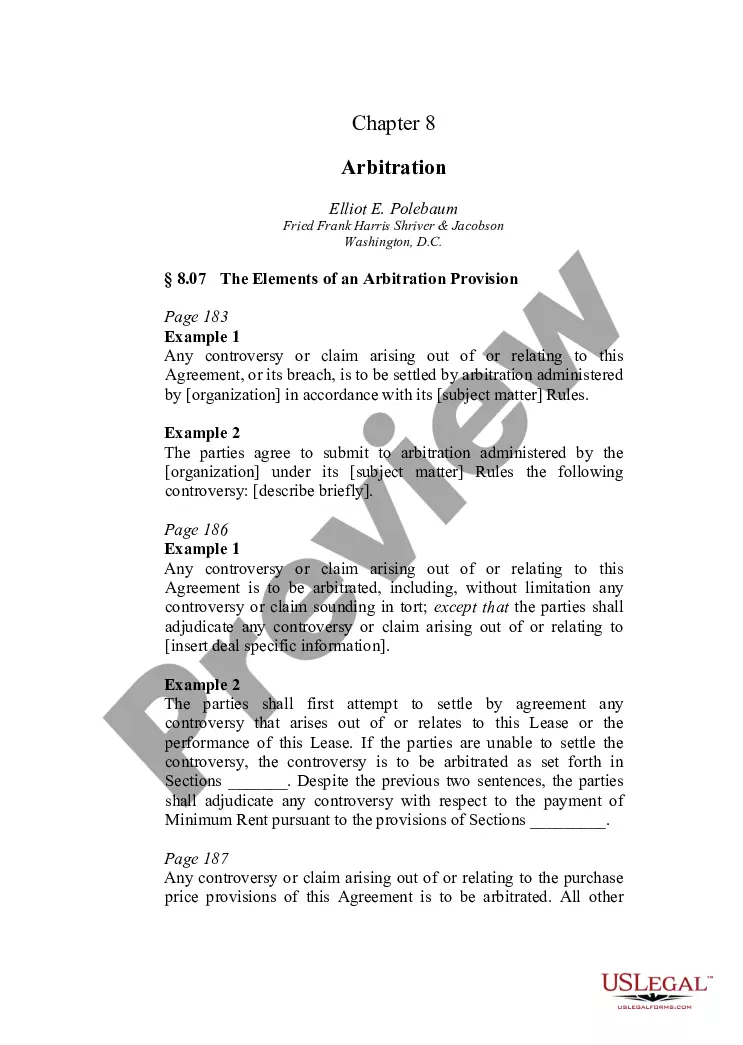
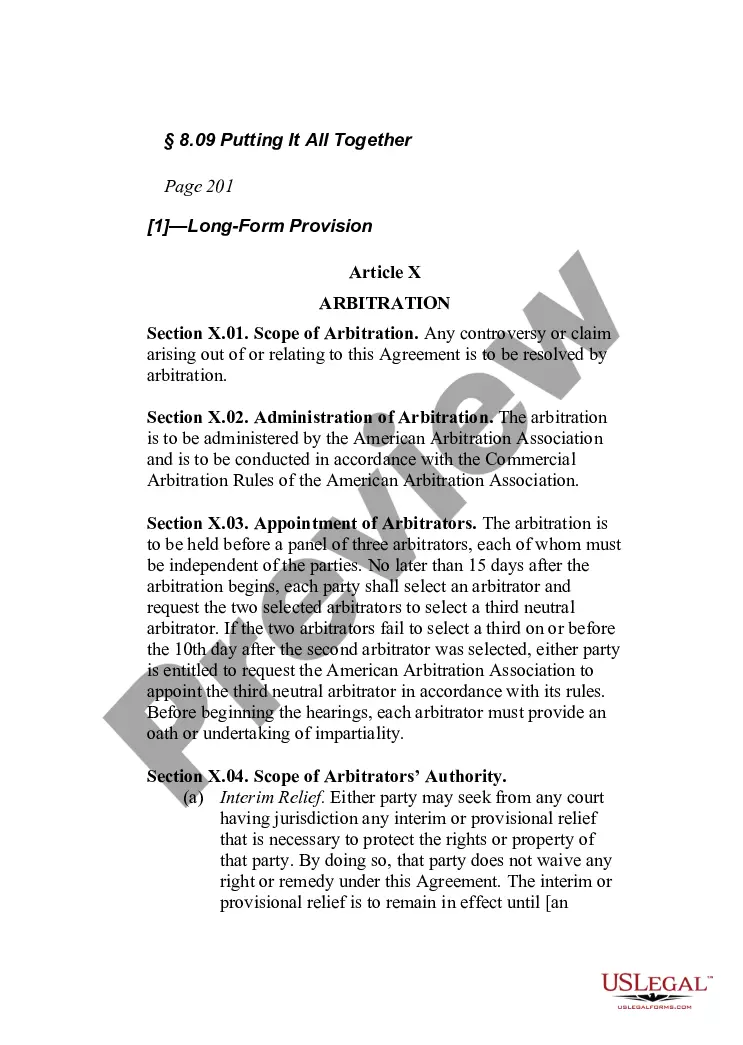
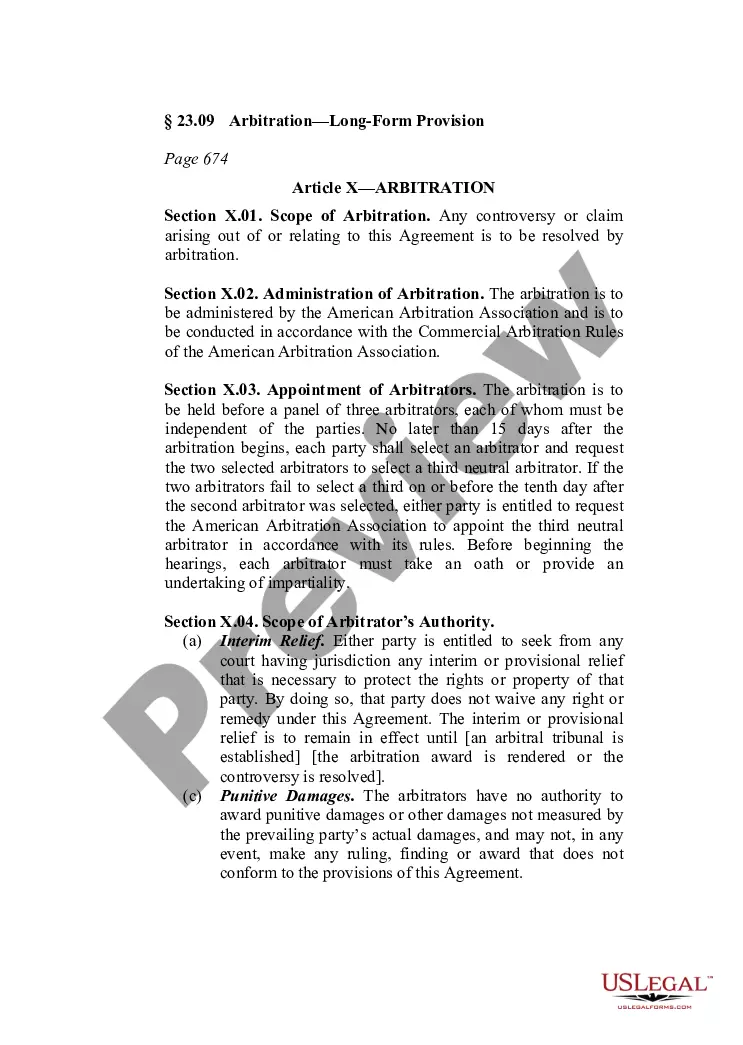
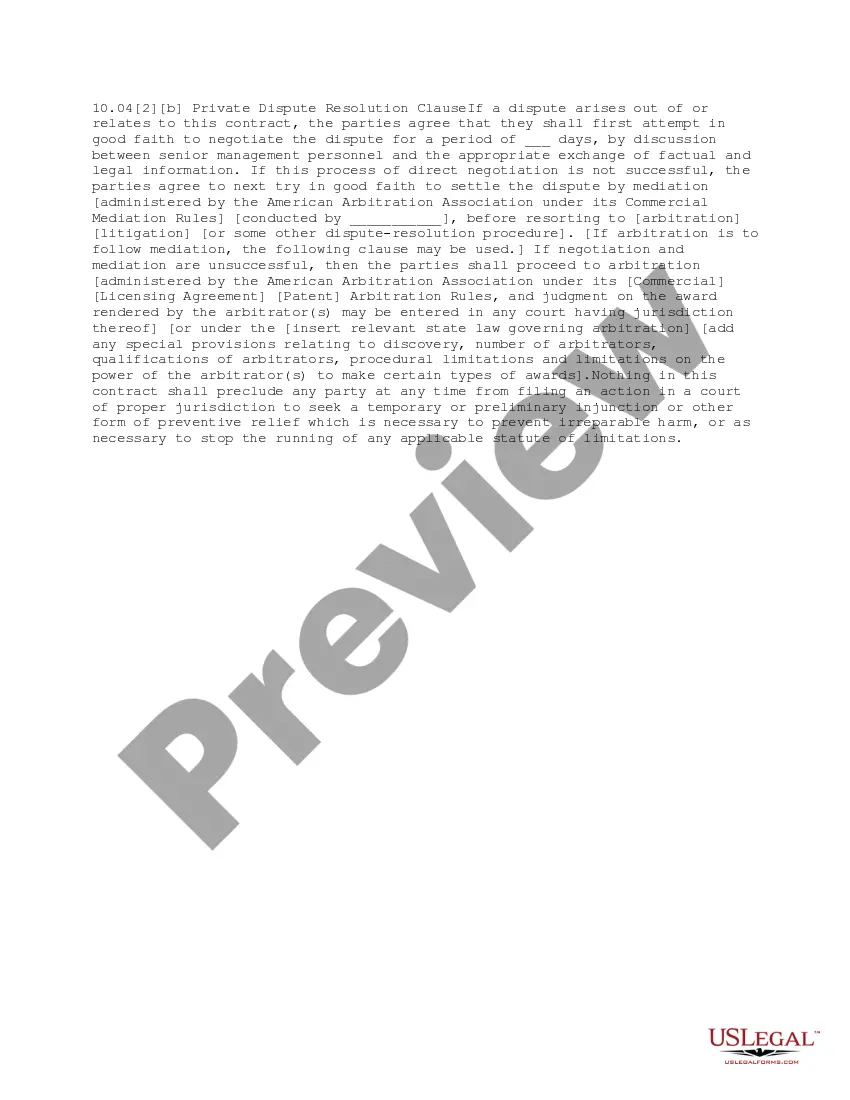
The Nonbinding Dispute Resolution Provisions form includes essential clauses designed to encourage parties to resolve disputes through negotiation or mediation before pursuing binding arbitration or litigation. This form serves as a proactive approach to conflict resolution within contractual agreements, distinguishing it from other forms that may focus solely on arbitration or litigation processes.
Form components explained
- Good faith negotiation requirement between executives with settlement authority.
- Provisions for mediation administration and procedures.
- Steps to take if mediation is unsuccessful.
When this form is needed
This form is useful when parties want to include a structured method for resolving disputes in their contract without immediately resorting to litigation or arbitration. It's especially beneficial when collaborating parties foresee the potential for disagreements and wish to establish a clear framework for preliminary dispute resolution efforts.
Intended users of this form
- Businesses entering into contractual agreements where disputes may arise.
- Individuals engaged in negotiations requiring formal dispute resolution processes.
- Legal professionals drafting contracts on behalf of clients seeking nonbinding resolutions.
Instructions for completing this form
- Identify the parties involved in the contract.
- Specify the executives who are responsible for discussions during the negotiation phase.
- Enter the name of the mediation administration body or service.
- Detail the steps to follow if mediation does not resolve the dispute.
Notarization guidance
This form usually doesn’t need to be notarized. However, local laws or specific transactions may require it. Our online notarization service, powered by Notarize, lets you complete it remotely through a secure video session, available 24/7.
Get your form ready online
Our built-in tools help you complete, sign, share, and store your documents in one place.
Make edits, fill in missing information, and update formatting in US Legal Forms—just like you would in MS Word.
Download a copy, print it, send it by email, or mail it via USPS—whatever works best for your next step.
Sign and collect signatures with our SignNow integration. Send to multiple recipients, set reminders, and more. Go Premium to unlock E-Sign.
If this form requires notarization, complete it online through a secure video call—no need to meet a notary in person or wait for an appointment.
We protect your documents and personal data by following strict security and privacy standards.

Make edits, fill in missing information, and update formatting in US Legal Forms—just like you would in MS Word.

Download a copy, print it, send it by email, or mail it via USPS—whatever works best for your next step.

Sign and collect signatures with our SignNow integration. Send to multiple recipients, set reminders, and more. Go Premium to unlock E-Sign.

If this form requires notarization, complete it online through a secure video call—no need to meet a notary in person or wait for an appointment.

We protect your documents and personal data by following strict security and privacy standards.
Typical mistakes to avoid
- Failing to designate executives with proper authority for negotiations.
- Omitting the name of the mediation service or provider.
- Not clearly outlining the process to follow if mediation fails.
Why complete this form online
- Easy to download and complete from any device.
- Editable templates allow for customization to fit specific needs.
- Access to attorney-drafted content ensures legal compliance and reliability.
Looking for another form?






Form popularity
FAQ
In non-binding ADR, the parties have agreed that the third party neutral may offer an opinion, but neither party is bound by that neutral's opinion. In other words, in non-binding ADR, if the parties cannot reach an agreement, they do not authorize the neutral to decide the outcome of the dispute.
The arbitration process may be either binding or non-binding. When arbitration is binding, the decision is final, can be enforced by a court, and can only be appealed on very narrow grounds. When arbitration is non-binding, the arbitrator's award is advisory and can be final only if accepted by the parties.
You Must Have the Intention to Agree to Arbitration. An Employer Cannot Force You Into An Agreement to Arbitrate By Fraud or Duress. Unconscionable Arbitration Agreements Will Not Be Enforced. Failure to Provide a Valid Jury Waiver.
Thus, in order for the Arbitration Clause to be enforceable, it must be clear that the parties mutually agreed to Arbitration as an alternate forum, that the parties are affirmatively waiving any right to proceed in State Court, and finally, that the parties are waiving a right to a Trial by jury.
The arbitrator's final decision on the case is called the award. This is like a judge's or jury's decision in a court case. Once the arbitrator decides that all of the parties' evidence and arguments have been presented, the arbitrator will close the hearings. This means no more evidence or arguments will be allowed.
The most common forms of ADR are arbitration, mediation, the rent-a-judge program, summary jury trial, and minitrial, although techniques can be combined to form hybrids suited to a particular dispute or legal jurisdiction.
Binding Versus Nonbinding Arbitration It may not be reviewed or overturned by a court except in very limited circumstances, such as when fraud or misuse of power has been involved. In nonbinding arbitration, either party may reject the arbitration award and demand a trial instead.
Arbitration, a form of alternative dispute resolution (ADR), is a way to resolve disputes outside the judiciary courts.An arbitration decision or award is legally binding on both sides and enforceable in the courts, unless all parties stipulate that the arbitration process and decision are non-binding.
Non-binding arbitration is used in connection with attempts to reach a negotiated settlement.Subsequent to a non-binding arbitration, the parties remain free to pursue their claims either through the courts, or by way of a binding arbitration, although in practice a settlement is the most common outcome.