Motion for Protective Order against Trial Deposition
Overview of this form
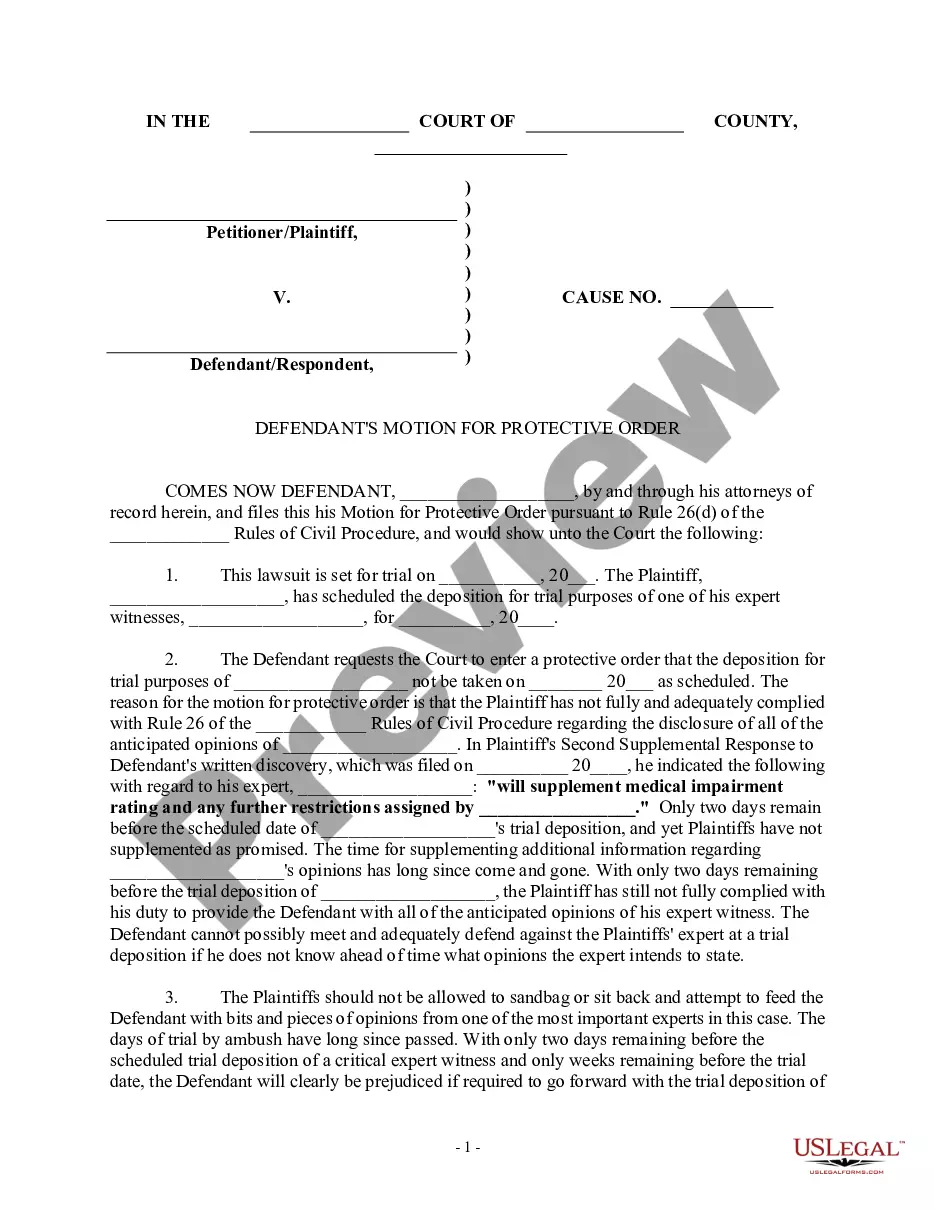
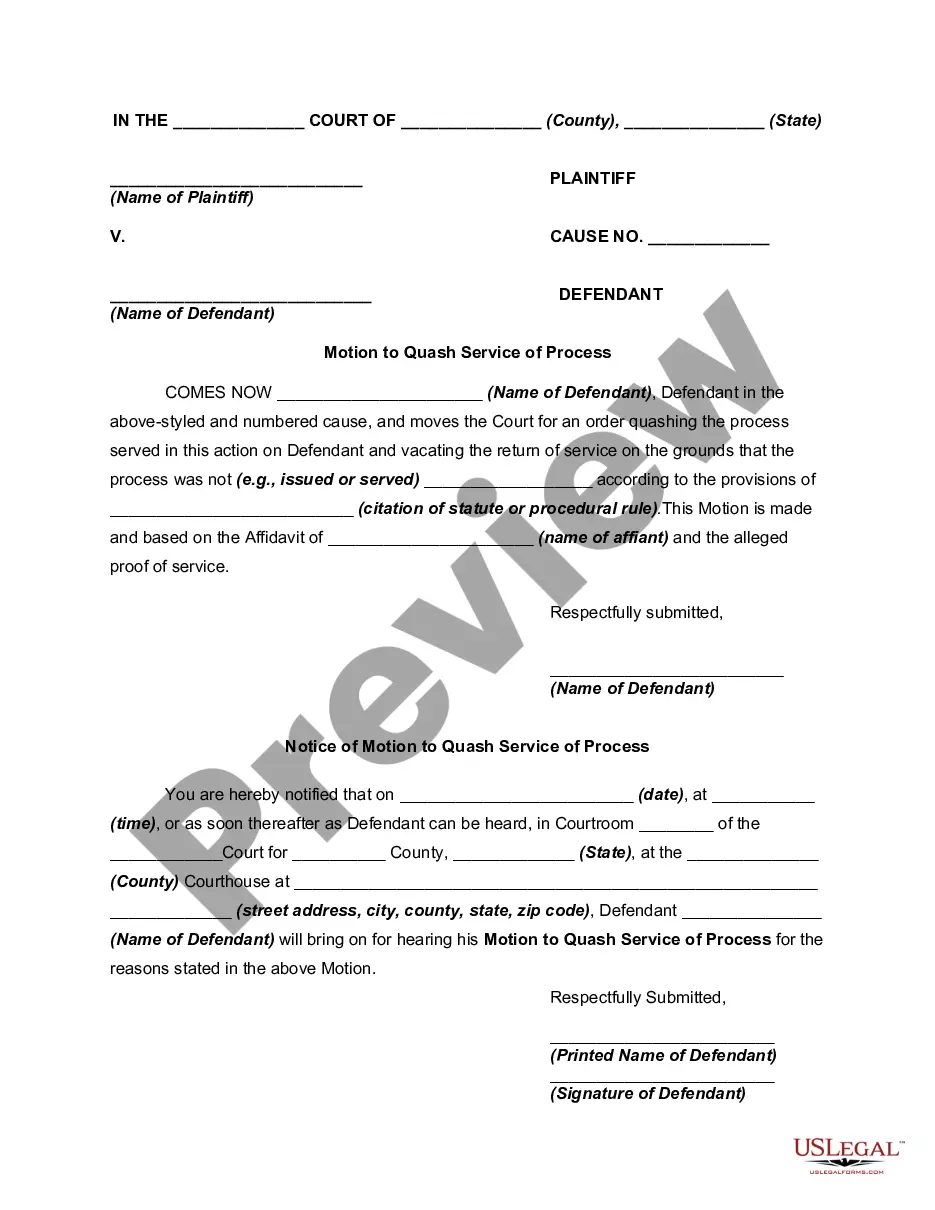
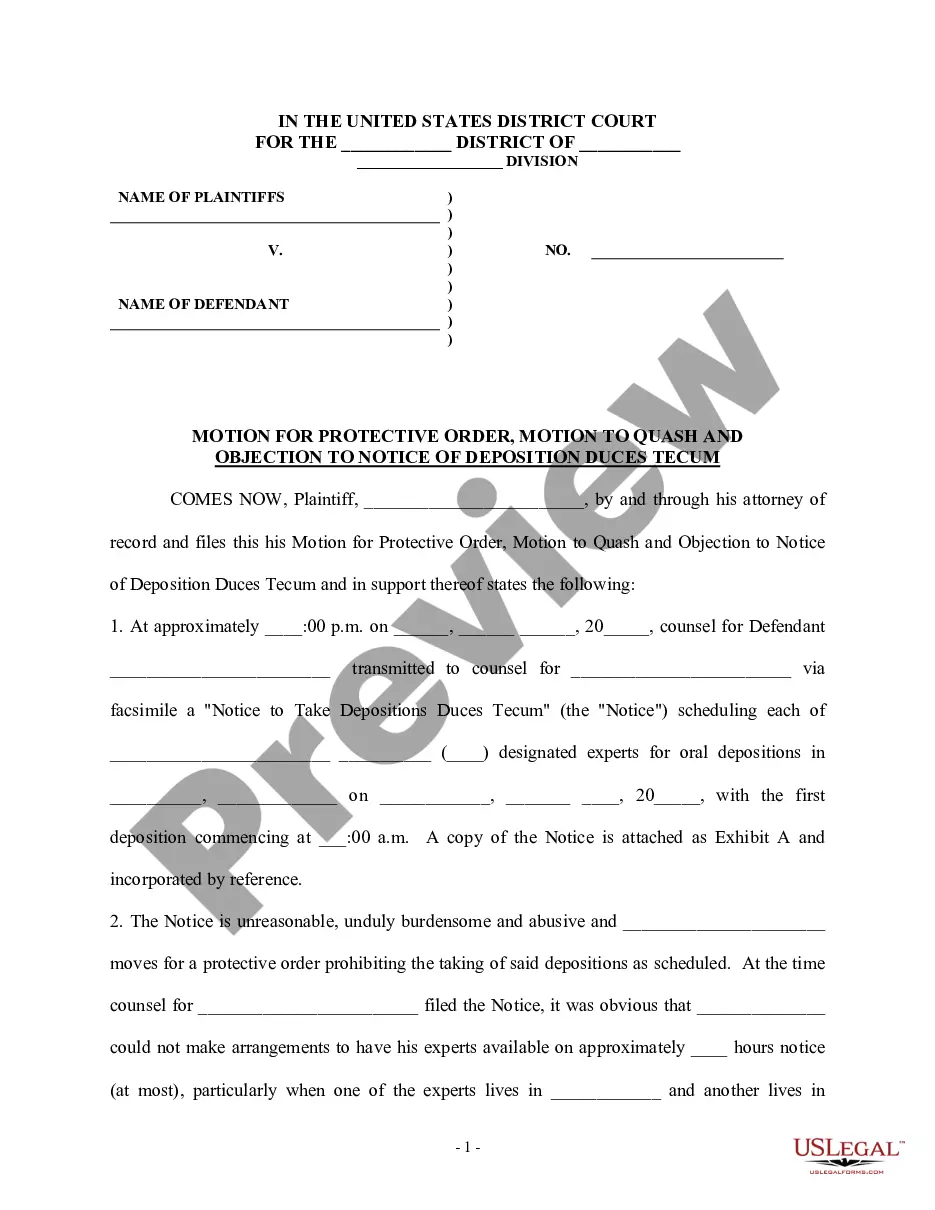
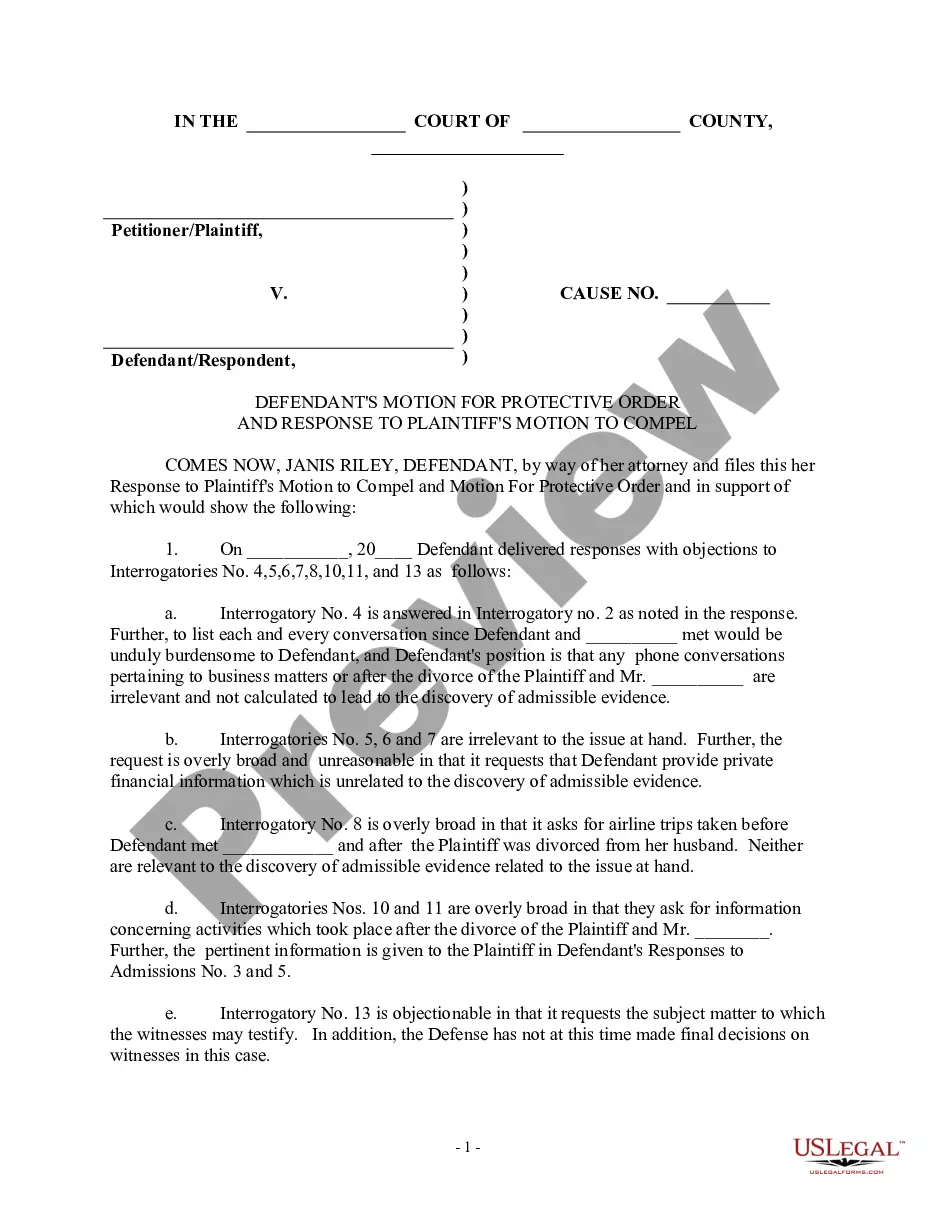
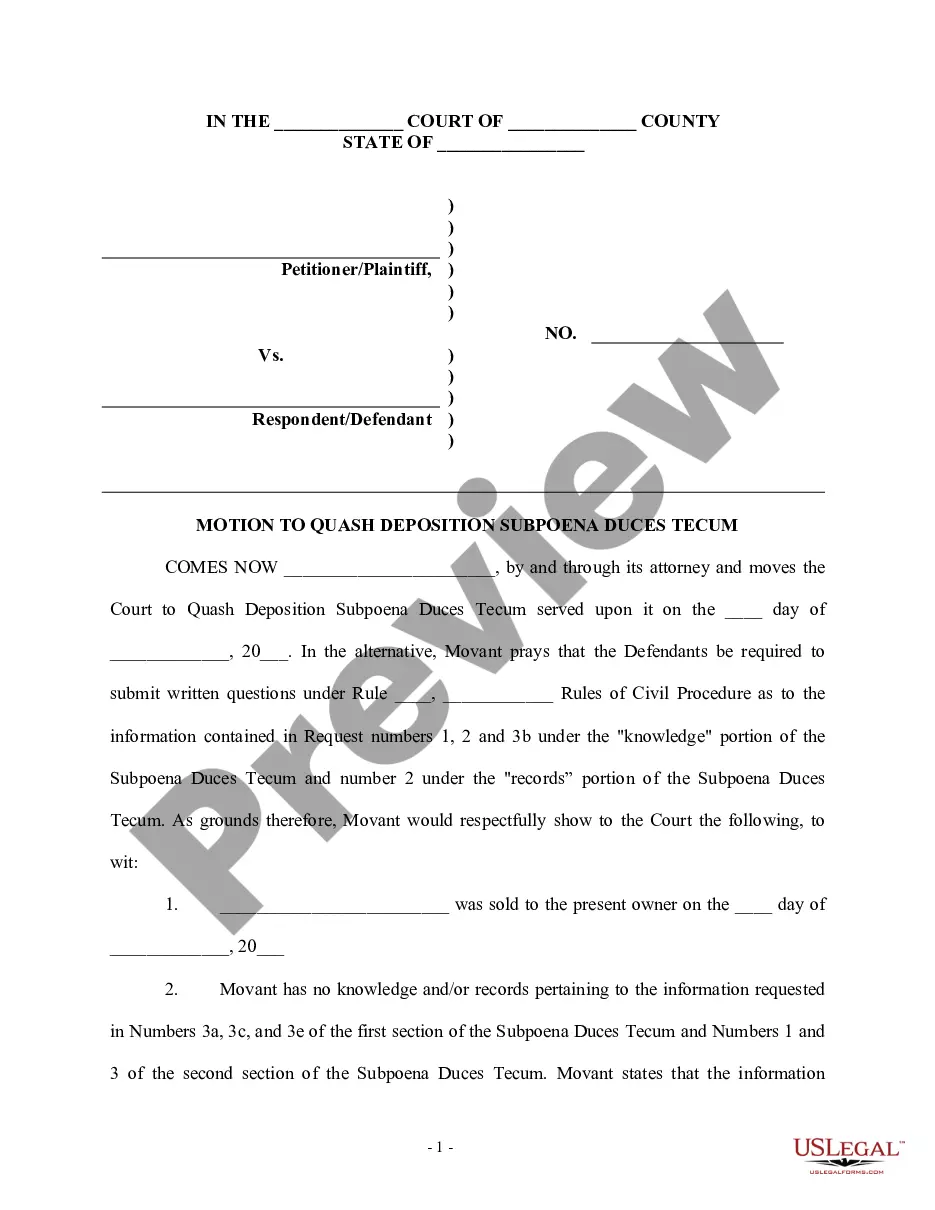
The Motion for Protective Order against Trial Deposition is a legal document used in civil litigation to request the court to prevent a deposition from taking place. This form is specifically helpful for defendants who believe that taking the deposition would not comply with established procedural rules, ensuring their rights are protected. It is different from standard deposition notices as it actively seeks to halt the process due to concerns about compliance with discovery rules.
Main sections of this form
- Identification of the parties involved, including the petitioner and respondent.
- The specific date and details of the scheduled deposition.
- Legal grounds for requesting the protective order, referencing applicable rules.
- A statement of how proceeding with the deposition could cause prejudice to the defendant.
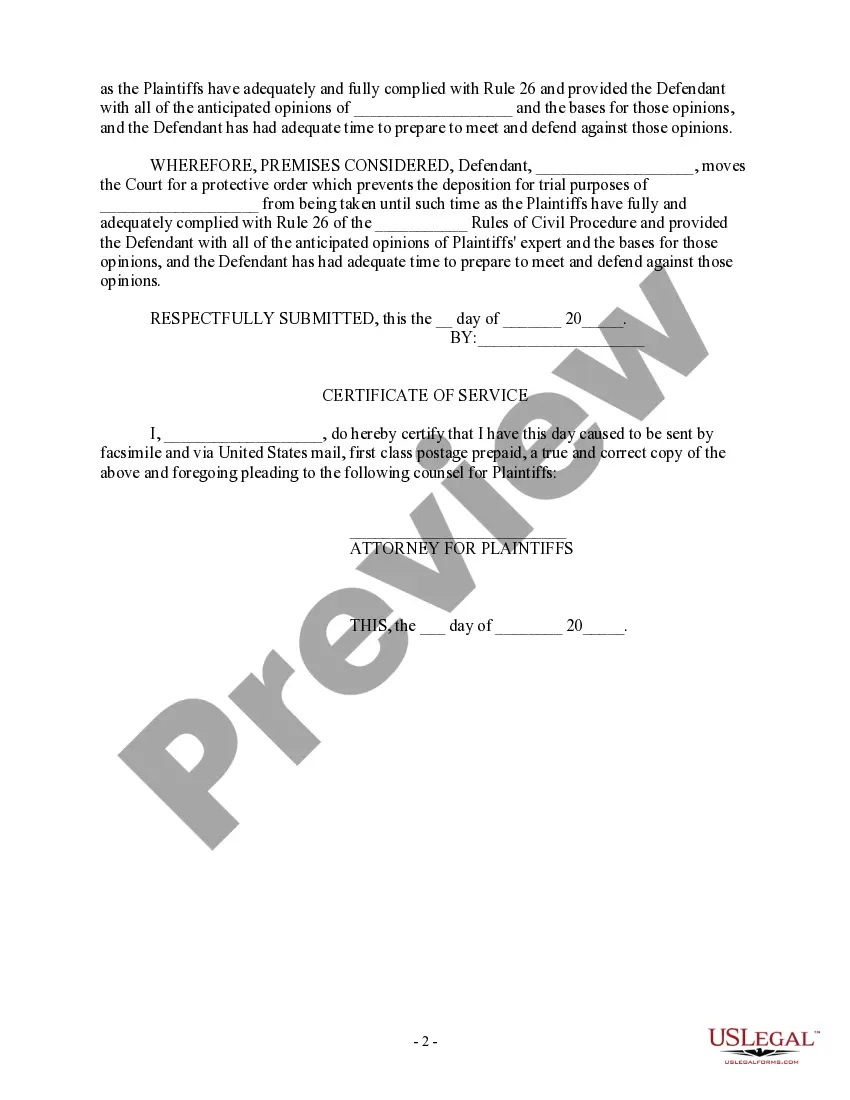
- A request section for the court to grant the protective order.
- Certification of service to document that all relevant parties were notified.
Common use cases
This form is necessary when a defendant is facing a scheduled deposition and has compelling reasons to believe that the deposition is unjustified or not compliant with discovery rules. For instance, if the plaintiff has not fully disclosed expert witness opinions, leading to potential unfairness in the proceedings, this motion can be filed to protect the defendant's interests.
Intended users of this form
- Defendants in civil litigation who are subject to depositions.
- Legal representatives or attorneys acting on behalf of a defendant.
- Individuals involved in cases where expert witnesses have been named but not adequately disclosed by the opposing party.
Steps to complete this form
- Identify and enter the names of the petitioner and respondent in the appropriate fields.
- Specify the date of the scheduled deposition clearly in the form.
- State the specific rule or rules being violated by the opposing party regarding expert witness disclosure.
- Provide detailed reasons for requesting the protective order, outlining any potential unfairness or prejudice.
- Fill out the certification of service section to confirm that all parties were notified of the motion.
Does this document require notarization?
This form does not typically require notarization unless specified by local law. Note that while many court submissions do not need to be notarized, verifying local requirements is always recommended.
Get your form ready online
Our built-in tools help you complete, sign, share, and store your documents in one place.
Make edits, fill in missing information, and update formatting in US Legal Forms—just like you would in MS Word.
Download a copy, print it, send it by email, or mail it via USPS—whatever works best for your next step.
Sign and collect signatures with our SignNow integration. Send to multiple recipients, set reminders, and more. Go Premium to unlock E-Sign.
If this form requires notarization, complete it online through a secure video call—no need to meet a notary in person or wait for an appointment.
We protect your documents and personal data by following strict security and privacy standards.

Make edits, fill in missing information, and update formatting in US Legal Forms—just like you would in MS Word.

Download a copy, print it, send it by email, or mail it via USPS—whatever works best for your next step.

Sign and collect signatures with our SignNow integration. Send to multiple recipients, set reminders, and more. Go Premium to unlock E-Sign.

If this form requires notarization, complete it online through a secure video call—no need to meet a notary in person or wait for an appointment.

We protect your documents and personal data by following strict security and privacy standards.
Common mistakes
- Failing to cite the specific rules or laws being violated.
- Not providing sufficient detail about why the deposition should be stopped.
- Missing the deadline to file the motion before the scheduled deposition.
Advantages of online completion
- Convenient downloading of the form allows you to fill it out at your own pace.
- Integrated guidelines ensure that the most up-to-date legal language is used.
- Easy editing capabilities help tailor the form to your specific case needs.
Legal use & context
- This form helps uphold the integrity of the legal process by preventing surprise tactics during depositions.
- Utilizing this form can protect a partyâs right to prepare adequately for upcoming trials.
- Compliance with the rules outlined in the motion is crucial for enforceability in the court.
Looking for another form?
Form popularity
FAQ
The Motion for Protective Order Against Trial Deposition is a civil-litigation document defendants use to ask the court to halt a deposition scheduled at trial. It helps protect rights when discovery rules may be violated. It requires identifying the parties, the deposition details, the legal grounds, a prejudice statement, a request for relief, and service certification.
A motion for protective order is a court petition to limit or bar discovery to prevent unfair burden or prejudice. In this form, the relief requested targets a trial deposition, asking the court to stop or restrict the deposition based on concerns about discovery rules and fairness.
This form guides a defendant to present the specific deposition and date, articulate grounds under applicable rules, state how proceeding could prejudice the defense, and request relief from the court. It also requires service certification to show all parties were notified before any hearing.
File this motion when a deposition is scheduled and the defendant believes it would violate discovery rules or cause prejudice. The form asks for the parties, the deposition details, the legal grounds, and a clear request for protective relief, along with a certification of service.
The form’s main sections include identifying the parties; the deposition date and details; the legal grounds for protective relief; a statement of potential prejudice; the relief requested; and a certification of service.
This form targets a specific scenario: halting or limiting a deposition that is scheduled to occur at trial. It ties relief to discovery-rule concerns and potential prejudice to the defendant, and it includes structured sections for party identification, deposition details, grounds, relief, and service.