Sewer Ordinance
Overview of this form
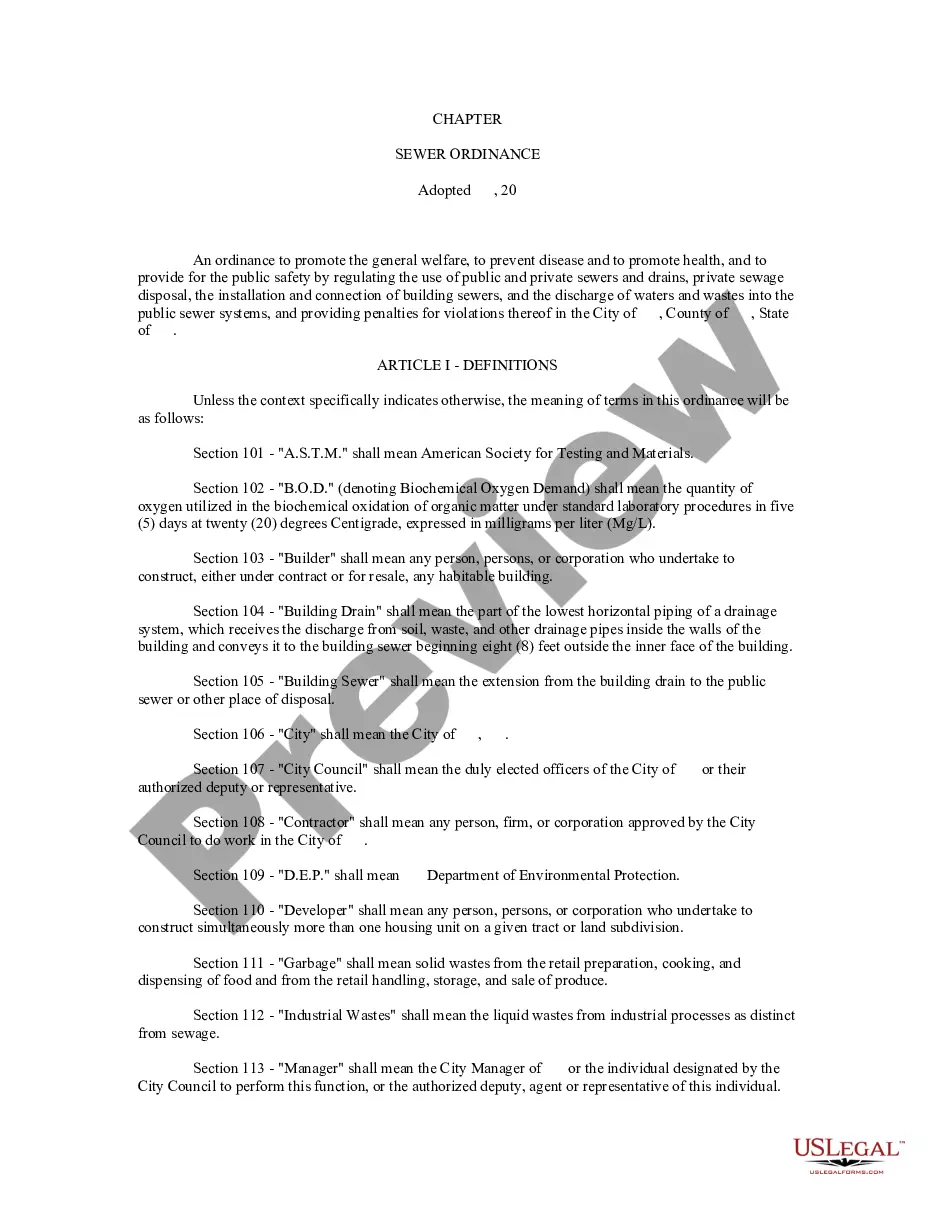
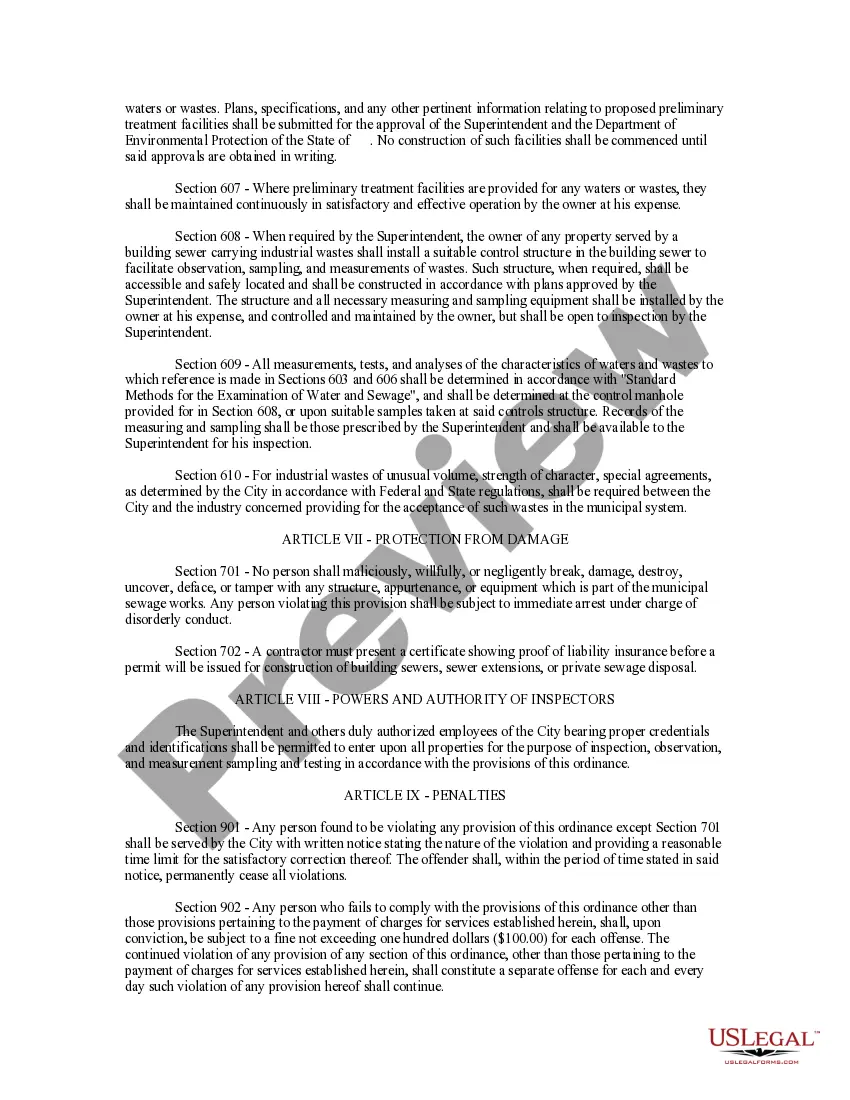
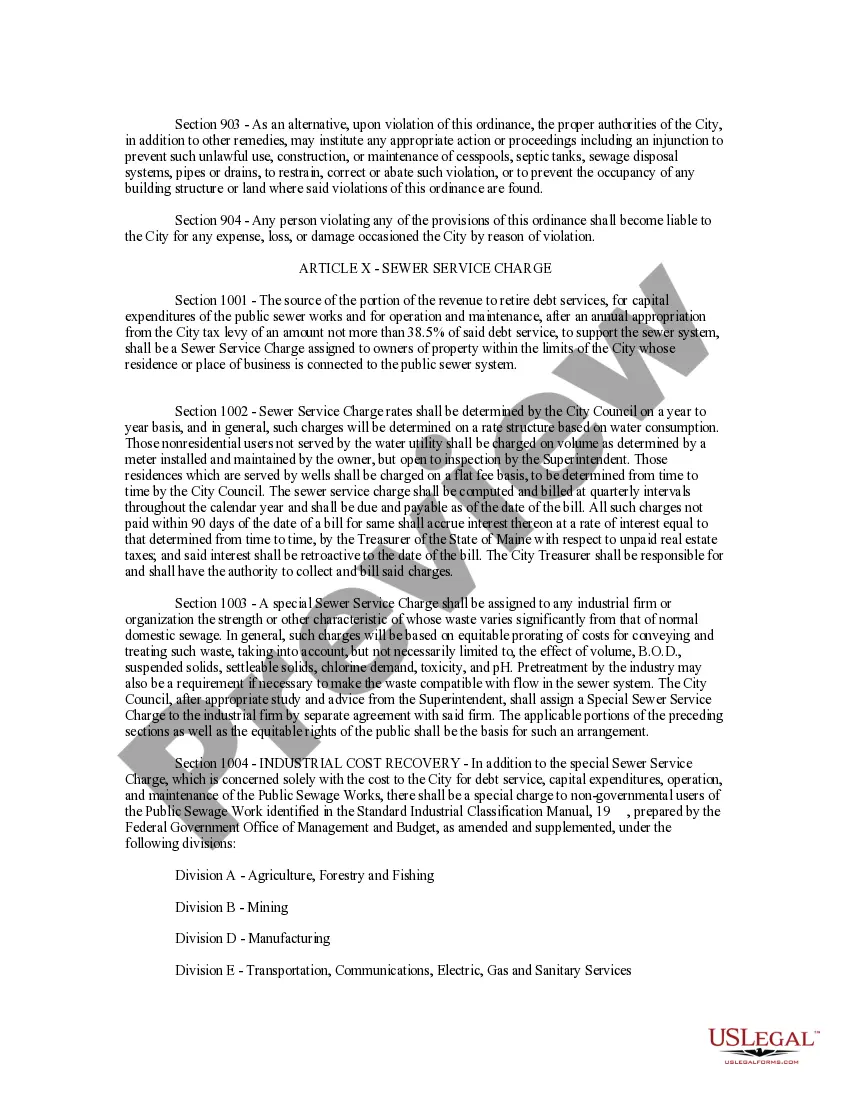
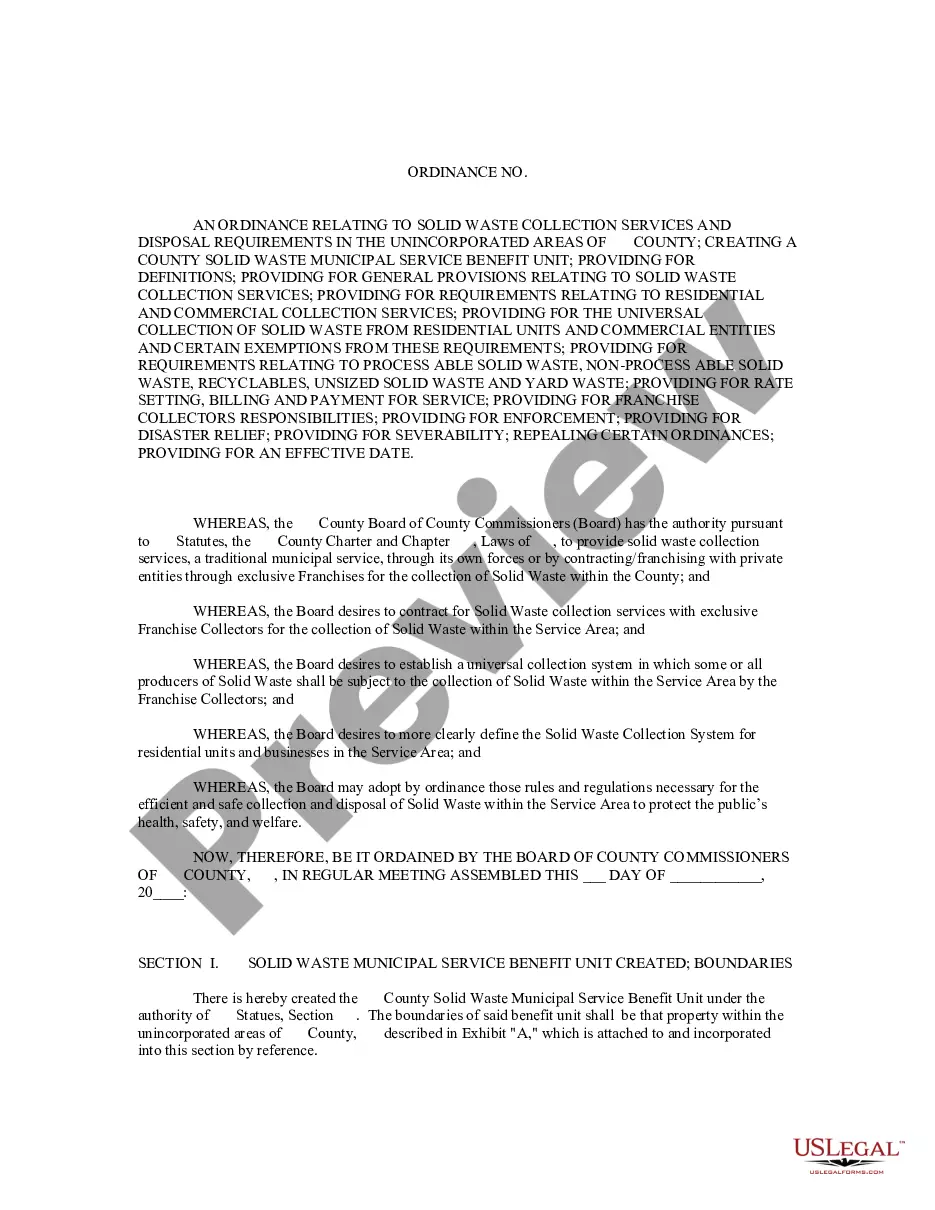
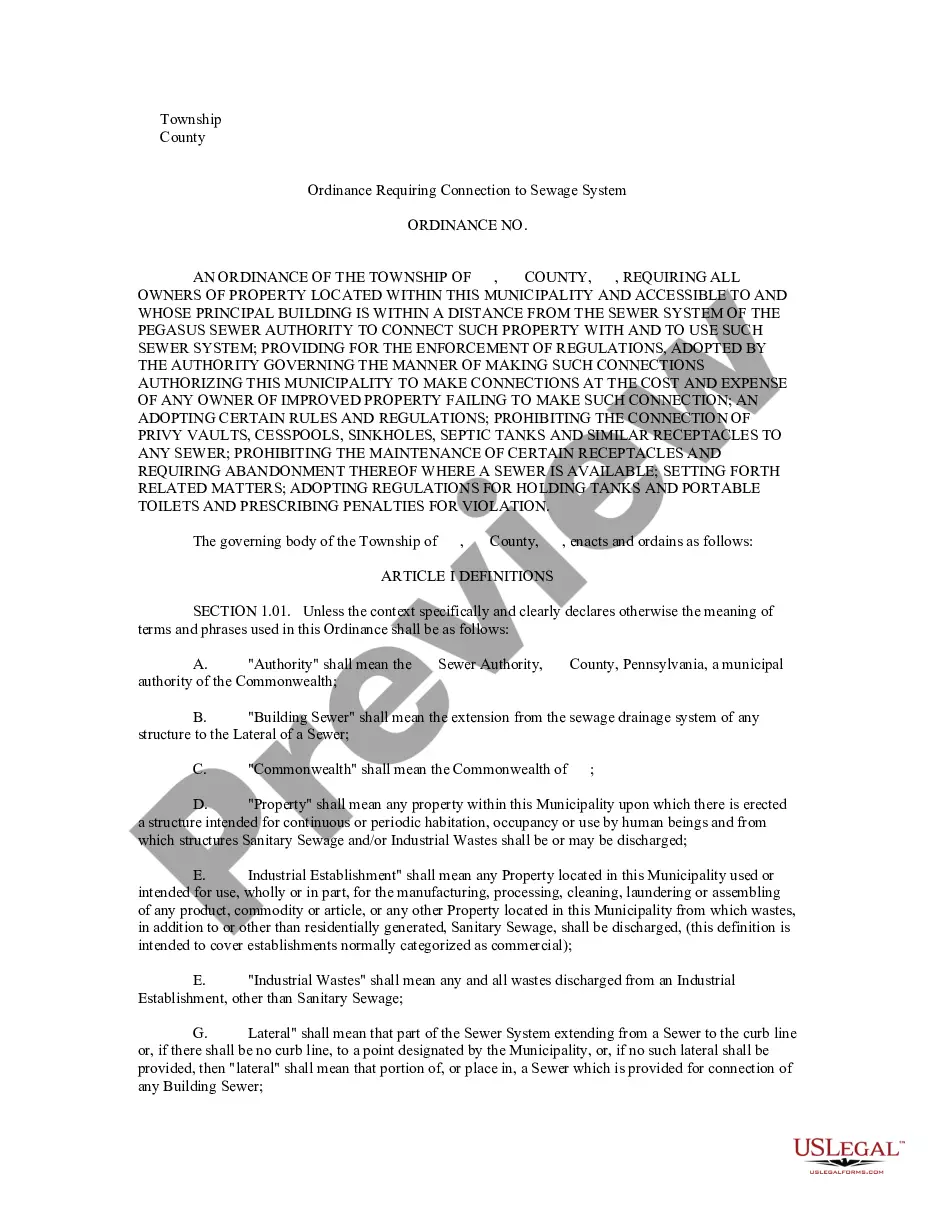
The Sewer Ordinance is a legal document that outlines the regulations governing the use of public and private sewer systems. This form is essential for municipalities to maintain public health and safety by controlling the disposal of wastewater and sewage. Unlike other municipal forms, the Sewer Ordinance focuses specifically on sewer management, plumbing connections, and penalties for non-compliance.
Key parts of this document
- Definitions of key terms related to sewer systems, including 'Public Sewer,' 'Sanitary Sewer,' and 'Industrial Wastes.'
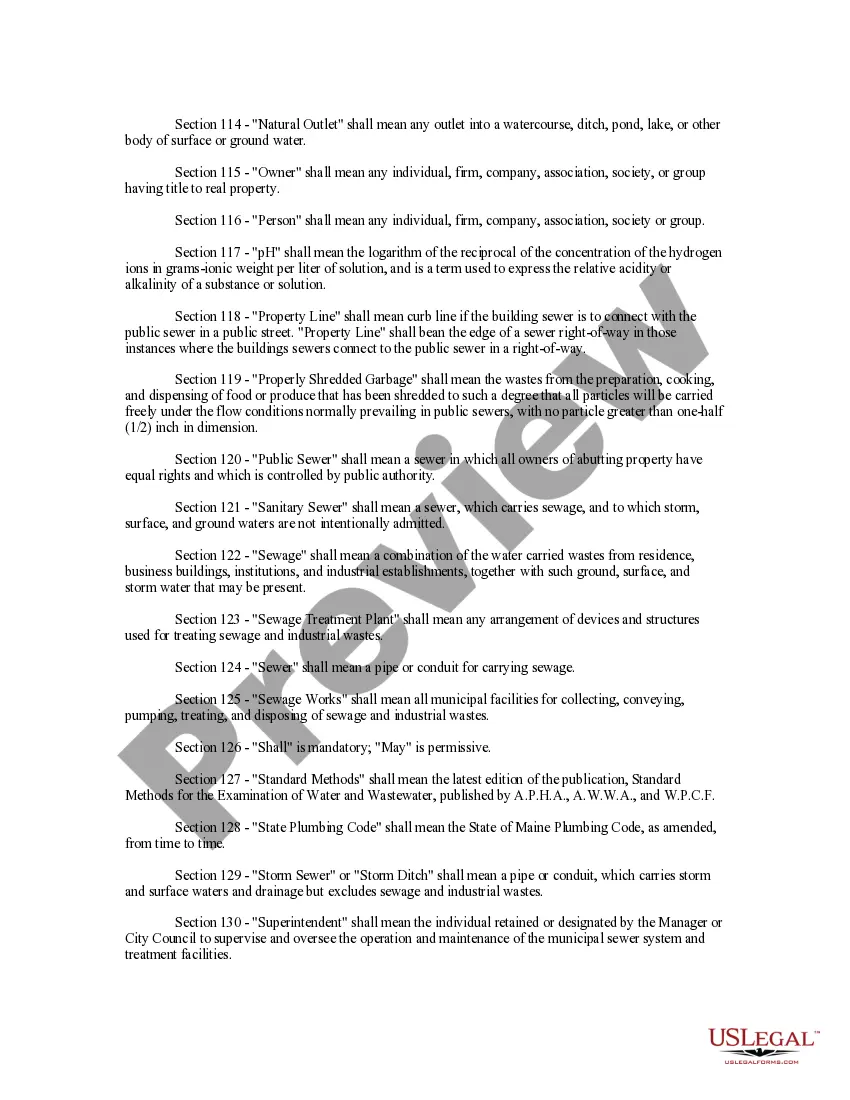
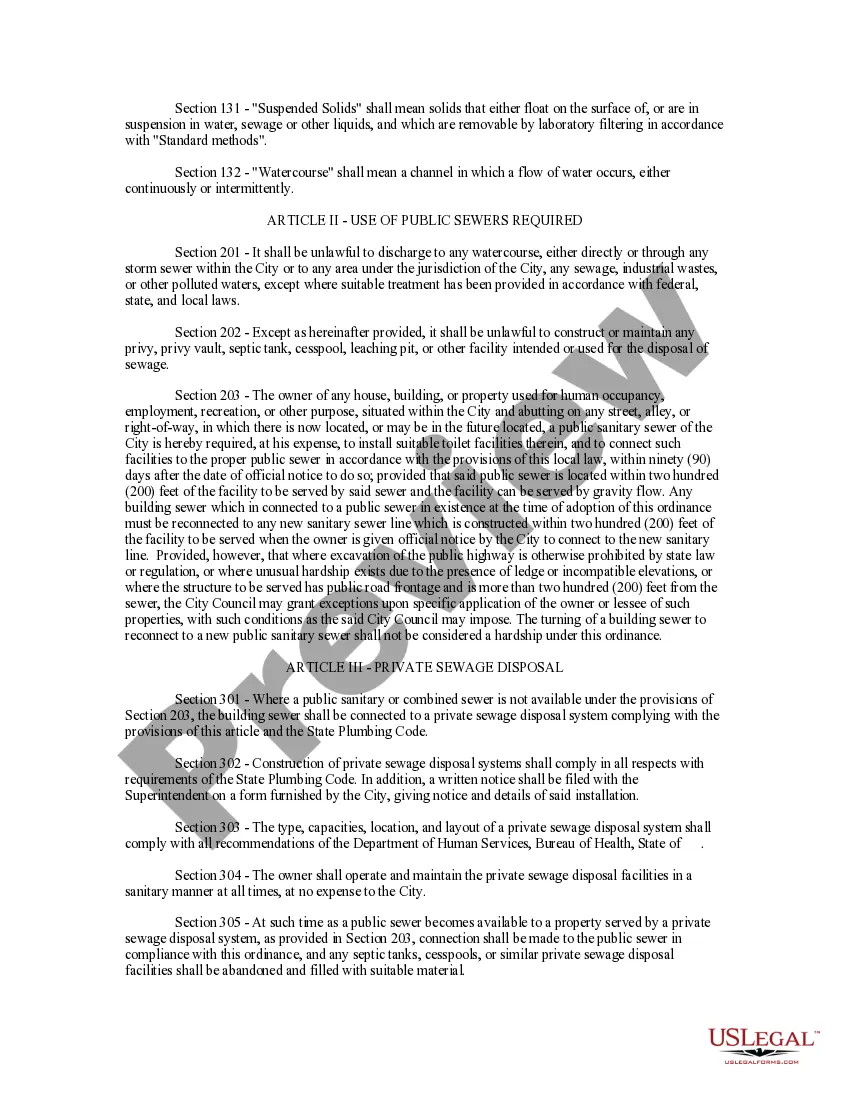
- Regulations regarding the mandatory use of public sewers and the prohibition of private sewage disposal methods.
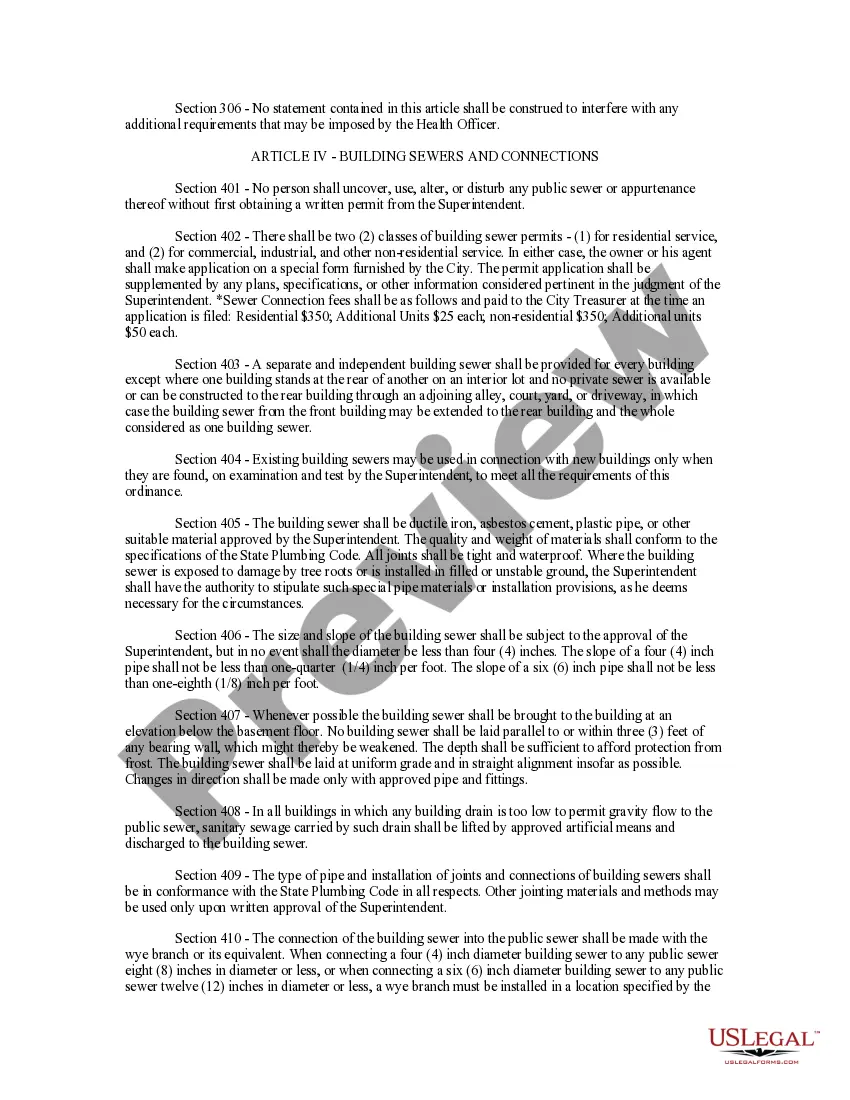
- Requirements for the construction, maintenance, and connection of building sewers.
- Details on the responsibilities and penalties for violations related to the sewer system.
- Guidelines for sewer extensions and special assessments for properties connecting to the sewer system.

When this form is needed
This form should be used by municipalities when creating or updating local laws regarding sewer systems. It is essential during the establishment of new housing developments, public health initiatives, or infrastructure projects where sewer management is critical. Additionally, it serves as a reference for property owners who need to understand their responsibilities regarding sewer connections.
Intended users of this form
This ordinance is intended for:
- City councils and municipal authorities responsible for local government regulations.
- Contractors and developers involved in residential or commercial construction projects.
- Property owners connecting to or maintaining sewer systems within city limits.
- Environmental agencies monitoring compliance with sewer management laws.
How to prepare this document
To properly complete the Sewer Ordinance, follow these steps:
- Enter the date the ordinance is adopted and the relevant city and county names.
- Review and define all key terms in the ordinance to ensure understanding and compliance.
- Specify the regulations pertaining to public sewer connections and any exceptions provided for property owners.
- Establish penalties for violations of the ordinance to enforce compliance.
- Include provisions for sewer extensions and required agreements for new developments.
Does this document require notarization?
This form does not typically require notarization unless specified by local law.
Get your form ready online
Our built-in tools help you complete, sign, share, and store your documents in one place.
Make edits, fill in missing information, and update formatting in US Legal Forms—just like you would in MS Word.
Download a copy, print it, send it by email, or mail it via USPS—whatever works best for your next step.
Sign and collect signatures with our SignNow integration. Send to multiple recipients, set reminders, and more. Go Premium to unlock E-Sign.
If this form requires notarization, complete it online through a secure video call—no need to meet a notary in person or wait for an appointment.
We protect your documents and personal data by following strict security and privacy standards.

Make edits, fill in missing information, and update formatting in US Legal Forms—just like you would in MS Word.

Download a copy, print it, send it by email, or mail it via USPS—whatever works best for your next step.

Sign and collect signatures with our SignNow integration. Send to multiple recipients, set reminders, and more. Go Premium to unlock E-Sign.

If this form requires notarization, complete it online through a secure video call—no need to meet a notary in person or wait for an appointment.

We protect your documents and personal data by following strict security and privacy standards.
Common mistakes to avoid
- Failing to include all necessary definitions, which can lead to misinterpretation of the ordinance.
- Not adhering to local or state plumbing codes when drafting regulatory sections.
- Neglecting to update the ordinance with current state or federal laws regarding sewage disposal.
Why complete this form online
- Convenience of having a legally vetted document ready for municipal use.
- Editable format allows municipalities to customize the ordinance to meet local needs.
- Access to expert legal drafting ensures compliance with local, state, and federal regulations.
- The Sewer Ordinance serves as a legal framework for managing waste disposal responsibly.
- Enforcement of the ordinance helps to safeguard public health and protect local water resources.
- Special provisions allow flexibility in approach based on unique local infrastructure needs.
Looking for another form?




Form popularity
FAQ
Brush PVC cement on the primed end of the pipe, as well as the primed inside of the end cap. Quickly push the end cap fully onto the end of the pipe and hold it in place for five seconds while the cement dries.
It is generally accepted that 1/42033 per foot of pipe run is the minimum for proper pitch on a sewer line.
The general rule is that if you will be building within 3 metres from a sewer or drain that the building works will need to be approved by the water company. If having considered the alternatives the only option is to apply to the water company for a build over agreement then an application should be made.
We know that it is necessary to apply for a build over agreement where development proposals will encroach on this easement, but properties extended prior to October 2011 over or near a private sewer will now be in breach of that statutory easement.
For 4-inch PVC piping and a building sewer less than 50 feet long, the minimum slope is 1 inch in 8 feet, or 1/8-inch per foot, and the maximum is 1/4-inch per foot. For sewers longer than 50 feet, the slope should be 1/4-inch per foot.
Do not drive over the septic tank, septic piping, or septic drainfield. Unless special provisions have been made such as protection of sewer piping and septic tanks from damage, vehicle-rated septic tank covers, or similar steps, do not drive vehicles over septic system piping or septic tanks.
Generally speaking, you're usually responsible for drains inside the boundaries of your property, while the sewerage company is responsible for lateral drains, which are usually outside of property boundaries, and sewers. Although most sewers are now publicly owned, there are still some private or unadopted sewers.
Sewer lines on private property can be as shallow as 18 to 30 inches deep or as much as 5 or 6 feet deep. In areas with cold climates, the pipe will be buried deeper to prevent the pipe from freezing in the winter. Pipe depth is not always a matter of climate.
The general rule is that if you will be building within 3 metres from a sewer or drain that the building works will need to be approved by the water company. If having considered the alternatives the only option is to apply to the water company for a build over agreement then an application should be made.