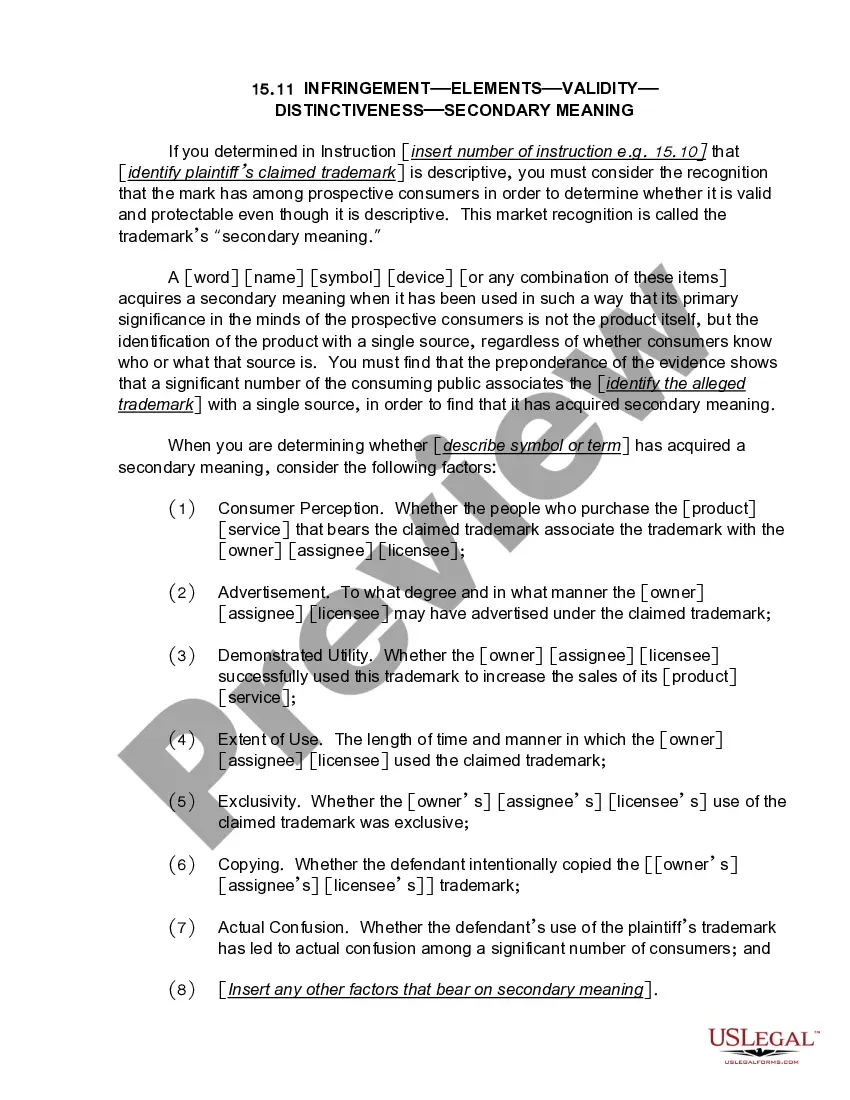
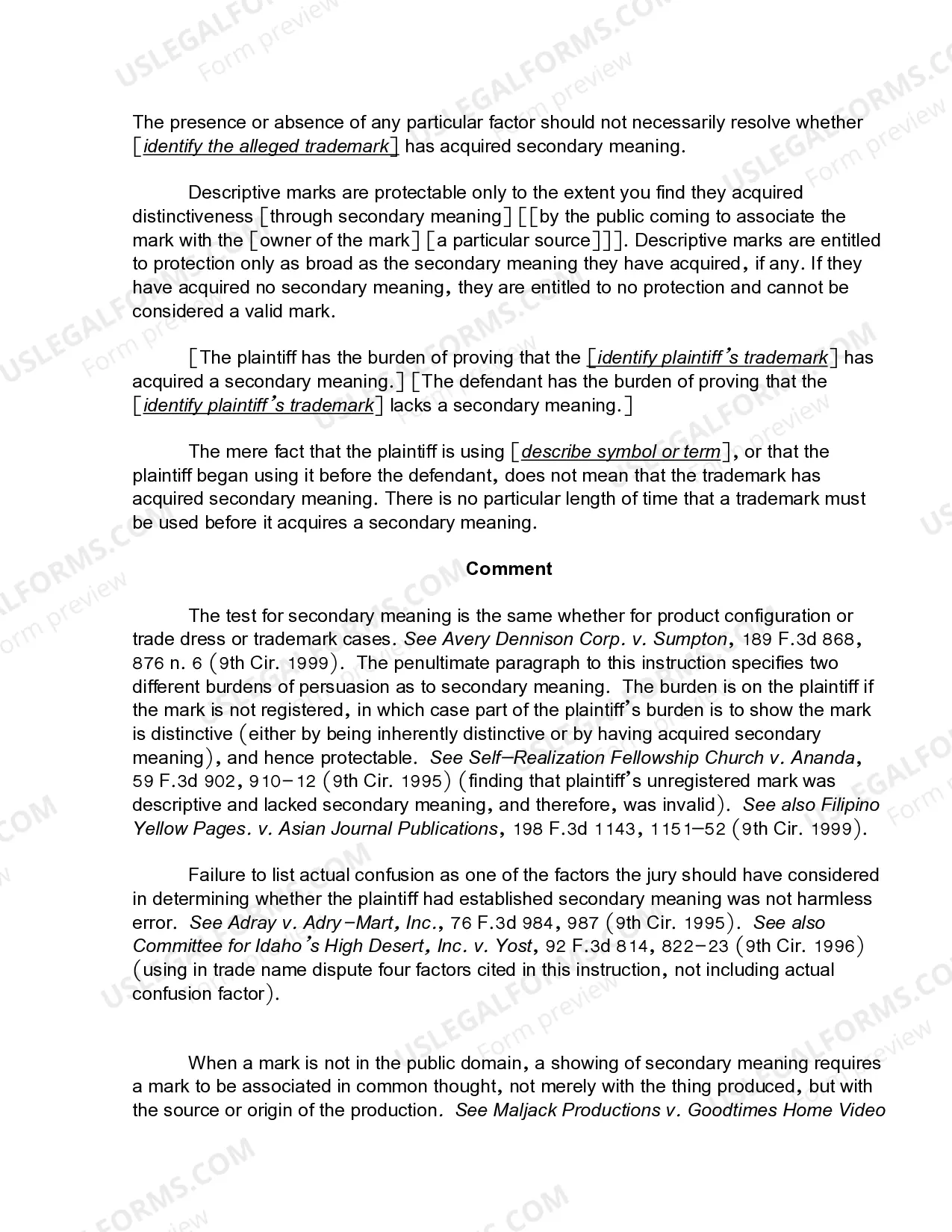
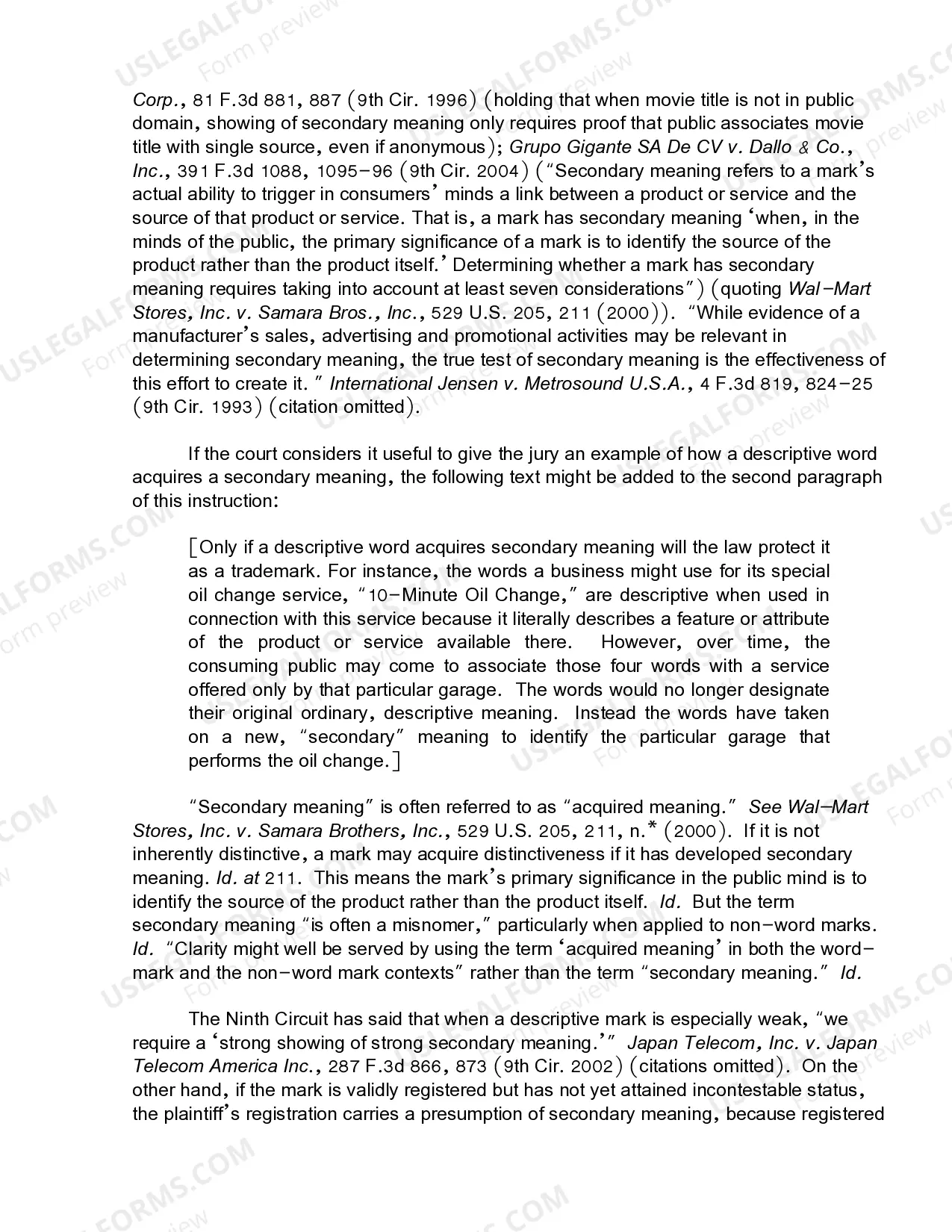
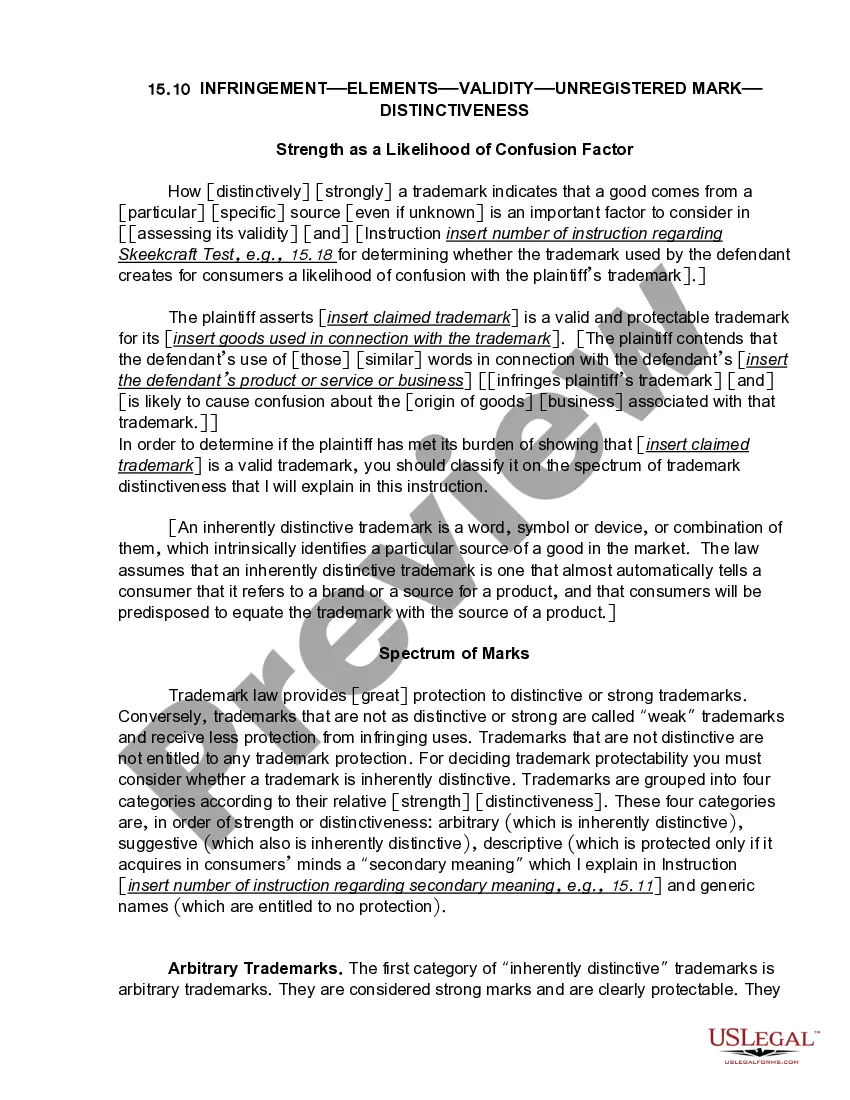
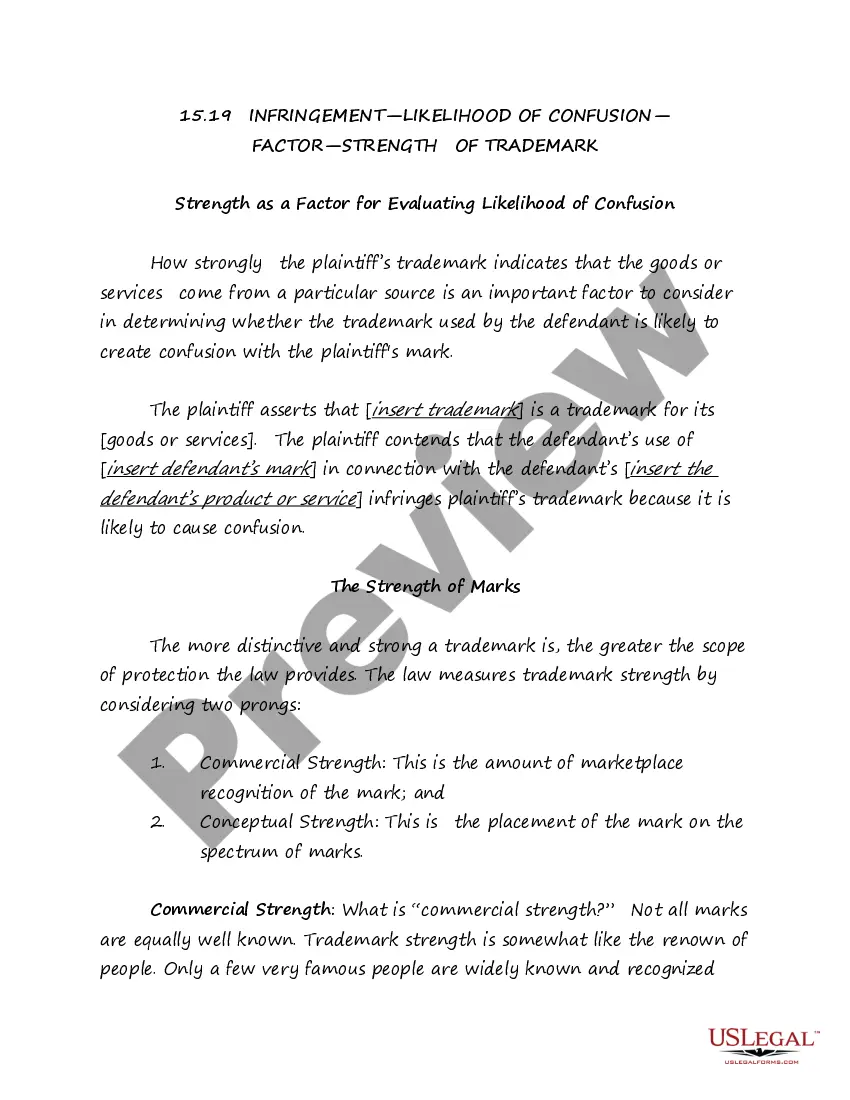
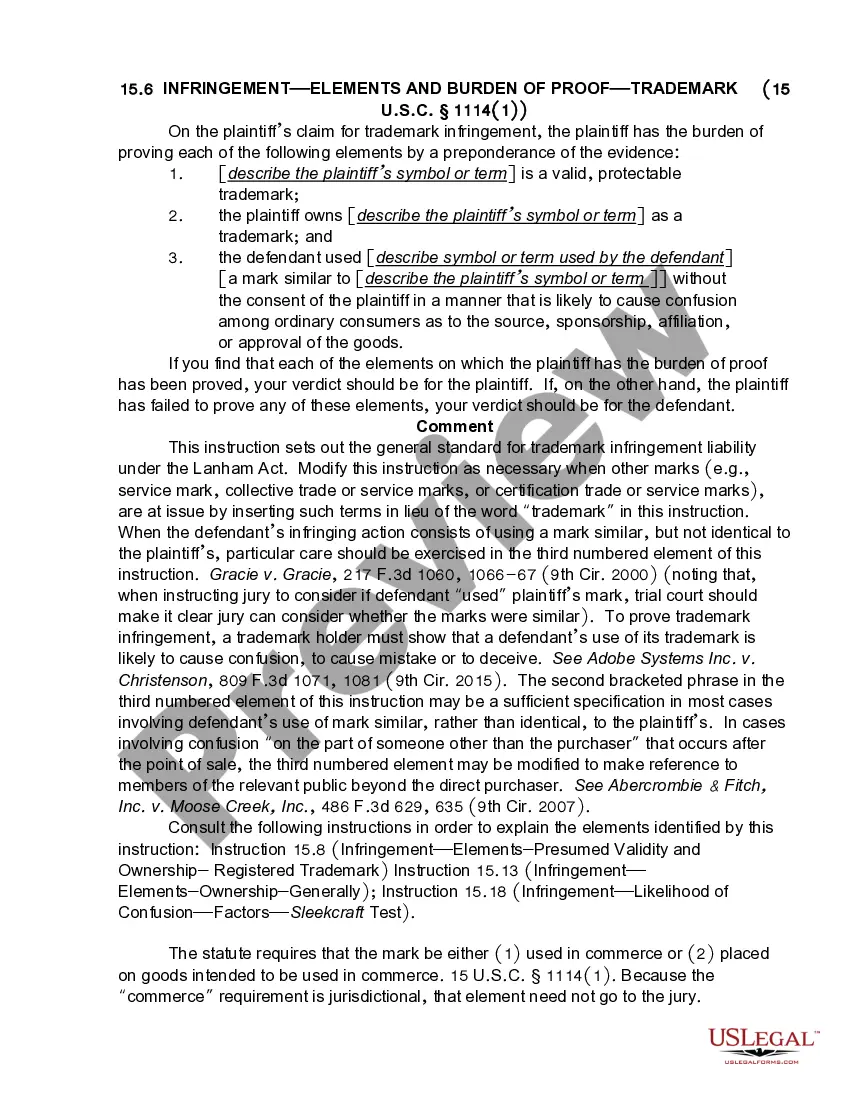
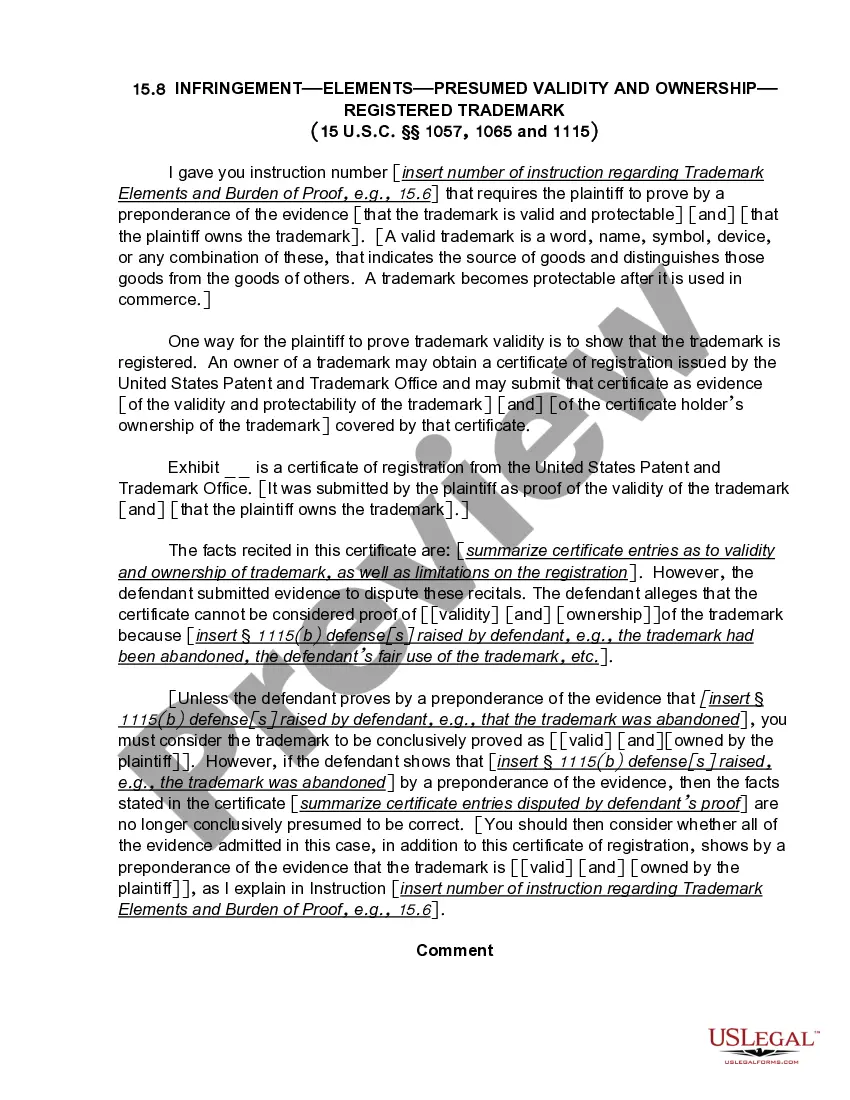
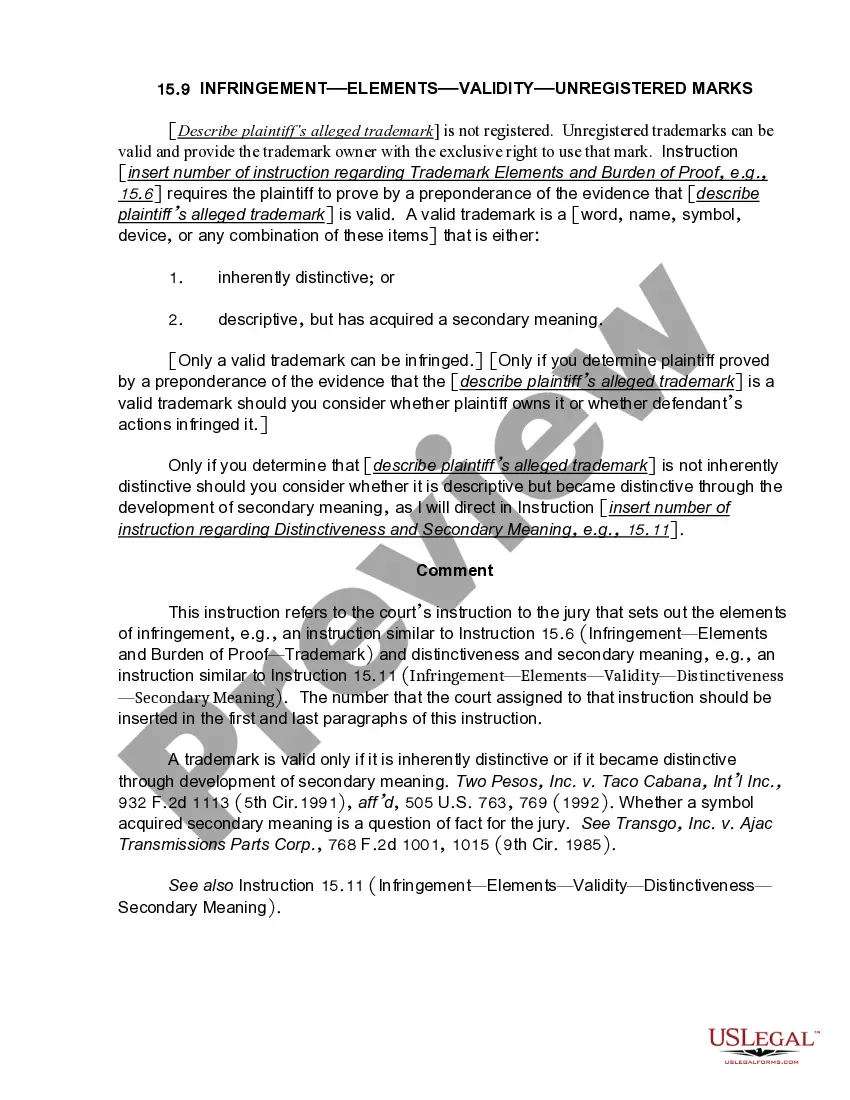
15.11 Infringement-Elements-Validity-Distinctiveness-Secondary Meaning

Does this document require notarization?
In most cases, this form does not require notarization. However, some jurisdictions or signing circumstances might. US Legal Forms offers online notarization powered by Notarize, accessible 24/7 for a quick, remote process.
Get your form ready online
Our built-in tools help you complete, sign, share, and store your documents in one place.
Make edits, fill in missing information, and update formatting in US Legal Forms—just like you would in MS Word.
Download a copy, print it, send it by email, or mail it via USPS—whatever works best for your next step.
Sign and collect signatures with our SignNow integration. Send to multiple recipients, set reminders, and more. Go Premium to unlock E-Sign.
If this form requires notarization, complete it online through a secure video call—no need to meet a notary in person or wait for an appointment.
We protect your documents and personal data by following strict security and privacy standards.

Make edits, fill in missing information, and update formatting in US Legal Forms—just like you would in MS Word.

Download a copy, print it, send it by email, or mail it via USPS—whatever works best for your next step.

Sign and collect signatures with our SignNow integration. Send to multiple recipients, set reminders, and more. Go Premium to unlock E-Sign.

If this form requires notarization, complete it online through a secure video call—no need to meet a notary in person or wait for an appointment.

We protect your documents and personal data by following strict security and privacy standards.
Looking for another form?





Form popularity
FAQ
A secondary meaning is an additional meaning acquired by a non-distinct trademark through its commercial use.
A secondary meaning is an additional meaning acquired by a non-distinct trademark through its commercial use. To acquire federal trademark protection, a non-distinctive mark must become associated with a single commercial source in the minds of consumers.
If a proposed trademark or service mark is not inherently distinctive, it may be registered on the Principal Register only upon proof of acquired distinctiveness, or "secondary meaning," that is, proof that it has become distinctive as applied to the applicant's goods or services in commerce.
?Acquired distinctiveness? is also known as ?secondary meaning,? implying that the mark has gained a significance among the consuming public that is different than the dictionary meaning of the mark.
A secondary meaning trademark results when consumers have started to identify a trademark with a particular product over time. A descriptive mark that a business might not have been able to register initially can now achieve a trademark status because of this association.
The plaintiff can prove secondary meaning using both circumstantial and direct evidence. Direct evidence may include consumer testimony in addition to consumer surveys. Circumstantial evidence is any evidence that relates to the: Advertising expenses; Number of customers and amount of sales; or.
If a proposed trademark or service mark is not inherently distinctive, it may be registered on the Principal Register only upon proof of acquired distinctiveness, or "secondary meaning," that is, proof that it has become distinctive as applied to the applicant's goods or services in commerce.
Secondary meaning in trademark law (For example, ?I'm lovin' it? for McDonald's, Philips for electronic goods, NESCAFE? for coffee.) The mark must have been identifiable as a brand for specific services and/or goods from just one source to be considered a trademark that has gained secondary meaning.