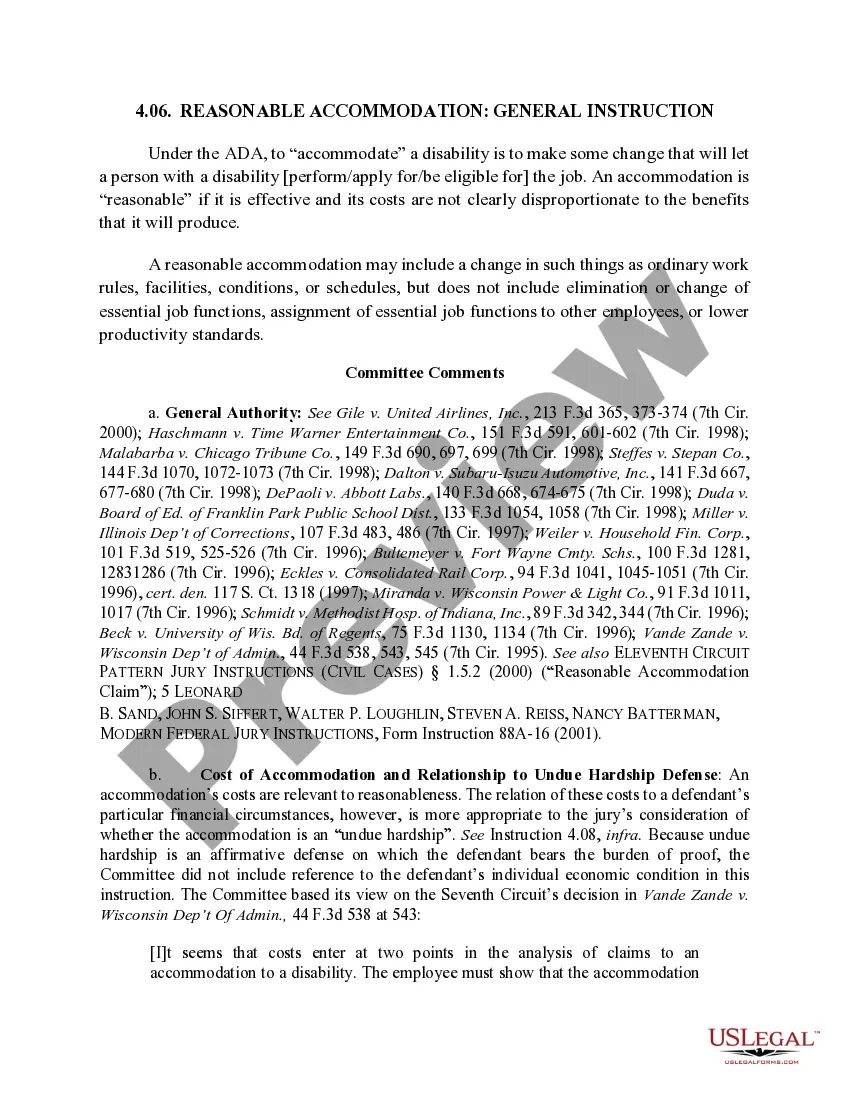
4.06. Reasonable Accommodation: General Instruction
About this form
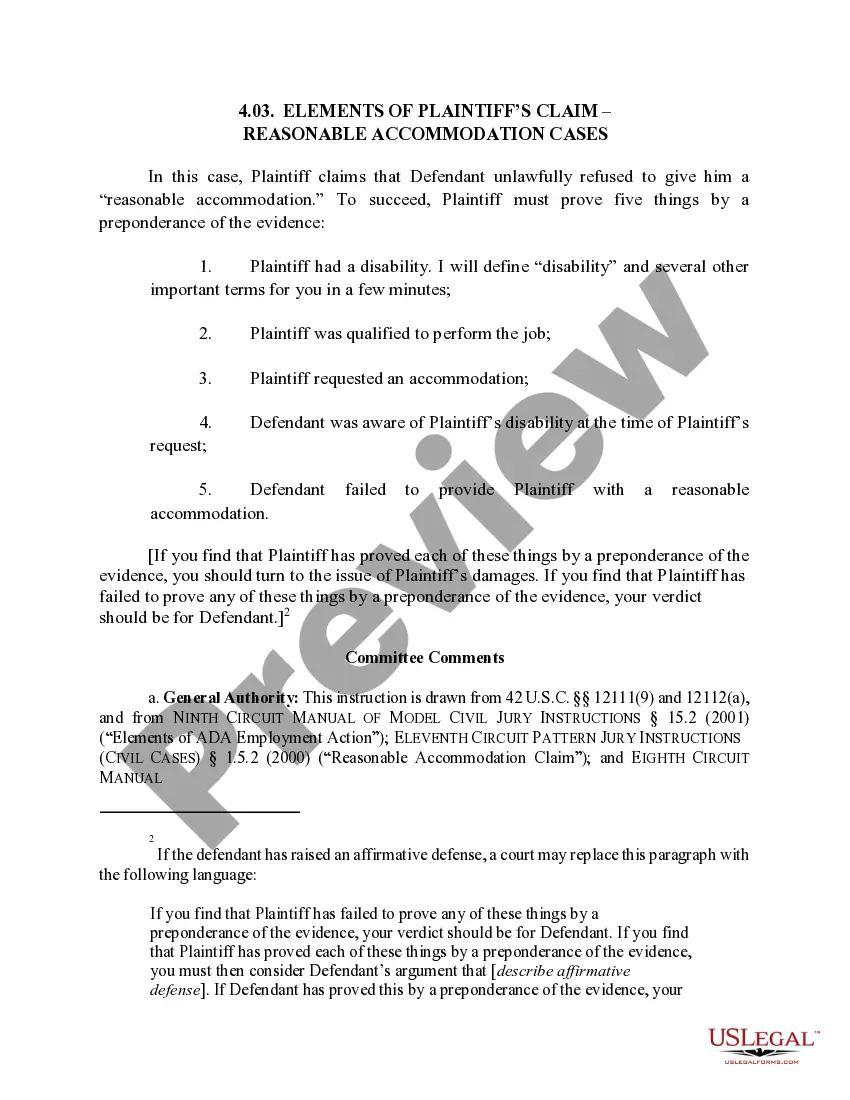
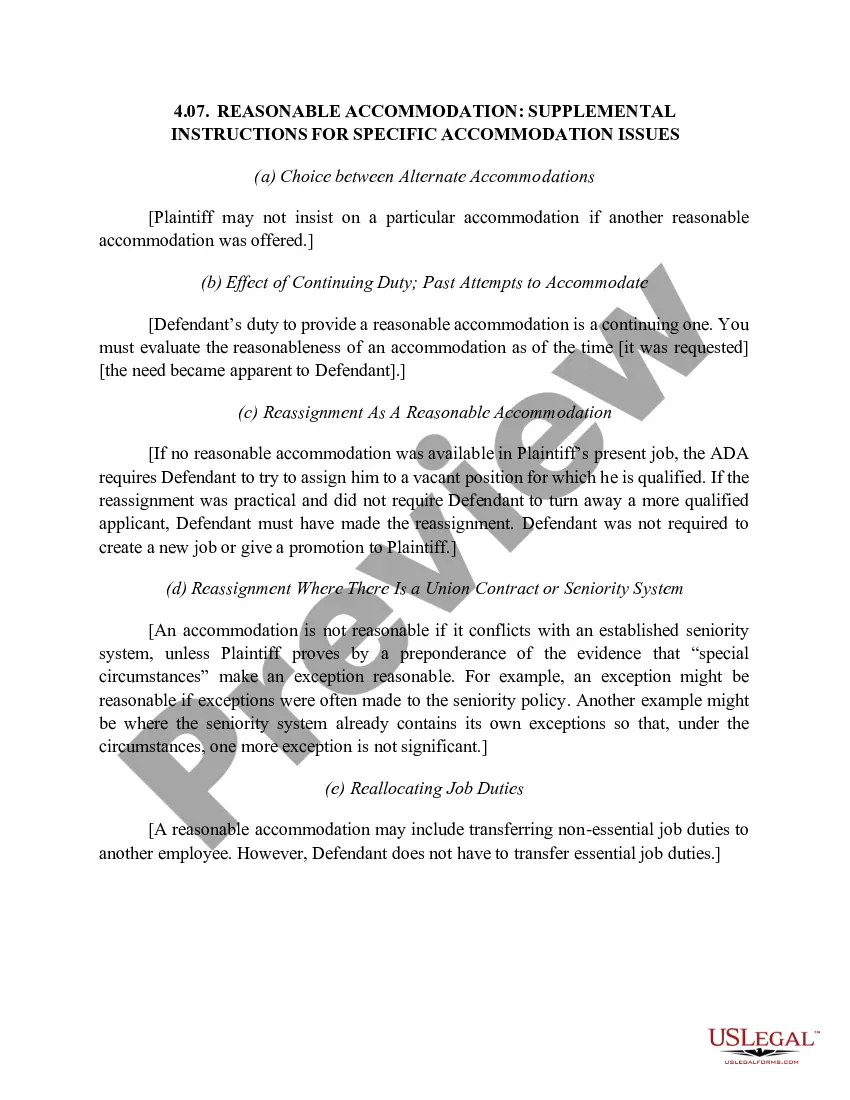
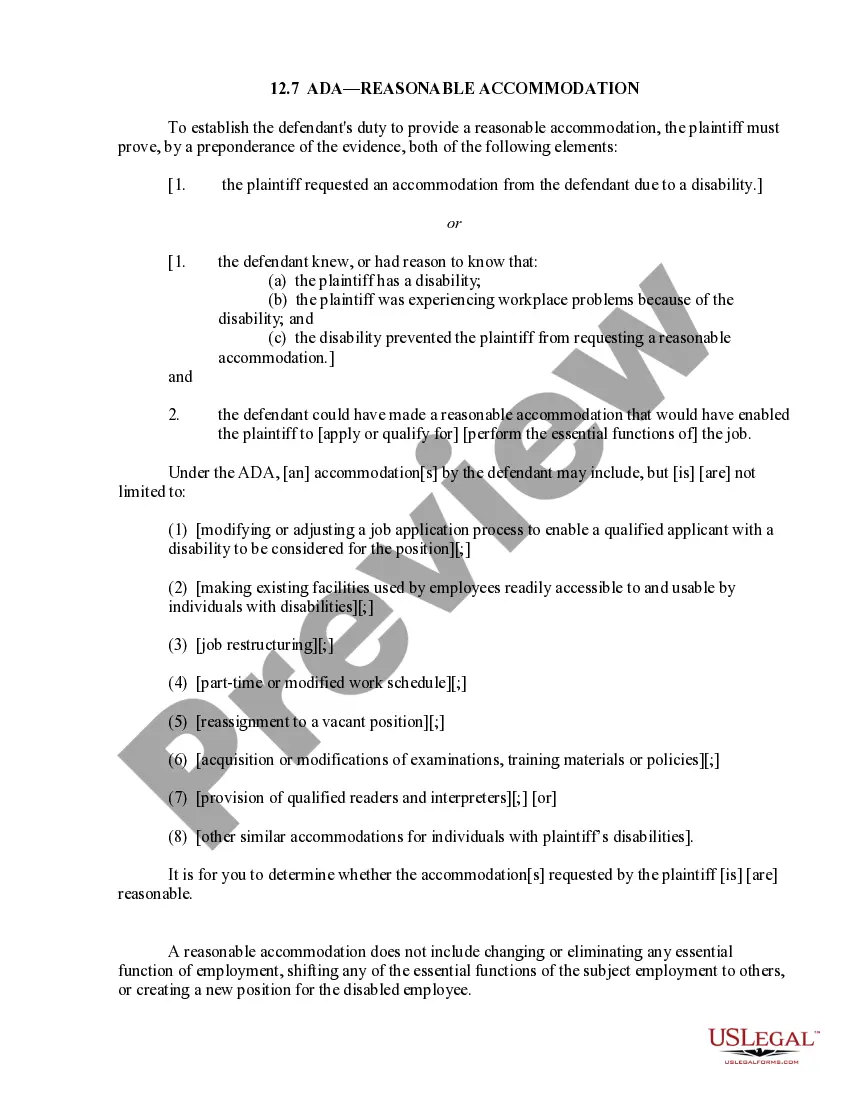
The Reasonable Accommodation: General Instruction form provides guidelines on how to make workplace accommodations for individuals with disabilities under the Americans with Disabilities Act (ADA). This form outlines what constitutes a reasonable accommodation, differentiating it from other employment-related forms by focusing specifically on the modifications necessary for individuals to perform their job duties effectively. It helps ensure that both employers and employees understand their rights and responsibilities regarding workplace accommodations.
Form components explained
- Definition of reasonable accommodation under the ADA.
- Explanation of what makes an accommodation âreasonable.â
- Guidance on potential changes to work rules, conditions, or schedules.
- Discussion of what is not included as part of reasonable accommodations.
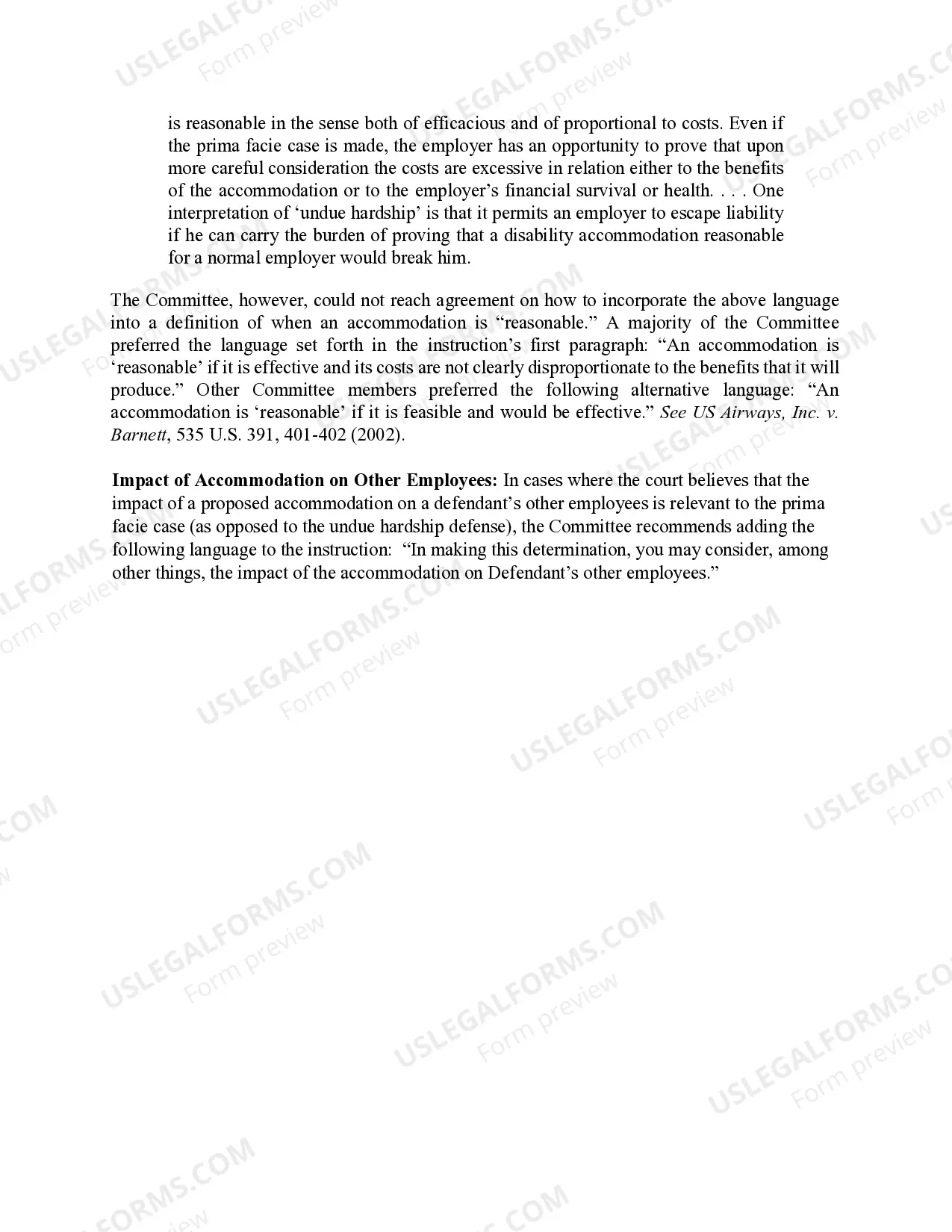
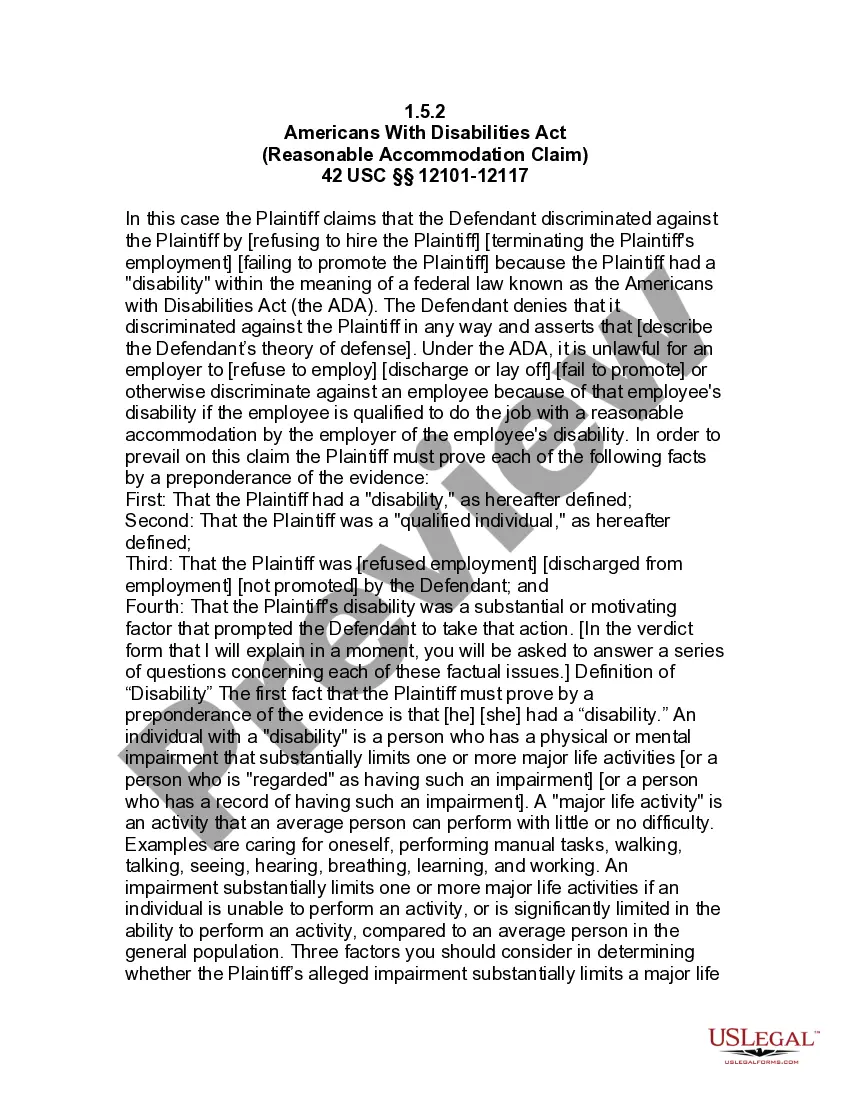
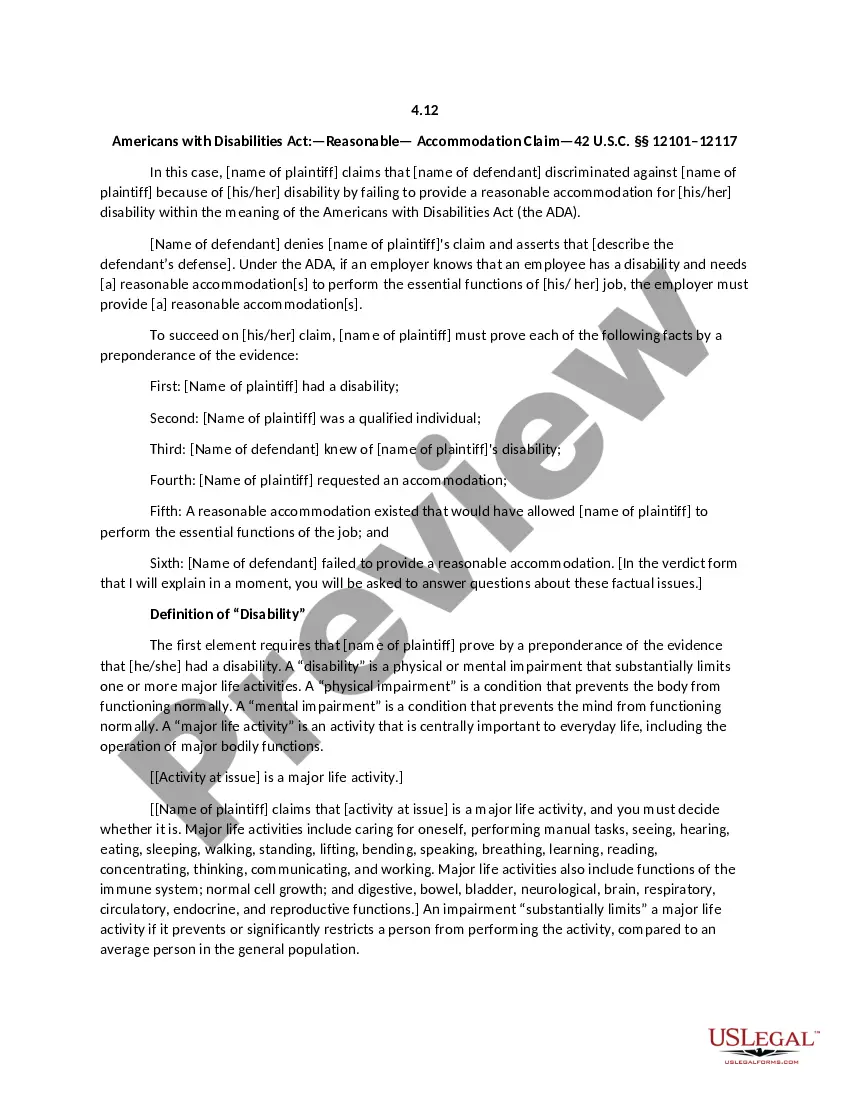
- References to relevant case law and judicial interpretations.
When to use this document
This form should be used when an employee requests an accommodation for a disability in the workplace. Scenarios include modifying work schedules, changing job responsibilities temporarily, or making adjustments to the work environment to better suit an employee's needs. Utilizing this form can help facilitate discussions and agreements on reasonable accommodations between employer and employee.
Who should use this form
- Employees with disabilities seeking reasonable workplace accommodations.
- Employers looking to understand their obligations under the ADA regarding accommodating employees.
- Human resources professionals involved in managing employee accommodations.
Steps to complete this form
- Read the instructions carefully to understand the definitions and guidelines.
- Identify any specific requests for accommodations made by the employee.
- Evaluate the effectiveness and costs of the requested accommodations.
- Consider the impact of potential accommodations on other employees.
- Document the agreement or disagreements in writing for legal compliance.
Notarization requirements for this form
This form usually doesn’t need to be notarized. However, local laws or specific transactions may require it. Our online notarization service, powered by Notarize, lets you complete it remotely through a secure video session, available 24/7.
Get your form ready online
Our built-in tools help you complete, sign, share, and store your documents in one place.
Make edits, fill in missing information, and update formatting in US Legal Forms—just like you would in MS Word.
Download a copy, print it, send it by email, or mail it via USPS—whatever works best for your next step.
Sign and collect signatures with our SignNow integration. Send to multiple recipients, set reminders, and more. Go Premium to unlock E-Sign.
If this form requires notarization, complete it online through a secure video call—no need to meet a notary in person or wait for an appointment.
We protect your documents and personal data by following strict security and privacy standards.

Make edits, fill in missing information, and update formatting in US Legal Forms—just like you would in MS Word.

Download a copy, print it, send it by email, or mail it via USPS—whatever works best for your next step.

Sign and collect signatures with our SignNow integration. Send to multiple recipients, set reminders, and more. Go Premium to unlock E-Sign.

If this form requires notarization, complete it online through a secure video call—no need to meet a notary in person or wait for an appointment.

We protect your documents and personal data by following strict security and privacy standards.
Mistakes to watch out for
- Failing to engage in an interactive process with the employee.
- Misunderstanding what constitutes a âreasonableâ accommodation.
- Neglecting to consider the impact on other employees.
- Not documenting the accommodation request and the employer's response.
Benefits of completing this form online
- Convenient access to the form for printing or digital submission.
- Editable format allows for easy customization to specific situations.
- Reliable and professionally drafted content ensures legal compliance.
Legal use & context
- This form aligns with federal guidelines established by the ADA.
- Employers are encouraged to use it to mitigate potential legal risks related to disability claims.
- The form serves to clarify employer obligations and employee rights regarding workplace accommodations.
What to keep in mind
- A reasonable accommodation helps employees with disabilities perform their job duties.
- Employers must carefully evaluate accommodation requests and their implications.
- Documentation and communication are essential to the process of providing accommodations.
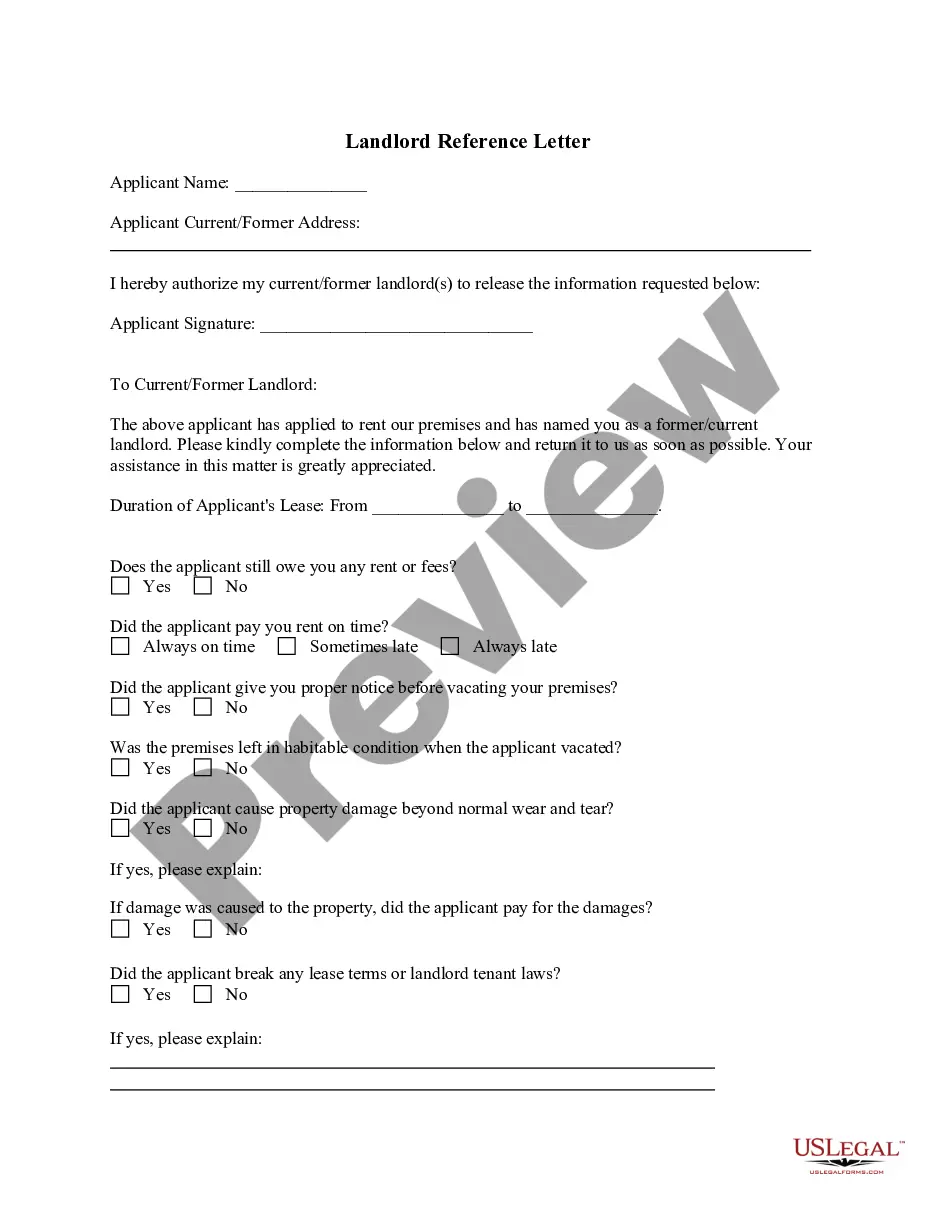
Looking for another form?



Form popularity
FAQ
The agency may reject an employee's request for a reasonable accommodation for the following reasons: The employee is not an individual with a qualifying disability.The employee is unable to provide requested documentation from a medical professional that demonstrates that he/she has a qualifying disability.
Dear Mr./Ms. (Contact at Human Resources Department): I work at (Company Name) as a (Your Job Title) and have been in this position since (Date). I am writing to request that you provide (list accommodation needed here) as a reasonable accommodation under the ADA.
There are three categories of "reasonable accommodations": changes to a job application process. changes to the work environment, or to the way a job is usually done. changes that enable an employee with a disability to enjoy equal benefits and privileges of employment (such as access to training).
Under the ADA, employers are required to provide reasonable accommodations to qualified employees with disabilities, unless doing so would pose an undue hardship. An employer is not required to make an accommodation if it would impose an "undue hardship" on the operation of the employer's business.
The ADA includes ADHD as a recognized disability. For an employee who has ADHD, the act can require the employer to provide reasonable accommodations, as long as it doesn't create undue hardship for the business.
The employment provisions of the ADA are enforced under the same procedures now applicable to race, color, sex, national origin, and religious discrimination under title VII of the Civil Rights Act of 1964, as amended, and the Civil Rights Act of 1991.
What types of accommodations are generally considered reasonable? Change job tasks. Provide reserved parking. Improve accessibility in a work area. Change the presentation of tests and training materials. Provide or adjust a product, equipment, or software. Allow a flexible work schedule.
Can an Employer Deny Reasonable Accommodation? If your employer refuses to provide a reasonable accommodation, it must be because the accommodation would cause undue hardship to the employer or company. Generally, undue hardship would result when the request is too difficult or expensive for the employer to implement.