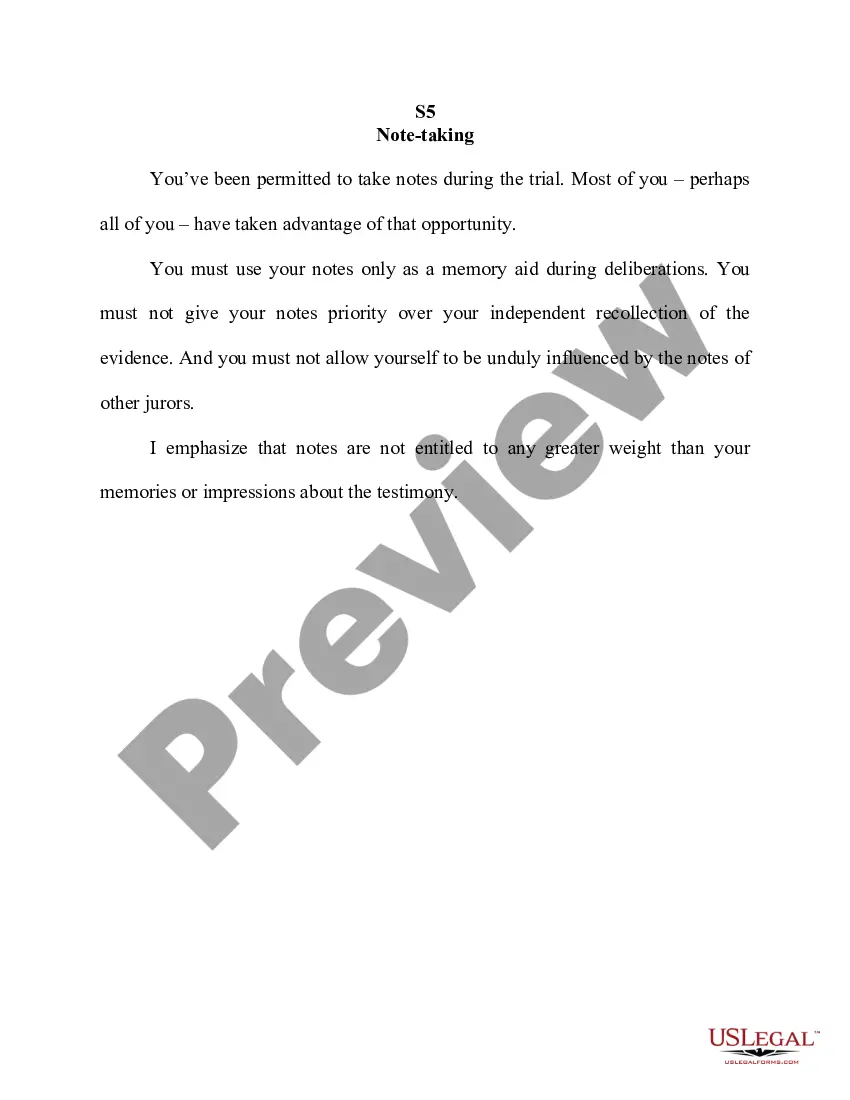
Note-taking
What is this form?
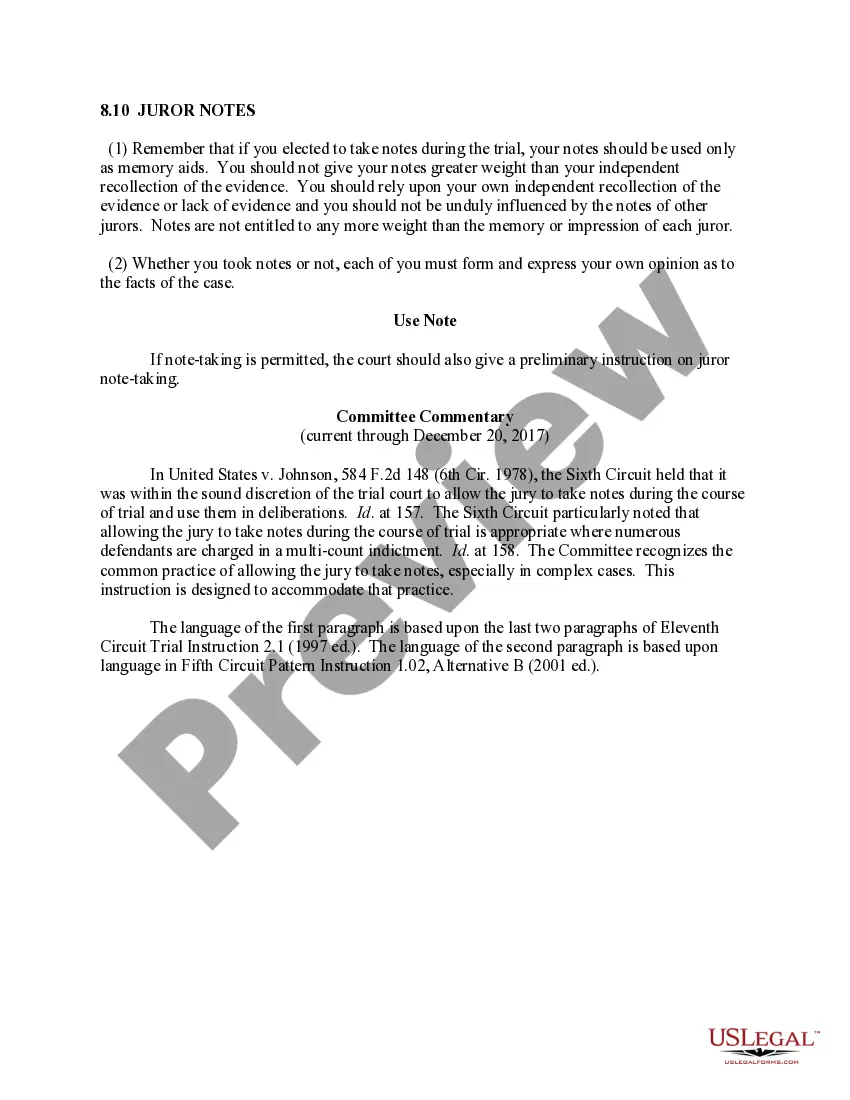
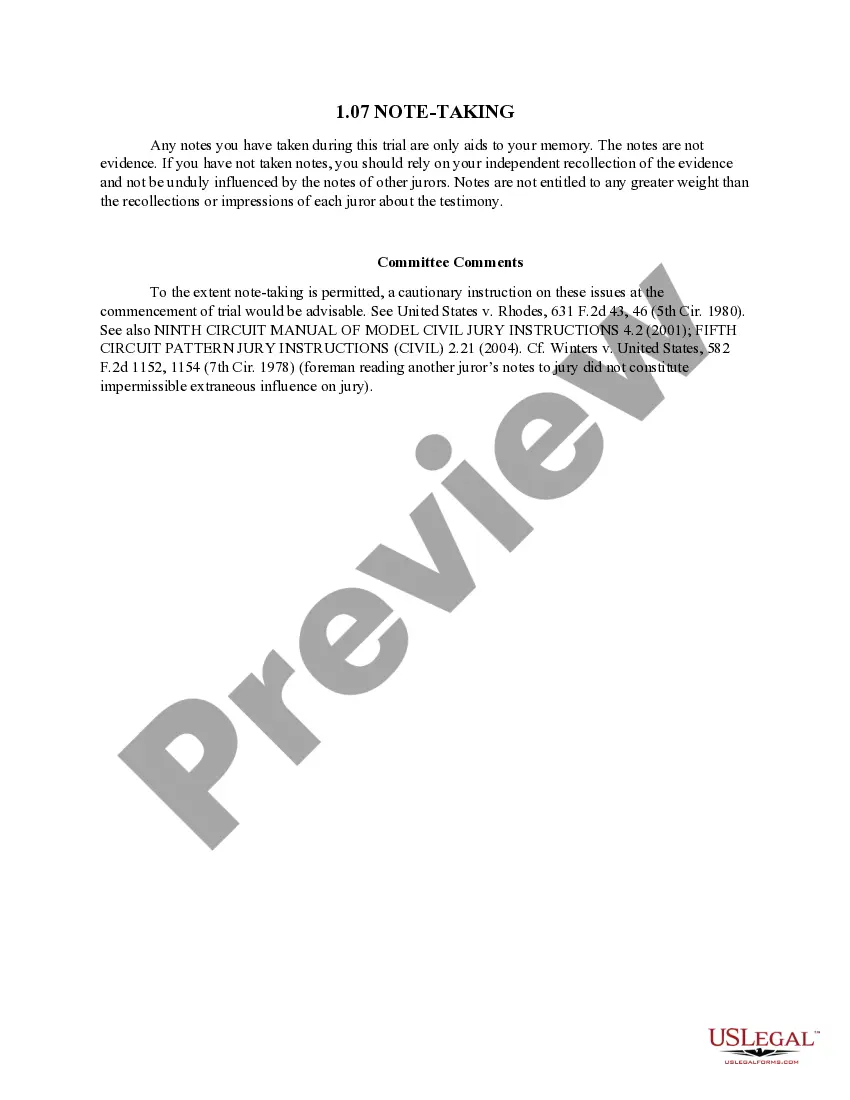
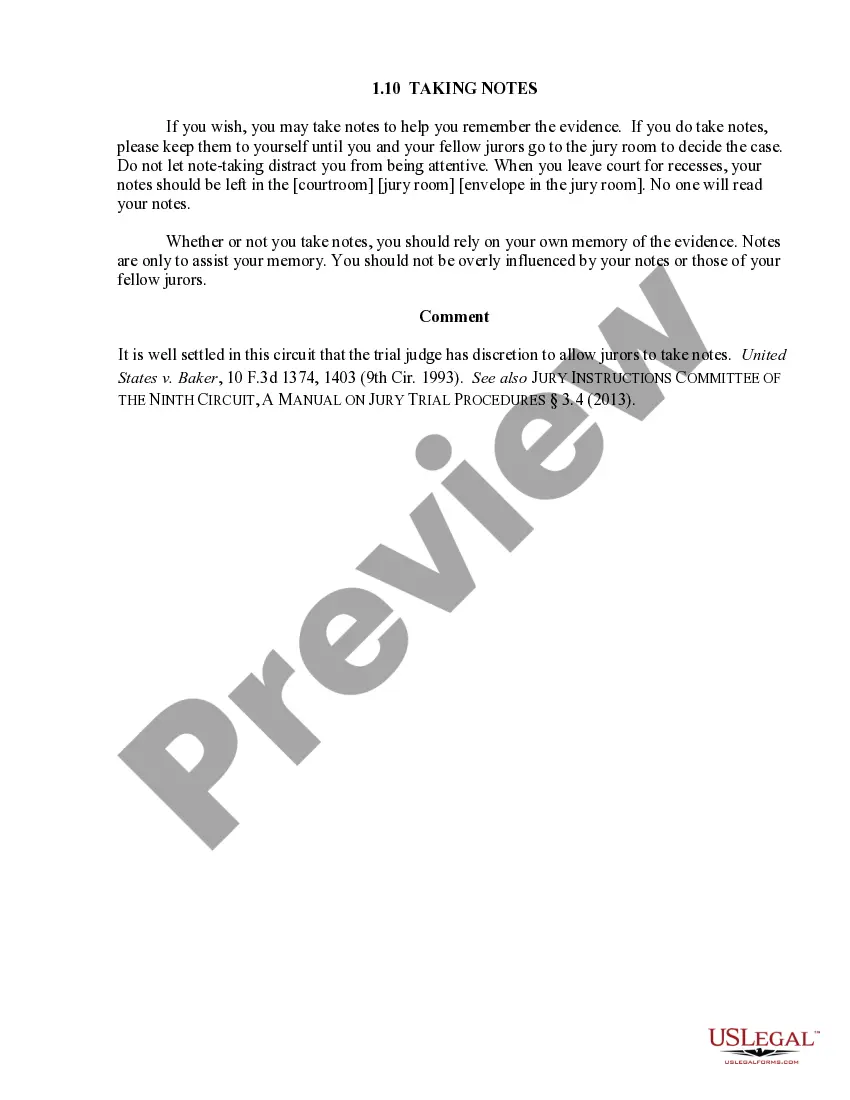
The Note-taking form is a guideline from the 11th Circuit Federal Court of Appeals that allows jurors to take notes during trials. This form is crucial for jurors to maintain a fair and accurate recollection of the evidence presented. It ensures that notes serve only as supplementary memory aids and not as definitive sources of evidence, maintaining the integrity of the jury's independent judgment. Unlike other legal forms, the Note-taking form specifically addresses the rules around jury note-taking to assist jurors in their deliberations.
Form components explained
- Permits jurors to take notes during trials.
- Emphasizes that notes are aids for memory, not substitutes for independent recollection.
- Instructs not to prioritize notes over personal impressions of testimony.
- Advises against being influenced by others' notes.
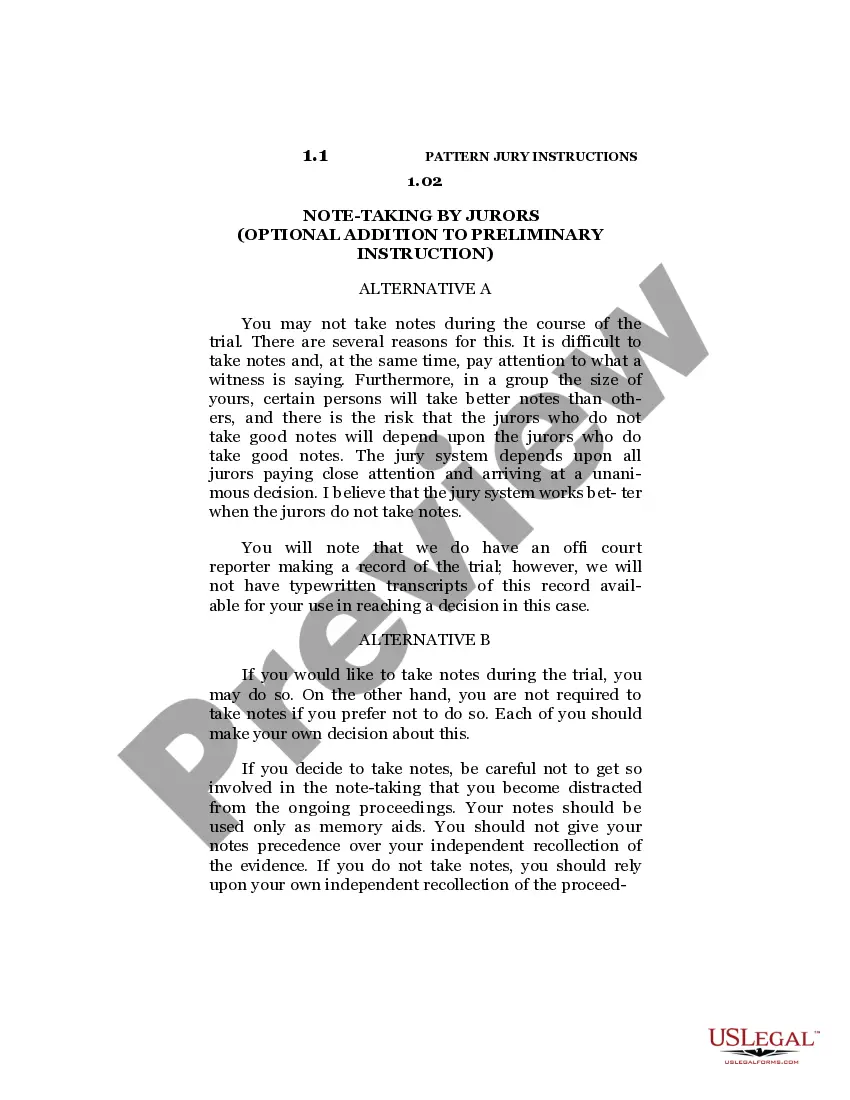
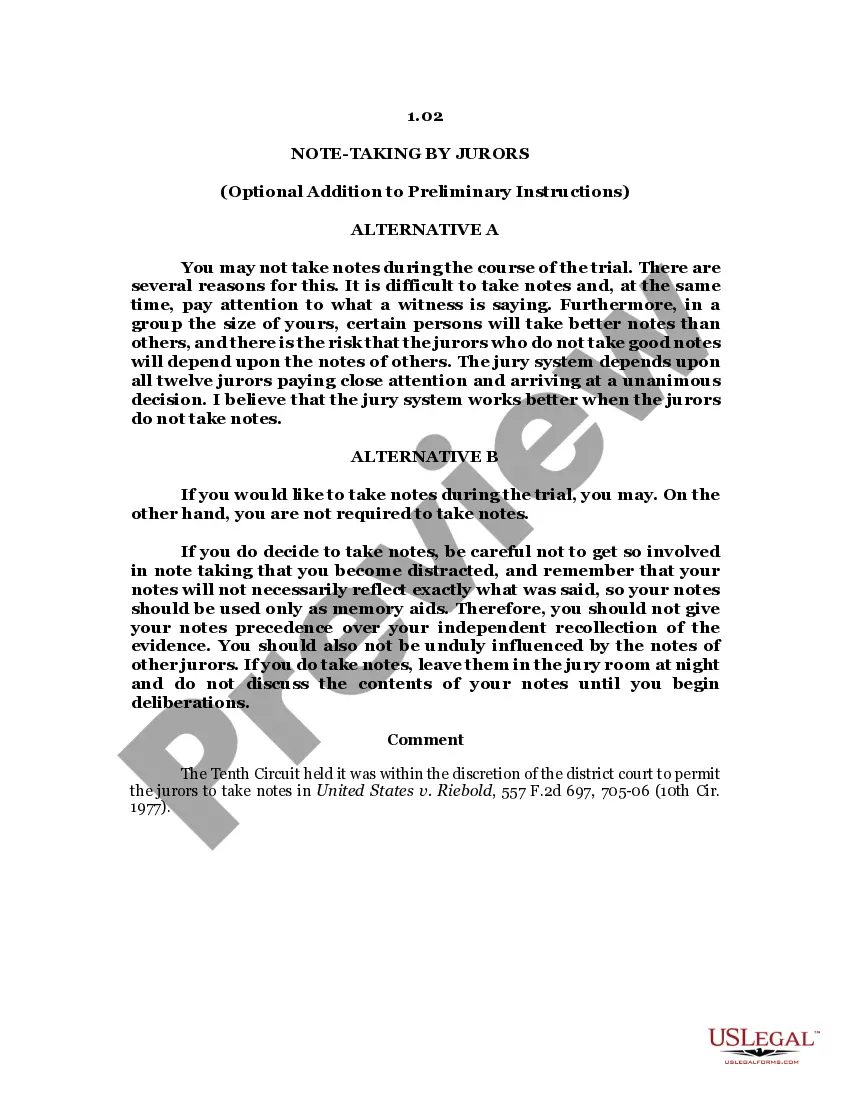
Situations where this form applies
This form is used during jury trials where jurors are allowed to take notes. It is particularly relevant in cases that involve complex evidence or lengthy testimony, where jurors may benefit from jotting down key points to aid in their recollection during deliberations. It also serves as a reminder of the proper conduct regarding the use of notes among jurors.
Who this form is for
- Jurors participating in a trial where note-taking is permitted.
- Legal professionals seeking to understand jury instruction on note-taking.
- Judges who oversee trial proceedings and jury conduct.
How to prepare this document
- Read the instructions provided at the beginning of the trial.
- Take notes during the trial to highlight key evidence and testimonies.
- Review your notes solely as a memory aid during deliberations.
- Do not allow others' notes to influence your independent recollection.
- Focus on your own understanding and impressions of the testimony.
Notarization guidance
This form does not typically require notarization unless specified by local law. It is mainly used for internal jury processes during trials.
Get your form ready online
Our built-in tools help you complete, sign, share, and store your documents in one place.
Make edits, fill in missing information, and update formatting in US Legal Forms—just like you would in MS Word.
Download a copy, print it, send it by email, or mail it via USPS—whatever works best for your next step.
Sign and collect signatures with our SignNow integration. Send to multiple recipients, set reminders, and more. Go Premium to unlock E-Sign.
If this form requires notarization, complete it online through a secure video call—no need to meet a notary in person or wait for an appointment.
We protect your documents and personal data by following strict security and privacy standards.

Make edits, fill in missing information, and update formatting in US Legal Forms—just like you would in MS Word.

Download a copy, print it, send it by email, or mail it via USPS—whatever works best for your next step.

Sign and collect signatures with our SignNow integration. Send to multiple recipients, set reminders, and more. Go Premium to unlock E-Sign.

If this form requires notarization, complete it online through a secure video call—no need to meet a notary in person or wait for an appointment.

We protect your documents and personal data by following strict security and privacy standards.
Common mistakes
- Relying too heavily on notes instead of personal recollections.
- Disregarding the instructions regarding the influence of other jurors' notes.
- Failing to review notes in a manner that supports independent judgment.
Why complete this form online
- Convenient access to note-taking guidelines directly from court sources.
- Editable format allows jurors to adapt notes for easy reading.
- Reliable and accurate representation of federal court instructions.
Legal use & context
- The Note-taking form is recognized by the 11th Circuit as a valid guideline for jurors.
- Helps to uphold fairness and accuracy within jury deliberations.
- Maintains the integrity of jurors' independent assessments of evidence.
Key takeaways
- Notes are a tool, not a substitute for jurors' memories.
- Jury time management and organization can be improved through effective note-taking.
- Each juror's independent judgment is paramount during deliberations.
Looking for another form?



Form popularity
FAQ
Use the four primary methods of note taking: lists, outlines, concept maps, and the Cornell method.
4 Stages of Notetaking Capture the Information. The main aim of notetaking at this stage is to record the key ideas, concepts, and themes from the source and if you can, try also to incorporate how the information connects together.Customise your Notes.Notes for Assignments.
The Cornell Method. The Outlining Method. The Mapping Method. The Charting Method. The Sentence Method.
3 BEST NOTE-TAKING METHODS THE MAP METHOD. The Map Method is ideal for visual learners and to process a large amount of information.THE BOXING METHOD. The Boxing Method is an increasingly popular method of writing notes, especially advised to those of you that bring their iPad or Laptop to class.THE CORNELL METHOD.
Note taking can be broken down into three steps: preparation, exectution and review. There are certain things a student can do before class to get ready for note taking, during class to effectively take notes and after class to follow up on what has been covered by utilizing the notes he's taken.
The charting method The charting note-taking method is one the most effective methods for fact- and data-heavy lecture content. When the lecture content is highly structured and uniform, the charting method provides an efficient way to keep up with the material.
Definition: Note-taking is a method of recording temporary but essential information for greater performance. In a systemized way, note-taking helps structure information during meetings and make it easy to recall the materials later. Writing down ideas helps with focus and managing tasks.
Use the four primary methods of note taking: lists, outlines, concept maps, and the Cornell method.