New Mexico Authorization To Obtain Medical Treatment For Minor Child - Horse Equine Forms
Understanding this form
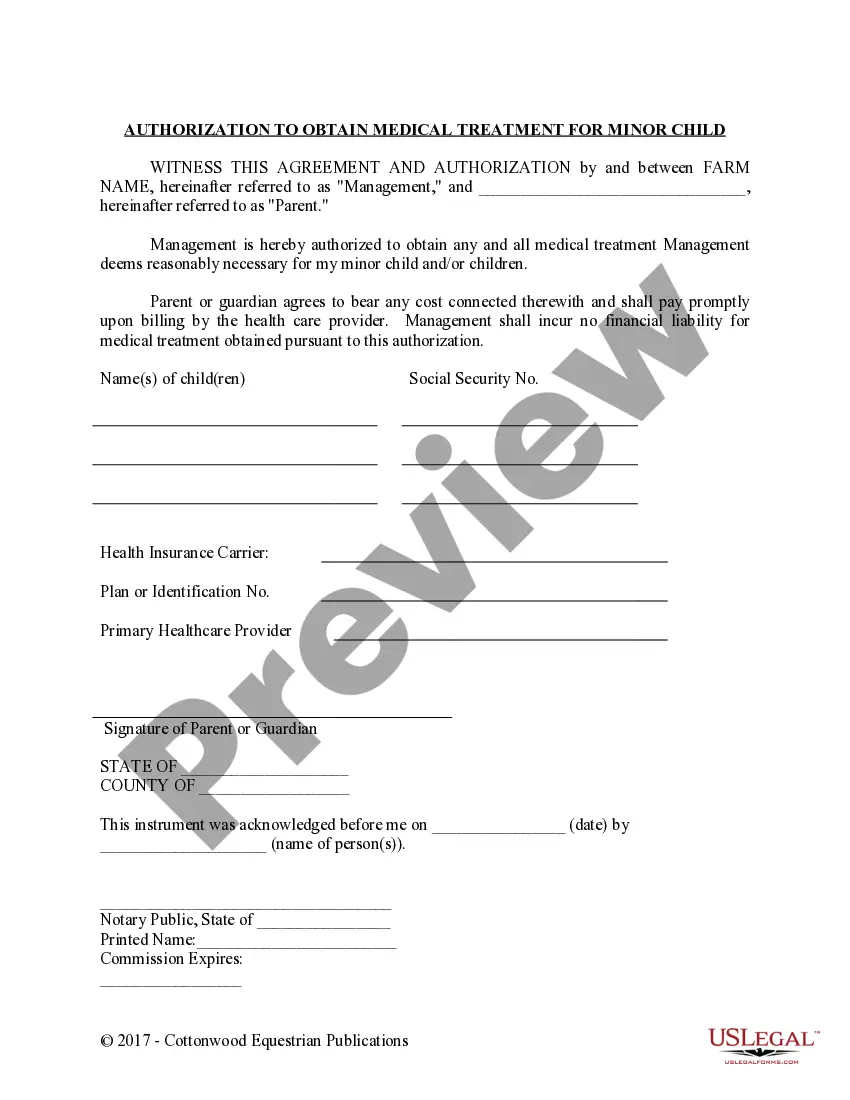
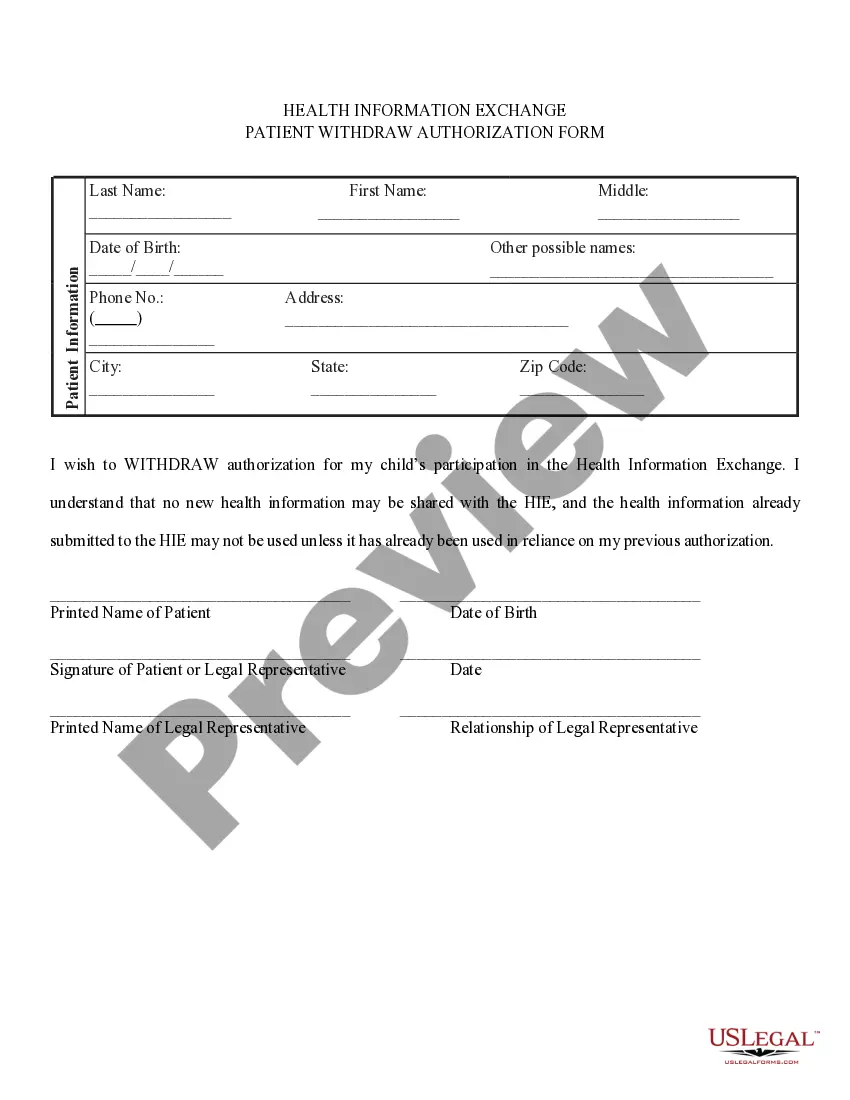
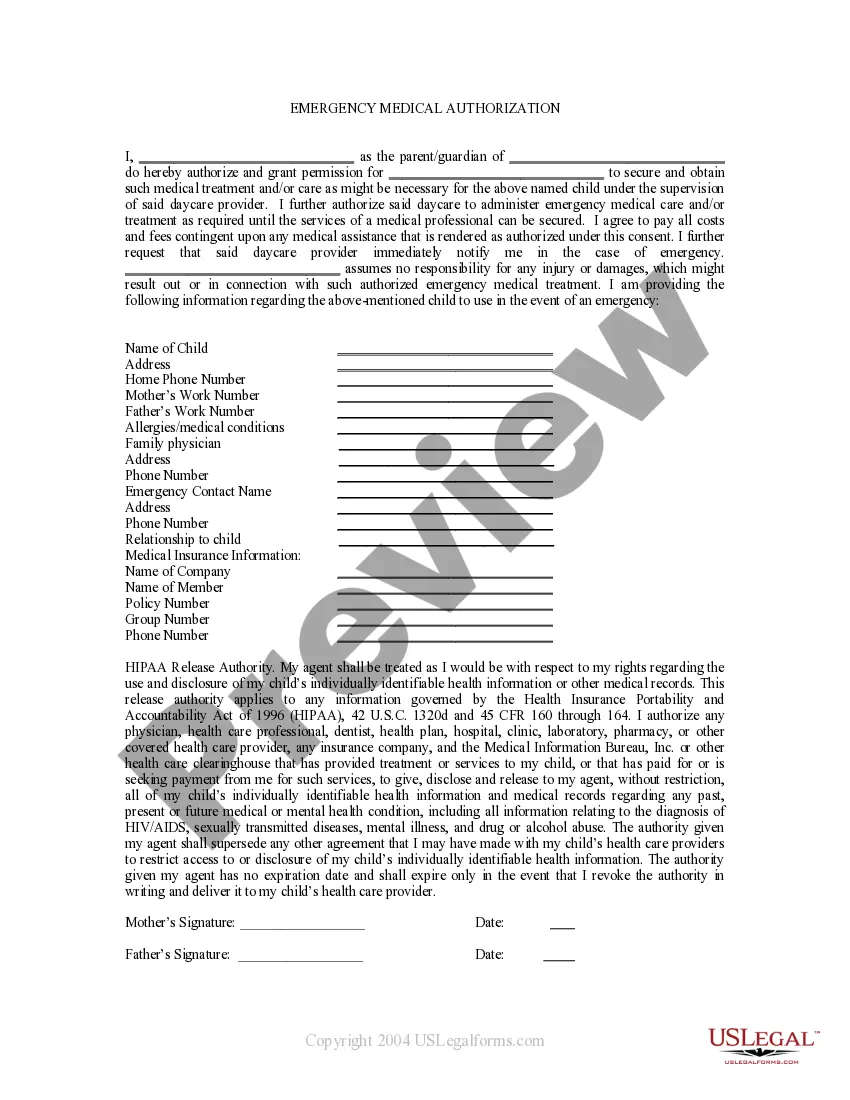
The Authorization to Obtain Medical Treatment for Minor ChildâHorse Equine Form is a legal document allowing farm management to secure medical treatment for a minor child involved in equine activities. This form ensures timely care in case of an emergency, placing the financial responsibility on the child's parents or guardians or their insurance company. It is distinct from release forms that focus solely on liability waivers, addressing the necessity of medical care instead.
Key components of this form
- Name and contact information of the farm management.
- Identification of the child or children for whom authorization is given.
- Parental agreement to bear costs associated with medical treatment.
- Signature of the parent or guardian authorizing the form.
- Information on the primary healthcare provider and health insurance details.
- Notary acknowledgment for legal validity.
When to use this document
This form is essential in scenarios involving minors participating in equine activities, such as riding lessons, horse shows, or any event where there is a risk of injury. It should be completed to ensure that children can receive immediate medical attention when necessary, without delays that may arise due to the need for parental consent during emergencies.
Who this form is for
- Parents or guardians of minor children participating in equine activities.
- Farm owners or management responsible for the care and safety of children on their premises.
- Equine event organizers requiring liability and medical authorization from participants.
Completing this form step by step
- Identify the farm management name and contact details.
- List the names and social security numbers of the minor children covered by the authorization.
- Provide information on the child's health insurance carrier and plan or identification number.
- Include the name of the primary healthcare provider.
- Have the parent or guardian sign and date the form.
- Secure notary acknowledgment if required.
Notarization guidance
This form does not typically require notarization unless specified by local law. However, notary acknowledgment can enhance its legal validity and ensure all parties are properly identified.
Get your form ready online
Our built-in tools help you complete, sign, share, and store your documents in one place.
Make edits, fill in missing information, and update formatting in US Legal Forms—just like you would in MS Word.
Download a copy, print it, send it by email, or mail it via USPS—whatever works best for your next step.
Sign and collect signatures with our SignNow integration. Send to multiple recipients, set reminders, and more. Go Premium to unlock E-Sign.
If this form requires notarization, complete it online through a secure video call—no need to meet a notary in person or wait for an appointment.
We protect your documents and personal data by following strict security and privacy standards.

Make edits, fill in missing information, and update formatting in US Legal Forms—just like you would in MS Word.

Download a copy, print it, send it by email, or mail it via USPS—whatever works best for your next step.

Sign and collect signatures with our SignNow integration. Send to multiple recipients, set reminders, and more. Go Premium to unlock E-Sign.

If this form requires notarization, complete it online through a secure video call—no need to meet a notary in person or wait for an appointment.

We protect your documents and personal data by following strict security and privacy standards.
Common mistakes to avoid
- Failing to include all necessary information about the child or children.
- Not providing accurate health insurance information.
- Omitting the signature of the parent or guardian.
- Neglecting to have the document notarized if required in your state.
Advantages of online completion
- Convenient access for immediate download, saving time.
- Easily editable to meet your specific needs before printing.
- Reliable templates drafted by licensed attorneys, ensuring legal compliance.
Legal use & context
- This form is legally binding and allows for medical care to be obtained without delay in emergencies.
- Ensures compliance with state laws regarding medical treatment of minors.
- Minimizes liability for farm management when acting in the child's best interest.
What to keep in mind
- The Authorization To Obtain Medical Treatment For Minor Child - Horse Equine Form is vital for minor participants in equine activities.
- Completing this form allows timely medical intervention while detailing financial responsibilities.
- It is essential for parents, guardians, and equestrian facilities to understand how to complete and utilize this form effectively.
Looking for another form?


Form popularity
FAQ
If you share legal custody with your child's other parent or parents, you will want to arrange to have the form notarized together.Once the covered time period is up, a new medical release form will need to be notarized for a caregiver's authority to make medical decisions to continue.
The grandparents' medical consent form allows a parent or legal guardian to hand over all responsibility regarding their child's health care decisions to one of the child's grandparents.
A notarized letter of consent will be required for children who travel without one or both of their parents or legal guardians.There is no standard-issue minor travel consent form, though there are templates online that may be used as examples.
If you share legal custody with your child's other parent or parents, you will want to arrange to have the form notarized together.Once the covered time period is up, a new medical release form will need to be notarized for a caregiver's authority to make medical decisions to continue.
MINOR MUST BE EMANCIPATED (GENERALLY 14 YEARS OF AGE OR OLDER) LAW/DETAILS MAY/MUST THE HEALTH CARE PROVIDER INFORM A PARENT ABOUT THIS CARE OR DISCLOSE RELATED MEDICAL INFORMATION TO THEM? An emancipated minor may consent to medical, dental and psychiatric care.
Step 1 Find a Competent Guardian. Step 2 Inform the Guardian of Child's Medical Issues (if any) Step 3 Inform the Guardian of the Child's Medications. Step 4 Determine an End Date. Step 5 Sign the Document.
A care provider may perform a routine test or treatment on a minor who is over the age of 14 without parental consent and without accompaniment, on condition that the minor him/herself gives informed consent for the medical procedure.
A legal document, dated and signed by a patient and his or her health care provider, designating that the patient has been advised about the care about to be received.
Since the 1990s, California law has afforded minors the right to consent to certain types of medical care, such as the diagnosis and treatment of sexually transmitted diseases, without the consent of their parent or guardian.