Copyright - Validity - Invalid Copyright Registration - Fraud on the Copyright Office
What is this form?
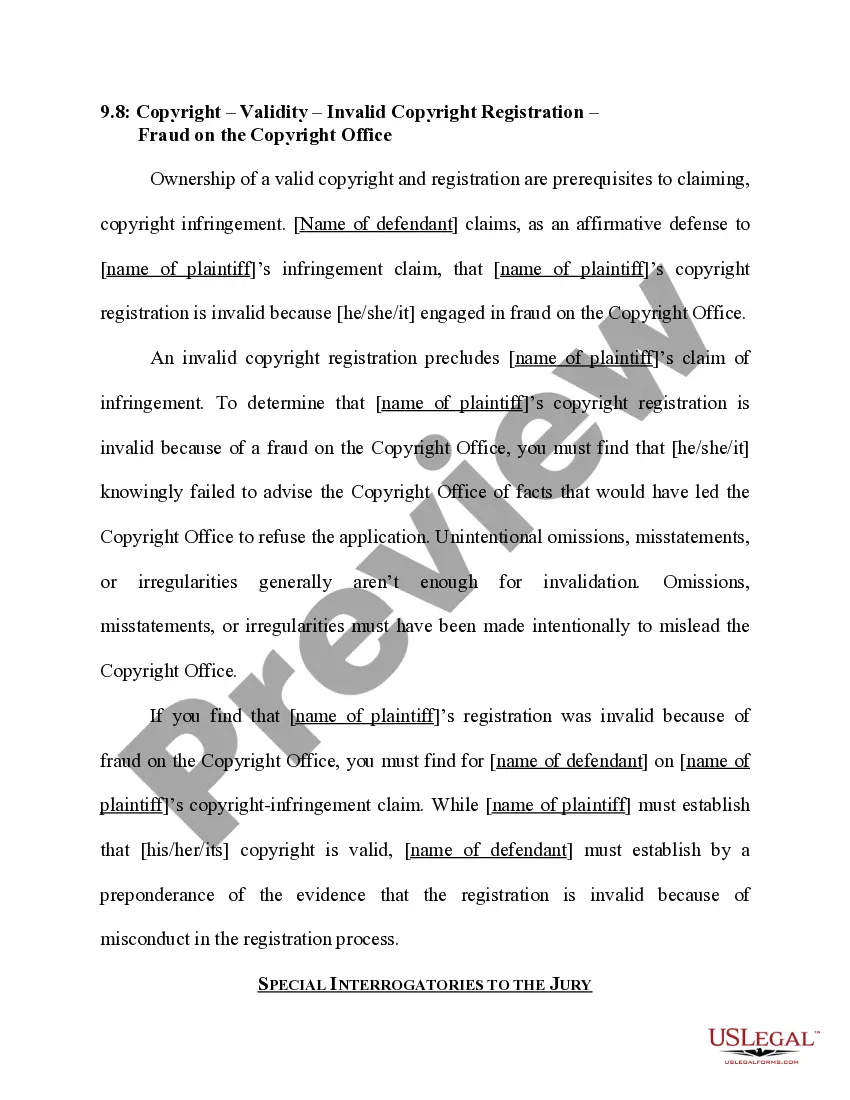
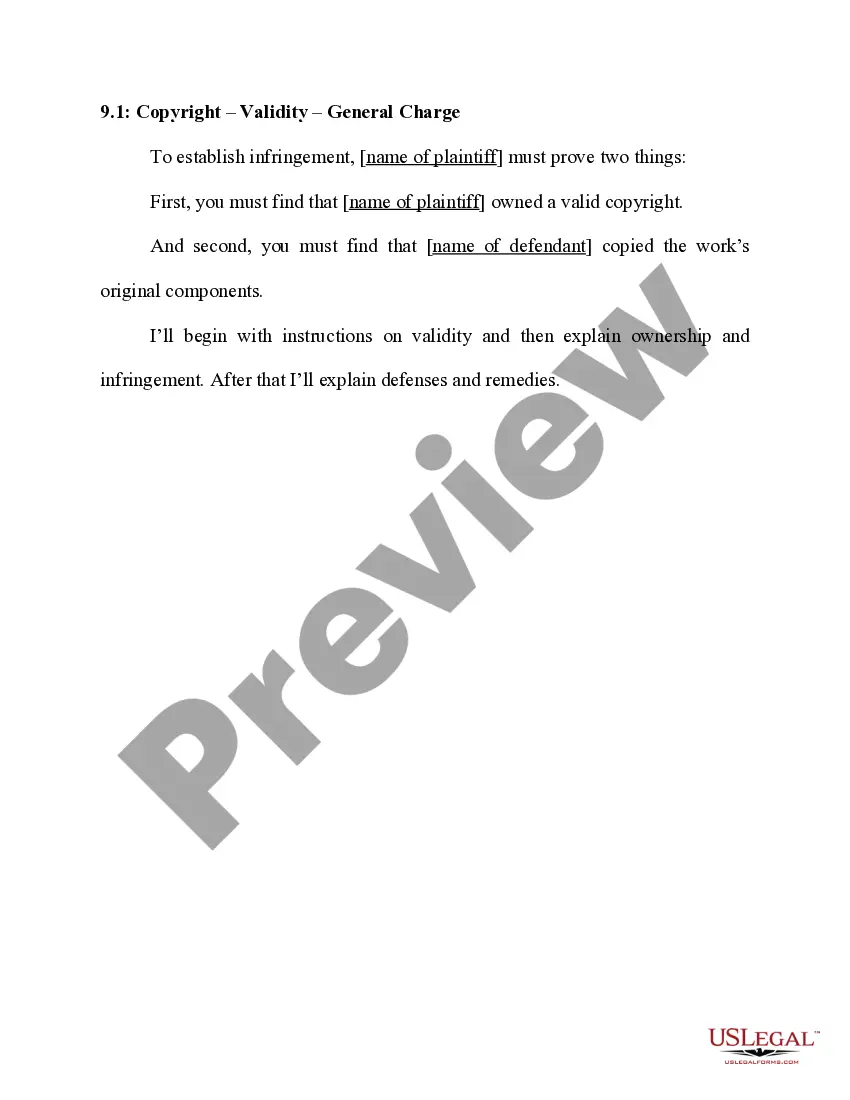
This form addresses issues related to copyright validity, specifically focusing on challenges to copyright registration based on allegations of fraud against the Copyright Office. It outlines the necessary criteria for determining whether a copyright registration is invalid due to misleading information provided during the registration process. Understanding this form is crucial for those involved in copyright infringement claims, as a valid copyright registration is essential to pursue legal action.
Key parts of this document
- Affirmative defense related to fraud on the Copyright Office.
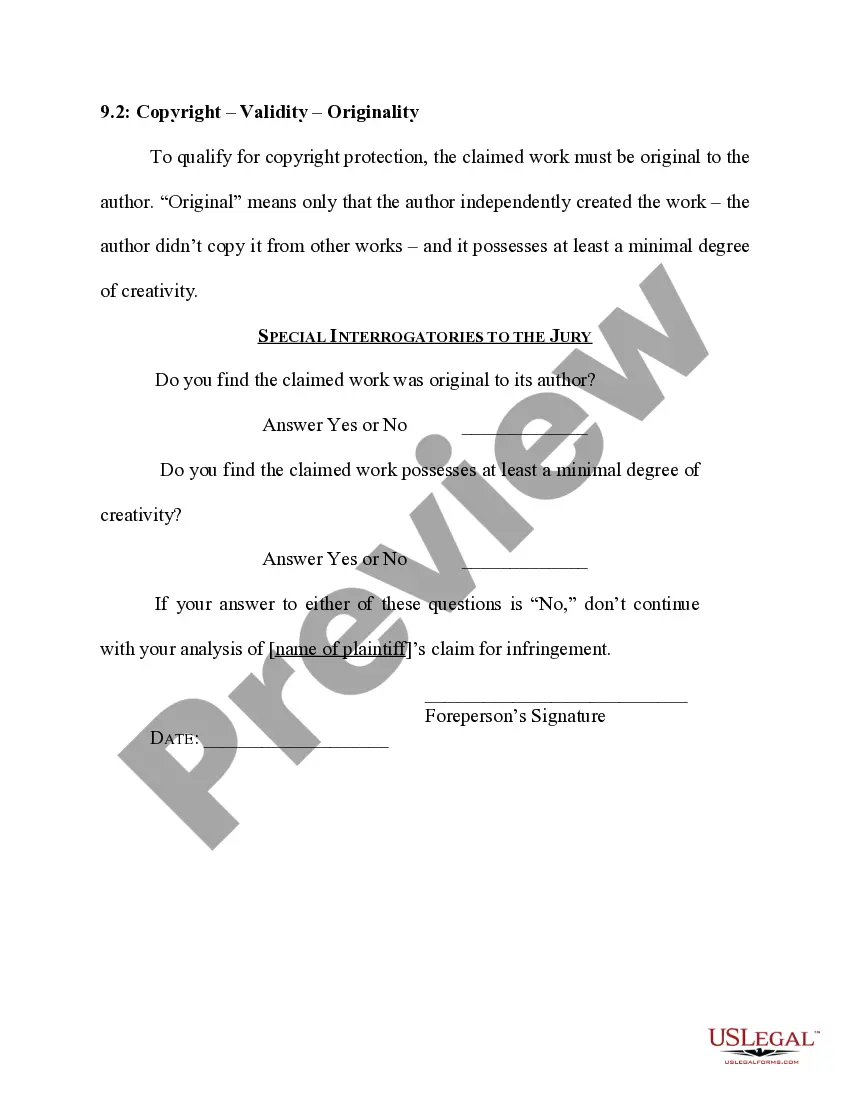
- Criteria for assessing whether a copyright registration is valid.
- Requirements for proving intentional misstatements or omissions.
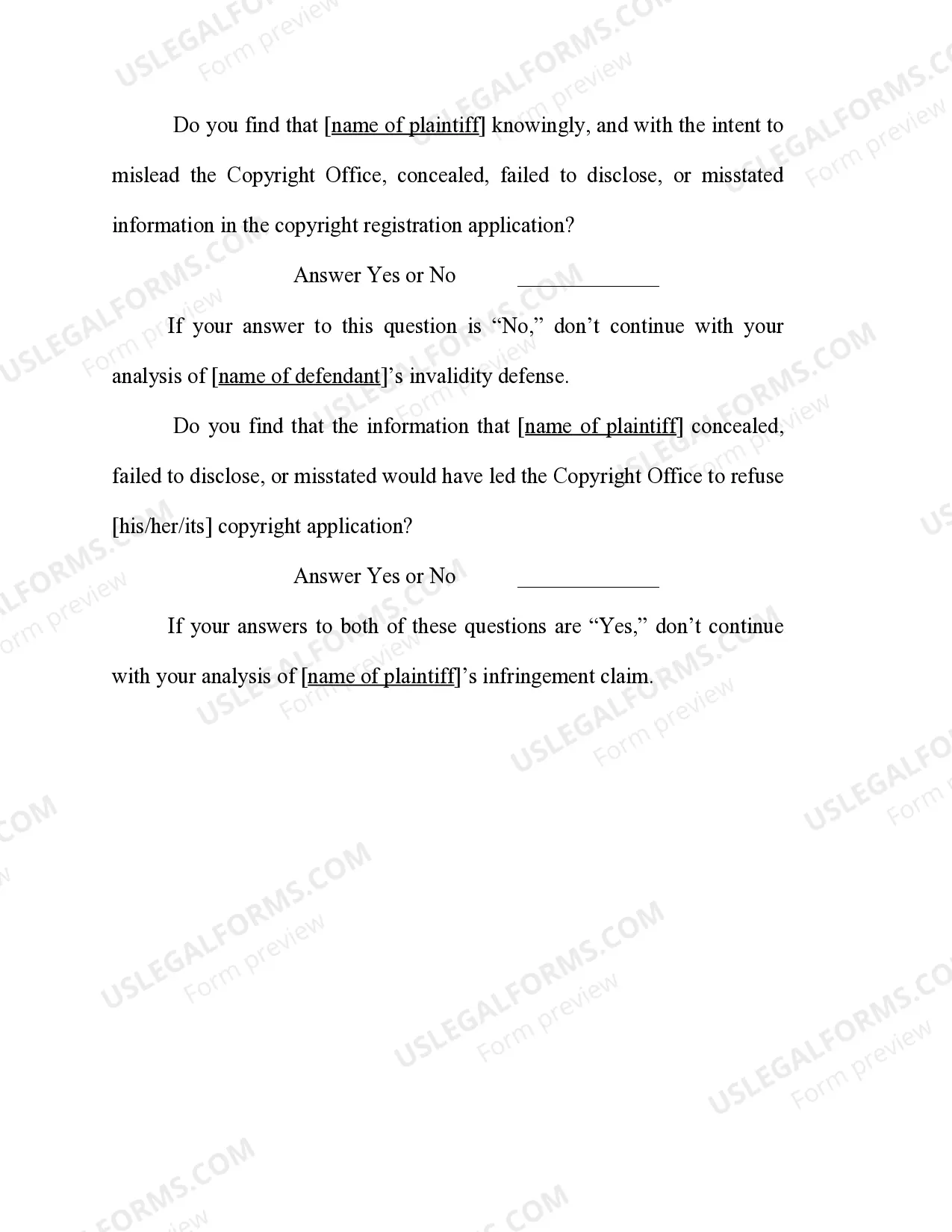
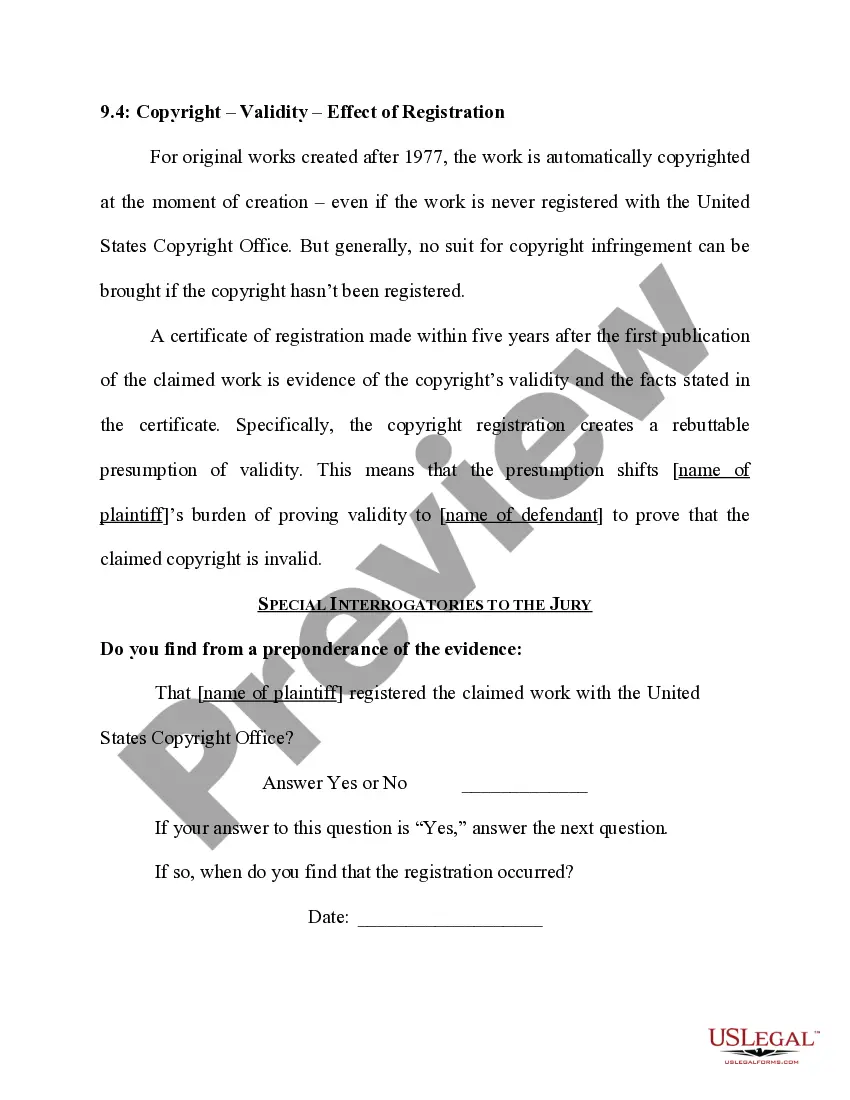
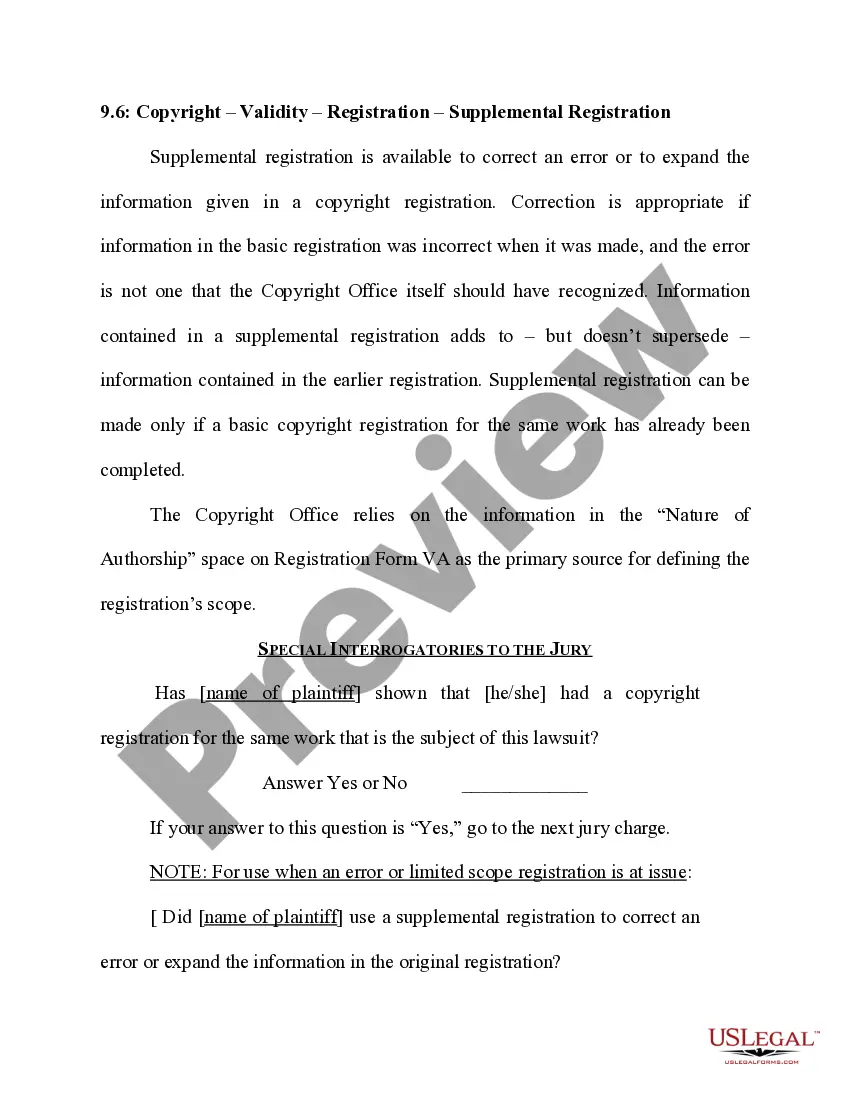
- Special interrogatories designed for jury deliberation on registration validity.
When this form is needed
This form should be used in legal cases where copyright infringement is alleged, and the defendant intends to challenge the validity of the plaintiff's copyright registration. It is relevant when there are claims of fraud against the Copyright Office during the registration process. By addressing issues of validity, defendants can potentially dismiss infringement claims based on the assertion that the copyright registration was improperly obtained.
Intended users of this form
- Defendants in copyright infringement cases.
- Attorneys representing clients in copyright disputes.
- Individuals or entities involved in litigation concerning copyright validity.
Completing this form step by step
- Identify the parties involved: the plaintiff and defendant in the copyright infringement case.
- Clearly state the grounds for claiming that the copyright registration is invalid.
- Detail the intentional omissions or misstatements made by the plaintiff in their application to the Copyright Office.
- Ensure to respond to the special interrogatories accurately, indicating whether fraud occurred.
- Submit the completed form as part of legal proceedings related to the copyright infringement claim.
Does this form need to be notarized?
This form usually doesn’t need to be notarized. However, local laws or specific transactions may require it. Our online notarization service, powered by Notarize, lets you complete it remotely through a secure video session, available 24/7.
Get your form ready online
Our built-in tools help you complete, sign, share, and store your documents in one place.
Make edits, fill in missing information, and update formatting in US Legal Forms—just like you would in MS Word.
Download a copy, print it, send it by email, or mail it via USPS—whatever works best for your next step.
Sign and collect signatures with our SignNow integration. Send to multiple recipients, set reminders, and more. Go Premium to unlock E-Sign.
If this form requires notarization, complete it online through a secure video call—no need to meet a notary in person or wait for an appointment.
We protect your documents and personal data by following strict security and privacy standards.

Make edits, fill in missing information, and update formatting in US Legal Forms—just like you would in MS Word.

Download a copy, print it, send it by email, or mail it via USPS—whatever works best for your next step.

Sign and collect signatures with our SignNow integration. Send to multiple recipients, set reminders, and more. Go Premium to unlock E-Sign.

If this form requires notarization, complete it online through a secure video call—no need to meet a notary in person or wait for an appointment.

We protect your documents and personal data by following strict security and privacy standards.
Common mistakes
- Failing to establish intent to mislead the Copyright Office, which is crucial for invalidation claims.
- Omitting details about the specific information that was misrepresented or withheld.
- Neglecting to address the special interrogatories, which are essential for jury deliberation.
Advantages of online completion
- Access to legally vetted templates designed by licensed attorneys.
- Convenient downloading and editing to suit specific case details.
- Reliable format that aligns with legal standards in copyright disputes.
Looking for another form?



Form popularity
FAQ
US Supreme Court Rules Copyright Owners Have No Right To Sue Until Their Copyright Has Been Registered.
You Cannot Sue for Copyright Infringement of an Unregistered Copyright. Copyright law is unique. By simply creating something with artistic value, you own a copyright to that artistic work. However, you cannot sue for copyright infringement unless you have registered your copyright.
While copyright IS automatic and you do have rights just by creating content, REGISTRATION is not automatic. While there is a presumption that this is your work even without notice or registration, you cannot seek a claim for copyright infringement unless it is registered.
The plaintiff in a copyright infringement lawsuit has the burden of proving two elements: that they own a copyright, and that the defendant infringed it. To establish ownership of a valid copyright, a plaintiff must demonstrate that the work is original, and that it is subject to legal protection.
Before an infringement suit may be filed in court, registration is necessary for works of U.S. origin. Without a registered copyright, you can't file suit for copyright infringement.
The United States Copyright Office (USCO), a part of the Library of Congress, is a United States government body that maintains records of copyright registration, including a copyright catalog.
The only way to correct a certificate of registration is by filing a Supplementary Registration with the required fee of $130.
However, statutory damages are only available if the work was registered within three months after it was first published, or, if the work is unpublished, it must have been registered prior to the act(s) of infringement. Statutory damages allow for an award of between $750 and $30,000 for each work that was infringed.