Trademark Dilution
What this document covers
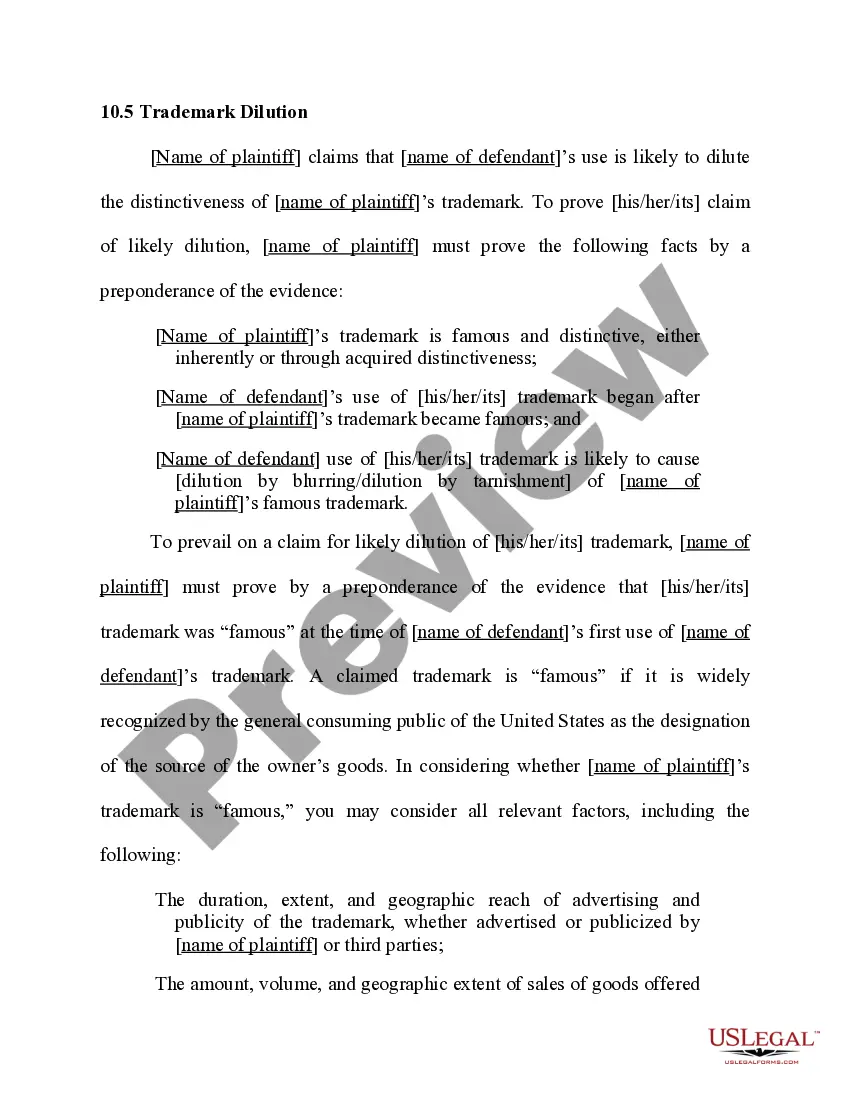
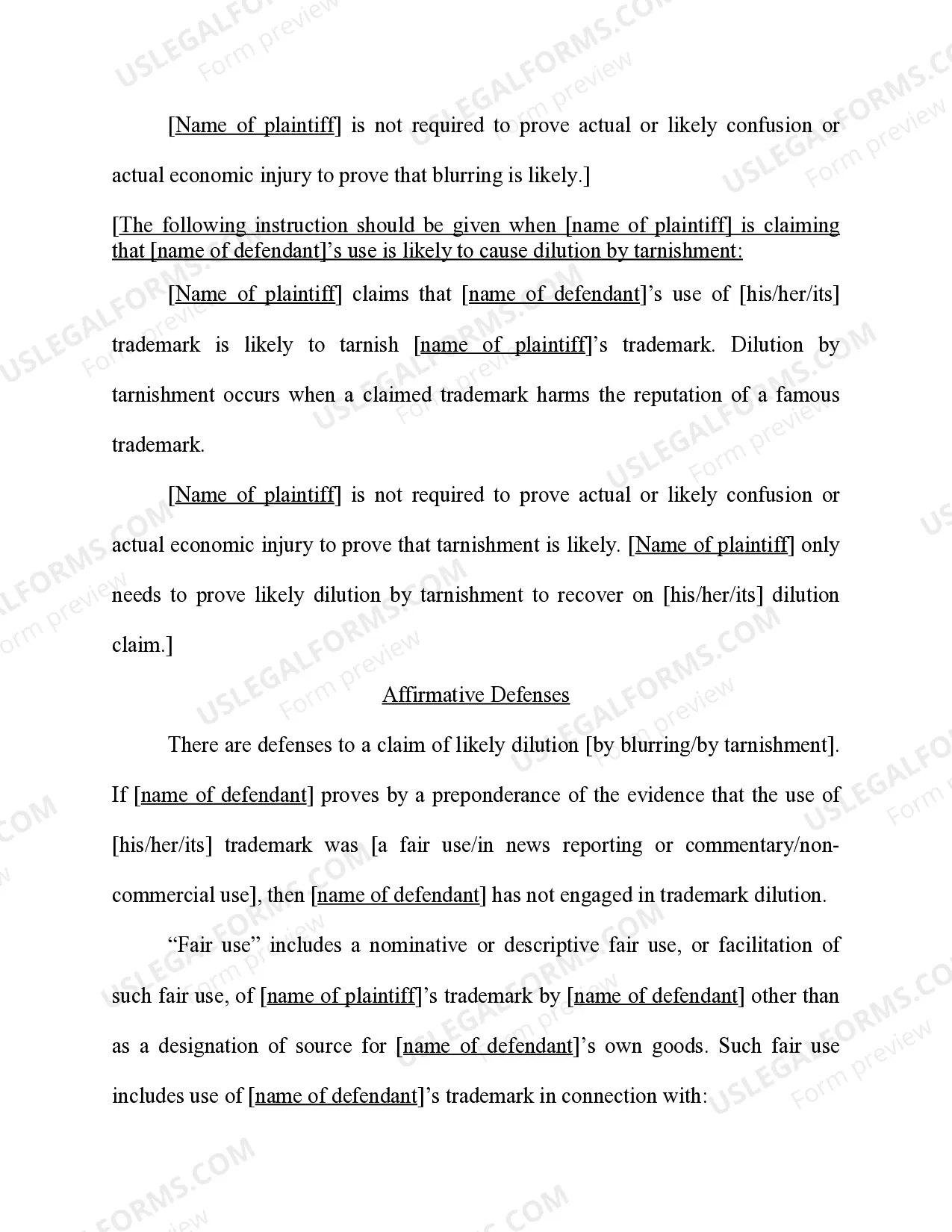
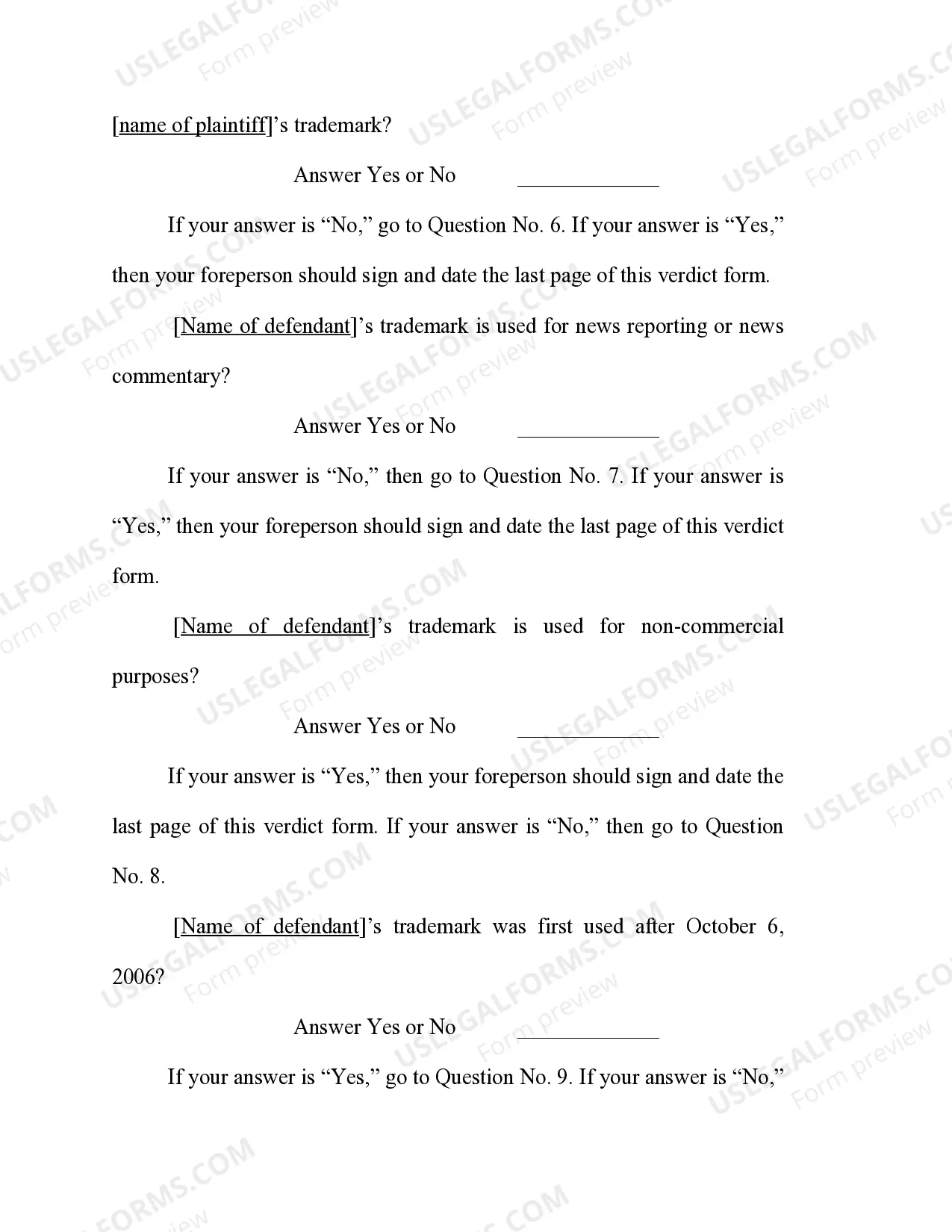
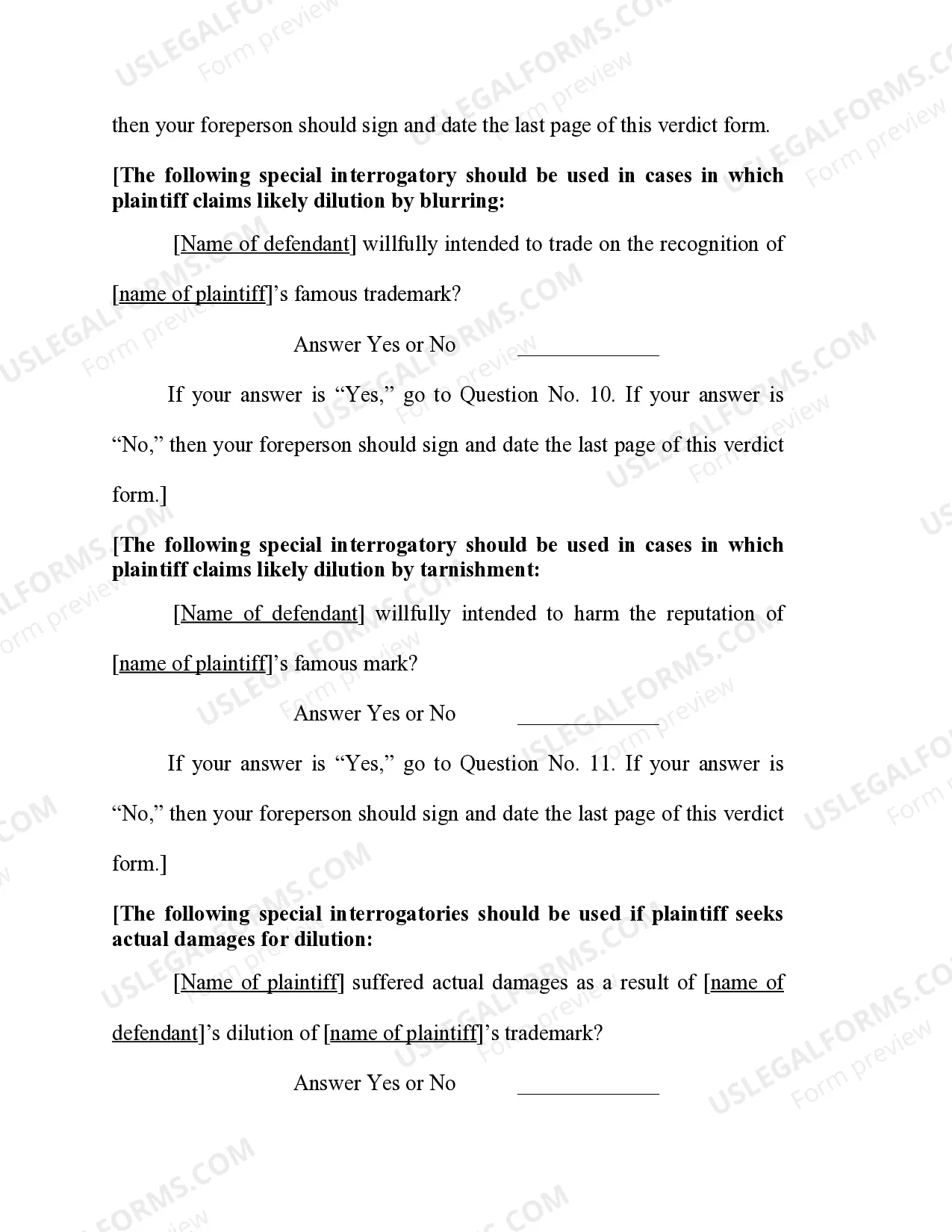
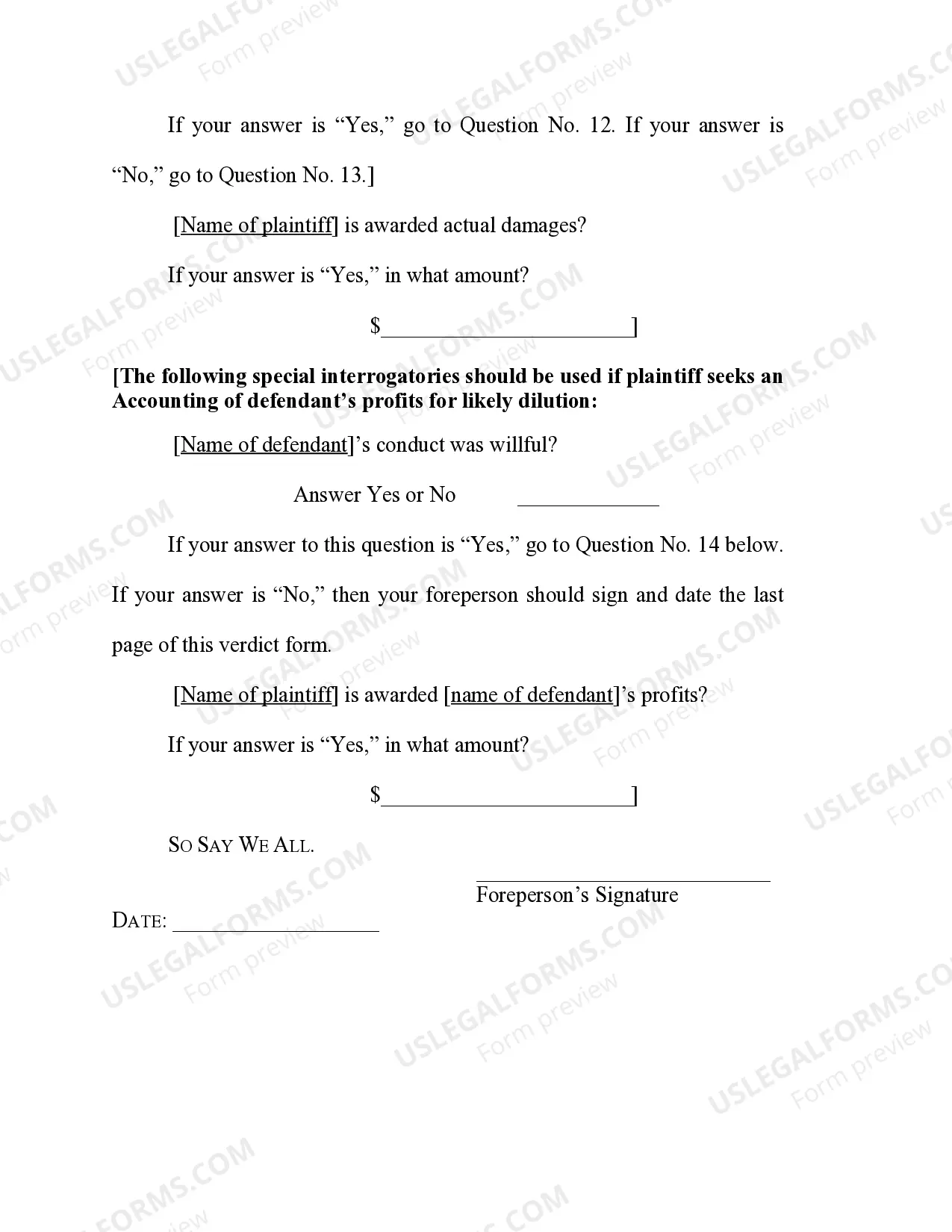
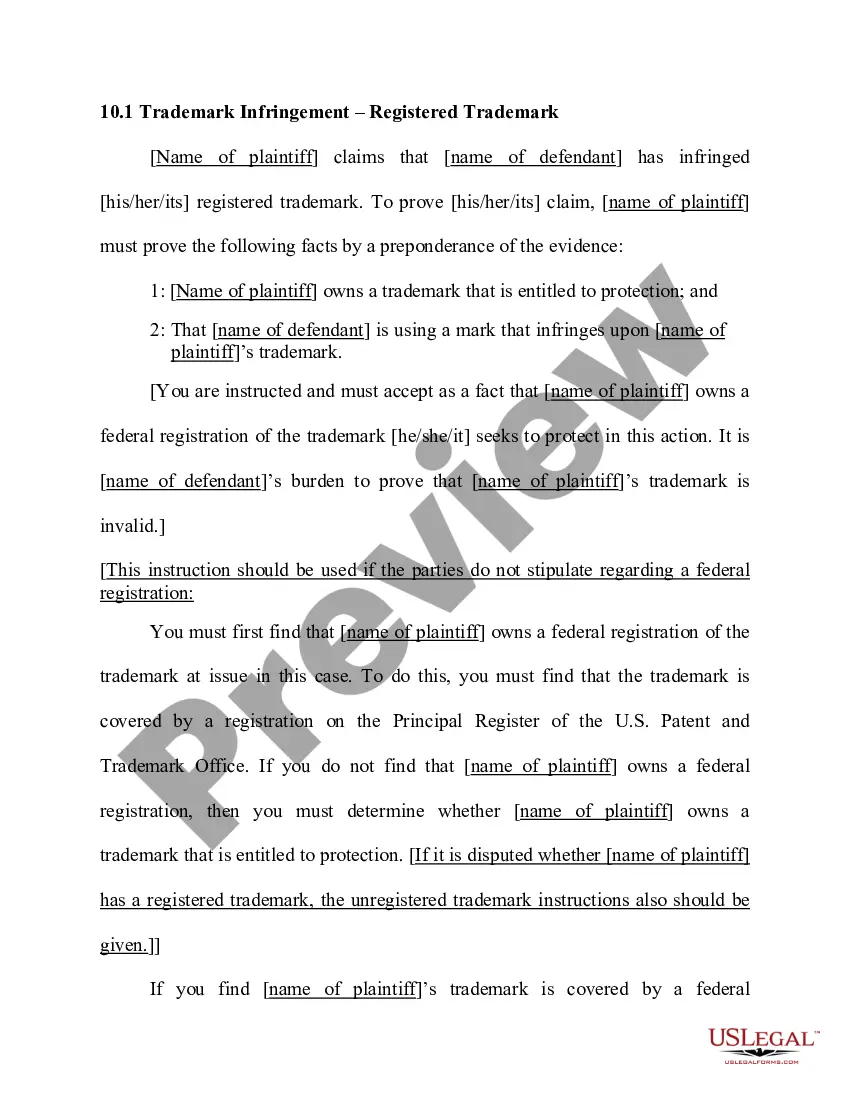
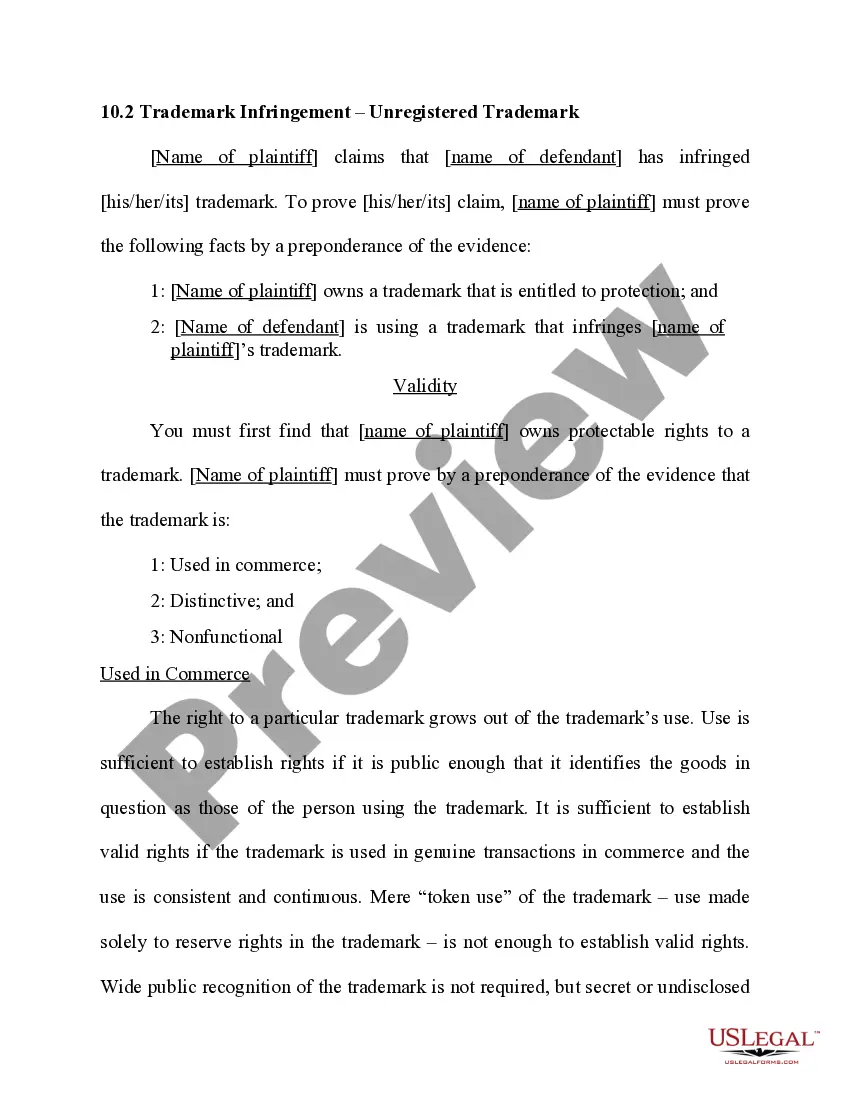
The Trademark Dilution form is used in legal proceedings to assess claims that a trademark's distinctiveness is being diluted through unauthorized use by another party. This form provides essential instructions for jury members in federal court cases regarding trademark dilution claims, outlining the necessary elements for proving that dilution has occurred. Unlike regular trademark infringement claims, which often require proof of consumer confusion, trademark dilution focuses on the injury to the mark's reputation and distinctiveness itself.
Main sections of this form
- Definition of trademark dilution and its legal implications.
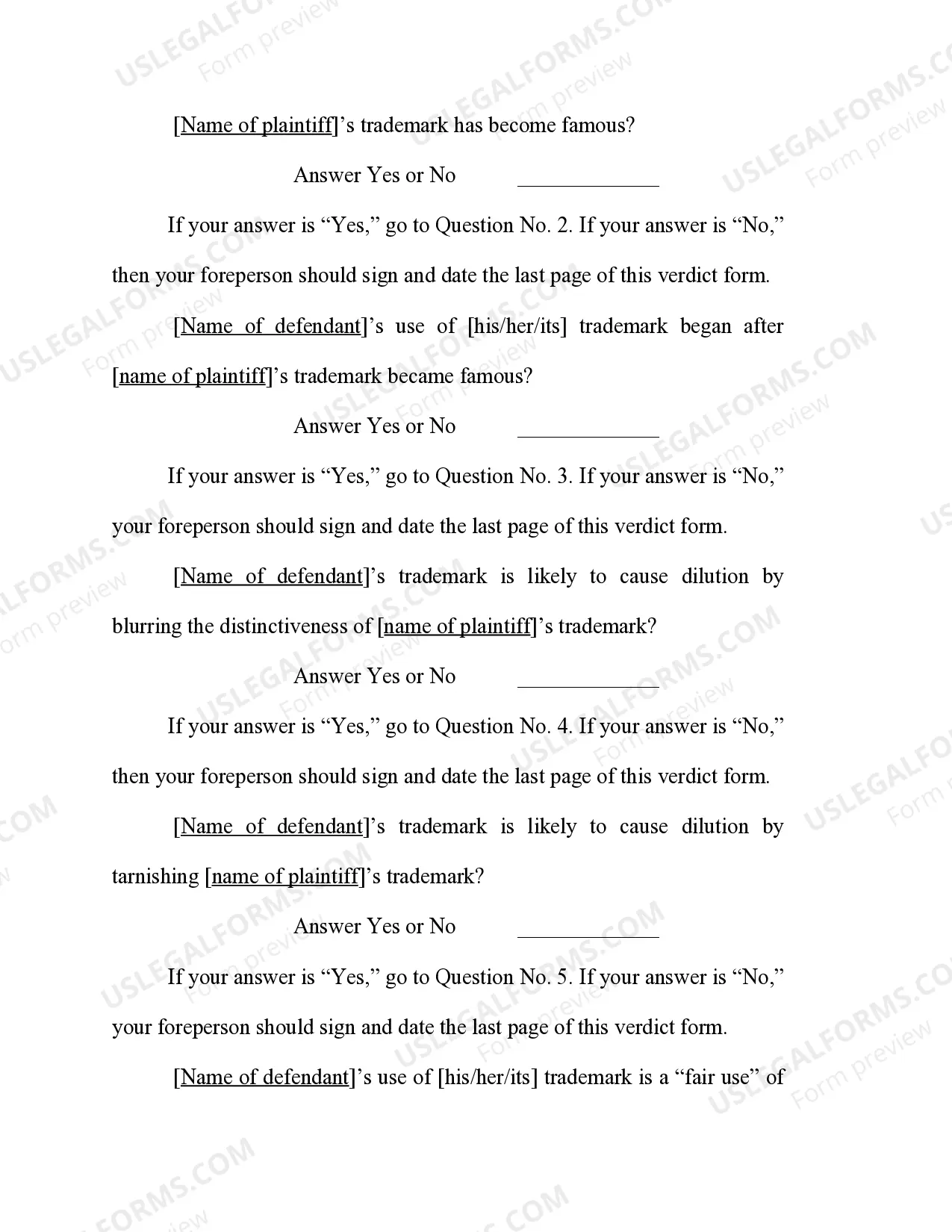
- Criteria for establishing a claim of likely dilution, including the fame of the trademark.
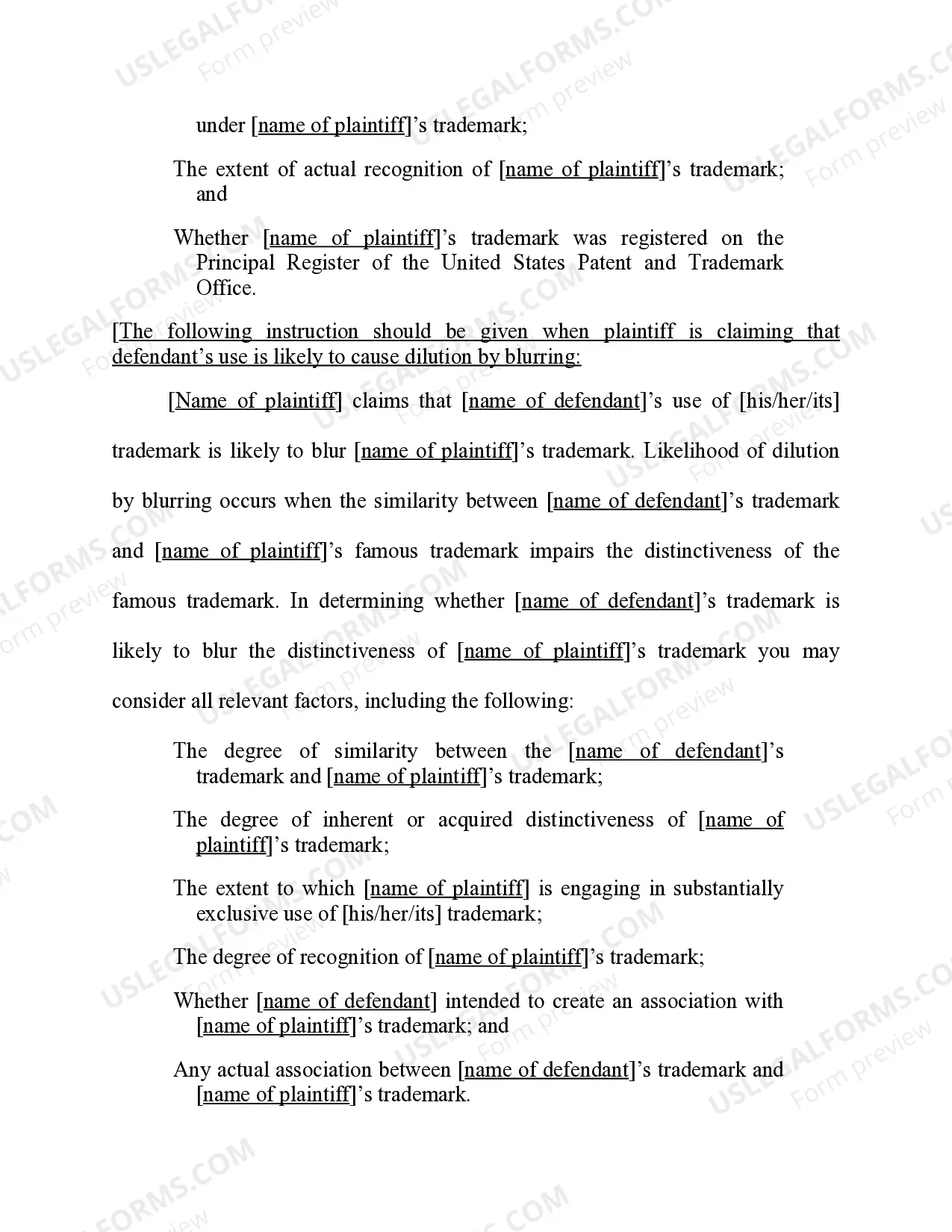
- Instructions on distinguishing between dilution by blurring and dilution by tarnishment.
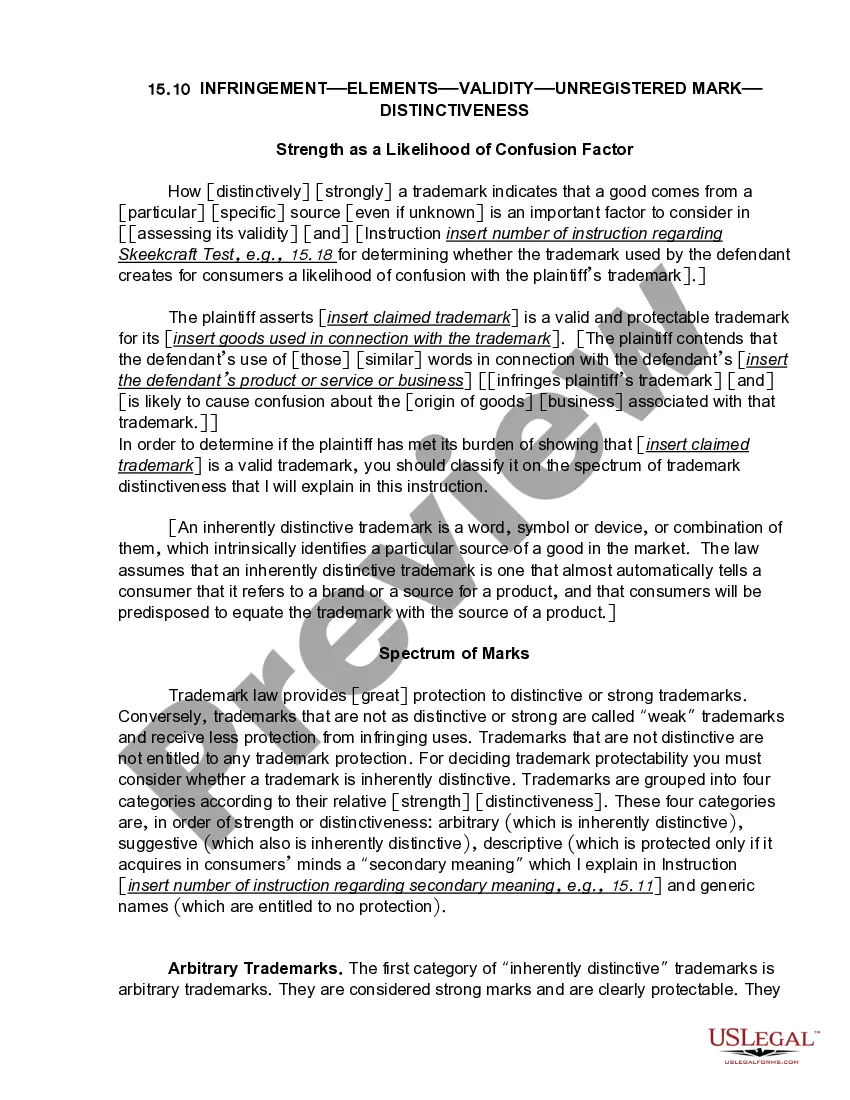
- Factors impacting trademark fame and distinctiveness.
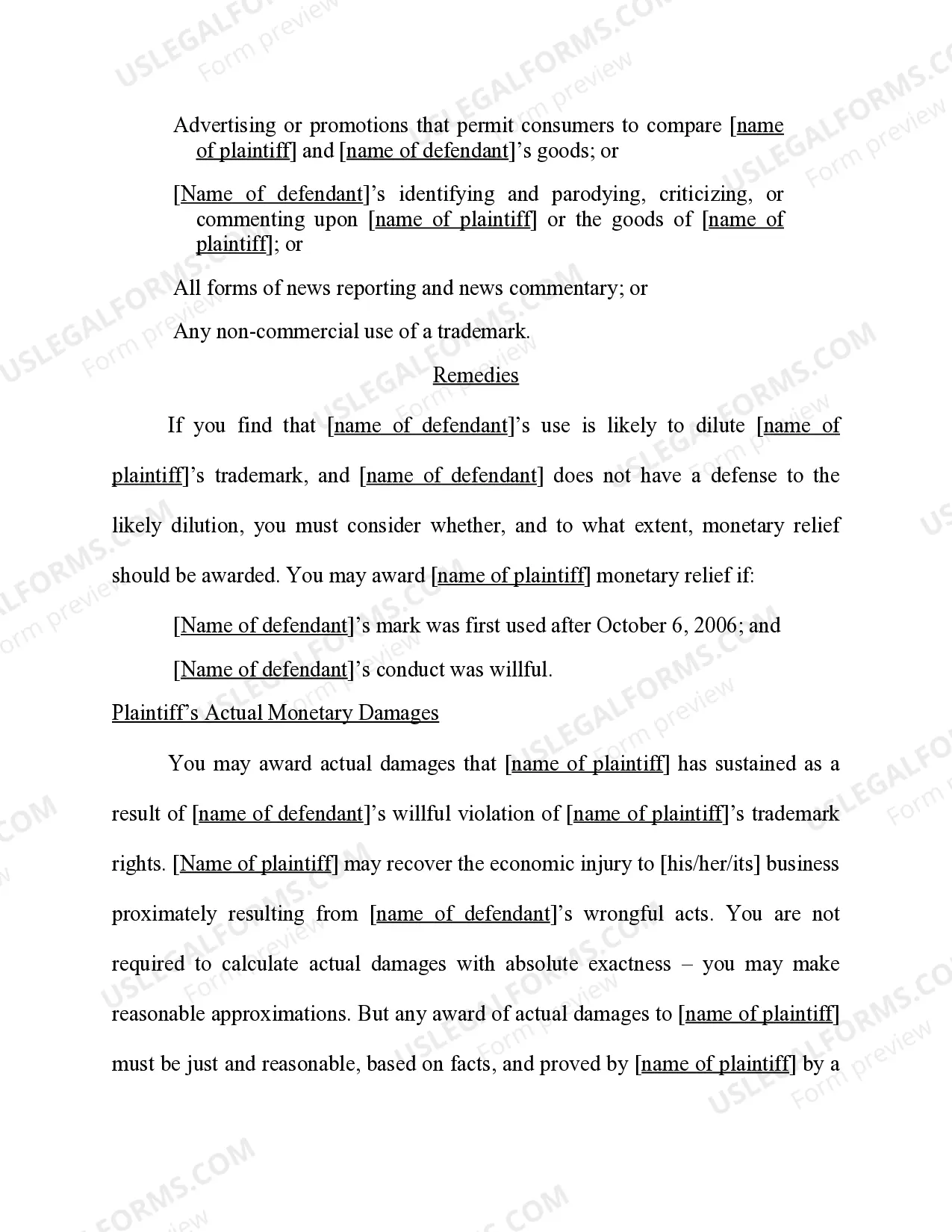
- Affirmative defenses available to the defendant.
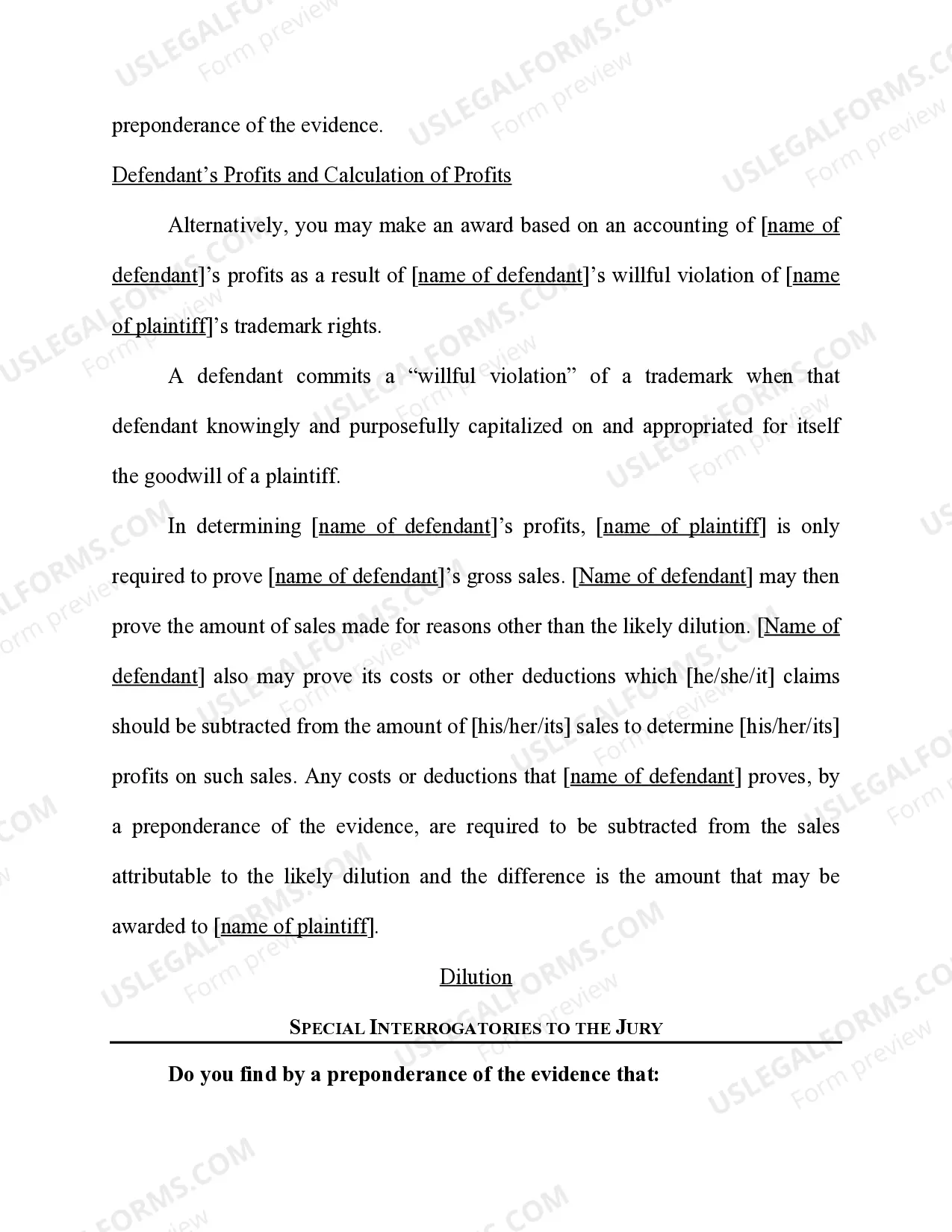
- Possible remedies including damages and accounting of profits.
Common use cases
This form should be used when a trademark owner believes that another party's use of a similar mark dilutes their trademark's distinctiveness or reputation. Common scenarios include instances where a less-known brand uses a similar name or logo that may weaken the recognition and value of a well-established brand. Businesses seeking to protect their intellectual property can also use this form as part of their litigation process in federal court.
Intended users of this form
This form is intended for:
- Trademark owners seeking legal protections against dilution of their trademarks.
- Lawyers representing clients in trademark dilution cases.
- Businesses involved in disputes over trademark use.
Completing this form step by step
- Identify the parties involved by entering the name of the plaintiff and defendant.
- Detail the claim regarding the trademark's fame and distinctiveness.
- Specify the alleged actions taken by the defendant that lead to dilution.
- Include any affirmative defenses that may apply to the defendant's use.
- Determine and outline the remedies sought, including damages or accounting of profits.
Notarization requirements for this form
In most cases, this form does not require notarization. However, some jurisdictions or signing circumstances might. US Legal Forms offers online notarization powered by Notarize, accessible 24/7 for a quick, remote process.
Get your form ready online
Our built-in tools help you complete, sign, share, and store your documents in one place.
Make edits, fill in missing information, and update formatting in US Legal Forms—just like you would in MS Word.
Download a copy, print it, send it by email, or mail it via USPS—whatever works best for your next step.
Sign and collect signatures with our SignNow integration. Send to multiple recipients, set reminders, and more. Go Premium to unlock E-Sign.
If this form requires notarization, complete it online through a secure video call—no need to meet a notary in person or wait for an appointment.
We protect your documents and personal data by following strict security and privacy standards.

Make edits, fill in missing information, and update formatting in US Legal Forms—just like you would in MS Word.

Download a copy, print it, send it by email, or mail it via USPS—whatever works best for your next step.

Sign and collect signatures with our SignNow integration. Send to multiple recipients, set reminders, and more. Go Premium to unlock E-Sign.

If this form requires notarization, complete it online through a secure video call—no need to meet a notary in person or wait for an appointment.

We protect your documents and personal data by following strict security and privacy standards.
Common mistakes
- Failing to adequately establish the fame of the trademark.
- Neglecting to specify the type of dilution being claimed.
- Overlooking potential affirmative defenses available to the defendant.
Why use this form online
- Access to ready-made legal language drafted by licensed attorneys.
- Convenience of downloading and completing the form at your own pace.
- Editable formats that allow for customizations specific to individual cases.
- Increased reliability through standardized formats recognized in legal contexts.
Legal use & context
- The Trademark Dilution form is enforceable in federal courts where trademark law applies.
- It is important to understand that not all trademark disputes rise to the level of dilution; evidence should clearly support claims of harm to the mark's reputation.
- Claimants must gather appropriate proof regarding their trademark's recognition and the defendant's intent in using a similar mark.
Looking for another form?
Form popularity
FAQ
In order to prevent your trademark from dilution in USA, you must prove that the original mark has been diluted. A famous trademark owner is qualified to an injunction against the third party using a mark or trade name that can cause dilution of the famous mark.
Dilution differs from normal trademark infringement in that there is no need to prove a likelihood of confusion to protect a mark. Instead, all that is required is that use of a "famous" mark by a third party causes the dilution of the "distinctive quality" of the mark.
To establish a claim of dilution, the mark must have become famous before use of the allegedly diluting mark or trade name began.
If a trademark becomes famous, like Nike or Xerox, the owner can also sue for trademark ?dilution.? Dilution happens when a trademark's distinctive quality is blurred or tarnished by another mark.
Trademark dilution occurs when a third party uses a mark or trade name in commerce that is sufficiently similar to a famous mark such that it harms consumer perception of the famous mark. ?Blurring? and ?tarnishment? are the two types of harm that arise from dilution.
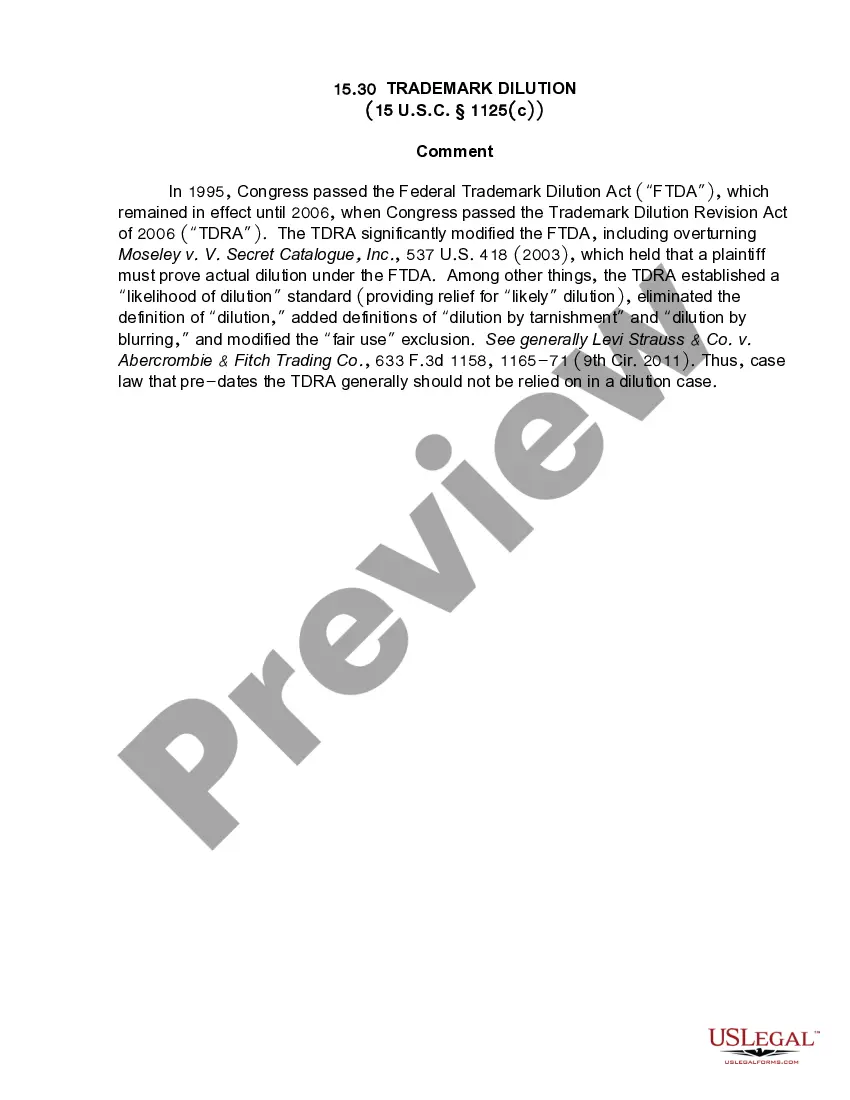
The Federal Trademark Dilution Act of 1995 states the owner of a trademark can take legal action against anyone who purposefully blurs or tarnishes a trademark.
The Federal Trademark Dilution Act of 1995 ( Pub. L. 104?98 (text) (PDF)) is a United States federal law which protects famous trademarks from uses that dilute their distinctiveness, even in the absence of any likelihood of confusion or competition. It went into effect on January 16, 1996.