INTENT REQUIREMENT
Overview of this form
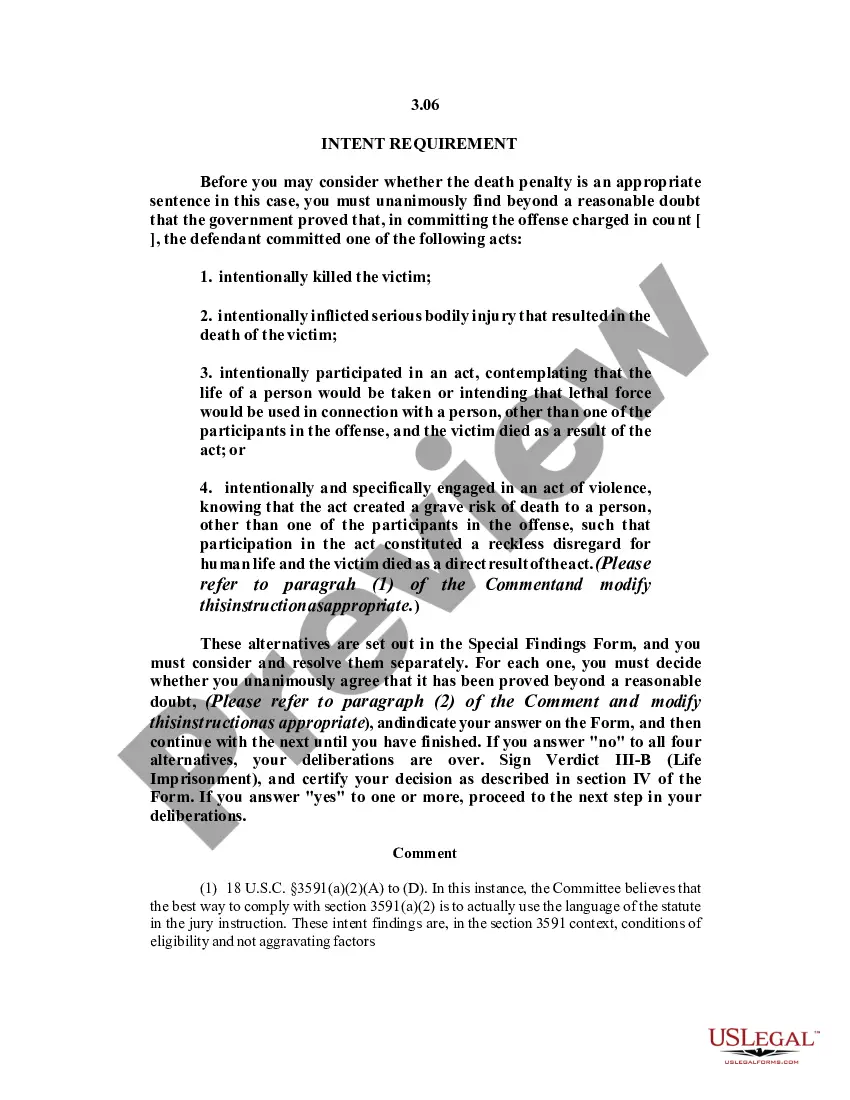
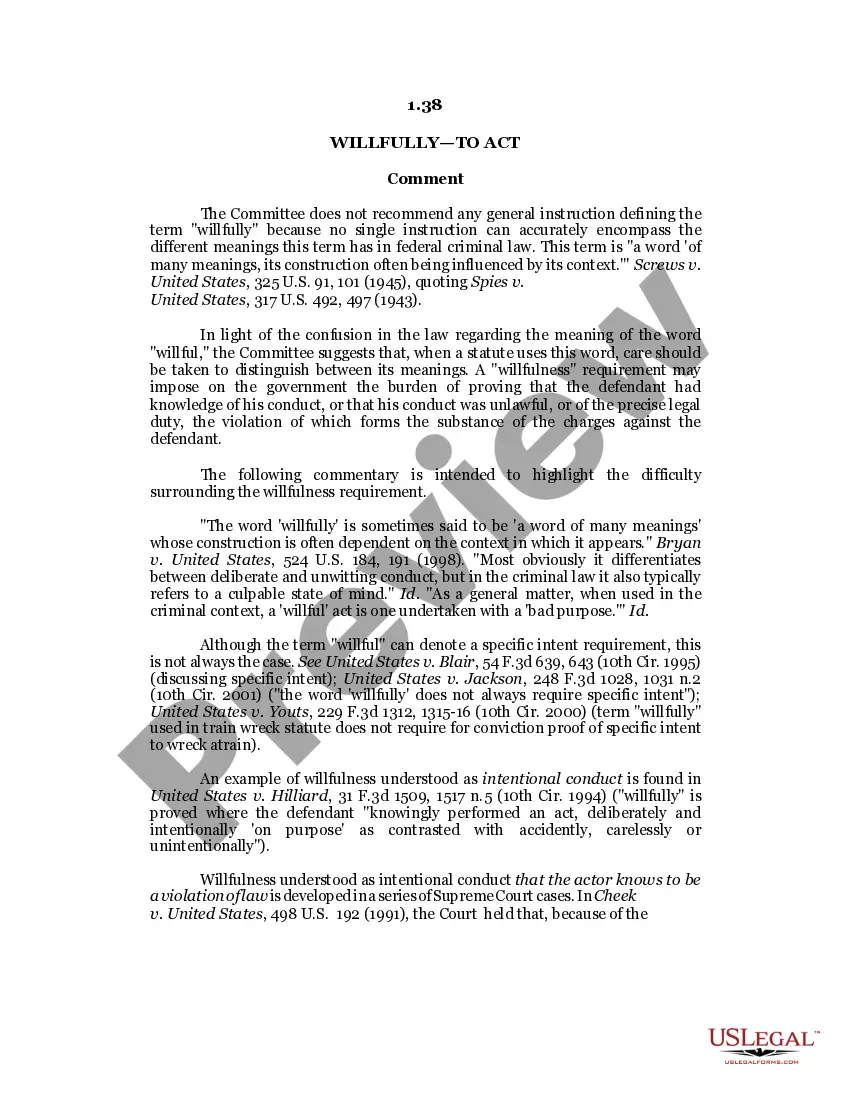
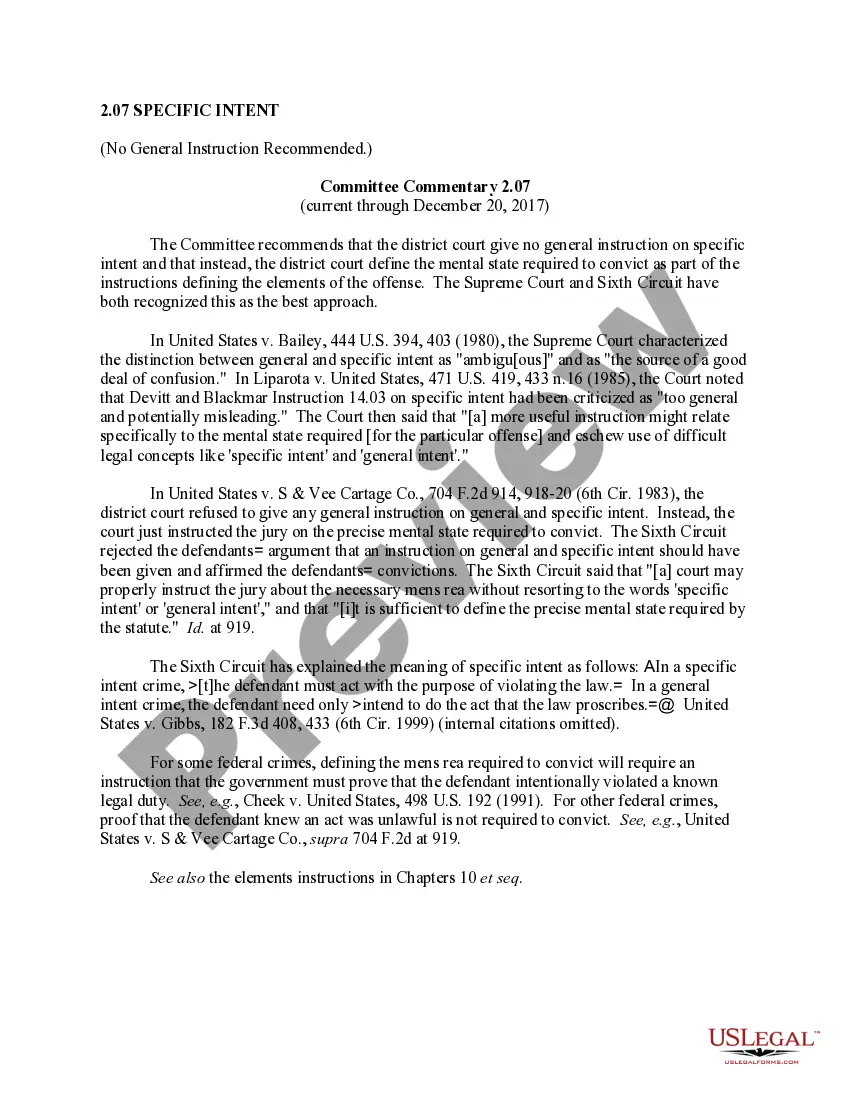
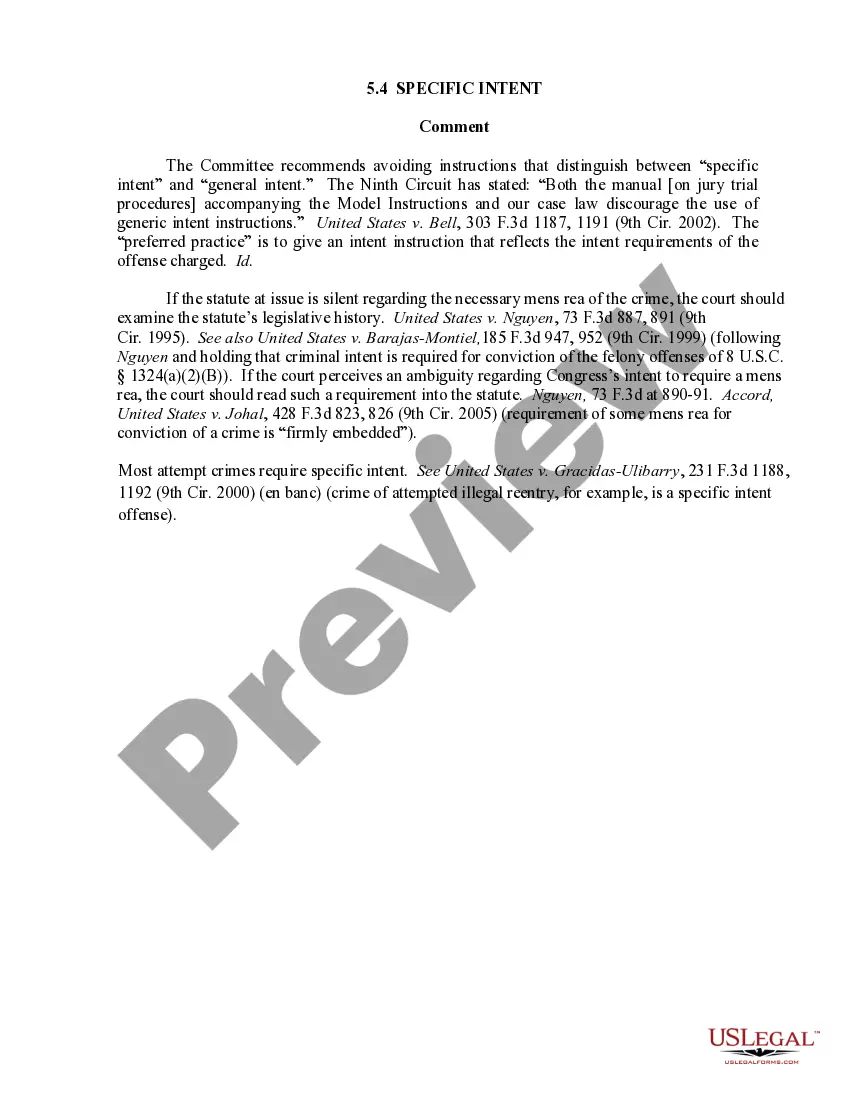
The Intent Requirement form outlines the specific criteria that must be established before a jury can consider imposing the death penalty. This form is critical in ensuring that jurors understand the different acts that constitute the necessary intent behind the defendant's actions. It differs from similar forms in that it focuses on the requirements for the imposition of the death penalty in criminal cases, ensuring that jurors reach a unanimous decision on the presence of intent beyond a reasonable doubt before proceeding with sentencing considerations.
Key parts of this document
- Definition of intent: Specifies the acts that are considered as demonstrating intent to kill.
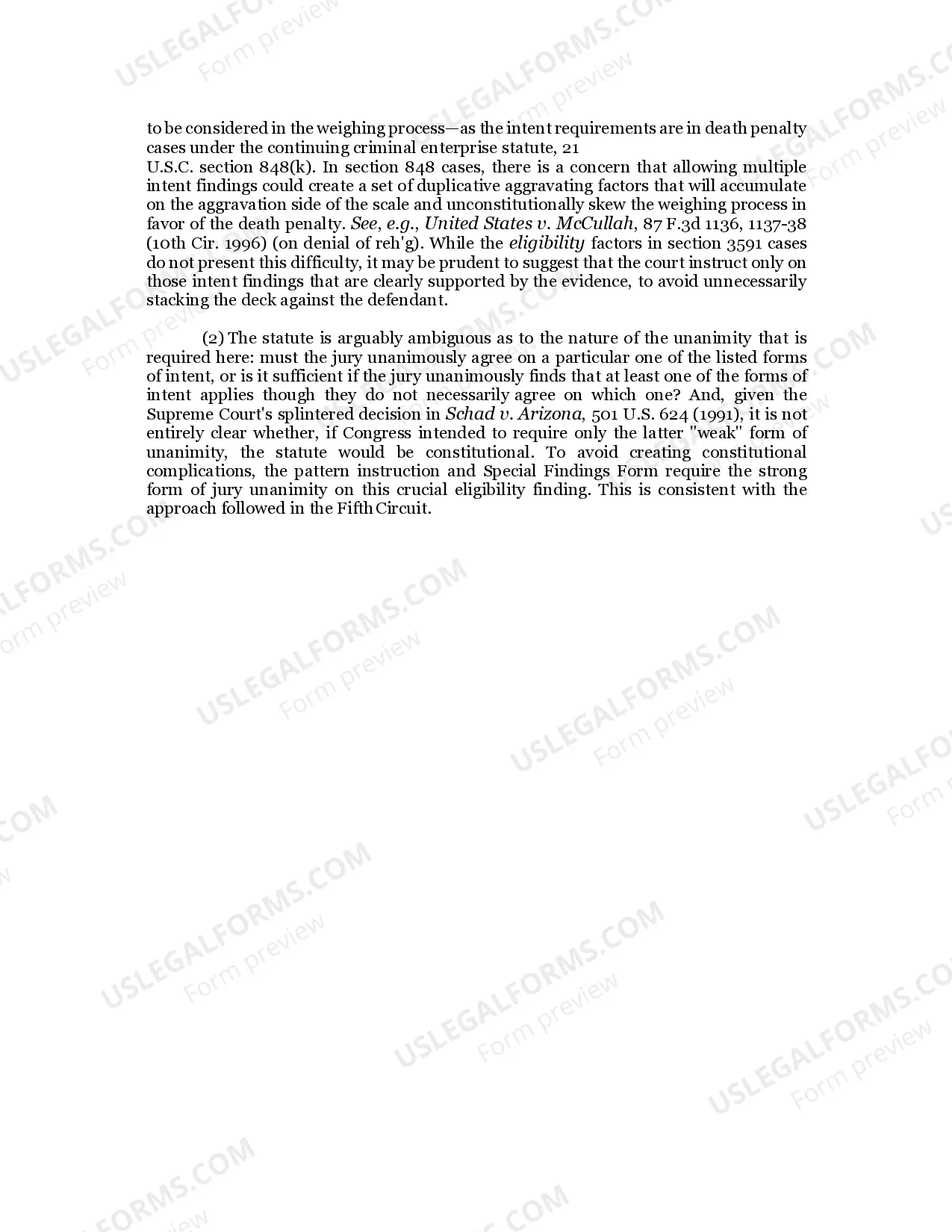
- Unanimous agreement: Requires that the jury unanimously finds that at least one form of intent has been proven beyond a reasonable doubt.
- Separate consideration: Jurors must resolve each form of intent separately before deliberating on the death penalty.
- Outcome directives: Instructions on what to do if unanimous consensus is reached or not on any of the intent options.
- Reference to statutory language: Aligns with specific statutory provisions to ensure compliance with legal standards.

When to use this document
This form is used in criminal cases where the death penalty is a potential sentence. It is invoked when a jury examines the circumstances surrounding a defendant's actions that resulted in death, ensuring that the requisite mental state or intent is established before considering capital punishment. Scenarios include murder trials where the prosecution seeks the death penalty and the court provides instructions on the necessary intent requirements.
Who needs this form
This form is intended for:
- Jurors involved in a capital case.
- Judges presiding over trials where the death penalty may be imposed.
- Legal practitioners who require clarity on intent requirements in jury instructions.
Instructions for completing this form
- Identify the act committed by the defendant that could establish intent.
- Determine if the evidence supports the prosecution's claim of intent.
- Engage in deliberations to reach a unanimous decision regarding the presence of intent.
- Complete the Special Findings Form by indicating the agreement or disagreement on intent options.
- If no intent is found, sign Verdict III-B and certify your decision.
Is notarization required?
This form does not typically require notarization to be legally valid. However, some jurisdictions or document types may still require it. US Legal Forms provides secure online notarization powered by Notarize, available 24/7 for added convenience.
Get your form ready online
Our built-in tools help you complete, sign, share, and store your documents in one place.
Make edits, fill in missing information, and update formatting in US Legal Forms—just like you would in MS Word.
Download a copy, print it, send it by email, or mail it via USPS—whatever works best for your next step.
Sign and collect signatures with our SignNow integration. Send to multiple recipients, set reminders, and more. Go Premium to unlock E-Sign.
If this form requires notarization, complete it online through a secure video call—no need to meet a notary in person or wait for an appointment.
We protect your documents and personal data by following strict security and privacy standards.

Make edits, fill in missing information, and update formatting in US Legal Forms—just like you would in MS Word.

Download a copy, print it, send it by email, or mail it via USPS—whatever works best for your next step.

Sign and collect signatures with our SignNow integration. Send to multiple recipients, set reminders, and more. Go Premium to unlock E-Sign.

If this form requires notarization, complete it online through a secure video call—no need to meet a notary in person or wait for an appointment.

We protect your documents and personal data by following strict security and privacy standards.
Common mistakes
- Failing to discuss each form of intent separately, which is required for jury instructions.
- Not reaching a unanimous decision if evidence supports intent but jurors disagree on which specific intent applies.
- Overlooking the statutory language when instructing jurors, which may lead to misunderstandings.
Benefits of completing this form online
- Convenience of immediate access to necessary legal forms without delay.
- Editable templates allow for customization to meet specific case requirements.
- Reliability ensures that the latest legal standards are reflected in the forms.
Legal use & context
- The form ensures compliance with federal law regarding the imposition of the death penalty.
- It is essential for maintaining the integrity of the legal process in capital cases.
- Jurors must feel confident in their understanding and application of the specified intent requirements.
Looking for another form?






Form popularity
FAQ
: a usually clearly formulated or planned intention : aim. the director's intent. : the act or fact of intending : purpose. especially : the design or purpose to commit a wrongful or criminal act.
Criminal intent is defined as the resolve or determination with which a person acts to commit a crime.
There are four kinds of criminal intent: purposeful, knowing, reckless, and negligent.
The three common-law intents ranked in order of culpability are malice aforethought, specific intent, and general intent. Specific intent is the intent to bring about a certain result, do something other than the criminal act, or scienter. General intent is simply the intent to perform the criminal act.
There are four kinds of criminal intent: purposeful, knowing, reckless, and negligent.
Model Penal Code Criminal Intent The Model Penal Code divides criminal intent into four states of mind listed in order of culpability: purposely, knowingly, recklessly, and negligently.
It wasn't my intent to hide anything from you. She glanced up and met his intent gaze. They put her through college and it was her intent to stay with them as long as they needed her. Finally, his intent gaze left the glass and found hers.