General Easement for Utilities
Overview of this form
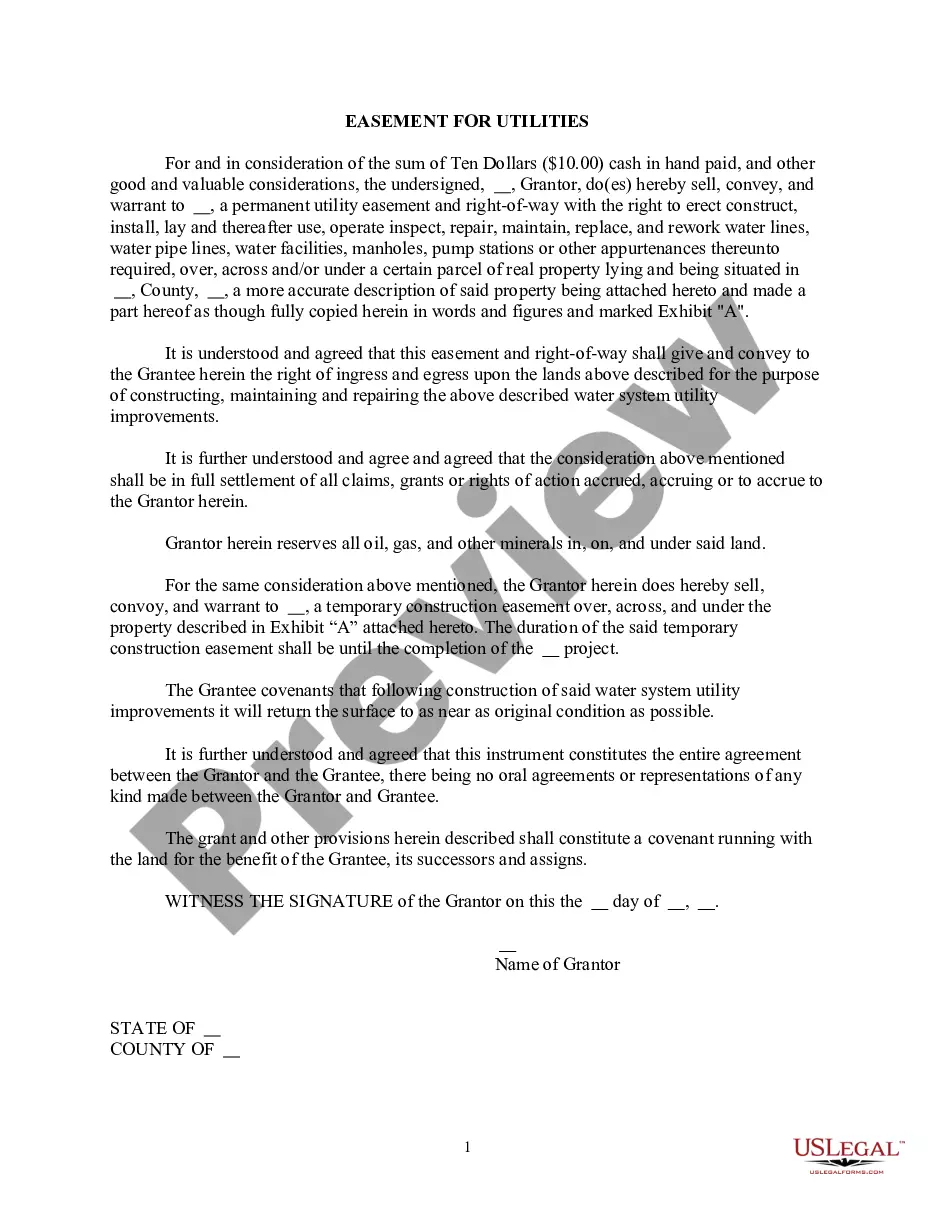
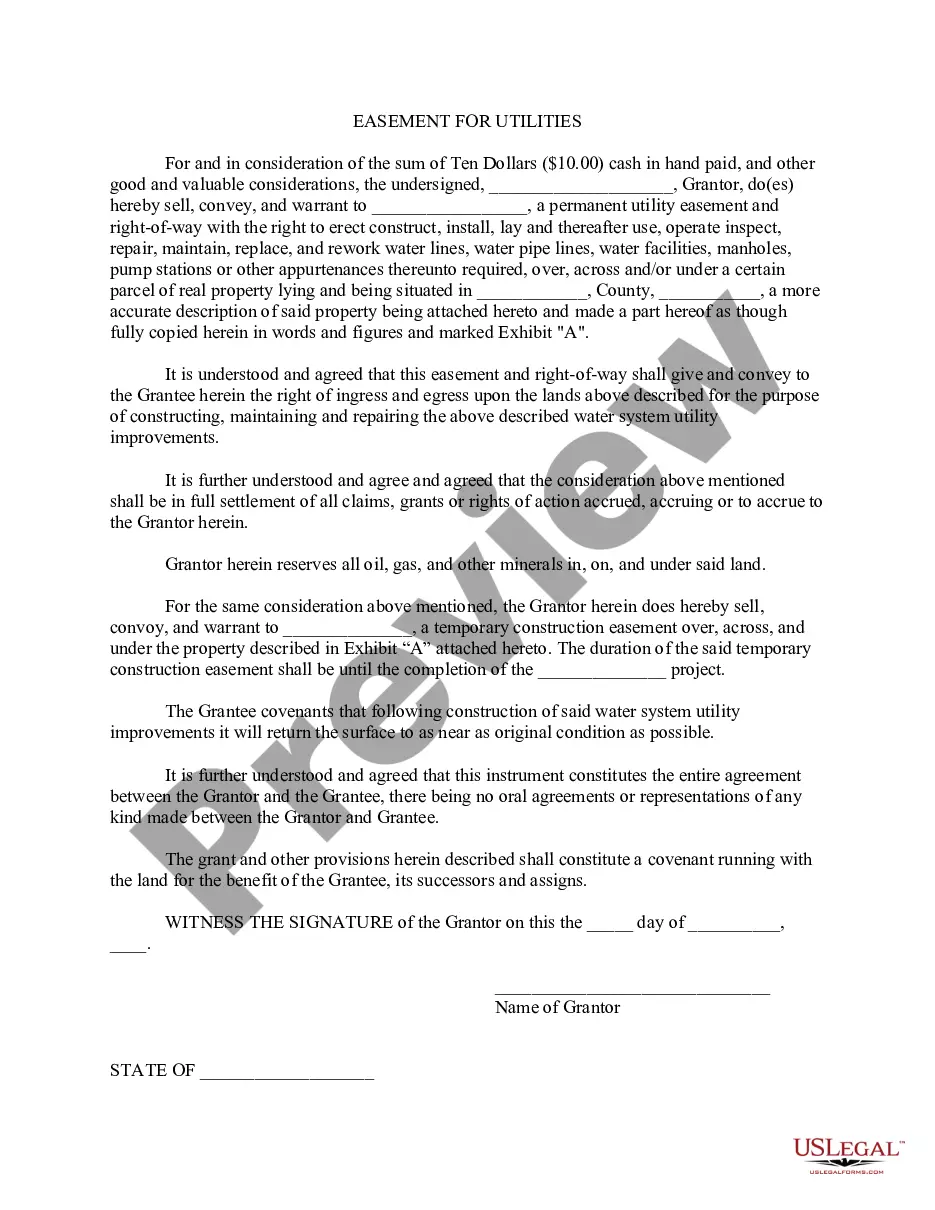
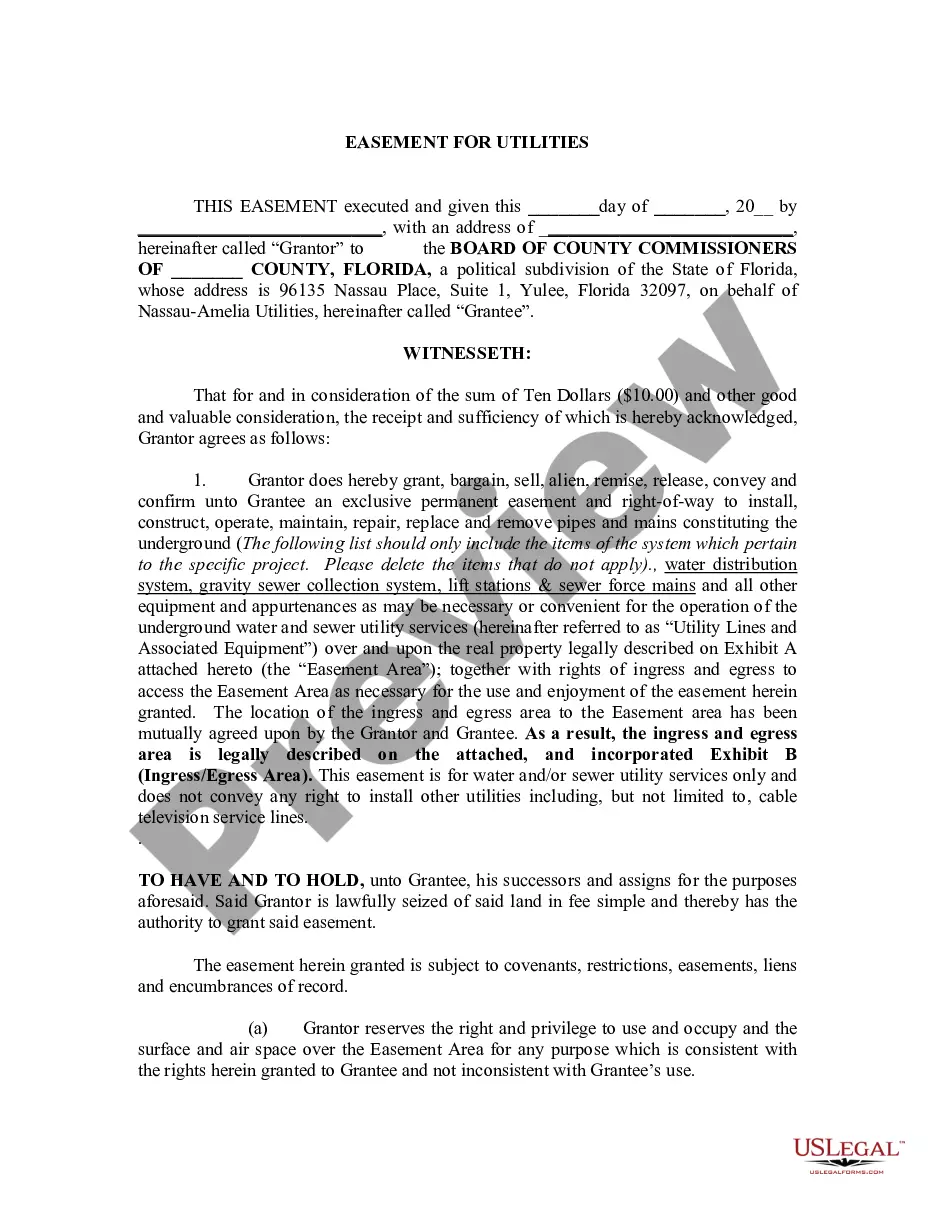
The General Easement for Utilities is a legal document that grants one party, usually a utility company, the rights to use another party's property for utility purposes, such as running water lines or other utilities. It distinguishes itself from other easement forms by focusing specifically on utility infrastructure and the associated rights and responsibilities both parties have concerning the easement area.
Form components explained
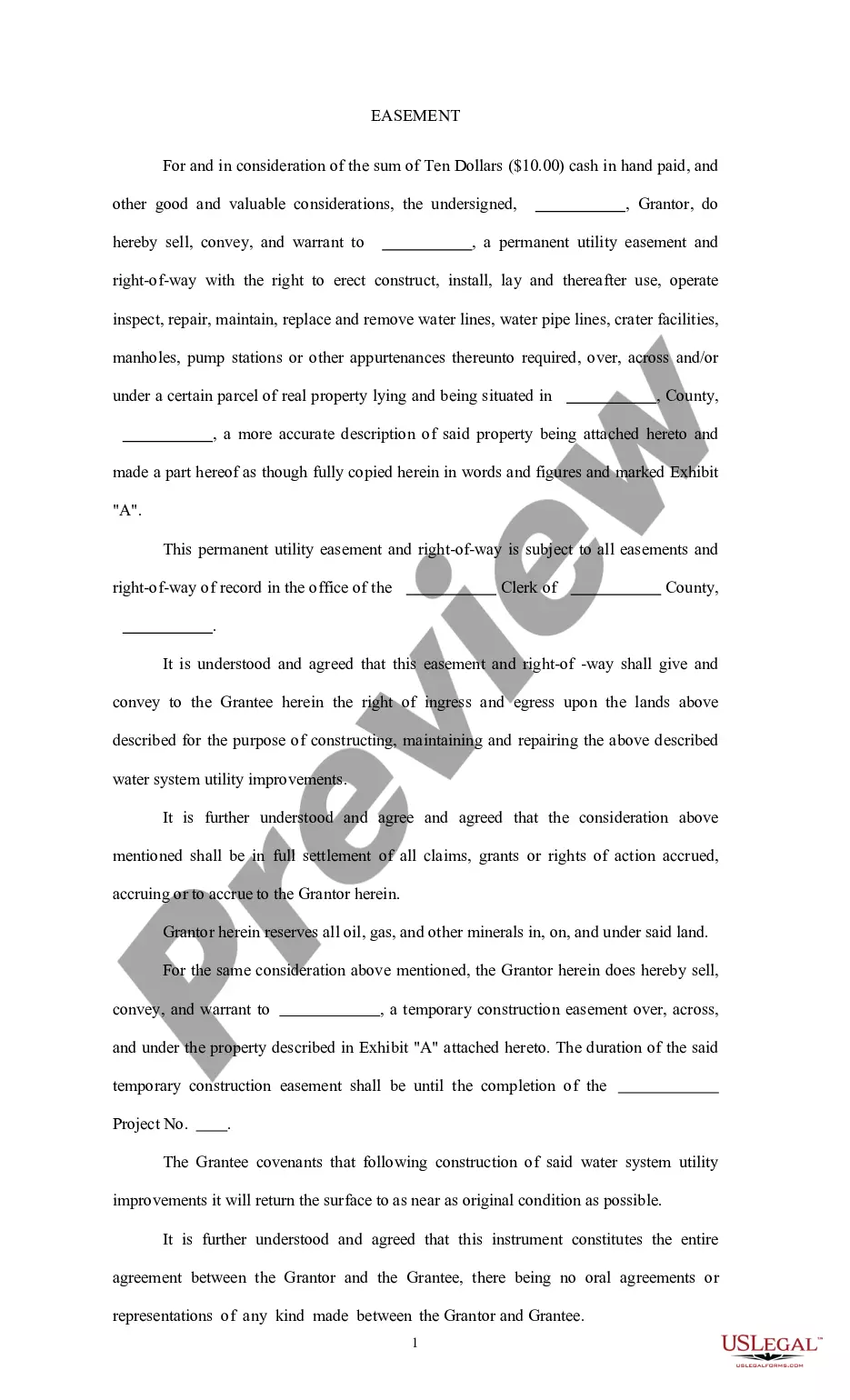
- Description of the property involved in the easement.
- Specific rights granted to the applicant (Grantee) regarding the construction and maintenance of utility systems.
- Reserved rights of the property owner (Grantor) concerning minerals beneath the surface.
- Terms regarding a temporary construction easement and its duration.
- Requirement for the Grantee to return the surface to its original condition after work is completed.
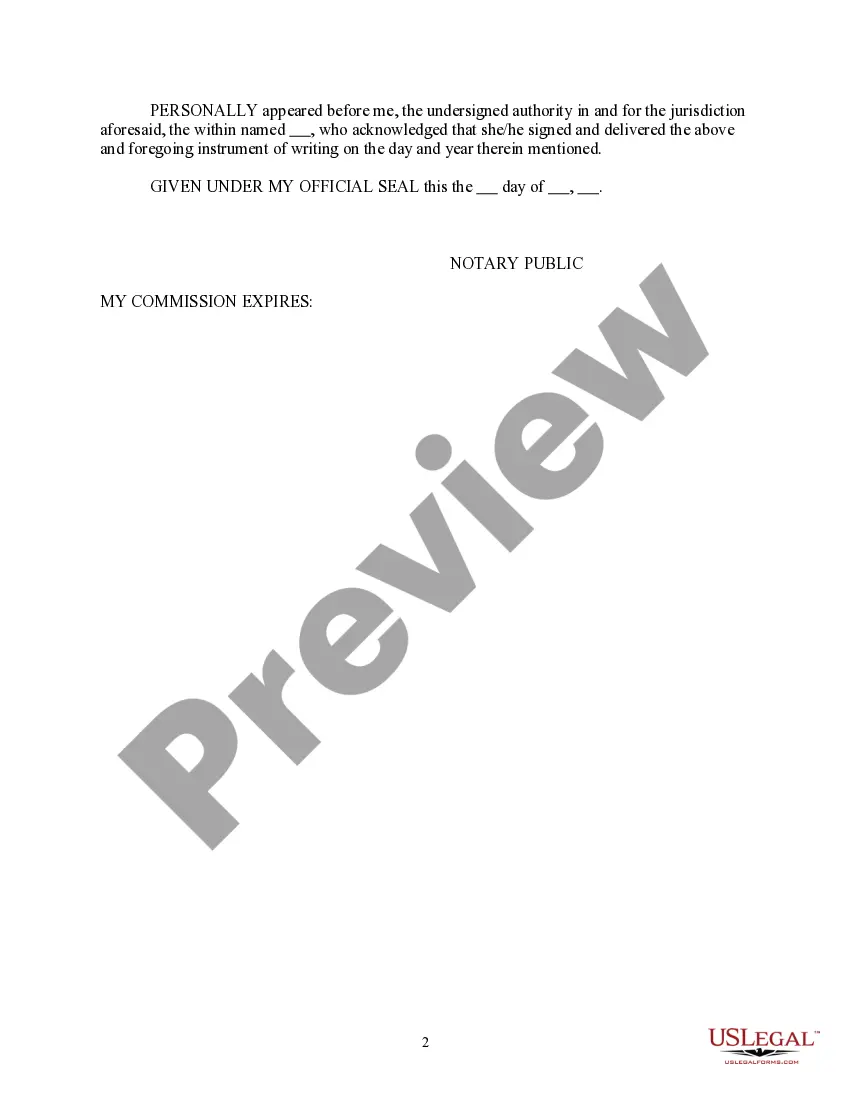
- Legal acknowledgment and notarization section to validate the agreement.
Situations where this form applies
This form should be used when a utility company needs to access and use a property owner's land for the purpose of installing, maintaining, or repairing utility infrastructure. It is commonly utilized for projects involving water lines, telecommunications cabling, and similar installations where the utility needs ongoing access to the property for operational reasons.
Intended users of this form
This form is intended for:
- Property owners who need to grant access to utility companies.
- Utility companies seeking a legal right-of-way for infrastructure installation and maintenance.
- Developers involved in land development requiring utility access.
- Landlords allowing utility installations for tenants.
How to complete this form
- Identify the parties involved, including the Grantor (property owner) and the Grantee (utility company).
- Specify the exact description of the property where the easement will apply.
- Clearly outline the rights being granted to the Grantee, including any construction or maintenance activities.
- Enter the consideration amount (usually a nominal fee) for granting the easement.
- Include the date and obtain signatures from both parties to validate the document.
- Have the form notarized if required, ensuring all formalities are observed.
Does this form need to be notarized?
Yes, this form must be notarized to be legally valid. US Legal Forms offers an integrated online notarization option, allowing for secure video calls with a notary 24/7, ensuring you can complete your form conveniently and legally.
Get your form ready online
Our built-in tools help you complete, sign, share, and store your documents in one place.
Make edits, fill in missing information, and update formatting in US Legal Forms—just like you would in MS Word.
Download a copy, print it, send it by email, or mail it via USPS—whatever works best for your next step.
Sign and collect signatures with our SignNow integration. Send to multiple recipients, set reminders, and more. Go Premium to unlock E-Sign.
If this form requires notarization, complete it online through a secure video call—no need to meet a notary in person or wait for an appointment.
We protect your documents and personal data by following strict security and privacy standards.

Make edits, fill in missing information, and update formatting in US Legal Forms—just like you would in MS Word.

Download a copy, print it, send it by email, or mail it via USPS—whatever works best for your next step.

Sign and collect signatures with our SignNow integration. Send to multiple recipients, set reminders, and more. Go Premium to unlock E-Sign.

If this form requires notarization, complete it online through a secure video call—no need to meet a notary in person or wait for an appointment.

We protect your documents and personal data by following strict security and privacy standards.
Common mistakes to avoid
- Failing to accurately describe the property involved in the easement.
- Not specifying the rights and responsibilities clearly.
- Overlooking the need for notarization where applicable.
- Using vague or unclear language, which may lead to disputes in the future.
Benefits of completing this form online
- Convenience: Download and complete the form at your own pace.
- Editability: Make necessary adjustments easily to suit your specific situation.
- Reliability: Access accurately drafted forms created by experienced attorneys.
Legal use & context
- The easement grants a legally recognized right that can be enforced in court.
- It establishes specific responsibilities for both parties related to property use.
- Failing to abide by the easement terms can lead to legal disputes and potential damages.
What to keep in mind
- A General Easement for Utilities is vital for legal access to property for utility purposes.
- Clear documentation and proper legal procedures, including notarization, are crucial for enforceability.
- Understanding the rights and obligations of both parties can prevent conflicts in future property use.
Glossary of terms used in this form
- Easement: A legal right to use someone else's land for a specified purpose.
- Grantor: The property owner granting the easement.
- Grantee: The individual or entity receiving the easement rights.
- Ingress and egress: The rights to enter and exit the property.
Looking for another form?


Form popularity
FAQ
Utility easements are one of the most common types of easements for private property, which generally allow public utility companies access to the property for the purpose of installing, repairing and maintaining utility lines.
An easement in gross is personal to the party that receives the benefit of easement. An example of an easement in gross is an easement to a utility company to run a power line across a burdened piece of property. The utility company is the benefited party and there isn't necessarily a benefited parcel of land.
So, having an easement on a property may have a permanent outcome on the property with rights of the home owner. But not all easements are bad.If you live in a rural area, you run into bad easement issues more often, typically where the easement was created by a parcel owner next to your land.
1. Easement in gross. In this type of easement, only property is involved, and the rights of other owners are not considered. For example, a public utility line easement would be an easement in gross and would be recorded in the public records.
Types of Easements An easement may be classified as either an easement appurtenant or an easement in gross. Easement Appurtenant. An easement appurtenant is an easement that benefits one parcel of land, known as the dominant tenement, to the detriment of another parcel of land, known as the servient tenement.
When termed as a utility easement, it means a utility company's right to access and control the portion of another person's land that is located near utility facilities and structures (i.e. utility poles, transformers, overhead or underground electrical lines).
The bottom line is that developers and builders who are presented with utility company easement forms should not just sign them, but think about the kinds of issues they can present. It is easier to negotiate these concessions up front before the lines go in, than to ask the utility company to amend its easement later.
When termed as a utility easement, it means a utility company's right to access and control the portion of another person's land that is located near utility facilities and structures (i.e. utility poles, transformers, overhead or underground electrical lines).