Order authorizing Rule 2004 examination - nondebtor witness
Understanding this form
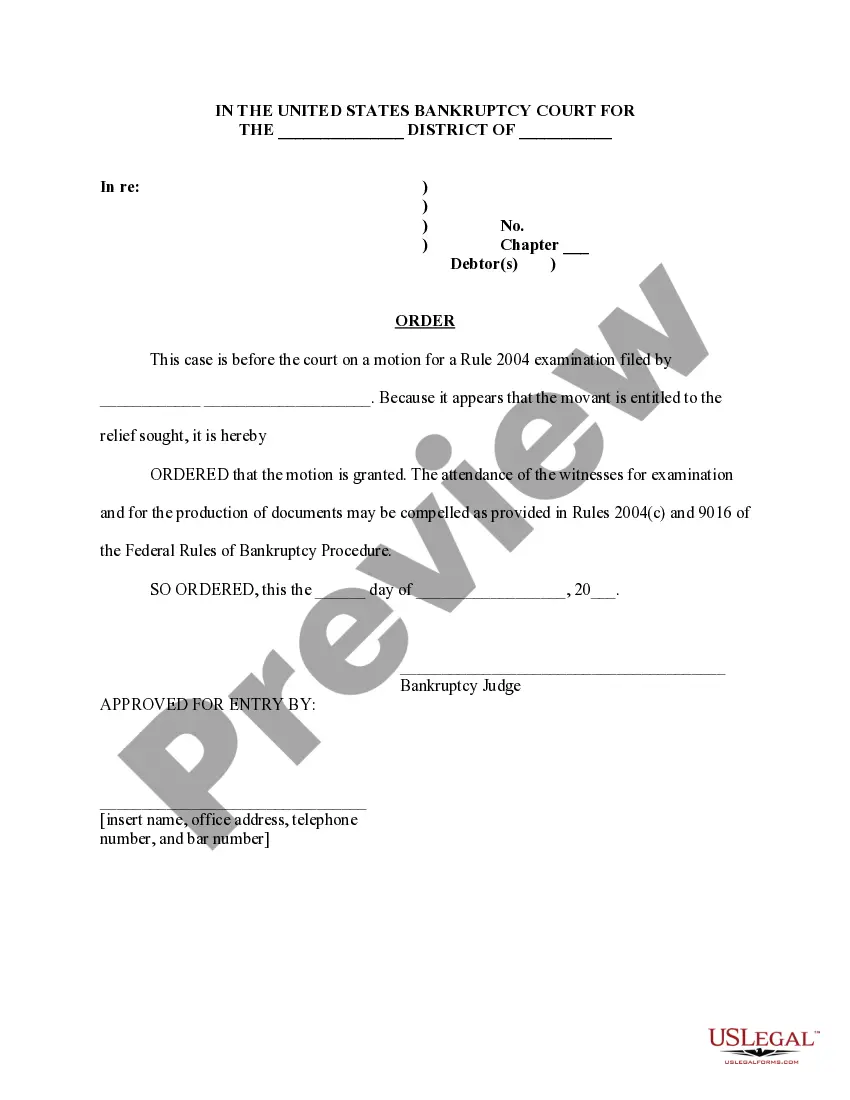
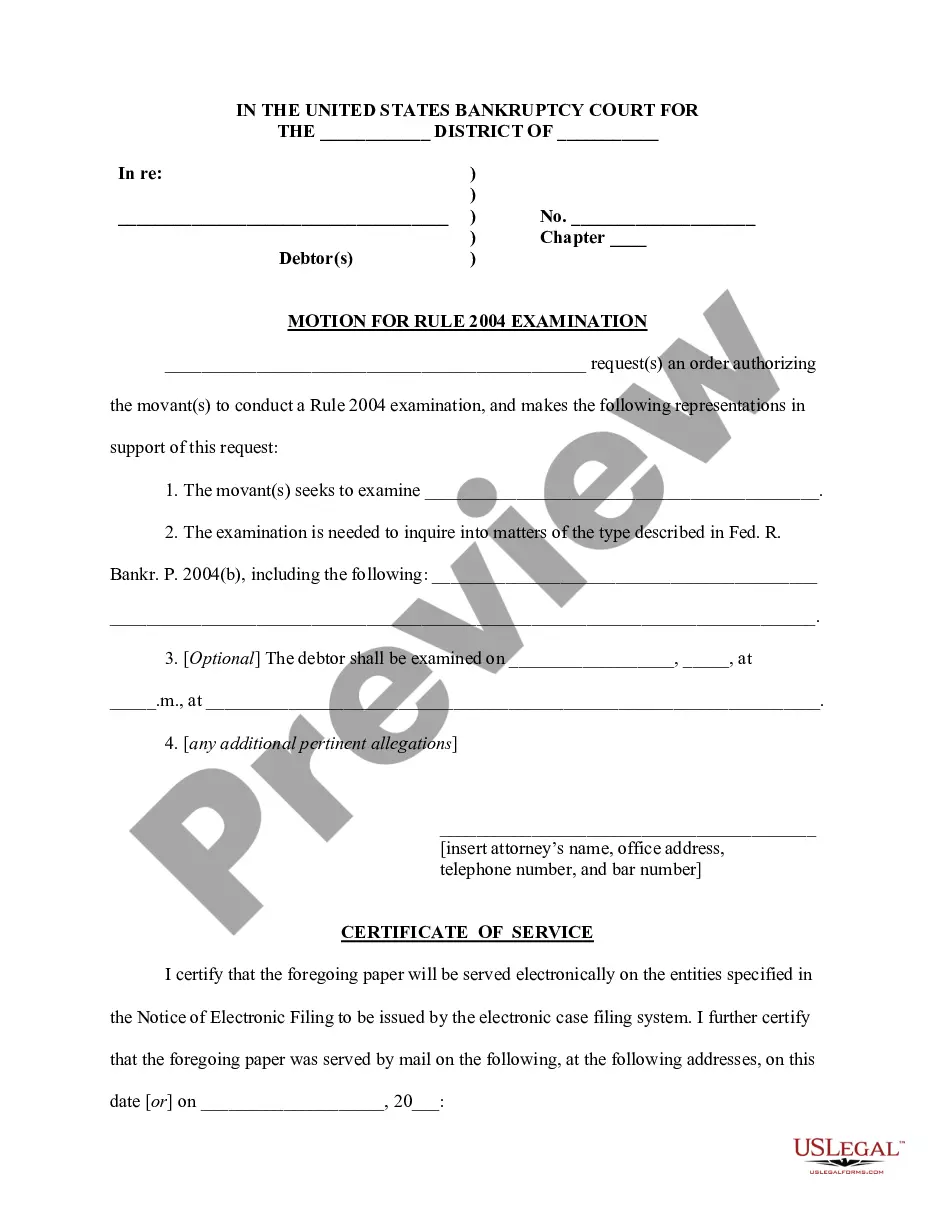
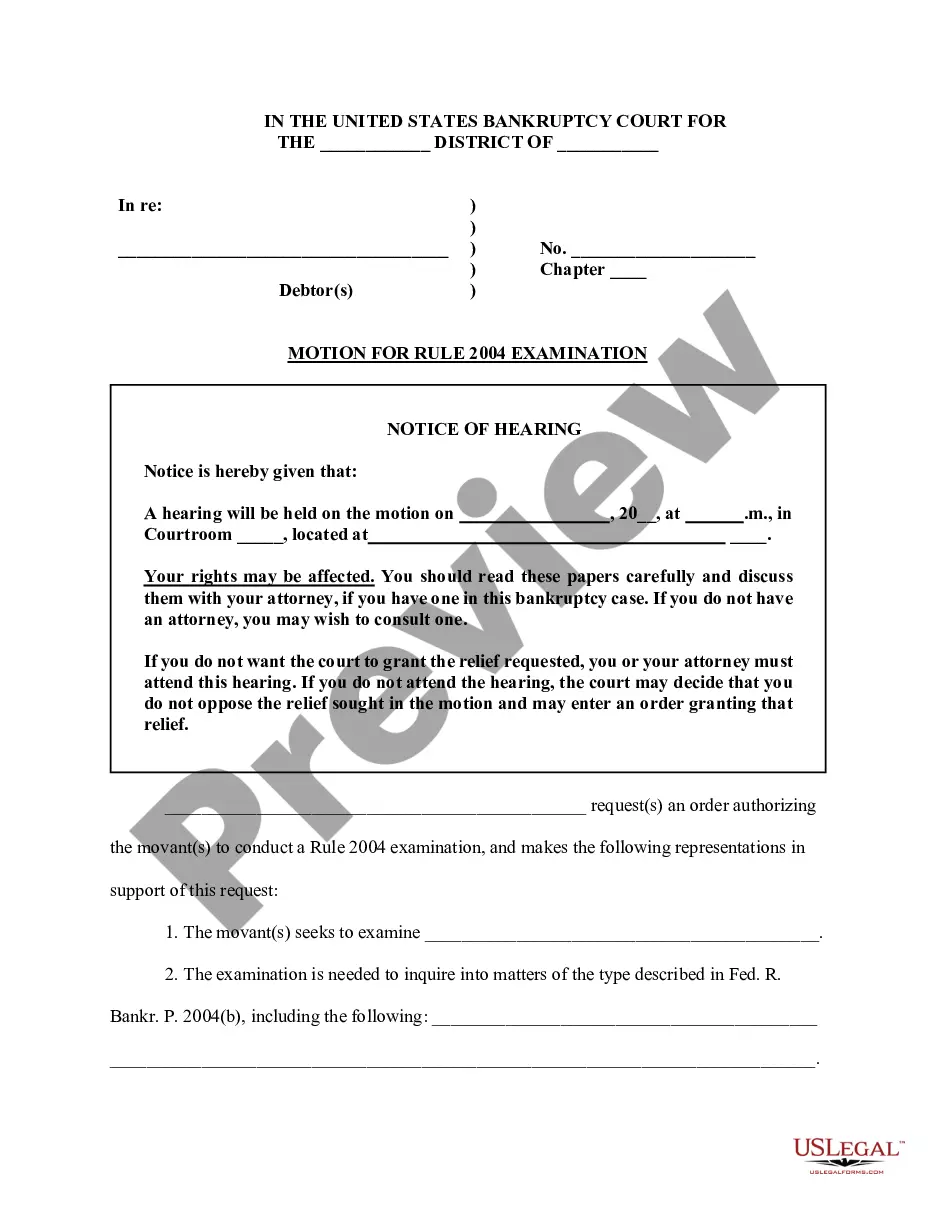
The Order authorizing Rule 2004 examination - nondebtor witness is a legal document used in bankruptcy proceedings. This form allows a bankruptcy court to order an examination of a nondebtor witness, compelling their attendance and the production of relevant documents. It differs from other forms related to bankruptcy examinations by specifically addressing non-debtors, which can be critical for gathering information about a debtor's financial situation.
Key components of this form
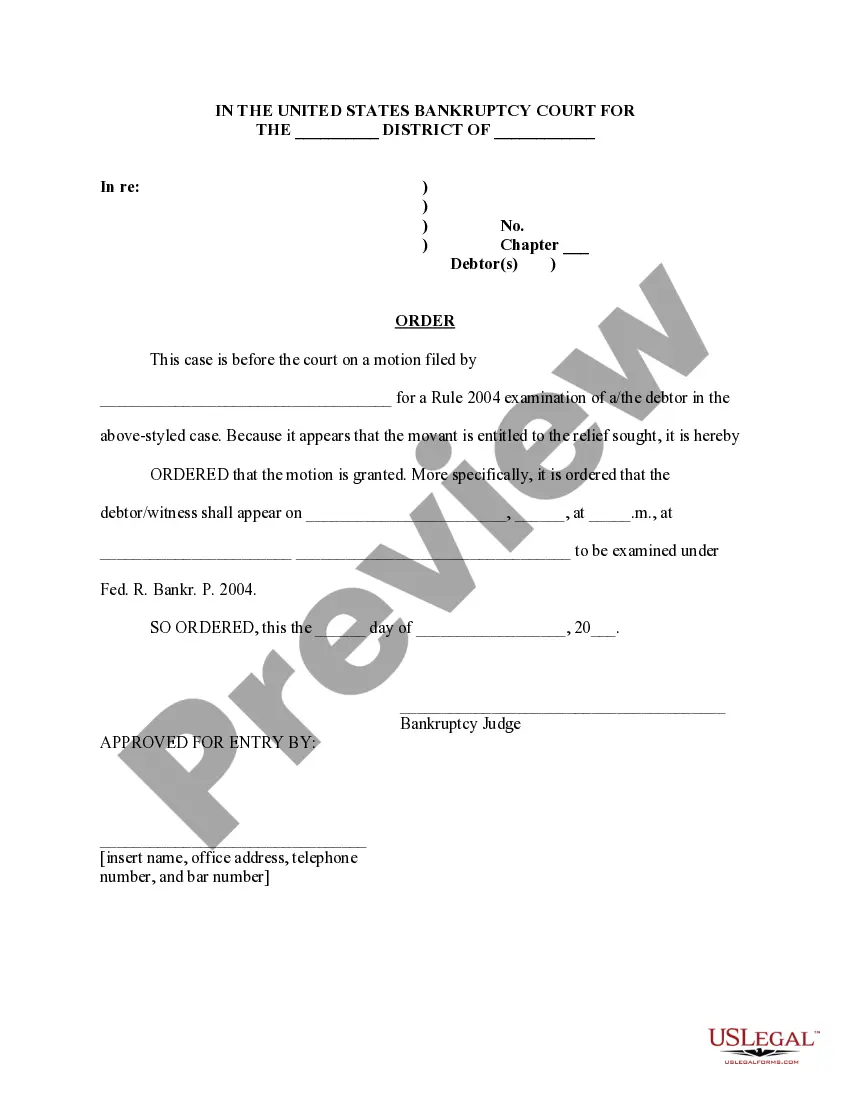
- Case Information: Details of the bankruptcy case, including the court's name and the case number.
- Movant Information: Name of the party requesting the examination.
- Court Orders: Official order granting the motion for examination.
- Signature Line: Signature of the bankruptcy judge approving the request.
- Attorney Information: Details of the attorney for the party making the request, including contact information.
When this form is needed
Who should use this form
- Attorneys representing parties in a bankruptcy case who need to examine nondebtor witnesses.
- Individuals involved in a bankruptcy case seeking to gather information from key witnesses.
- Trustees tasked with investigating the affairs of the debtor in bankruptcy proceedings.
How to prepare this document
- Identify the relevant bankruptcy court and record the district and case number.
- Insert the name of the individual or entity requesting the examination.
- Complete the section describing the scope of the examination and any required documents.
- Sign and date the order in the designated area marked for the bankruptcy judge.
- Provide the attorney's contact information for approval and correspondence.
Does this form need to be notarized?
This form does not typically require notarization unless specified by local law. Users should check their jurisdiction's regulations to ensure compliance with any additional requirements.
Get your form ready online
Our built-in tools help you complete, sign, share, and store your documents in one place.
Make edits, fill in missing information, and update formatting in US Legal Forms—just like you would in MS Word.
Download a copy, print it, send it by email, or mail it via USPS—whatever works best for your next step.
Sign and collect signatures with our SignNow integration. Send to multiple recipients, set reminders, and more. Go Premium to unlock E-Sign.
If this form requires notarization, complete it online through a secure video call—no need to meet a notary in person or wait for an appointment.
We protect your documents and personal data by following strict security and privacy standards.

Make edits, fill in missing information, and update formatting in US Legal Forms—just like you would in MS Word.

Download a copy, print it, send it by email, or mail it via USPS—whatever works best for your next step.

Sign and collect signatures with our SignNow integration. Send to multiple recipients, set reminders, and more. Go Premium to unlock E-Sign.

If this form requires notarization, complete it online through a secure video call—no need to meet a notary in person or wait for an appointment.

We protect your documents and personal data by following strict security and privacy standards.
Mistakes to watch out for
- Failing to include all required case details, leading to potential dismissal of the order.
- Not specifying the documents to be produced during the examination, causing confusion.
- Omitting the movant's attorney information, which can delay processing.
- Neglecting to sign the order, rendering it invalid.
Why complete this form online
- Convenience of downloading and completing the form from anywhere.
- Editability allows for adjustments before finalizing the document.
- Access to templates drafted by licensed attorneys ensures compliance with legal standards.
- Time-saving - no need to visit a legal office or courthouse to obtain the form.
Legal use & context
- Enforceable as a court order once signed by the bankruptcy judge.
- Used primarily in the context of bankruptcy law to investigate the debtor's financial situation.
- Noncompliance by the witness can lead to penalties, including sanctions from the court.
Quick recap
- The Order authorizing Rule 2004 examination - nondebtor witness is vital for gathering information in bankruptcy cases.
- It enables attorneys to compel testimony and document production to better understand the debtor's financials.
- Proper completion and filing of the form are essential to ensure its validity in legal proceedings.
Looking for another form?




Form popularity
FAQ
If a debtor fails to keep up with payments under their repayment plan in a Chapter 13 bankruptcy, the bankruptcy trustee may file a motion to dismiss their case. This means that their debts would not be discharged because the case would be considered unsuccessful.
In bankruptcy court disputed matters are either classified as ?contested matters? or ?adversary proceedings?. A contested matter commonly arises in disputed motions. Whereas adversary proceedings largely track traditional civil litigation (i.e., Complaint, Answer, Trial).
The pending proceeding rule states that once a separate matter has been commenced (whether in an adversary proceeding, a contested matter, or in a non-bankruptcy forum), discovery should be made pursuant to the discovery rules applicable to the separate proceeding, and not through Rule 2004.
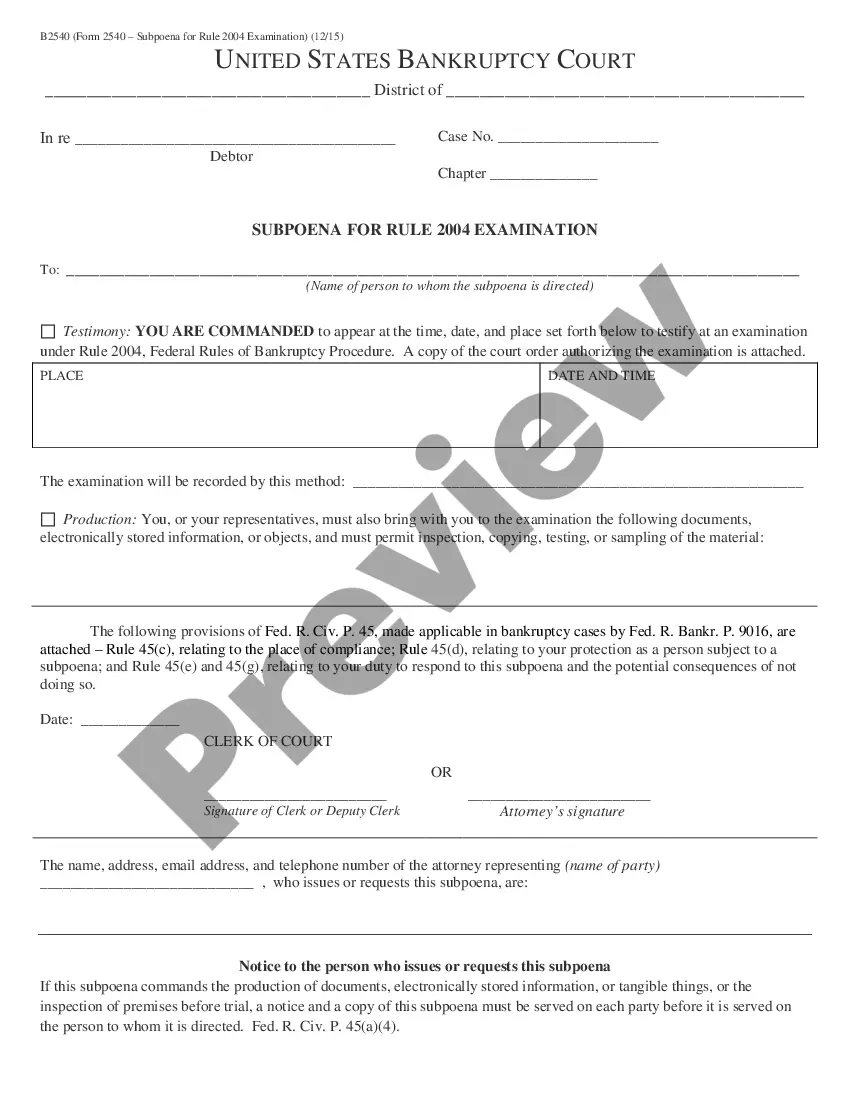
During a 2004 examination, the trustee or creditor can examine anyone that might have knowledge of the debtor's finances and request the debtor or a third party to produce documents for review.
Rule 2004 of the Federal Rules of Bankruptcy Procedure allows any "interested person" to require someone else to testify and produce documents on matters related to your bankruptcy. The 2004 Exam can cover a broad range of issues, including: your actions, conduct or property.
Authority to Take a Rule 2004 Exam: FRBP 2004 provides parties with the opportunity to conduct an examination of a person and/or documents, even though an adversary proceeding has not been filed. This is called a "Rule 2004 Examination".