Performance Evaluation for Exempt Employees
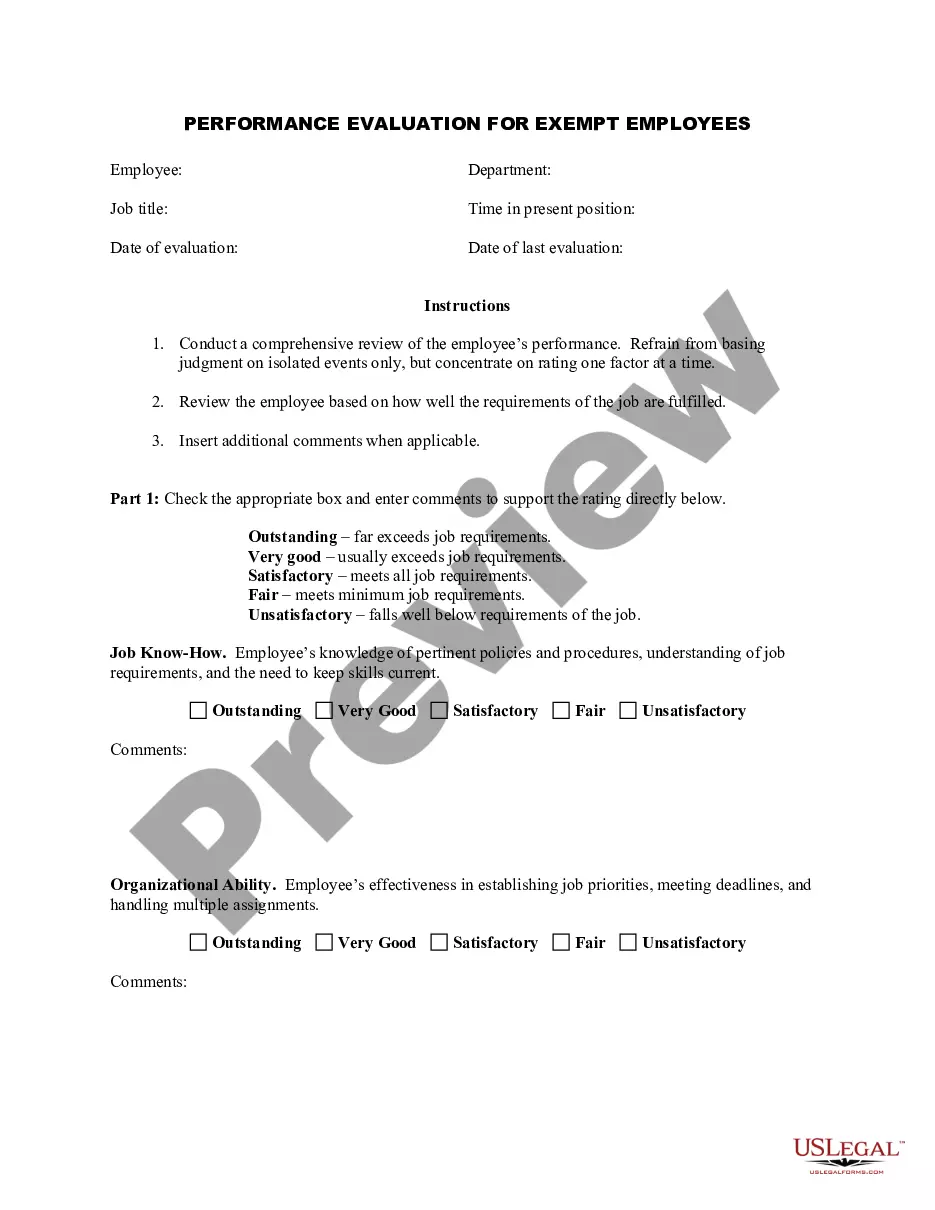
The Performance Evaluation for Exempt Employees is a structured form designed to assess the job performance of employees who are not eligible for overtime pay under the Fair Labor Standards Act. This evaluation covers multiple facets of an employee's performance, allowing for comprehensive feedback. Unlike standard performance reviews, this form is particularly tailored to account for the unique responsibilities and expectations of exempt positions, making it an essential tool for effective employee management and development.
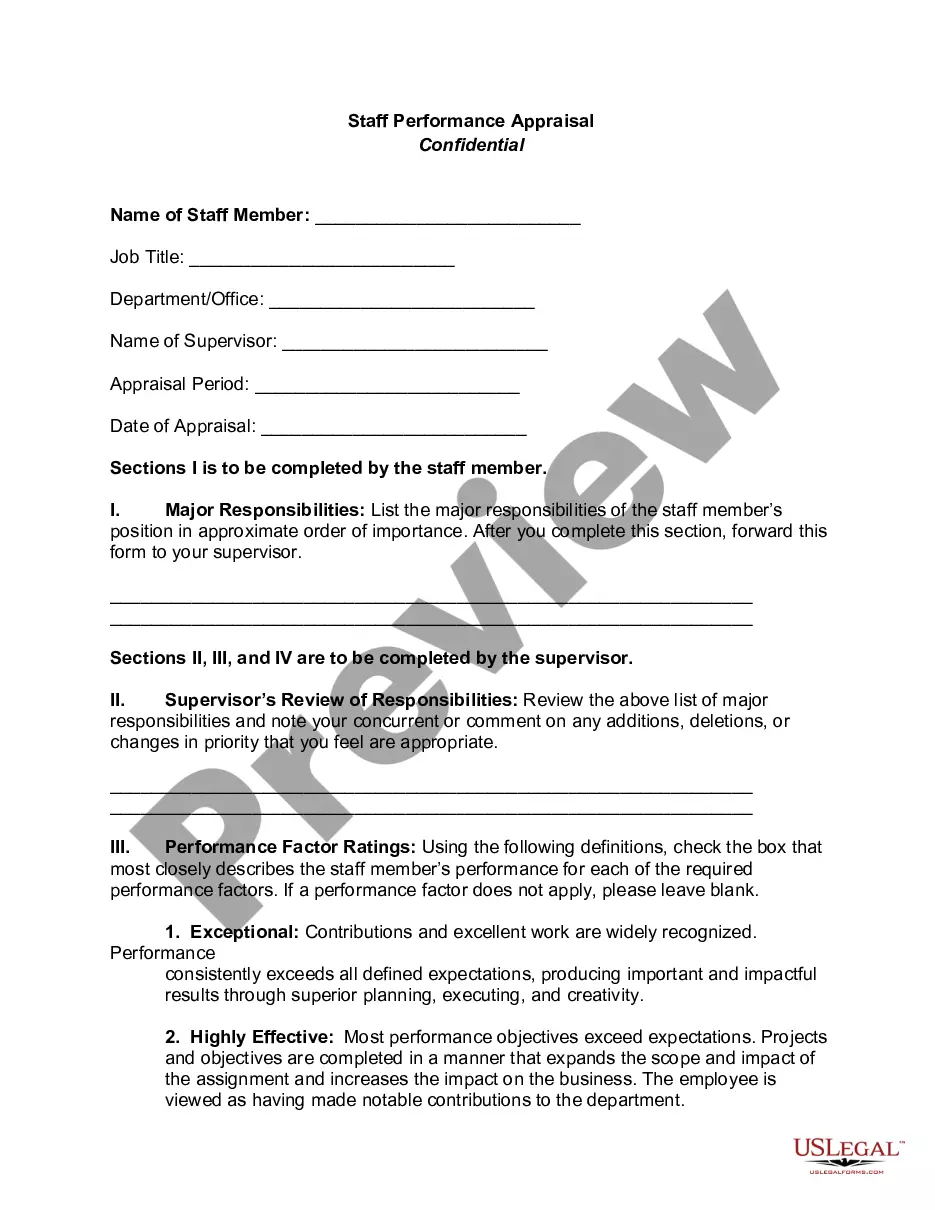
- Employee information: Fields for the employee's name, department, job title, and date of evaluation.
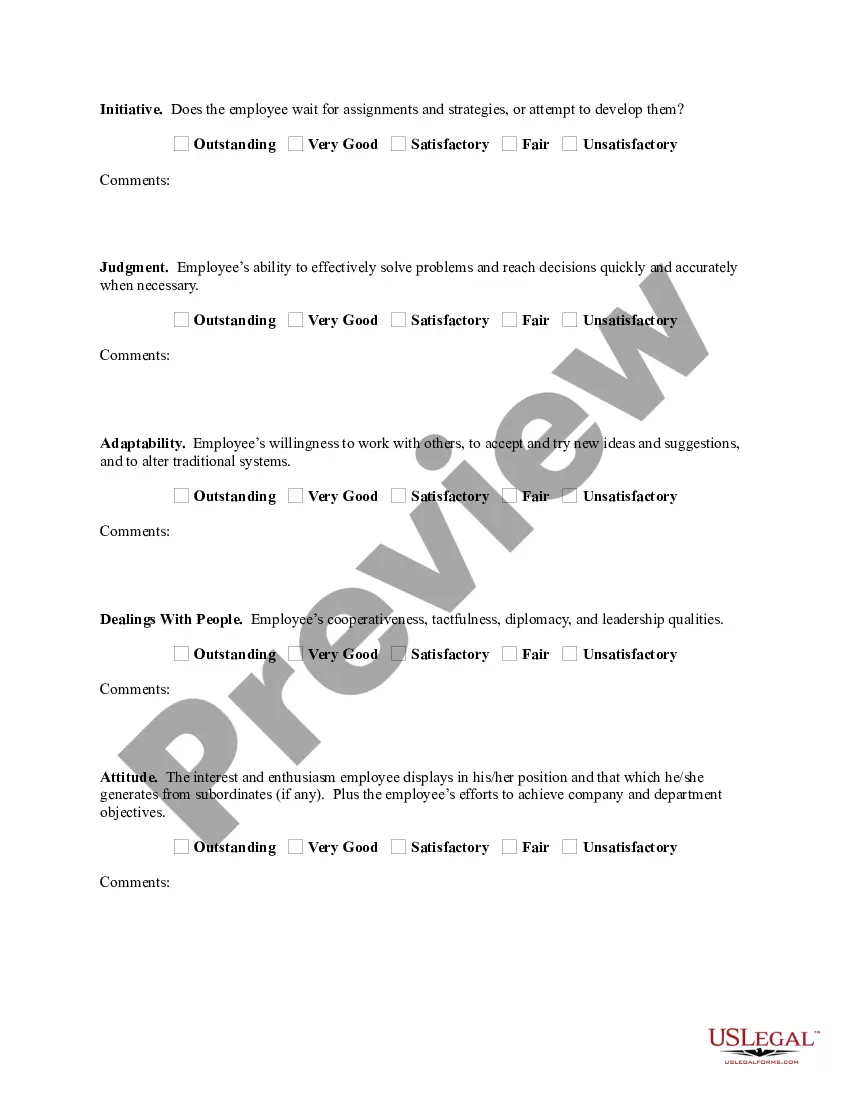
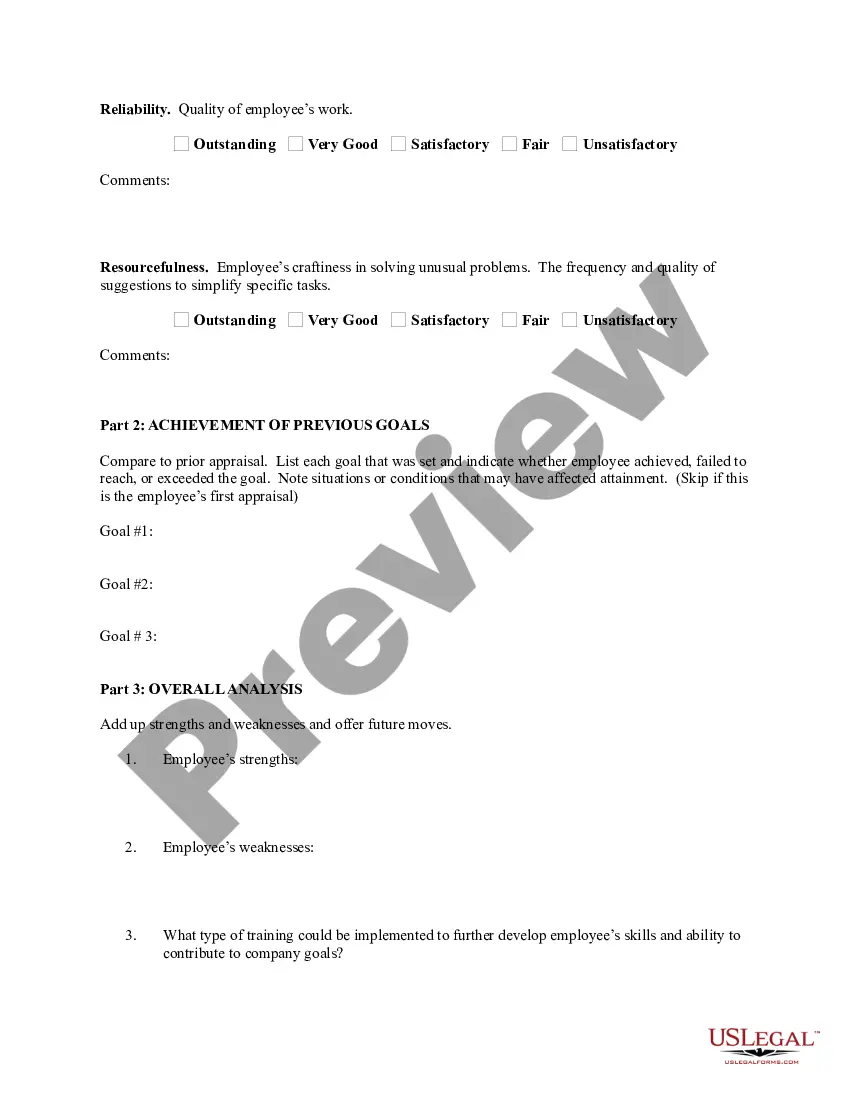
- Performance ratings: A standardized assessment scale for evaluating key performance areas such as job knowledge, organizational ability, initiative, and teamwork.
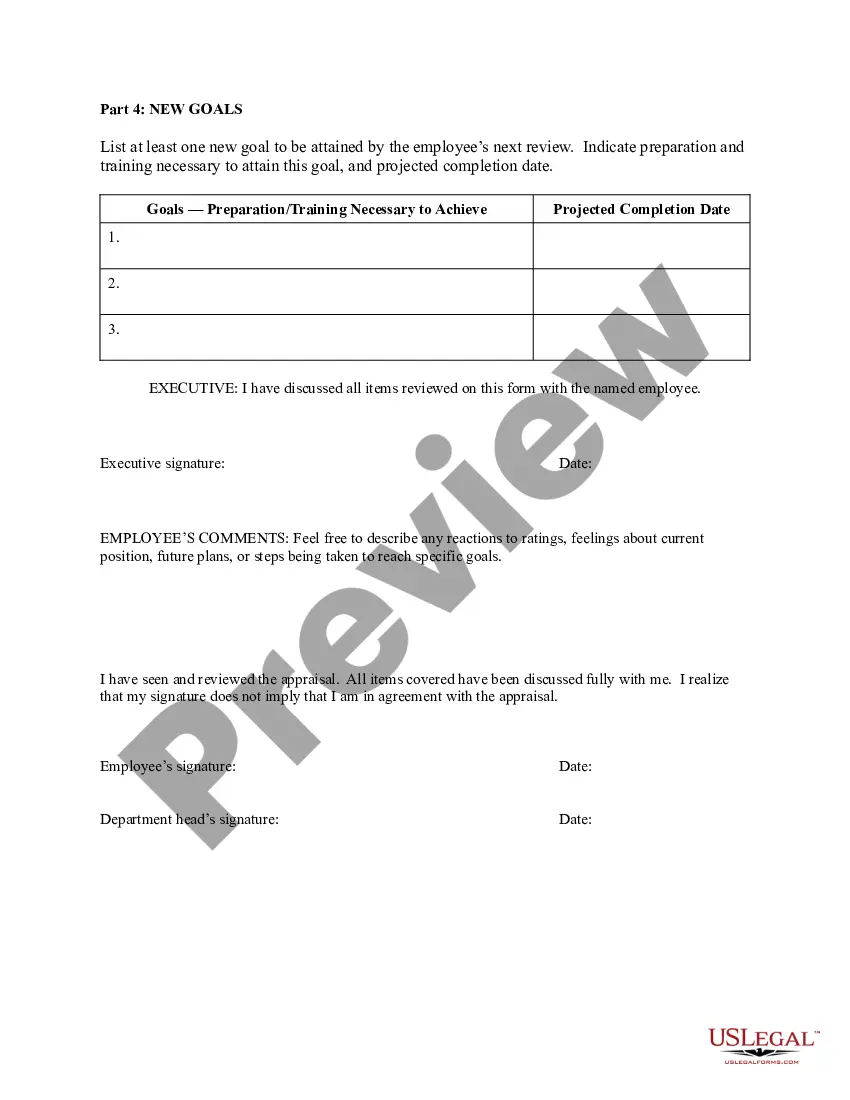
- Goal achievement: A section to review previously set goals and assess whether they were met, exceeded, or not achieved.
- Overall analysis: Space to summarize strengths and weaknesses, and suggest future training or development opportunities.
- Signatures: Areas for signatures of the employee, evaluator, and department head, acknowledging the evaluation discussion.
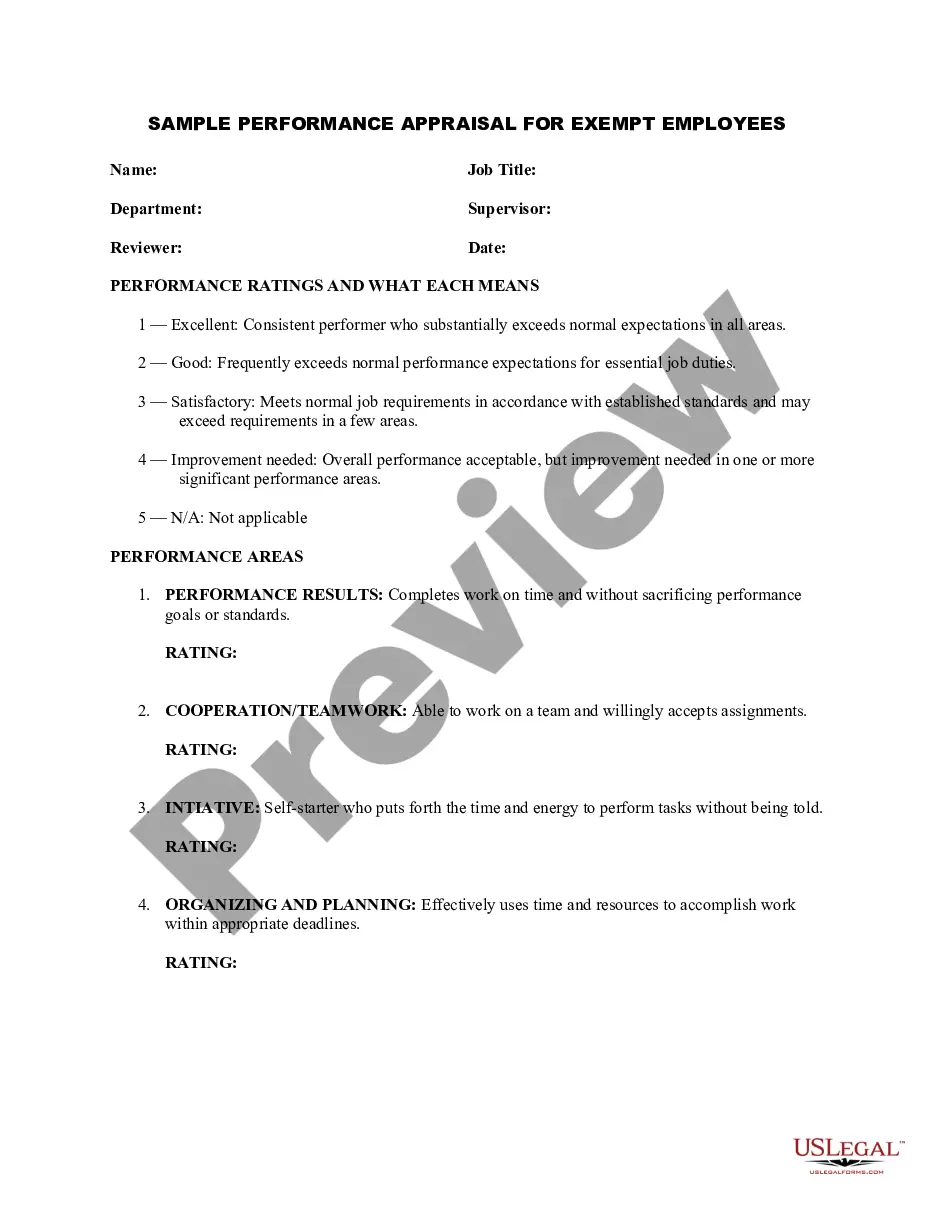
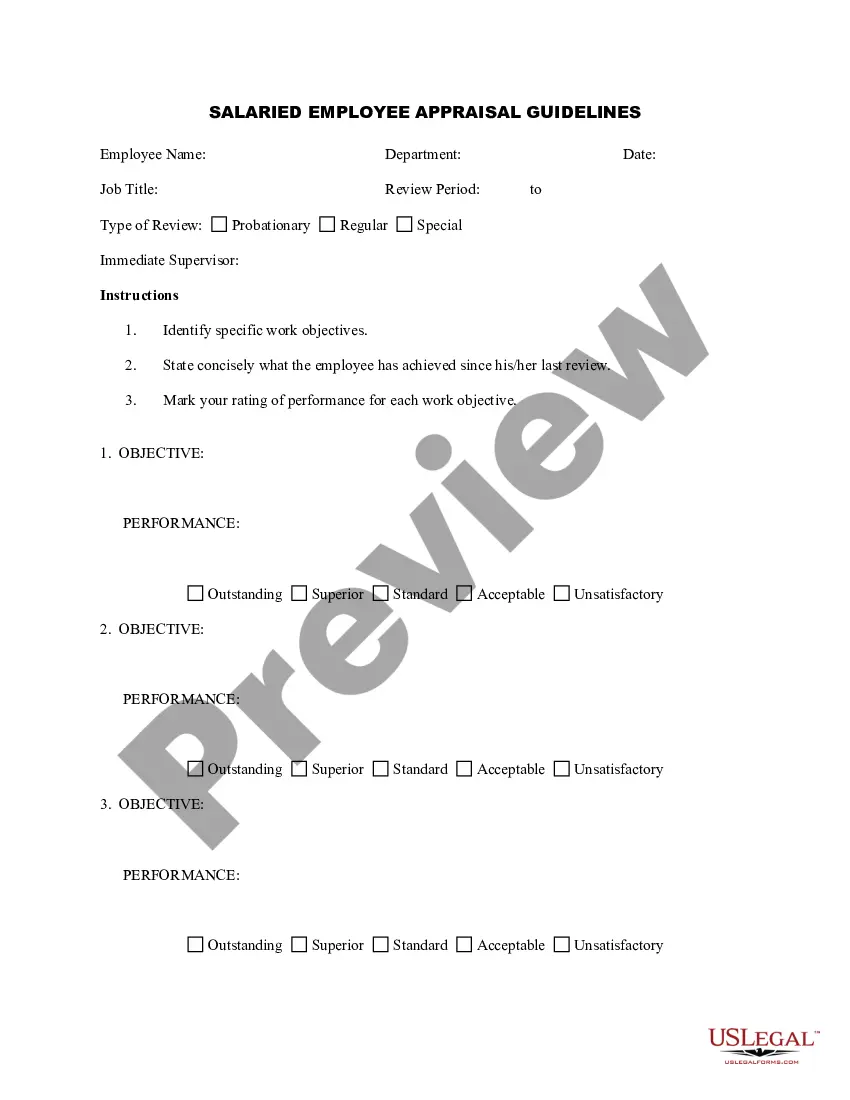
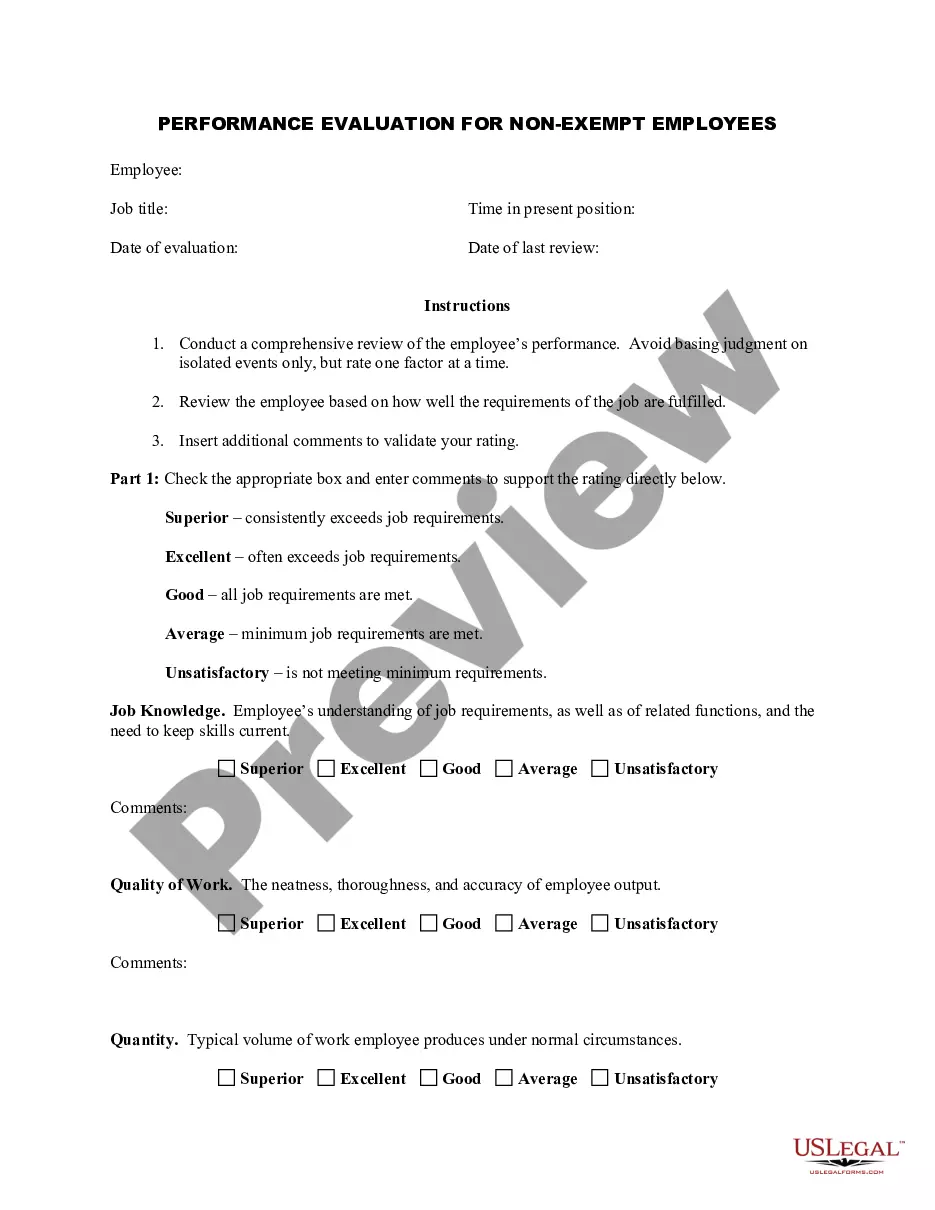
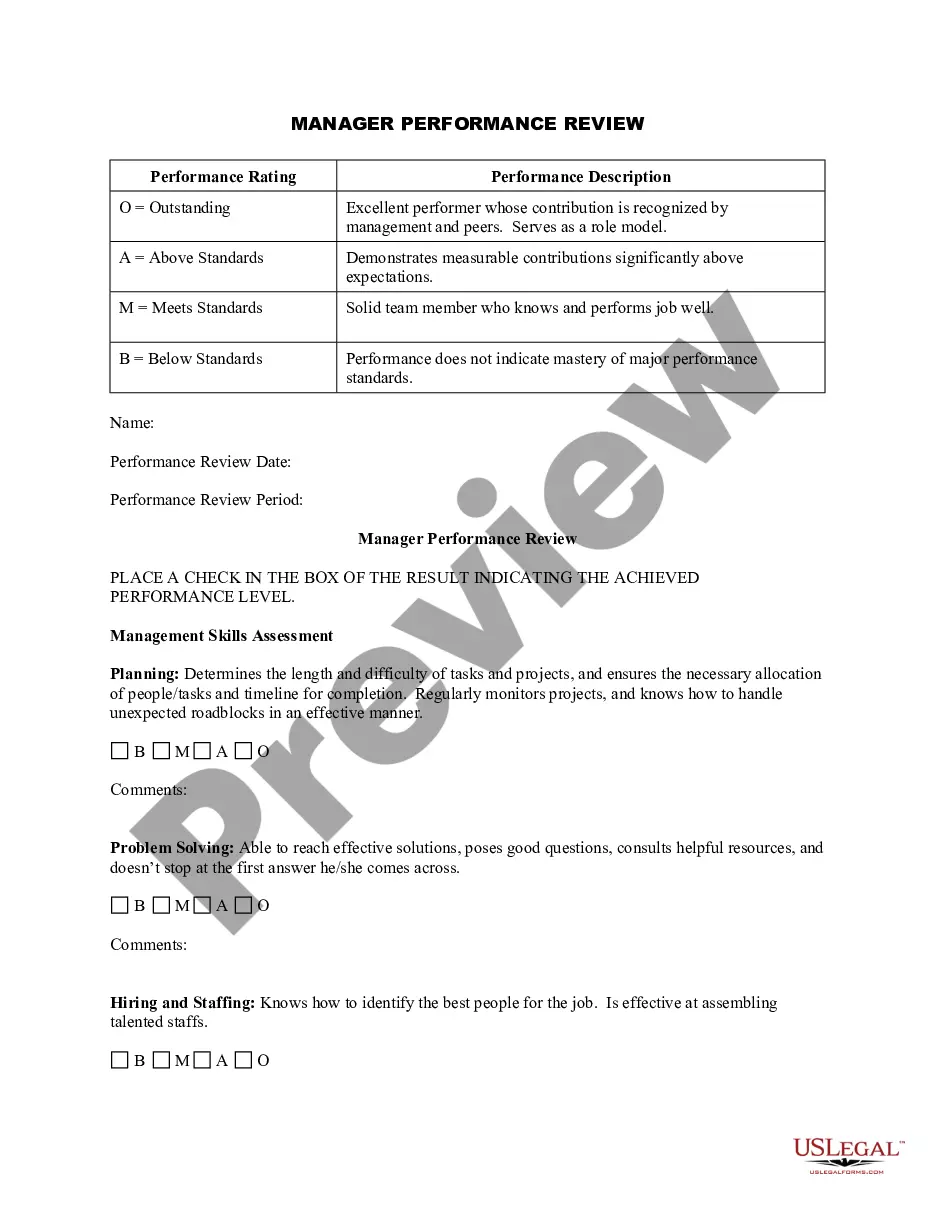
This form should be used during regular performance review cycles, typically held annually or semi-annually. It is applicable when assessing an exempt employee's effectiveness, providing structured feedback, and setting future performance goals. Employers should utilize this form not only for formal evaluations but also for ongoing performance discussions to promote employee development.
This performance evaluation form is intended for:
- Managers and supervisors conducting employee evaluations.
- Human resources professionals responsible for performance management.
- Business owners assessing the effectiveness of exempt staff members.
Follow these steps to complete the Performance Evaluation for Exempt Employees:
- Enter the employee's information in the designated fields at the top of the form.
- Review each key performance area and select the appropriate rating for the employee.
- Provide comments to support the ratings, highlighting specific examples of performance.
- Evaluate the employee's previous goals and indicate if they were achieved, not achieved, or exceeded.
- Summarize the overall performance analysis, noting strengths and weaknesses.
- Have the evaluator and employee sign the form to confirm the discussion of the evaluation.
This form does not typically require notarization unless specified by local law. However, having it notarized can enhance its credibility and ensure that the signatures are validated, providing additional assurance in the evaluation process.
Get your form ready online
Our built-in tools help you complete, sign, share, and store your documents in one place.
Make edits, fill in missing information, and update formatting in US Legal Forms—just like you would in MS Word.
Download a copy, print it, send it by email, or mail it via USPS—whatever works best for your next step.
Sign and collect signatures with our SignNow integration. Send to multiple recipients, set reminders, and more. Go Premium to unlock E-Sign.
If this form requires notarization, complete it online through a secure video call—no need to meet a notary in person or wait for an appointment.
We protect your documents and personal data by following strict security and privacy standards.

Make edits, fill in missing information, and update formatting in US Legal Forms—just like you would in MS Word.

Download a copy, print it, send it by email, or mail it via USPS—whatever works best for your next step.

Sign and collect signatures with our SignNow integration. Send to multiple recipients, set reminders, and more. Go Premium to unlock E-Sign.

If this form requires notarization, complete it online through a secure video call—no need to meet a notary in person or wait for an appointment.

We protect your documents and personal data by following strict security and privacy standards.
- Failing to provide specific examples to justify performance ratings.
- Overlooking previous goals and not addressing their outcomes.
- Not involving the employee in the evaluation discussion.
- Using vague or non-specific language in written feedback.
- Convenience: This form can be completed online, making it easily accessible for both evaluators and employees.
- Editability: The form allows for notes and adjustments, supporting a tailored evaluation process.
- Reliability: Utilizing a standardized form increases consistency in evaluations across employees.
- This form serves as an important document for employers to legally protect their performance evaluation process.
- The information recorded can be essential in addressing any future disputes regarding employee performance and employment decisions.
- Ensure evaluations are based on specific, observable performance metrics.
- Involve employees in the review process for better clarity and understanding.
- Maintain documentation of evaluations to support ongoing employee development and accountability.
- Exempt Employee: An employee not entitled to overtime pay under the FLSA, often classified based on salary and responsibilities.
- Performance Review: A formal assessment of an employee's work performance, typically conducted annually.
Looking for another form?




Form popularity
FAQ
Check Your Attitude. "Attitude is very important," says employment consultant Rick Waters. Be Reflective. Assess Your Performance Against the Job Specifications. Keep a File. Find out the Supervisor's Expectations. Get Feedback From Others. Be a Team Player. Plan Ahead.
Be proud. One major goal of the self-evaluation is to highlight your accomplishments and recollect milestones in your professional development. Be honest and critical. Continuously strive for growth. Track your accomplishments. Be professional.
Communication. Collaboration and teamwork. Problem-solving. Quality and accuracy of work. Attendance, punctuality and reliability. The ability to accomplish goals and meet deadlines.
Be as specific as possible. Instead of saying, Don't make your reports so long, say, Shorten your reports to five to eight pages maximum. Address each problem individually. Cite specific examples and let the employee respond. Don't bring up a new problem until you've thoroughly discussed the current one.
Pull out your annual goals. Include additional achievements. Pore over the next level's JD. Stay objective and honest. Mindfully highlight the mistakes. Don't be a know-it-all. Ask for that promotion already!
Review the employee's job description. Get a current copy of each person's job description and review the requirements. Highlight areas of improvement. Compare strengths and weaknesses. Recommend actionable goals. Provide constructive feedback. Welcome employee input.
Have your employee complete self-assessment first. Be open to amendments. Don't make it personal. Focus on strengths. Use concrete examples. Base the review against their job description. Include action items for moving forward. Follow up.
Reflect on feedback. Make a list of your top accomplishments and identify areas for improvements. Gather analytics to show impact. Make a commitment to improve. Set a SMART goal for yourself. Create a plan of action. Communication. Job Performance.
Reflect on feedback. Make a list of your top accomplishments and identify areas for improvements. Gather analytics to show impact. Make a commitment to improve. Set a SMART goal for yourself. Create a plan of action. Communication. Job Performance.