Minnesota Interrogatories
Overview of this form
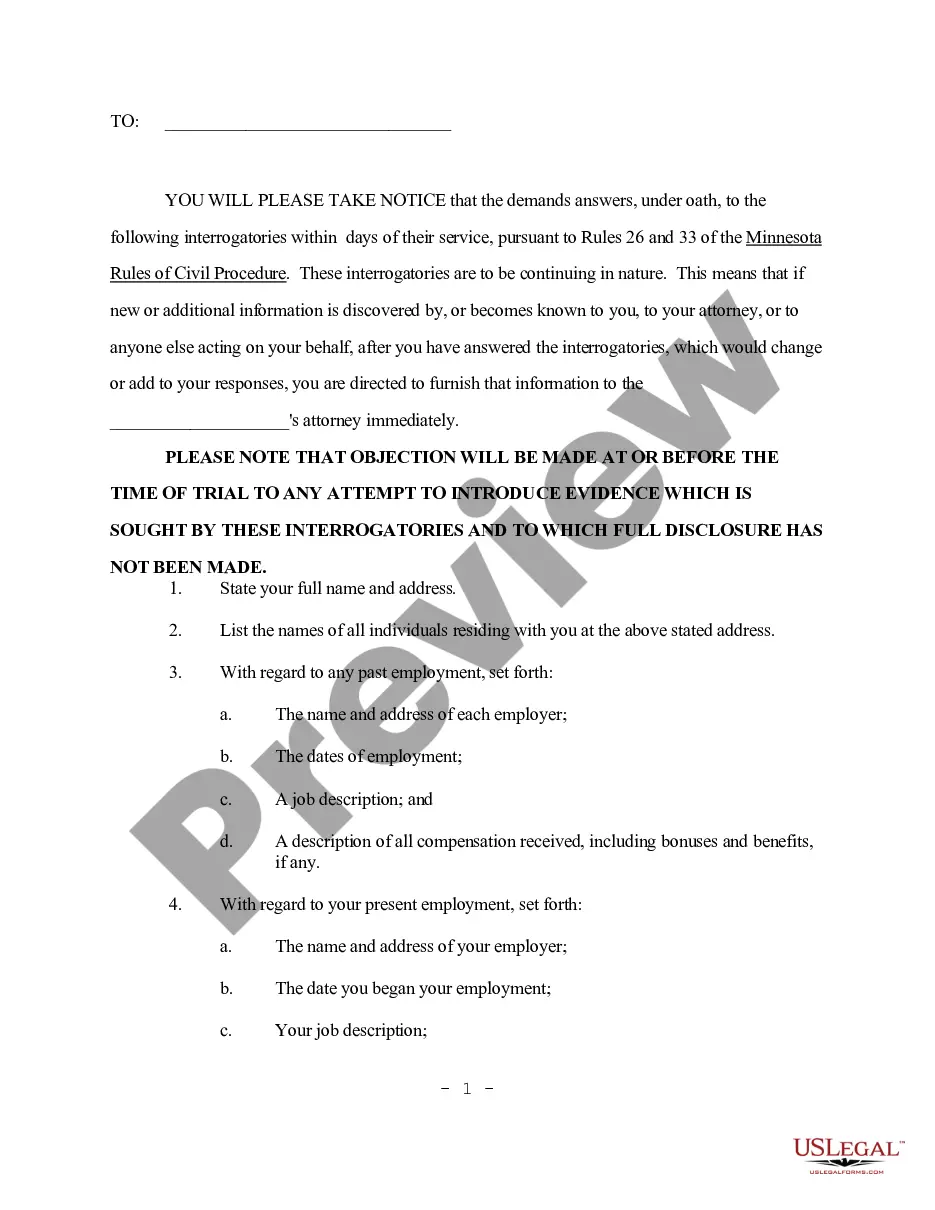
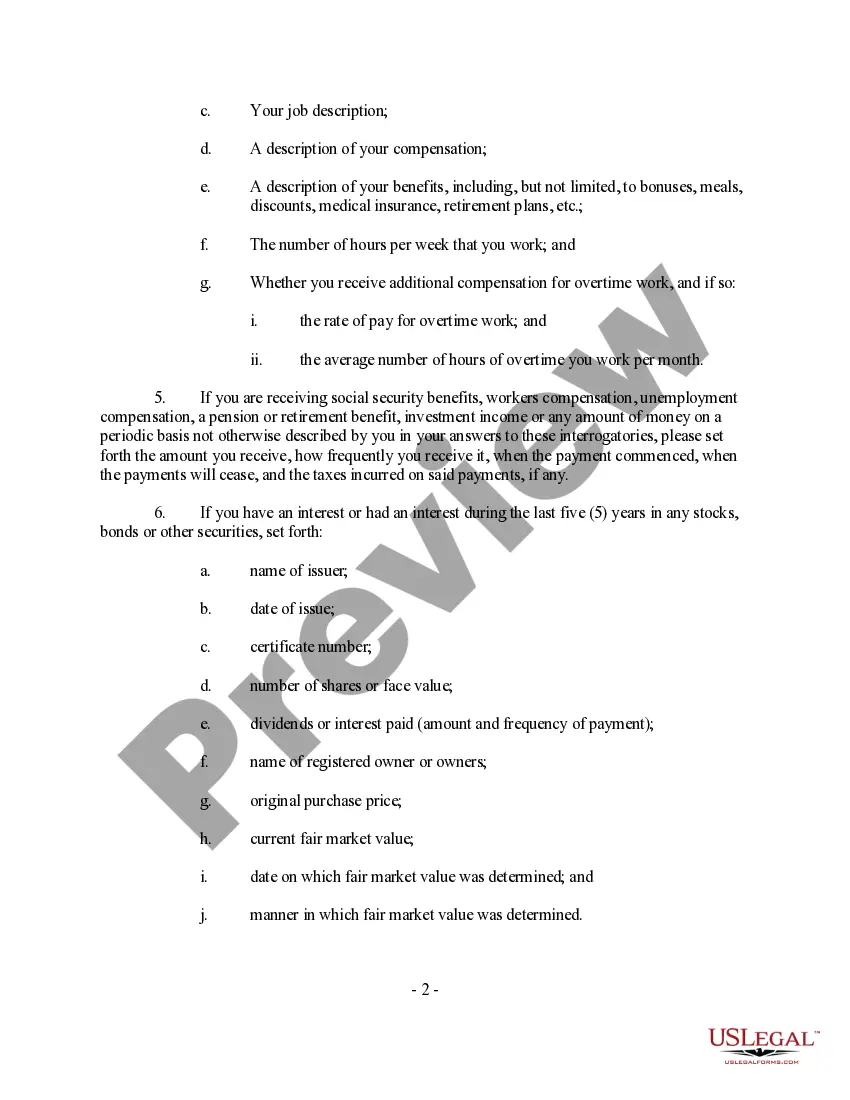
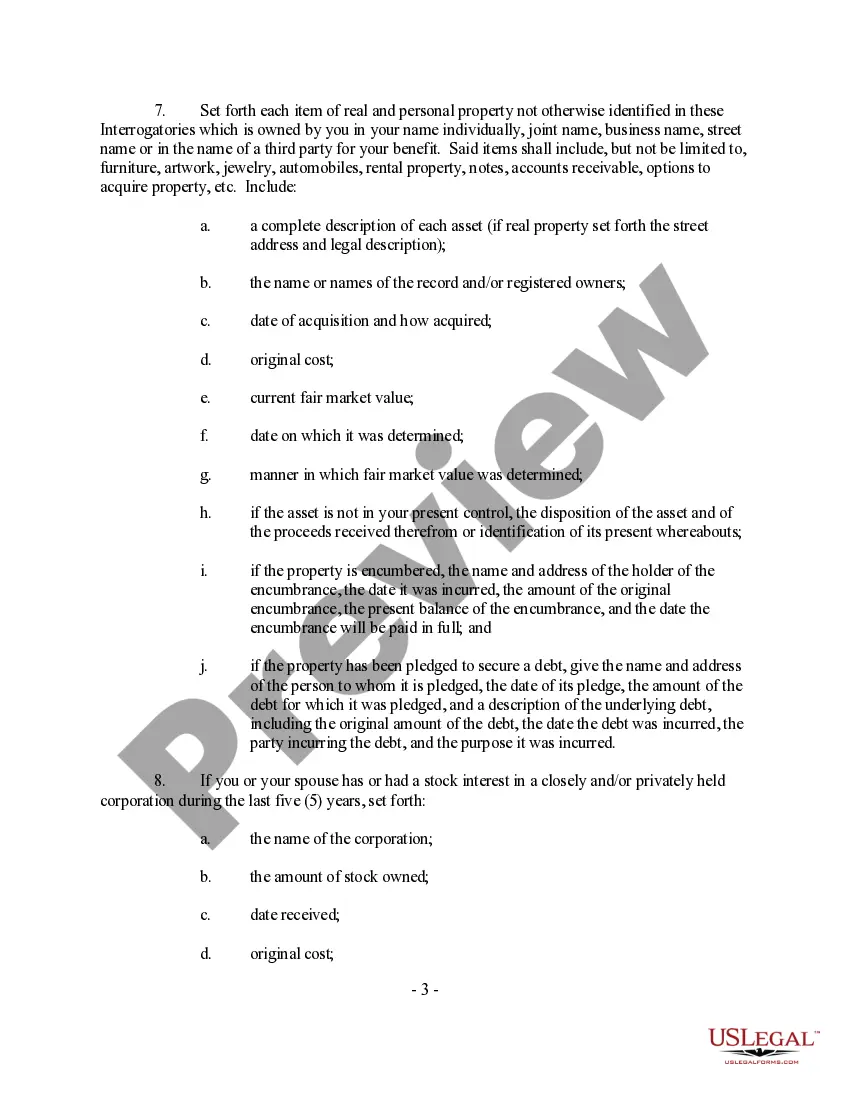
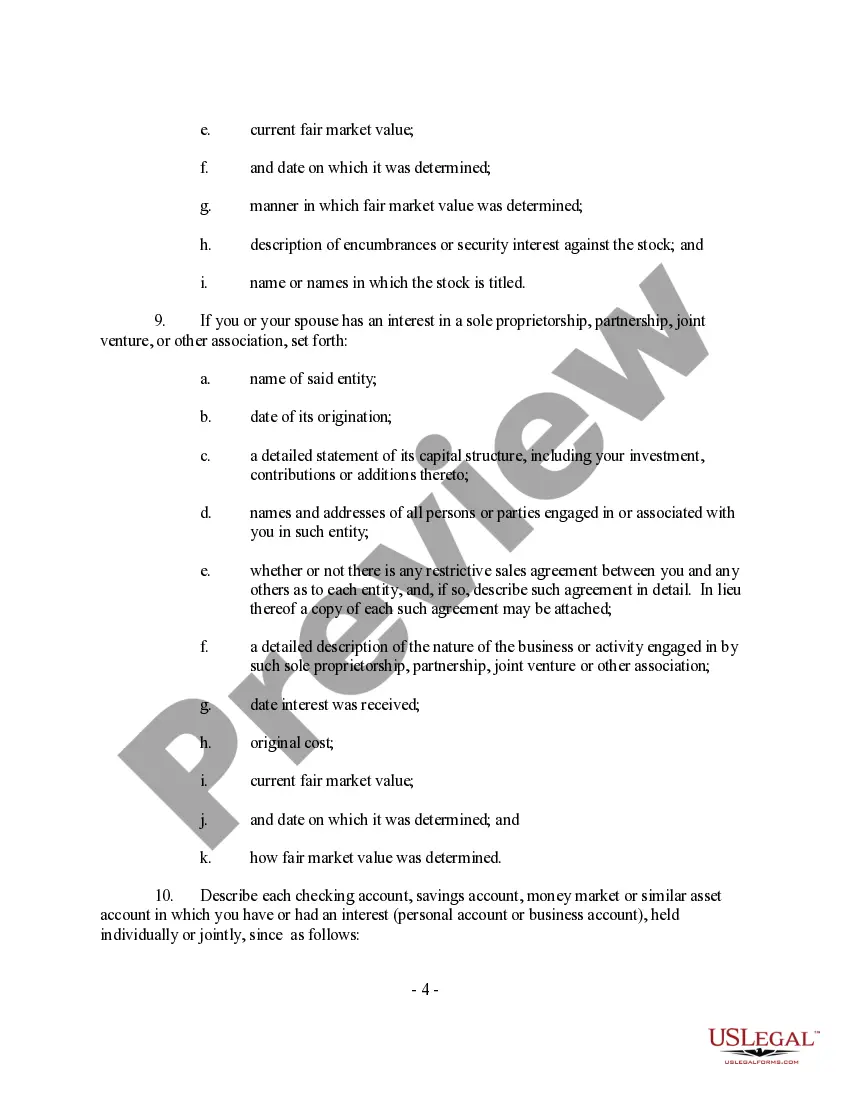
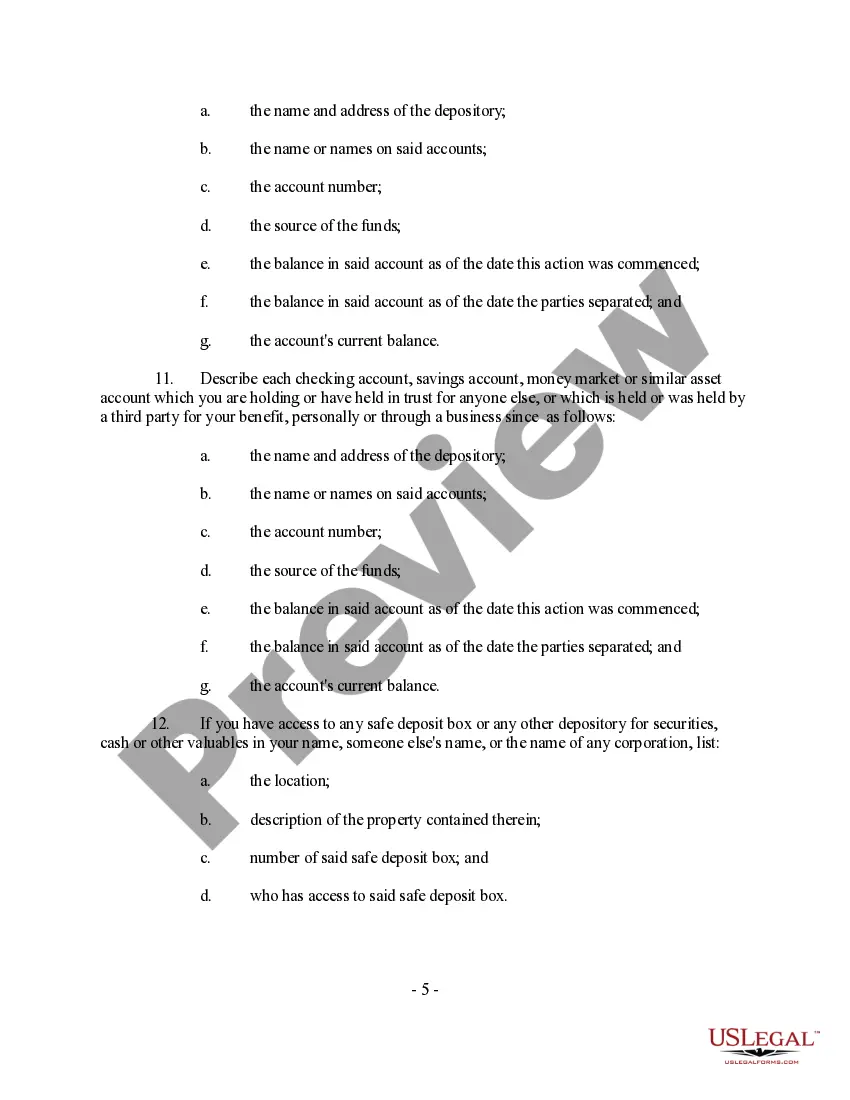
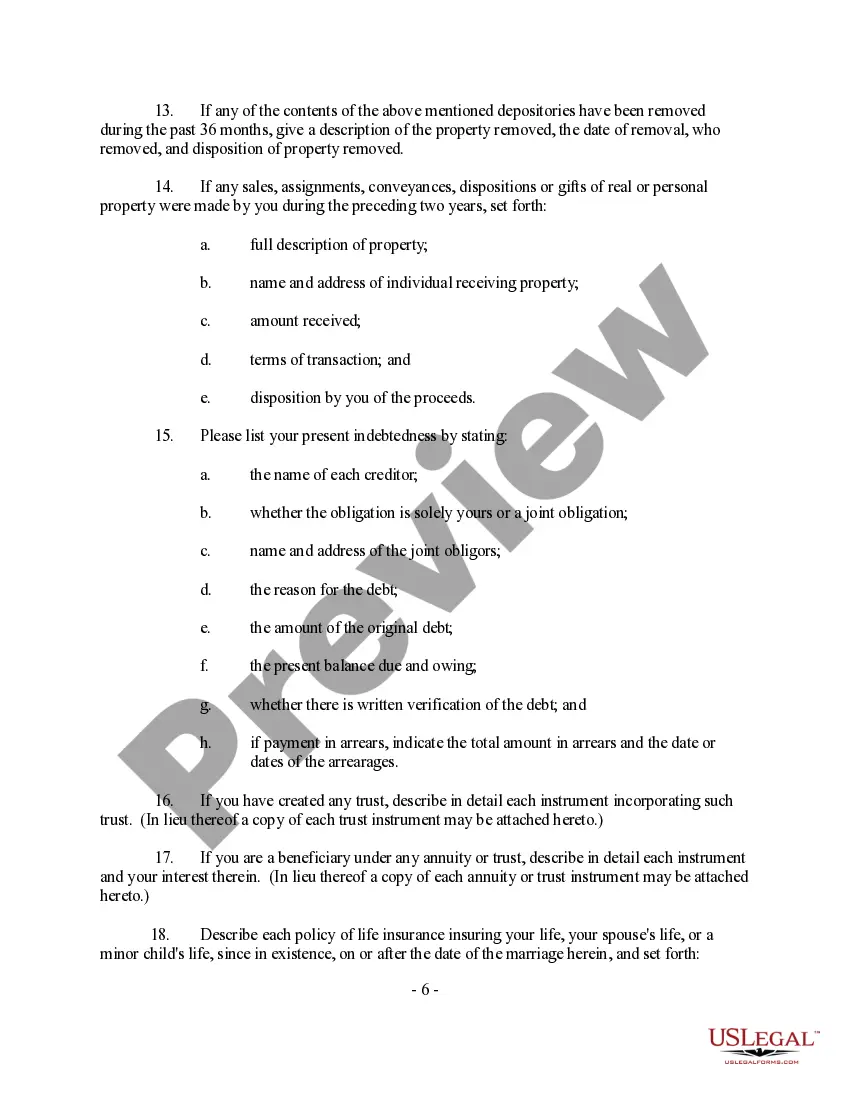
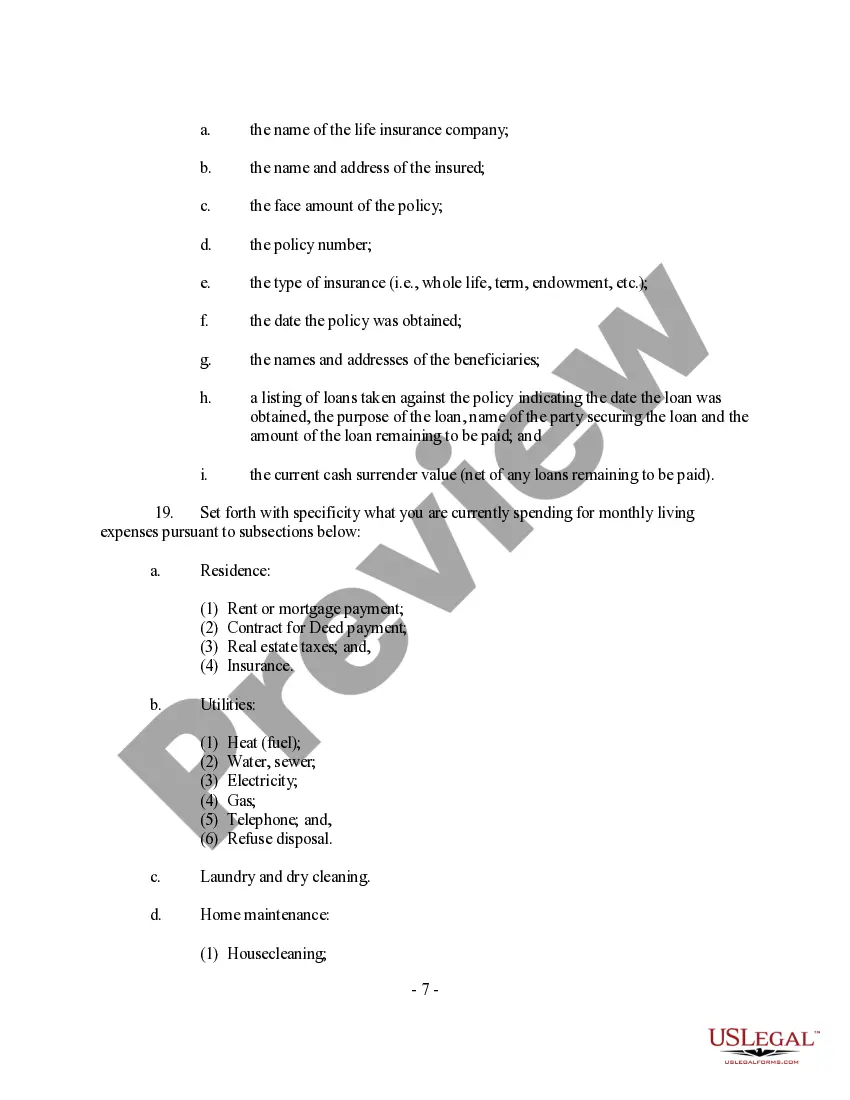
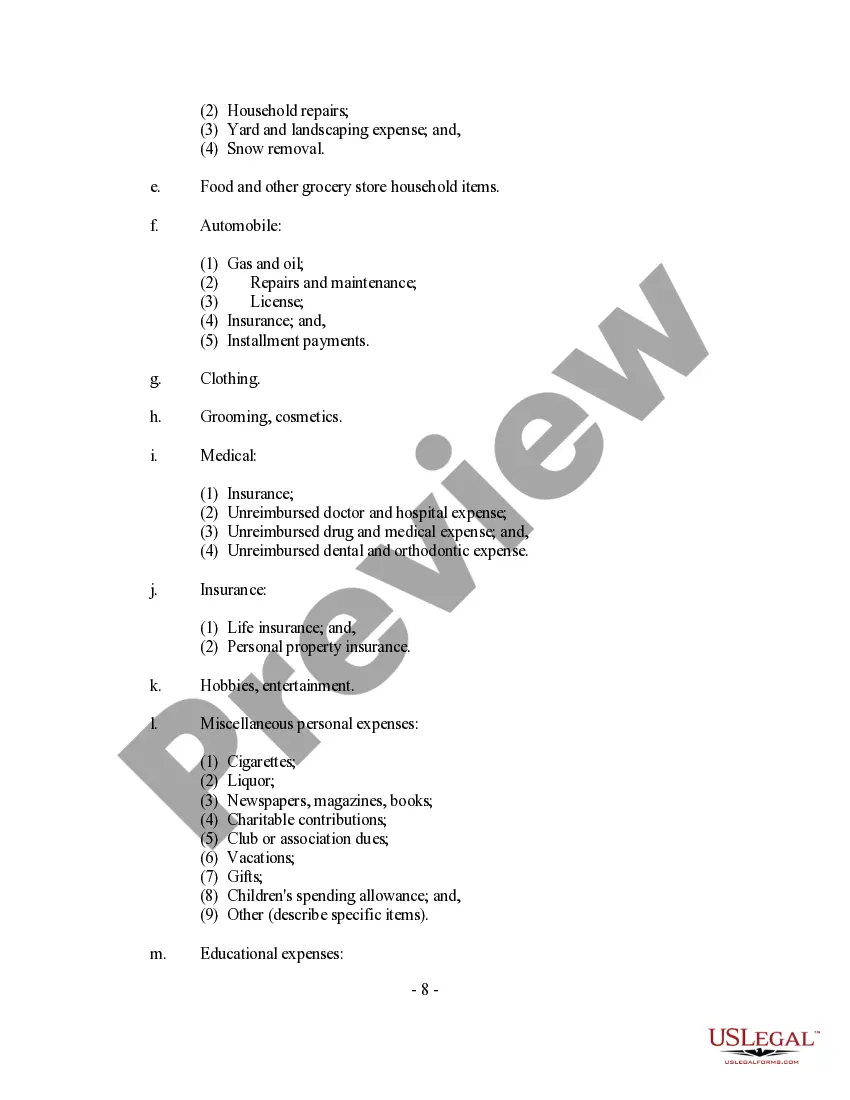
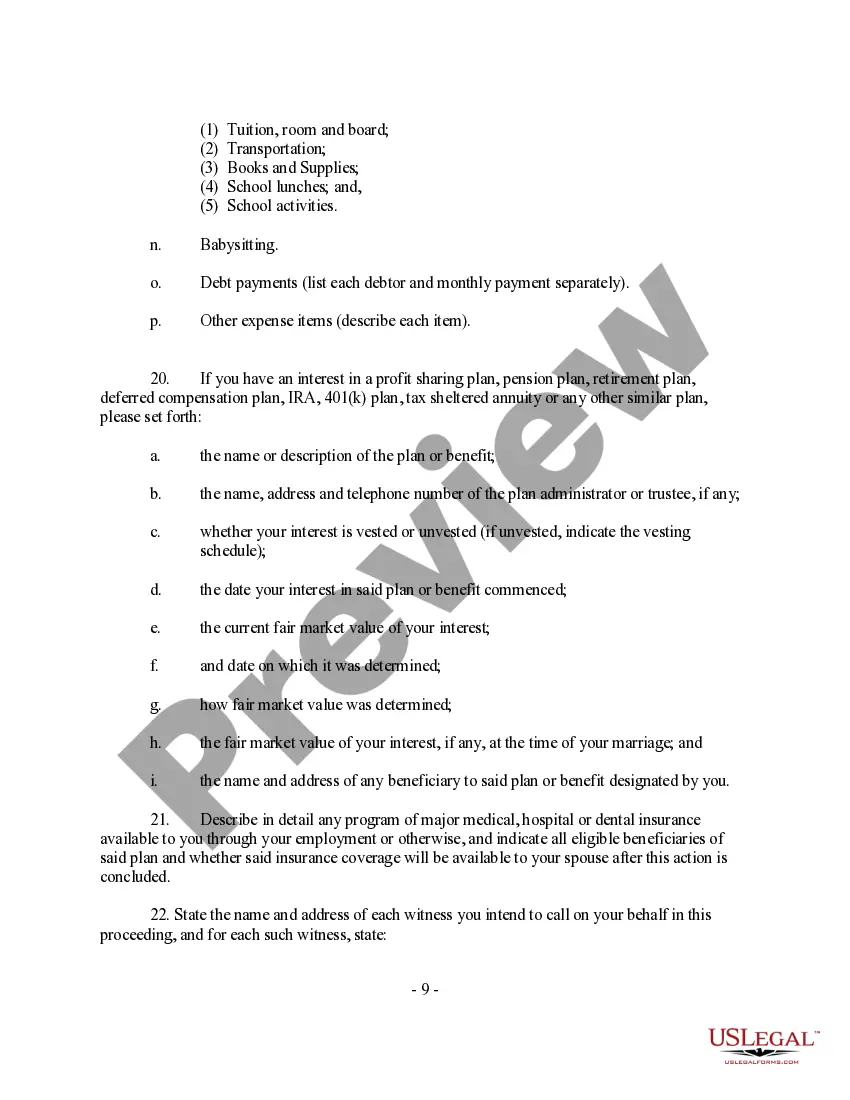
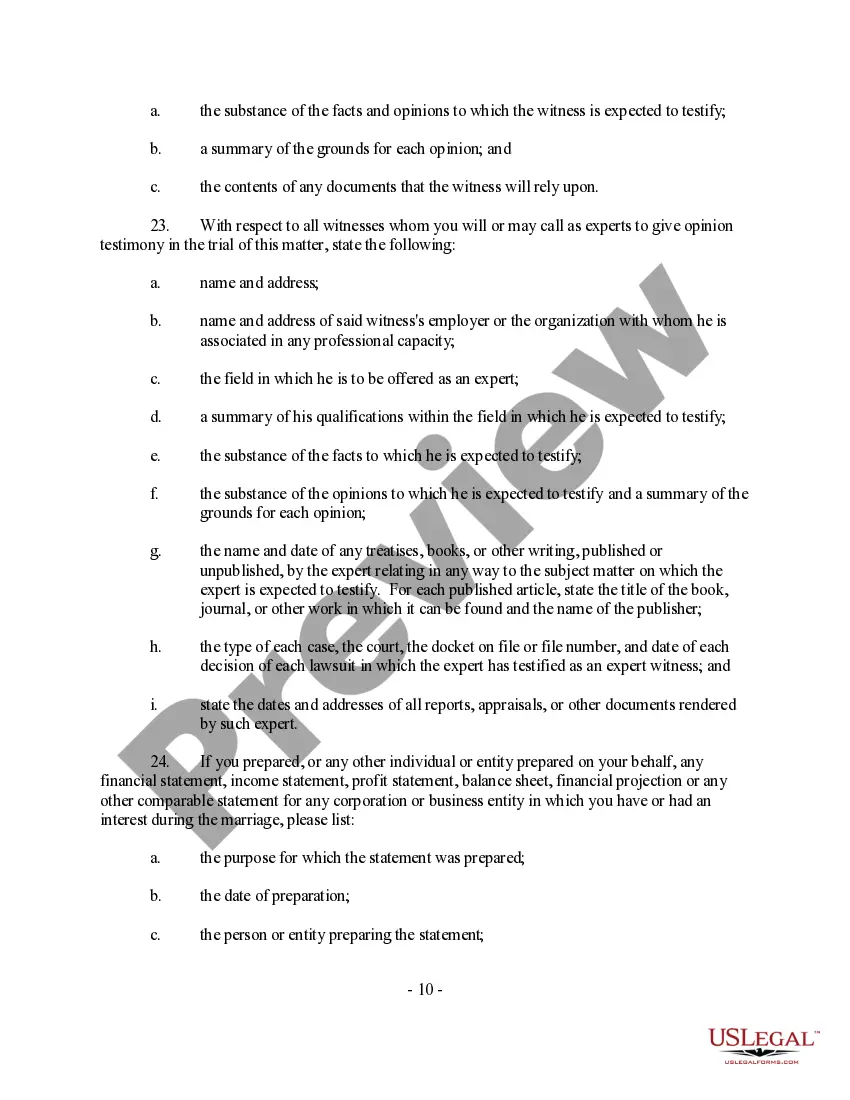
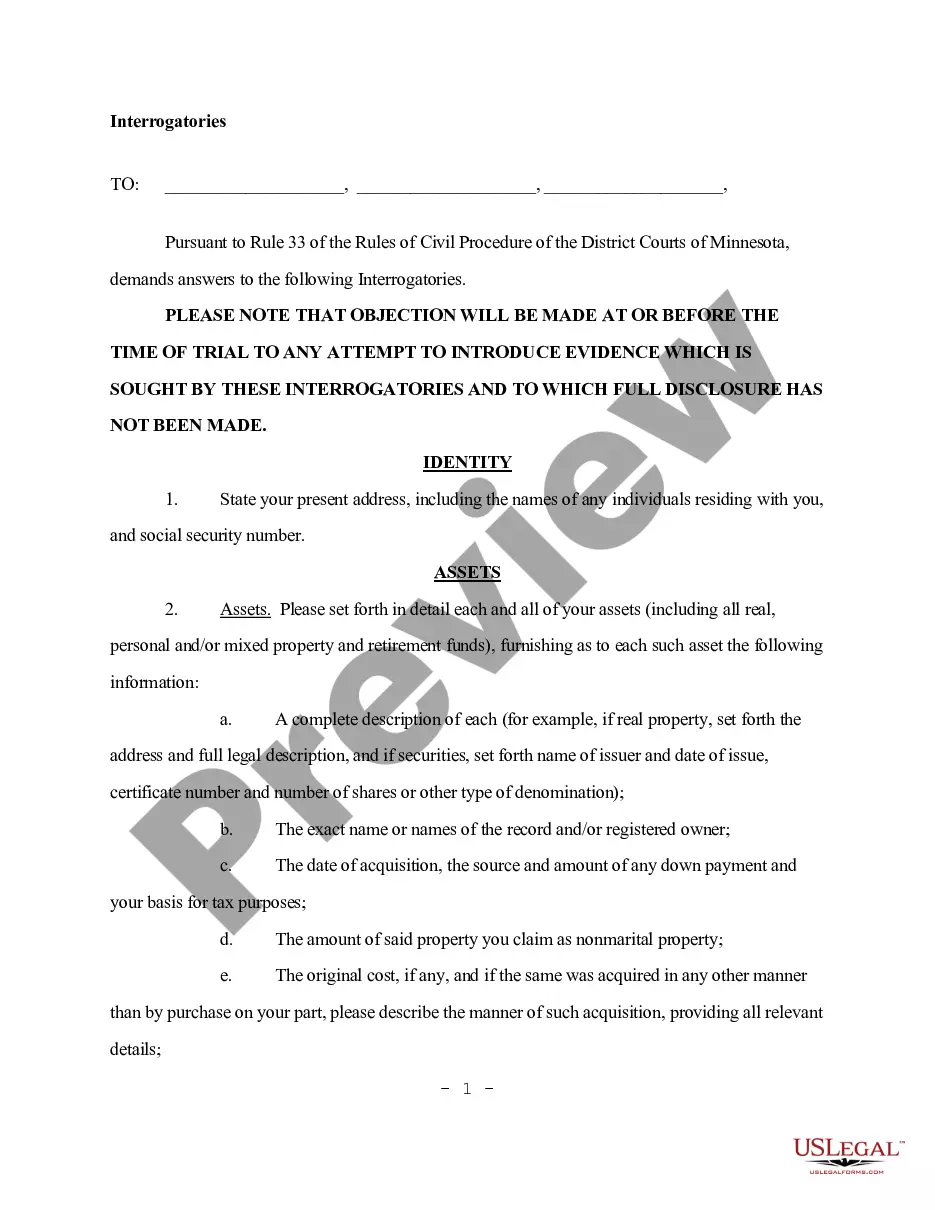
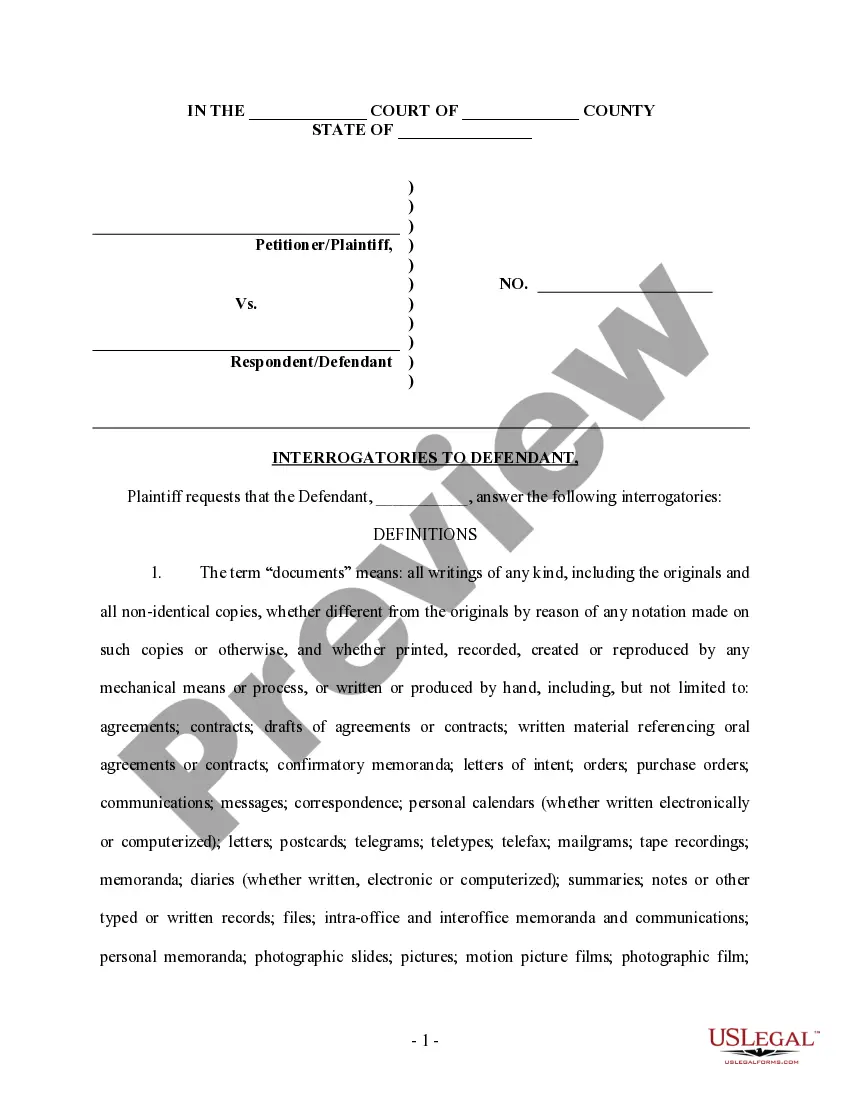
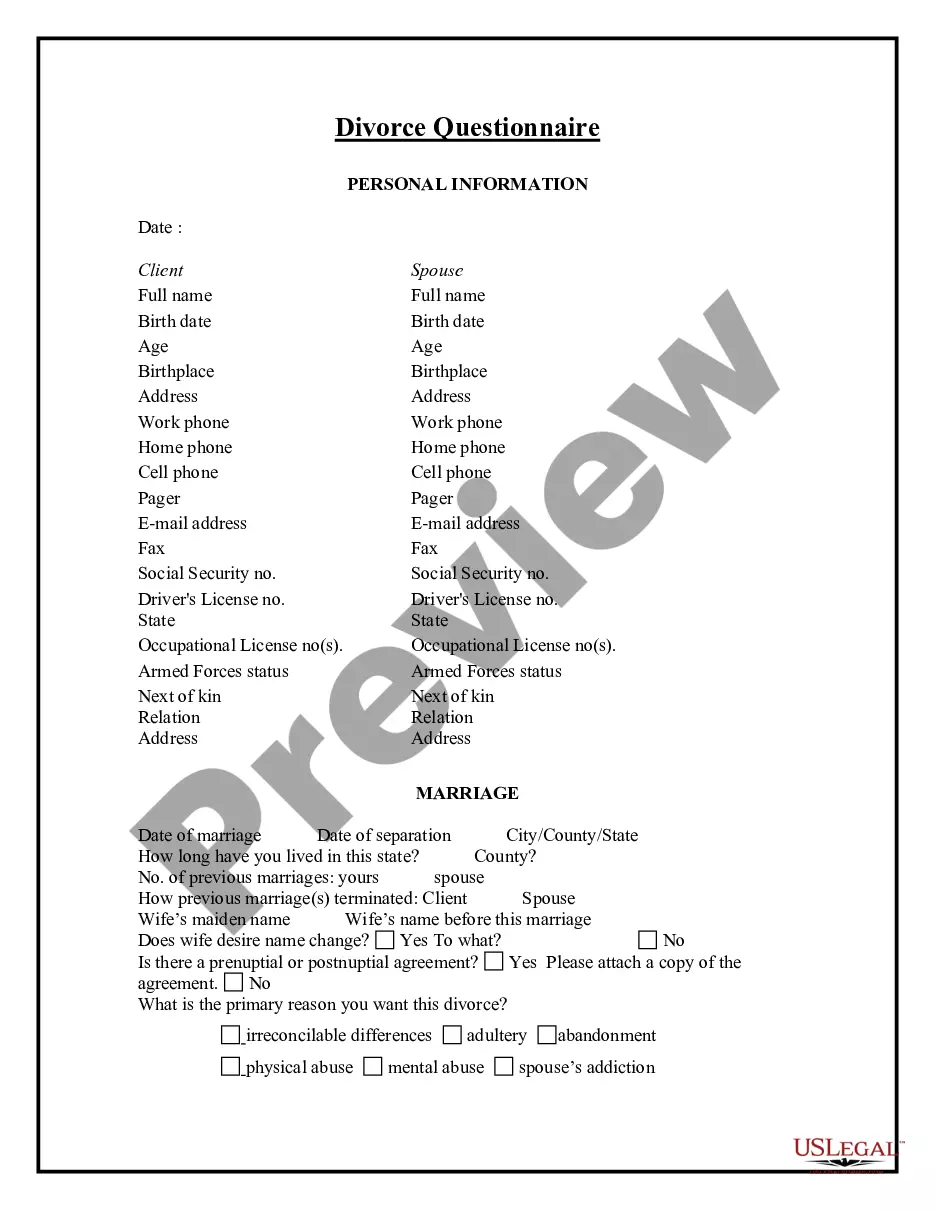
The Interrogatories form is a legal document used to request written answers to specific questions under oath. This form aids in gathering crucial information related to a case, often in divorce or custody proceedings, and helps clarify aspects like bank accounts, maintenance, and personal expenses. It differs from other forms in that it solicits detailed responses about the parties' financial and personal situations.
Form components explained
- Identification of the individual and their address.
- Details of all individuals residing at the same address.
- Information about employment history, including past and current employers.
- Disclosure of assets, liabilities, and real and personal property owned.
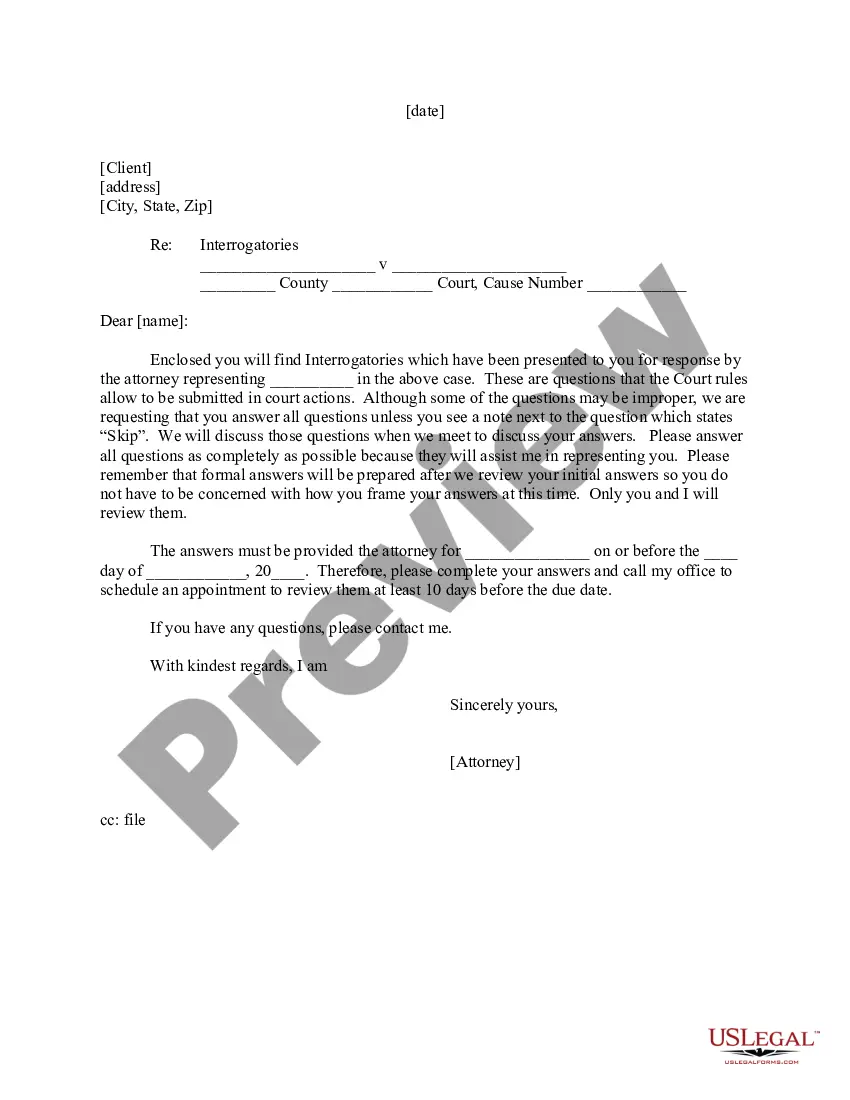
- Scheduling details for responses and updates of provided information.

When this form is needed
This form is typically used during divorce or custody cases, particularly when one party needs detailed information from the other. It is essential when determining financial obligations, property division, and assessing each party's financial status. Use this form to gather information necessary for settling disputes and making informed decisions in court.
Who this form is for
This form is intended for any party involved in legal proceedings, particularly family law matters such as divorce, child custody, or asset division. Legal representatives may also use this form on behalf of their clients to ensure all necessary information is obtained.
- Individuals undergoing divorce or separation.
- Parents involved in custody disputes.
- Attorneys representing clients in family law cases.
How to complete this form
- Identify and fill in your full name and address at the top of the form.
- List the names and addresses of individuals residing with you as requested.
- Provide detailed information regarding your employment history and current financial situation.
- Disclose all assets, liabilities, and property owned, following the structured prompts in the form.
- Sign and date the form before submission, ensuring all requested information is accurately provided.
Is notarization required?
In most cases, this form does not require notarization. However, some jurisdictions or signing circumstances might. US Legal Forms offers online notarization powered by Notarize, accessible 24/7 for a quick, remote process.
Get your form ready online
Our built-in tools help you complete, sign, share, and store your documents in one place.
Make edits, fill in missing information, and update formatting in US Legal Forms—just like you would in MS Word.
Download a copy, print it, send it by email, or mail it via USPS—whatever works best for your next step.
Sign and collect signatures with our SignNow integration. Send to multiple recipients, set reminders, and more. Go Premium to unlock E-Sign.
If this form requires notarization, complete it online through a secure video call—no need to meet a notary in person or wait for an appointment.
We protect your documents and personal data by following strict security and privacy standards.

Make edits, fill in missing information, and update formatting in US Legal Forms—just like you would in MS Word.

Download a copy, print it, send it by email, or mail it via USPS—whatever works best for your next step.

Sign and collect signatures with our SignNow integration. Send to multiple recipients, set reminders, and more. Go Premium to unlock E-Sign.

If this form requires notarization, complete it online through a secure video call—no need to meet a notary in person or wait for an appointment.

We protect your documents and personal data by following strict security and privacy standards.
Mistakes to watch out for
- Providing incomplete or inaccurate information, which may lead to legal complications.
- Failing to update information if circumstances change after the initial submission.
- Ignoring the timelines set for responses, which can affect case outcomes.
Advantages of online completion
- Convenience of downloading and filling out the form at your own pace.
- Editability allows for correcting mistakes easily before final submission.
- Access to templates drafted by licensed attorneys, ensuring legal compliance.
Legal use & context
- Interrogatories are legally binding and must be answered truthfully to avoid penalties.
- Failure to provide complete answers may lead to objections and limitations on introducing evidence in court.
- It's crucial to understand the implications of your responses as they can influence the outcome of legal proceedings.
Main things to remember
- The Interrogatories form is essential for gathering crucial information in family law cases.
- Complete and accurate responses are critical to avoid legal repercussions.
- Ensure you are aware of the timelines and procedures for submission in Minnesota.
Looking for another form?
Form popularity
FAQ
Filling out an interrogatories form in Minnesota involves several key steps. First, download a template from a reliable source like US Legal Forms, which offers user-friendly formats. Next, carefully read each question and provide detailed responses where necessary. Finally, review your answers for accuracy before submitting the form to ensure compliance with legal requirements.
In Minnesota, the number of interrogatories you can serve is generally limited to 25, including subparts. This limit encourages focused and relevant questioning, which can lead to more efficient case management. However, if you need to ask more interrogatories, you may request permission from the court. Staying within these limits helps maintain the integrity of the discovery process.
To answer Minnesota Interrogatories properly, read each question carefully and respond truthfully. Provide complete answers that include all necessary details, and avoid vague or ambiguous language. If you are unsure about a question, seek clarification or legal advice. Using resources like US Legal Forms can provide guidance and ensure your responses meet legal standards.
In Minnesota, certain topics are off-limits in interrogatories. You cannot ask questions that invade a person's privacy, seek privileged information, or are irrelevant to the case. Additionally, questions that are overly broad or vague may be challenged. Understanding these limitations helps you focus your inquiries effectively and constructively.
The purpose of form interrogatories in Minnesota is to gather relevant information from the opposing party in a legal case. These standardized questions help clarify facts and establish evidence needed for your case. They can also save time and improve efficiency in the discovery process. By utilizing Minnesota Interrogatories, you can ensure that you receive the necessary details to support your arguments.
Filling out Minnesota Interrogatories requires careful attention to detail. Begin by reviewing each question thoroughly to ensure you understand what is being asked. Then, provide clear and concise answers based on your knowledge and available information. Using a platform like US Legal Forms can simplify this process, as it offers templates that guide you through each step.
Rule 37 of the Minnesota Rules of Civil Procedure addresses the consequences of failing to comply with discovery requests, including Minnesota Interrogatories. This rule empowers the court to impose sanctions on parties who do not respond adequately or timely to discovery demands. Understanding this rule is crucial, as it emphasizes the importance of fulfilling your obligations during the discovery phase. You can rely on US Legal Forms to access templates and guidance for proper compliance with Minnesota Interrogatories.
Rule 69 in Minnesota refers to the process for obtaining discovery, including Minnesota Interrogatories. This rule allows a party to request information from the other party through written questions, which they must answer under oath. It is an essential tool in civil litigation, enabling parties to gather necessary facts and evidence before trial. Utilizing Minnesota Interrogatories can streamline your preparation and enhance your case strategy.
Dealing with Minnesota interrogatories requires a clear understanding of the legal process. First, review the interrogatories carefully to understand what information is being requested. Next, gather the necessary facts and documents to provide accurate responses. Lastly, respond in a timely manner, ensuring that your answers are complete and comply with the rules of the court. For assistance, consider using USLegalForms, which offers templates and guidance to help you navigate Minnesota interrogatories effectively.
Not all Minnesota court records are available online. While many documents, including Minnesota interrogatories, can be accessed digitally, some records may require a visit to the courthouse or a request for physical copies. It is essential to check the specific court's website or use a reliable legal service, like US Legal Forms, to navigate the available resources effectively.