Worksheet Analyzing a Self-Employed Independent Contractor
Overview of this form
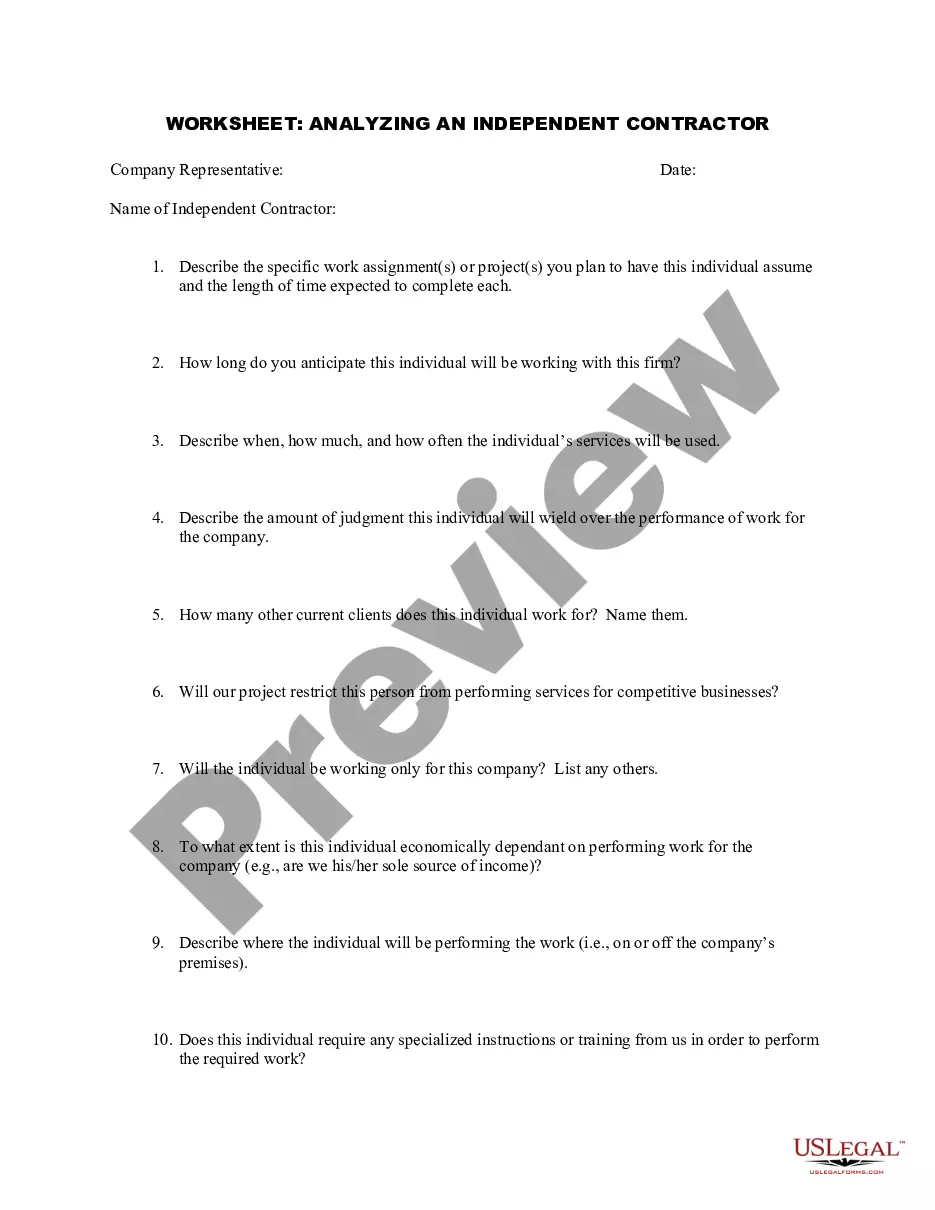
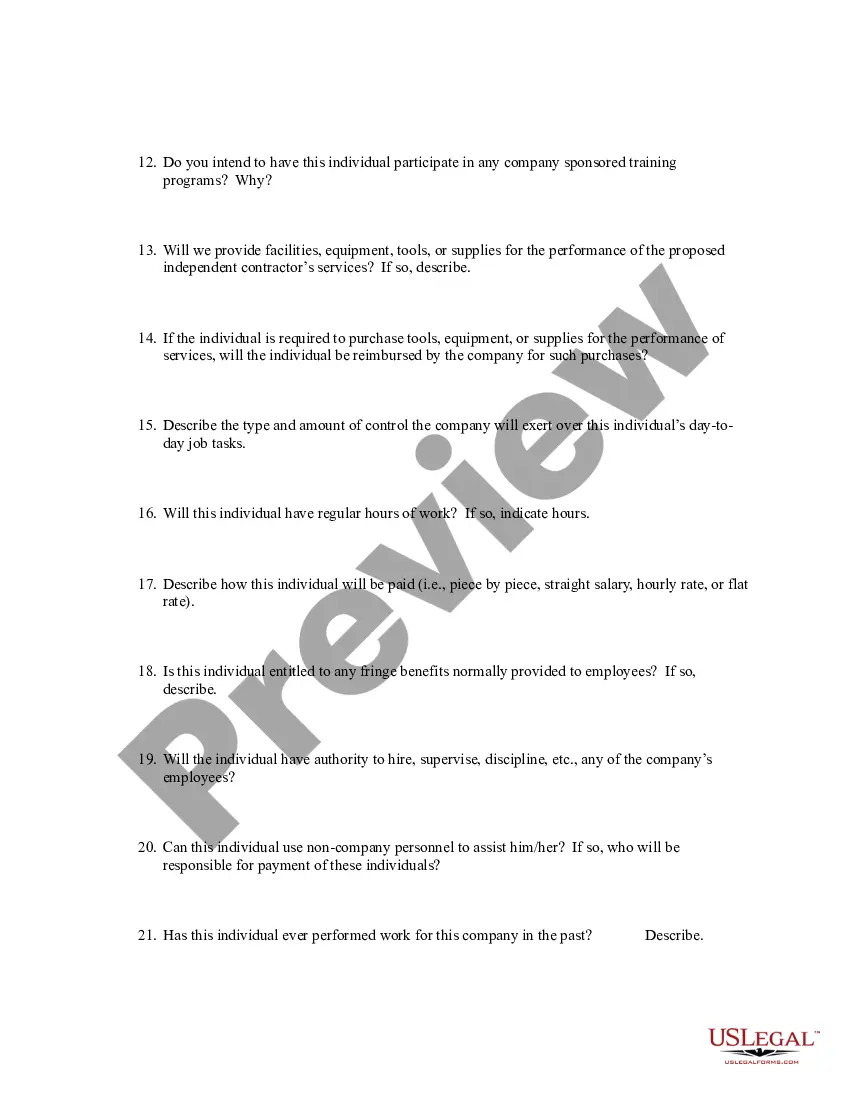
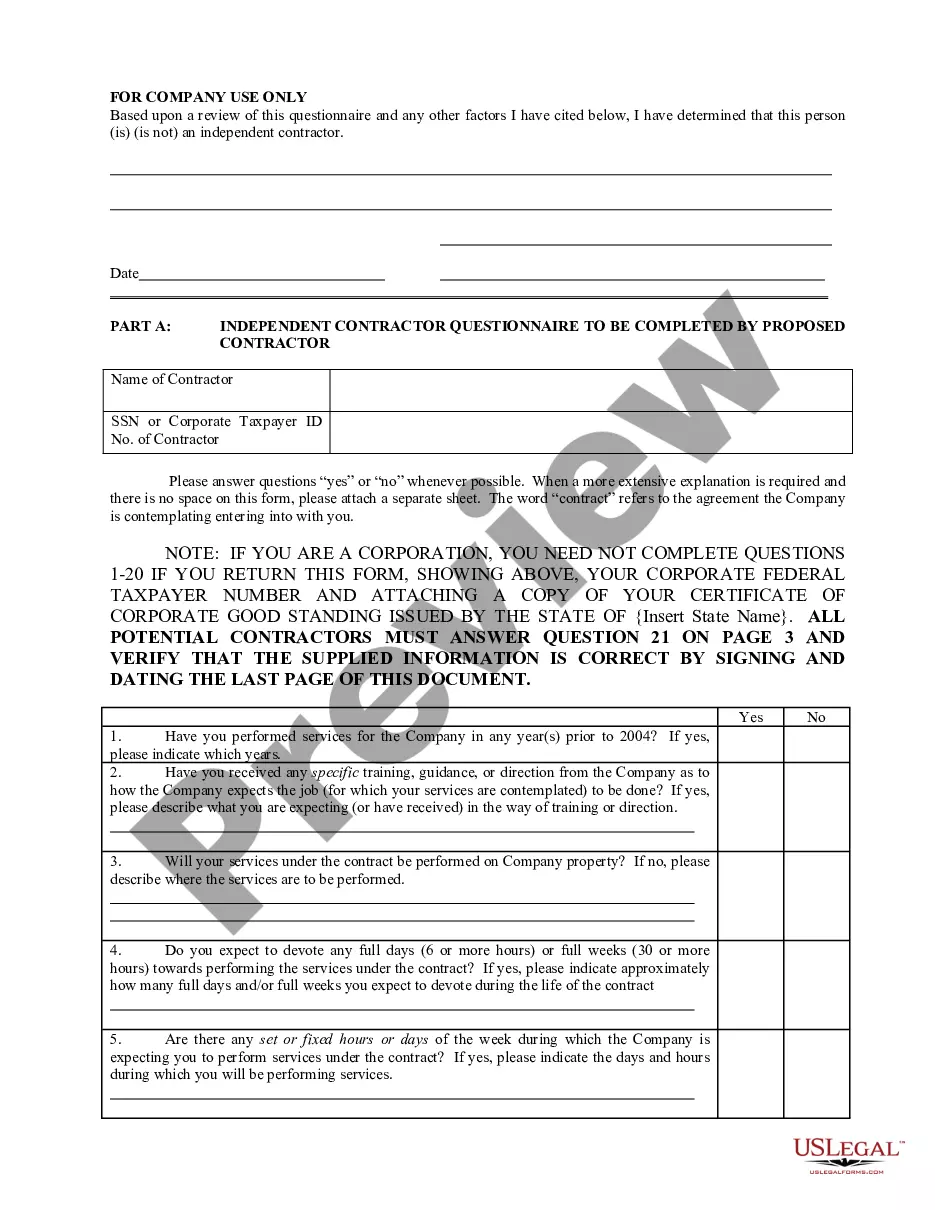
The Worksheet Analyzing a Self-Employed Independent Contractor is a legal document designed to assist companies in evaluating the appropriateness of hiring an independent contractor. This form is essential for businesses that utilize independent contractors rather than employees, helping to clarify the nature of the relationship and ensure it aligns with legal standards. Its unique focus on evaluating various factors differentiates it from more general employment forms.
Form components explained
- Company Representative Information: Captures details about the company representative who is completing the form.
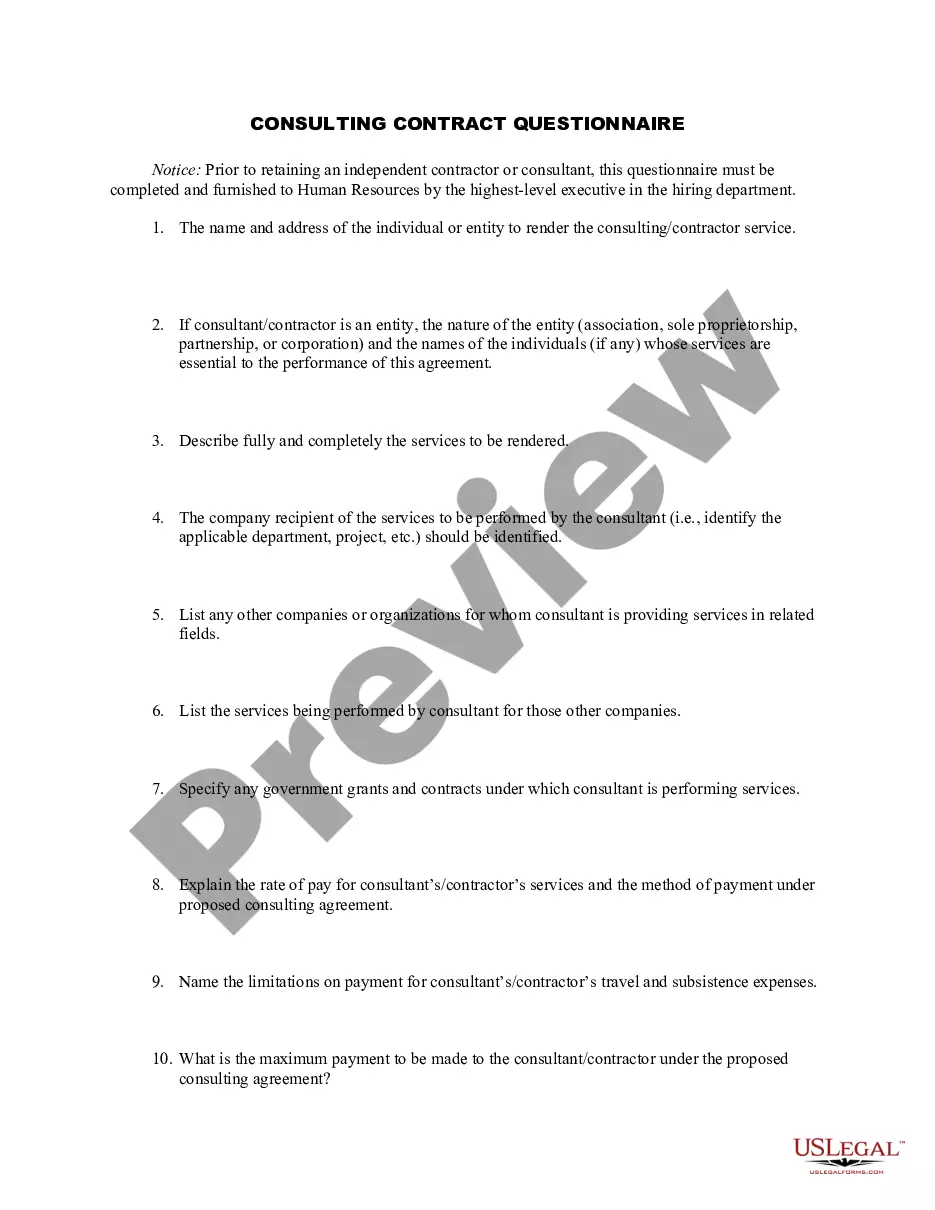
- Independent Contractor Details: Identifies the contractor's name and describes the specific work assignments planned.
- Service Frequency: Outlines how often and when the contractor will provide services.
- Economic Dependency: Assesses the contractor's financial reliance on the company for income.
- Judgment and Control: Evaluates the contractor's authority over work tasks and company operations.
When to use this document
This form should be utilized when a business is considering engaging a self-employed independent contractor. It is particularly valuable in scenarios where the company needs to:
- Verify the contractor's fit for the project based on specific requirements.
- Ensure compliance with local labor laws and regulations regarding independent contractors.
- Assess the risk of misclassification, which could lead to legal and financial repercussions.
Intended users of this form
- Business owners and managers looking to hire independent contractors.
- HR professionals tasked with managing contractor relationships.
- Legal advisors ensuring compliance with employment regulations.
- Independent contractors seeking clarity on their working relationships.
How to complete this form
- Provide the name and contact information of the company representative.
- Enter the name of the independent contractor and describe the work assignments.
- Specify the frequency and duration of services expected from the contractor.
- Assess and document the economic dependence of the contractor on your company.
- Describe any control the company will have over the contractor's work and how they will be compensated.
Is notarization required?
In most cases, this form does not require notarization. However, some jurisdictions or signing circumstances might. US Legal Forms offers online notarization powered by Notarize, accessible 24/7 for a quick, remote process.
Get your form ready online
Our built-in tools help you complete, sign, share, and store your documents in one place.
Make edits, fill in missing information, and update formatting in US Legal Forms—just like you would in MS Word.
Download a copy, print it, send it by email, or mail it via USPS—whatever works best for your next step.
Sign and collect signatures with our SignNow integration. Send to multiple recipients, set reminders, and more. Go Premium to unlock E-Sign.
If this form requires notarization, complete it online through a secure video call—no need to meet a notary in person or wait for an appointment.
We protect your documents and personal data by following strict security and privacy standards.

Make edits, fill in missing information, and update formatting in US Legal Forms—just like you would in MS Word.

Download a copy, print it, send it by email, or mail it via USPS—whatever works best for your next step.

Sign and collect signatures with our SignNow integration. Send to multiple recipients, set reminders, and more. Go Premium to unlock E-Sign.

If this form requires notarization, complete it online through a secure video call—no need to meet a notary in person or wait for an appointment.

We protect your documents and personal data by following strict security and privacy standards.
Avoid these common issues
- Failing to accurately describe the contractor's work assignments.
- Not assessing the contractor's economic dependency correctly.
- Overlooking the amount of control the company exerts over the contractor.
- Neglecting to update the form if work roles or circumstances change.
Why use this form online
- Convenience of accessing and filling out the form from any location.
- Immediate digital storage and retrieval of completed forms.
- Easy editing capabilities if details need to be modified.
- Built-in guidance to avoid common errors during the completion process.
Looking for another form?





Form popularity
FAQ
The IRS requires contractors to fill out a Form W-9, request for Taxpayer Identification Number and Certification, which you should keep on file for at least four years after the hiring. This form is used to request the correct name and Taxpayer Identification Number, or TIN, of the worker or their entity.
Do not designate someone as a 1099 Employee if: Company provides training on a certain method of job performance. Tools and materials are provided. Employees must follow set schedule. You provide benefits such as vacation, overtime pay, etc.
Self-employed persons, including direct sellers, report their income on Schedule C (Form 1040), Profit or Loss from Business (Sole Proprietorship). Use Schedule SE (Form 1040), Self-Employment Tax if the net earnings from self-employment are $400 or more.
You have to file an income tax return if your net earnings from self-employment were $400 or more. If your net earnings from self-employment were less than $400, you still have to file an income tax return if you meet any other filing requirement listed in the Form 1040 and 1040-SR instructions PDF.
Tell HMRC that you're self-employed, so that they know you need to pay tax through Self Assessment and pay Class 2 and 4 National Insurance contributions. set up a business bank account.
An independent contractor is not considered an employee for Form I-9 purposes and does not need to complete Form I-9.
Locate all of your annual tax returns. Tax returns are your first go-to when it comes to income proof. Bank statements indicate personal cash flow. Make use of online accounting services that track payments and expenditures. Maintain profit and loss statements.
Locate all of your annual tax returns. Tax returns are your first go-to when it comes to income proof. Bank statements indicate personal cash flow. Make use of online accounting services that track payments and expenditures. Maintain profit and loss statements.
As an independent contractor, report your income on Schedule C of Form 1040, Profit or Loss from Business. You must pay self-employment taxes on net earnings exceeding $400. For those taxes, you must submit Schedule SE, Form 1040, the self-employment tax.