Sample Confidentiality Form Upon Termination
Overview of this form
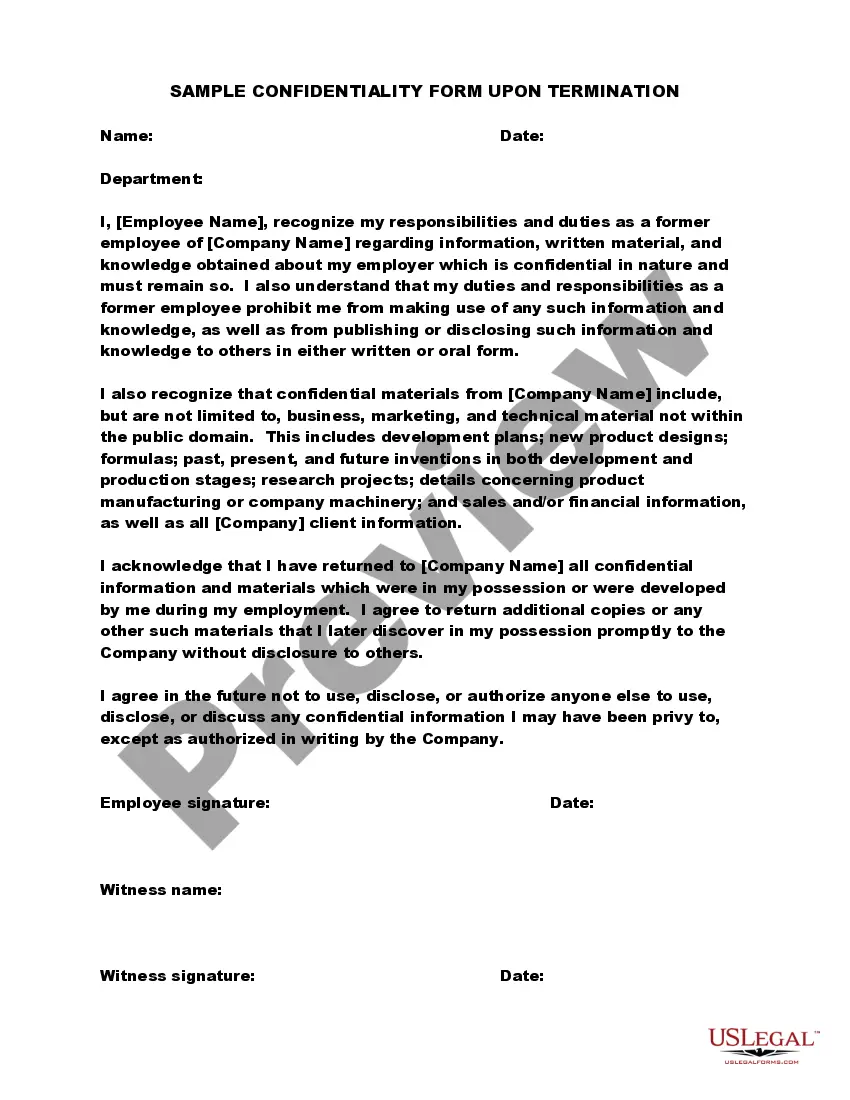
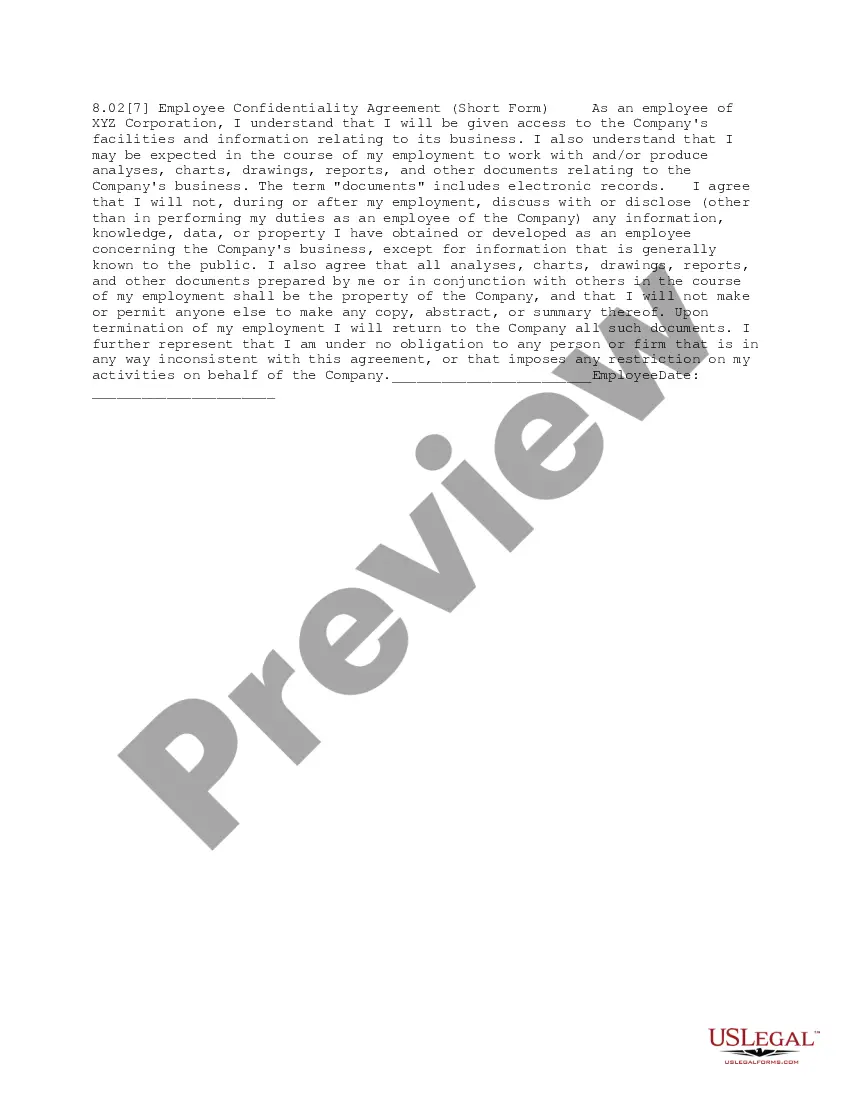
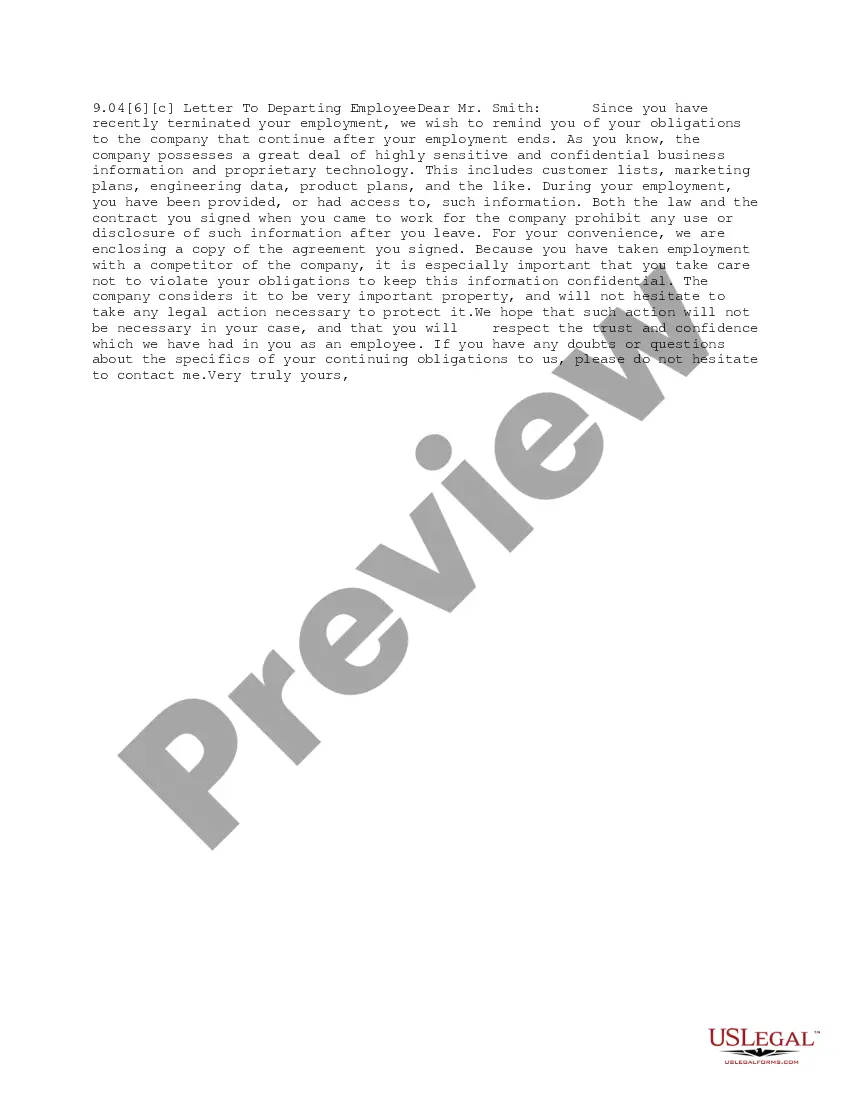
The Sample Confidentiality Form Upon Termination is a legal document designed for former employees. It serves to protect the confidential information of the employer by requiring the terminated employee to refrain from disclosing proprietary information after their employment ends. This form also mandates that the employee return all confidential materials in their possession, ensuring that sensitive company data remains secure.
Key parts of this document
- Identification of the employee, company, and relevant dates.
- Declaration of confidentiality obligations regarding proprietary information.
- Return of all company materials and information upon termination.
- Signature lines for the employee and witnesses to acknowledge the terms of the agreement.
When this form is needed
This form should be used during the termination process of an employee to ensure the confidentiality of sensitive company information. It is crucial for situations involving business secrets, proprietary processes, or any confidential communication that the company wishes to protect from disclosure.
Who should use this form
The Sample Confidentiality Form Upon Termination is intended for:
- Employers looking to secure confidential information when an employee leaves the organization.
- Employees who have been terminated and need to understand their responsibilities regarding confidentiality.
- HR professionals managing the exit process to ensure compliance with confidentiality protocols.
Instructions for completing this form
- Enter the employee's name and details, including the department and company name.
- Specify the date of termination on the form.
- Have the employee sign to acknowledge their understanding of confidentiality obligations.
- Include witness information and signatures for validation of the agreement.
- Ensure the employee returns all confidential materials before finalizing the form.
Is notarization required?
This form does not typically require notarization unless specified by local law. However, having it notarized may provide additional verification if disputes arise.
Get your form ready online
Our built-in tools help you complete, sign, share, and store your documents in one place.
Make edits, fill in missing information, and update formatting in US Legal Forms—just like you would in MS Word.
Download a copy, print it, send it by email, or mail it via USPS—whatever works best for your next step.
Sign and collect signatures with our SignNow integration. Send to multiple recipients, set reminders, and more. Go Premium to unlock E-Sign.
If this form requires notarization, complete it online through a secure video call—no need to meet a notary in person or wait for an appointment.
We protect your documents and personal data by following strict security and privacy standards.

Make edits, fill in missing information, and update formatting in US Legal Forms—just like you would in MS Word.

Download a copy, print it, send it by email, or mail it via USPS—whatever works best for your next step.

Sign and collect signatures with our SignNow integration. Send to multiple recipients, set reminders, and more. Go Premium to unlock E-Sign.

If this form requires notarization, complete it online through a secure video call—no need to meet a notary in person or wait for an appointment.

We protect your documents and personal data by following strict security and privacy standards.
Common mistakes to avoid
- Failing to obtain signatures from both the employee and a witness.
- Not specifying all types of confidential information that must be protected.
- Leaving out the date of termination, which may affect the form's validity.
Why use this form online
- Convenient access to a legally compliant template that can be customized.
- Editable fields allow for quick completion and storage of the document.
- Secure downloading ensures that private information remains confidential.
Legal use & context
- This form is designed to protect a companyâs confidential information and is legally enforceable.
- Violation of the confidentiality agreement can lead to legal action against the former employee for damages.
What to keep in mind
- The Sample Confidentiality Form Upon Termination is essential for protecting sensitive company information after employee termination.
- It should always be completed accurately to ensure legal validity and enforceability.
- Employers and employees both have responsibilities outlined in the form to prevent misuse of confidential materials.
Looking for another form?
Form popularity
FAQ
A definition of confidential information. Who is involved. Why the recipient knows the information. Exclusions or limits on confidential information. Receiving party's obligations. Time frame or term. Discloser to the recipient.
Common obligations covered by Survival clauses include Confidentiality, Non-Competition, and Effect of Termination. After these core obligations, the Survival clause can be highly deal-specific, with certain representations, warranties, and other obligations also continuing.
It's important to have confidentiality provisions survive the termination of an NDA.To protect its trade secret information, a company may indicate that the NDA will have a term of 2 years but certain aspects of the confidentiality provision will remain in effect for many years after the NDA or even indefinitely.
Use a standard format for contracts. Decide what type of confidentiality statement you should use. Identify the involved parties in the agreement. Define the information to keep confidential. List the information excluded from the agreement.
Therapist/patient confidentiality Sharing confidential information about a client with a family member or friend.Leaving your computer containing confidential information open to others. Continuing to work with a client when there's a conflict of interests (for example, they know one of your family members or friends)
A confidentiality agreement (also called a nondisclosure agreement or NDA) is a legally binding contract in which a person or business promises to treat specific information as a trade secret and promises not to disclose the secret to others without proper authorization.
2. Clearly label all confidential information as confidential. This means writing confidential on documents or any folder you keep them in. If you are sending an email, make sure the title clearly identifies it as confidential.
This Article 7 shall survive the expiration or termination of the Agreement for a period of five (5) years unless otherwise extended or shortened by mutual written agreement between the Parties.
Set the date of the agreement. Describe the two parties, sometimes called the Disclosing Party and the Receiving Party.7feff Include names and identification, so there can be no misunderstanding about who signed the agreement.