California Promissory Note with No Payment Due Until Maturity and Interest to Compound Annually
Overview of this form
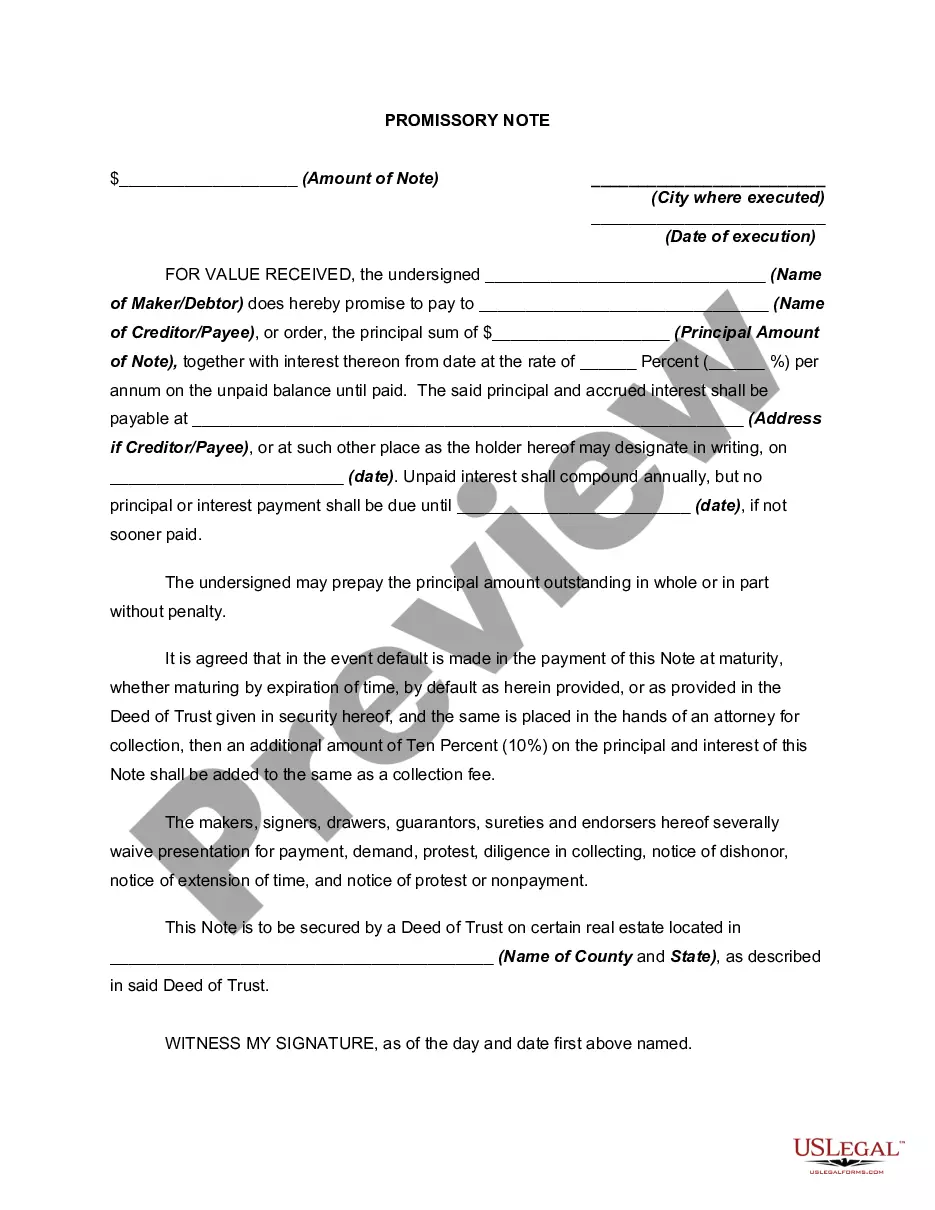
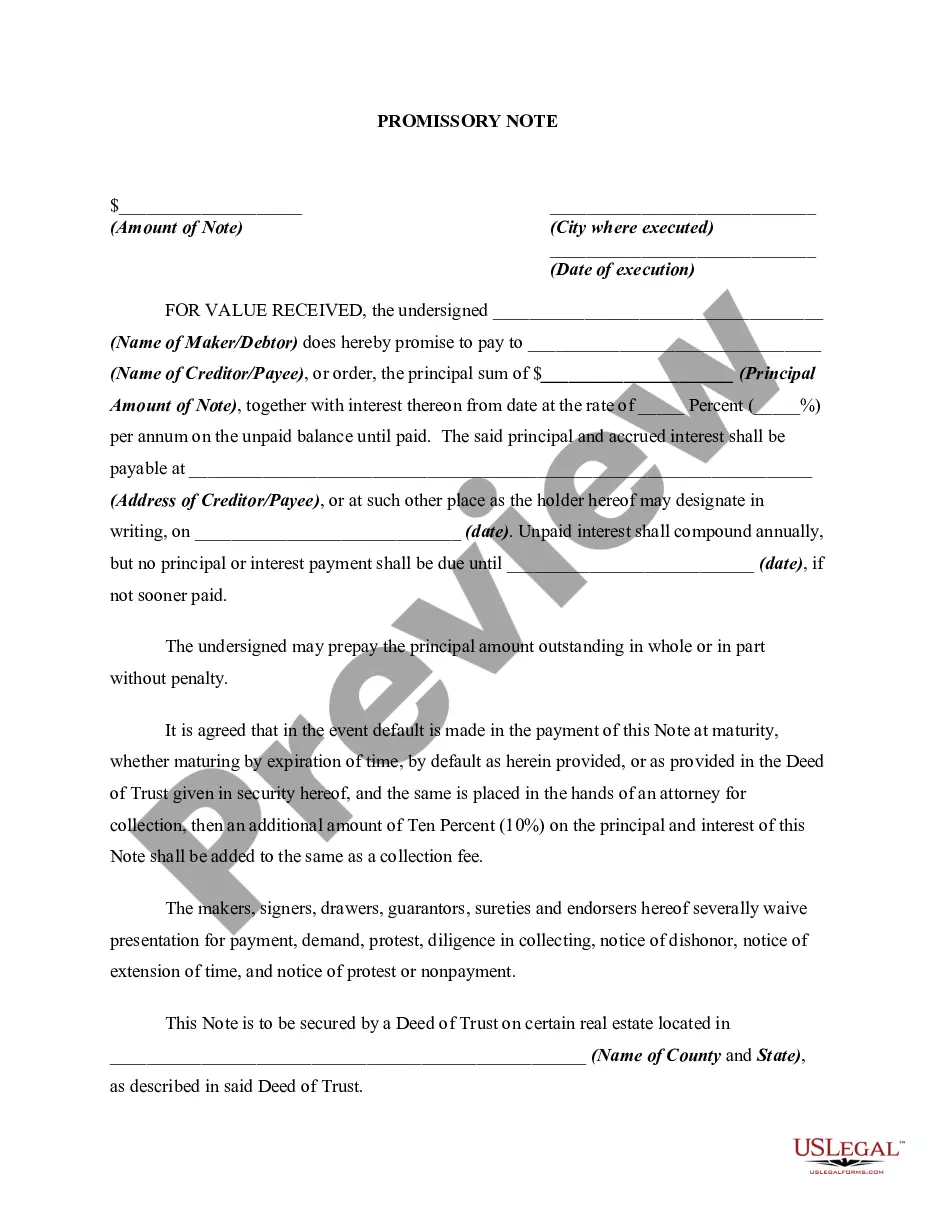
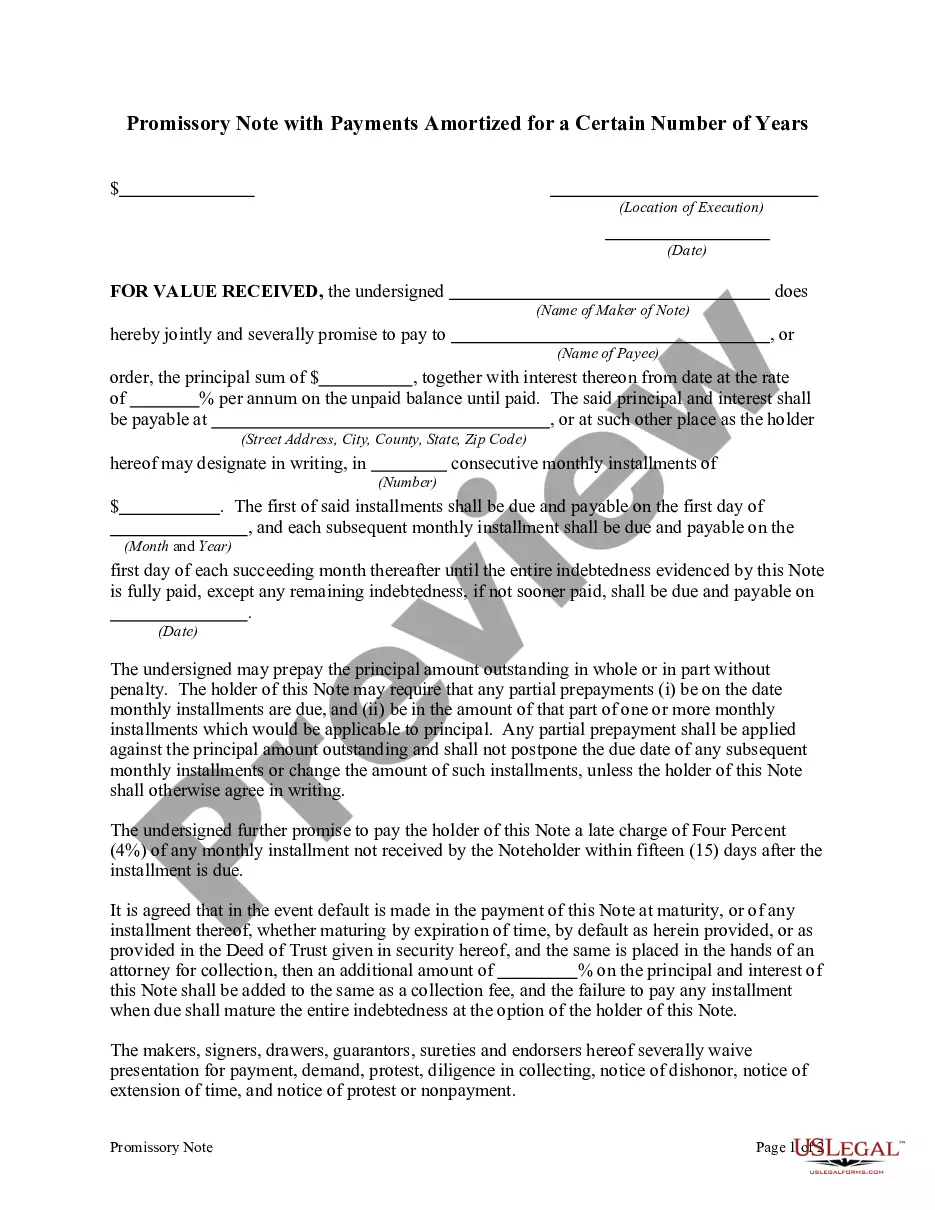
A promissory note with no payment due until maturity and interest to compound annually is a legally binding document in which one party (the maker/debtor) promises to pay a specified principal amount to another party (the creditor/payee) at a future date. This form differs from others by allowing the debtor to defer payments of both principal and interest until the note's maturity, with interest compounding annually during the term of the loan. This type of note is commonly used for loans where the borrower needs flexibility in payment schedules.
Form components explained
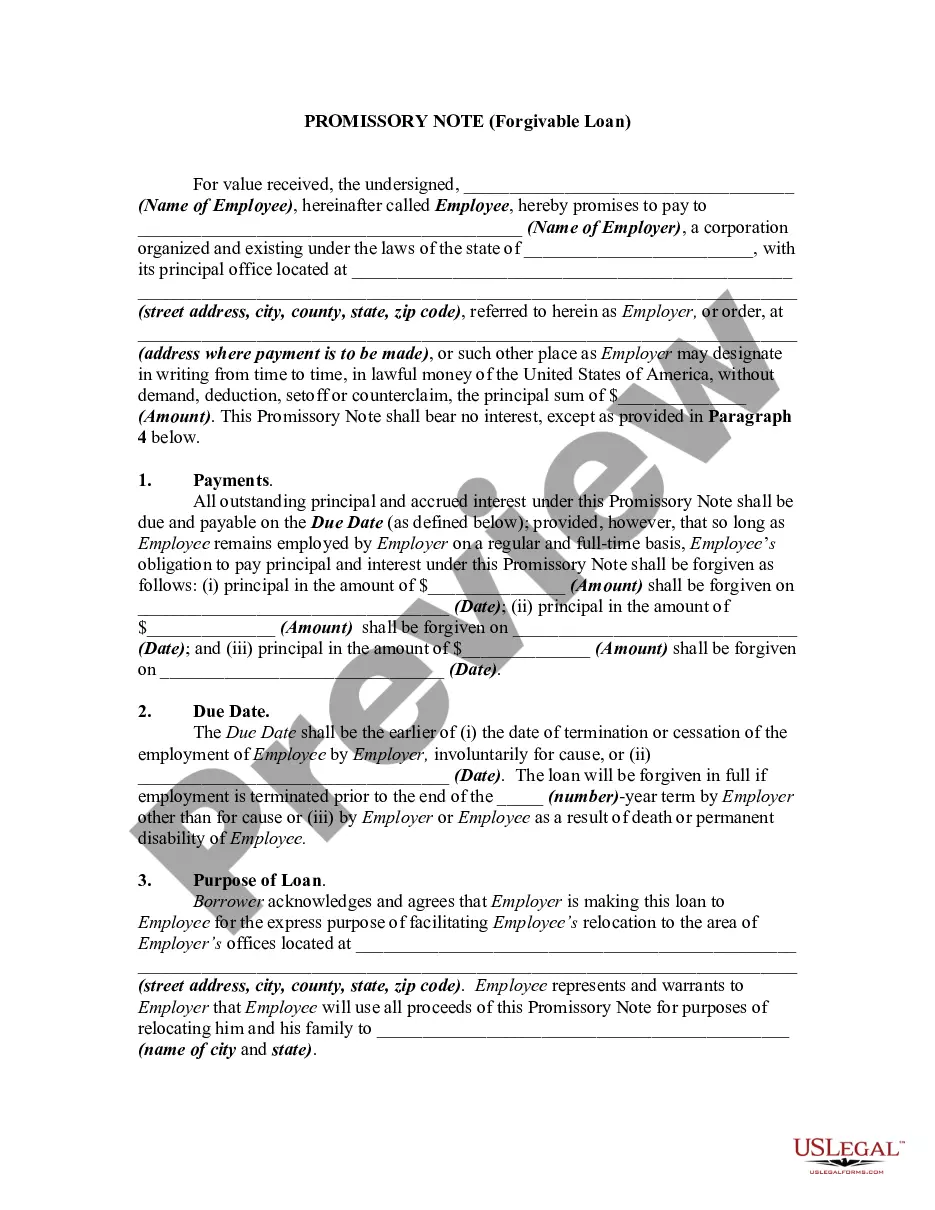
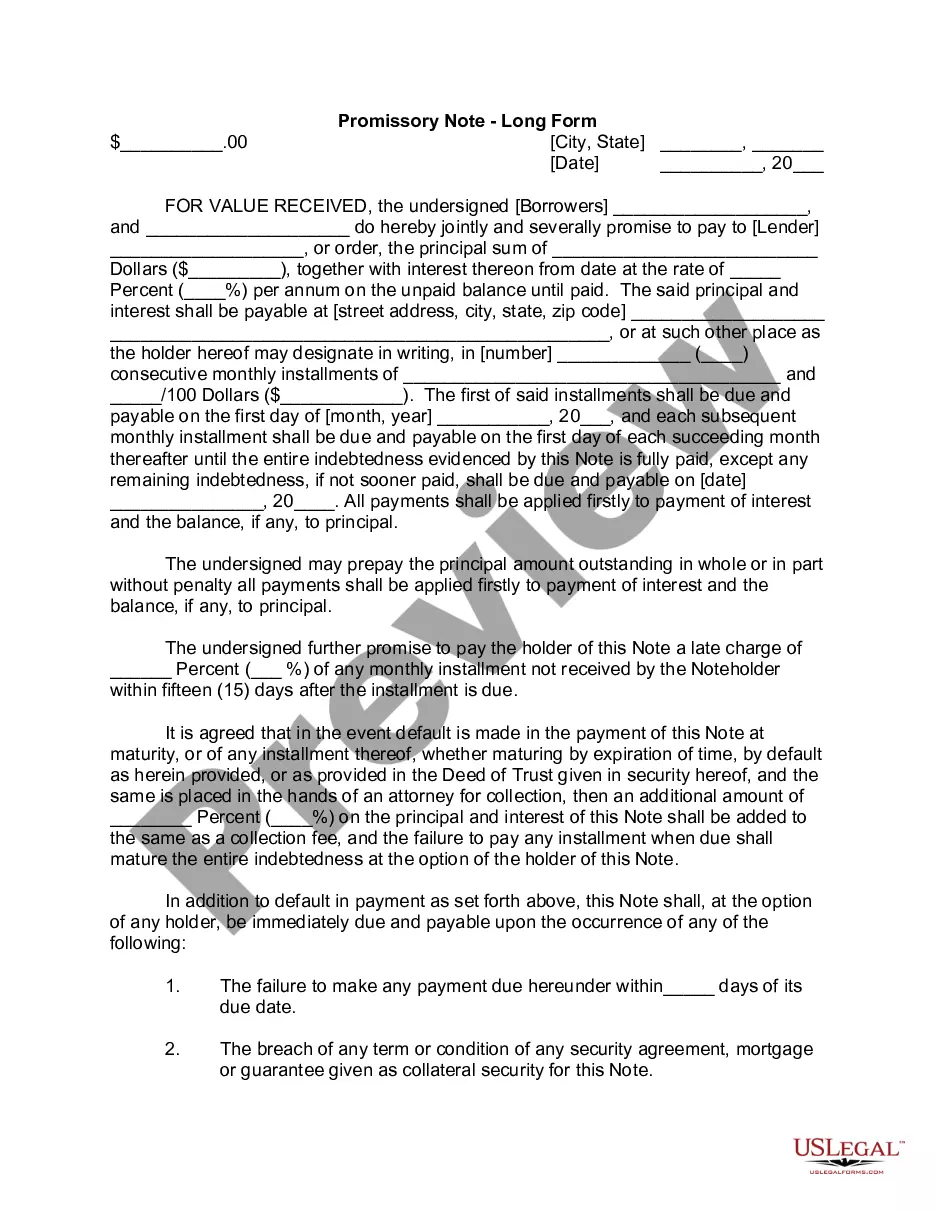
- Principal Amount: The total amount of money borrowed.
- Interest Rate: The percentage of interest to be accrued annually on the principal amount.
- Maturity Date: The specific date when the full payment is due.
- Prepayment Clause: Allows the maker to pay off the debt early without incurring penalties.
- Default Terms: Conditions outlining actions to be taken if payments are not made as agreed.
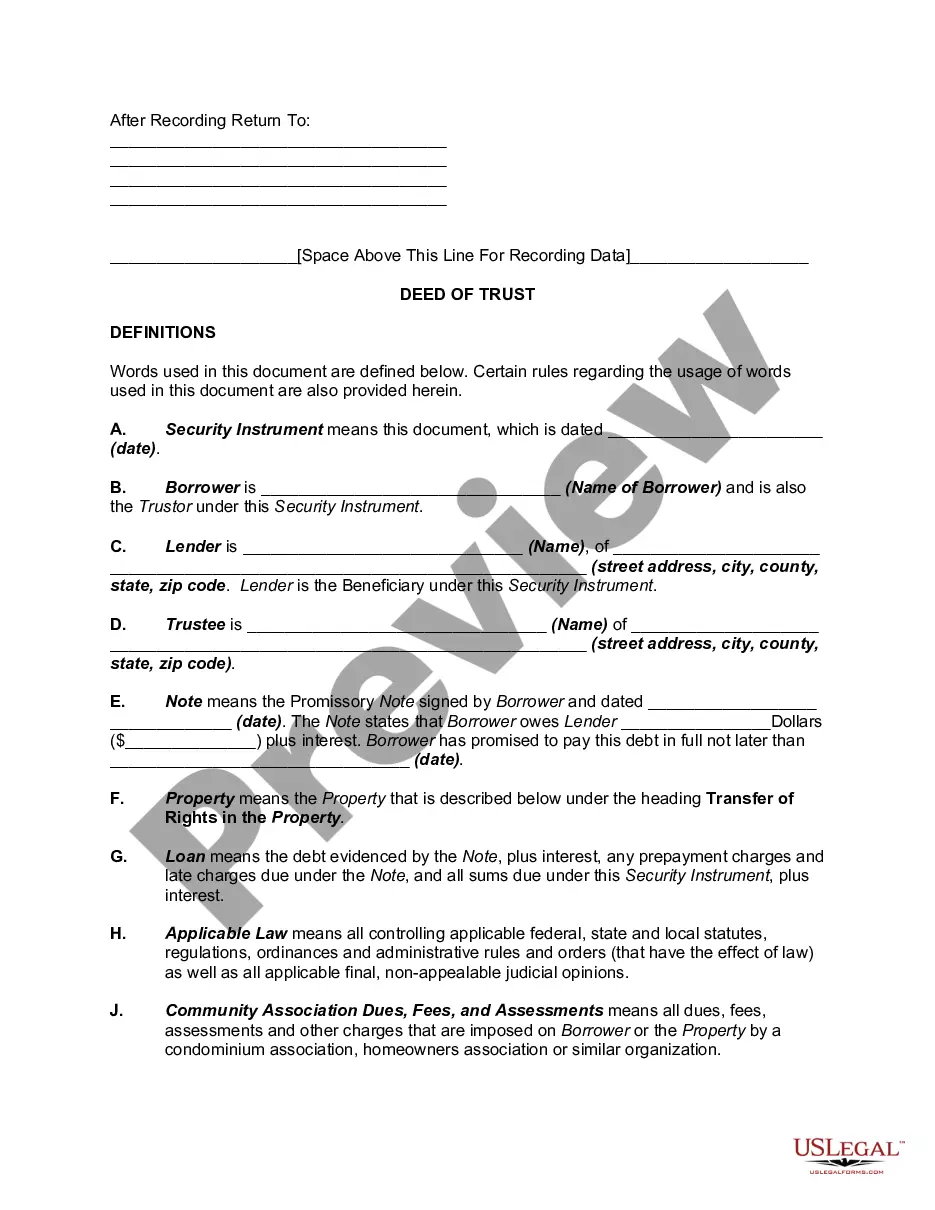
- Legal Security: References to a deed of trust securing the note with real estate.
Situations where this form applies
This form is typically used when an individual or business borrows money but needs the option to delay repayment until a specific future date. For instance, it is useful for real estate transactions or personal loans where the borrower anticipates increased cash flow at maturity. It is also beneficial if the borrower prefers to minimize financial pressure during the loan period.
Who this form is for
This form is ideal for:
- Individuals looking to borrow money without immediate repayment obligations.
- Businesses needing short-term financing but anticipating income later.
- Lenders who want to provide loans with flexible repayment terms.
How to prepare this document
- Identify the parties involved: Enter the names of the maker/debtor and the creditor/payee.
- Specify the loan amount: Write the principal amount being borrowed.
- Set the interest rate: Indicate the annual interest rate to be charged.
- Enter the maturity date: Choose and write the date when payment is due.
- Provide the repayment address: Include the address where payments should be sent.
- Have the maker sign and date the document: This legally binds the parties to the terms described in the note.
Does this form need to be notarized?
Notarization is generally not required for this form. However, certain states or situations might demand it. You can complete notarization online through US Legal Forms, powered by Notarize, using a verified video call available anytime.
Get your form ready online
Our built-in tools help you complete, sign, share, and store your documents in one place.
Make edits, fill in missing information, and update formatting in US Legal Forms—just like you would in MS Word.
Download a copy, print it, send it by email, or mail it via USPS—whatever works best for your next step.
Sign and collect signatures with our SignNow integration. Send to multiple recipients, set reminders, and more. Go Premium to unlock E-Sign.
If this form requires notarization, complete it online through a secure video call—no need to meet a notary in person or wait for an appointment.
We protect your documents and personal data by following strict security and privacy standards.

Make edits, fill in missing information, and update formatting in US Legal Forms—just like you would in MS Word.

Download a copy, print it, send it by email, or mail it via USPS—whatever works best for your next step.

Sign and collect signatures with our SignNow integration. Send to multiple recipients, set reminders, and more. Go Premium to unlock E-Sign.

If this form requires notarization, complete it online through a secure video call—no need to meet a notary in person or wait for an appointment.

We protect your documents and personal data by following strict security and privacy standards.
Mistakes to watch out for
- Failing to specify the correct interest rate, leading to confusion on repayment terms.
- Not including a specific maturity date, which can create uncertainties.
- Omitting the repayment address where payments should be sent.
- Neglecting to have both parties sign the document, invalidating the agreement.
Benefits of using this form online
- Convenience of completing the form at any time from home.
- Access to professionally drafted templates that minimize legal risks.
- Ability to easily edit and customize fields to fit specific requirements.
- Reliability through quality checking by licensed attorneys.
Legal use & context
- This form is legally enforceable in most jurisdictions provided it is executed correctly.
- Ensure that both parties fully understand the terms of the note to mitigate potential disputes.
- Consult a legal professional if there are questions regarding the implications of this note on your financial obligations.
Main things to remember
- A promissory note allows the borrower to delay payments until maturity, with interest compounding annually.
- It's crucial to clearly define all terms, including the repayment address and maturity date, to avoid disputes.
- This form can be used by both individuals and businesses seeking flexible loan arrangements.
Looking for another form?
Form popularity
FAQ
To find out how much $1000 will be worth after 2 years at a 6% interest rate compounded daily, you would use the formula A = 1000(1 + 0.06/365)^(3652). After performing the calculation, you will find that the total amount will be approximately $1,127.43. This example highlights the benefits of understanding a California Promissory Note with No Payment Due Until Maturity and Interest to Compound Annually, as the compounding effect can lead to significant gains over time.
To calculate compound interest on a promissory note, use the formula A = P(1 + r/n)^(nt). In this formula, you will plug in your principal, the annual interest rate, the number of times interest is compounded annually, and the total time in years. This method applies very well to a California Promissory Note with No Payment Due Until Maturity and Interest to Compound Annually, allowing you to see how your investment compounds over time.
Yes, a promissory note can be structured to carry no interest at all. This type of note is often used in specific situations, such as personal loans between friends or family members. However, if you consider a California Promissory Note with No Payment Due Until Maturity and Interest to Compound Annually, interest accrues and compounds annually, which can benefit the lender significantly.
Yes, interest can compound on a promissory note, including a California Promissory Note with No Payment Due Until Maturity and Interest to Compound Annually. Compounding interest means that you earn interest on both the principal amount and any previously accrued interest. This feature can greatly increase the total amount due at maturity, making clear terms in your note crucial for understanding future obligations.
In California, a promissory note may become invalid if it does not comply with state laws. Common issues include missing signatures, unclear terms, or lack of consideration. To ensure that your California Promissory Note with No Payment Due Until Maturity and Interest to Compound Annually adheres to legal standards, consider utilizing services like USLegalForms, which provide templates compliant with state regulations.
A promissory note can be deemed invalid for several reasons, including lack of essential details or absence of necessary signatures. If the terms are unclear or if the borrower did not receive adequate consideration, the note may fail enforcement. Ensuring that your California Promissory Note with No Payment Due Until Maturity and Interest to Compound Annually is comprehensively drafted can minimize such risks.
Yes, certain promissory notes can exist without a specific maturity date; however, this may lead to potential complications. For a California Promissory Note with No Payment Due Until Maturity and Interest to Compound Annually, it is essential to clearly state the payment conditions to prevent misunderstandings in the future. Having structured terms benefits both lenders and borrowers.
Generally, a note should include a maturity date to provide a clear timeline for repayment. However, specific notes, such as a California Promissory Note with No Payment Due Until Maturity and Interest to Compound Annually, might differ. Even in such cases, having defined terms can help avoid confusion and ensure that both parties are aware of their obligations.
Yes, promissory notes are legally binding in California if they meet certain requirements. To be enforceable, a California Promissory Note with No Payment Due Until Maturity and Interest to Compound Annually must include essential details such as the signature of the borrower, the principal amount, and terms of repayment. By documenting these aspects, the note provides legal protection to lenders.
Yes, a promissory note typically requires a maturity date. This date indicates when the borrower must repay the principal amount to the lender. In the case of a California Promissory Note with No Payment Due Until Maturity and Interest to Compound Annually, the note will specify when the full amount is due, ensuring clarity for both parties involved.