Confidentiality Agreement - General
What this document covers
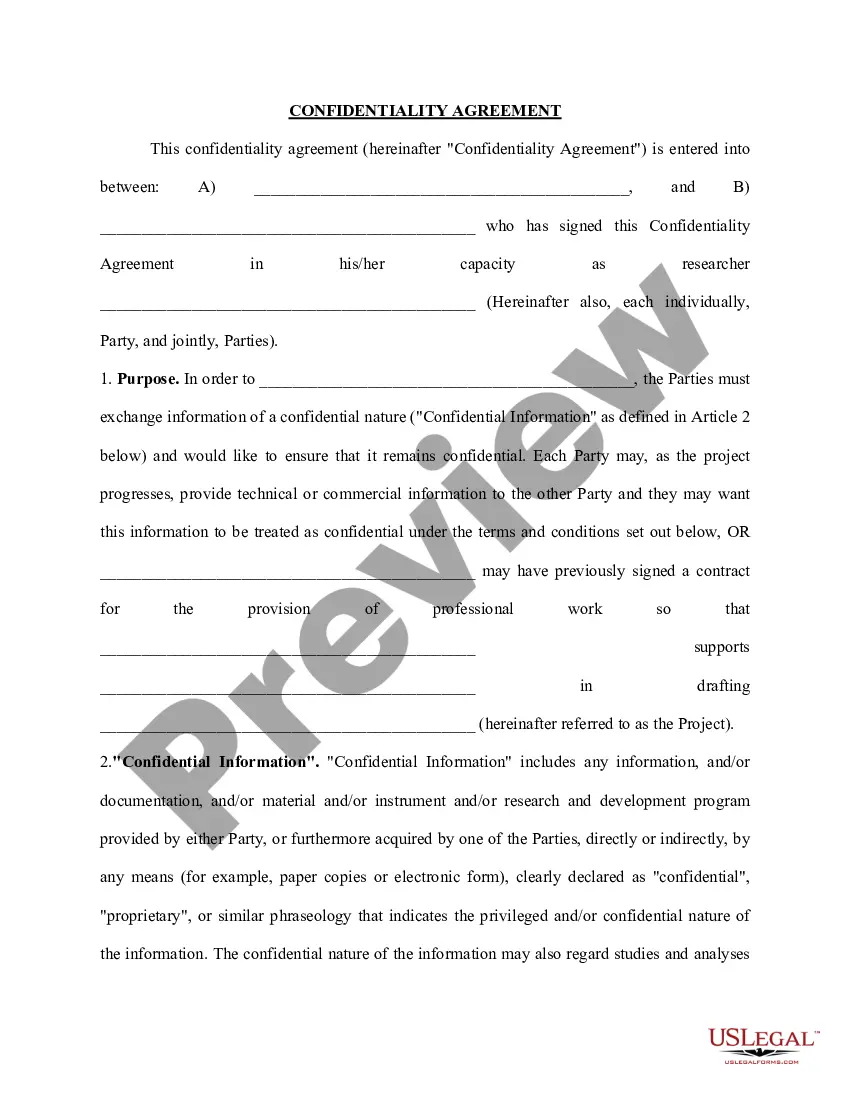
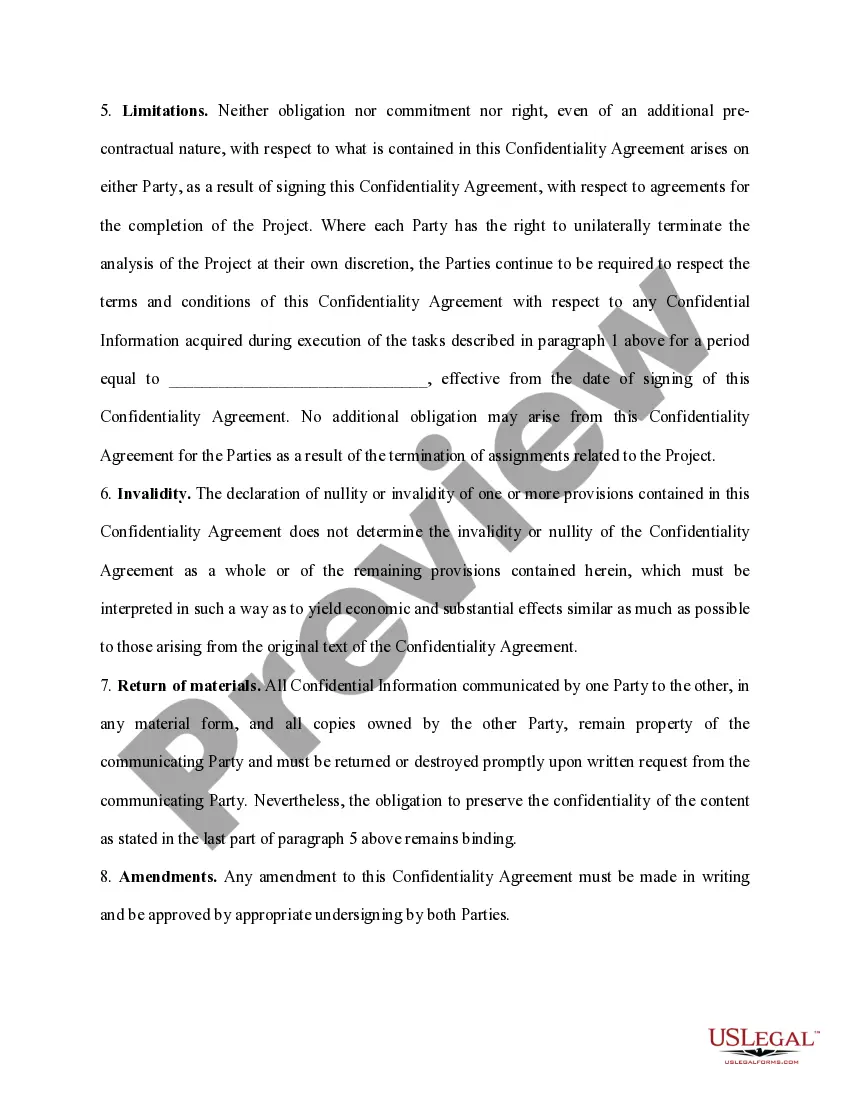
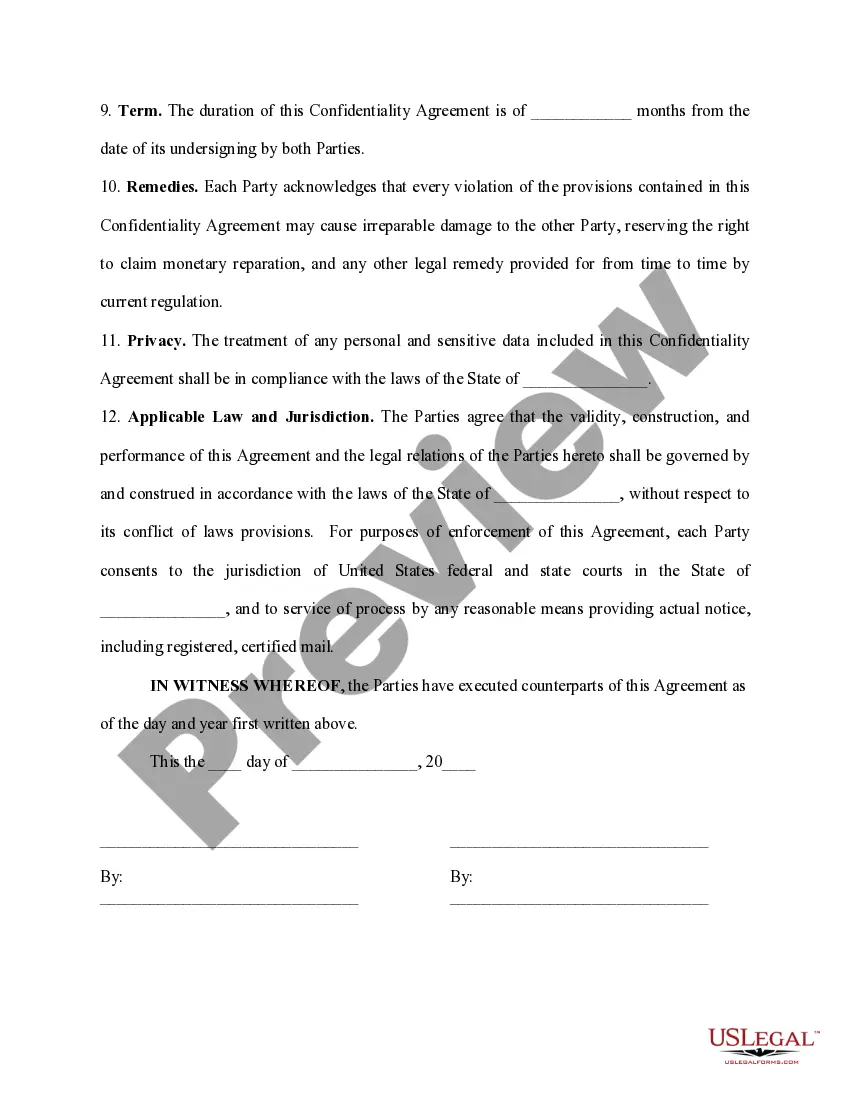
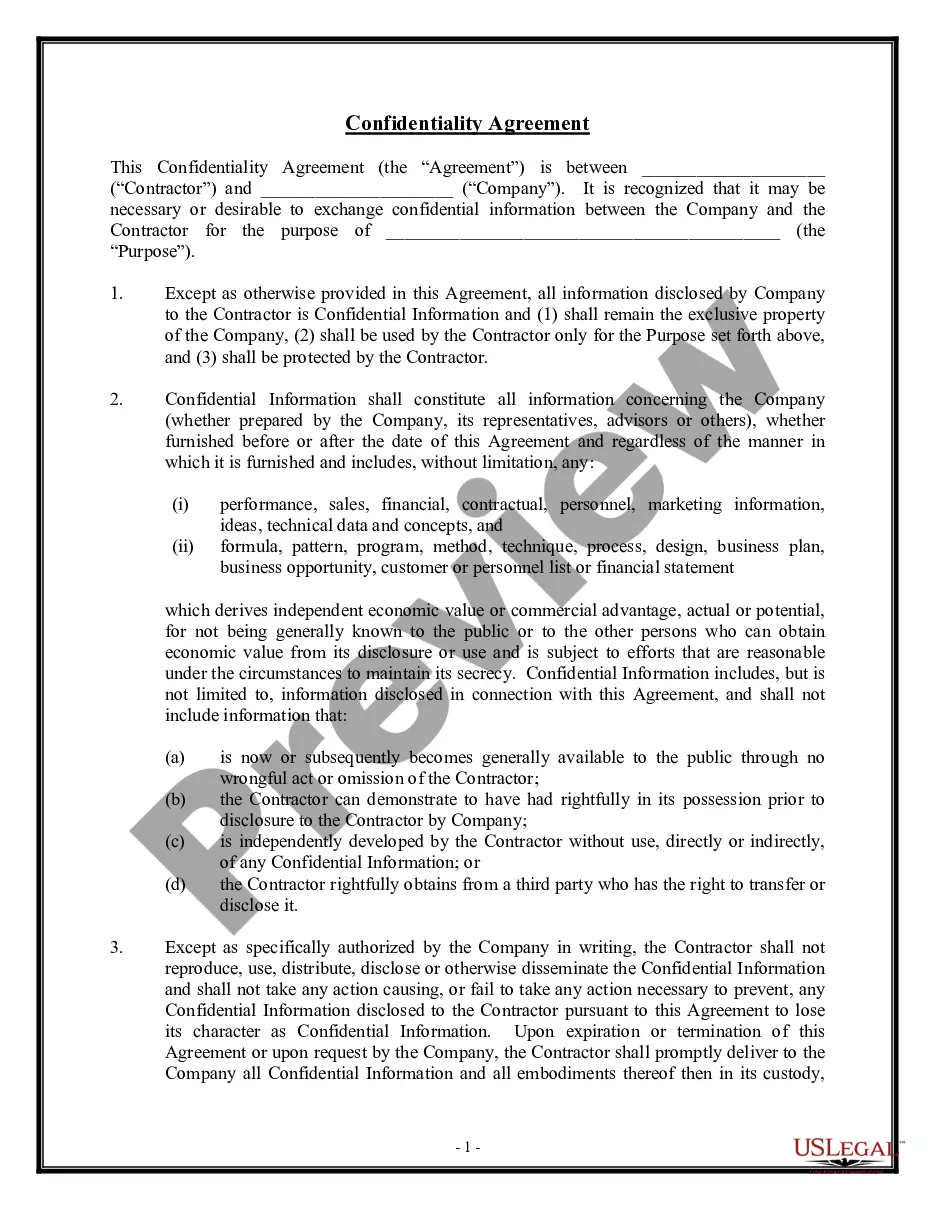
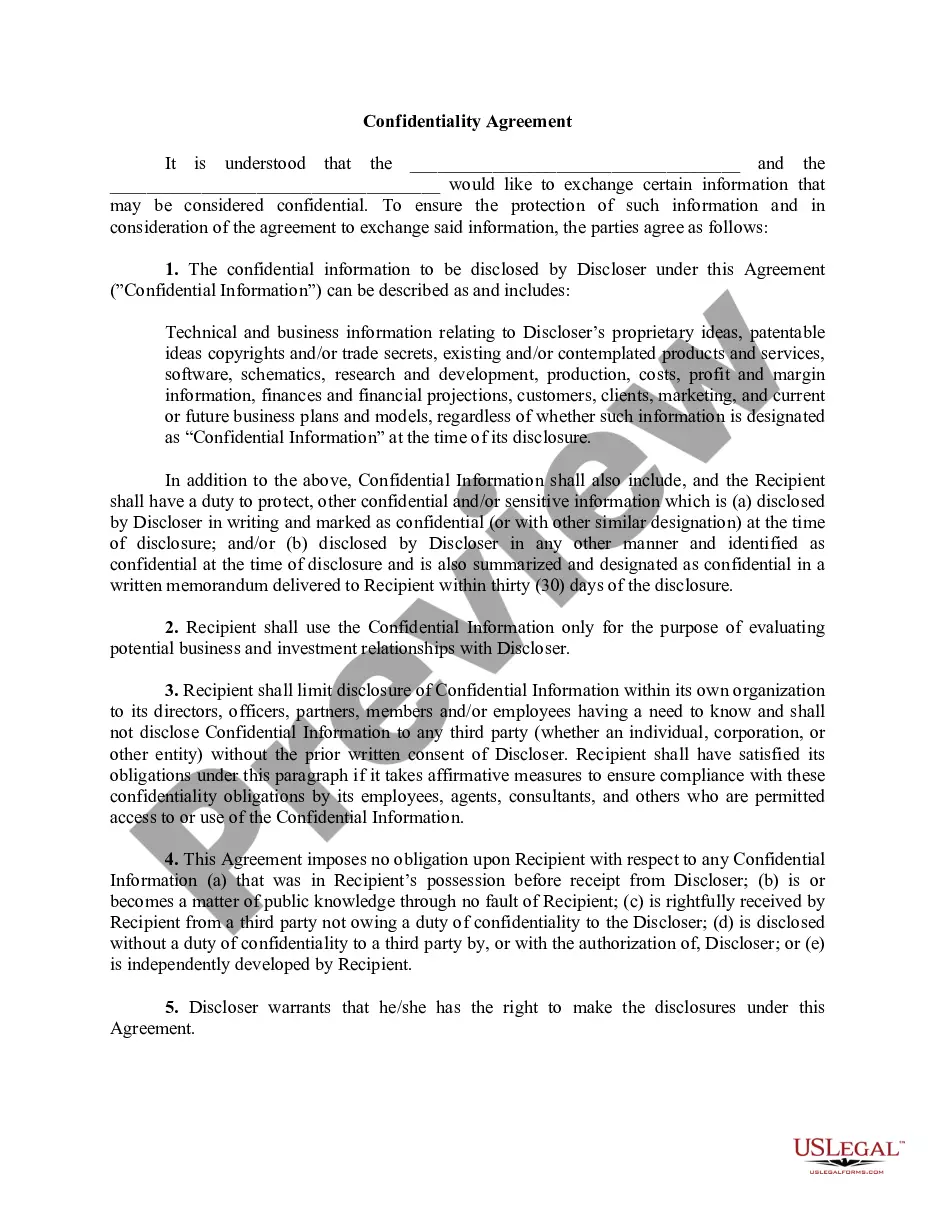
The Confidentiality Agreement - General is a legal document designed to protect confidential information exchanged between parties involved in a project. This agreement outlines the obligations for safeguarding sensitive information, setting it apart from similar forms as it is specifically tailored for project-related disclosures. By establishing clear terms, it helps ensure that proprietary information remains secure and is not misused during or after the project's execution.
Key components of this form
- Purpose: Specifies the rationale for sharing confidential information during a project.
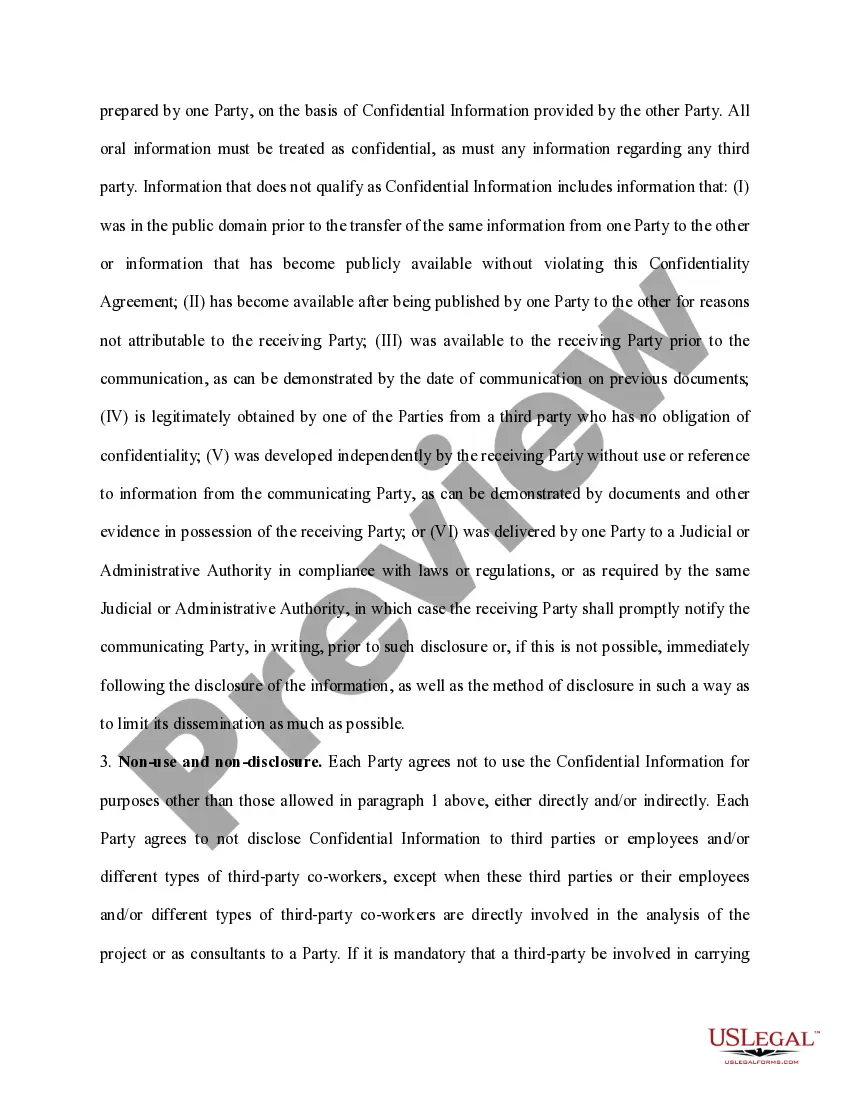
- Confidential Information: Defines what constitutes confidential data and exceptions to this definition.
- Non-use and Non-disclosure: Stipulates the obligations of each party not to misuse or reveal confidential information.
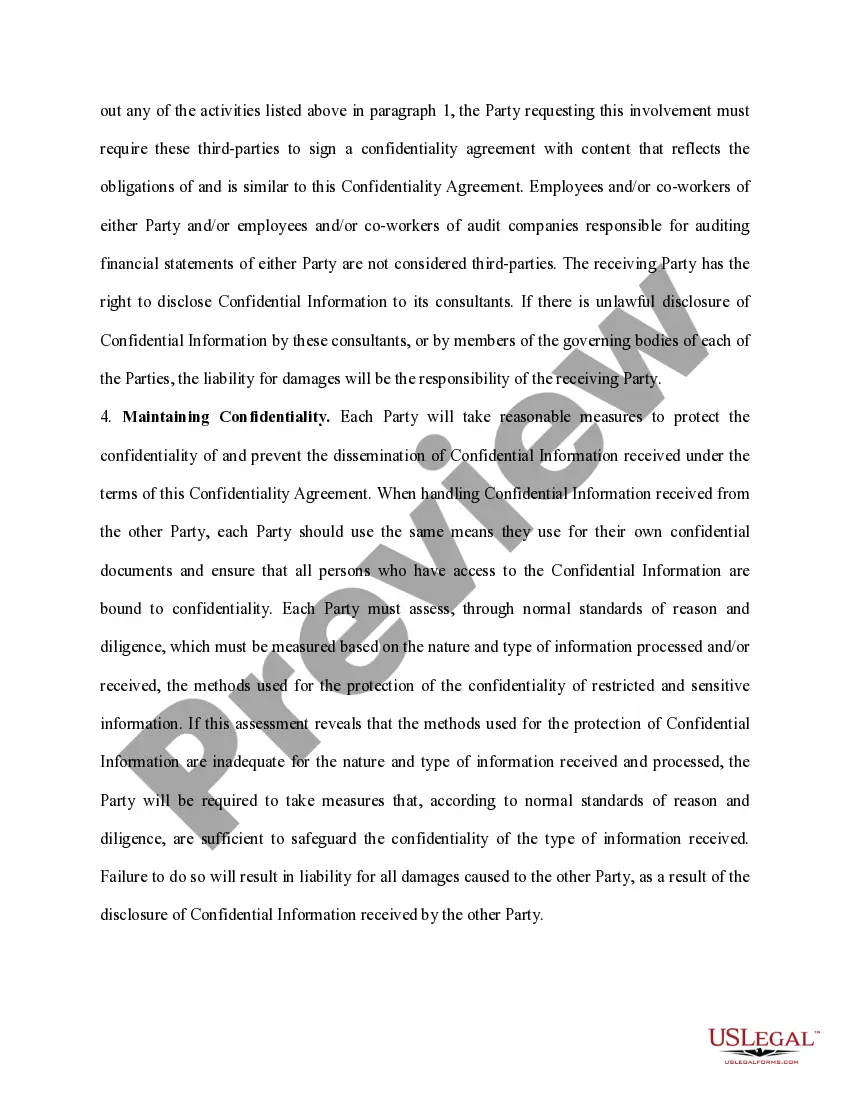
- Maintaining Confidentiality: Outlines the measures required to protect confidential information.
- Return of Materials: Requires the return or destruction of confidential materials once the agreement is terminated.
- Duration and Termination: Indicates the length of the agreement and conditions for termination.
Situations where this form applies
This Confidentiality Agreement should be used when two or more parties are planning to share sensitive information during a project. Examples include research collaborations, business partnerships, or any situation where proprietary data needs protection. Utilizing this agreement helps ensure that all involved parties are legally bound to maintain confidentiality.
Who should use this form
- Businesses entering contracts where sensitive information may be shared.
- Individuals conducting research that involves proprietary data.
- Consultants or freelancers who need access to confidential client information.
- Organizations looking to formalize their data protection procedures when cooperating with other entities.
Completing this form step by step
- Identify the parties involved by filling in their names and roles.
- Clearly state the purpose of sharing confidential information in the agreement.
- Define what constitutes 'Confidential Information' in the context of your project.
- Specify the duration of the confidentiality obligations and any conditions for termination.
- Both parties should sign and date the agreement to make it effective.
Does this form need to be notarized?
This form does not typically require notarization unless specified by local law. However, it is recommended to verify local requirements to ensure compliance.
Get your form ready online
Our built-in tools help you complete, sign, share, and store your documents in one place.
Make edits, fill in missing information, and update formatting in US Legal Forms—just like you would in MS Word.
Download a copy, print it, send it by email, or mail it via USPS—whatever works best for your next step.
Sign and collect signatures with our SignNow integration. Send to multiple recipients, set reminders, and more. Go Premium to unlock E-Sign.
If this form requires notarization, complete it online through a secure video call—no need to meet a notary in person or wait for an appointment.
We protect your documents and personal data by following strict security and privacy standards.

Make edits, fill in missing information, and update formatting in US Legal Forms—just like you would in MS Word.

Download a copy, print it, send it by email, or mail it via USPS—whatever works best for your next step.

Sign and collect signatures with our SignNow integration. Send to multiple recipients, set reminders, and more. Go Premium to unlock E-Sign.

If this form requires notarization, complete it online through a secure video call—no need to meet a notary in person or wait for an appointment.

We protect your documents and personal data by following strict security and privacy standards.
Avoid these common issues
- Failing to define confidential information clearly.
- Not having all parties sign the agreement.
- Leaving out the duration of confidentiality obligations.
- Assuming verbal agreements are sufficient for confidentiality.
Benefits of completing this form online
- Convenient and immediate access to downloadable templates.
- Editability to customize terms according to project needs.
- Reliability of professionally drafted documents for legal safety.
Looking for another form?


Form popularity
FAQ
Identification of the parties. Definition of what is deemed to be confidential. The scope of the confidentiality obligation by the receiving party. The exclusions from confidential treatment.
Confidentiality Clauses for Simple Agreements A confidentiality clause binds parties to nondisclosure of proprietary or confidential information within the larger confines of a contract or agreement. Its scope is generally limited in time and type of information.
The key elements of confidentiality agreements are: Identification of the parties. Definition of what is defined to be confidential. The scope of the confidentiality obligation by the receiving party. The exclusions from confidential treatment. The term of the agreement.
Describe what the other party is agreeing to. Exercising reasonable precautions against disclosure of the information. Not disclosing Confidential Information without the written consent of the Disclosing Party. Using the information only for business purposes, and only on a ?need to know? basis.
Here is a common example: CONFIDENTIALITY NOTICE: This message and any accompanying documents contain information belonging to the sender which may be confidential and legally privileged. This information is only for the use of the individual or entity to which it was intended.
The agreement should identify the purpose to which the recipient can put the confidential information. All other uses of the confidential information should be prohibited. Sometimes a confidentiality agreement states that no rights are licensed by the confidentiality agreement. This is stating the obvious.