Michigan Name Affidavit of Seller
About this form
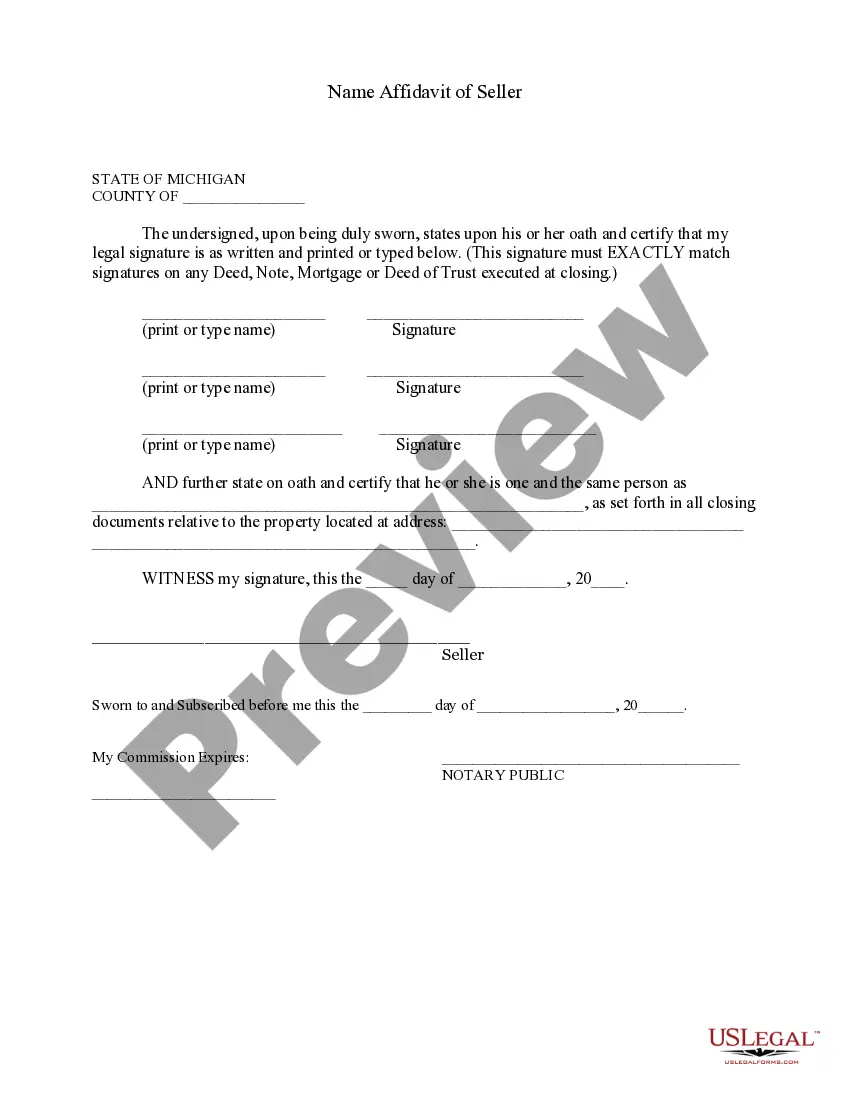
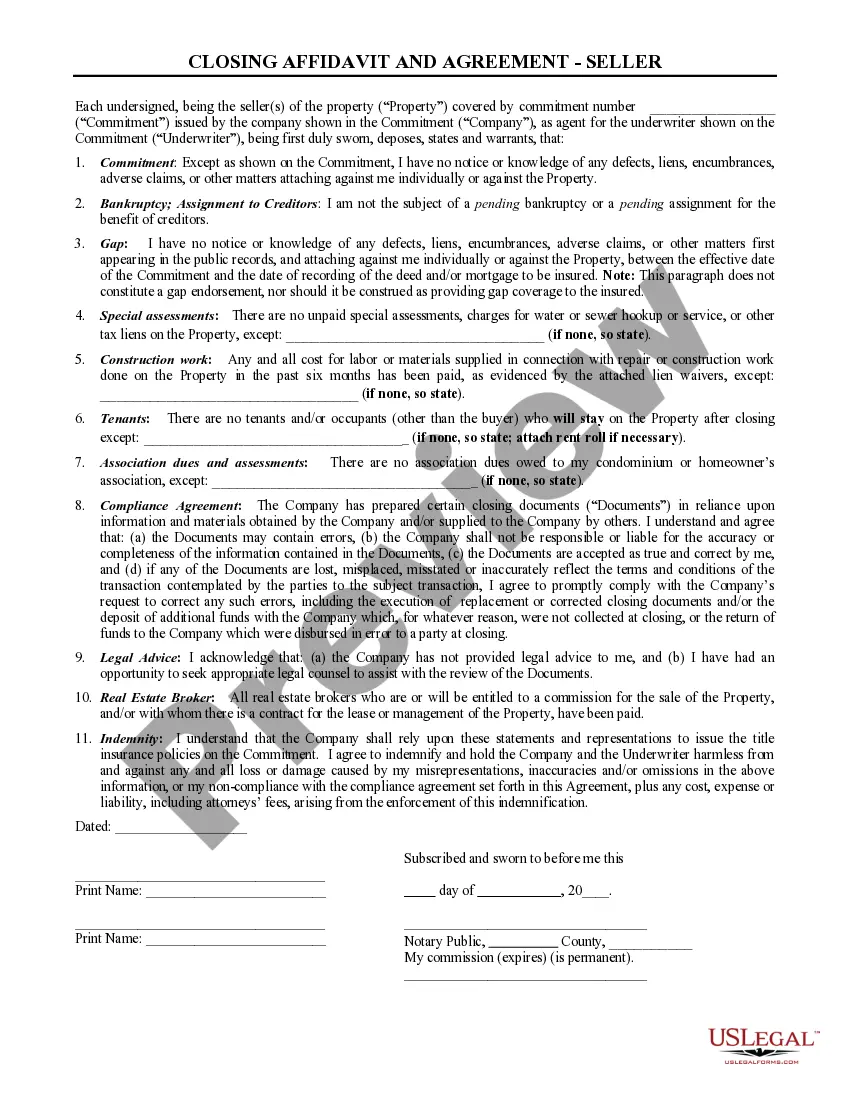
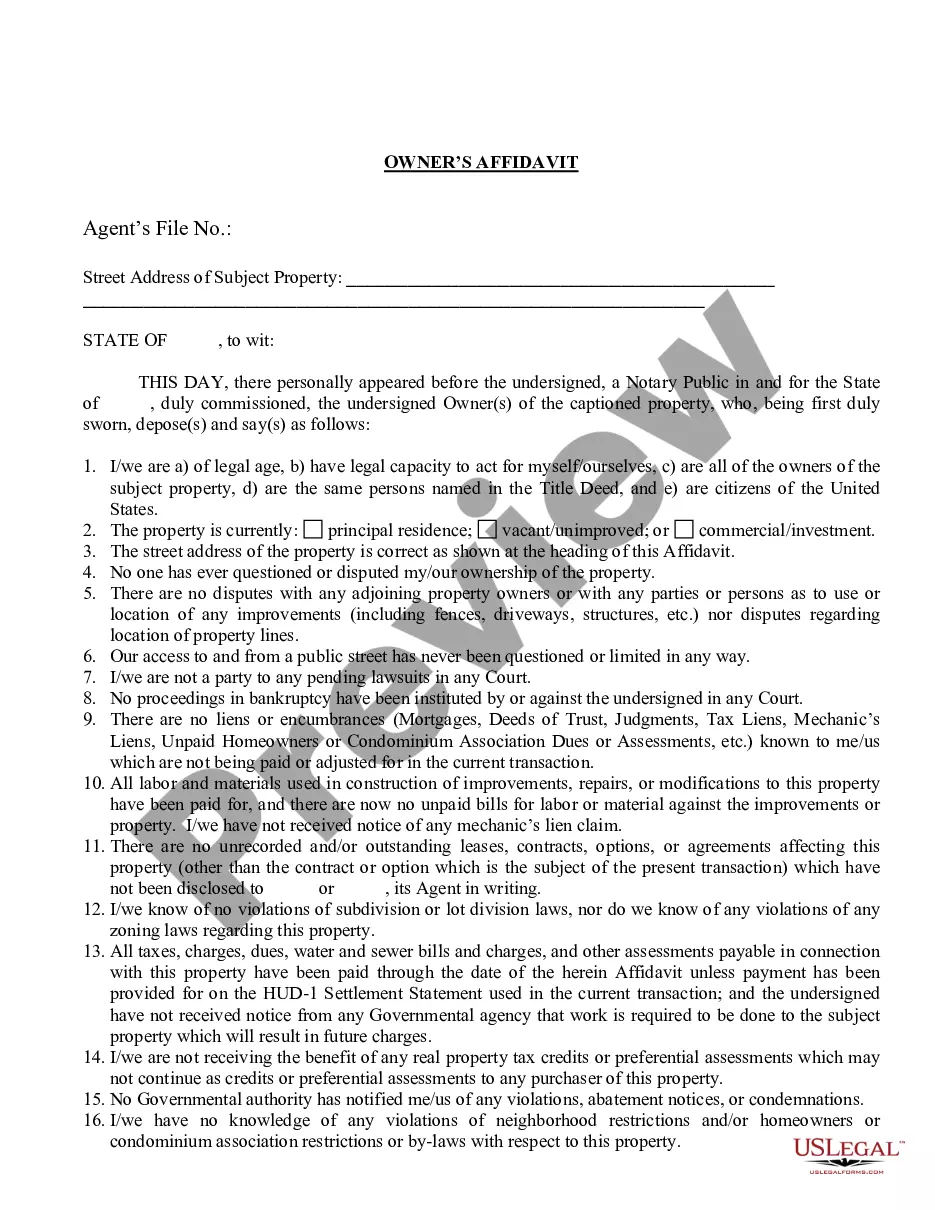
The Name Affidavit of Seller is a legal form used by sellers to provide a statement of their legal name and signature, while also certifying any other names they may be known by. This form helps clarify that different signatures belong to the same individual, which is important when signing legal documents such as deeds or contracts. By using this affidavit, sellers can ensure that their identity is clearly established, preventing potential disputes regarding the ownership of property or fulfillment of contractual obligations.
What’s included in this form
- Legal name declaration: The seller states their legal name and provides a signature that must match previous documents.
- Known as names: The seller can declare any other names they are known by.
- Property details: Identification of the property related to the transaction.
- Witness and notarization section: Area for witness signatures and verification by a notary public.

When to use this document
This form is necessary in situations where a seller needs to affirm their identity for legal transactions. Common scenarios include selling real estate, where the seller has used various names over time, or when signing multiple documents at closing that require a consistent identity. Utilizing the Name Affidavit of Seller helps provide clarity and prevent misunderstandings surrounding the seller's identity throughout the transaction process.
Who should use this form
- Individuals selling their property who have used different names.
- Real estate agents or brokers assisting clients in property transactions.
- Attorneys handling real estate closings for their clients.
Completing this form step by step
- Identify the seller: Clearly print or type the legal name of the seller.
- Provide signatures: Sellers must sign their name as it will appear on the closing documents.
- List known as names: Declare any other names by which the seller is known.
- Fill in property details: Specify the address and details of the property related to the transaction.
- Sign in presence of a notary: Ensure a notary public is present for signatures to validate the affidavit.
Notarization guidance
Yes, this form must be notarized to be legally valid. Having a notary public witness the signatures ensures the authenticity of the affidavit, providing an additional layer of security in the transaction process. US Legal Forms offers integrated online notarization, allowing you to complete this step securely and conveniently at any time.
Get your form ready online
Our built-in tools help you complete, sign, share, and store your documents in one place.
Make edits, fill in missing information, and update formatting in US Legal Forms—just like you would in MS Word.
Download a copy, print it, send it by email, or mail it via USPS—whatever works best for your next step.
Sign and collect signatures with our SignNow integration. Send to multiple recipients, set reminders, and more. Go Premium to unlock E-Sign.
If this form requires notarization, complete it online through a secure video call—no need to meet a notary in person or wait for an appointment.
We protect your documents and personal data by following strict security and privacy standards.

Make edits, fill in missing information, and update formatting in US Legal Forms—just like you would in MS Word.

Download a copy, print it, send it by email, or mail it via USPS—whatever works best for your next step.

Sign and collect signatures with our SignNow integration. Send to multiple recipients, set reminders, and more. Go Premium to unlock E-Sign.

If this form requires notarization, complete it online through a secure video call—no need to meet a notary in person or wait for an appointment.

We protect your documents and personal data by following strict security and privacy standards.
Mistakes to watch out for
- Failing to match the signature with prior documents, leading to potential disputes.
- Omitting known as names that could create confusion.
- Incorrectly filling out property details, which could invalidate the document.
Why use this form online
- Convenience of downloading and filling out the form from anywhere.
- Editability allows for easy corrections and updates before finalizing.
- Reliability ensured by forms drafted and reviewed by licensed attorneys.
Key takeaways
- The Name Affidavit of Seller clarifies the seller's identity for legal transactions.
- Accurate completion of this form helps prevent potential disputes over signatures.
- This form is specifically designed for use in Michigan and meets local regulations.
Looking for another form?


Form popularity
FAQ
An affidavit of title for an estate is a legal declaration that confirms ownership and the status of the title for a property. It is often used to clear up uncertainties about ownership and potential liens when real estate transfers occur. When filing a Michigan Name Affidavit of Seller, including an affidavit of title can help safeguard the transaction by verifying that there are no hidden claims on the property. For comprehensive templates and guidance, check out US Legal Forms to simplify your process.
The processing time for an affidavit of affixture in Michigan can vary, typically taking around two to four weeks. Factors such as the completeness of your submitted paperwork and the workload of the local register of deeds can influence the timeline. If you use the Michigan Name Affidavit of Seller as part of your paperwork, ensure everything is accurately filled to avoid unnecessary delays. For more timely assistance, explore the resources available on US Legal Forms.
Yes, in Michigan, affidavits generally need to be notarized to ensure their legality. When you complete a Michigan Name Affidavit of Seller, having a notary public sign off on the document can provide an added layer of validity. This requirement helps prevent fraud and assures all parties that the information provided is truthful. Always consult with a legal expert or resource like US Legal Forms to ensure your documents comply with the latest laws.
Under certain circumstances, you can sell your vehicle without replacing a lost title if:there are no liens (bank loans) on the title record, or, if the record shows a lien, the seller brings a lien termination statement, and. a record of the current title is on the Secretary of State's computer system.
A Property Transfer Affidavit is a form that notifies the local taxing authority of a transfer of ownership of real estate.The law requires a new owner to file this within 45 days after a transfer of ownership.
In accordance with Michigan State Law, a Property Transfer Affidavit must be filed with the local assessor's office whenever real estate or some types of personal property transfer ownership (a transfer of ownership is generally defined as: a conveyance of title to, or present interest in, a property, including
Who has to file and/or pay earnings tax? All Kansas City, Missouri residents are required to pay the earnings tax, even if they work outside of the city. Non-residents are required to pay the earnings tax on income earned within Kansas City, Missouri city limits.
Find the most recent deed to the property. Create the new deed. Sign and notarize the deed. File the deed in the county land records.
Identify the donee or recipient. Discuss terms and conditions with that person. Complete a change of ownership form. Change the title on the deed. Hire a real estate attorney to prepare the deed. Notarize and file the deed.
Affidavit must be filed by the new owner with the assessor for the city or township where the property is located within 45 days of the transfer. The information on this form is NOT CONFIDENTIAL.