New Jersey Roofing Contract for Contractor
Understanding this form
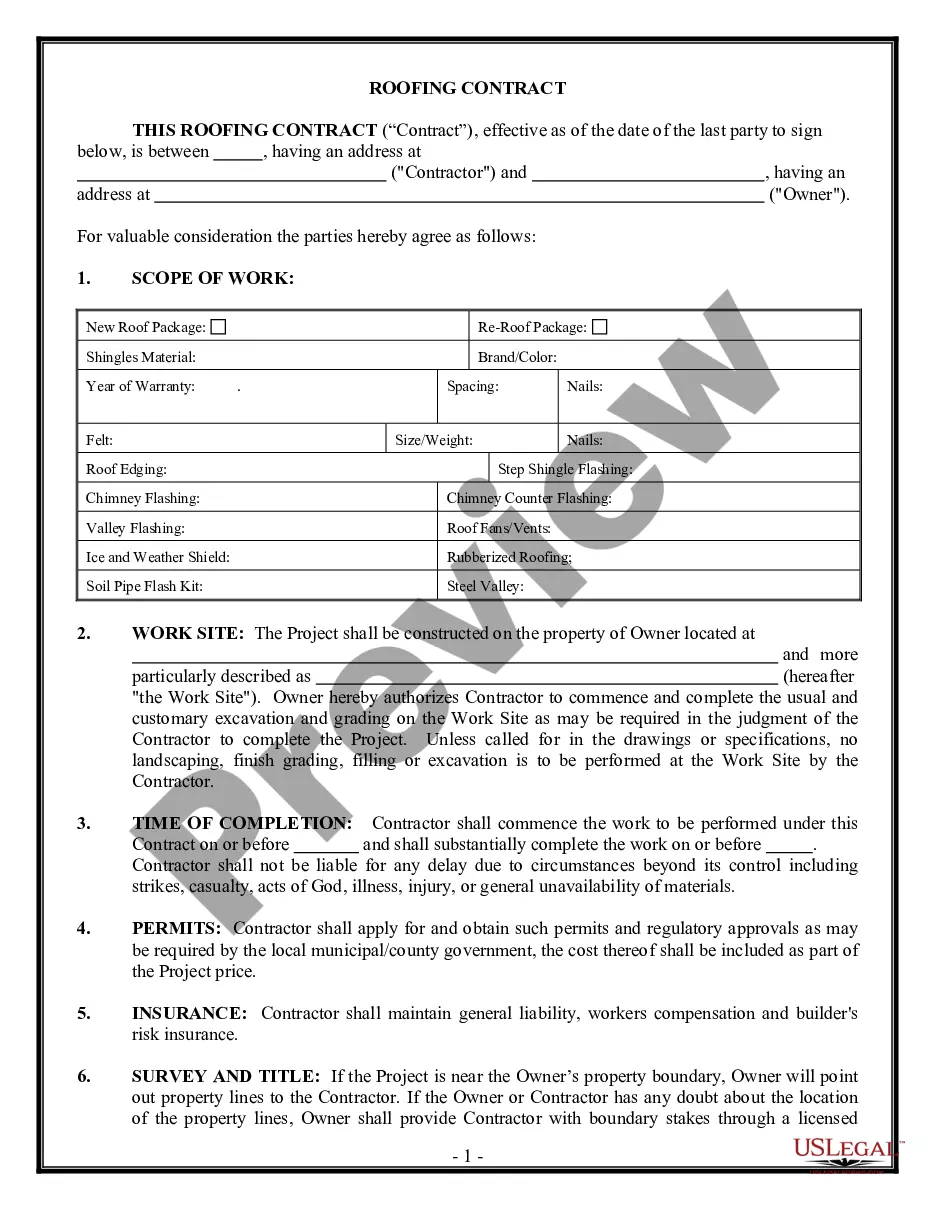
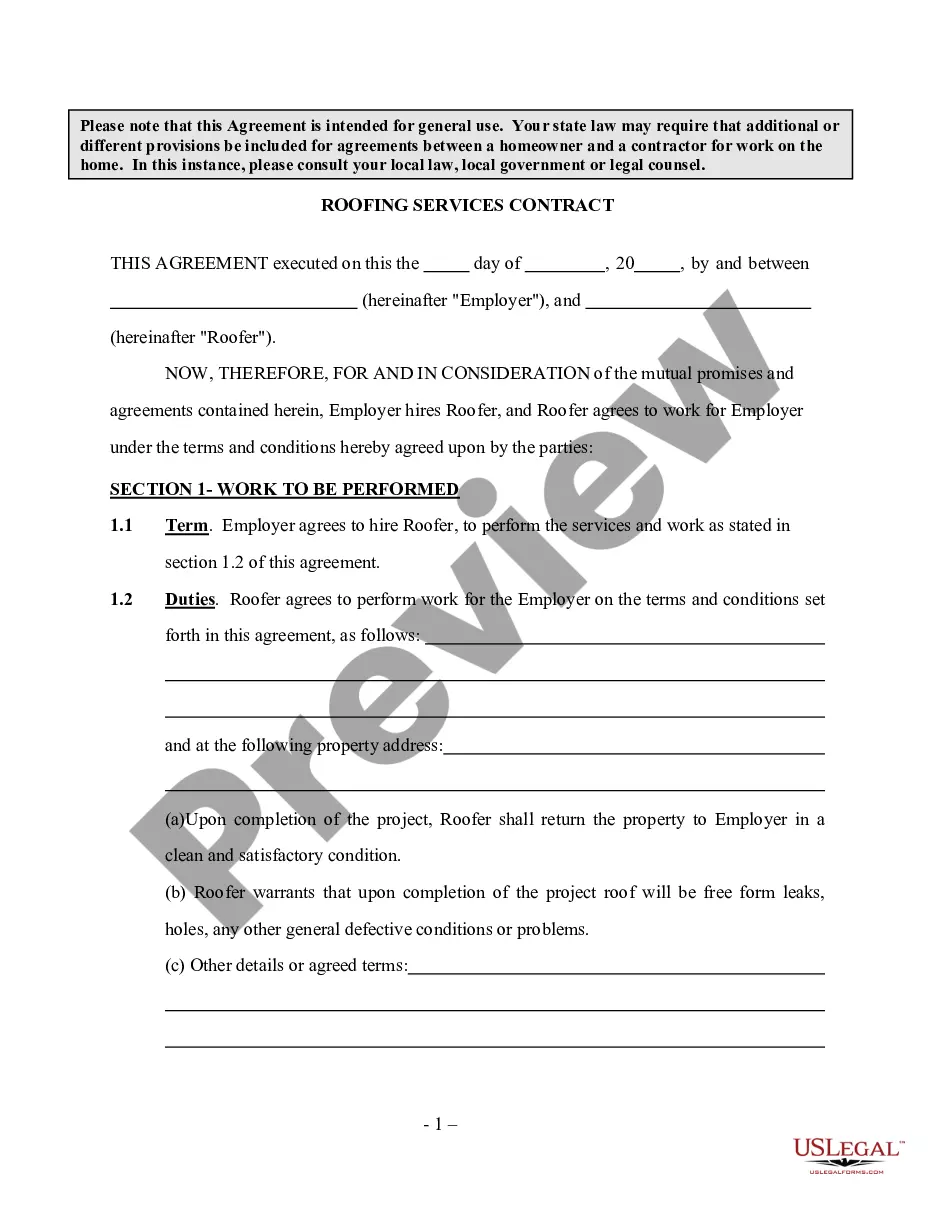
The Roofing Contract for Contractor is a specialized legal document used to formalize the agreement between a roofing contractor and a property owner. This contract outlines the terms of the project, including payment arrangements, responsibilities for permits, insurance requirements, and provisions for any changes to the scope of work. Unlike generic contracts, this form is tailored specifically to comply with New Jersey law, offering contractors and property owners a clear framework for their roofing projects.
What’s included in this form
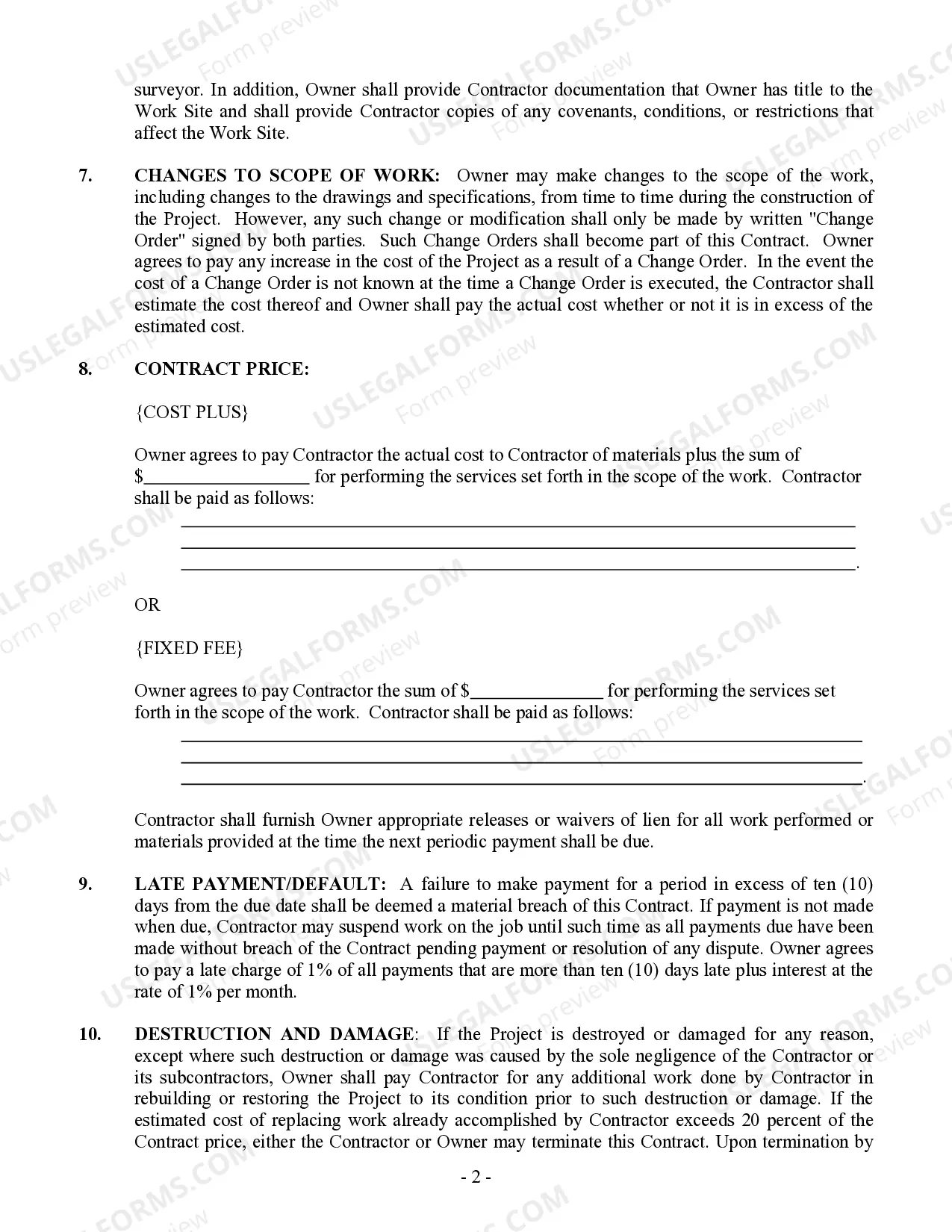
- Permits: Contractor is responsible for obtaining necessary permits.
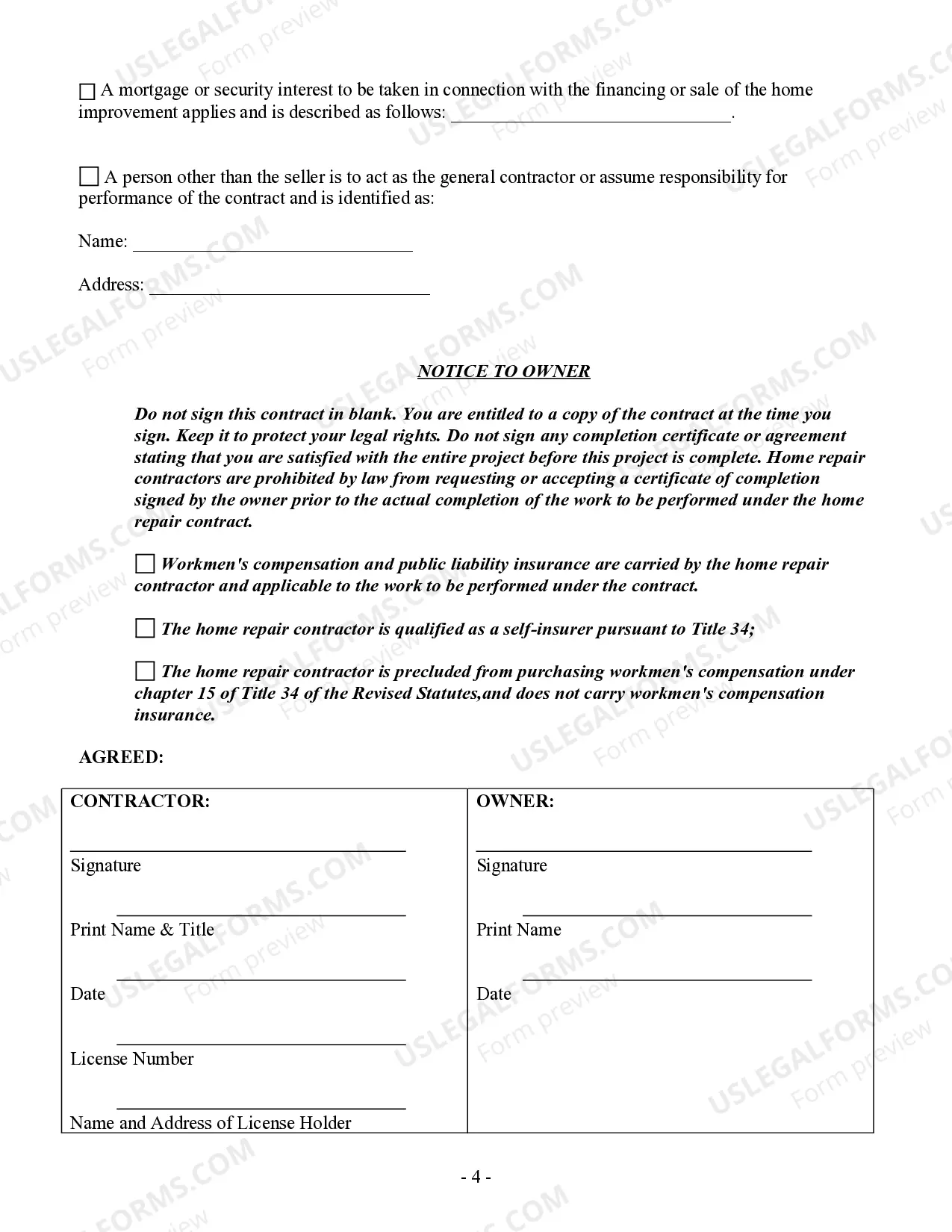
- Insurance: Specification of required insurance types, including general liability and workers compensation.
- Changes to Scope of Work: Procedures for making modifications to the work agreement.
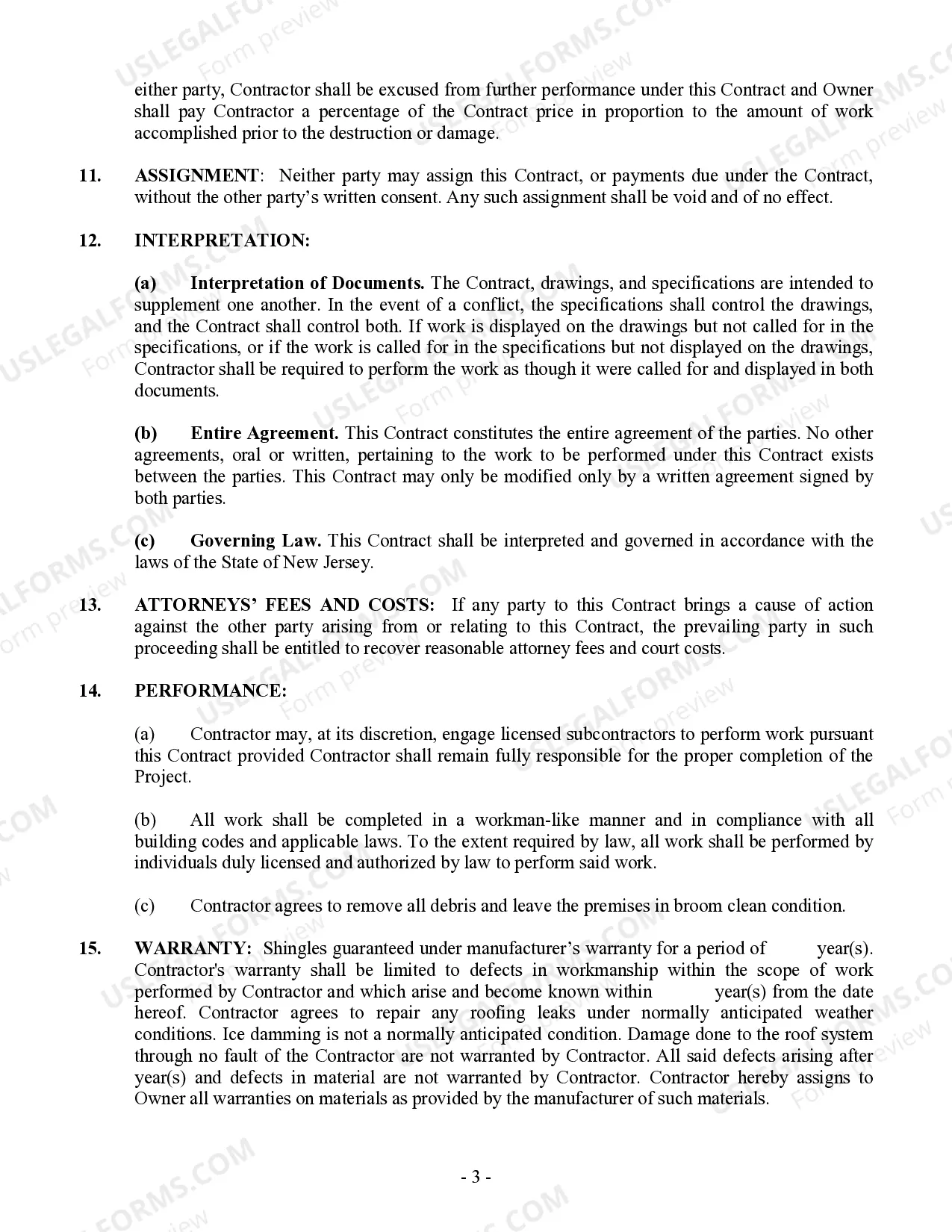
- Destruction and Damage: Guidelines for addressing damages during the project.
- Assignment: Conditions under which the contract may be assigned to another party.
- Entire Agreement: Clarifies that the contract consists of all prior agreements and modifications.

Situations where this form applies
This form is essential when a property owner hires a roofing contractor for a roofing project in New Jersey. It is particularly necessary when determining payment structures, such as cost plus or fixed fee arrangements. Additionally, the contract is useful when changes to the original project arise or when delineating responsibilities for insurance and permits.
Who should use this form
- Property owners looking to hire a roofing contractor for repairs or new installations.
- Roofing contractors who need a comprehensive contract to initiate projects with property owners.
- Home improvement professionals in New Jersey requiring a legally compliant contract template.
How to prepare this document
- Identify the parties: Enter the names and contact information of both the contractor and the property owner.
- Specify the project details: Describe the scope of roofing work, including specific tasks and timelines.
- Outline payment terms: Choose between a cost plus or fixed fee payment arrangement and detail associated costs.
- Include insurance details: Confirm that the contractor will maintain required insurance coverage.
- Sign and date the contract: Ensure both parties sign the contract to make it legally binding.
Does this document require notarization?
This form does not typically require notarization unless specified by local law. However, it is advisable to keep a signed copy for your records and consider notarizing when involved in high-stakes projects for added legal assurance.
Get your form ready online
Our built-in tools help you complete, sign, share, and store your documents in one place.
Make edits, fill in missing information, and update formatting in US Legal Forms—just like you would in MS Word.
Download a copy, print it, send it by email, or mail it via USPS—whatever works best for your next step.
Sign and collect signatures with our SignNow integration. Send to multiple recipients, set reminders, and more. Go Premium to unlock E-Sign.
If this form requires notarization, complete it online through a secure video call—no need to meet a notary in person or wait for an appointment.
We protect your documents and personal data by following strict security and privacy standards.

Make edits, fill in missing information, and update formatting in US Legal Forms—just like you would in MS Word.

Download a copy, print it, send it by email, or mail it via USPS—whatever works best for your next step.

Sign and collect signatures with our SignNow integration. Send to multiple recipients, set reminders, and more. Go Premium to unlock E-Sign.

If this form requires notarization, complete it online through a secure video call—no need to meet a notary in person or wait for an appointment.

We protect your documents and personal data by following strict security and privacy standards.
Mistakes to watch out for
- Not clearly defining the scope of work, leading to disputes later.
- Failing to include necessary insurance provisions or permit responsibilities.
- Not using written Change Orders for modifications to the project.
- Forgetting to sign and date the contract, which voids the agreement.
Advantages of online completion
- Convenient access to a legally vetted contract template.
- Easy to customize for specific project needs and details.
- Available for download, allowing for quick and efficient use.
- Ensures compliance with local laws, reducing legal risks.
Legal use & context
- This contract provides a binding agreement outlining the responsibilities of both the contractor and property owner.
- It can be enforced in a court of law in New Jersey, protecting both partiesâ rights.
- Proper completion of the contract enhances clarity and reduces the risk of disputes.
Quick recap
- The Roofing Contract for Contractor lays out clear terms between contractors and property owners.
- Itâs important for mitigating risks and clarifying responsibilities throughout the roofing project.
- State-specific regulations must be followed to ensure compliance, particularly in New Jersey.
Looking for another form?
Form popularity
FAQ
If you run a small business that hires 1099 contractors, also known as independent contractors, it is vital that you have them sign an independent contractor contract. This is because there is a significant gray area between who is classified as an independent contractor and who is classified as an employee.
The New Jersey Division of Consumer Affairs (DCA) is a governmental agency in the U.S. state of New Jersey that is responsible for protecting the public "from fraud, deceit and misrepresentation in the sale of goods and services." The DCA operates within the New Jersey Department of Law and Public Safety in the office
Yes, absolutely. Starting work without a signed contract means that your position isn't clear, or even worse it's weak.It also means that the contract is legally enforceable and will be able to support you if you decide to take legal action.
For most types of projects you hire an independent contractor (IC) to do, the law does not require you to put anything in writing. You can meet with the IC, agree on the terms of your arrangement, and have an oral contract or agreement that is legally binding. Just because you can doesn't mean you should, however.
In New Jersey are authorized to alter, paint, remodel, repair, restore, renovate, move, modernize, or demolish any part of residential properties. This work includes patios, kitchens, cabinets, porches, doors, fences, bathrooms, garages, basements, and floor coverings.
Name of contractor and contact information. Name of homeowner and contact information. Describe property in legal terms. List attachments to the contract. The cost. Failure of homeowner to obtain financing. Description of the work and the completion date. Right to stop the project.
To do home construction and many types of substantial home repairs in New Jersey, an individual must be a licensed contractor. Obtaining an NJ contractor license requires the contractor to register with the New Jersey Division of Consumer Affairs, a process that involves multiple smaller steps.
Consumers who believe they have been cheated or scammed by a business, or suspect any other form of consumer abuse, can file a complaint with the State Division of Consumer Affairs by visiting its website or by calling 1-800-242-5846 (toll free within New Jersey ) or 973-504-6200.
Both parties should sign the contract, and both should be bound by the terms and conditions spelled out in the agreement. In general that means the contractor will be obliged to provide specified materials and to perform certain services for you. In turn, you will be required to pay for those goods and that labor.