Tax Evasion
What is this form?
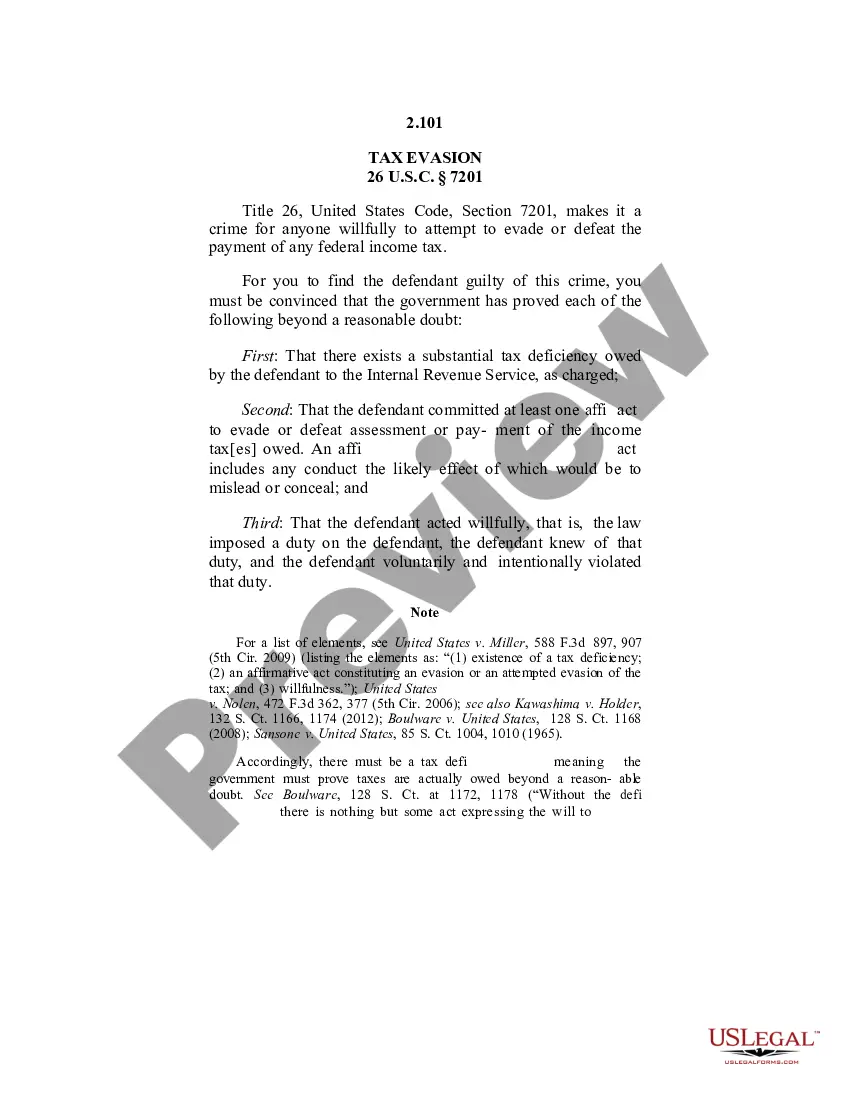
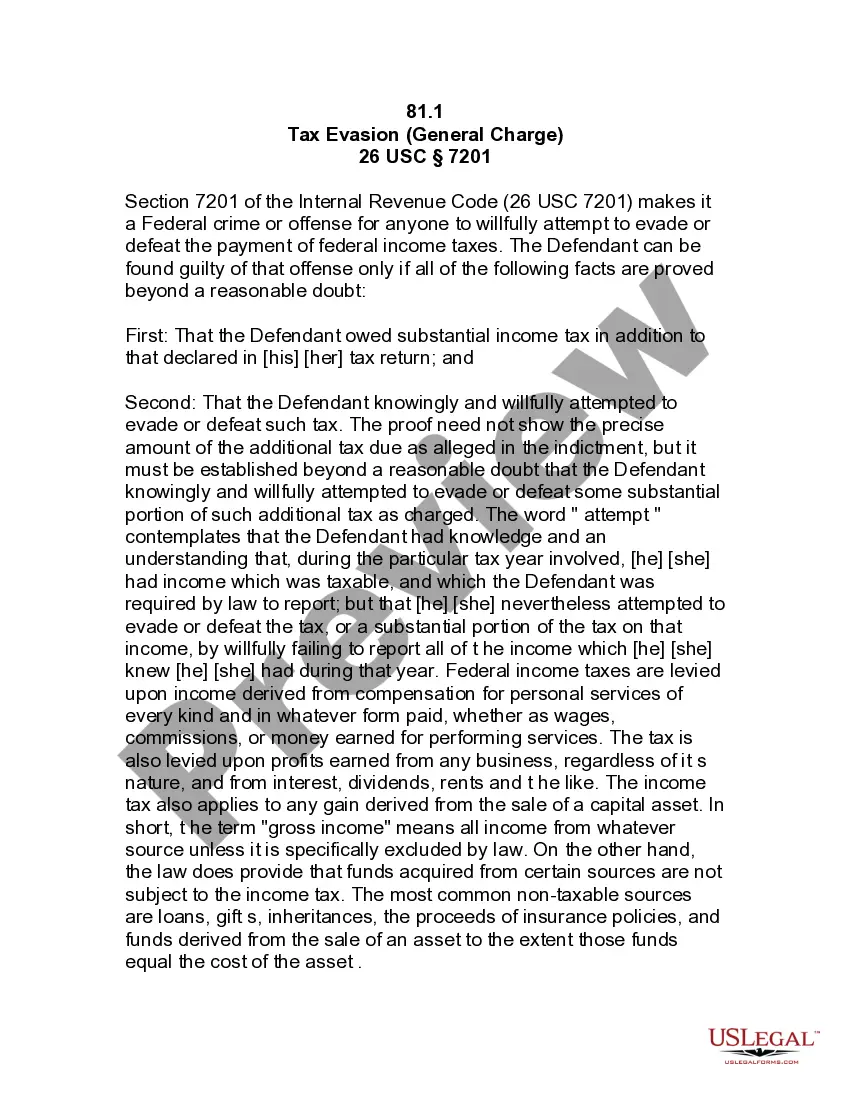
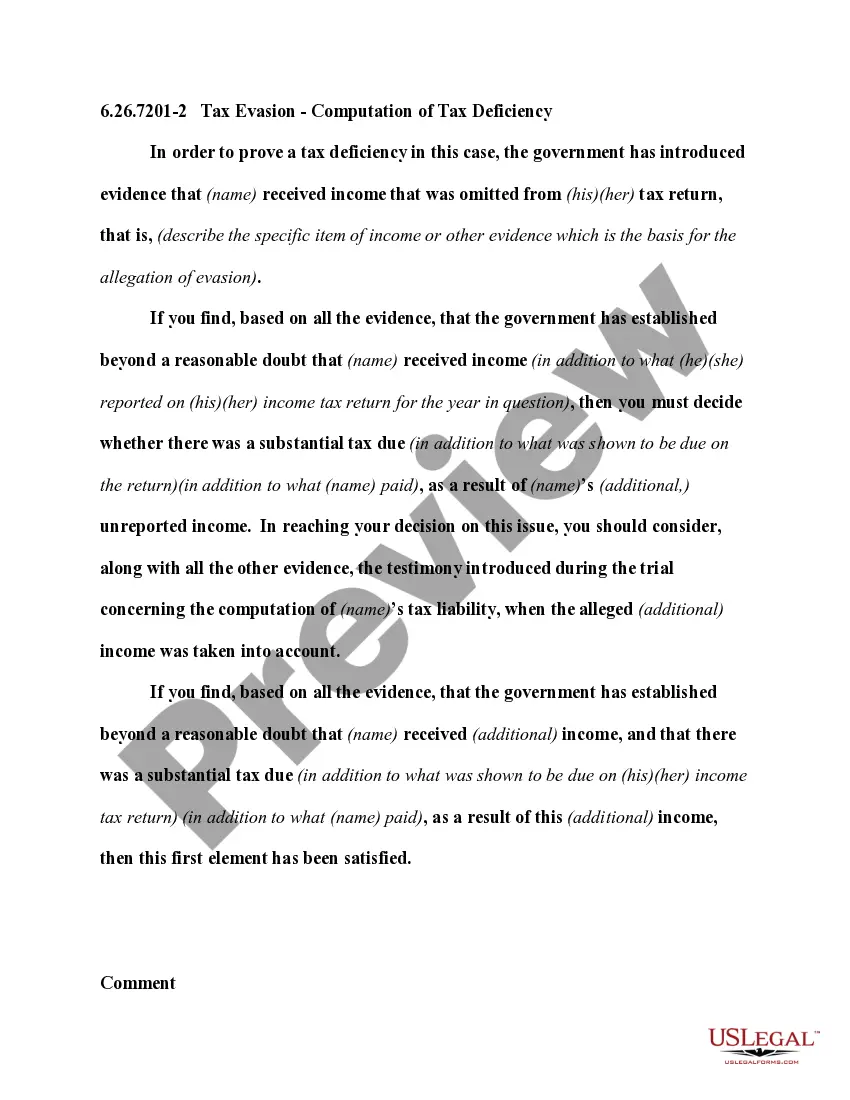
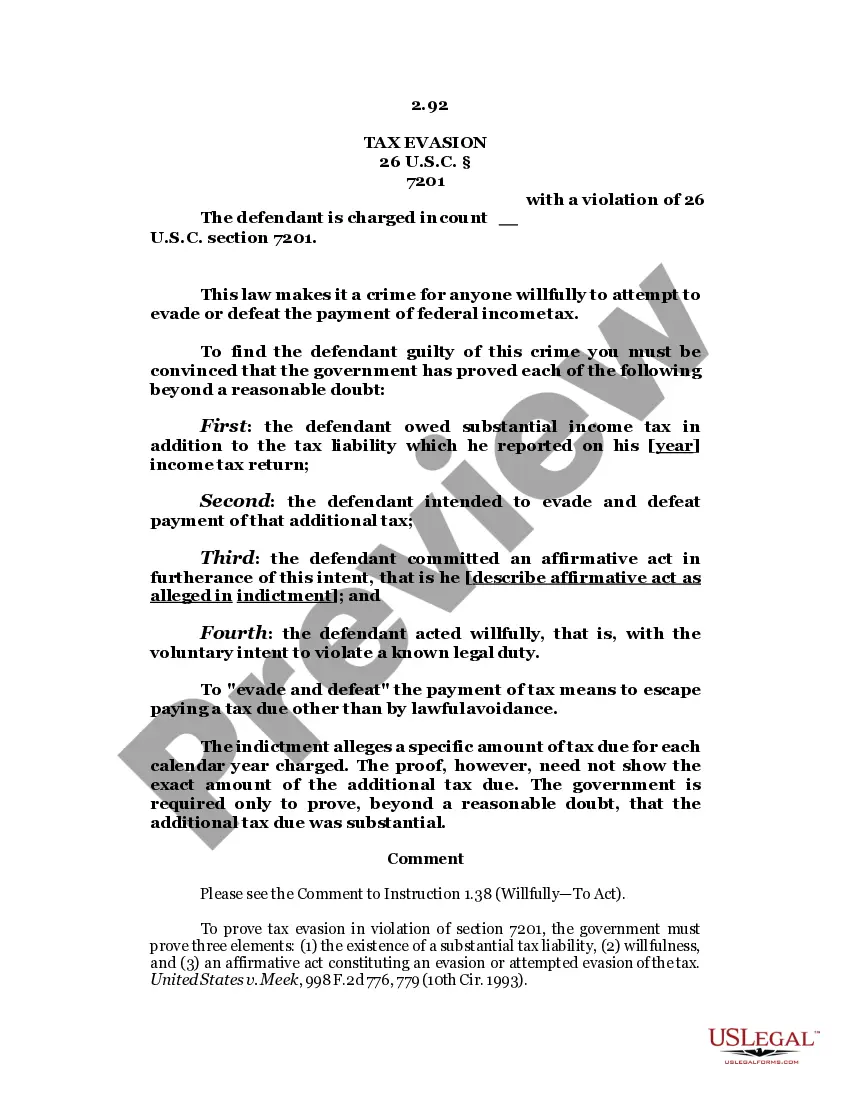
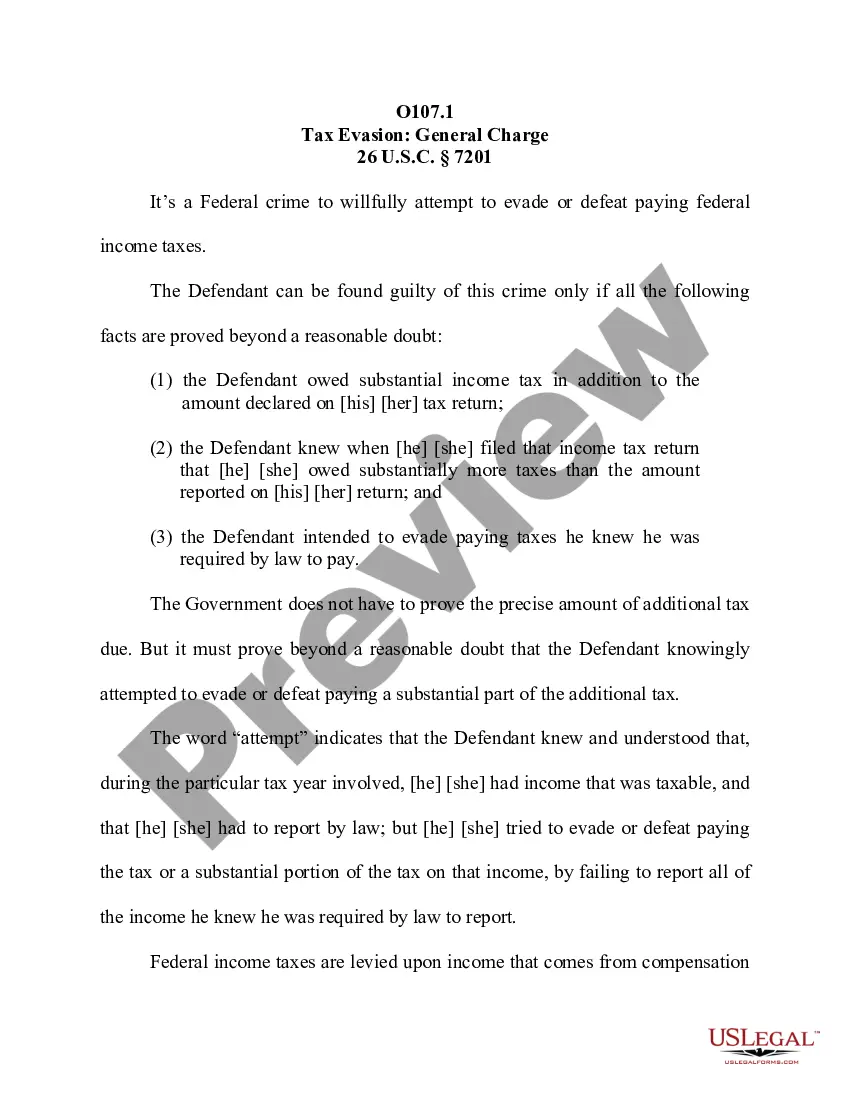
The Tax Evasion form is a legal template designed for individuals or entities accused of willfully attempting to evade or defeat federal income tax payments. This form is essential for understanding the specific elements that must be proven for a tax evasion charge under Title 26, United States Code, Section 7201. Unlike other tax forms, this document specifically addresses the legal framework surrounding tax evasion allegations, outlining the required defenses and legal duty involved.
Form components explained
- Definition of tax evasion under 26 U.S.C. §7201.
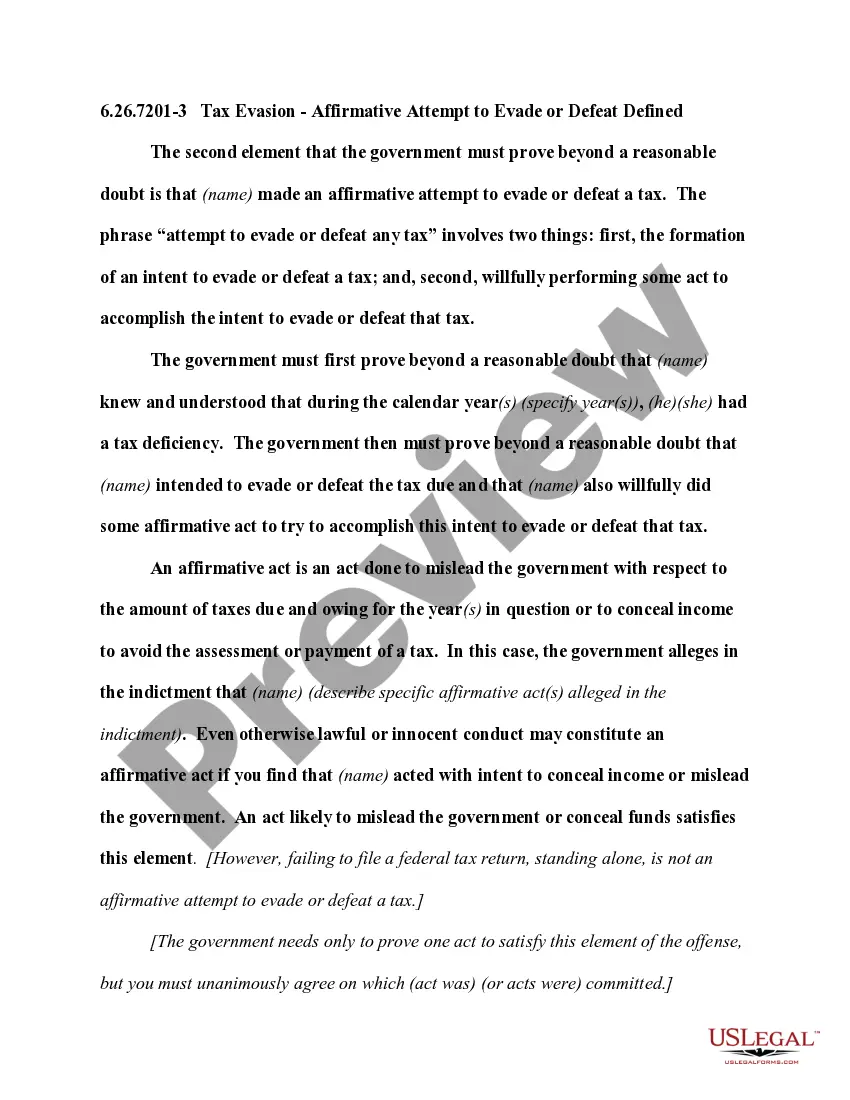
- Elements required for proof of tax evasion including tax deficiency, affirmative act, and willfulness.
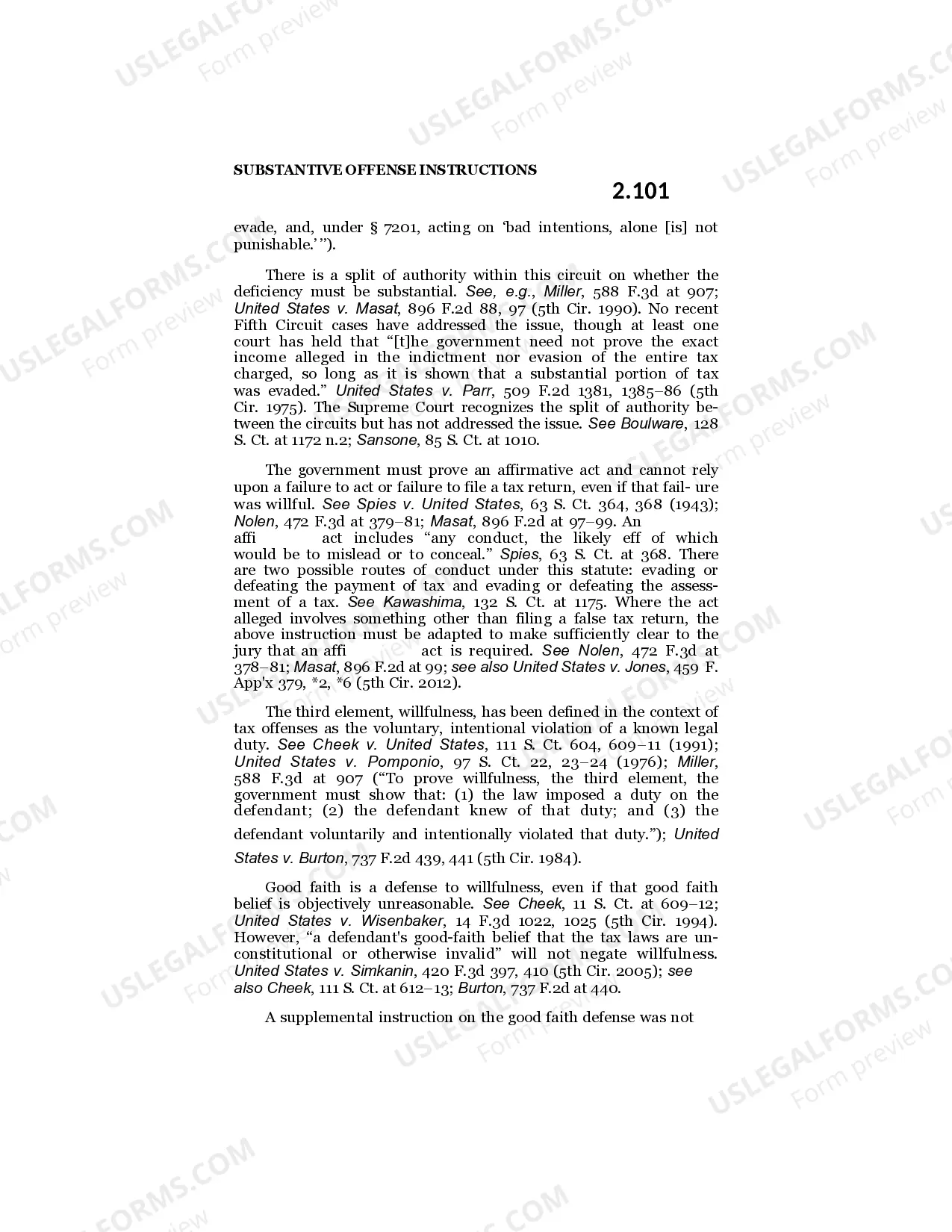
- Clarification of what constitutes an "affirmative act" in tax evasion cases.
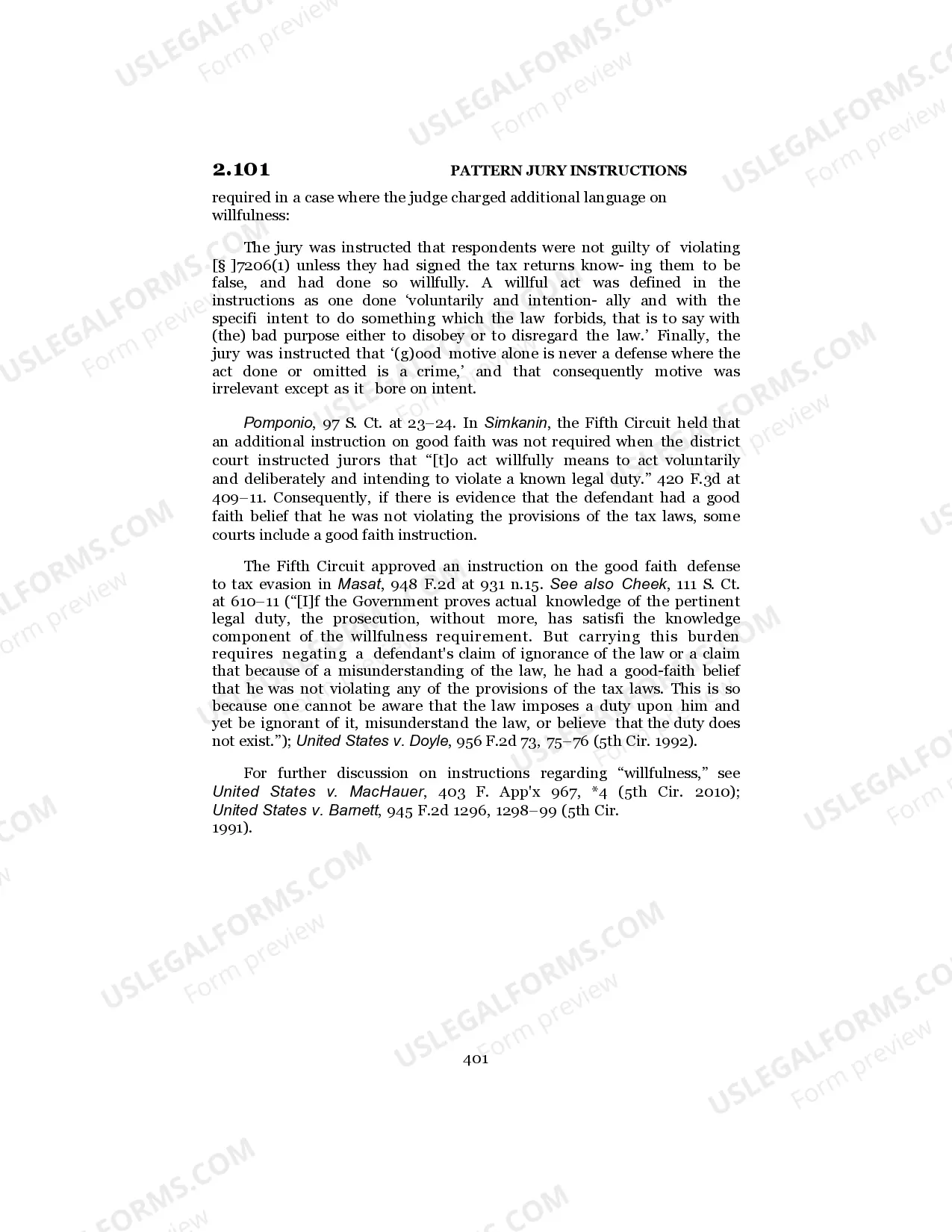
- Defense options available to the accused, including good faith belief.
- Legal references to precedents and court rulings related to tax evasion charges.
When to use this form
This form should be utilized when an individual or entity is facing accusations of tax evasion. It is particularly relevant in circumstances where a substantial tax deficiency has been identified, and where there are claims of willful actions taken to evade tax obligations. This form serves as a guide for understanding the legal principles involved and preparing a defense.
Who should use this form
- Individuals accused of tax evasion by the Internal Revenue Service (IRS).
- Tax professionals representing clients facing similar allegations.
- Entities (such as businesses) involved in disputes over unpaid federal income taxes.
- Defendants seeking to understand their rights and legal duties regarding tax obligations.
How to complete this form
- Identify the parties involved, including the defendant and the IRS.
- Specify the substantial tax deficiency that is being challenged.
- Enter details of the affirmative acts allegedly committed to evade taxes.
- Document any evidence or facts supporting your defense, including good faith beliefs or honest misunderstandings.
- Review and sign the form to affirm its accuracy before submission.
Does this document require notarization?
This form typically does not require notarization unless specified by local law. However, it is important to verify any additional requirements in your specific jurisdiction.
Get your form ready online
Our built-in tools help you complete, sign, share, and store your documents in one place.
Make edits, fill in missing information, and update formatting in US Legal Forms—just like you would in MS Word.
Download a copy, print it, send it by email, or mail it via USPS—whatever works best for your next step.
Sign and collect signatures with our SignNow integration. Send to multiple recipients, set reminders, and more. Go Premium to unlock E-Sign.
If this form requires notarization, complete it online through a secure video call—no need to meet a notary in person or wait for an appointment.
We protect your documents and personal data by following strict security and privacy standards.

Make edits, fill in missing information, and update formatting in US Legal Forms—just like you would in MS Word.

Download a copy, print it, send it by email, or mail it via USPS—whatever works best for your next step.

Sign and collect signatures with our SignNow integration. Send to multiple recipients, set reminders, and more. Go Premium to unlock E-Sign.

If this form requires notarization, complete it online through a secure video call—no need to meet a notary in person or wait for an appointment.

We protect your documents and personal data by following strict security and privacy standards.
Typical mistakes to avoid
- Failing to adequately document the affirmative acts taken to evade taxes.
- Omitting important details about tax deficiency or legal obligations.
- Neglecting to cite relevant case law or precedents that may benefit the defense.
- Misunderstanding the concept of willfulness in the context of tax obligations.
Benefits of completing this form online
- Convenient access to a legally drafted template at any time.
- Easy customization to fit specific case details and personal information.
- Reliable format that adheres to legal standards, ensuring compliance.
- Access to support and resources for assistance with completion and submission.
Legal use & context
- This form serves as a foundational document in criminal proceedings related to tax evasion.
- Understanding the elements outlined is critical to effectively prosecute or defend against tax evasion charges.
- Compliance with federal standards is essential to uphold the legality of actions taken under this form.
Quick recap
- The Tax Evasion form is essential for legal actions related to evading tax payments.
- Clear understanding of the law and associated case precedents is crucial for proper use.
- The focus must be on proving affirmative acts of evasion and the willfulness of the action.
Looking for another form?




Form popularity
FAQ
It depends on the situation. The United States doesn't just throw people into jail because they can't afford to pay their taxes. However, you can face jail time if you commit tax evasion, tax fraud, or do not file your taxes. In fact, you may face a year in jail (uncommon) for each year you did not file.
For fraud and tax evasion, the tax law dictates that if you're convicted, you may be fined up to $100,000 and sent to jail for up to five years. The maximum fine for corporations is $500,000.
Tax evasion is an illegal activity in which a person or entity deliberately avoids paying a true tax liability. Those caught evading taxes are generally subject to criminal charges and substantial penalties. To willfully fail to pay taxes is a federal offense under the Internal Revenue Service (IRS) tax code.
Examples of tax evasion include claiming tax deductions or tax credits you're not entitled to, intentionally underreporting or failing to report income, and concealing taxable assets. Internal Revenue Service.
Various investigative techniques are used to obtain evidence, including interviews of third party witnesses, conducting surveillance, executing search warrants, subpoenaing bank records, and reviewing financial data.