Tax Evasion - Affirmative Attempt to Evade or Defeat Defined
Understanding this form
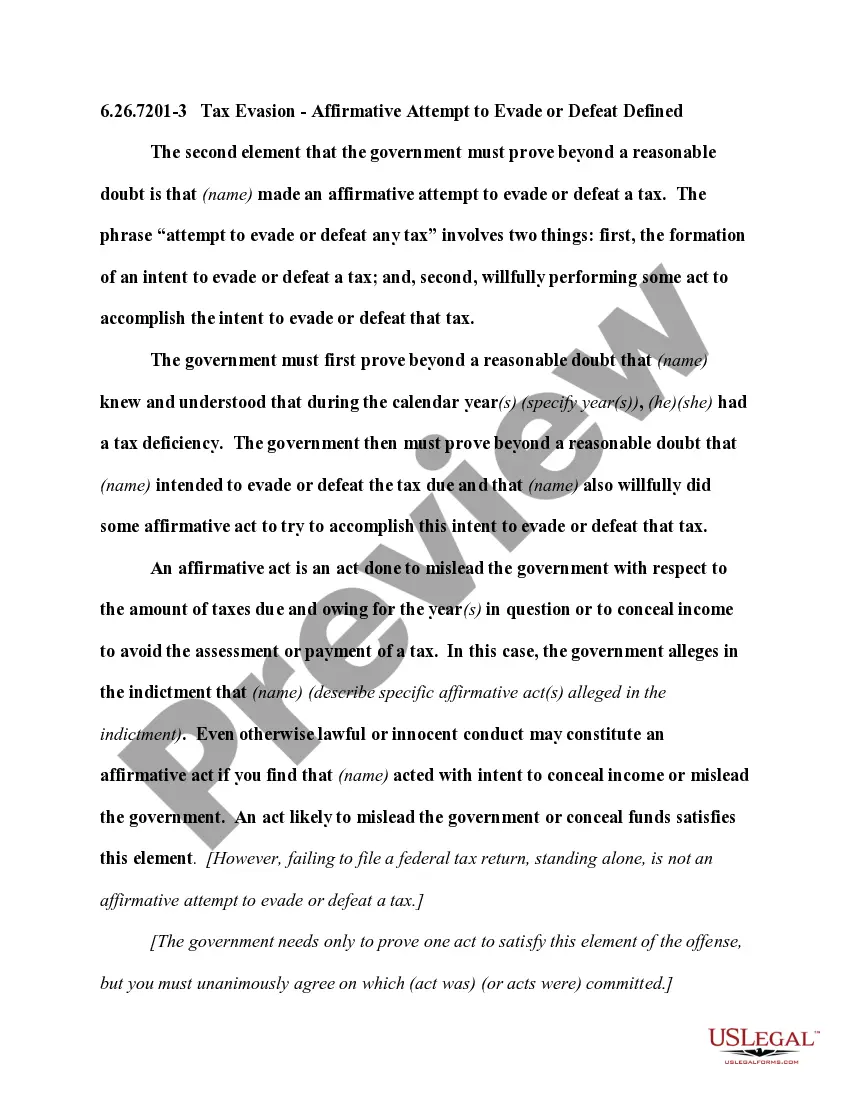
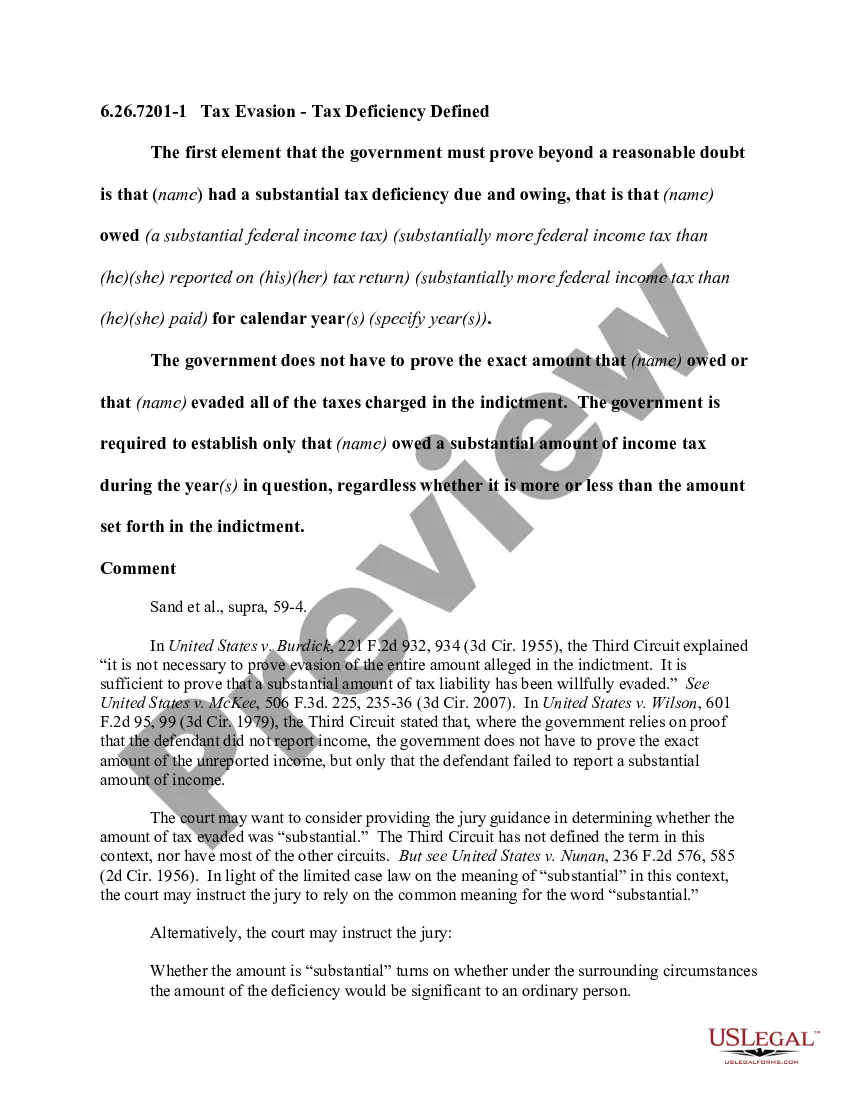
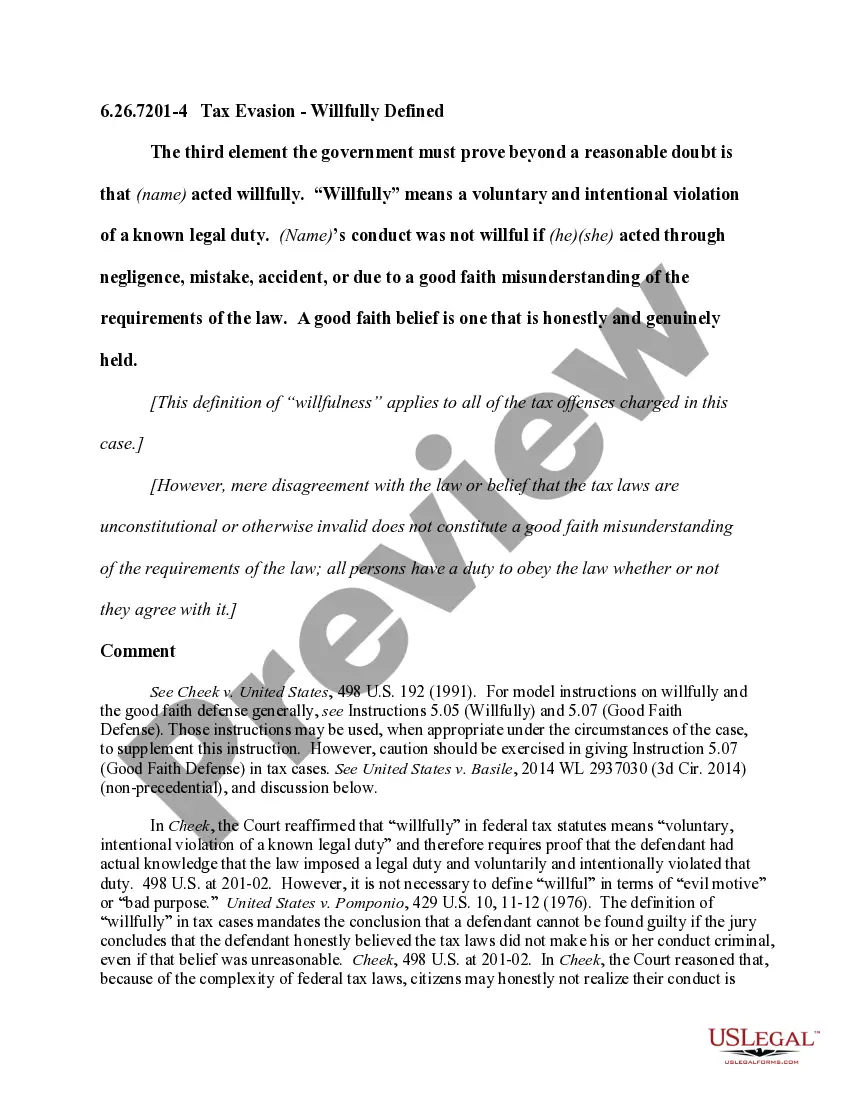
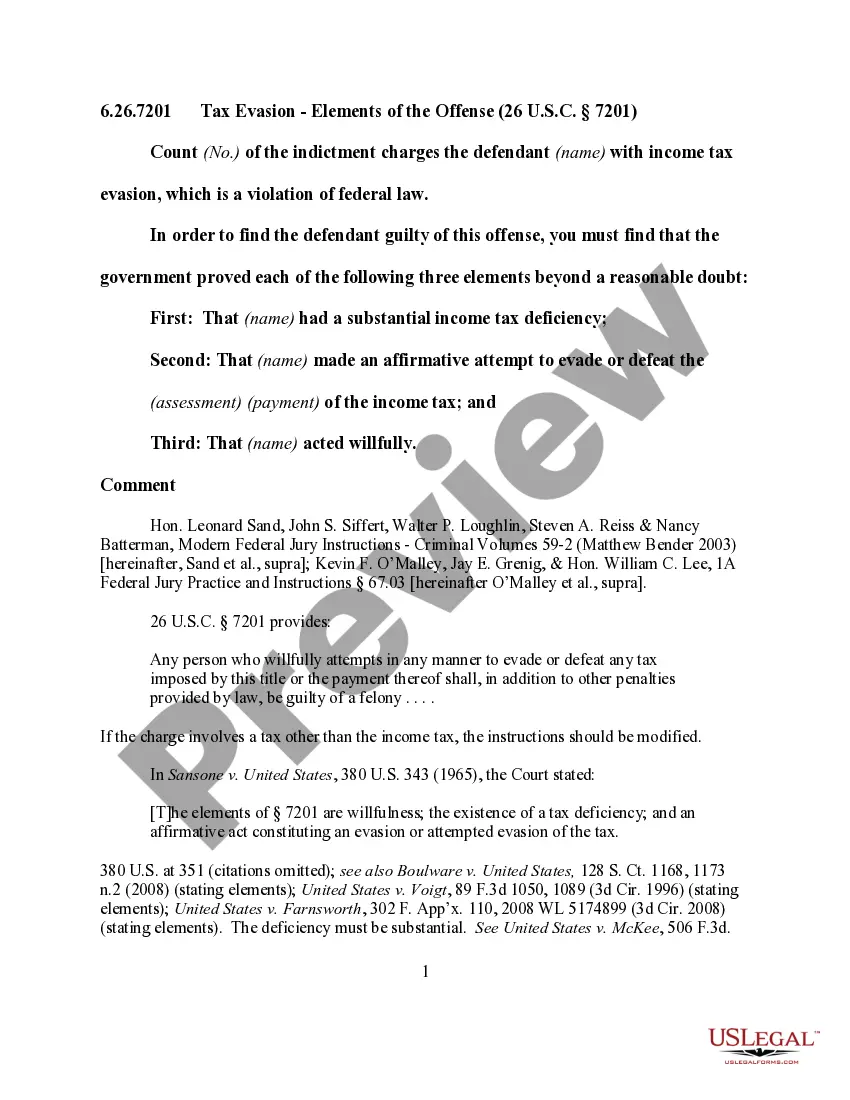
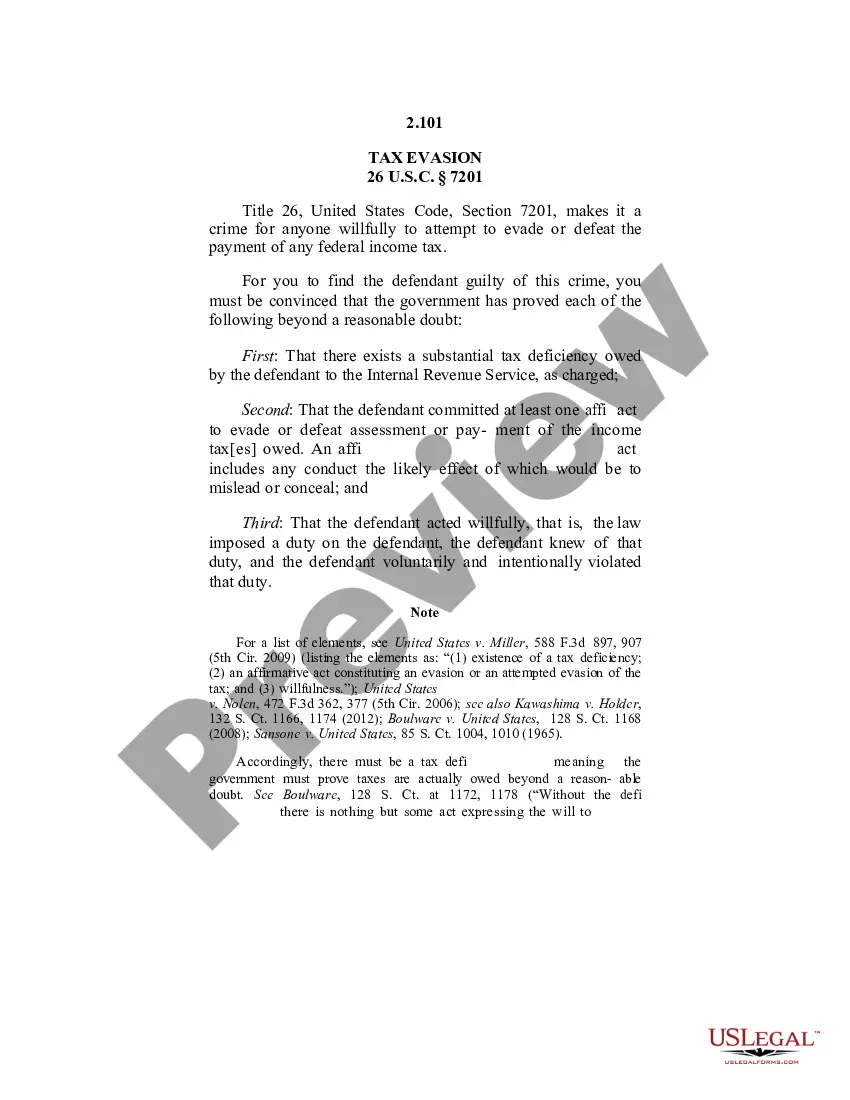
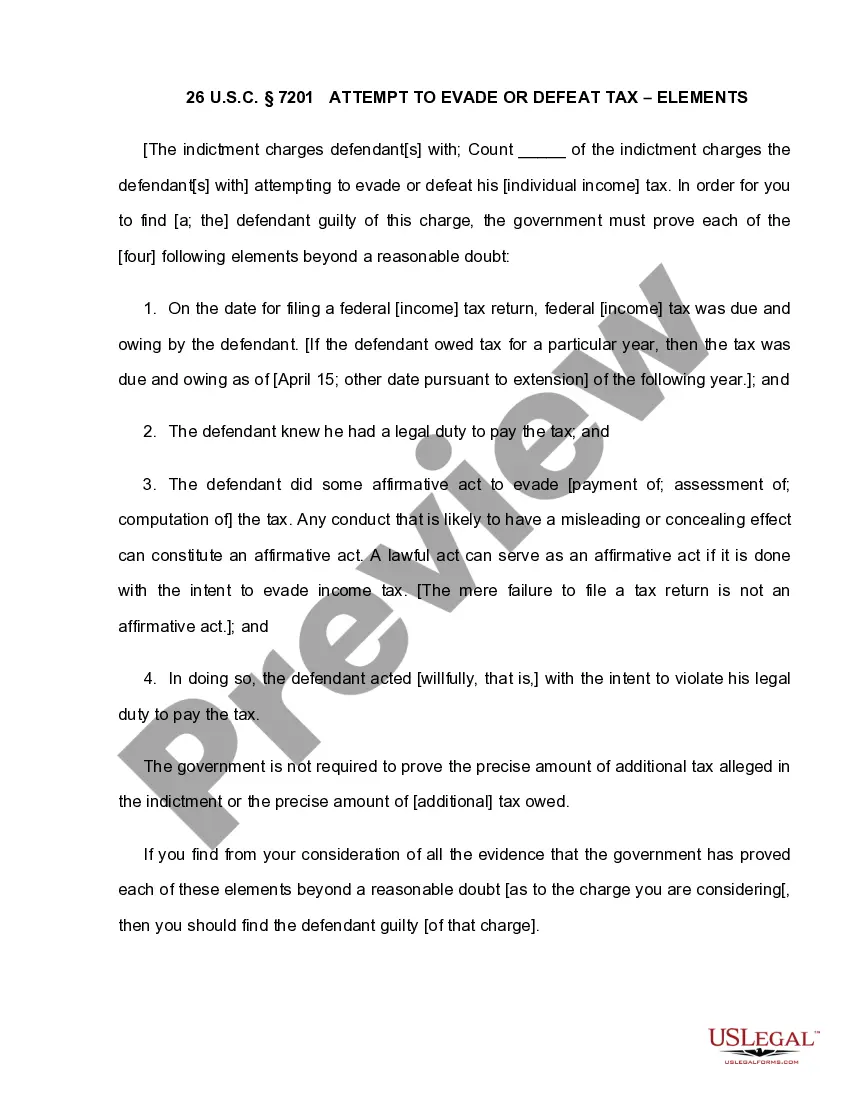
The Tax Evasion - Affirmative Attempt to Evade or Defeat Defined is a legal form used to outline the governmentâs burden of proof in a tax evasion case. This form specifically details the criteria that demonstrate an individual's intent and actions to evade tax obligations. Unlike other tax-related forms, this one focuses on the legal definitions and implications of tax evasion as defined under federal law.
Key parts of this document
- Definition of affirmative attempt to evade or defeat tax obligations.
- Requirements for proving intent to evade a tax.
- Explanation of what constitutes an affirmative act.
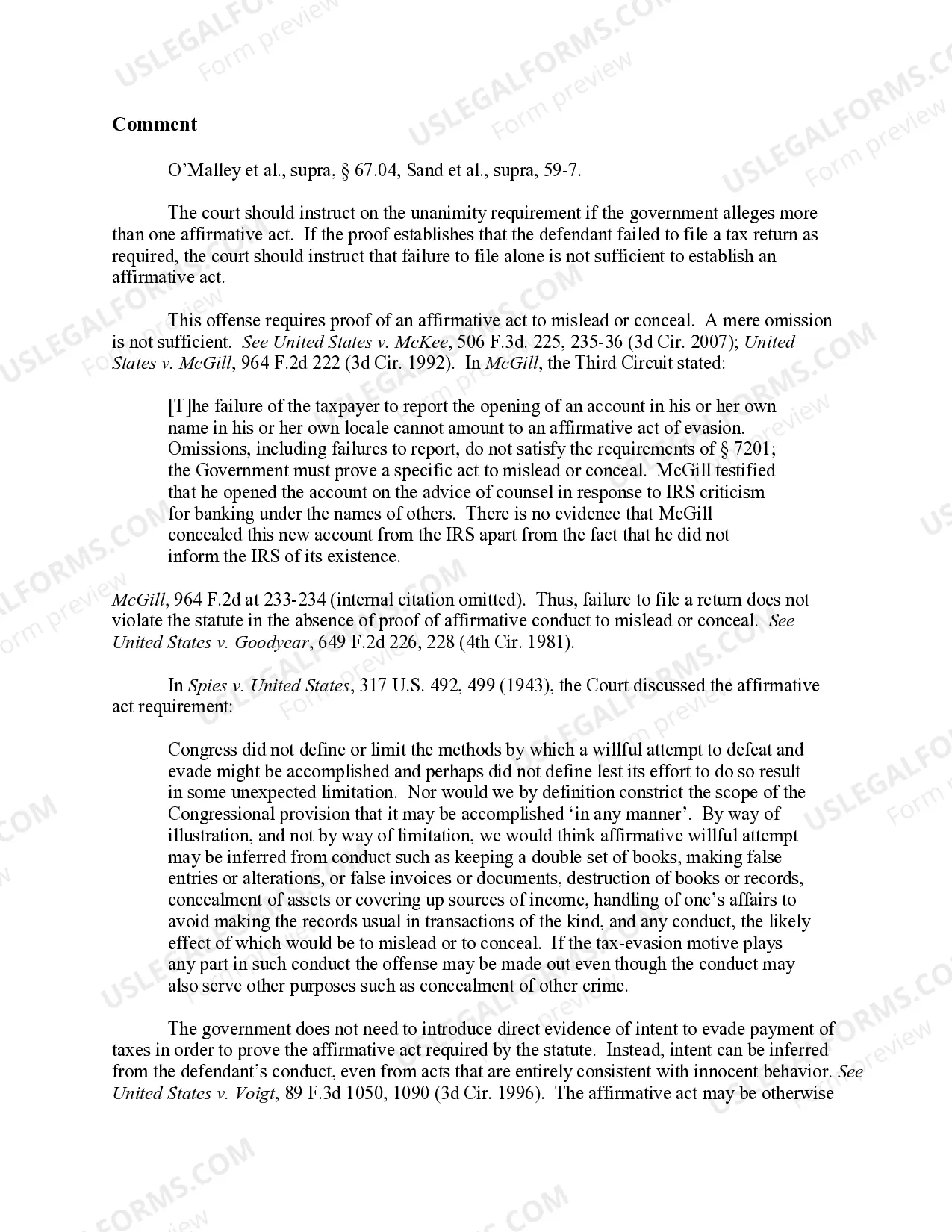
- Clarifications on omissions versus actions that can be considered evasion.
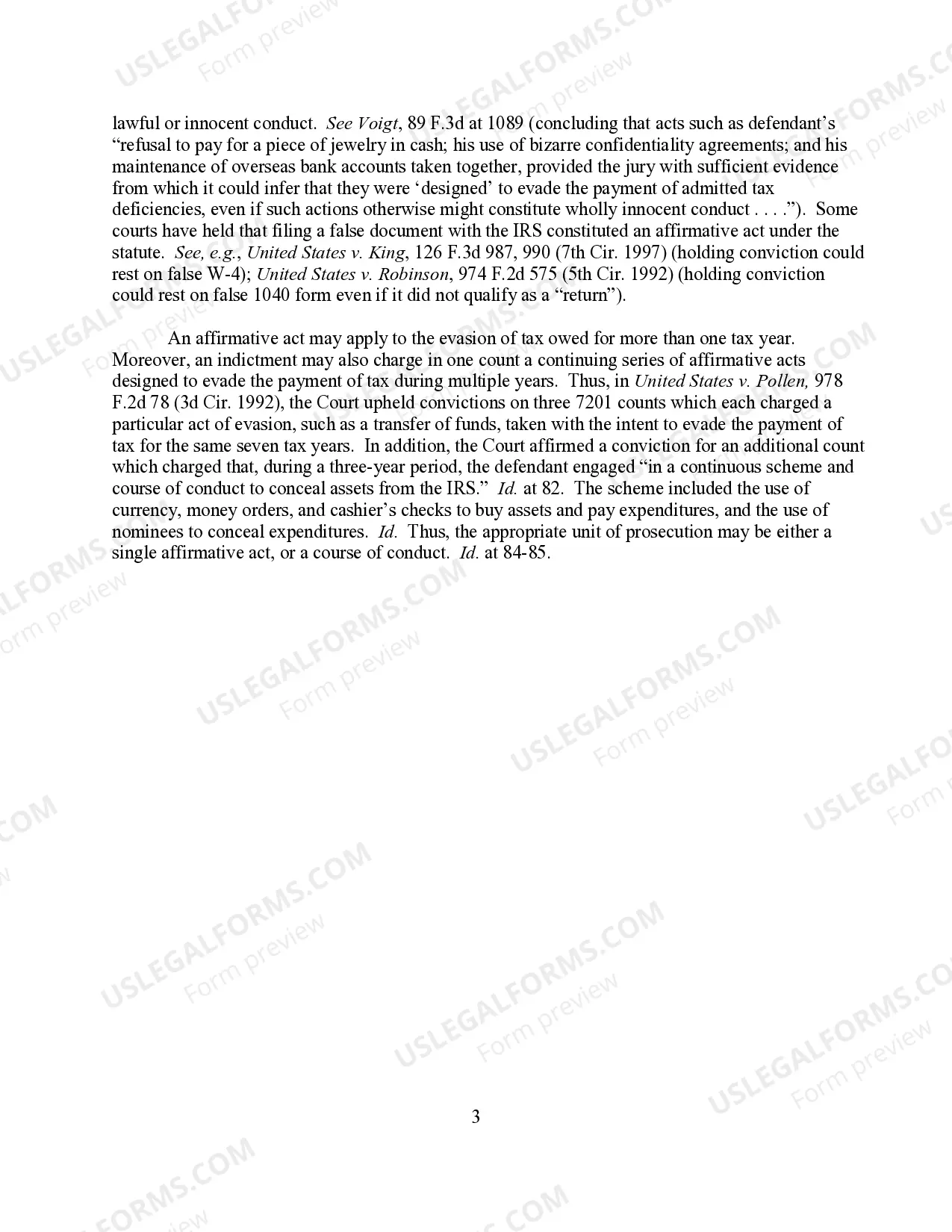
- Reference to court cases that illustrate the application of this definition.
When this form is needed
This form is used in legal proceedings involving accusations of tax evasion. It is relevant when an individual or entity is charged with willfully attempting to reduce their tax liability through misleading actions or omissions. Use this form to understand the standards the government must meet to prove tax evasion beyond a reasonable doubt.
Who needs this form
- Taxpayers who have been accused of tax evasion.
- Legal professionals representing clients in tax evasion cases.
- Individuals seeking to understand legal accusations against them regarding taxes.
- Tax consultants and advisors involved in legal tax matters.
Steps to complete this form
- Identify the calendar year or years relevant to the alleged tax deficiency.
- State the specific affirmative acts the government claims were performed to evade taxes.
- Establish the intent behind each affirmative act and relate it to the tax deficiency.
- Gather evidence supporting claims of affirmative attempts to evade tax obligations.
- Ensure the form is signed and dated in accordance with legal requirements.
Notarization requirements for this form
In most cases, this form does not require notarization. However, some jurisdictions or signing circumstances might. US Legal Forms offers online notarization powered by Notarize, accessible 24/7 for a quick, remote process.
Get your form ready online
Our built-in tools help you complete, sign, share, and store your documents in one place.
Make edits, fill in missing information, and update formatting in US Legal Forms—just like you would in MS Word.
Download a copy, print it, send it by email, or mail it via USPS—whatever works best for your next step.
Sign and collect signatures with our SignNow integration. Send to multiple recipients, set reminders, and more. Go Premium to unlock E-Sign.
If this form requires notarization, complete it online through a secure video call—no need to meet a notary in person or wait for an appointment.
We protect your documents and personal data by following strict security and privacy standards.

Make edits, fill in missing information, and update formatting in US Legal Forms—just like you would in MS Word.

Download a copy, print it, send it by email, or mail it via USPS—whatever works best for your next step.

Sign and collect signatures with our SignNow integration. Send to multiple recipients, set reminders, and more. Go Premium to unlock E-Sign.

If this form requires notarization, complete it online through a secure video call—no need to meet a notary in person or wait for an appointment.

We protect your documents and personal data by following strict security and privacy standards.
Common mistakes to avoid
- Not clearly defining the affirmative acts alleged in tax evasion.
- Failing to provide evidence of intent beyond reasonable doubt.
- Confusing omissions with affirmative acts that constitute evasion.
- Neglecting to address multiple tax years if applicable in the case.
Why use this form online
- Quick and easy access to definitions and legal standards related to tax evasion.
- Ability to download and save the form for later use, ensuring it is readily available.
- Reliable templates drafted by licensed attorneys to meet legal requirements.
Legal use & context
- This form is crucial in tax evasion cases in federal court, as it establishes the framework for prosecution.
- Understanding the definition of tax evasion can protect taxpayers from unfair accusations.
- Knowledge of case law regarding tax evasion can aid in defense strategies.
Key takeaways
- Intent and affirmative acts are crucial in proving tax evasion.
- Mere failure to file is insufficient to establish evasion.
- The prosecution must meet a high burden of proof.
- Consultation with legal counsel is recommended for individuals facing such charges.
Looking for another form?

Form popularity
FAQ
Examples of tax evasion include claiming tax deductions or tax credits you're not entitled to, intentionally underreporting or failing to report income, and concealing taxable assets. Internal Revenue Service.
Various investigative techniques are used to obtain evidence, including interviews of third party witnesses, conducting surveillance, executing search warrants, subpoenaing bank records, and reviewing financial data.
Three Elements of Tax Evasion The Existence of a Tax Deficiency. The IRS will look for an existence of additional tax that is due from the taxpayer, such as when they owe substantially more than what they reported on their tax return.An Attempt to Evade or Defeat Tax.The Taxpayer's Willfulness.
Examples of affirmative acts of evasion of payment include placing assets in the names of others, dealing in currency, using nominees to conduct business, buy and sell assets, or conduct other financial transactions, or providing false information about assets or income to the IRS. See Cohen v. United States, 297 F.
Tax evasion is the illegal non-payment or under-payment of taxes, usually by deliberately making a false declaration or no declaration to tax authorities ? such as by declaring less income, profits or gains than the amounts actually earned, or by overstating deductions.
Tax evasion is a serious white collar crime, which can carry jail sentences and hefty fines depending on the facts of the case. It can be prosecuted on the state level or the federal level, depending on which taxes are unpaid. This guide will focus on tax evasion laws in California. What is Criminal Tax Fraud?
Tax Evasion Section 7201 makes it a crime to attempt, ?in any manner,? to evade or defeat tax. In order to prove the evasion of assessment and/or payment of tax, the government must show that an individual acted purposely to avoid assessment of their true tax liability or to hide assets.
Tax avoidance?An action taken to lessen tax liability and maximize after-tax income. tax evasion?The failure to pay or a deliberate underpayment of taxes.