Insanity
Understanding this form
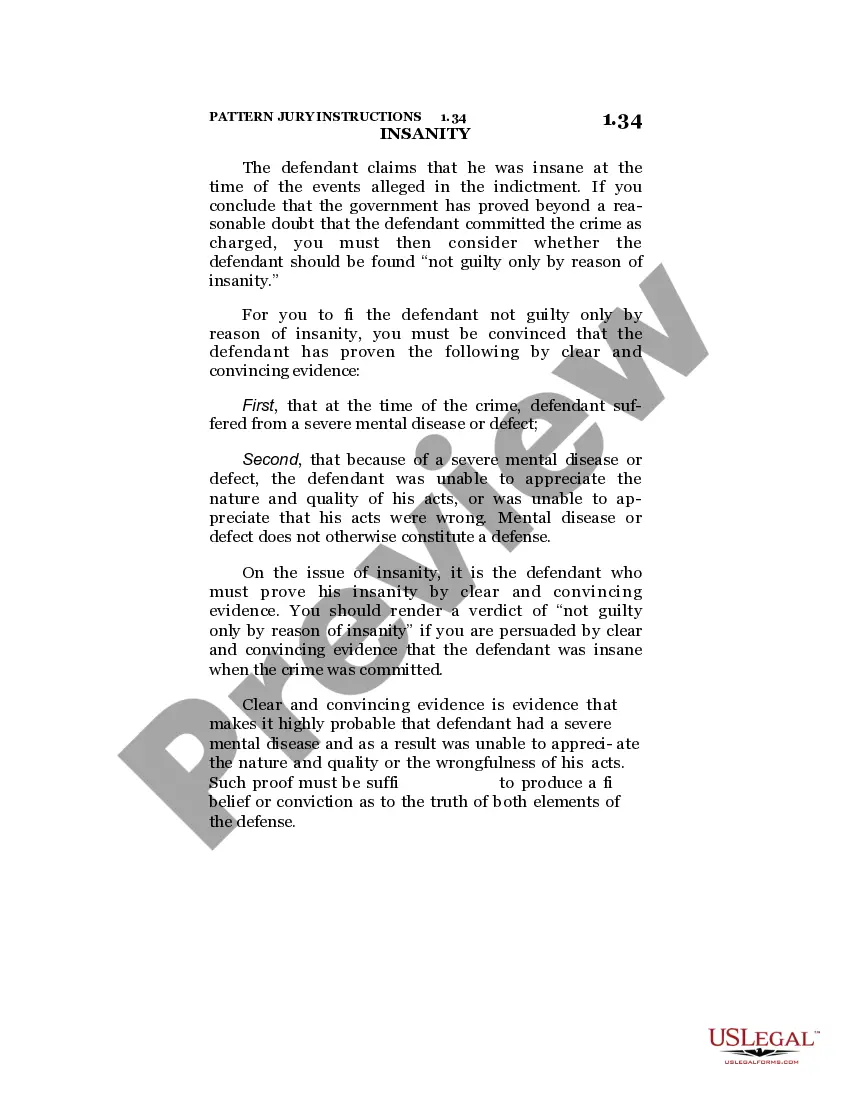
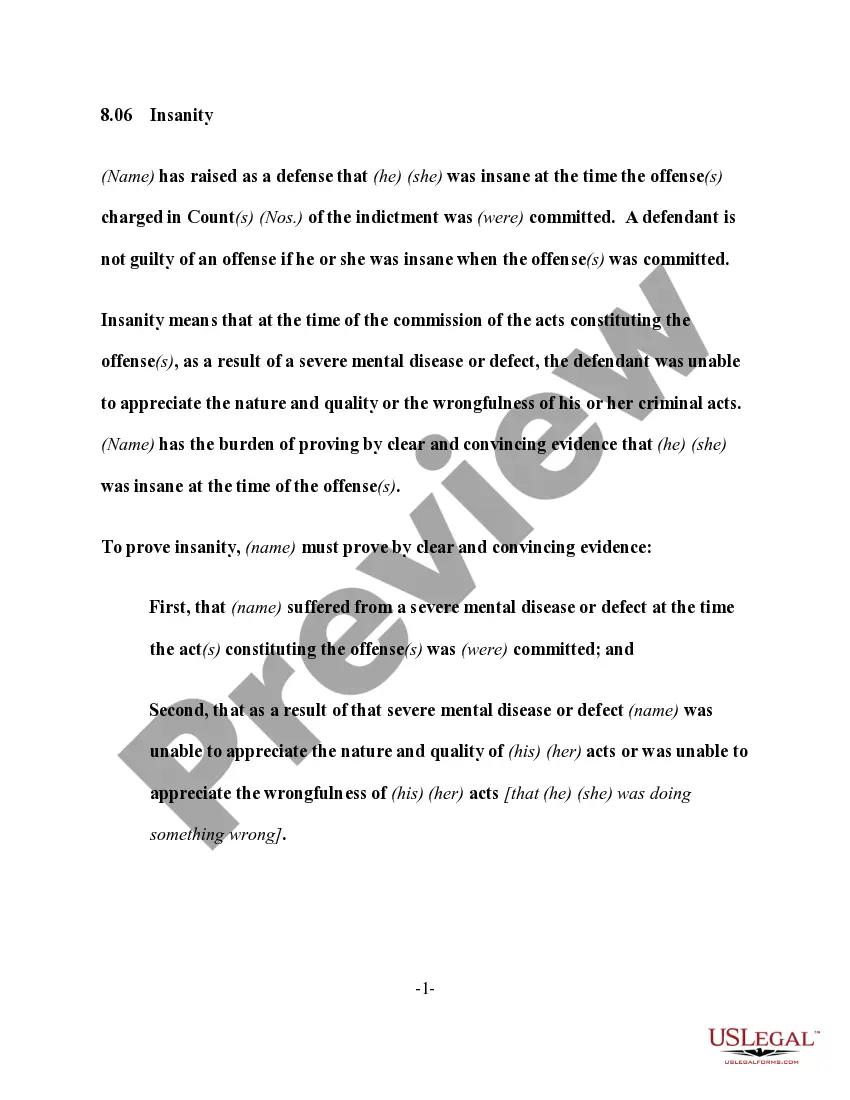
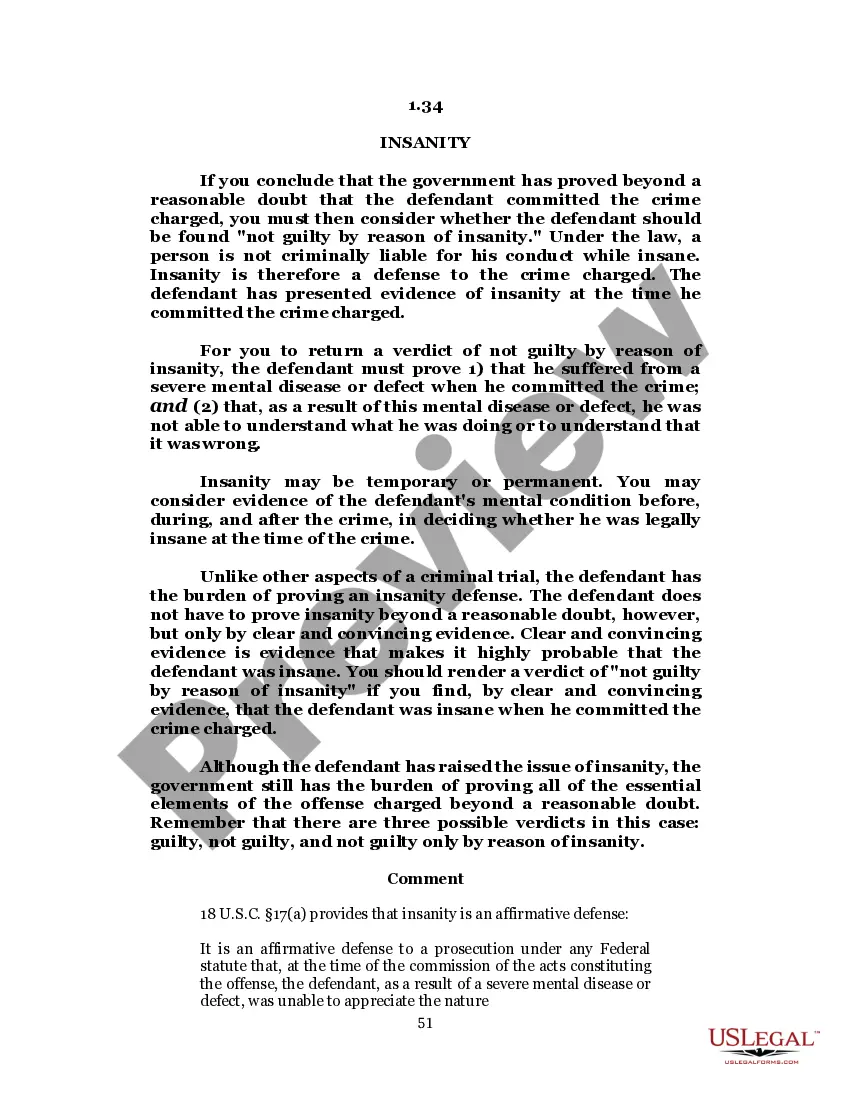
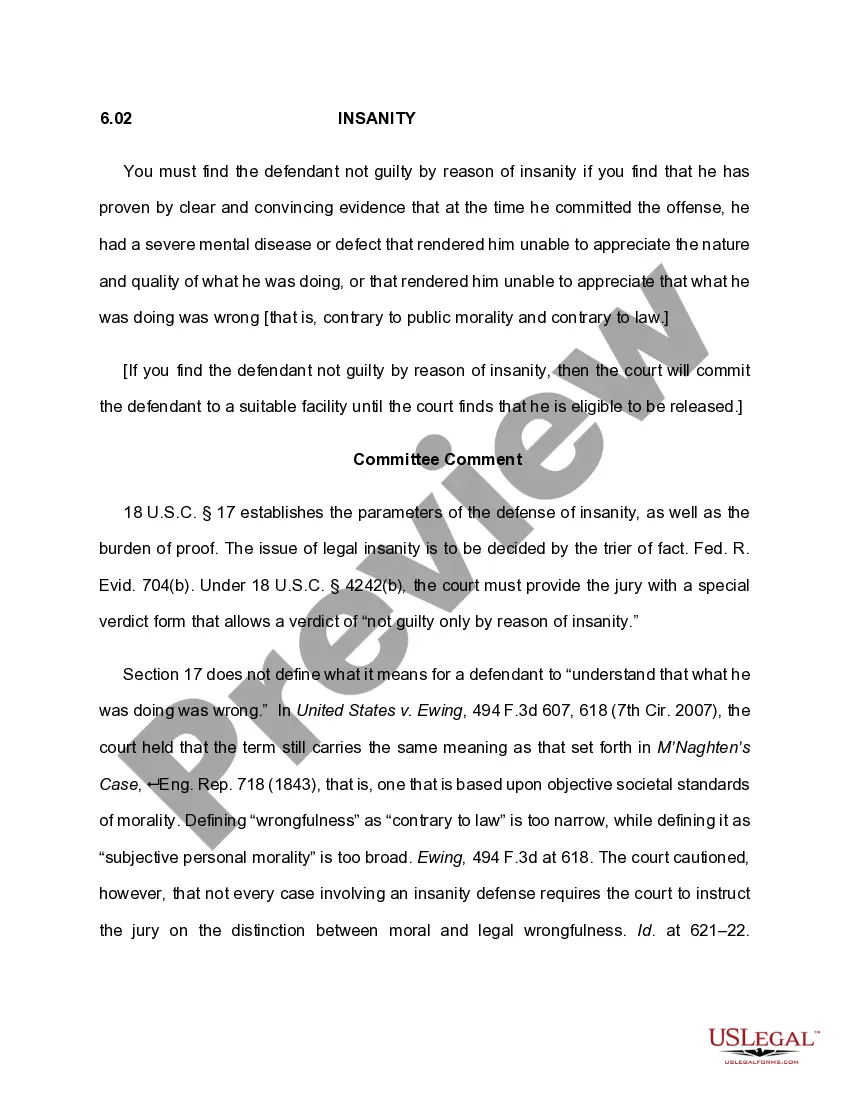
The Insanity form is a legal document used in court to assert that a defendant was not in a sound mental state at the time a crime was committed. This defense seeks a verdict of not guilty by reason of insanity, rather than standard acquittal. The form operates under specific legal standards and differs from other legal defenses in that it requires the defendant to prove their mental incapacity clearly and convincingly. This form is important for cases where mental health is central to the crime's circumstances.
Form components explained
- Assertion of insanity as a defense.
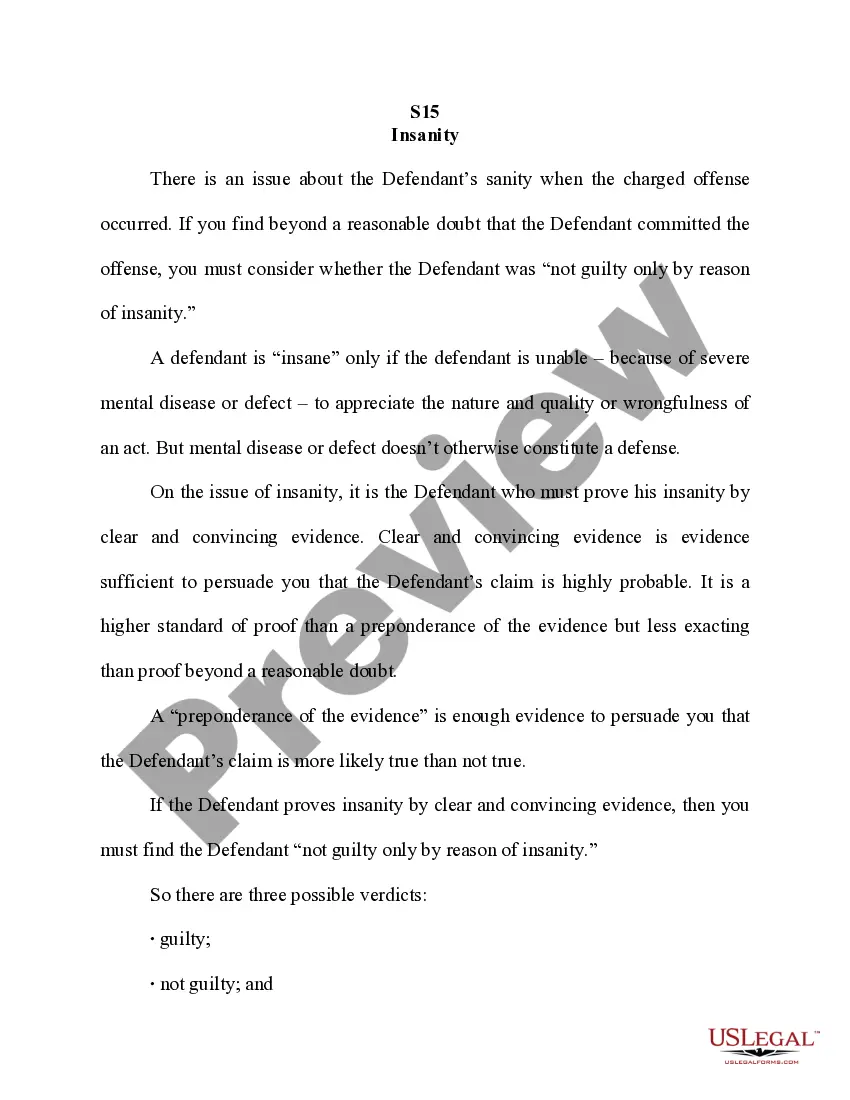
- Definition of severe mental disease or defect.
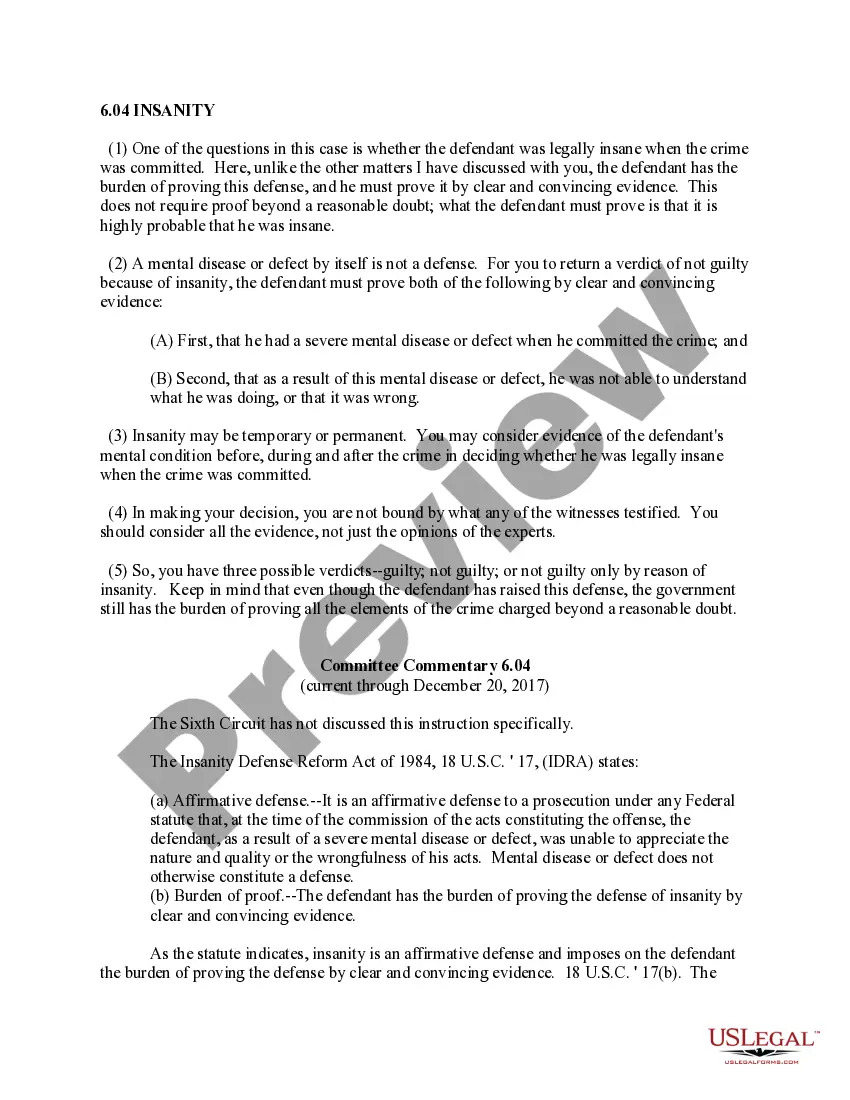
- Standards for proving insanity with clear and convincing evidence.
- Criteria for jury considerations regarding the verdict.
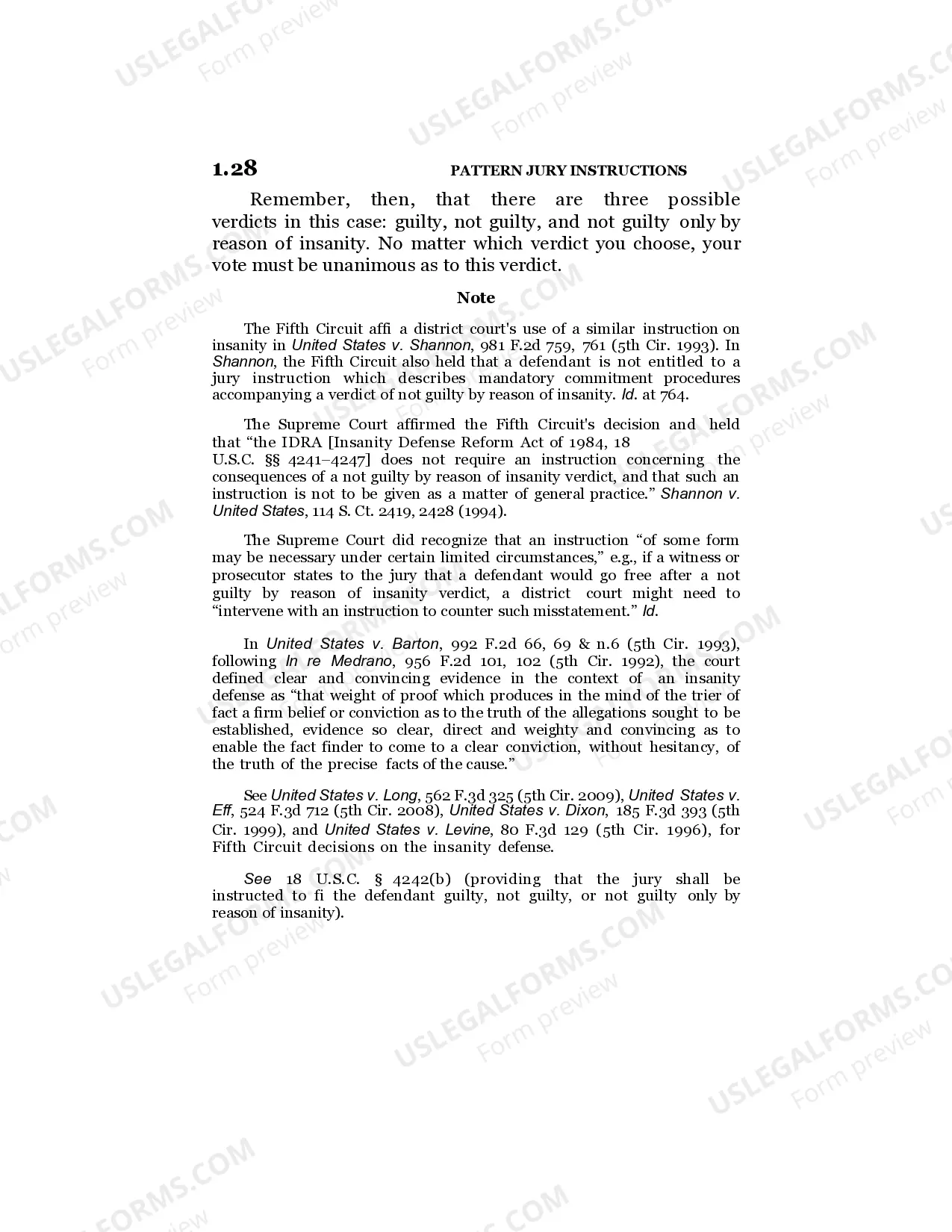
- Clarification of potential verdict options: guilty, not guilty, or not guilty by reason of insanity.
When this form is needed
This form should be used in criminal cases where the defendant claims they were insane at the time of the offense. It is particularly relevant in situations where mental illness may impact the defendant's awareness of their actions or understanding of wrongdoing. Legal counsel typically advises its use when mental health evaluations indicate serious conditions that could support such a defense.
Intended users of this form
- Defendants facing criminal charges who have mental health concerns.
- Legal representatives or attorneys working on behalf of clients with mental health issues.
- Individuals aiming to provide a defense based on insanity in a court setting.
Completing this form step by step
- Identify the defendant and provide details regarding the alleged crime.
- Clearly state the claim of insanity and attach evidence supporting this claim.
- Outline how the defendantâs mental state affected their understanding of the crime.
- Submit the necessary documentation that reflects assessments from mental health professionals.
- Ensure the form is filed in the appropriate court jurisdiction.
Does this document require notarization?
This form does not typically require notarization to be legally valid. However, some jurisdictions or document types may still require it. US Legal Forms provides secure online notarization powered by Notarize, available 24/7 for added convenience.
Get your form ready online
Our built-in tools help you complete, sign, share, and store your documents in one place.
Make edits, fill in missing information, and update formatting in US Legal Forms—just like you would in MS Word.
Download a copy, print it, send it by email, or mail it via USPS—whatever works best for your next step.
Sign and collect signatures with our SignNow integration. Send to multiple recipients, set reminders, and more. Go Premium to unlock E-Sign.
If this form requires notarization, complete it online through a secure video call—no need to meet a notary in person or wait for an appointment.
We protect your documents and personal data by following strict security and privacy standards.

Make edits, fill in missing information, and update formatting in US Legal Forms—just like you would in MS Word.

Download a copy, print it, send it by email, or mail it via USPS—whatever works best for your next step.

Sign and collect signatures with our SignNow integration. Send to multiple recipients, set reminders, and more. Go Premium to unlock E-Sign.

If this form requires notarization, complete it online through a secure video call—no need to meet a notary in person or wait for an appointment.

We protect your documents and personal data by following strict security and privacy standards.
Common mistakes to avoid
- Failing to provide adequate evidence from mental health experts.
- Misunderstanding the standards of proof required for an insanity defense.
- Underestimating the importance of complete and accurate documentation.
- Not clarifying the defendant's mental state during the crime adequately.
Advantages of online completion
- Convenience of access at any time without the need for in-person consultations.
- Editable fields for custom responses to reflect individual circumstances.
- Reliable templates drafted by licensed attorneys, ensuring legal validity.
- Quick download options allowing immediate use for urgent legal matters.
Legal use & context
- The Insanity form is used to navigate complex criminal defenses in court.
- It requires a clear and convincing standard of proof, making it a rigorous process.
- Successful use of this form can lead to different legal outcomes, including treatment rather than punishment.
What to keep in mind
- The Insanity form is vital for defendants claiming mental incapacity during a crime.
- Proving insanity requires a strong foundation of evidence from psychological evaluations.
- Understanding your state's specific laws related to insanity defenses can enhance the form's effectiveness.
Looking for another form?
Form popularity
FAQ
Sanity, a term used more colloquially than otherwise in recent years, can be understood to refer to the state of having a sound, rational mind and being capable of good judgment.
Actions that are very stupid and possibly dangerous synonym madness, lunacy.
You probably know that the word insane means crazy. Well, the opposite of insane is sane ? or not crazy. A sane person is of sound mind and is mentally healthy. Sane people have good judgment, are reasonable, and can tell the difference between what's real and imagined.
Insanity in Contemporary Times For example: ?A person with depression? instead of ?a depressed person.? ?A person who has anorexia nervosa? or ?a person diagnosed with an eating disorder? instead of ?an anorexic? or ?a bulimic.?
The noun insanity originates from the Latin word insanitatem, meaning "unhealthfulness" relating to the mind.
N. 1. in law, the state of not suffering from a mental disorder or neurological defect that impairs one's ability to understand or appreciate one's acts or to conform to the requirements of the law.
The term "insanity" has been retired from medical nomenclature for about 100 years. Formerly interchangeable with the legal term, implying unsoundness of mind, it persists as a legal determination, mainly in criminal matters. However, the most prevalent uses of "insanity" are in colloquial speech and media.
: unsoundness of mind or lack of the ability to understand that prevents one from having the mental capacity required by law to enter into a particular relationship, status, or transaction or that releases one from criminal or civil responsibility: as.