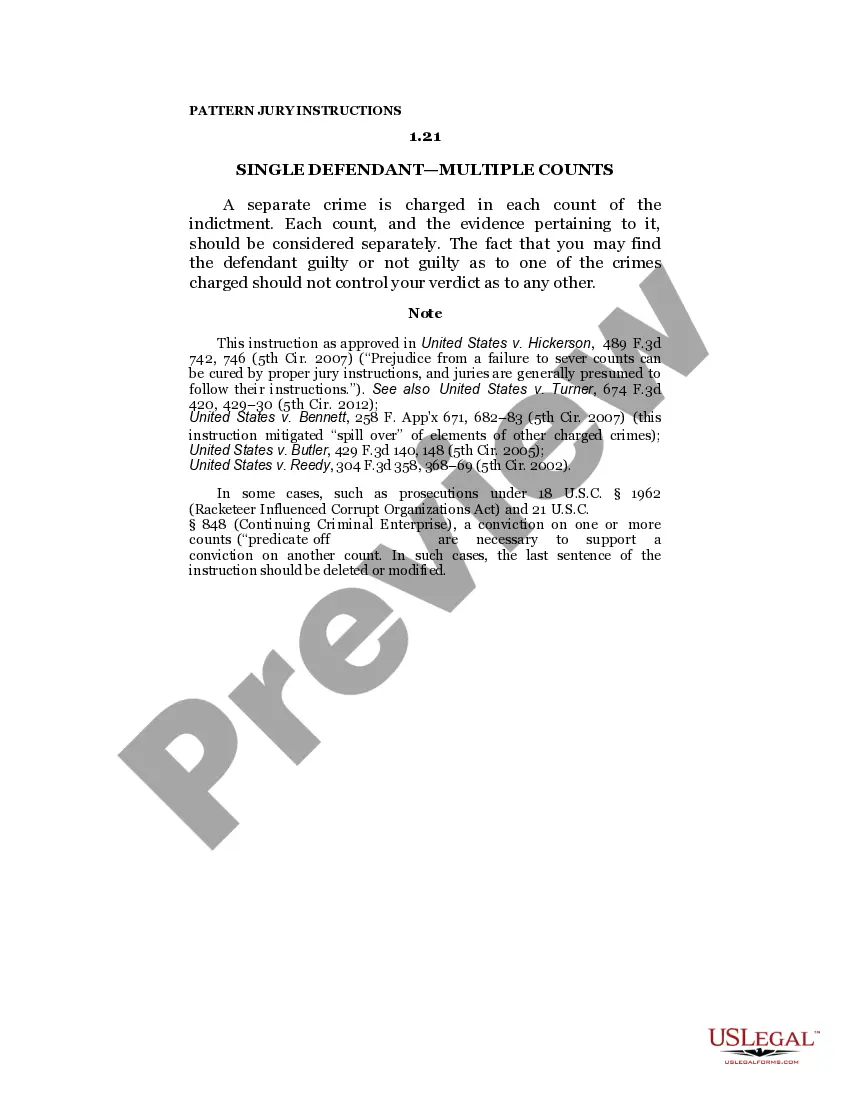
Single Defendant - Multiple Counts
What is this form?
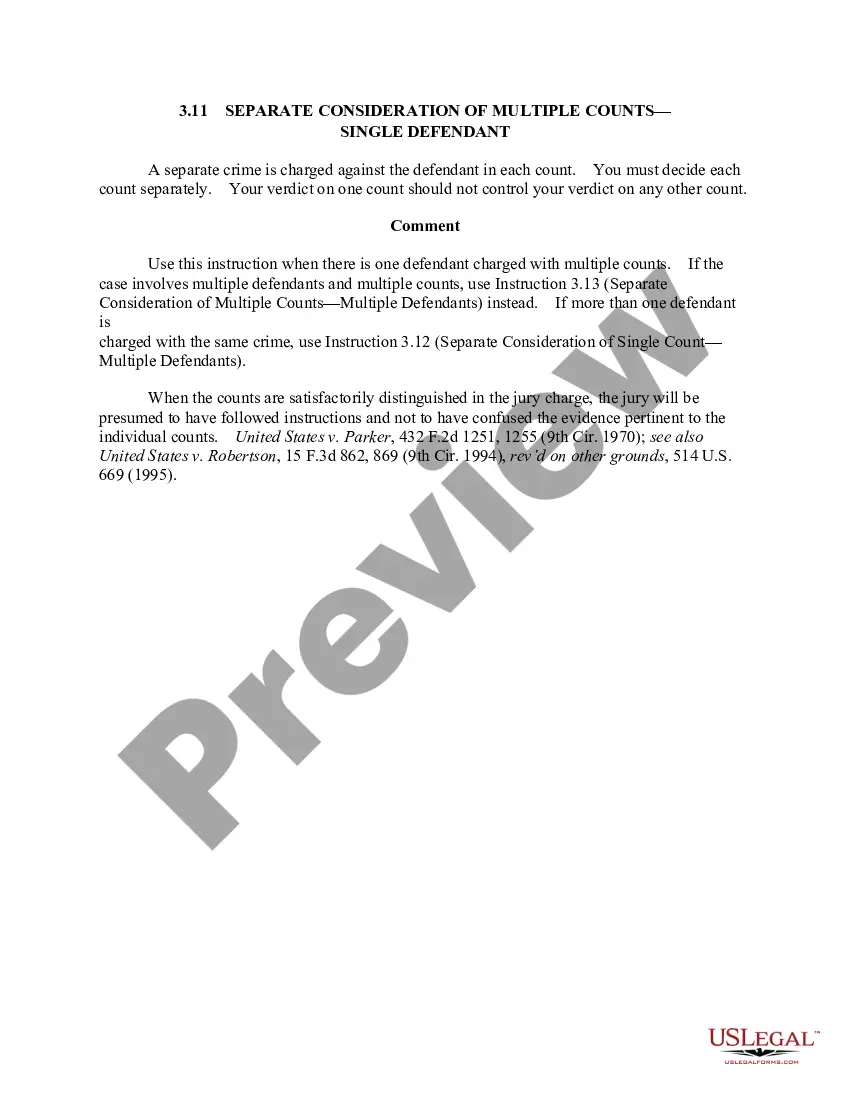
The Single Defendant - Multiple Counts form is a legal document used in criminal cases where a single defendant is charged with multiple counts or separate crimes. This form is designed to help jurors understand that they must evaluate each count and the related evidence individually, without letting their verdict on one count influence their decision on others. It ensures a fair trial and upholds the legal principle that a defendant is considered innocent until proven guilty for each specific charge.
What’s included in this form
- Clear definition of the structure of multiple counts against a single defendant.
- Instructions for jurors on how to evaluate each count separately.
- Legal citations that establish the basis for these instructions.
- A note for cases with specific laws that may affect the interpretation of multiple counts.

When to use this form
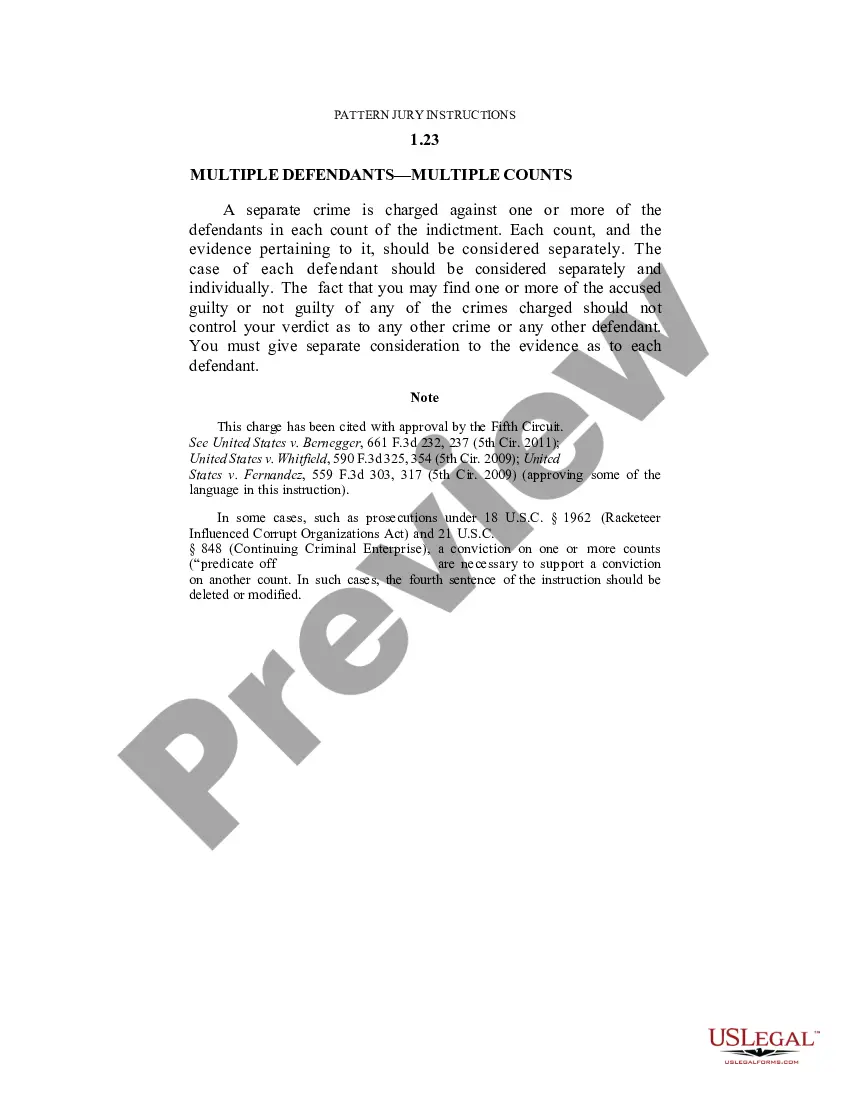
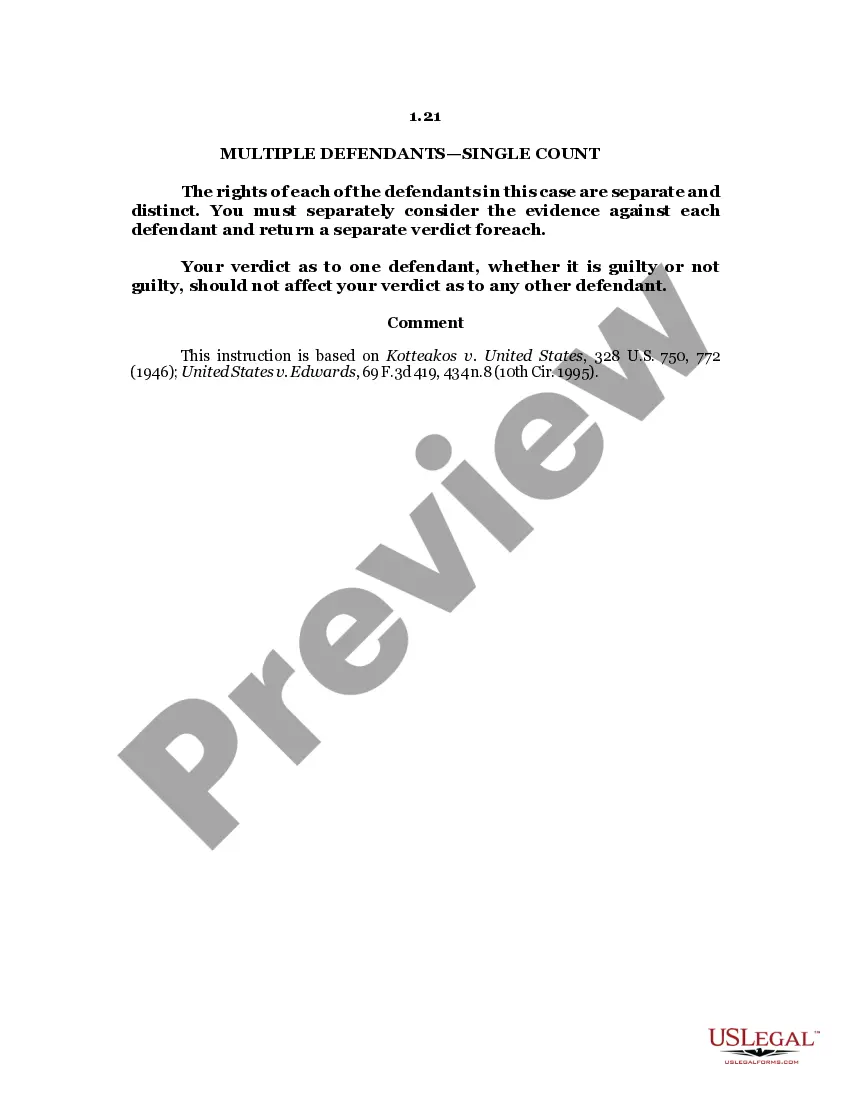
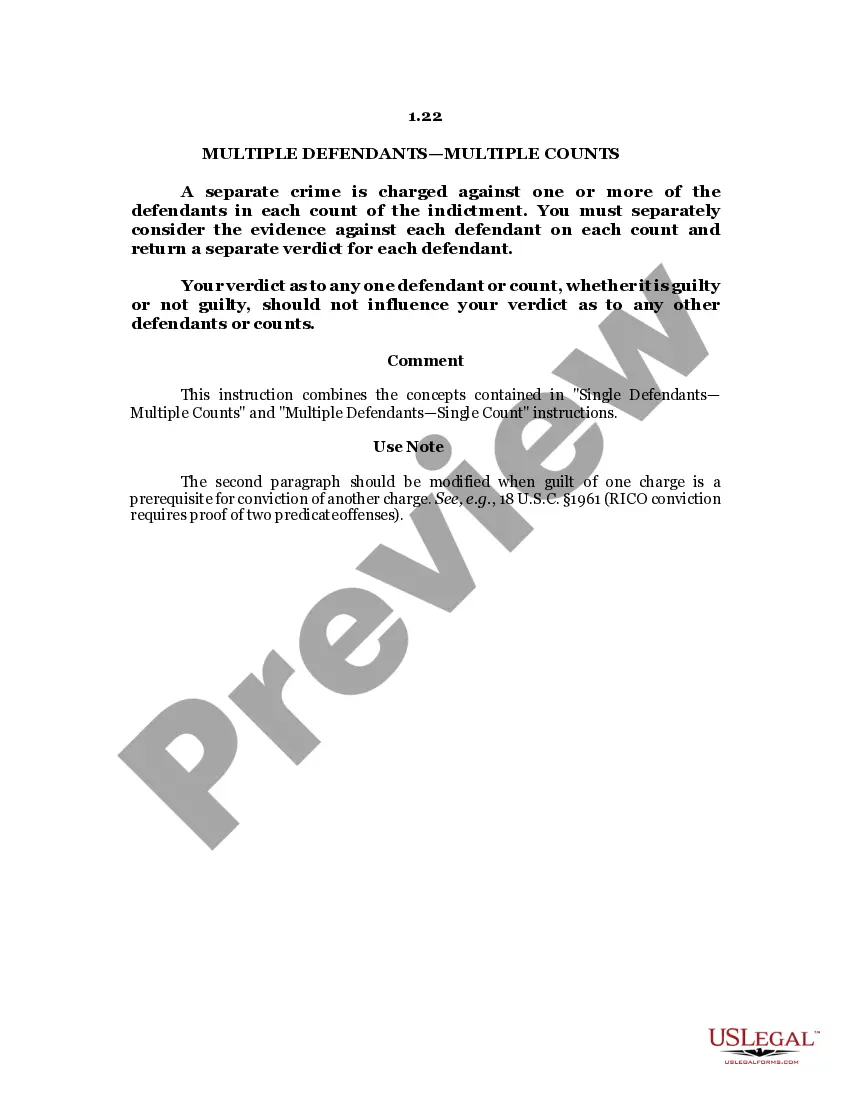
This form should be used in criminal trials where a defendant faces more than one count of offense. It is relevant in cases where the charges are related but distinct enough that they should be evaluated independently. Examples include cases involving drug offenses, theft, or fraud, where multiple counts arise from a single event or pattern of behavior.
Who this form is for
- Judges overseeing criminal trials with multiple counts against a defendant.
- Prosecutors presenting evidence on multiple offenses in court.
- Defense attorneys representing clients charged with multiple counts.
How to prepare this document
- Identify the specific charges against the defendant and list them as counts.
- Provide a clear description of the evidence relevant to each count.
- Include instructional language that guides jurors on assessing each count separately.
- Incorporate applicable legal citations to support the instructions.
- Ensure compliance with any state-specific requirements if needed.
Is notarization required?
In most cases, this form does not require notarization. However, some jurisdictions or signing circumstances might. US Legal Forms offers online notarization powered by Notarize, accessible 24/7 for a quick, remote process.
Get your form ready online
Our built-in tools help you complete, sign, share, and store your documents in one place.
Make edits, fill in missing information, and update formatting in US Legal Forms—just like you would in MS Word.
Download a copy, print it, send it by email, or mail it via USPS—whatever works best for your next step.
Sign and collect signatures with our SignNow integration. Send to multiple recipients, set reminders, and more. Go Premium to unlock E-Sign.
If this form requires notarization, complete it online through a secure video call—no need to meet a notary in person or wait for an appointment.
We protect your documents and personal data by following strict security and privacy standards.

Make edits, fill in missing information, and update formatting in US Legal Forms—just like you would in MS Word.

Download a copy, print it, send it by email, or mail it via USPS—whatever works best for your next step.

Sign and collect signatures with our SignNow integration. Send to multiple recipients, set reminders, and more. Go Premium to unlock E-Sign.

If this form requires notarization, complete it online through a secure video call—no need to meet a notary in person or wait for an appointment.

We protect your documents and personal data by following strict security and privacy standards.
Typical mistakes to avoid
- Failing to clearly delineate between different counts can lead to jury confusion.
- Not providing sufficient evidence related to each count.
- Using generic instructions that do not adequately address multiple counts.
Why use this form online
- Convenient access to a professionally drafted legal document.
- Editable templates that allow for customization based on specific needs.
- Reliable legal content drafted by licensed attorneys to ensure compliance with current laws.
Looking for another form?








Form popularity
FAQ
In criminal cases, each count alleges a different crime. For example, a person accused of shooting and killing two people could be charged with two counts of murder and two counts of armed criminal action. Statements identifying probable cause must support each count.
Law enforcement officers have full discretion over what crimes to submit against a suspect. In some cases, they put forth more charges than is fair for the situation, often in an attempt to strengthen the main case that the prosecutor wishes to pursue.
Count. An allegation in an indictment or information, charging a defendant with a crime. An indictment or information may contain allegations that the defendant committed more than one crime. Each allegation is referred to as a count.
In criminal cases, each count alleges a different crime. For example, a person accused of shooting and killing two people could be charged with two counts of murder and two counts of armed criminal action. Statements identifying probable cause must support each count.
For example, the complaint in a civil (non-criminal) lawsuit might state: First Count (or cause of action) for negligence, and then state the detailed allegations; Second Count for breach of contract; Third Count for debt and so forth. In a criminal case each count would be a statement of a different alleged crime.
Counts refer to the basis for bringing a case, including each cause of action in civil cases or charge in criminal cases. Lawsuits can involve multiple counts in which someone can be held liable. For example, assault and battery are separate causes of action that often are both present in a lawsuit.
It means the number of crimes or the number of a certain crime. For example, a mass shooters kills 5 people and wounds another 7. They get charged with 5 counts of murder (one murder charge for each victim killed) and 7 counts of attempted murder (one for each victim wounded).
It means you committed the same crime more than once. An example is if someone shoots 10 people and they all survive, that person would have 10 counts of attempted murder. He committed the same crime against all of these people. So he has to answer for each person that was wronged by his action.