Caution - Consider Only Crime Charged
Understanding this form
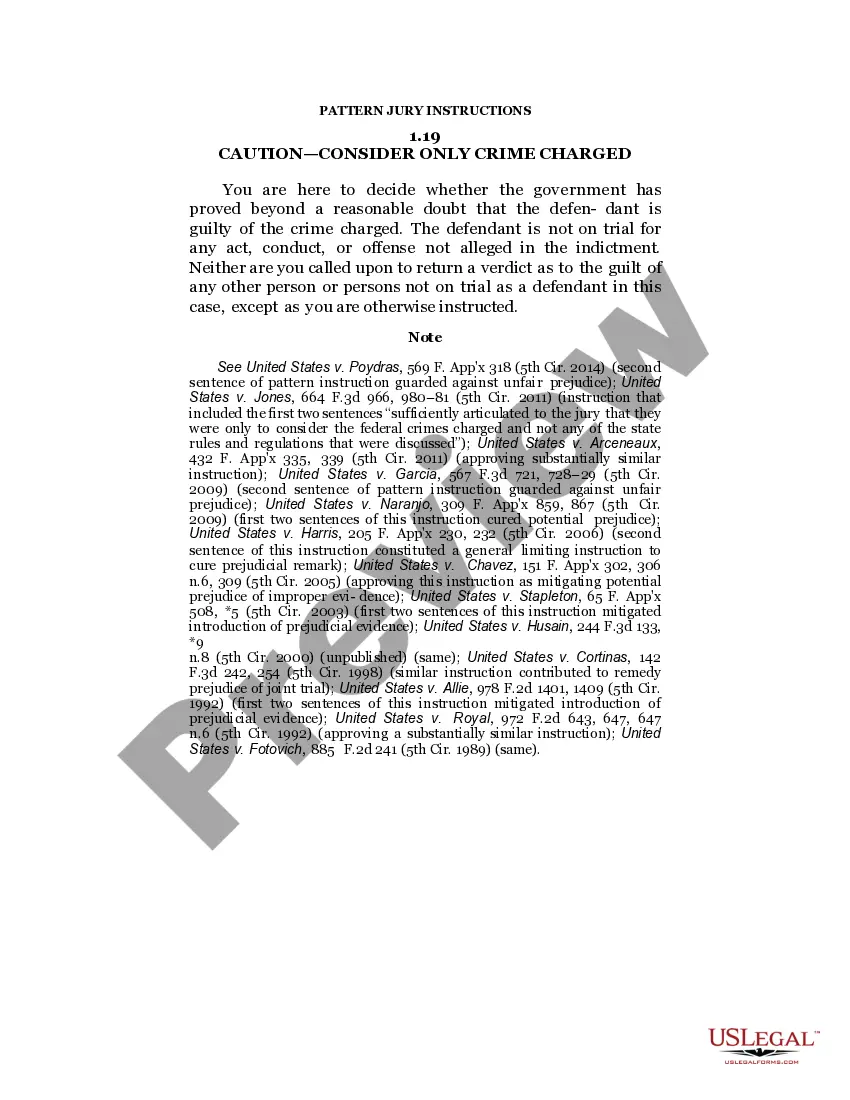
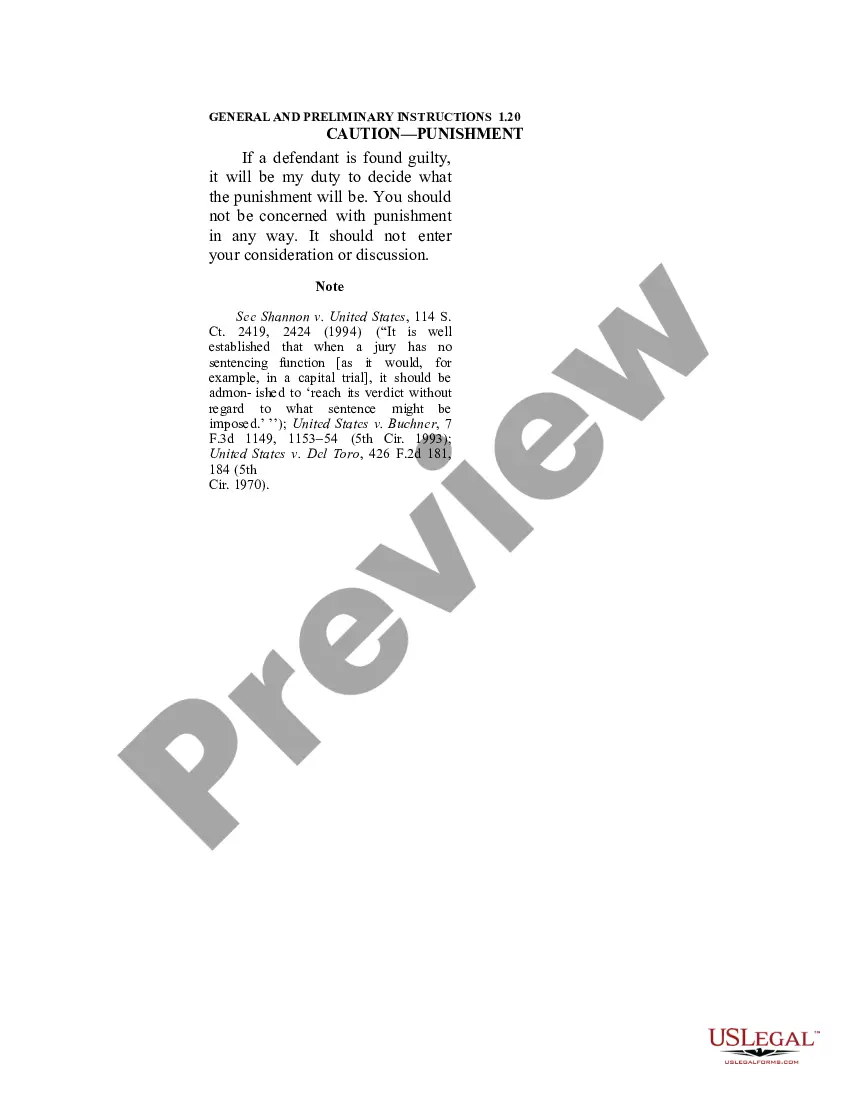
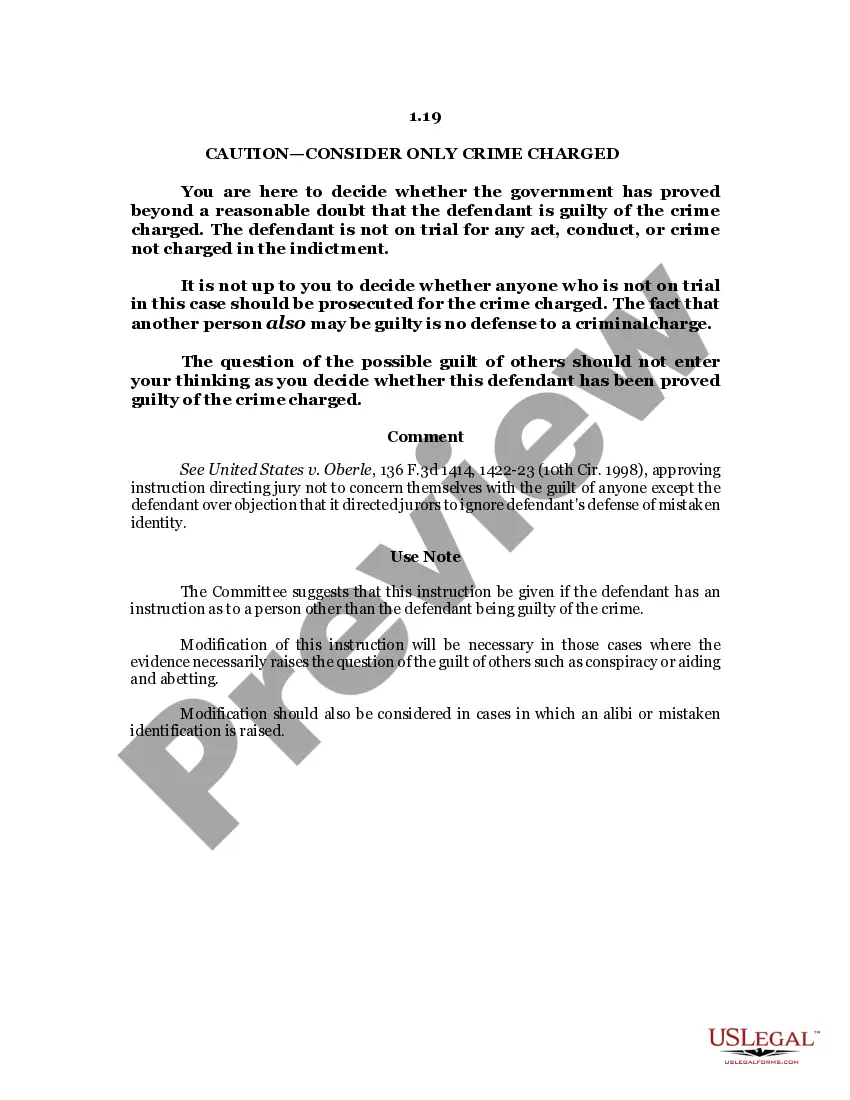
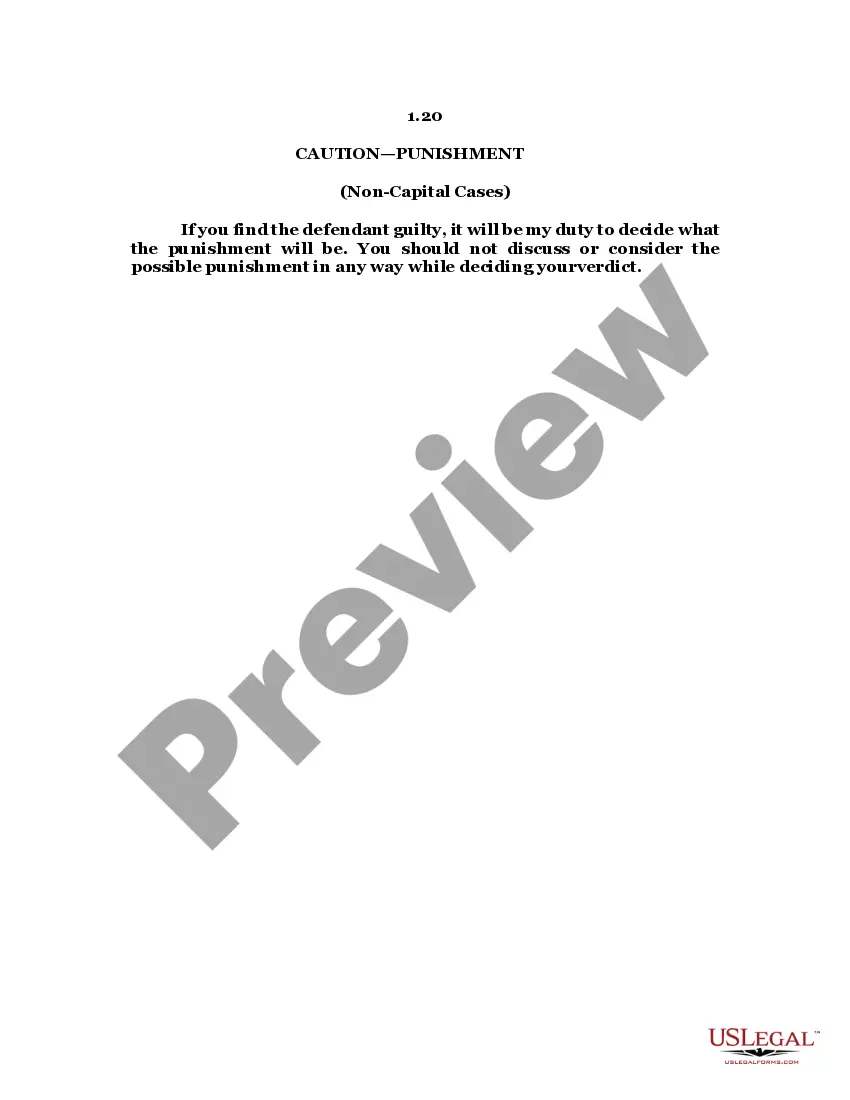
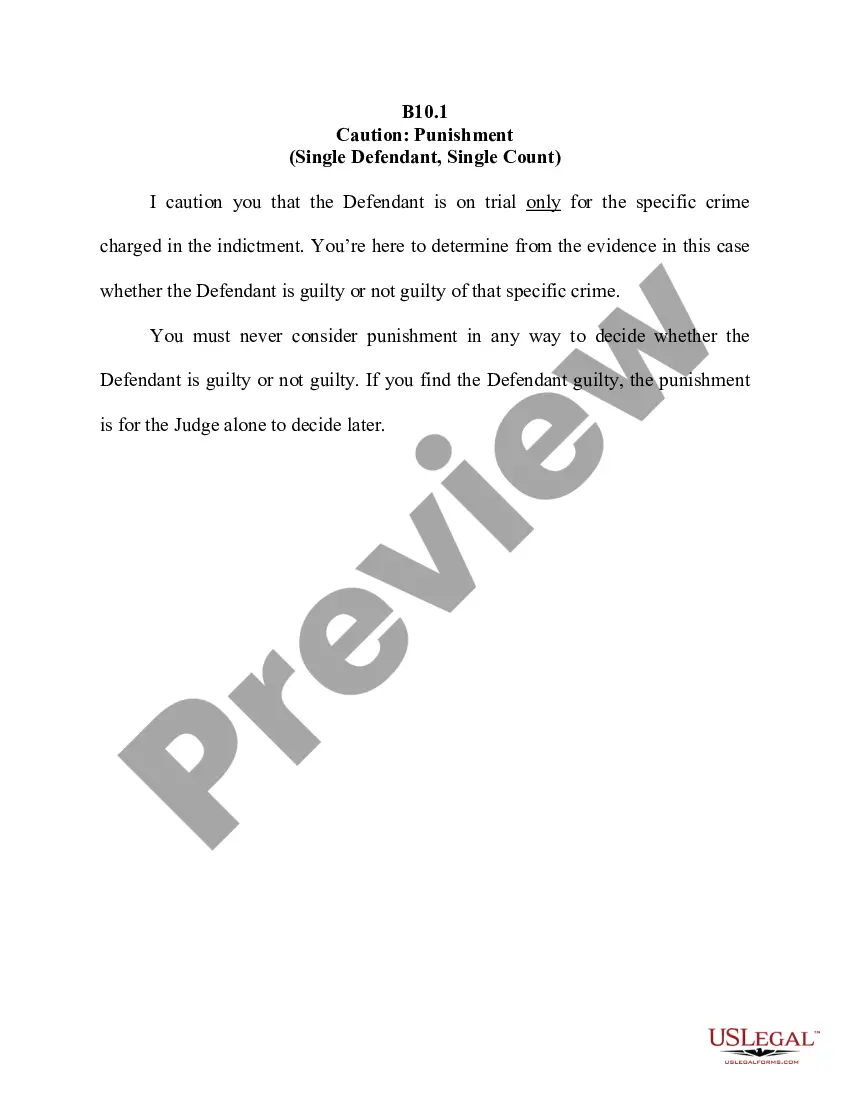
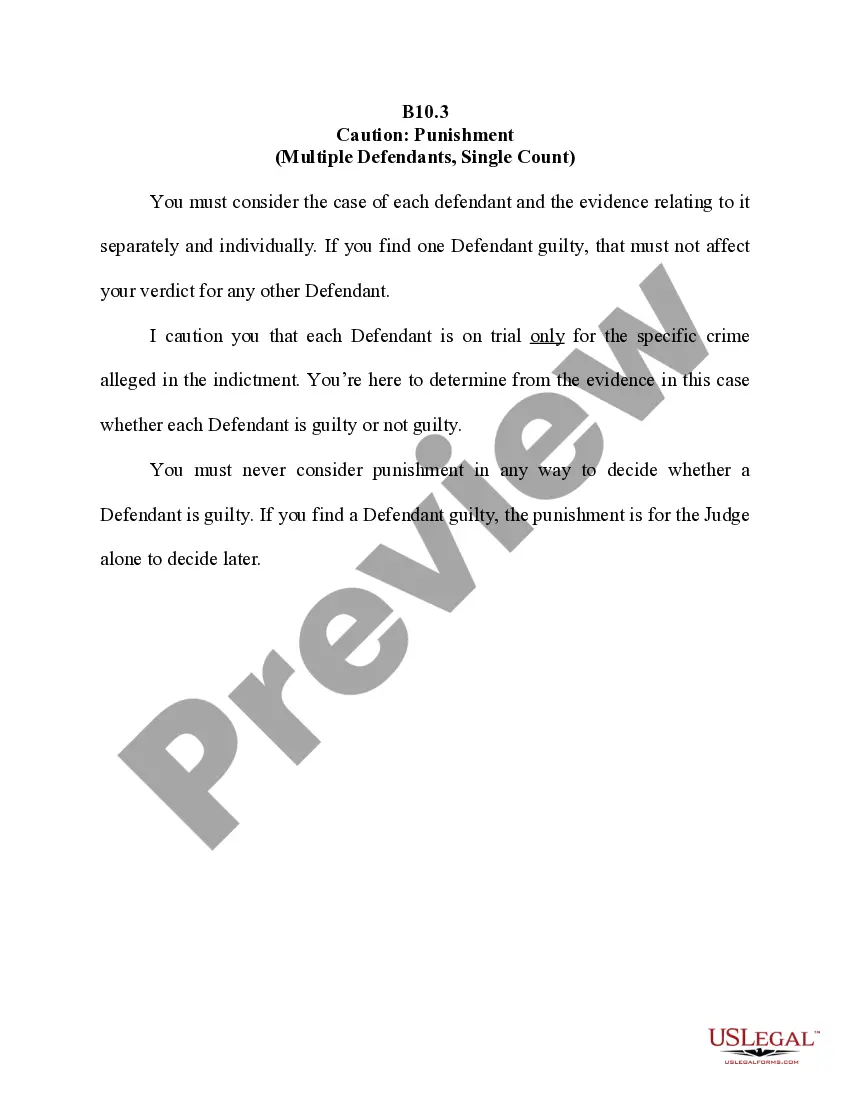
The "Caution - Consider Only Crime Charged" form is a legal instruction used in criminal trials. Its primary purpose is to guide jurors in their deliberations, ensuring they focus solely on the specific crime charged against the defendant. This form differs from other legal instructions by emphasizing the need to avoid any consideration of non-charged conduct or other individuals not on trial, thereby safeguarding the fairness of the trial process.
What’s included in this form
- Clarification that jurors should evaluate evidence only related to the crime charged.
- Instructions to ignore any acts or offenses not included in the indictment.
- Guidance on avoiding unfair prejudice against the defendant by focusing on relevant charges.
- Citations of legal precedents to support the instructions provided.
When this form is needed
This form is utilized during jury trials in criminal cases. It is essential when jurors are instructed to specifically consider the charges brought against a defendant, ensuring they make their decisions based only on applicable evidence related to the crime alleged in the indictment.
Who can use this document
- Judges presiding over criminal trials.
- Attorneys representing defendants or the government in criminal cases.
- Jurors, who rely on these instructions to guide their verdict deliberations.
Instructions for completing this form
- Identify the specific crime charged against the defendant outlined in the indictment.
- Review all evidence presented during the trial that relates directly to this charge.
- Engage in deliberations focused solely on the evidence pertaining to the crime charged.
- Consult the provided legal precedents to understand the context of the restrictions placed upon deliberations.
- Reach a verdict based only on the considerations mandated by the form's instructions.
Notarization guidance
Notarization is generally not required for this form. However, certain states or situations might demand it. You can complete notarization online through US Legal Forms, powered by Notarize, using a verified video call available anytime.
Get your form ready online
Our built-in tools help you complete, sign, share, and store your documents in one place.
Make edits, fill in missing information, and update formatting in US Legal Forms—just like you would in MS Word.
Download a copy, print it, send it by email, or mail it via USPS—whatever works best for your next step.
Sign and collect signatures with our SignNow integration. Send to multiple recipients, set reminders, and more. Go Premium to unlock E-Sign.
If this form requires notarization, complete it online through a secure video call—no need to meet a notary in person or wait for an appointment.
We protect your documents and personal data by following strict security and privacy standards.

Make edits, fill in missing information, and update formatting in US Legal Forms—just like you would in MS Word.

Download a copy, print it, send it by email, or mail it via USPS—whatever works best for your next step.

Sign and collect signatures with our SignNow integration. Send to multiple recipients, set reminders, and more. Go Premium to unlock E-Sign.

If this form requires notarization, complete it online through a secure video call—no need to meet a notary in person or wait for an appointment.

We protect your documents and personal data by following strict security and privacy standards.
Common mistakes
- Jurors considering evidence unrelated to the charge.
- Misinterpreting the legal precedents cited within the instructions.
- Discussing other defendants or offenses that are not part of the current trial.
Why use this form online
- Convenience of access from anywhere, allowing for immediate use in trial preparations.
- Editability ensures that specific details can be tailored to fit the case requirements.
- Reliability established through legal drafting by licensed attorneys.
Looking for another form?




Form popularity
FAQ
No Contest means the defendant does not contest (disagree with) the charge. This plea has the same effect as a guilty plea, except the conviction generally cannot be used against the defendant in a civil lawsuit.
A nolo contendere plea has all the same criminal and civil consequences as a guilty plea.
There are three possible pleas to a complaint: 1) Guilty, 2) Nolo Contendere, and 3) Not Guilty. Your decision on what plea to enter is the most important decision you will have to make.
In any case, a plea, whether of guilty or innocent, is just one step on the road to a possible conviction. A defendant cannot convict himself; only the court can hand down a conviction. A guilty plea is the same as being convicted of a crime in that it is recorded as a conviction.
The arraignment is usually set within 48 hours after a person is charged. At the arraignment, the judge will automatically enter a plea of not guilty and advise the defendant of his or her rights as an accused person, such as the right to an attorney.
The Arraignment is the formal accusation of the defendant where a plea of guilty or not guilty is entered.
The grand jury determines whether there is ?probable cause? to believe the individual has committed a crime and should be put on trial. If the grand jury determines there is enough evidence, an indictment will be issued against the defendant.
A plea of no contest is similar to a guilty plea in that you admit that you accept a conviction for the charge. In misdemeanor cases, however, that plea cannot be used against you as an admission of guilt in certain civil proceedings. A no contest plea is also referred to as ?nolo contendere.?