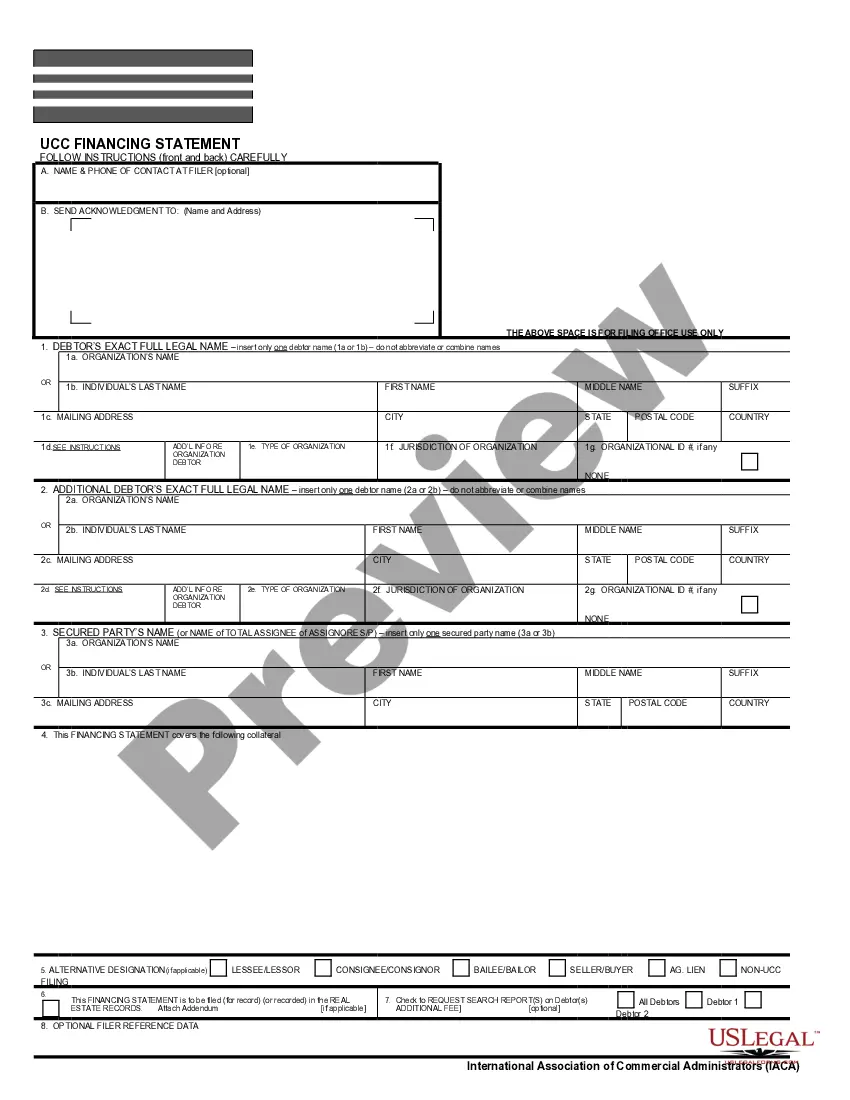
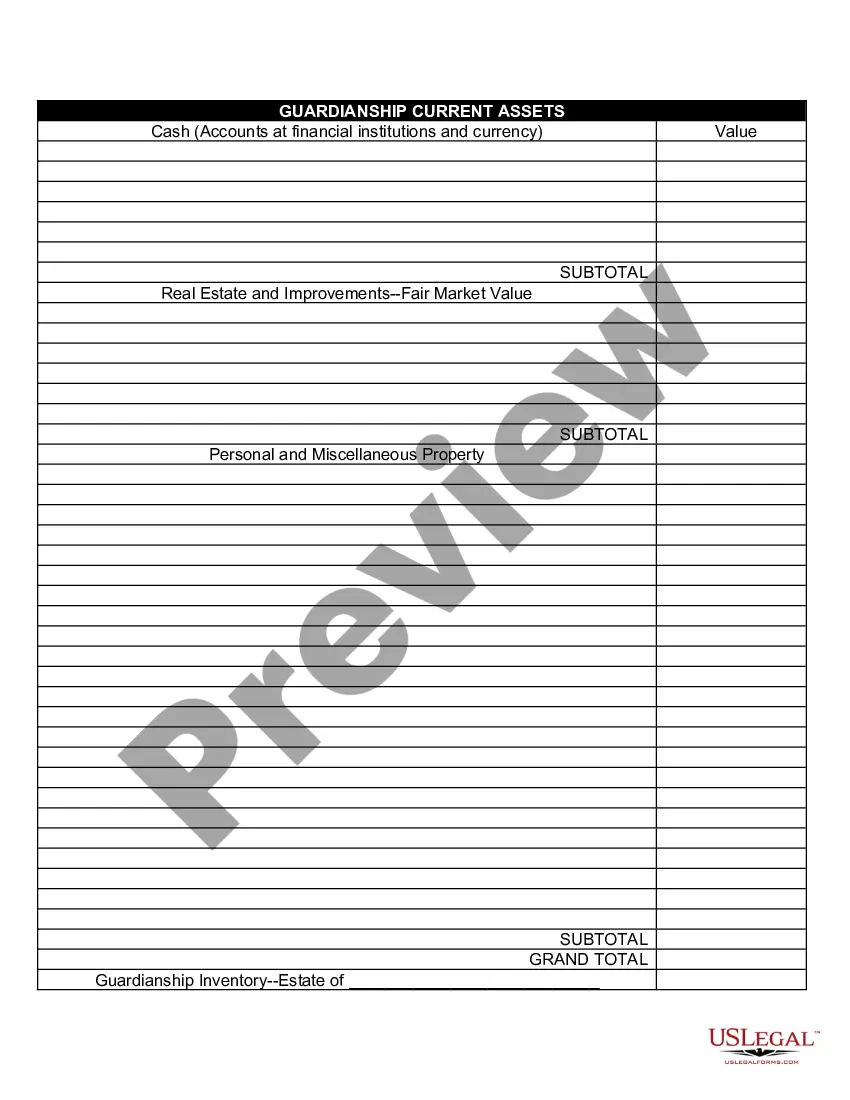
Guardianship Current Assets
About this form
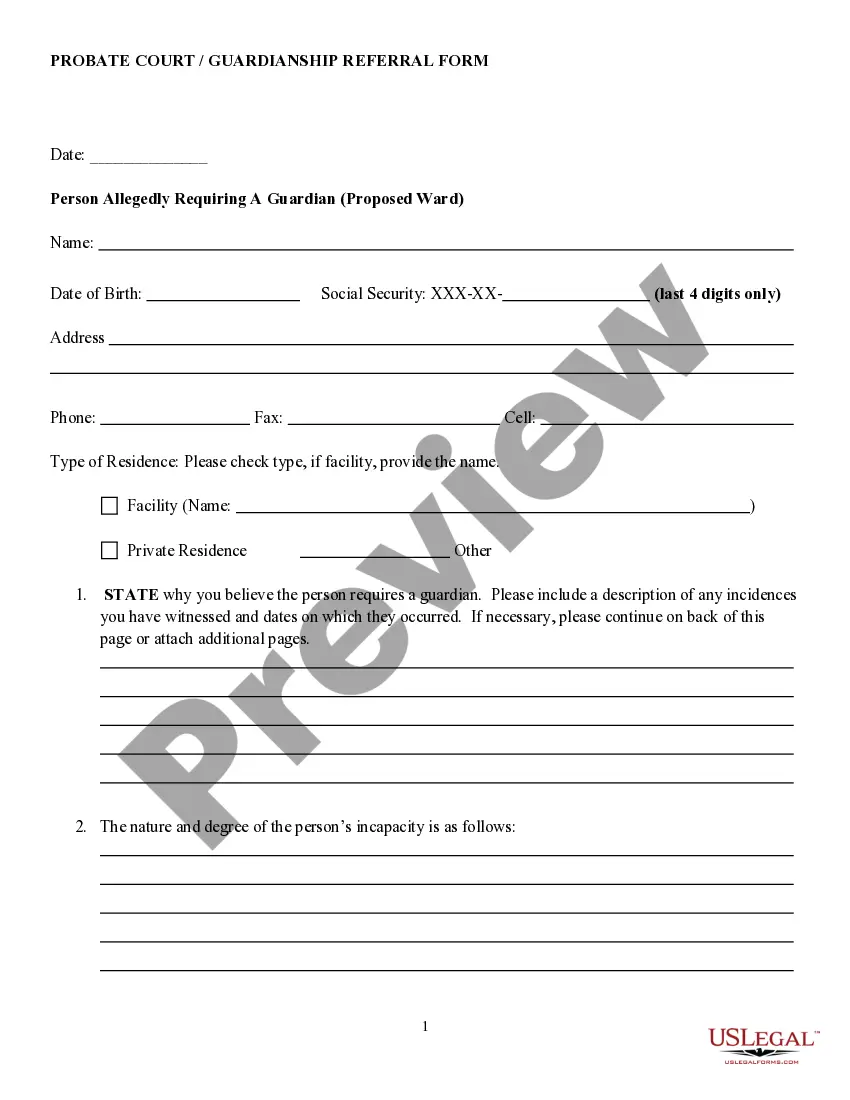
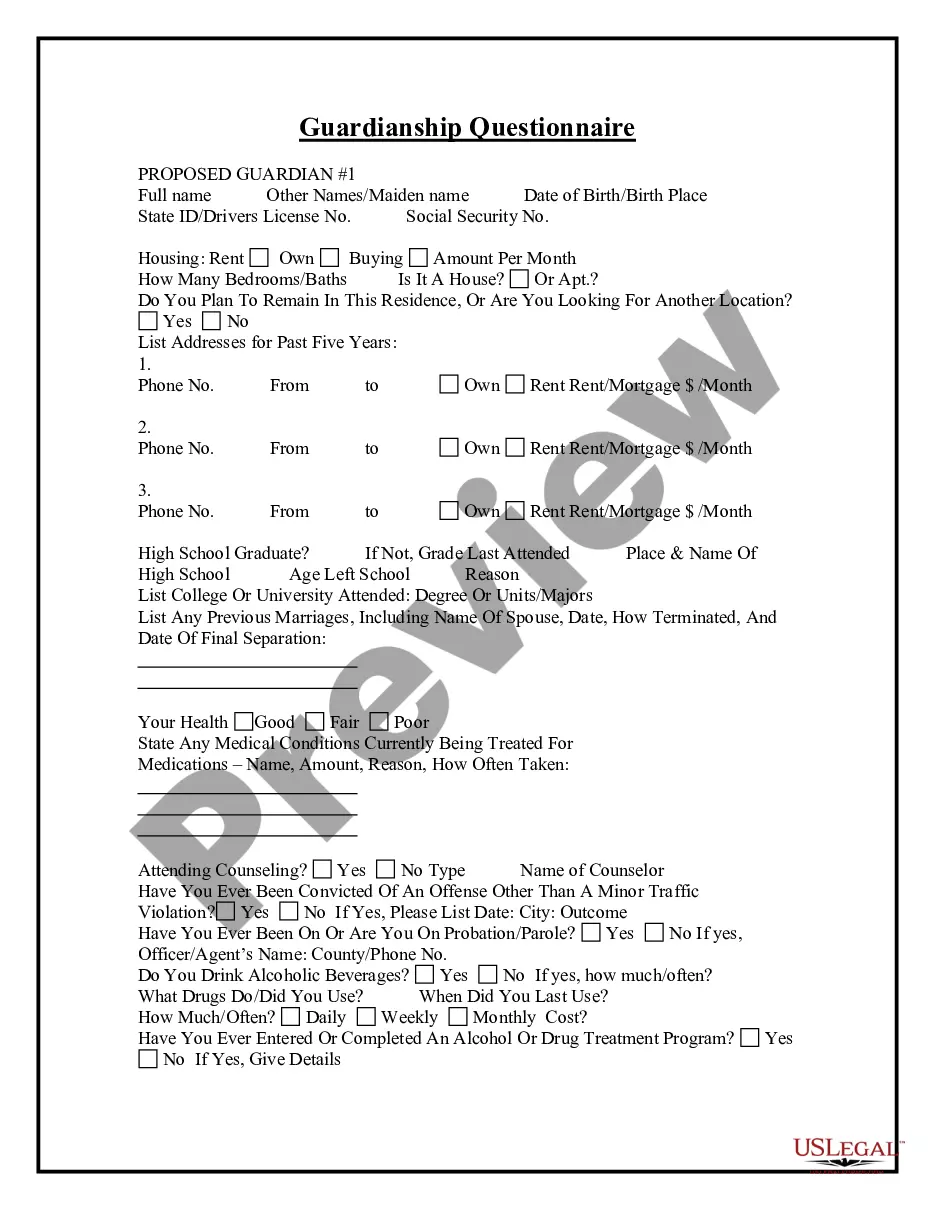
The Guardianship Current Assets form is a checklist designed to document and assess the assets of a ward under guardianship. This form is essential for guardians to ensure they are managing the ward's financial resources appropriately. Unlike other financial forms, this checklist specifically focuses on current assets, providing a clear overview for court reporting and asset management.
Key parts of this document
- List of current assets, including cash, property, and investments
- Estimated values of each asset
- Sources or accounts related to the assets
- Date of asset evaluation
- Signatures of the guardian and any required witnesses

When to use this form
This form should be used when a guardian is appointed and needs to report on the current financial status of the wardâs assets. Guardians may need to submit this checklist periodically to the court to demonstrate proper management of the ward's estate. It is also useful during annual audits or financial reviews.
Who this form is for
- Guardians appointed by the court for individuals who cannot manage their finances
- Family members or friends acting as guardians
- Legal representatives managing the financial affairs of a ward
How to complete this form
- Start by listing all current assets owned by the ward.
- Next, determine and enter an estimated value for each asset.
- Provide information about where the assets are held, including account numbers or property addresses.
- Date the checklist to reflect the evaluation's timing.
- Finally, have the guardian sign the form and, if required, obtain necessary witness signatures.
Notarization guidance
This form does not typically require notarization unless specified by local law. However, ensuring all signatures are properly executed is crucial for legal validity.
Get your form ready online
Our built-in tools help you complete, sign, share, and store your documents in one place.
Make edits, fill in missing information, and update formatting in US Legal Forms—just like you would in MS Word.
Download a copy, print it, send it by email, or mail it via USPS—whatever works best for your next step.
Sign and collect signatures with our SignNow integration. Send to multiple recipients, set reminders, and more. Go Premium to unlock E-Sign.
If this form requires notarization, complete it online through a secure video call—no need to meet a notary in person or wait for an appointment.
We protect your documents and personal data by following strict security and privacy standards.
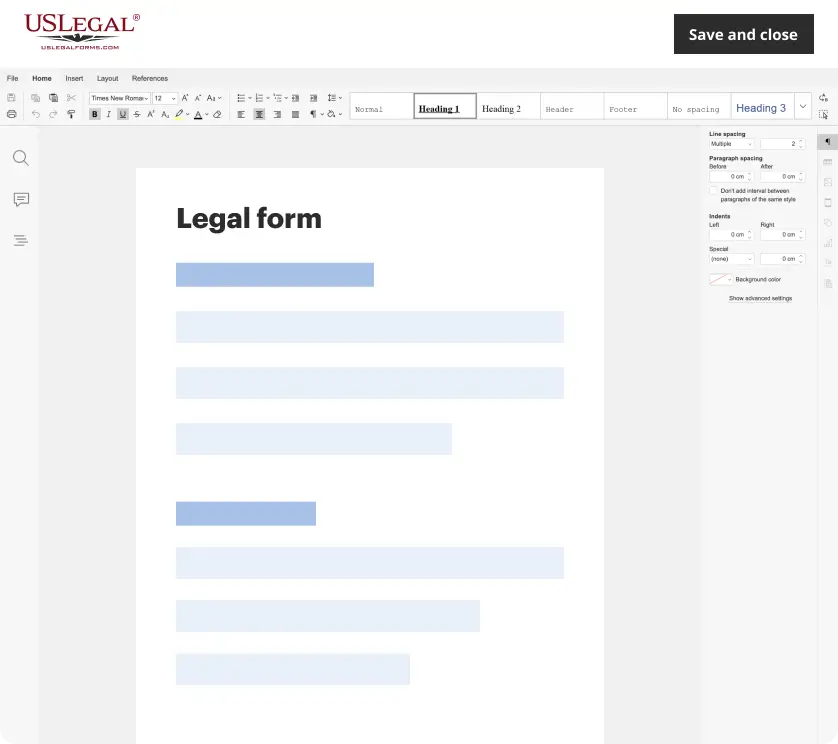
Make edits, fill in missing information, and update formatting in US Legal Forms—just like you would in MS Word.
Download a copy, print it, send it by email, or mail it via USPS—whatever works best for your next step.
Sign and collect signatures with our SignNow integration. Send to multiple recipients, set reminders, and more. Go Premium to unlock E-Sign.

If this form requires notarization, complete it online through a secure video call—no need to meet a notary in person or wait for an appointment.
We protect your documents and personal data by following strict security and privacy standards.
Typical mistakes to avoid
- Failing to include all assets in the checklist
- Using outdated valuations for reported assets
- Omitting required signatures or dates
- Providing inaccurate or incomplete asset information
Why complete this form online
- Convenient access to the form at any time
- Easy to edit and customize based on specific needs
- Ensures reliability with documents drafted by licensed attorneys
Looking for another form?









Form popularity
FAQ
In most cases, power of attorney is preferred to legal guardianship because more control is retained by the person being protected. However, if court supervision is needed, guardianship may be more appropriate. Guardianship also gives the guardian court-ordered authority that third parties, like banks, must recognize.
The guardian is responsible for deciding where the ward's liquid assets will be held and who will be responsible for overseeing the investments. If the ward owns any real estate, the guardian is responsible for paying all of the bills for maintaining the property such as taxes, mortgages and insurance.
The duties of a guardian, generally speaking, are to oversee the welfare and safety of the person under guardianship, and to attend to the financial needs of the individual, using his or her assets wisely. A guardian has a legal duty, called a "fiduciary duty", to act in the best interests of the individual.
The Guardian's Allowance rate is £18 a week. You get it on top of Child Benefit and it's tax-free. You must tell the Guardian's Allowance Unit about certain changes to your circumstances.
Differences Between a Power of Attorney and a Guardianship Another big difference is that if you execute a Power of Attorney, you will be able to choose the person who will be handling your financial matters. Under a Guardianship proceeding, the guardian is chosen by the judge.
A power of attorney is a private way to decide who will have the legal authority to carry out your wishes if you can no longer speak or act for yourself. It is less costly than a guardianship, which is a public proceeding and the person appointed as your guardian may not be the person you would have chosen.
A guardianship is for managing the person's personal affairs; a conservatorship is for managing the person's financial matters. A conservatorship generally supercedes a power of attorney.
The Principal can override either type of POA whenever they want. However, other relatives may be concerned that the Agent (in most cases a close family member like a parent, child, sibling, or spouse) is abusing their rights and responsibilities by neglecting or exploiting their loved one.