Maryland UCC1 Financing Statement
About this form
The Maryland UCC1 Financing Statement is a legal document used to establish a security interest in specific collateral, ensuring that creditors have a claim on the debtor's assets in case of default. This form is specifically designed for use in Maryland and complies with state laws. It is essential for businesses and individuals who are securing a loan or credit through collateralized assets, providing them with the legal grounds to protect their interests. This financing statement differs from other forms, such as security agreements, as it serves to publicly notify third parties of the secured claim against the assets of the debtor.
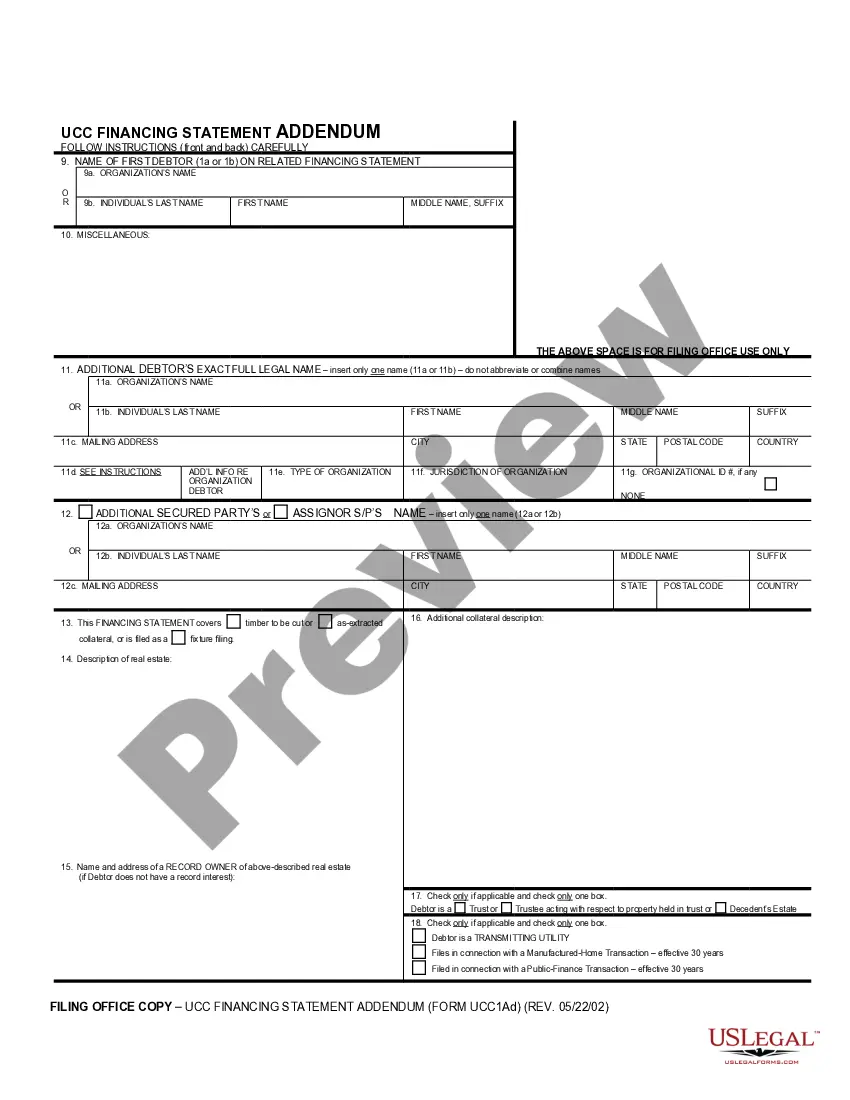
Form components explained
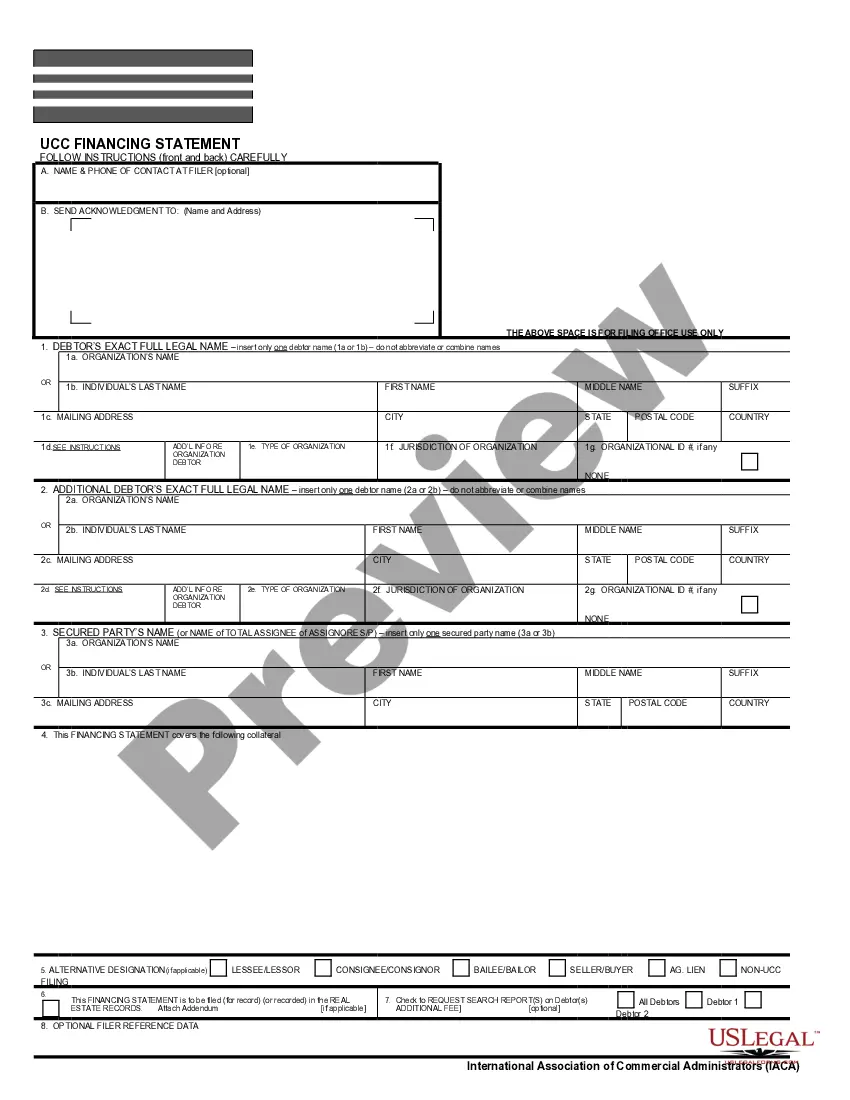
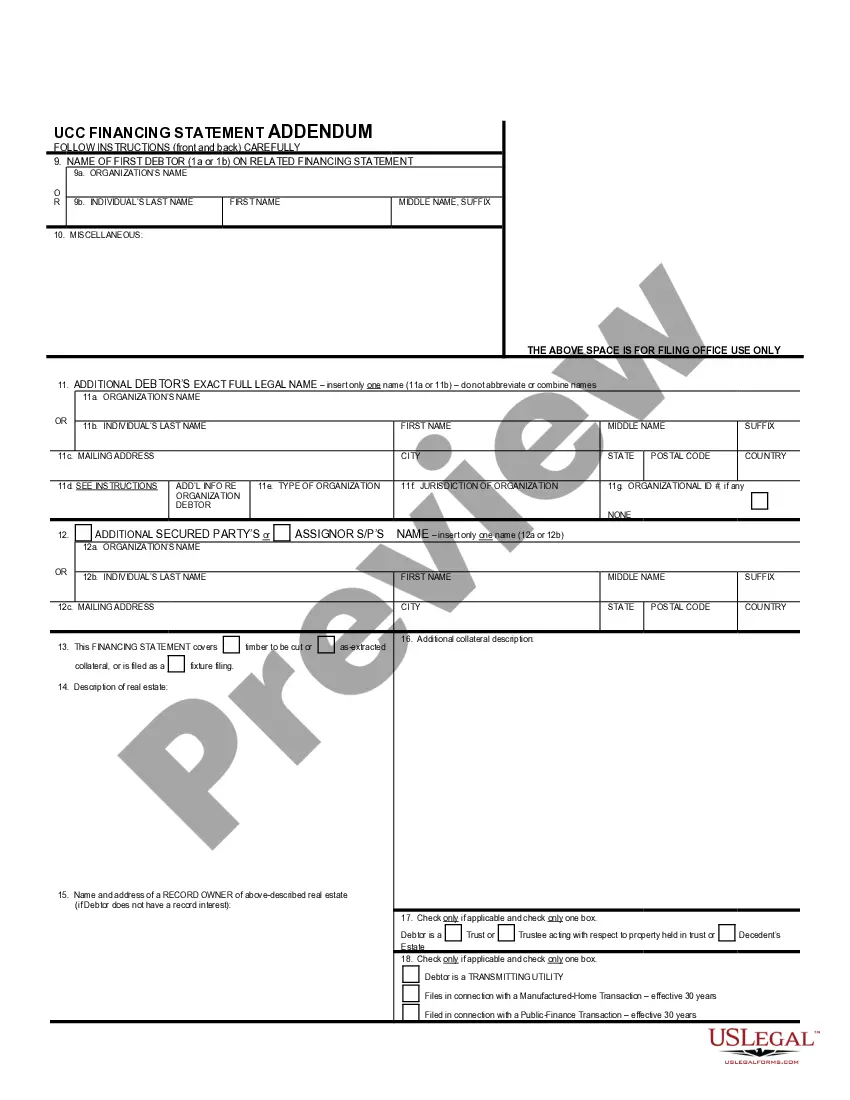
- Debtor name: Requires the exact legal name of the debtor, whether an individual or an organization.
- Collateral description: Specifies the collateral covered by this financing statement.
- Additional debtors: Allows for the inclusion of multiple debtors by attaching additional documentation.
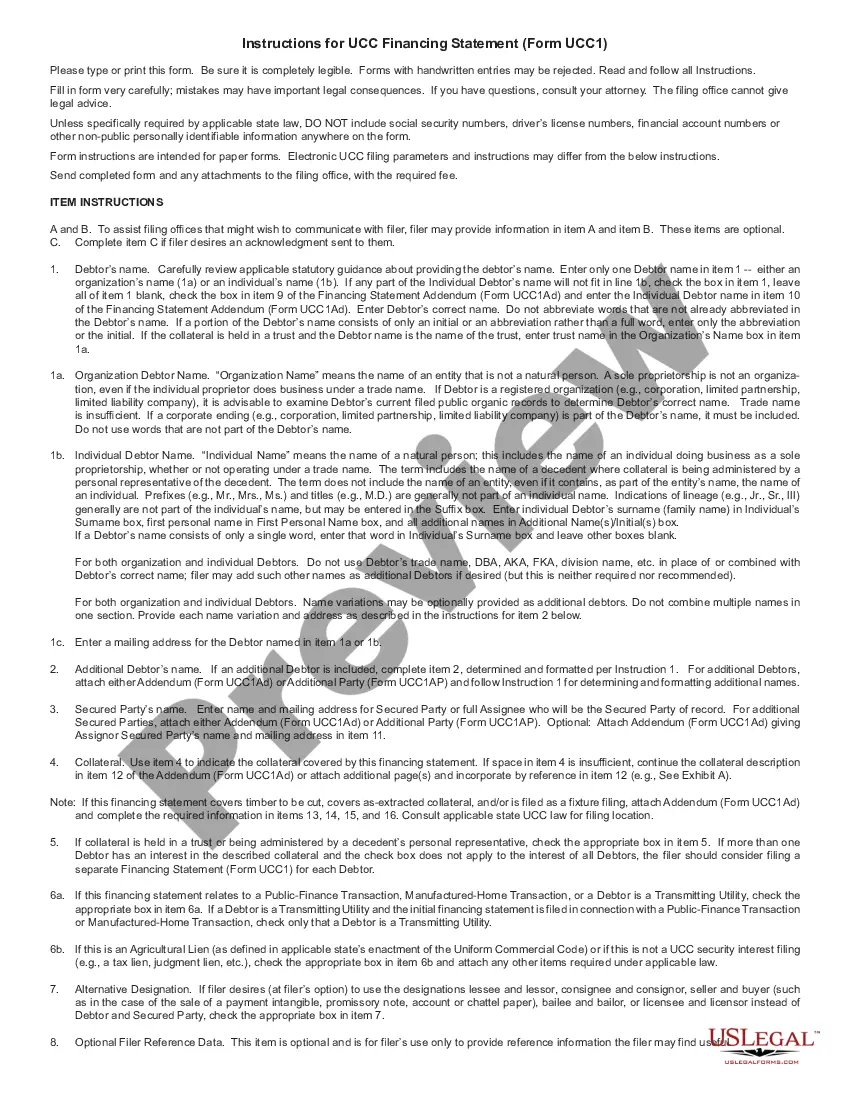
- Filing office copy: Provides instructions for submitting the form along with the required fee.
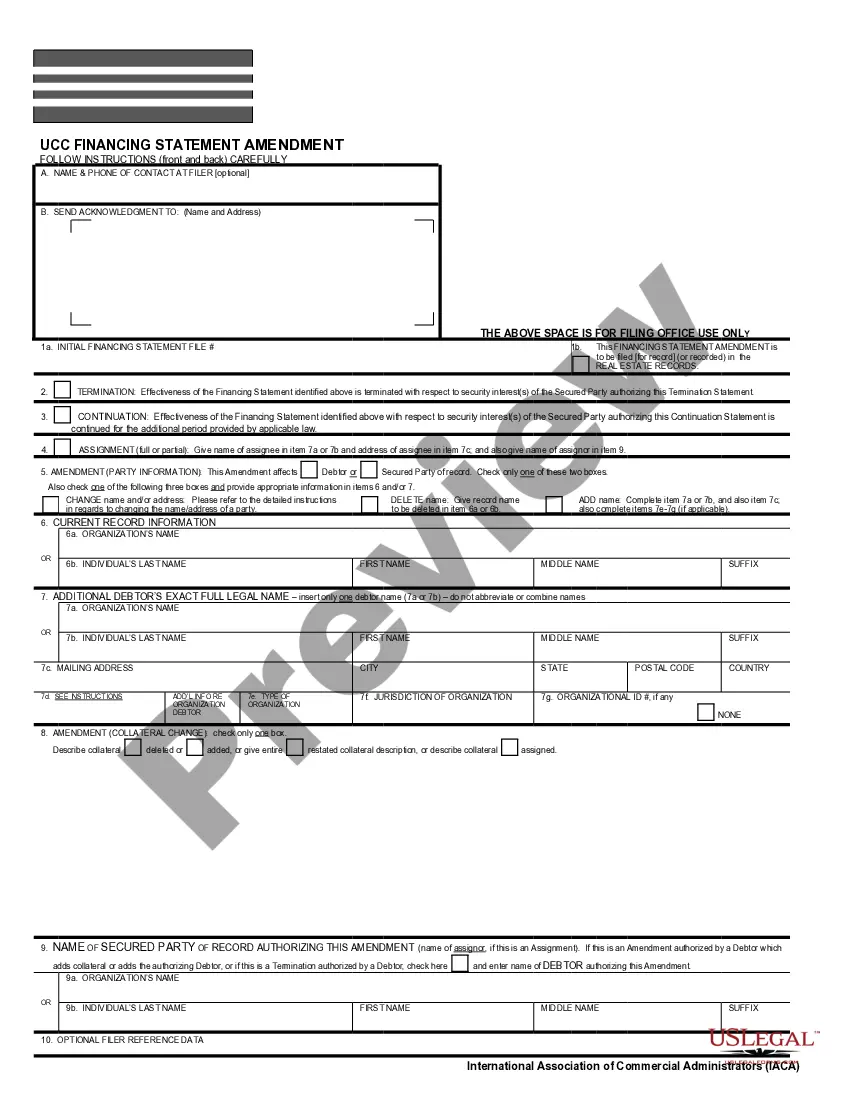
- Search request: Optional section to request a report on any existing financing statements related to the debtor.
When to use this form
This form should be used when a creditor wishes to secure a loan or credit transaction by claiming rights to specific collateral owned by the debtor. It's commonly employed in various financing situations, including business loans, personal loans secured by valuable assets, and real estate transactions. If you are a lender or creditor looking to protect your interests in a loan or credit agreement involving collateral, filing a Maryland UCC1 Financing Statement is essential.
Who this form is for
- Creditors or lenders who are providing loans secured by collateral.
- Businesses entering into credit transactions that require collateralization.
- Individual borrowers who wish to secure personal loans with assets.
- Attorneys or legal representatives assisting clients with secured transactions.
Completing this form step by step
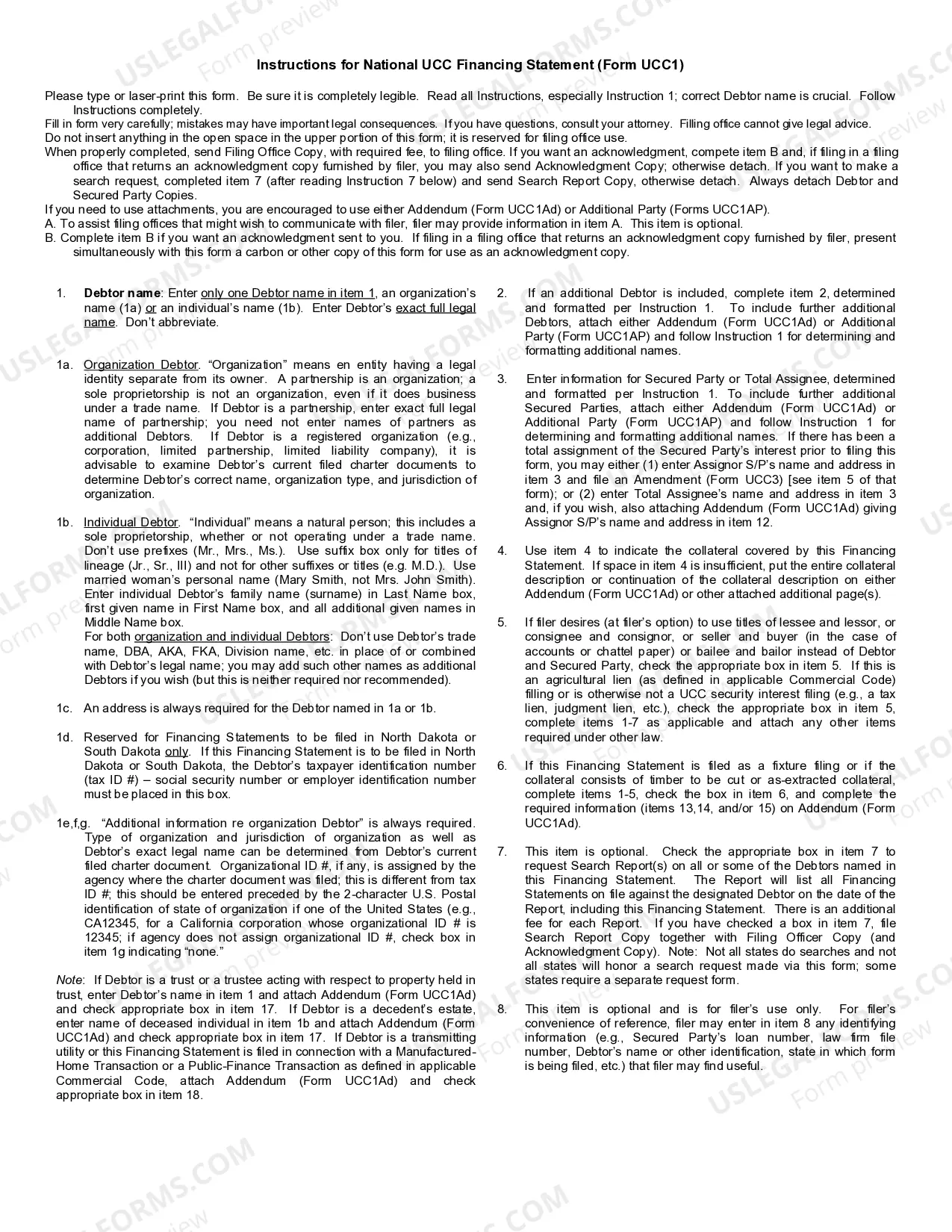
- Identify the debtor: Enter the exact legal name of the debtor in the appropriate sections.
- Describe collateral: Clearly outline the collateral that is being secured by this financing statement.
- Complete filing options: Choose whether to request an acknowledgment copy and/or search report.
- Submit the form: Send the completed form along with the filing fee to the appropriate filing office.
- Detach copies: Ensure you keep copies for the debtor and secured party for their records.
Does this document require notarization?
This form does not typically require notarization unless specified by local law. Always check state-specific requirements to ensure compliance. For additional peace of mind, consider using integrated online notarization services, available around the clock, to verify the document's authenticity when necessary.
Get your form ready online
Our built-in tools help you complete, sign, share, and store your documents in one place.
Make edits, fill in missing information, and update formatting in US Legal Forms—just like you would in MS Word.
Download a copy, print it, send it by email, or mail it via USPS—whatever works best for your next step.
Sign and collect signatures with our SignNow integration. Send to multiple recipients, set reminders, and more. Go Premium to unlock E-Sign.
If this form requires notarization, complete it online through a secure video call—no need to meet a notary in person or wait for an appointment.
We protect your documents and personal data by following strict security and privacy standards.

Make edits, fill in missing information, and update formatting in US Legal Forms—just like you would in MS Word.

Download a copy, print it, send it by email, or mail it via USPS—whatever works best for your next step.

Sign and collect signatures with our SignNow integration. Send to multiple recipients, set reminders, and more. Go Premium to unlock E-Sign.

If this form requires notarization, complete it online through a secure video call—no need to meet a notary in person or wait for an appointment.

We protect your documents and personal data by following strict security and privacy standards.
Typical mistakes to avoid
- Incorrectly naming the debtor, which can lead to complications in enforcement.
- Failing to provide a complete description of the collateral.
- Leaving out crucial optional items, such as acknowledgment and search requests when needed.
- Not following the specific formatting guidelines required by Maryland law.
Benefits of completing this form online
- Convenience: Complete the form from anywhere, saving time and effort.
- Editability: Easily make changes to the form until it is finalized for submission.
- Reliability: Ensures that the form meets all legal requirements for Maryland filings.
Looking for another form?
Form popularity
FAQ
A UCC 1 financing statement is a legal form that a creditor files to notify the public of their security interest in a debtor’s personal property. This form serves as a public record, establishing the priority of the creditor's claim. It plays a vital role in securing loans and financing arrangements, ensuring clarity in creditor-debtor relationships.
You may have received a UCC financing statement because a lender has filed it to secure their interest in your assets. This document serves to publicly declare the lender's rights to claim certain assets in case of default. In the state of Maryland, a UCC1 Financing Statement is often necessary for protecting the lender's position. Understanding this process can help you navigate your obligations and rights efficiently.
You can always check the status of UCC filings against your business through your business credit report or searching UCC lien public records.
UCC liens filed with Secretary of State offices act as a public notice by the "creditor" of the creditor's interest in the property.
UCC-1 Financing Statements do not have to be signed by either the Debtor or Secured Party; however, they must be authorized.Although the UCC-1 Financing Statement does not require signatures, any attachment such as the legal description or special terms and conditions may require the signature of the Debtor.
In all cases, you should file a UCC-1 with the secretary of state's office in the state where the debtor is incorporated or organized (if a business), or lives (if an individual).
When is a UCC-1 Filed? UCC-1 filings typically happen when a loan is first originated. If the borrower has loans from more than one lender, the first lender to file the UCC-1 is first in line for the borrower's assets. This motivates lenders to file a UCC-1 as soon as a loan is made.
Enter your information. The type of information you can use to search UCC filings varies among states. Retrieve your results. The website will return results based on the information you entered. Record financial statement numbers.
After receiving your request, the lender has 20 days to terminate the UCC filing.
The UCC-1 Financing Statement is filed to protect a lender's or creditor's security interest by giving public notice that there is a right to take possession of and sell certain assets for repayment of a specific debt with a certain debtor.