Quitclaim Deed
Overview of this form
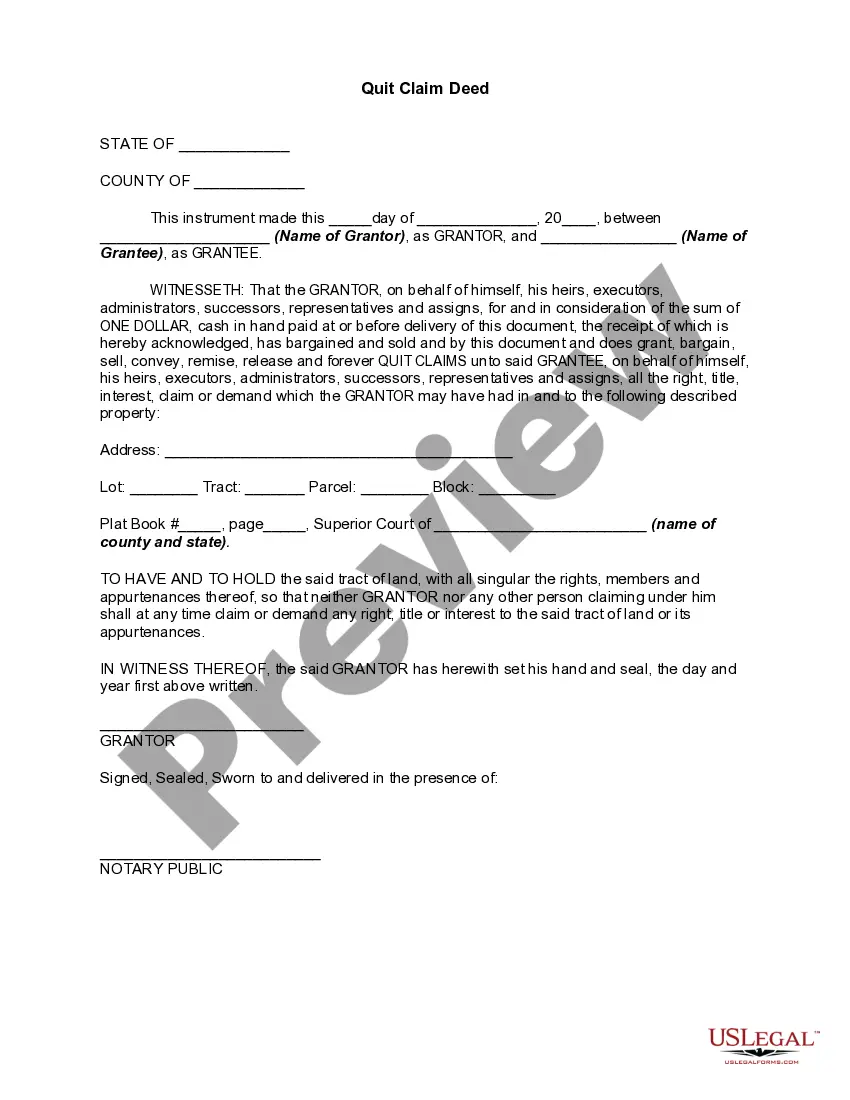
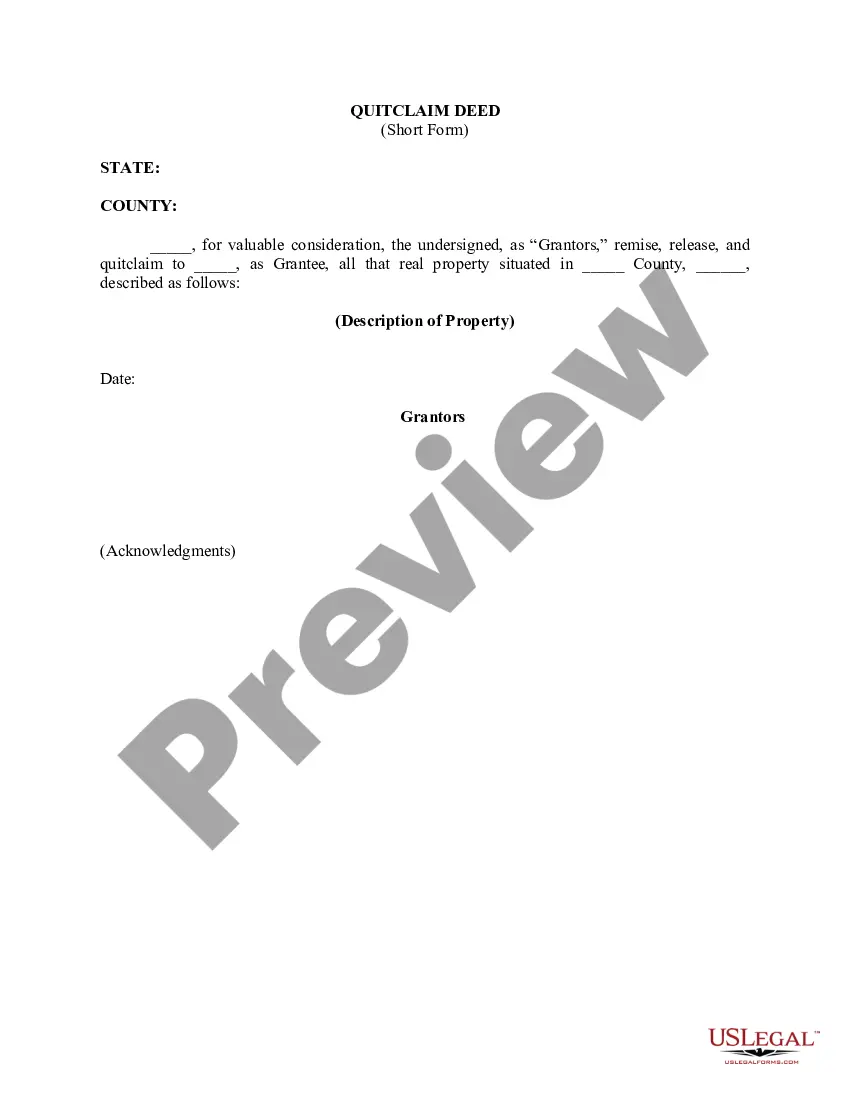
A Quitclaim Deed is a legal form used to transfer ownership of real estate from one party (the grantor) to another (the grantee) without any warranties or guarantees. Unlike other types of deeds, a Quitclaim Deed does not ensure that the grantor holds valid title to the property; it simply conveys whatever interest the grantor may have, if any. This form is particularly useful in situations such as property transfers between family members, divorces, or clearing up title disputes, where the parties know each other and are willing to waive the usual protections that other deeds provide.
Key parts of this document
- Identification of the grantor and grantee, including names and addresses.
- Statement of the consideration paid for the property.
- Legal description of the property being transferred.
- Clauses for any easements or rights associated with the property.
- Signatures of the grantor and any required witnesses.
- A notarization section to validate the deed.





Situations where this form applies
This form should be used in scenarios where you need to transfer property without providing warranties regarding the title. Common situations include:
- Transferring property to a family member.
- Settling a divorce where property is being divided.
- Clearing title issues by transferring any claimed ownership.
- Gifting property to a friend or organization.
Who should use this form
- Individuals or entities looking to transfer property without guarantees.
- Family members involved in informal property transfers.
- Divorcing couples dividing real estate assets.
- Anyone needing to clarify ownership issues without a lengthy legal process.
Completing this form step by step
- Identify the parties involved by entering their full names and addresses in the designated sections.
- Specify the amount of consideration paid in the transfer.
- Include a legal description of the property, referencing any attached documents if necessary.
- Ensure all parties sign the form in the presence of witnesses, if required.
- Have the document notarized to validate the transfer, if needed in your state.
Notarization guidance
Yes, this form must be notarized to be legally valid. Notarization confirms the identity of the grantor and their willingness to sign the document. US Legal Forms provides integrated online notarization services for your convenience, allowing you to complete the process securely via video call.
Get your form ready online
Our built-in tools help you complete, sign, share, and store your documents in one place.
Make edits, fill in missing information, and update formatting in US Legal Forms—just like you would in MS Word.
Download a copy, print it, send it by email, or mail it via USPS—whatever works best for your next step.
Sign and collect signatures with our SignNow integration. Send to multiple recipients, set reminders, and more. Go Premium to unlock E-Sign.
If this form requires notarization, complete it online through a secure video call—no need to meet a notary in person or wait for an appointment.
We protect your documents and personal data by following strict security and privacy standards.

Make edits, fill in missing information, and update formatting in US Legal Forms—just like you would in MS Word.

Download a copy, print it, send it by email, or mail it via USPS—whatever works best for your next step.

Sign and collect signatures with our SignNow integration. Send to multiple recipients, set reminders, and more. Go Premium to unlock E-Sign.

If this form requires notarization, complete it online through a secure video call—no need to meet a notary in person or wait for an appointment.

We protect your documents and personal data by following strict security and privacy standards.
Typical mistakes to avoid
- Failing to provide a complete and accurate legal description of the property.
- Omitting signatures or notarization, which may render the form invalid in some jurisdictions.
- Not specifying the consideration amount, leading to ambiguity.
Why complete this form online
- Convenience of downloading and completing the form at your own pace.
- Ability to customize fields to reflect specific property details and parties involved.
- Access to attorney-drafted templates ensures compliance with legal standards.
Key takeaways
- A Quitclaim Deed allows for the transfer of property with no warranties of title.
- It is commonly used in familial and informal property transactions.
- Notarization is required for validation in most cases.
Looking for another form?




Form popularity
FAQ
What is a quitclaim deed? A quitclaim deed is a legal document used to transfer real estate ownership. It is an instrument that allows one party (the grantor) to give up or relinquish all their right, title, and interest in a particular piece of real estate to another party (the grantee).
A quitclaim deed is the opposite of a warranty deed in that the grantor is transferring title to a piece of property but is not warranting that they have good title to that property. A quitclaim deed only transfers whatever interest that the grantor has in the property at the time of the conveyance.
In Washington, the requirements for a Quitclaim deed are simple: it must be in writing, contain a legal description of the property, be signed by the grantor, and the grantor's signature must be notarized.
A Massachusetts quitclaim deed ? also known as a quitclaim covenant is comparable to special warranty deeds in other state. Quitclaim deeds are a document used to legally transfer property and buildings from one party to another, such as a seller and buyer.
A quitclaim deed is a legal document that transfers property to someone else without making guarantees of title. The person receiving the property is called a grantee. In Florida, a quitclaim deed is a legal, simple, and inexpensive way to transfer whatever title a property owner has to the grantee.
What are the Disadvantages of a Quit Claim Deed? No Protections For The Transaction: Unlike warranty deeds, a quitclaim deeds does not offer protections for the new property owner. There is no way to guarantee that the property is owned free and clear, and that there are no easements or restrictions.
As a general rule the Quitclaim must (a) be voluntarily entered into by the employee; and (b) consists of a reasonable settlement. There must have been no fraud or coercion used on the employee. Further, the settlement amount must be reasonable and not shockingly low. Employee Quitclaim and Waiver - Legal Tree legaltree.ph ? documents legaltree.ph ? documents
A bargain and sale deed indicates that only the seller of a property holds the title and has the right to transfer ownership. This type of deed offers no guarantees for the buyer against liens or other claims to the property, so the buyer could be responsible for these issues if they turn up.
Transfers of real property must be in writing and notarized. Deeds should be recorded in the county where the property is located. To ensure a legal change to the property title, you'll want the services of an attorney. A qualified attorney will prepare and file the real estate transfer deed.