Pro Se Defendant
Overview of this form
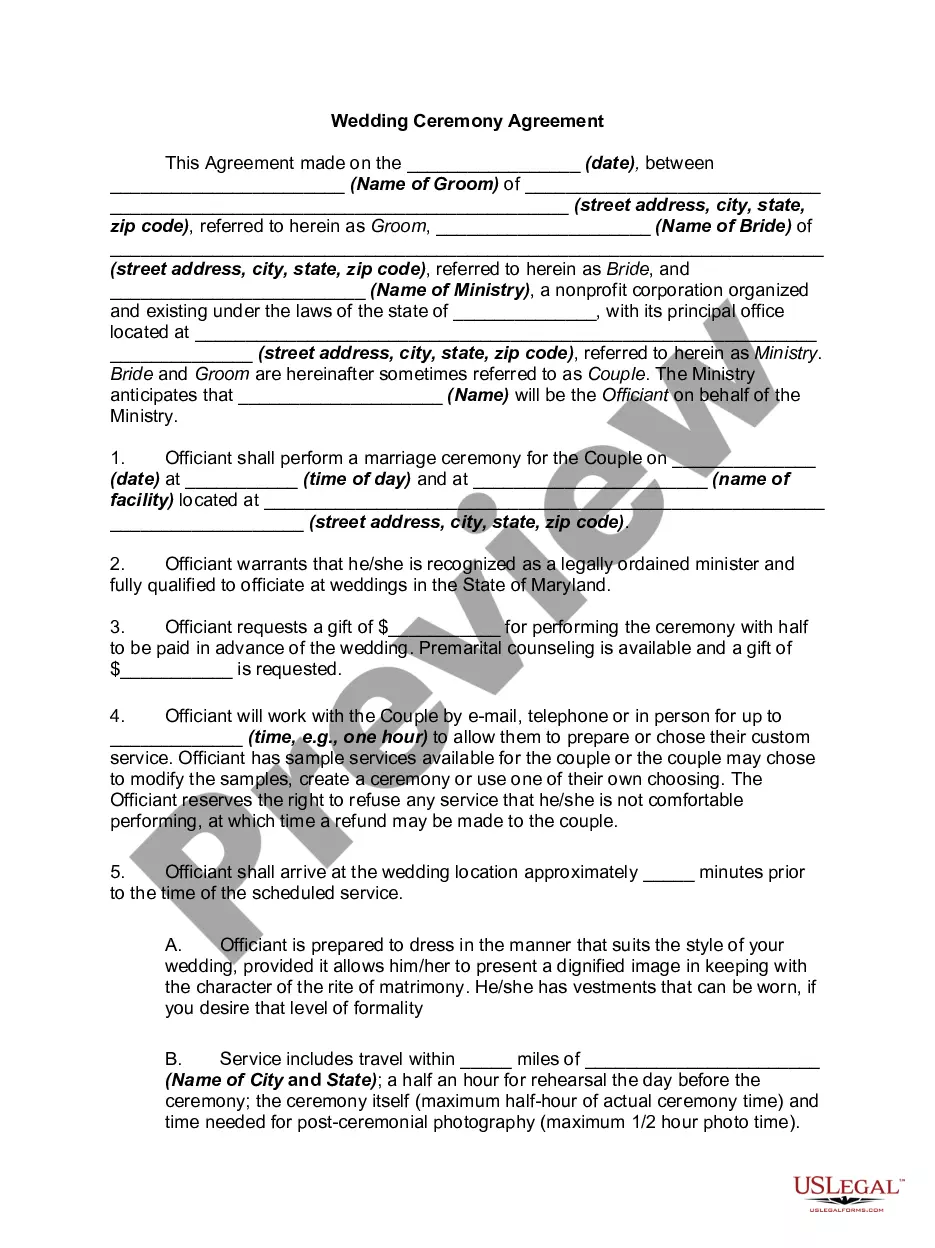
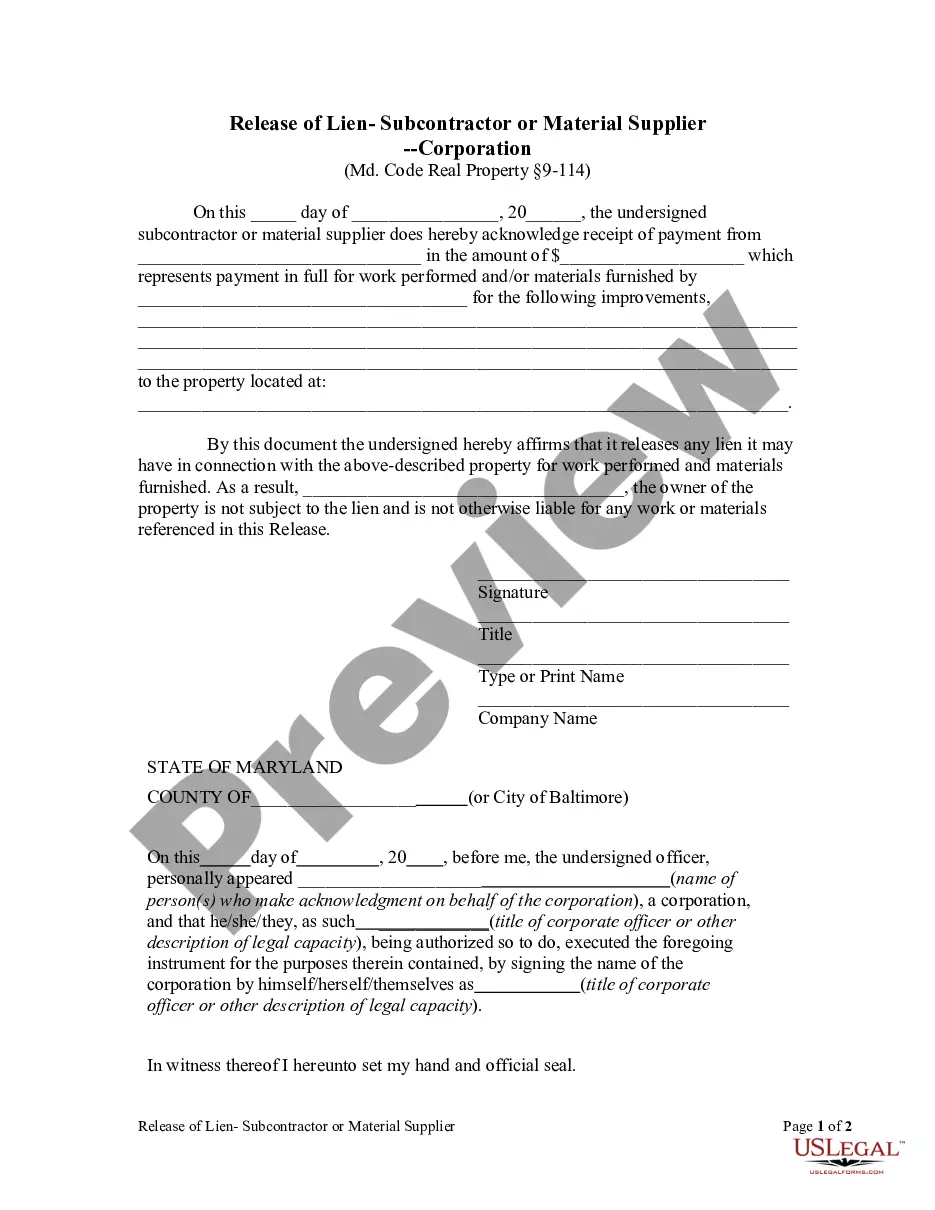
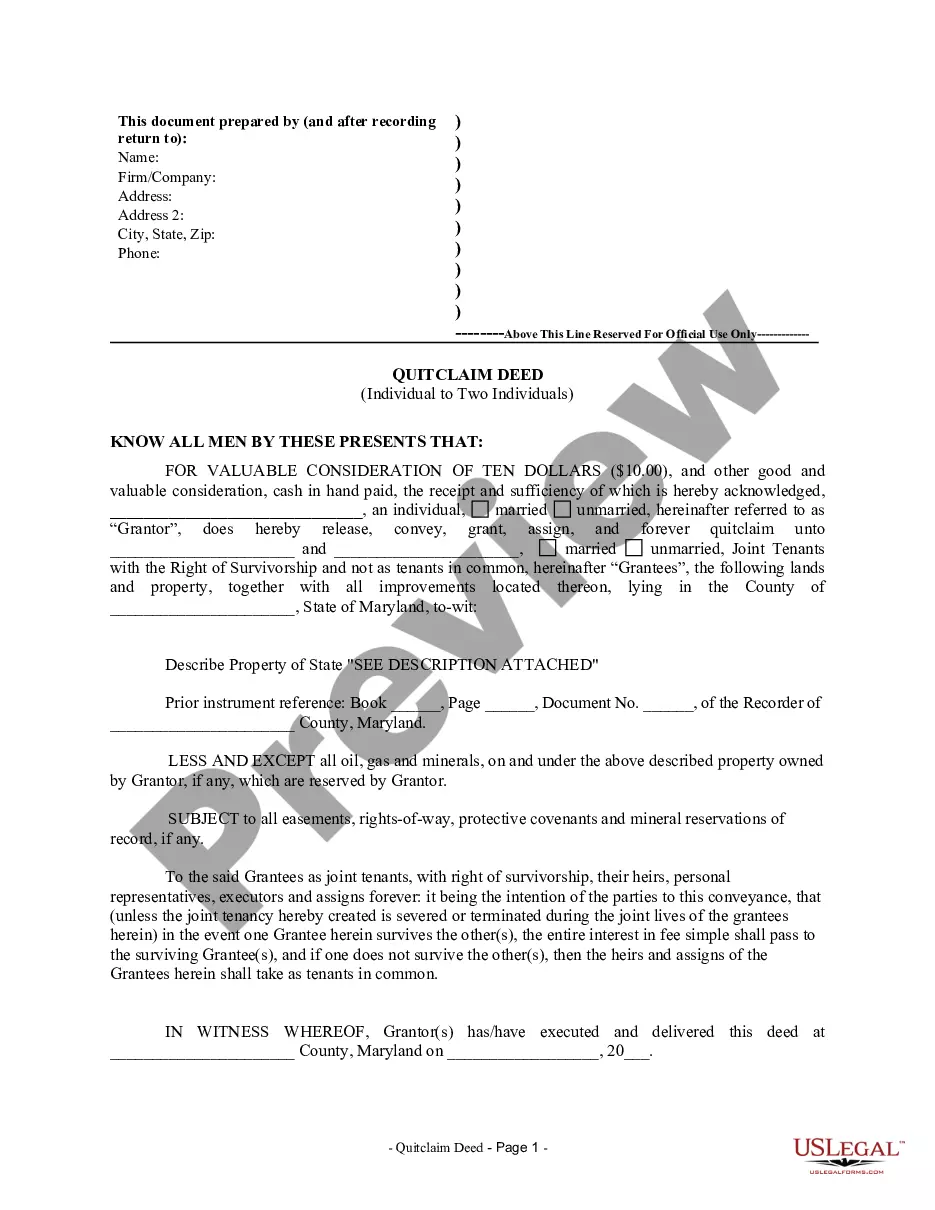
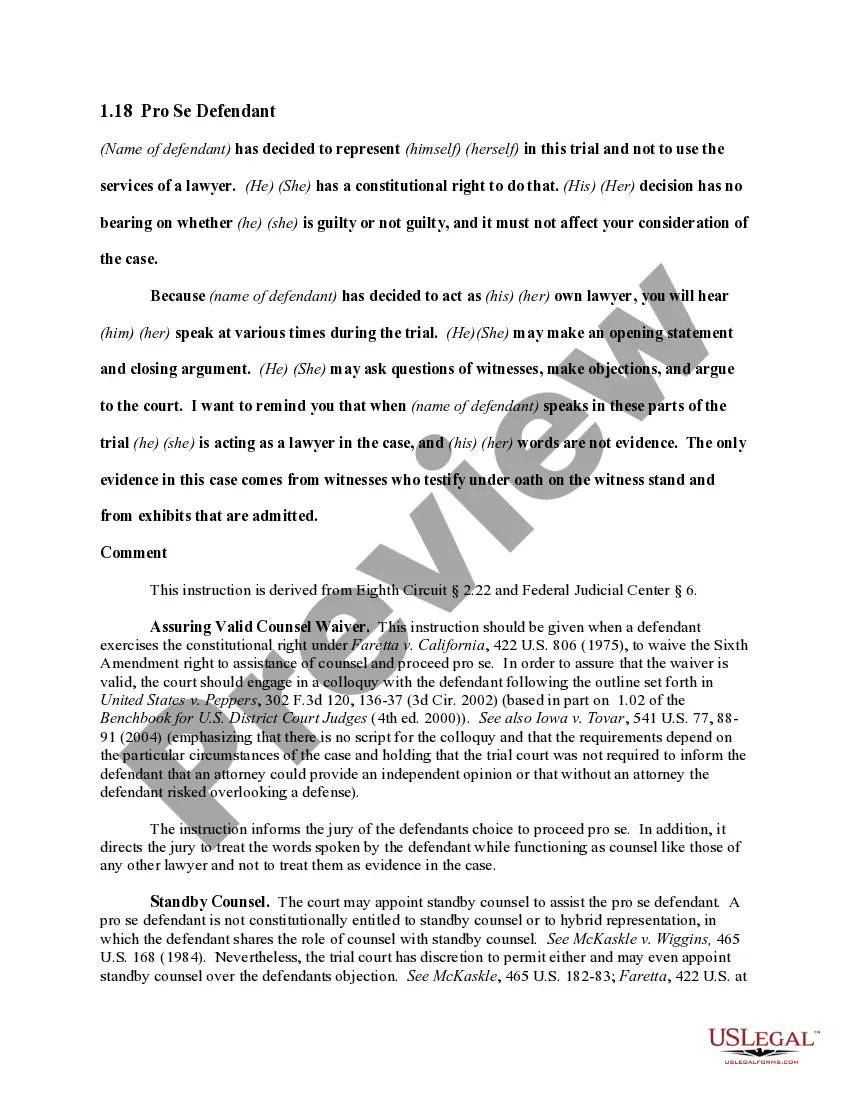
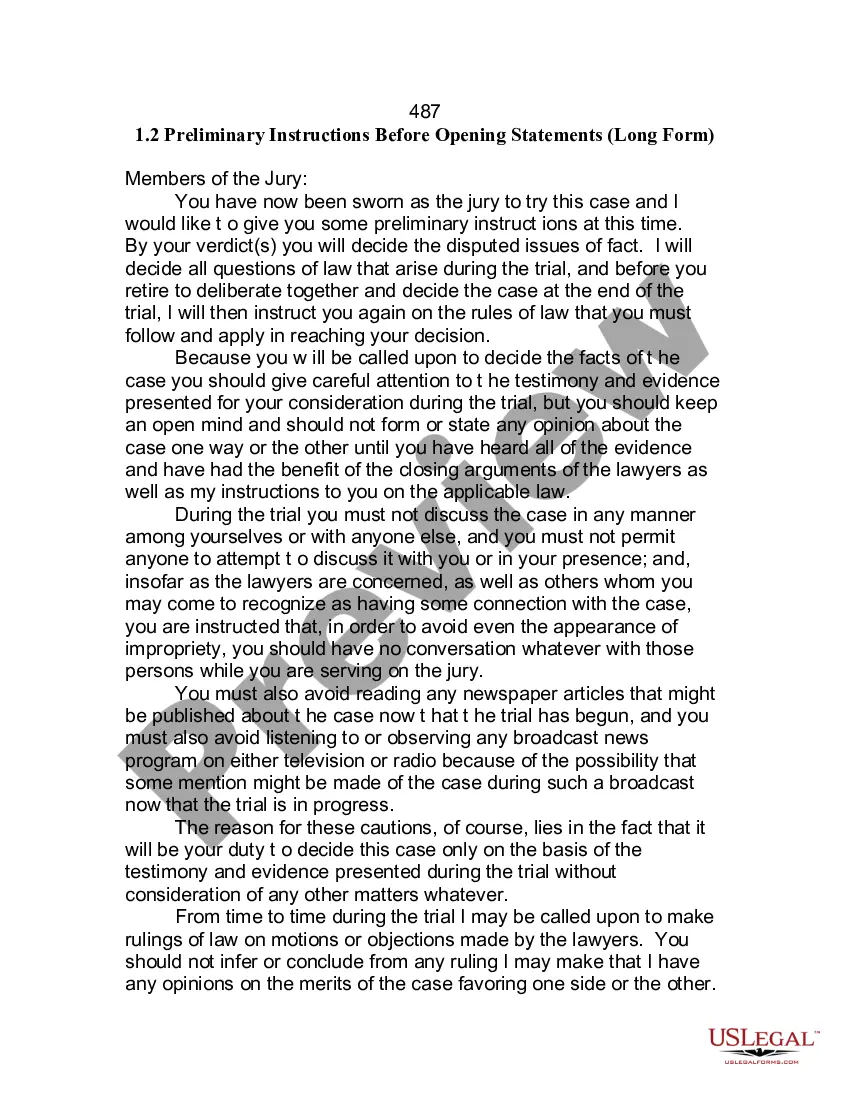
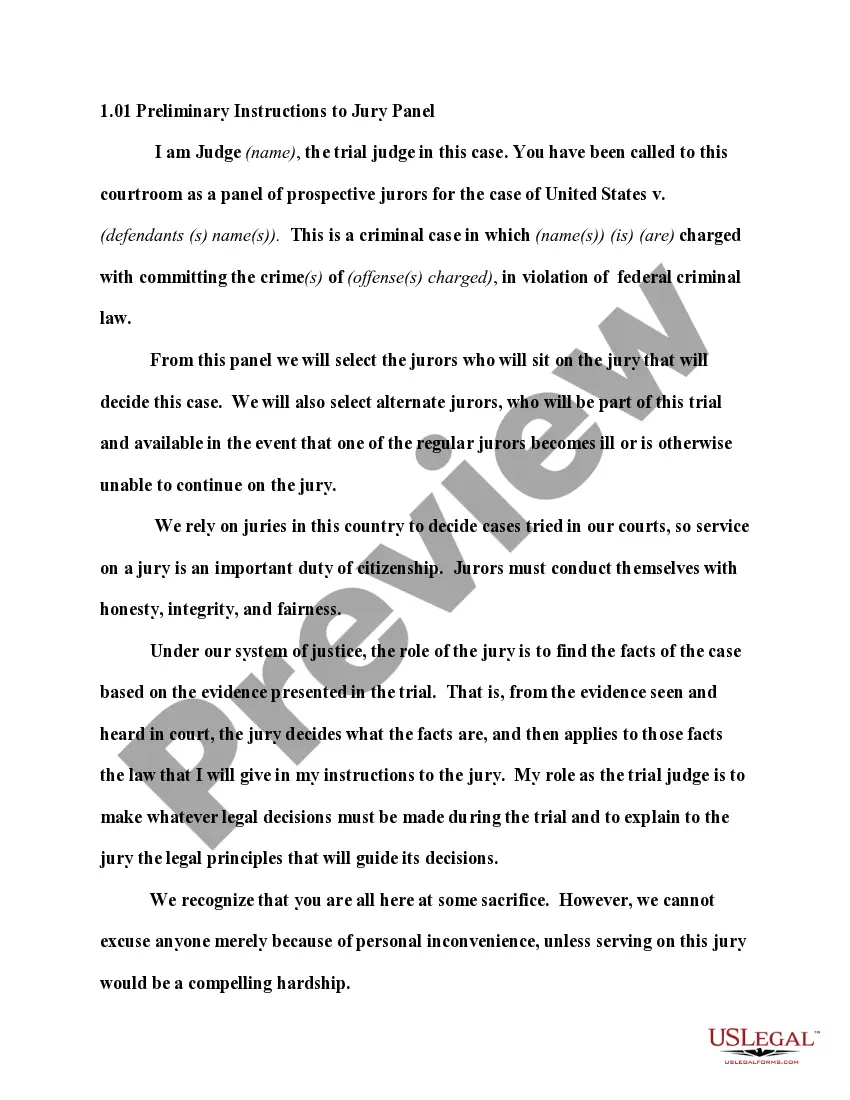
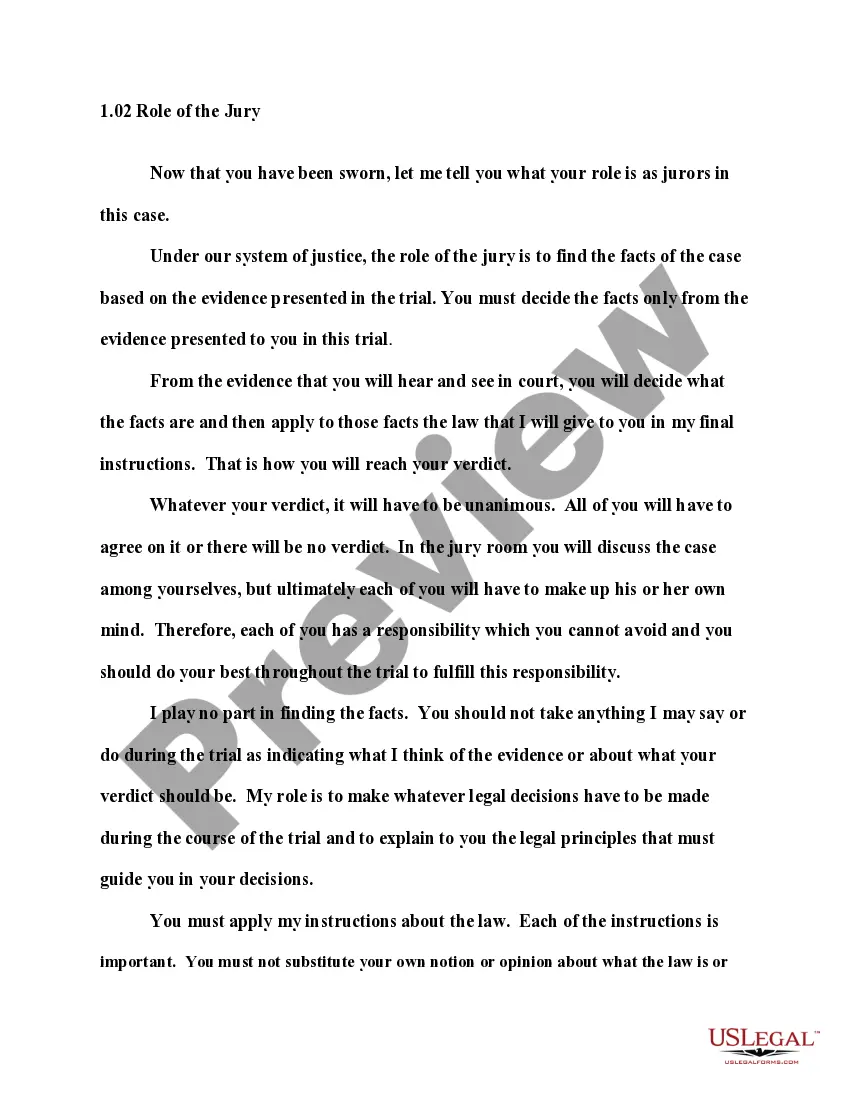
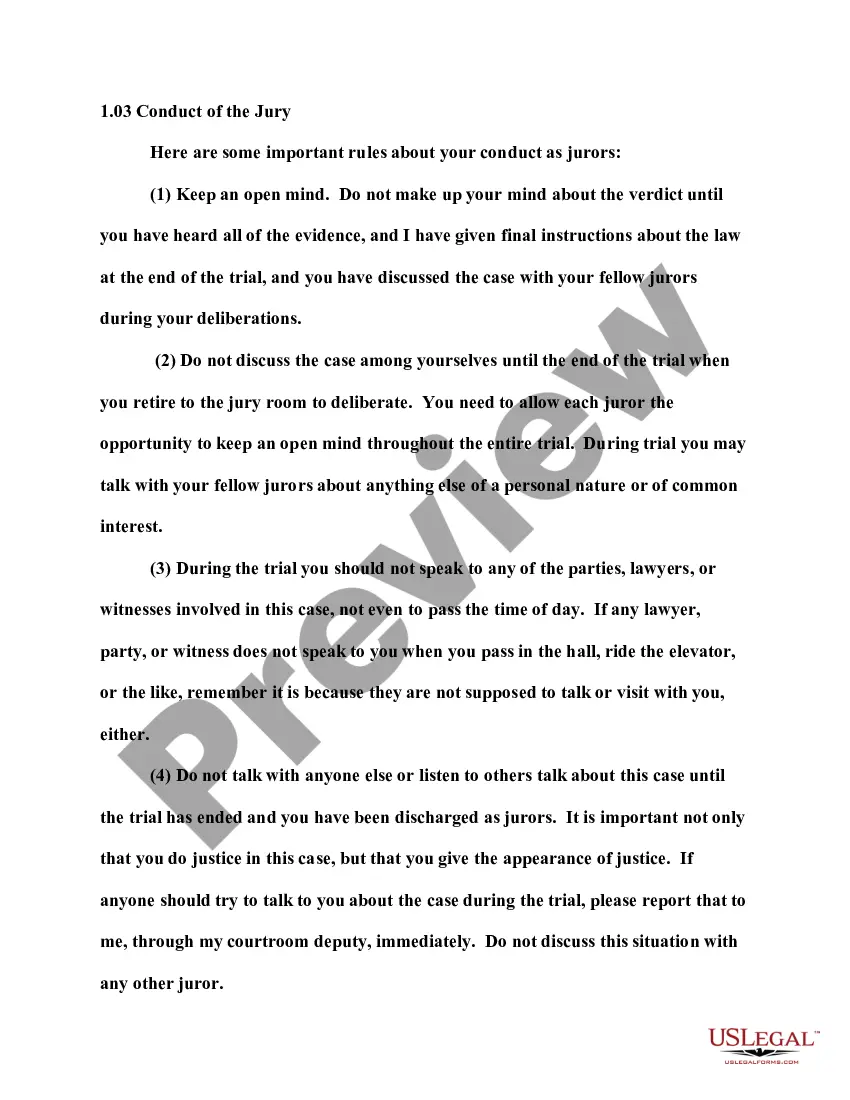
The Pro Se Defendant form is a legal document that allows an individual to represent themselves in a legal proceeding without the assistance of a lawyer. This form serves to inform the jury about the defendant's choice to act as their own counsel, which is a constitutional right under the Sixth Amendment. Unlike other forms that may require legal representation, this form explicitly communicates the mandate that a defendant's self-representation does not affect the jury's determination of guilt or innocence. It clarifies the specific roles and limitations of a pro se defendant within the courtroom context.
Main sections of this form
- Identification of the defendant choosing to represent themselves.
- Assertion of the defendant's constitutional right to self-representation.
- Clarification that the defendant's spoken words during the trial are not to be considered evidence.
- Guidance on the roles of standby counsel, if appointed.
- Direction for the jury to treat statements by the pro se defendant as those of a lawyer, without affecting the case outcome.


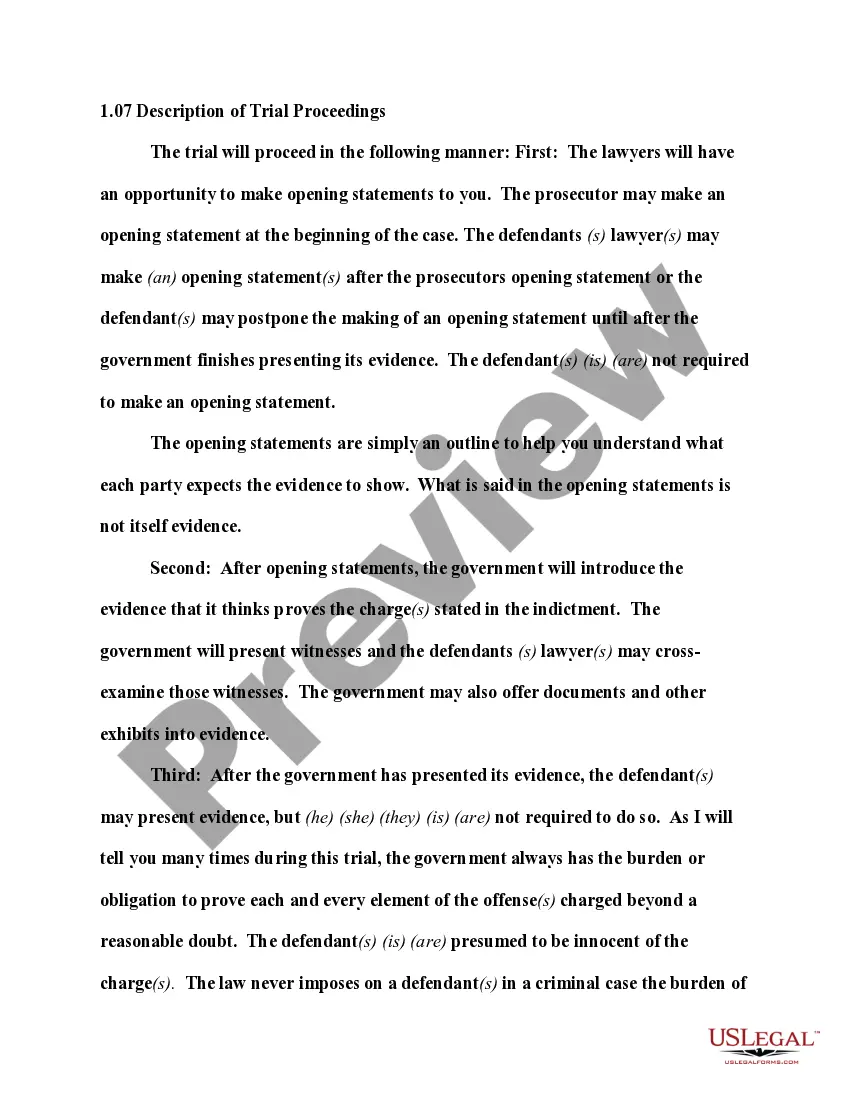
When to use this form
This form is necessary when a defendant in a criminal trial opts to waive their right to legal counsel and proceed without a lawyer. Situations might include cases where the defendant wishes to closely control their defense strategy, feel confident in their ability to represent themselves, or have specific arguments they believe are best articulated by them personally. It is particularly relevant in trials where a defendant believes that an attorney may not adequately represent their interests.
Who this form is for
This form is intended for:
- Defendants in criminal cases who wish to represent themselves.
- Individuals who understand the risks involved in waiving counsel and are prepared to speak on their behalf in court.
- People seeking to assert their constitutional right to self-representation, as recognized by the courts.
Completing this form step by step
- Clearly state the name of the defendant who is choosing to represent themselves.
- Indicate the decision to proceed without a lawyer and acknowledge the understanding of this choice.
- Prepare to present an opening statement and closing argument, noting that these are to be treated as lawyerly addresses.
- Understand the role of witnesses and evidence in the trial, ensuring proper courtroom conduct.
- If applicable, clarify the involvement of any standby counsel and their intended assistance without interfering with self-representation.
Notarization guidance
This form usually doesn’t need to be notarized. However, local laws or specific transactions may require it. Our online notarization service, powered by Notarize, lets you complete it remotely through a secure video session, available 24/7.
Get your form ready online
Our built-in tools help you complete, sign, share, and store your documents in one place.
Make edits, fill in missing information, and update formatting in US Legal Forms—just like you would in MS Word.
Download a copy, print it, send it by email, or mail it via USPS—whatever works best for your next step.
Sign and collect signatures with our SignNow integration. Send to multiple recipients, set reminders, and more. Go Premium to unlock E-Sign.
If this form requires notarization, complete it online through a secure video call—no need to meet a notary in person or wait for an appointment.
We protect your documents and personal data by following strict security and privacy standards.

Make edits, fill in missing information, and update formatting in US Legal Forms—just like you would in MS Word.

Download a copy, print it, send it by email, or mail it via USPS—whatever works best for your next step.

Sign and collect signatures with our SignNow integration. Send to multiple recipients, set reminders, and more. Go Premium to unlock E-Sign.

If this form requires notarization, complete it online through a secure video call—no need to meet a notary in person or wait for an appointment.

We protect your documents and personal data by following strict security and privacy standards.
Avoid these common issues
- Failing to properly inform the court of the decision to represent oneself.
- Assuming that statements made without legal training can constitute legal arguments.
- Neglecting to adequately prepare for courtroom procedures, rules, and evidence presentation.
Advantages of online completion
- Convenient access to legal templates drafted by licensed attorneys.
- Editable formats that allow customization based on individual needs.
- Instant download capability, enabling immediate use.
Looking for another form?

Form popularity
FAQ
The reasoning behind that decision means that the Constitution requires our justice system to be neutral towards the self-represented litigant. That in turn means that the courts must offer a level playing field for the represented and unrepresented alike, consistent with basic principles of fairness.
Pro se actually means ?for himself,? and in legal terms it means a person represents himself/herself in court when either filing an action or responding to an action without the assistance of an attorney.
A criminal defendant sometimes will decide to handle their case pro se instead of hiring an attorney. They may feel that they do not need to pay a private attorney or go through the process of working with a public defender if the case is simple and minor.
Some litigants also choose to proceed pro se because they feel that they are best-positioned to plead their case ? they believe nobody knows the details quite as well as they do.
Pro se litigants rarely do. Lawyers skillfully ?handle? pro se opposition. Most pro se litigants don't handle lawyers or their own cases with the skills needed to come out on top. In the end, most pro se litigants lose and they do so very quickly.
When two parties get entangled in a civil legal dispute, they head to a courtroom for trial. After that, a judge or jury will decide the matter. This is civil litigation. If you find yourself in a civil action but don't have a lawyer, you can represent yourself, or proceed pro se.
Defendants who choose to appear pro se may do so because they believe they may gain tactical advantages against the prosecutor, such as obtaining sympathy from the jury, the opportunity to personally address the jury and witnesses.