Demand for Indemnity from a Limited Liability Company LLC by Member
What is this form?
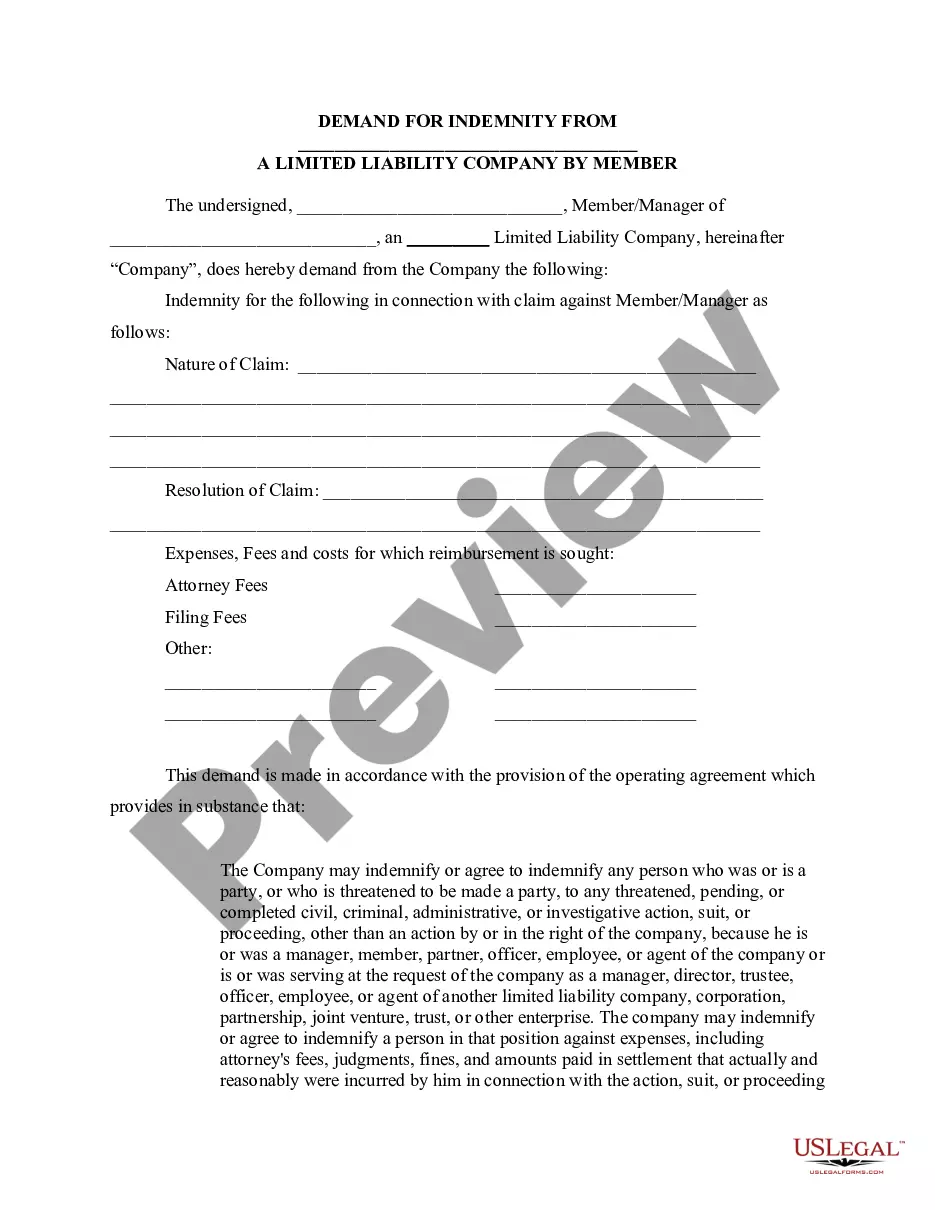
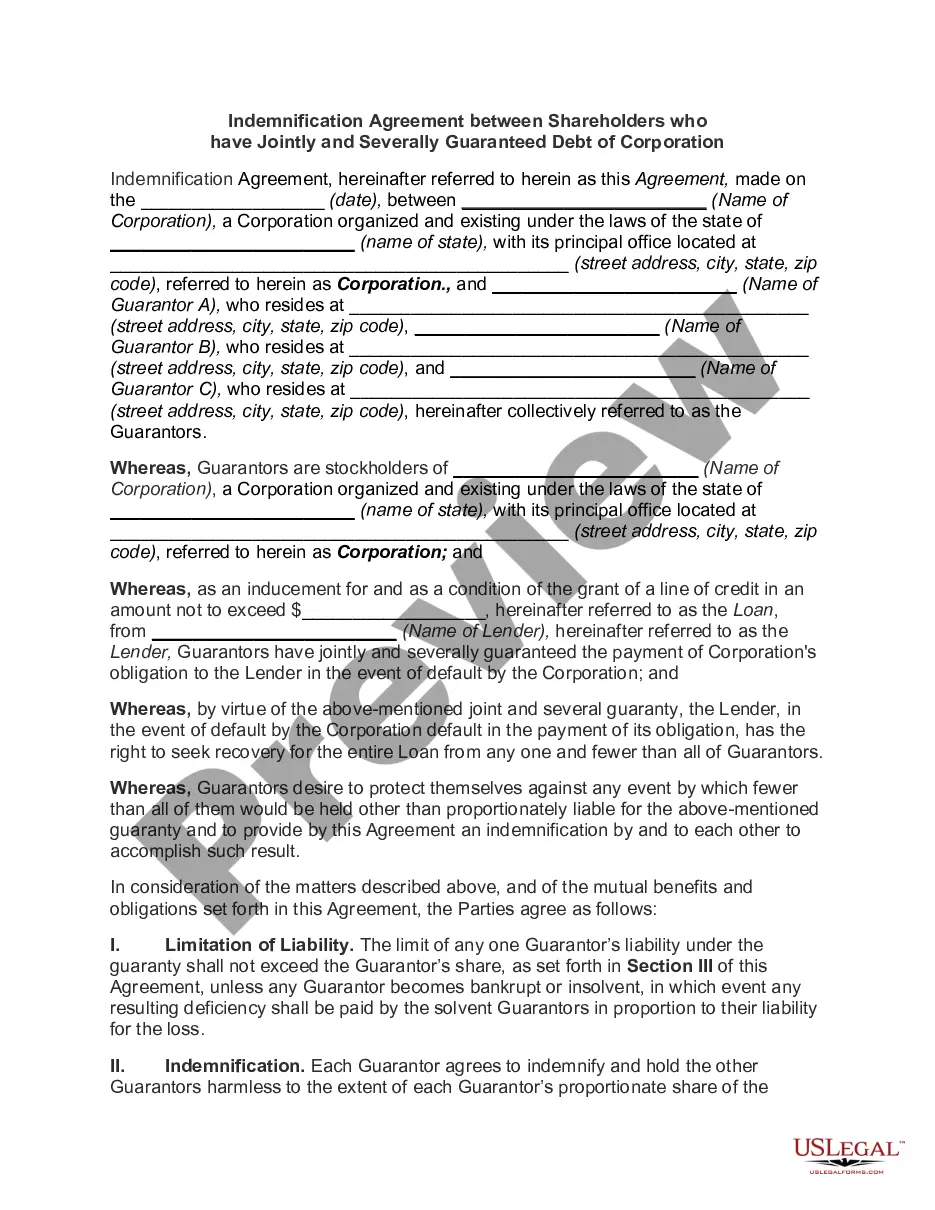
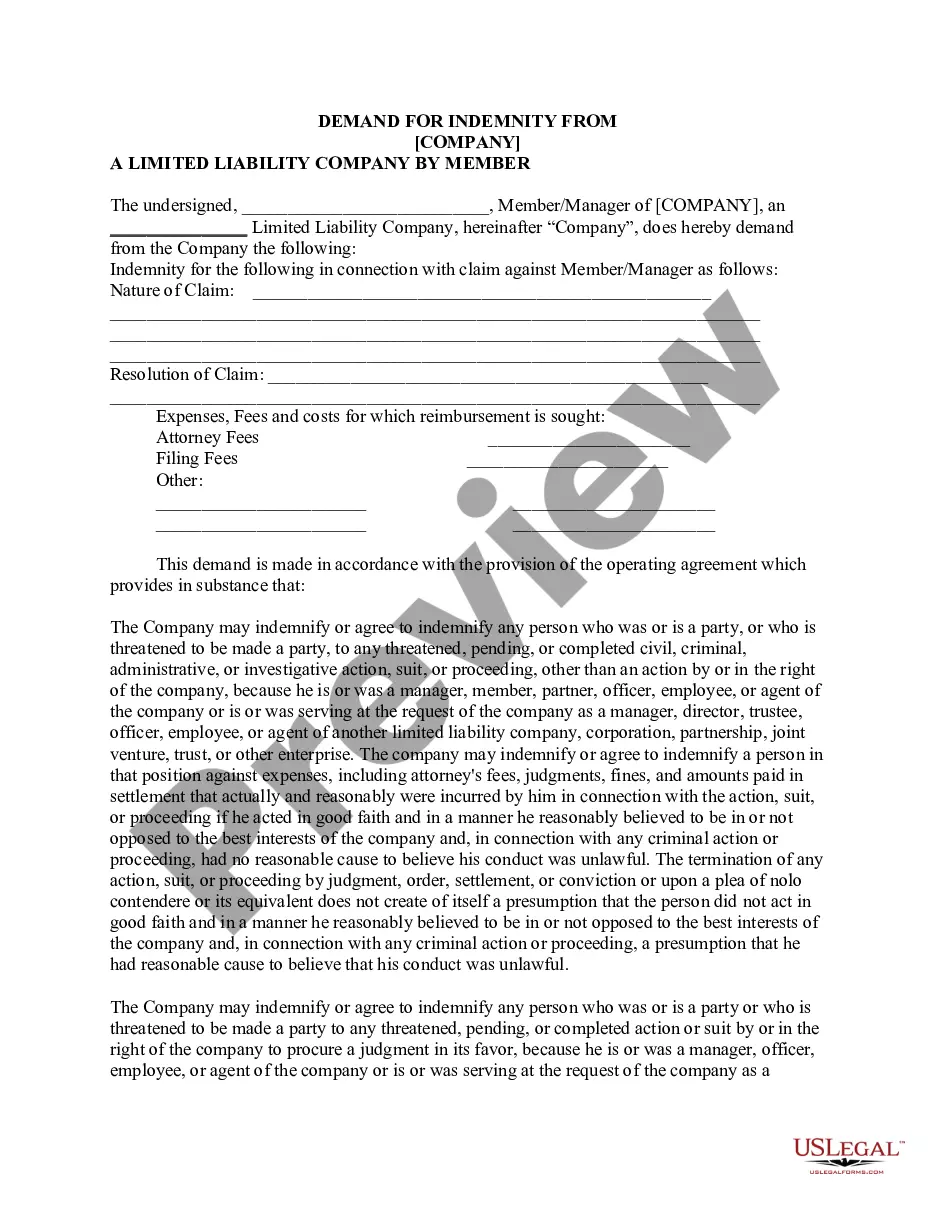
This form, the Demand for Indemnity from a Limited Liability Company by Member, is a legal document used by a member or manager of an LLC to formally request reimbursement for expenses incurred in connection with a claim against them. This demand is made under the provisions typically found in the company's operating agreement and distinguishes itself from other forms by its focus on indemnity from the LLC for claims related to their role within the company.
Key parts of this document
- Identification of the member/manager and LLC involved.
- Specific details about the nature of the claim against the member/manager.
- Resolution of the claim sought.
- Breakdown of expenses, including attorney and filing fees.
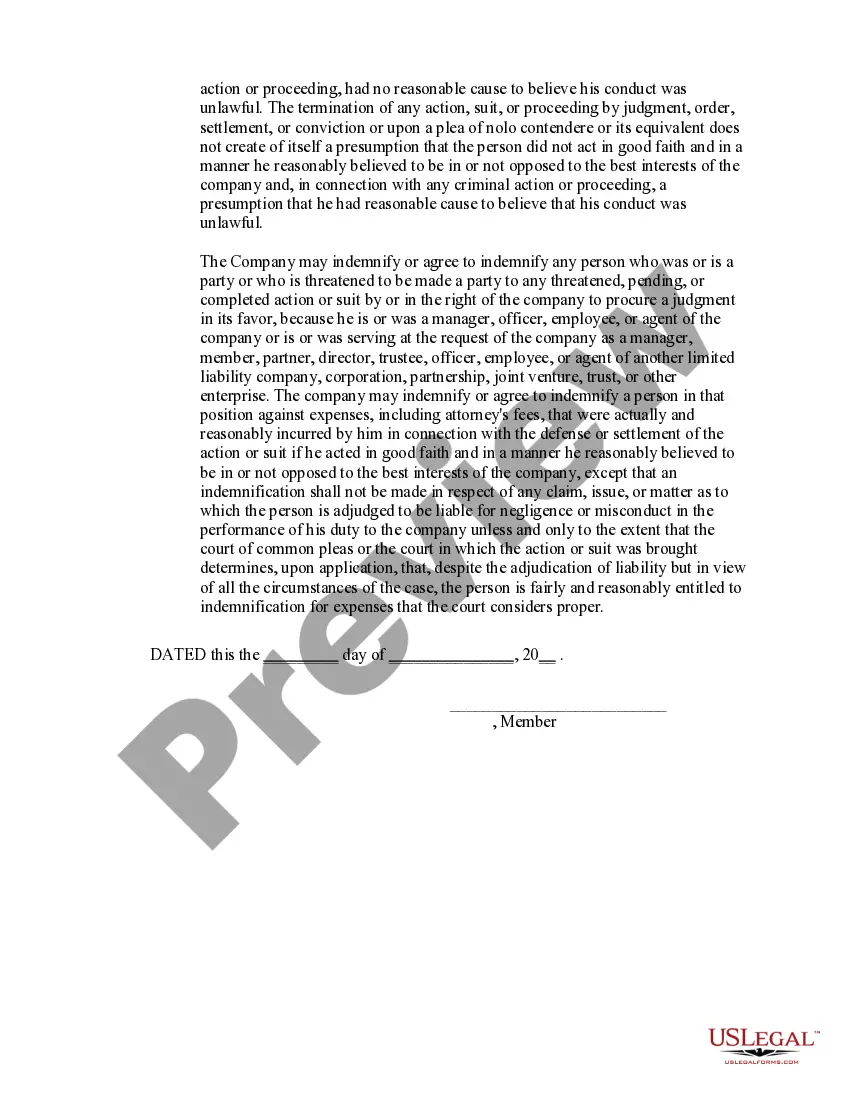
- Reference to the indemnity provisions outlined in the operating agreement.

Situations where this form applies
This form should be used when a member or manager of an LLC faces a claim related to their duties and seeks indemnity from the company for costs incurred, such as legal fees or other associated expenses. It is particularly relevant when the operating agreement allows for indemnification and the member/manager acted in good faith.
Who should use this form
The following individuals should use this form:
- Members of a limited liability company (LLC).
- Managers serving in their official capacities within the company.
- Any individual who has incurred expenses due to claims related to their role in the LLC.
Steps to complete this form
- Identify the parties involved by filling in the names of the member/manager and the LLC.
- Clearly state the nature of the claim, detailing any relevant information.
- Indicate the resolution sought for the claim, explaining what you are requesting from the LLC.
- List specific expenses you are requesting reimbursement for, including attorney fees and filing costs.
- Review the form to ensure accuracy and completeness before submitting it to the LLC.
Does this form need to be notarized?
This form does not typically require notarization unless specified by local law. It's advisable to check state requirements or consult legal counsel for clarification.
Get your form ready online
Our built-in tools help you complete, sign, share, and store your documents in one place.
Make edits, fill in missing information, and update formatting in US Legal Forms—just like you would in MS Word.
Download a copy, print it, send it by email, or mail it via USPS—whatever works best for your next step.
Sign and collect signatures with our SignNow integration. Send to multiple recipients, set reminders, and more. Go Premium to unlock E-Sign.
If this form requires notarization, complete it online through a secure video call—no need to meet a notary in person or wait for an appointment.
We protect your documents and personal data by following strict security and privacy standards.

Make edits, fill in missing information, and update formatting in US Legal Forms—just like you would in MS Word.

Download a copy, print it, send it by email, or mail it via USPS—whatever works best for your next step.

Sign and collect signatures with our SignNow integration. Send to multiple recipients, set reminders, and more. Go Premium to unlock E-Sign.

If this form requires notarization, complete it online through a secure video call—no need to meet a notary in person or wait for an appointment.

We protect your documents and personal data by following strict security and privacy standards.
Common mistakes to avoid
- Failing to provide detailed information about the nature of the claim.
- Not specifying all expenses for which reimbursement is being requested.
- Omitting references to the operating agreement's indemnity provisions.
- Not reviewing the form for proper completion before submission.
Why complete this form online
- Convenience of immediate downloading and printing from your home or office.
- Editability allows for easy customization to suit your specific situation.
- Access to professional legal templates created by licensed attorneys.
- Reduction of errors through guided completion and structured formats.
Looking for another form?
Form popularity
FAQ
The members are the owners of an LLC, like shareholders are the owners of a corporation. Members do not own the LLC's property. They may or may not manage the business and affairs. Initial members are admitted at the time of formation.
Under state LLC laws, an LLC is a legal entity, in effect a legal person. An LLC can sue and be sued, own property, enter into contracts, and do many of the things that an individual human being can do.A member has no interest in specific property of the limited liability company. N.Y.
Limited liability companies (LLCs) are legally considered separate from their owners. In terms of debt, this means that company owners, also known as members, are not responsible for paying LLC debts. Creditors can only pursue assets that belong to the LLC, not those that personally belong to members.
Members will have interests that are associated with various rights. These include the right to share in the profits and losses, to receive distributions, and to participate in the management of the company. The company's Operating Agreement defines nature of these rights. An LLC must have at least one member.
If you form an LLC, you will remain personally liable for any wrongdoing you commit during the course of your LLC business. For example, LLC owners can be held personally liable if they: personally and directly injure someone during the course of business due to their negligence.
Unless the articles of organization state otherwise, when a member leaves a LLC, her former ownership interest is divided equally between the remaining members or is transferred to a new member, according to "Your Limited Liability Company: An Operating Manual."
As a general rule, if the LLC can't pay its debts, the LLC's creditors can go after the LLC's bank account and other assets. The owners' personal assets such as cars, homes and bank accounts are safe. An LLC owner only risks the amount of money he or she has invested in the business.
When Can LLC Members Sue Each Other? When first forming an LLC, the members should draft an operating agreement.If the operating agreement states that members can be held liable to one another for wrongdoing, then one member is able to bring suit against another.
Unlike a limited partnership, no LLC owner (member) need be personally liable for the company's obligations, and each member is permitted to manage the company and to take part in the ·control of its business without losing the member's limited liability (Corp C A§A§17101, 17150).