Complaint for Misappropriation of Software
Overview of this form
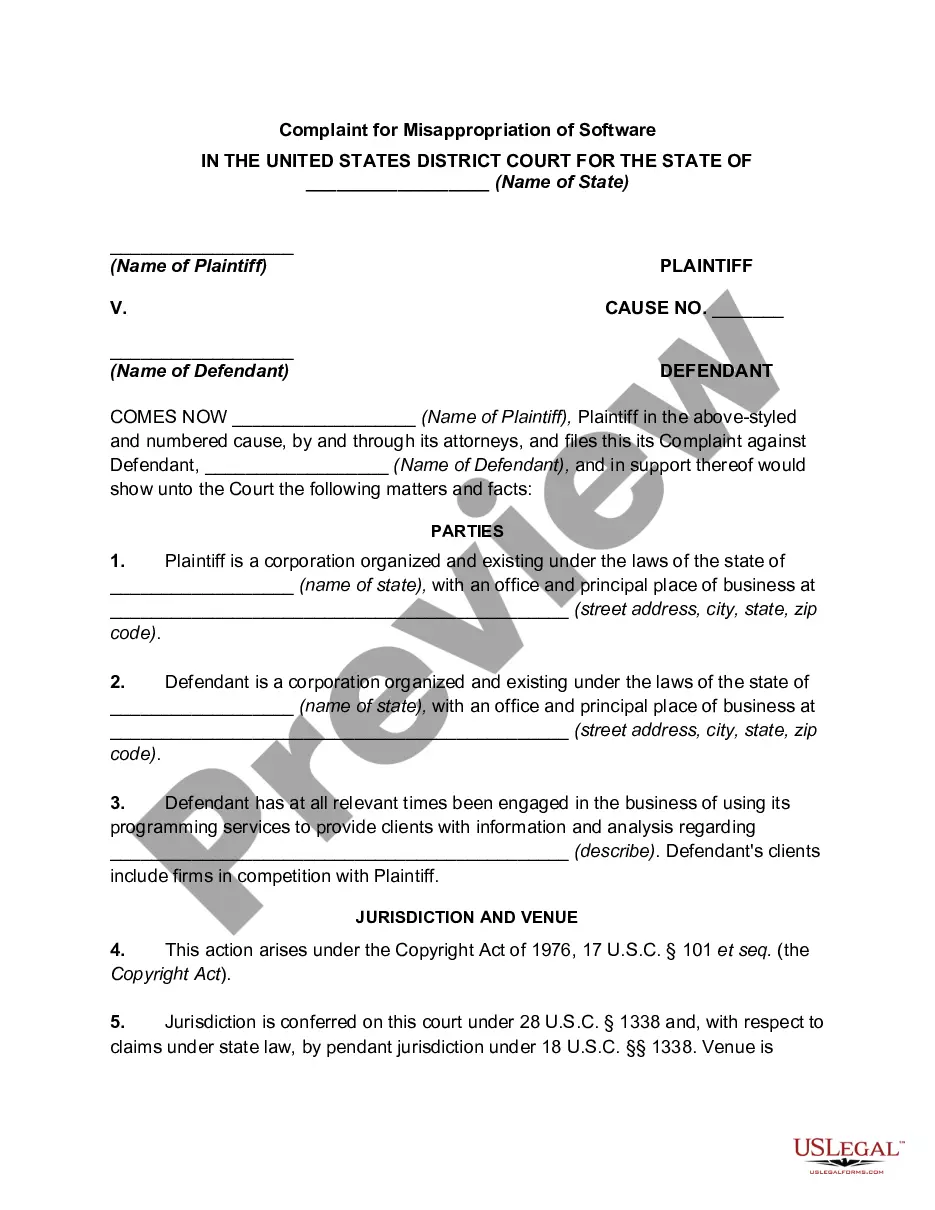
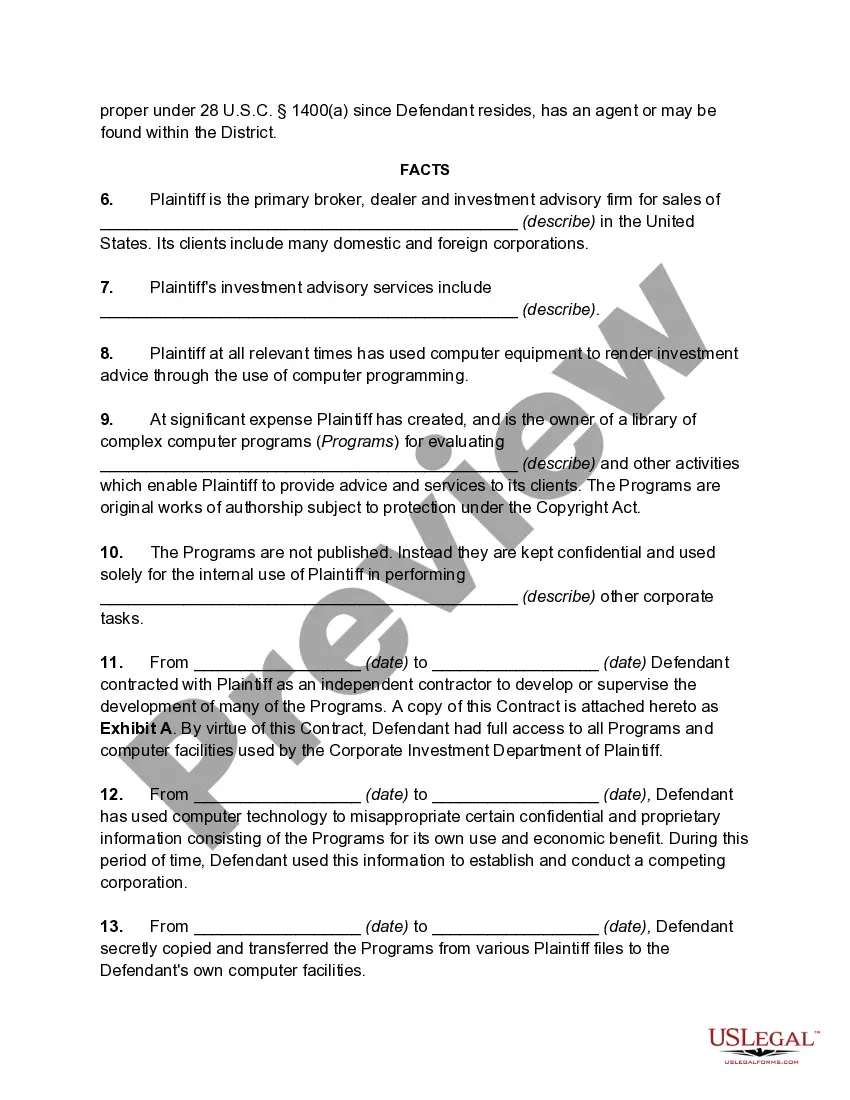
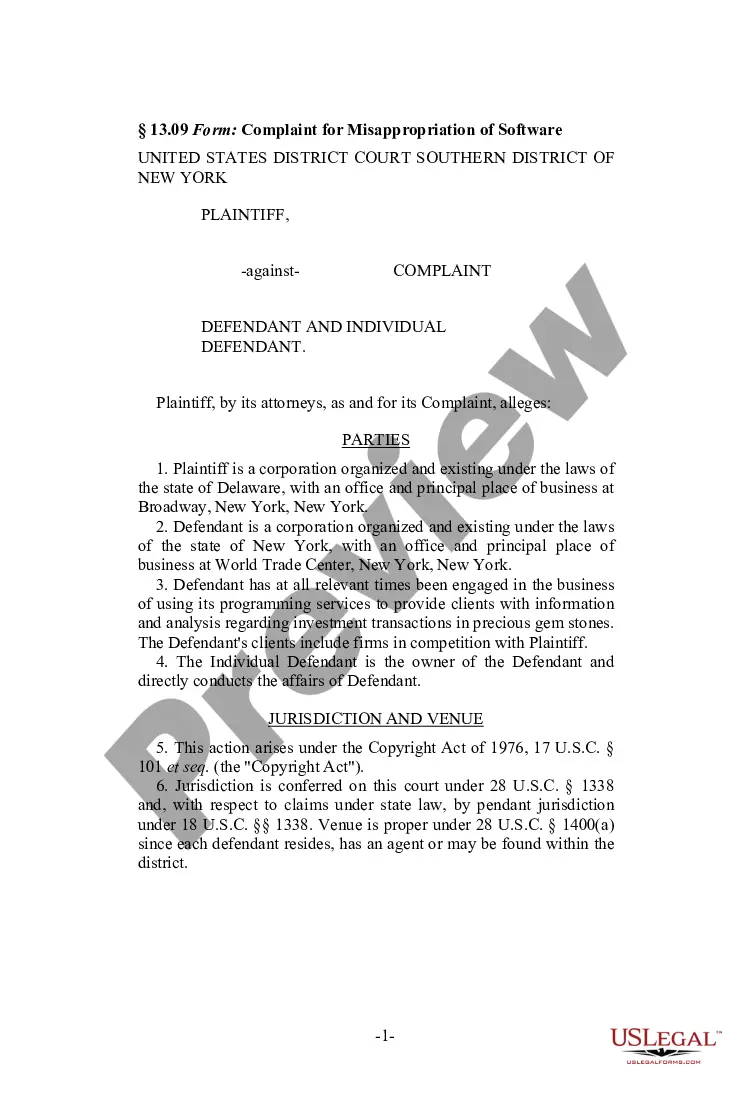
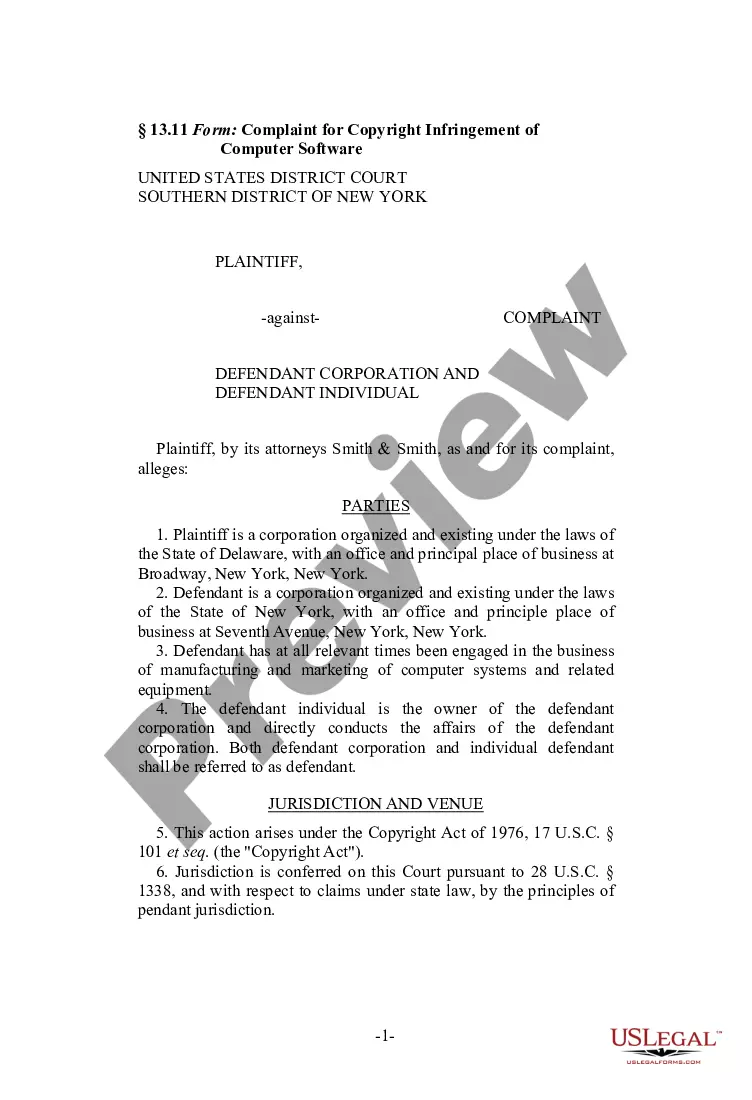
The Complaint for Misappropriation of Software is a legal document used to initiate a lawsuit against individuals or entities that unlawfully copy or use proprietary software without permission. This form is specifically designed to address copyright infringement and trade secret misappropriation in the context of software and programming, distinguishing it from other types of intellectual property claims.
Form components explained
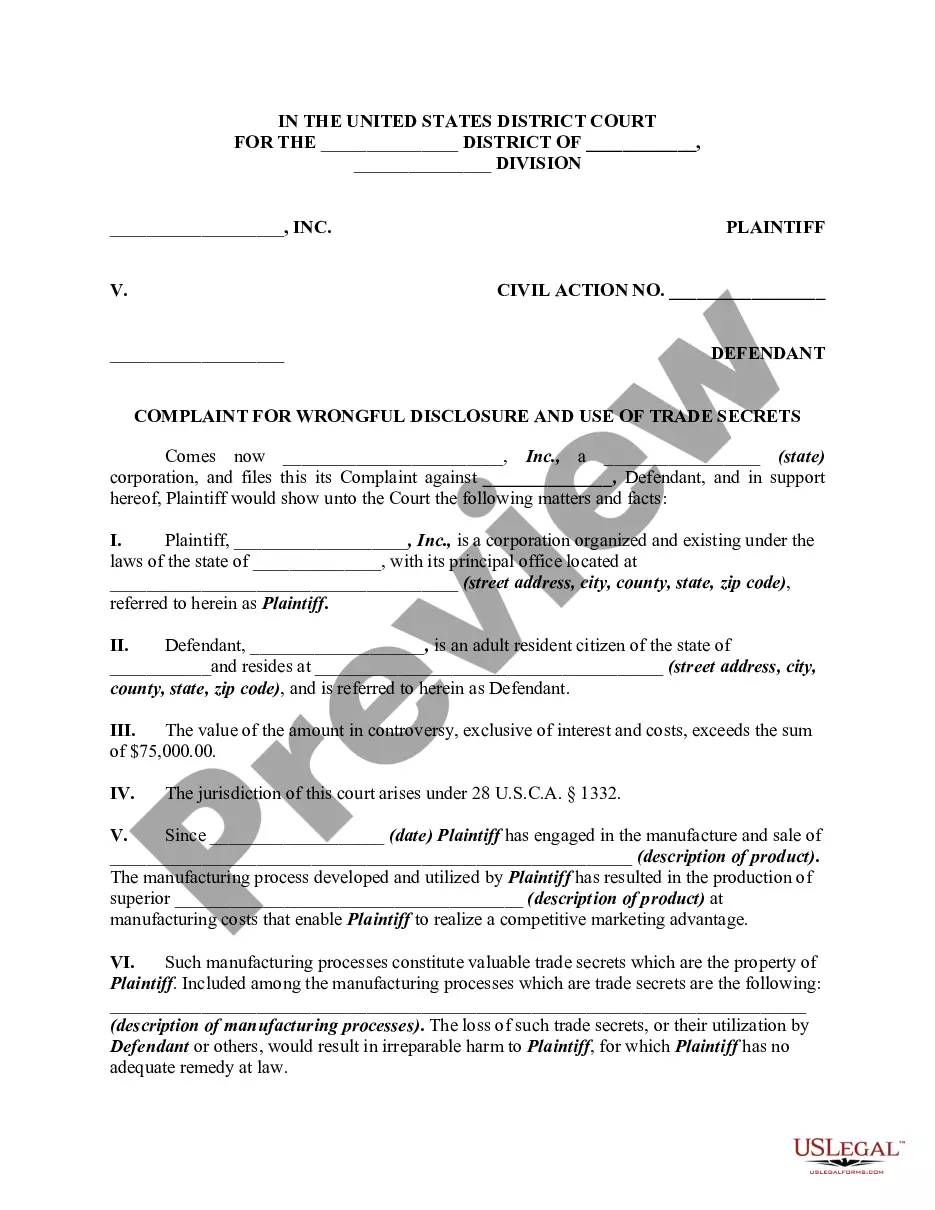
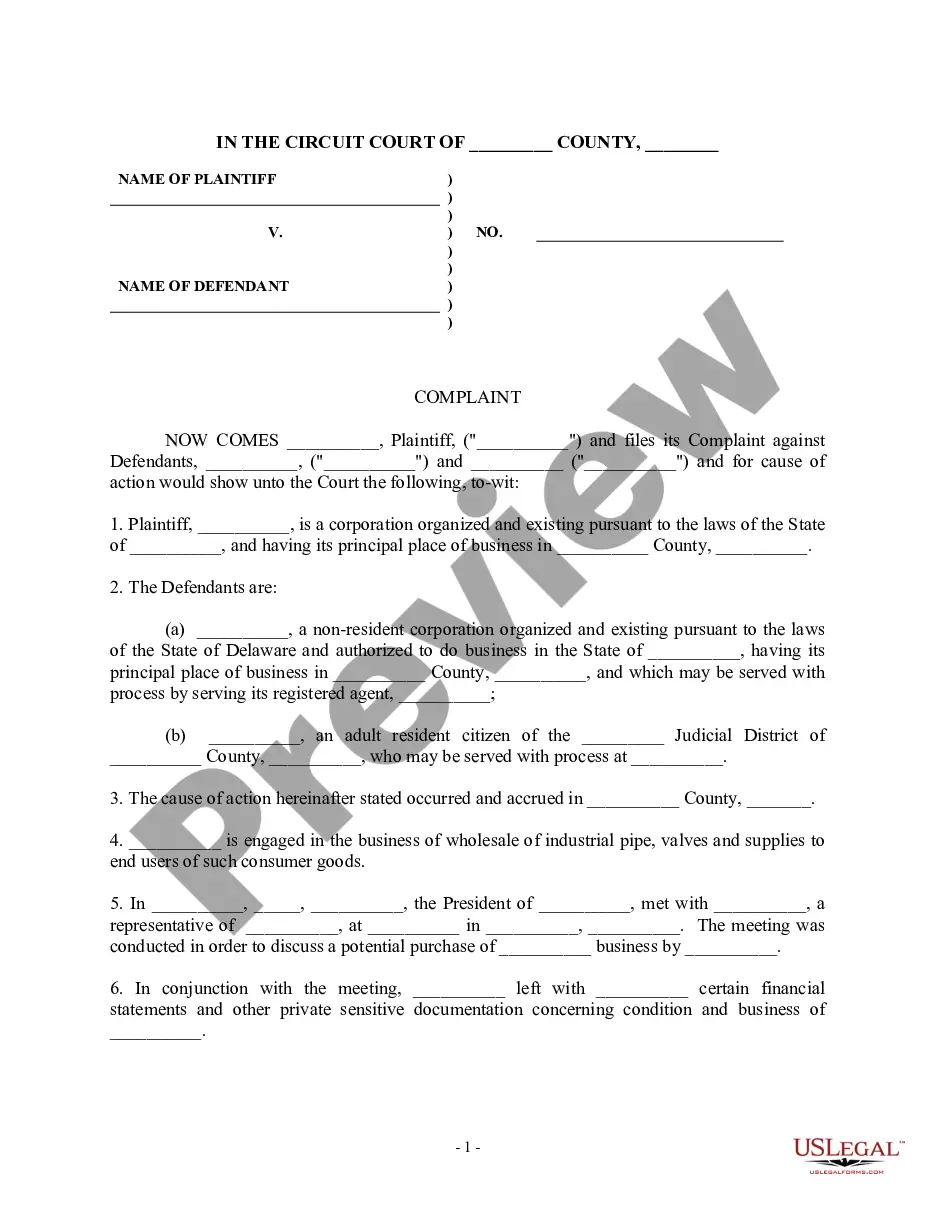
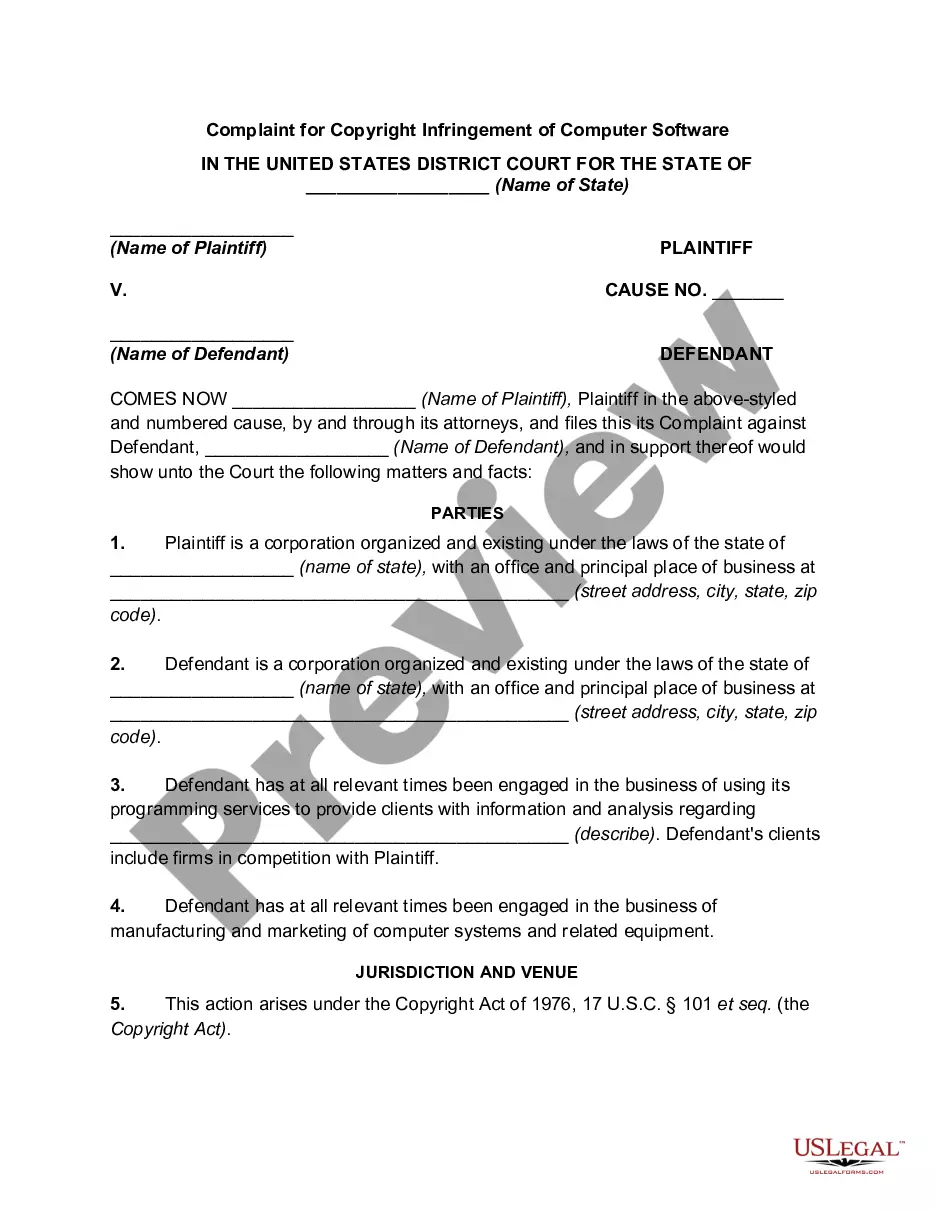
- Identification of the plaintiff and defendant, including their business details.
- Jurisdictional basis under copyright law and state law.
- Facts outlining the ownership and use of the proprietary software.
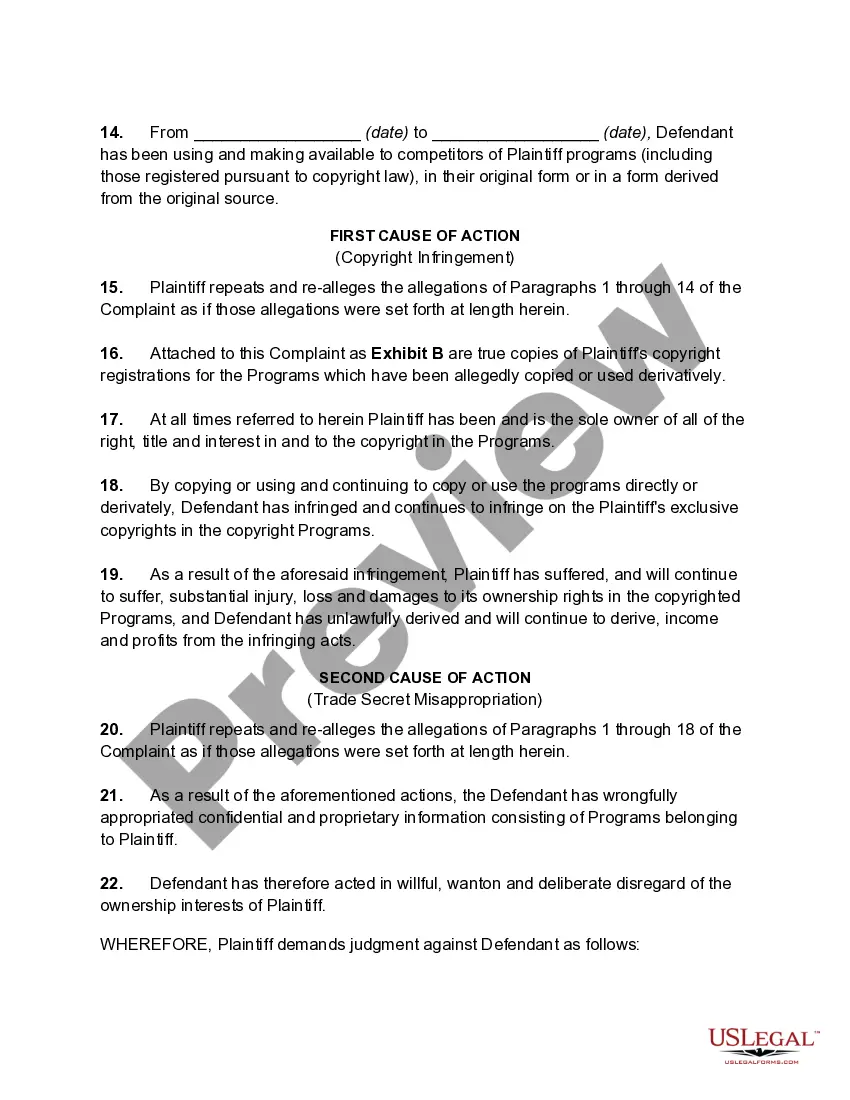
- Causes of action for copyright infringement and trade secret misappropriation.
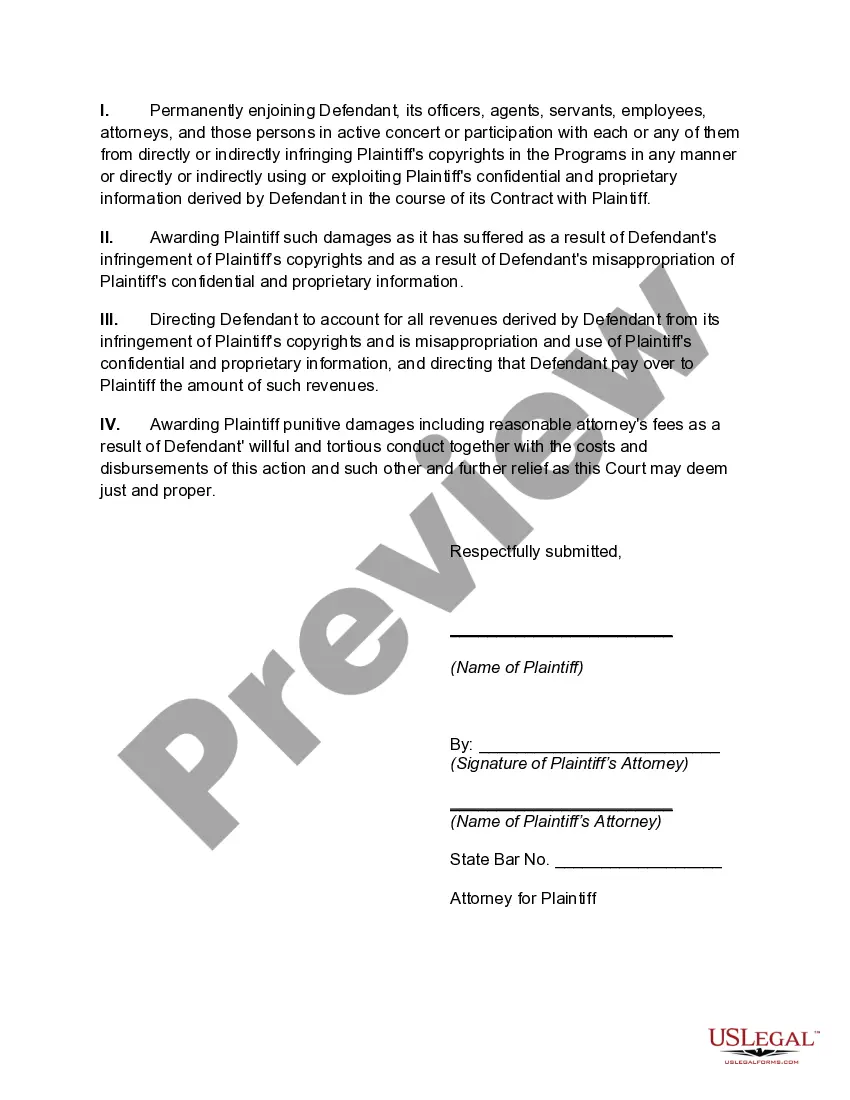
- Remedies sought by the plaintiff, including injunctions and damages.
When this form is needed
This form should be used when a software developer or company believes that another party has illegally used or distributed their proprietary software. Situations may involve independent contractors misusing information accessed during their work, or competitors leveraging stolen software to gain an unfair advantage.
Who needs this form
- Software developers and companies whose proprietary software has been copied or misused.
- Legal representatives handling intellectual property cases regarding software.
- Individuals responsible for protecting trade secrets within their organizations.
How to complete this form
- Identify and enter the names and addresses of the plaintiff and defendant at the beginning of the form.
- Provide details regarding the jurisdiction and venue of the case, citing relevant laws.
- Outline the facts and evidence supporting the claim of misappropriation and copyright infringement.
- Clearly state the legal causes of action, including copyright infringement and trade secret misappropriation.
- Specify the exact remedies sought, such as damages and injunctive relief.
Does this document require notarization?
This form does not typically require notarization unless specified by local law. Always check your jurisdiction's requirements to ensure compliance.
Get your form ready online
Our built-in tools help you complete, sign, share, and store your documents in one place.
Make edits, fill in missing information, and update formatting in US Legal Forms—just like you would in MS Word.
Download a copy, print it, send it by email, or mail it via USPS—whatever works best for your next step.
Sign and collect signatures with our SignNow integration. Send to multiple recipients, set reminders, and more. Go Premium to unlock E-Sign.
If this form requires notarization, complete it online through a secure video call—no need to meet a notary in person or wait for an appointment.
We protect your documents and personal data by following strict security and privacy standards.

Make edits, fill in missing information, and update formatting in US Legal Forms—just like you would in MS Word.

Download a copy, print it, send it by email, or mail it via USPS—whatever works best for your next step.

Sign and collect signatures with our SignNow integration. Send to multiple recipients, set reminders, and more. Go Premium to unlock E-Sign.

If this form requires notarization, complete it online through a secure video call—no need to meet a notary in person or wait for an appointment.

We protect your documents and personal data by following strict security and privacy standards.
Mistakes to watch out for
- Failing to provide accurate names and addresses of the parties involved.
- Not citing the appropriate jurisdictional statutes.
- Inadequately outlining the facts of the case or the specifics of the proprietary software.
- Neglecting to include all relevant damages or remedies sought.
Benefits of using this form online
- Convenient access to a professionally drafted legal form.
- Editability allows users to customize the document to their specific needs.
- Reliable resource for up-to-date legal language and formatting.
- Instant download ensures timely filing of legal claims.
Looking for another form?

Form popularity
FAQ
For instance, in order to get a conviction for misappropriation of funds in federal court, the government must prove the following elements of the crime beyond a reasonable doubt: You had access to the funds, but not ownership of them; You knowingly and intentionally took the money or intended to take the money; and.
Many states have also enacted laws making trade secret infringement a crime. For example, in California it is a crime to acquire, disclose or use trade secrets without authorization. Violators may be fined up to $5,000, sentenced to up to one year in jail, or both.
Notably, California has a statutory provision, albeit buried in its code of civil procedure, that requires a plaintiff to disclose its trade secrets with reasonable particularity before it can obtain discovery from defendants.
Under federal and state law, owners of trade secrets may sue to protect the trade secret from misappropriation. Money damages are available as are various levels of injunctive relief.Legally, trade secrets are also protected under state and federal tort law.
The plaintiff in a trade-secret case lawsuit must prove three facts: (1) it has some valuable business information that it has kept secret; (2) the information is not generally known; and (3) the defendant has used that secret. A defendant may attack each showing, but some attacks are better than others.
"Misappropriation " means: (i) acquisition of a trade secret of another by a person who knows or has reason to know that the trade secret was acquired by improper means; or (ii) disclosure or use of a trade secret of another without express or implied consent by a person who (A) used improper means to acquire knowledge
Trade secrets are intellectual property (IP) rights on confidential information which may be sold or licensed. In general, to qualify as a trade secret, the information must be: commercially valuable because it is secret, be known only to a limited group of persons, and.