Sample Letter for Organization Audit Form
Overview of this form
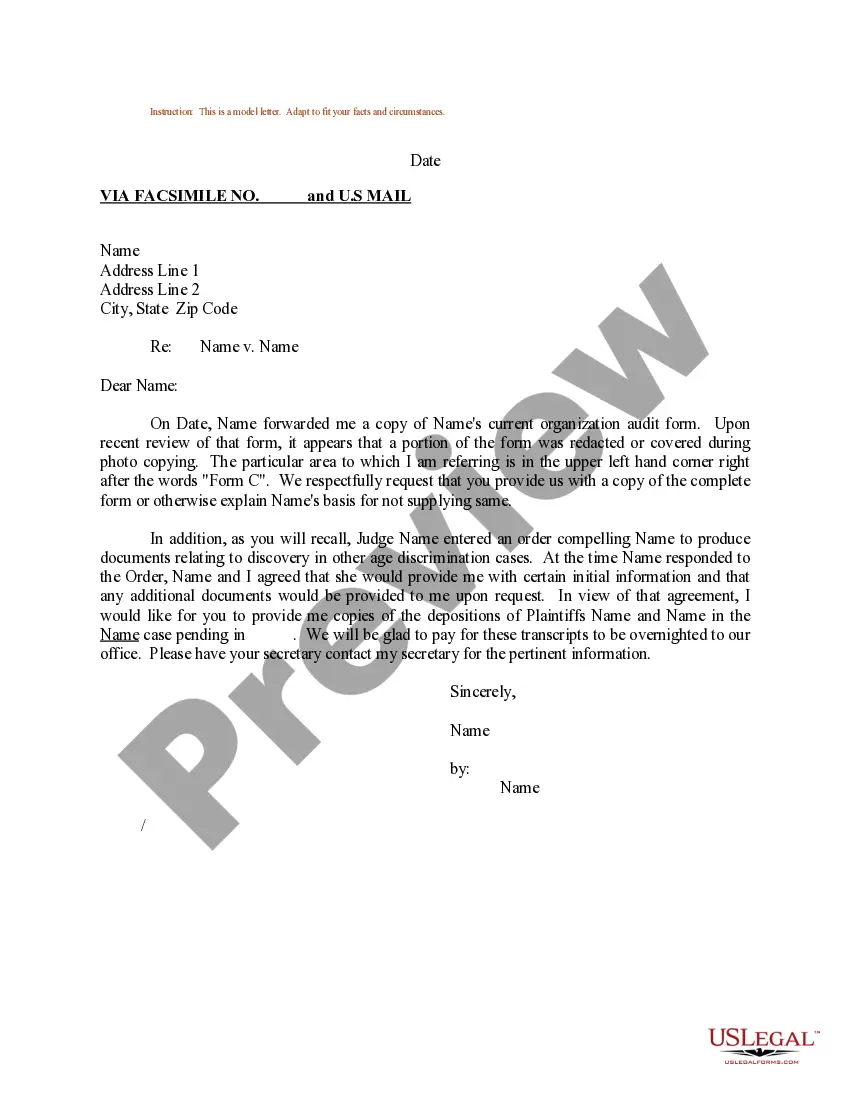
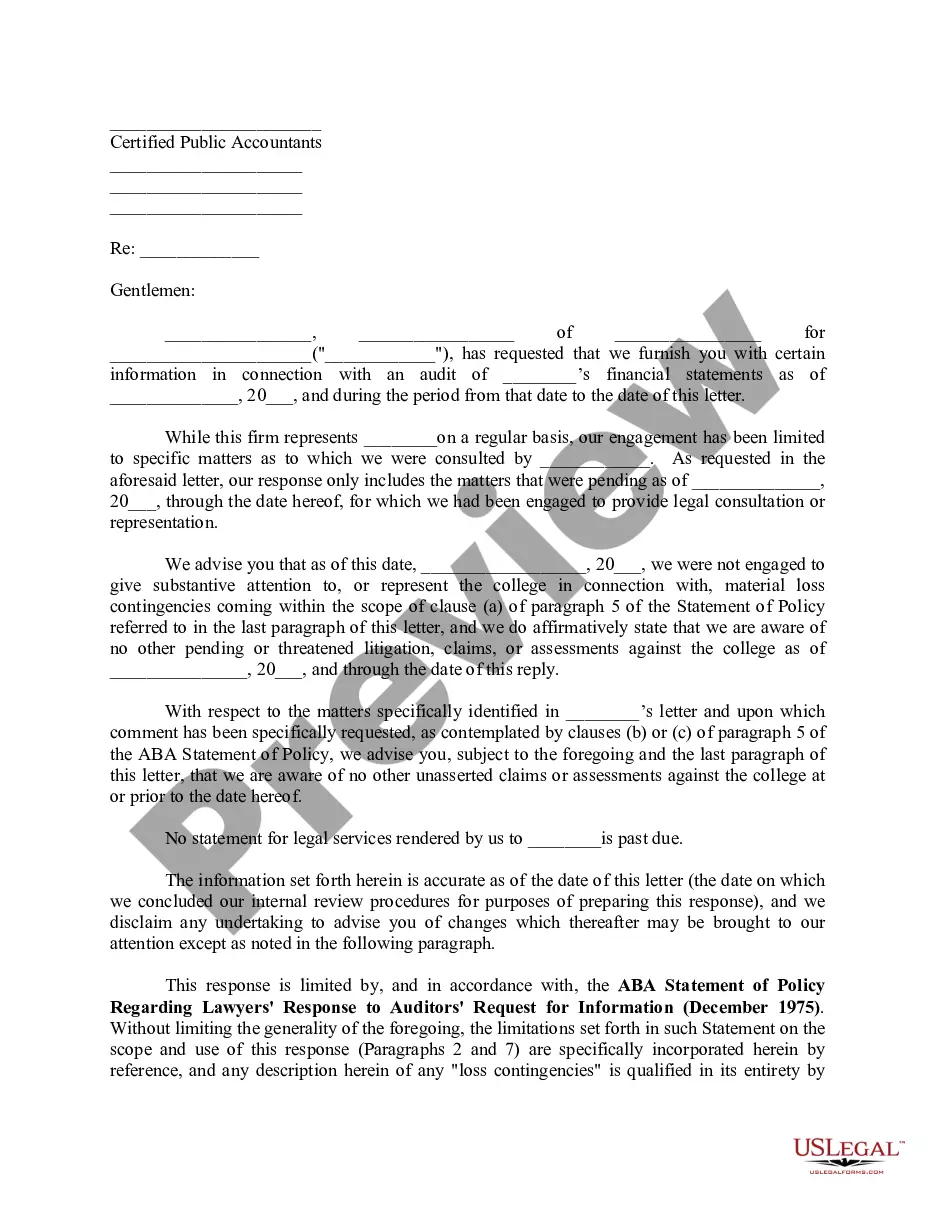
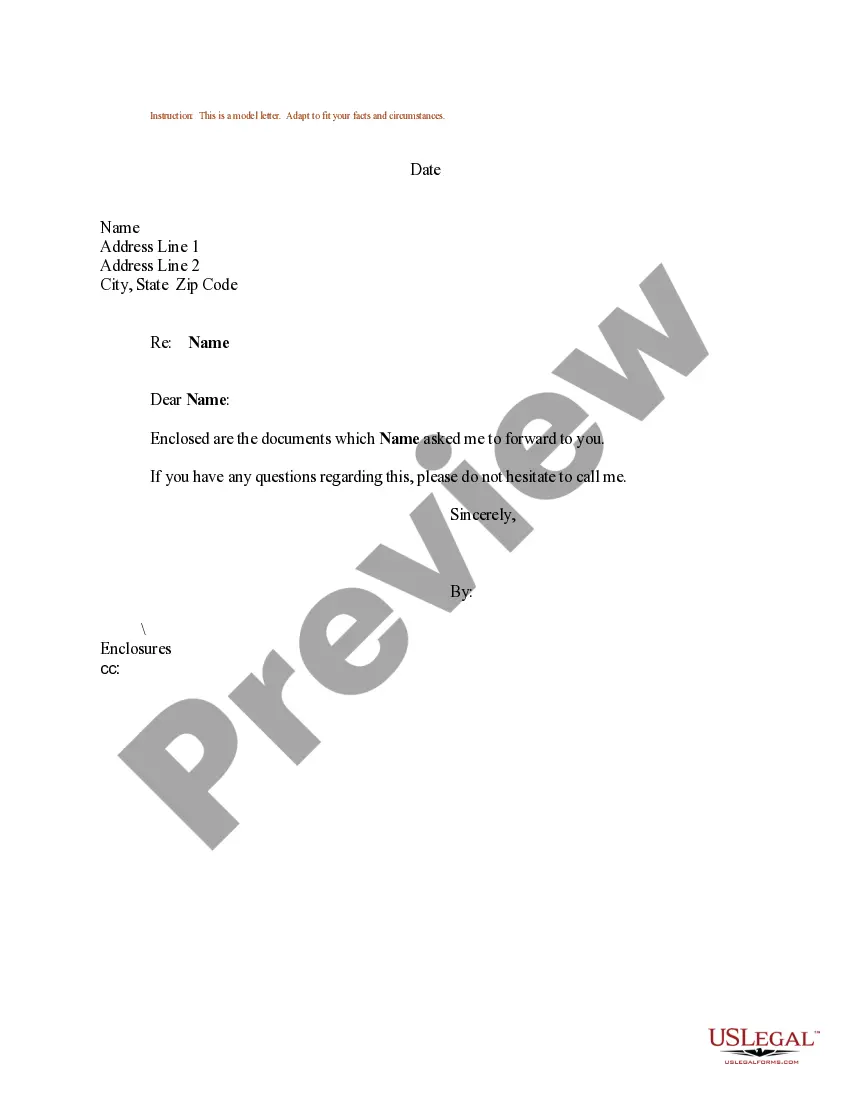
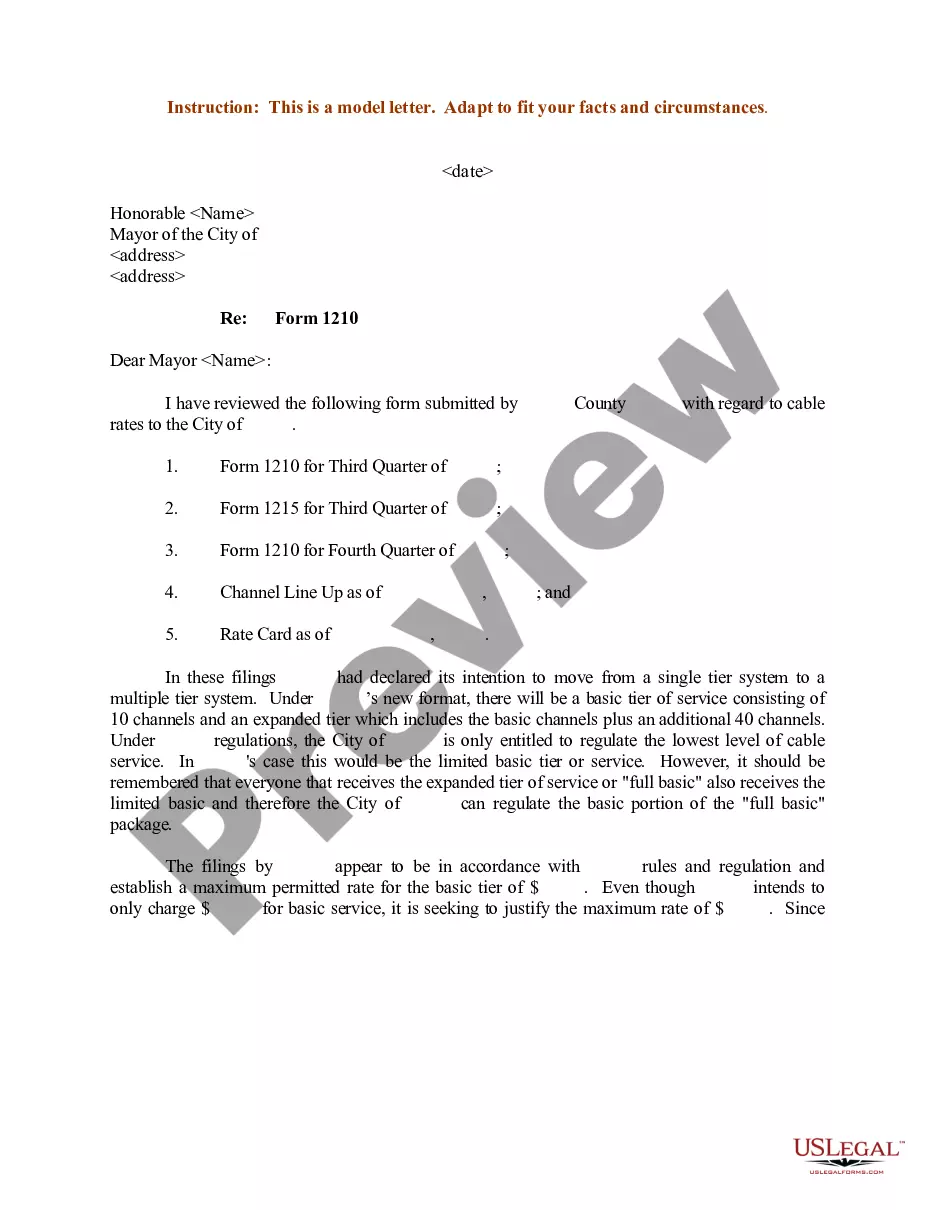
The Sample Letter for Organization Audit Form is a template designed for requesting the complete version of an organization audit form. This letter specifically addresses the need for clarity and completeness in organizational documentation, distinguishing it from other forms that may request general information without such precise context.
Key parts of this document
- Recipient details: includes the name and address of the individual or organization being contacted.
- Subject line: clearly states the purpose of the letter regarding the organization audit form.
- Date: specifies when the letter is written.
- Request for additional information: explicitly asks for the complete form or an explanation for why it was redacted.
When to use this document
This form should be used when an organization has received a partial audit form and needs to obtain further details to ensure all necessary information is available for record-keeping or compliance purposes. It is especially useful in situations where transparency in organizational audits is required.
Who needs this form
- Organizations needing clarity on their audit documentation.
- Individuals responsible for oversight or review of organizational audits.
- Administrators requesting complete transparency from an auditing body.
Completing this form step by step
- Fill in the recipient's name and address at the top of the letter.
- Enter the date the letter is sent.
- Clearly state the subject in the subject line.
- Use the body of the letter to politely request the complete organization audit form or an explanation regarding any missing information.
- Sign the letter to authenticate the request.
Does this form need to be notarized?
This form does not typically require notarization unless specified by local law. However, it is advisable to verify if your specific circumstances necessitate notarization for legal validity.
Get your form ready online
Our built-in tools help you complete, sign, share, and store your documents in one place.
Make edits, fill in missing information, and update formatting in US Legal Forms—just like you would in MS Word.
Download a copy, print it, send it by email, or mail it via USPS—whatever works best for your next step.
Sign and collect signatures with our SignNow integration. Send to multiple recipients, set reminders, and more. Go Premium to unlock E-Sign.
If this form requires notarization, complete it online through a secure video call—no need to meet a notary in person or wait for an appointment.
We protect your documents and personal data by following strict security and privacy standards.

Make edits, fill in missing information, and update formatting in US Legal Forms—just like you would in MS Word.

Download a copy, print it, send it by email, or mail it via USPS—whatever works best for your next step.

Sign and collect signatures with our SignNow integration. Send to multiple recipients, set reminders, and more. Go Premium to unlock E-Sign.

If this form requires notarization, complete it online through a secure video call—no need to meet a notary in person or wait for an appointment.

We protect your documents and personal data by following strict security and privacy standards.
Common mistakes
- Failing to include the recipient's correct details.
- Sending the letter without specifying a clear request.
- Omitting the date of the letter.
Why complete this form online
- Convenient access to a ready-to-use template without the need to draft from scratch.
- Editability allows users to customize the letter to suit their specific needs.
- Reliability in terms of legal adequacy and clarity in communication.
Looking for another form?




Form popularity
FAQ
If you suspect or witness a provider inappropriately billing or a member receiving inappropriate services, please call OIG's Hotline at 1-800-HHS-TIPS (1-800-447-8477), directly to a Medi-Cal Fraud Control Unit (MFCU), or our anonymous and confidential FWA hotline at 1-866-685-8664. California Health & Wellness and
Your full name. Your current address and all addresses you have lived at over the past two years. Copy of a government-issued ID. Copy of a utility bill, bank statement, or insurance statement. A reference line that begins RE: and includes the name of the creditor and the account number for the item(s) you're disputing.
In order to make a strong case, your medical bill dispute letter should be detailed but concise. You should also put important information such as your name, address, and contact information. Include the date of your billing along with a billing identification number.
Call The Medical Provider Billing Department. File An Appeal With Your Insurance Company. File An Appeal With Your Medical Provider's Patient Advocate. Contact Your State Insurance Commissioner. Consider Legal Counsel. Final Thoughts.
Ask to lower the bill Reach out, be nice, and tell the provider that you can't afford to pay the bill. Then, ask for a reduction. Uninsured patients are usually charged the master rate, or the maximum that the hospital would charge for a particular procedure, Bosco noted.
Contact the revenue cycle (billing department) for an itemized bill. Make sure all procedures are coded accurately. Check if there were any denials from the insurance. If you don201at have insurance and are low-income, Medicaid could cover you retrospectively, but apply ASAP. Try to negotiate. Set up a payment plan.
How much of a discount can I get? The discount rate under the Hospital Fair Pricing Act is the amount that Medicare or Medi-Cal would pay. Most hospitals use the Medicare rate. This is usually 65-85% less than the Charge Master rate.
Review the Bill. Billing departments in hospitals and doctor offices handle countless insurance claims on a daily basis. Ask for an Itemized Billing Statement. Document Everything. Communicate with Care Providers. File an Appeal with Insurance Company.
The tone of the letter should be strict but gentle. Mention all the necessary details of the current case. Explain the reason for disputing it. Attach copies of relevant documents to confirm your claim. End the letter with your contact details.