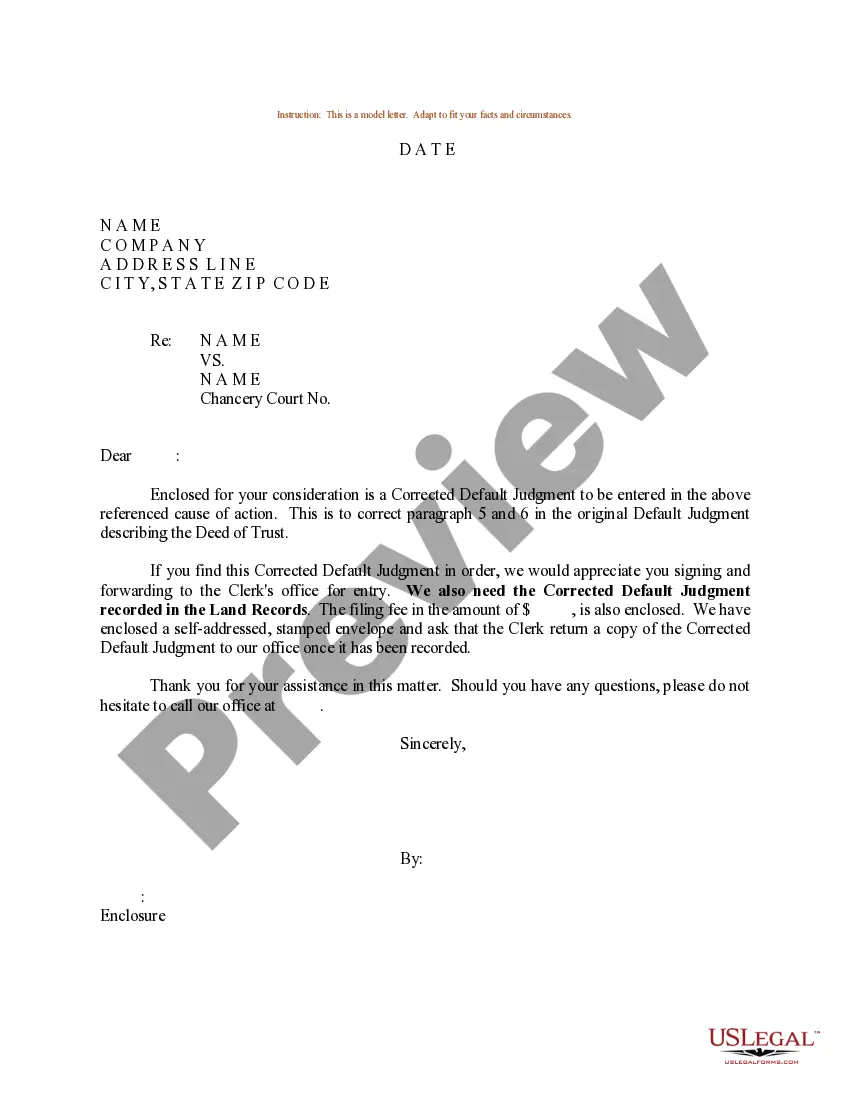
Sample Letter regarding Corrected Default Judgment
Understanding this form
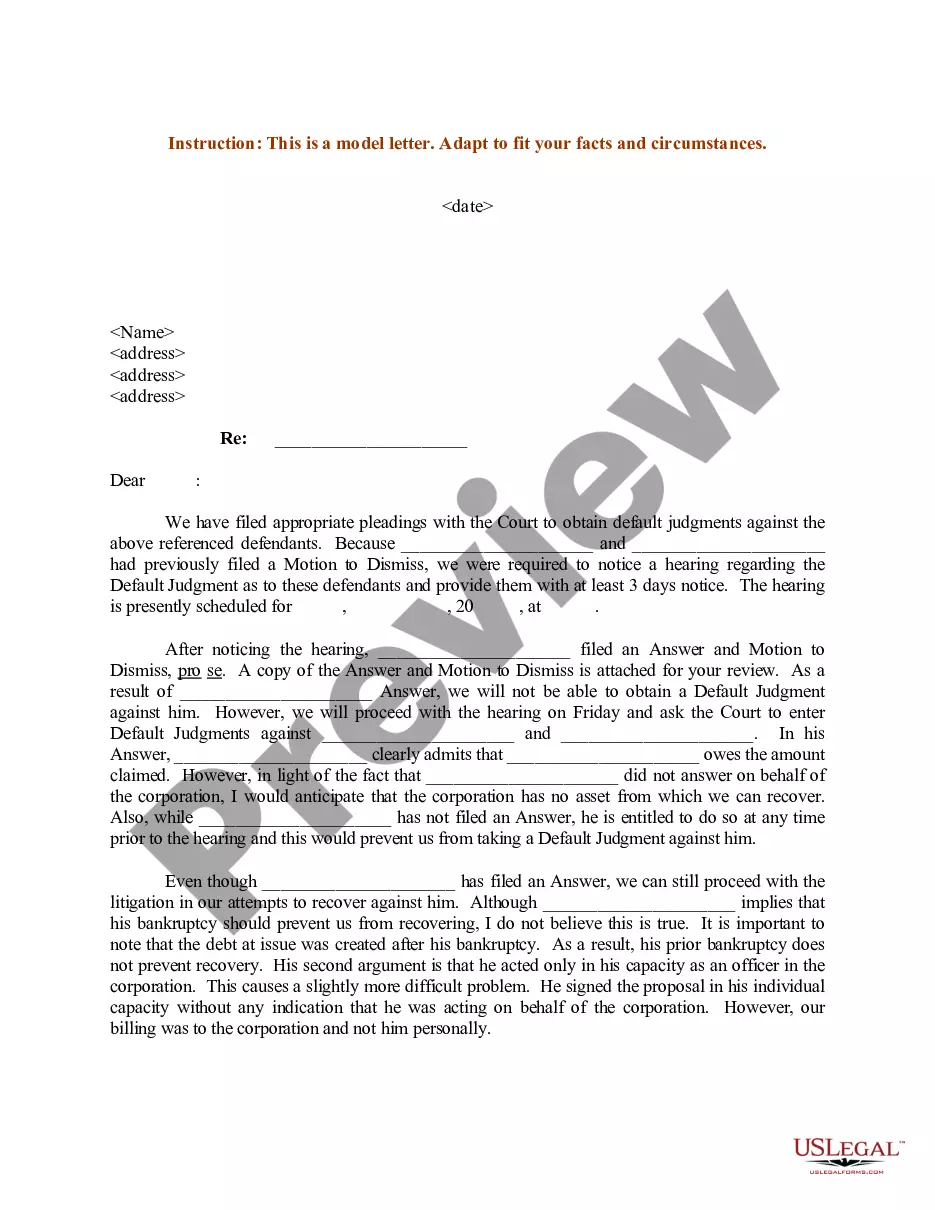
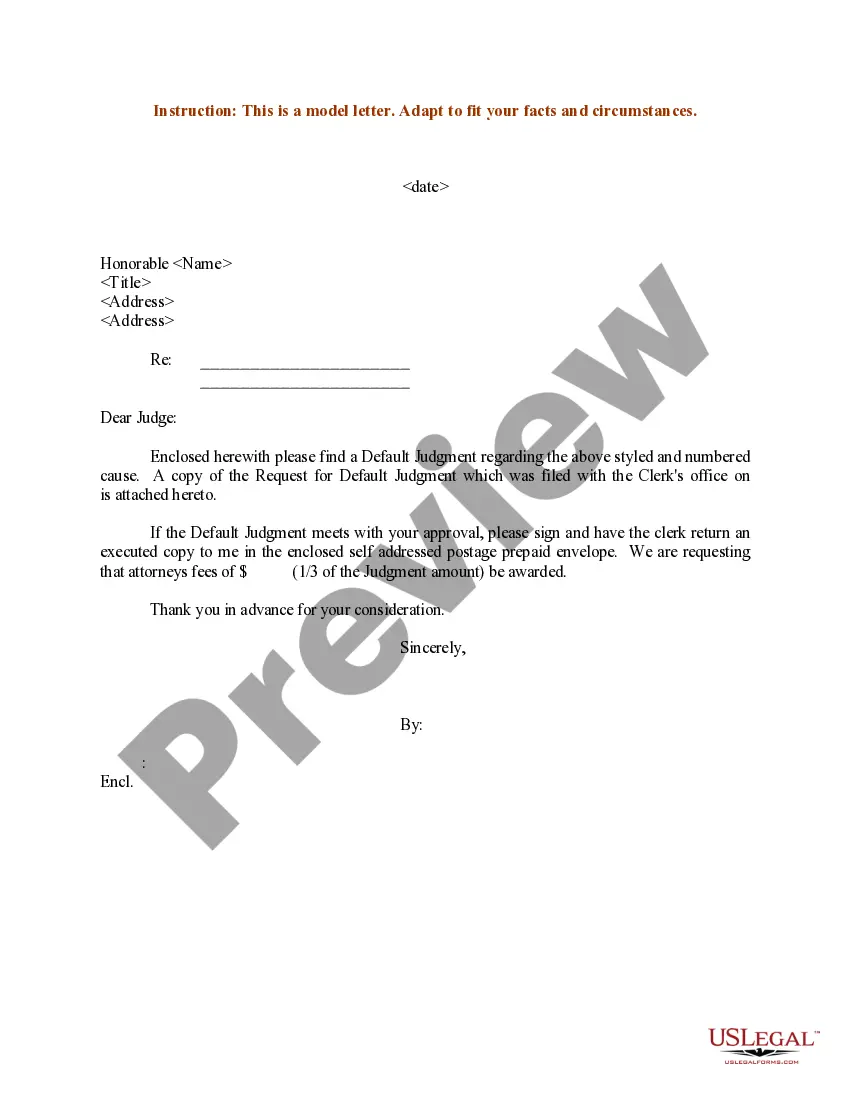
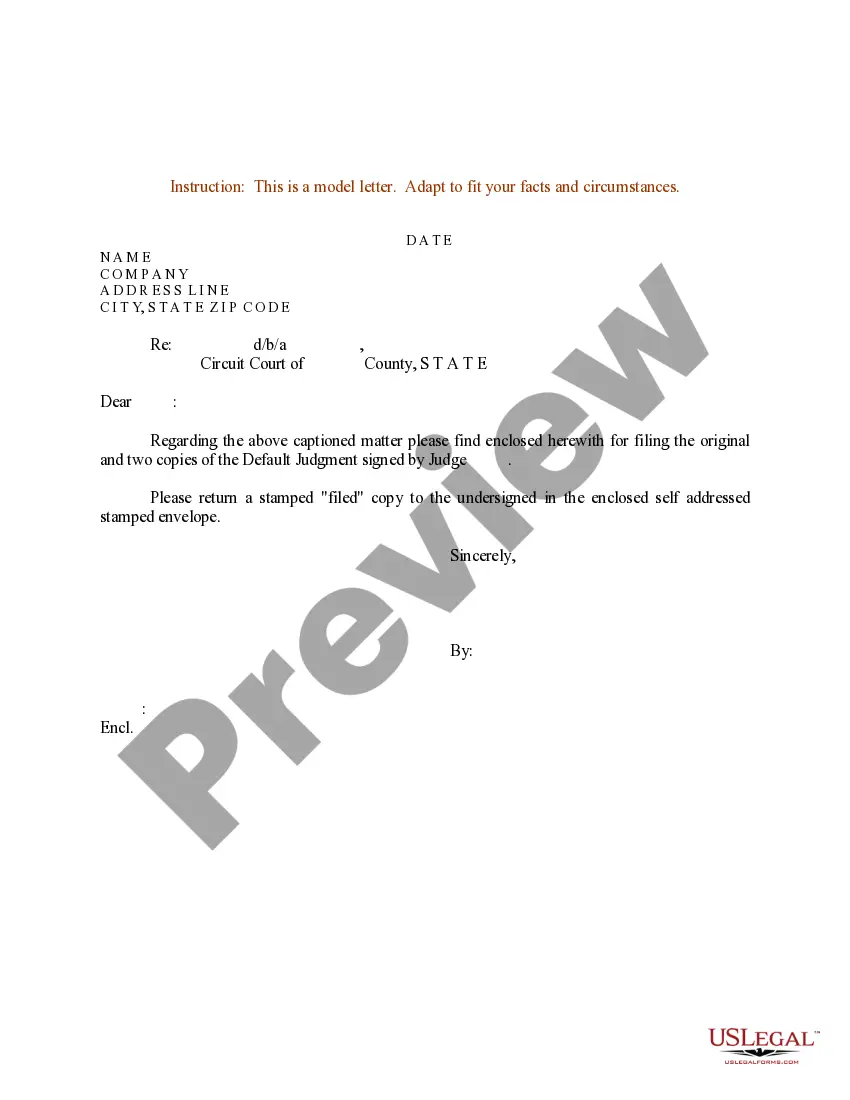
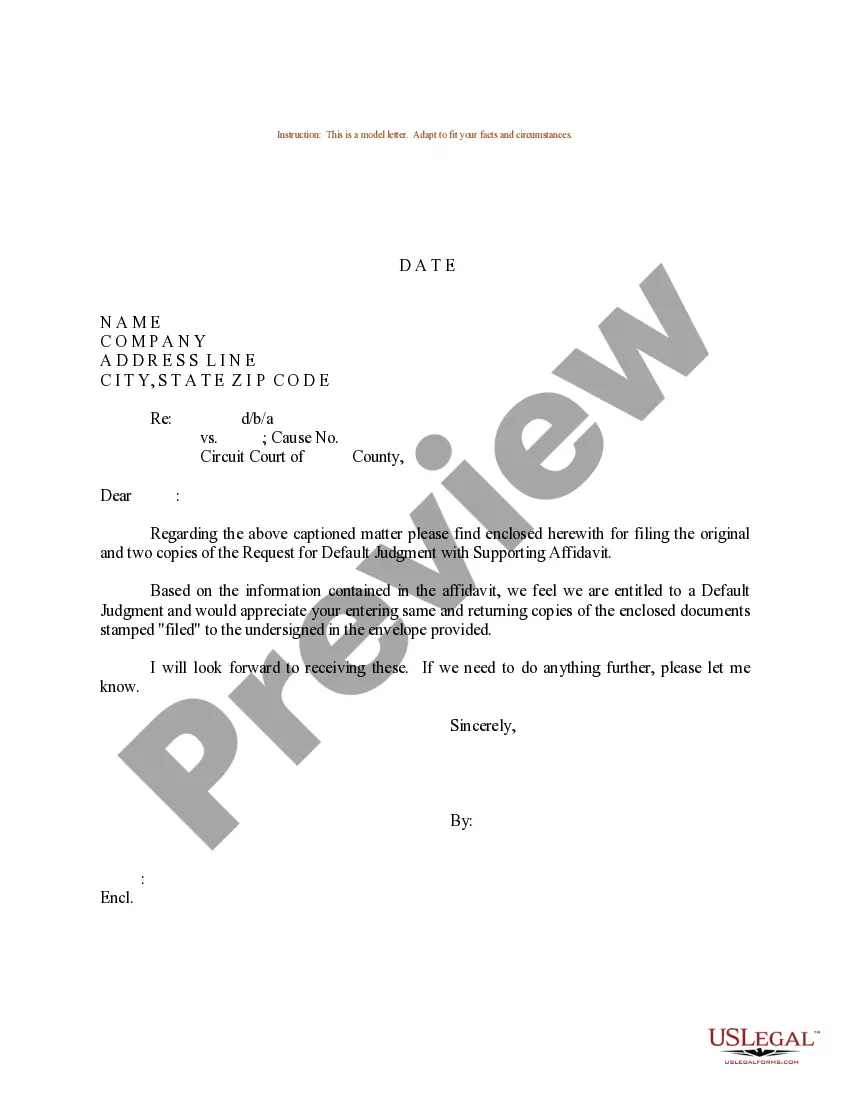
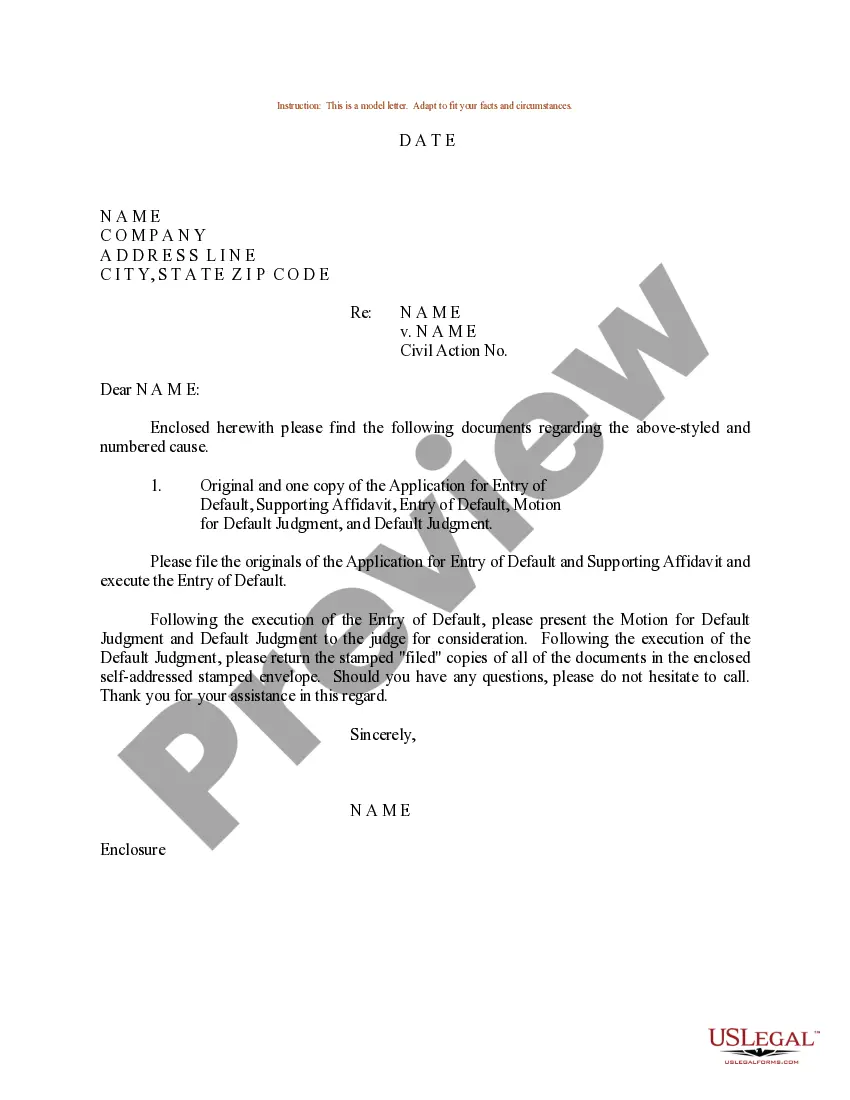
This form is a Sample Letter regarding Corrected Default Judgment. It serves as a guideline for writing a letter to address a default judgment that has been corrected. This sample letter provides the necessary structure and language to effectively communicate with the relevant parties about the judgment. Unlike other legal documents, this form focuses specifically on correcting misunderstandings or errors in default judgments rather than initiating legal actions or appeals.
Form components explained
- Date of the letter
- Sender's name and contact information
- Subject line referencing the corrected default judgment
- Details of the parties involved (defendant and plaintiff)
- A clear statement regarding the correction of the judgment
Common use cases
You should use this form when you need to formally address a corrected default judgment. This may occur in situations where a legal error was made, and the court has rectified that judgment. It is important to notify all involved parties, including the court and the opposing party, to ensure clear communication and understanding of the current legal standing.
Who should use this form
This form is intended for individuals or businesses who have received a default judgment that has been corrected. It is particularly useful for:
- Defendants who need to respond to a corrected judgment
- Attorneys representing clients in default judgment cases
- Individuals seeking to clarify their legal status following a correction in judgment
Steps to complete this form
- Begin by entering the date at the top of the letter.
- Add your name and contact information, followed by the recipient's information.
- Clearly indicate the subject line regarding the corrected default judgment.
- Provide comprehensive details regarding the judgment and the necessary corrections.
- Conclude the letter with your signature and any necessary enclosures.
Notarization requirements for this form
This form does not typically require notarization unless specified by local law. However, it is recommended to check with local regulations to ensure compliance with any specific requirements in your jurisdiction.
Get your form ready online
Our built-in tools help you complete, sign, share, and store your documents in one place.
Make edits, fill in missing information, and update formatting in US Legal Forms—just like you would in MS Word.
Download a copy, print it, send it by email, or mail it via USPS—whatever works best for your next step.
Sign and collect signatures with our SignNow integration. Send to multiple recipients, set reminders, and more. Go Premium to unlock E-Sign.
If this form requires notarization, complete it online through a secure video call—no need to meet a notary in person or wait for an appointment.
We protect your documents and personal data by following strict security and privacy standards.

Make edits, fill in missing information, and update formatting in US Legal Forms—just like you would in MS Word.

Download a copy, print it, send it by email, or mail it via USPS—whatever works best for your next step.

Sign and collect signatures with our SignNow integration. Send to multiple recipients, set reminders, and more. Go Premium to unlock E-Sign.

If this form requires notarization, complete it online through a secure video call—no need to meet a notary in person or wait for an appointment.

We protect your documents and personal data by following strict security and privacy standards.
Avoid these common issues
- Failing to include the date of the letter.
- Inaccurate recipient details, which can lead to miscommunication.
- Omitting key information about the judgment correction.
- Not signing the letter before sending it.
Advantages of online completion
- Convenient access to a professionally drafted letter format.
- Editable fields allow for customization to fit specific circumstances.
- Ensures compliance with legal standards and terminology.
- Downloadable for easy printing and submission.
Key takeaways
- The Sample Letter regarding Corrected Default Judgment is crucial for addressing inaccuracies in court judgments.
- Clearly outline your reasons for correction in the letter to support your request.
- This form is adaptable across multiple states, but be mindful of local regulations.
Looking for another form?
Form popularity
FAQ
Default judgments happen when you don't respond to a lawsuit often from a debt collector and a judge resolves the case without hearing your side.Next up could be wage garnishment or a bank account levy, which allows a creditor to remove money from your bank accounts to repay the debt.
Accept the judgment. Settle the judgment for less. Challenge the judgment. Pursue debt relief.
If a notice of motion for setting aside or variation of a judgment or order is filed within 14 days after the judgment or order is entered, the court may set aside or vary the judgment or order under r 36.16(1) as if the judgment or order had not been entered: r 36.16(3A).
First, you can ask the court to set aside the default judgment and give you an opportunity to contest it. Next, you can settle the debt with the debt buyer for an amount less than what the default judgment is for. And finally you can eliminate the default judgment completely by filing for bankruptcy.
Make sure you state you are exercising your rights under the Fair Debt Collection Practices Act. Include a sentence or two describing why you are judgment-proof For example: I am judgment proof because I am living only on Social Security benefits, own limited exempt property, and cannot meet current expenses.
First, you can ask the court to set aside the default judgment and give you an opportunity to contest it. Next, you can settle the debt with the debt buyer for an amount less than what the default judgment is for. And finally you can eliminate the default judgment completely by filing for bankruptcy.
Fill out a Notice of Motion to Vacate Judgment and Declaration (Small Claims) (Form SC-135 ). File it with the small claims court clerk. Pay the filing fee. If you cannot afford the fee, ask for a fee waiver. The clerk will give you a date for your hearing.
If you do not think the default judgment was appropriately entered against you, you must file a motion with the court asking the judge to set aside (void or nullify) the judgment. If the judge grants your motion, the case starts back up again.
Typically, a court's rules governing enforcement of default judgments include procedures for wage garnishments, attachment of bank accounts and seizure of assets. The plaintiff can usually pursue more than one of these enforcement mechanisms simultaneously.