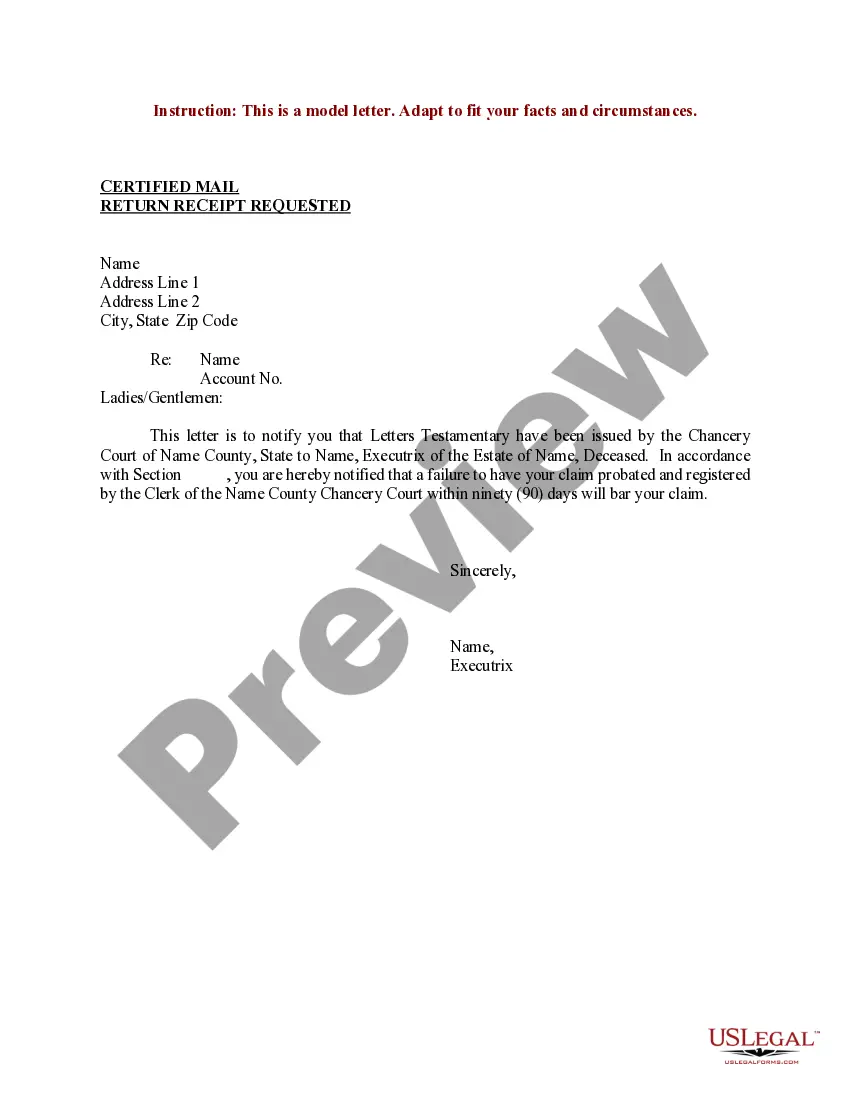
Sample Letter for Letters Testamentary and Registration of Claim
About this form
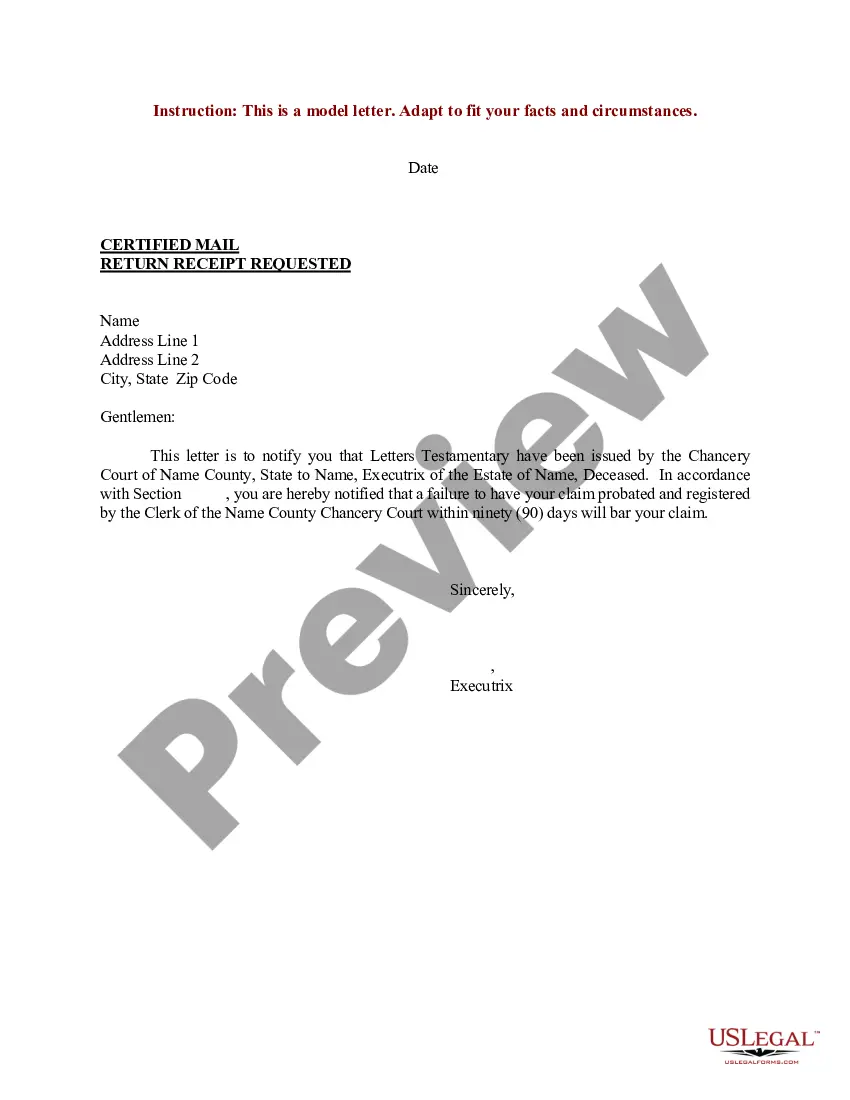
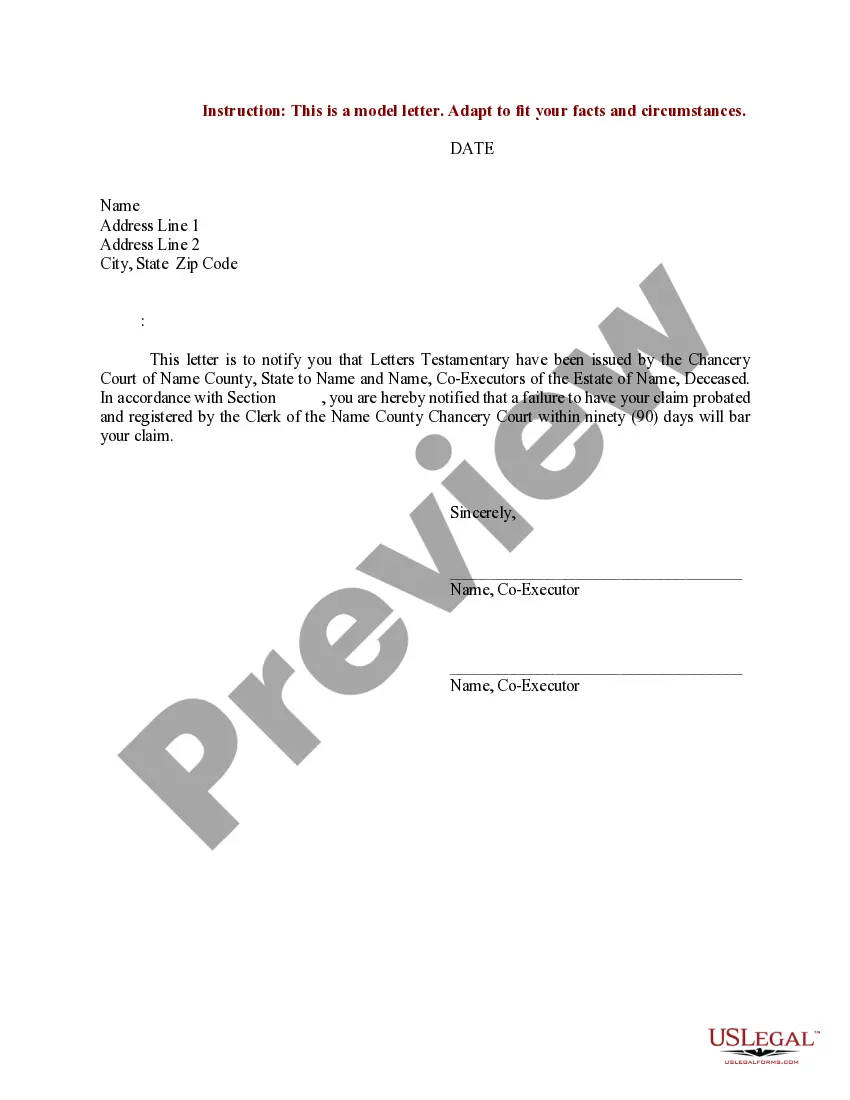
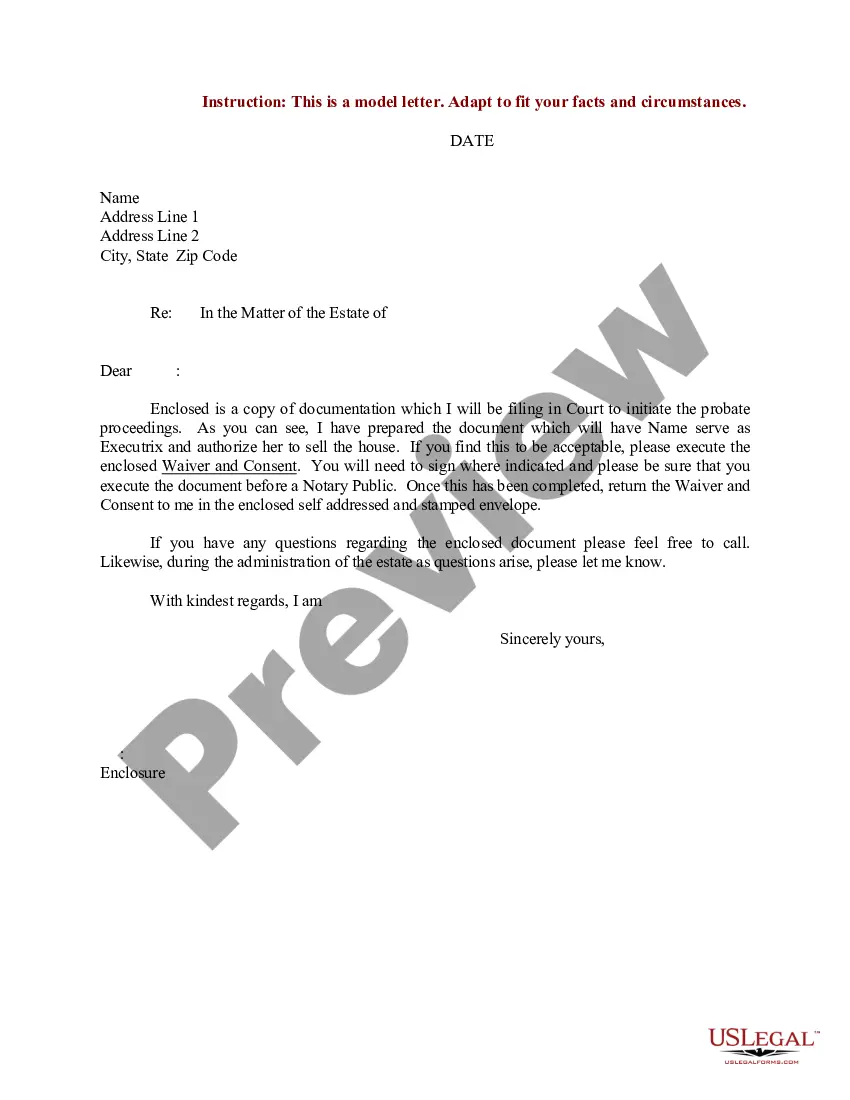
The Sample Letter for Letters Testamentary and Registration of Claim is a legal document intended for executors of estates. This letter serves the purpose of notifying interested parties, such as creditors or beneficiaries, about the appointment of the executor and the process for claiming an inheritance. Unlike other legal documents, this sample letter is tailored to facilitate communications regarding the estate's administration, making it a crucial piece in estate management.
Main sections of this form
- Sender's name and address
- Recipient's name and address
- Date of the letter
- Subject line indicating the nature of the letter
- Signature line for the executor


When to use this form
This form is essential when an executor has been appointed to manage a deceased person's estate. It is used to formally inform creditors and beneficiaries about the executor's role and to streamline the process of settling claims against the estate. For example, it is particularly beneficial when creditors need to submit claims for debts owed by the deceased or when beneficiaries must understand the status of their inheritances.
Who this form is for
- Executors appointed in a will
- Legal representatives of the deceased's estate
- Beneficiaries or heirs seeking information about claims
- Creditors pursuing debts from the estate
Completing this form step by step
- Identify the sender's name and full address.
- Enter the recipient's name and address accurately.
- Specify the date when the letter is written.
- Clearly state the subject of the letter.
- Sign the letter in the designated area as the executor.
Notarization requirements for this form
This form does not typically require notarization unless specified by local law.
Get your form ready online
Our built-in tools help you complete, sign, share, and store your documents in one place.
Make edits, fill in missing information, and update formatting in US Legal Forms—just like you would in MS Word.
Download a copy, print it, send it by email, or mail it via USPS—whatever works best for your next step.
Sign and collect signatures with our SignNow integration. Send to multiple recipients, set reminders, and more. Go Premium to unlock E-Sign.
If this form requires notarization, complete it online through a secure video call—no need to meet a notary in person or wait for an appointment.
We protect your documents and personal data by following strict security and privacy standards.

Make edits, fill in missing information, and update formatting in US Legal Forms—just like you would in MS Word.

Download a copy, print it, send it by email, or mail it via USPS—whatever works best for your next step.

Sign and collect signatures with our SignNow integration. Send to multiple recipients, set reminders, and more. Go Premium to unlock E-Sign.

If this form requires notarization, complete it online through a secure video call—no need to meet a notary in person or wait for an appointment.

We protect your documents and personal data by following strict security and privacy standards.
Typical mistakes to avoid
- Failing to include the correct addresses for sender and recipient.
- Omitting the date or subject line.
- Not signing the letter as the executor.
- Providing incomplete information about the estate.
Why use this form online
- Convenience of downloading the document instantly.
- Editability allows for customization as per individual needs.
- Reliability from templates drafted by licensed attorneys.
Looking for another form?
Form popularity
FAQ
When probating a will, it is necessary for one person to be appointed as the executor.Generally speaking, the executor must obtain a letter of testamentary, which provides legal documentation and proof that they are in fact the executor of the estate.
There are two components of letter of testamentary cost: the court fee and the attorney's fees. The court fee ranges from $45 to $1,250, depending on the gross value of the estate. The attorney's fees start at about $2,500 and can go up depending on the complexity of the case.
To obtain your letter of testamentary, you will need to file the will and death certificate in the probate court, along with forms asking for the letter of testamentary. You'll need to provide your information, as well as some basic information about the value of the estate and the date of death.
The purpose of a letter of testamentary is to show you have the legal right to act as an executor of a particular person's estate. This letter gives you permission to pay an estate's debts, take inventory of the estate's assets and distribute those assets on behalf of the decedent.
A letter of testamentary is a document issued by a probate court that gives an executor the power to act in a fiduciary manner on behalf of the estate.
Letters testamentary or letters of administration give the personal representative the legal authority to administer the decedent's probate estate. The letters provide proof of appointment and qualification of the personal representative of an estate and the date of qualification.
Getting letters means going to probate court.2) Letters of Administration is basically identical to letters testamentary but means either there is no will or the person named executor is not serving (i.e. petition for letters with will annexed).
Avoid Probate in California Altogether In such case, there is no need for letters testamentary or letters of administration to distribute the assets of a trust.
Determine what story you want to tell. Ask specific questions. Keep it short and conversational. Use the customer's name and include pictures, if possible.