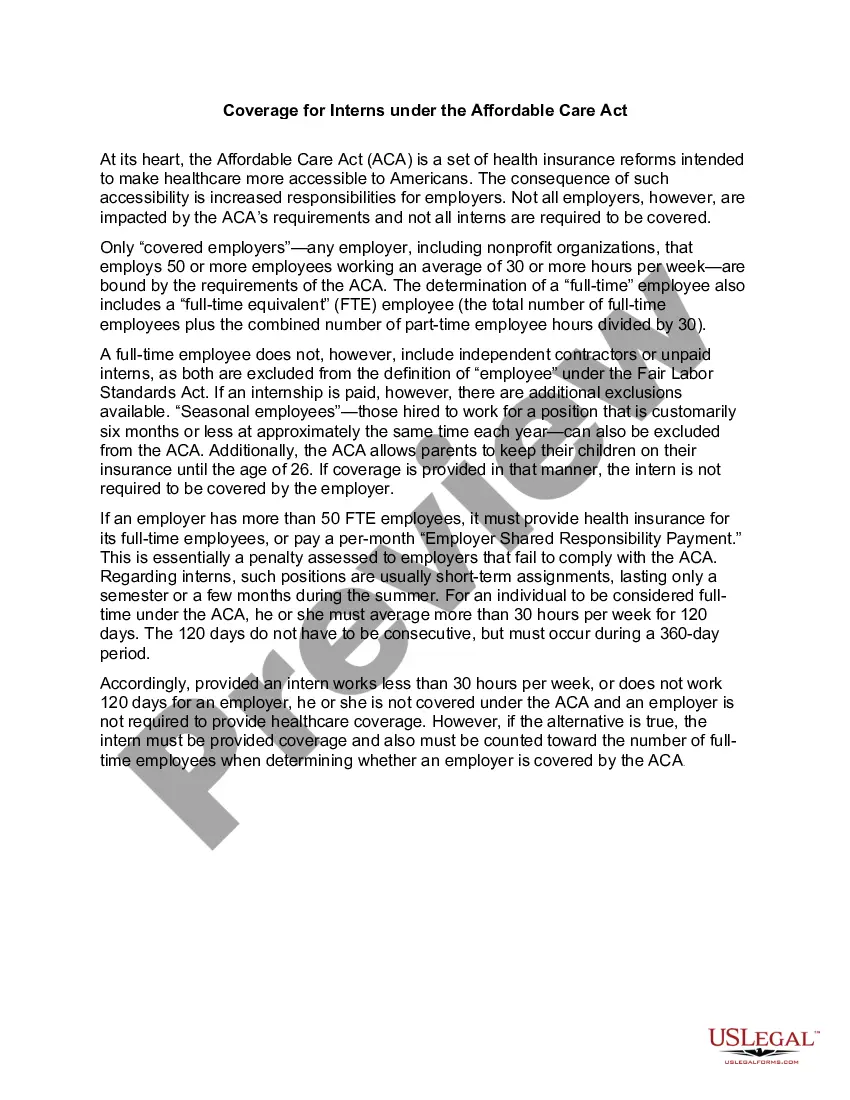
Coverage for Interns under the Affordable Care Act
What is this form?
The Coverage for Interns under the Affordable Care Act form helps employers understand their responsibilities regarding health insurance coverage for interns. This form clarifies the distinctions between unpaid and paid interns and outlines employer obligations under the Affordable Care Act (ACA). It is crucial for determining which interns must be covered and helps avoid tax penalties for non-compliance.
Main sections of this form
- Definitions of full-time employee and full-time equivalent (FTE) under the ACA.
- Clarifications regarding the classification of interns as unpaid volunteers or paid employees.
- Requirements for employers with 50 or more employees regarding health insurance coverage.
- Details about exclusions, such as seasonal employees and how coverage impacts dependent children.
- Information on penalties for non-compliance with the ACA.
When to use this form
This form should be used when an employer is assessing whether their interns are covered under the Affordable Care Act. Employers, especially those in nonprofit sectors, should utilize this form when determining the status of paid and unpaid interns, ensuring compliance with ACA requirements, and understanding their obligations regarding health insurance provision.
Who needs this form
- Employers with interns, particularly those classified as paid employees.
- Nonprofit organizations looking to clarify intern classifications.
- HR professionals responsible for employee benefits and compliance.
- Legal professionals advising clients on employment and healthcare law.
Instructions for completing this form
- Identify the status of each intern (paid or unpaid).
- Determine the average weekly hours worked by the interns.
- Calculate the total number of full-time employees including FTEs.
- Review health insurance offerings for compliance with ACA mandates.
- Document all findings and ensure understanding of responsibilities.
Notarization guidance
In most cases, this form does not require notarization. However, some jurisdictions or signing circumstances might. US Legal Forms offers online notarization powered by Notarize, accessible 24/7 for a quick, remote process.
Get your form ready online
Our built-in tools help you complete, sign, share, and store your documents in one place.
Make edits, fill in missing information, and update formatting in US Legal Forms—just like you would in MS Word.
Download a copy, print it, send it by email, or mail it via USPS—whatever works best for your next step.
Sign and collect signatures with our SignNow integration. Send to multiple recipients, set reminders, and more. Go Premium to unlock E-Sign.
If this form requires notarization, complete it online through a secure video call—no need to meet a notary in person or wait for an appointment.
We protect your documents and personal data by following strict security and privacy standards.

Make edits, fill in missing information, and update formatting in US Legal Forms—just like you would in MS Word.

Download a copy, print it, send it by email, or mail it via USPS—whatever works best for your next step.

Sign and collect signatures with our SignNow integration. Send to multiple recipients, set reminders, and more. Go Premium to unlock E-Sign.

If this form requires notarization, complete it online through a secure video call—no need to meet a notary in person or wait for an appointment.

We protect your documents and personal data by following strict security and privacy standards.
Common mistakes
- Misclassifying unpaid interns as employees.
- Overlooking the requirement to count interns towards employee totals.
- Failing to track intern hours accurately during the coverage determination period.
- Assuming all interns are automatically covered by employer insurance.
Benefits of using this form online
- Immediate access to legally drafted forms tailored to meet ACA requirements.
- Editable format allows for customization according to specific organizational needs.
- Guidance provided in clear terms that are easy to comprehend.
- Convenience of downloading and printing at any time.
Legal use & context
- The form is essential for compliance with the ACA, avoiding potential penalties.
- Understanding employee and intern classifications is crucial for legal protection.
- The guidelines help ensure that employers are not inadvertently violating labor laws.
Summary of main points
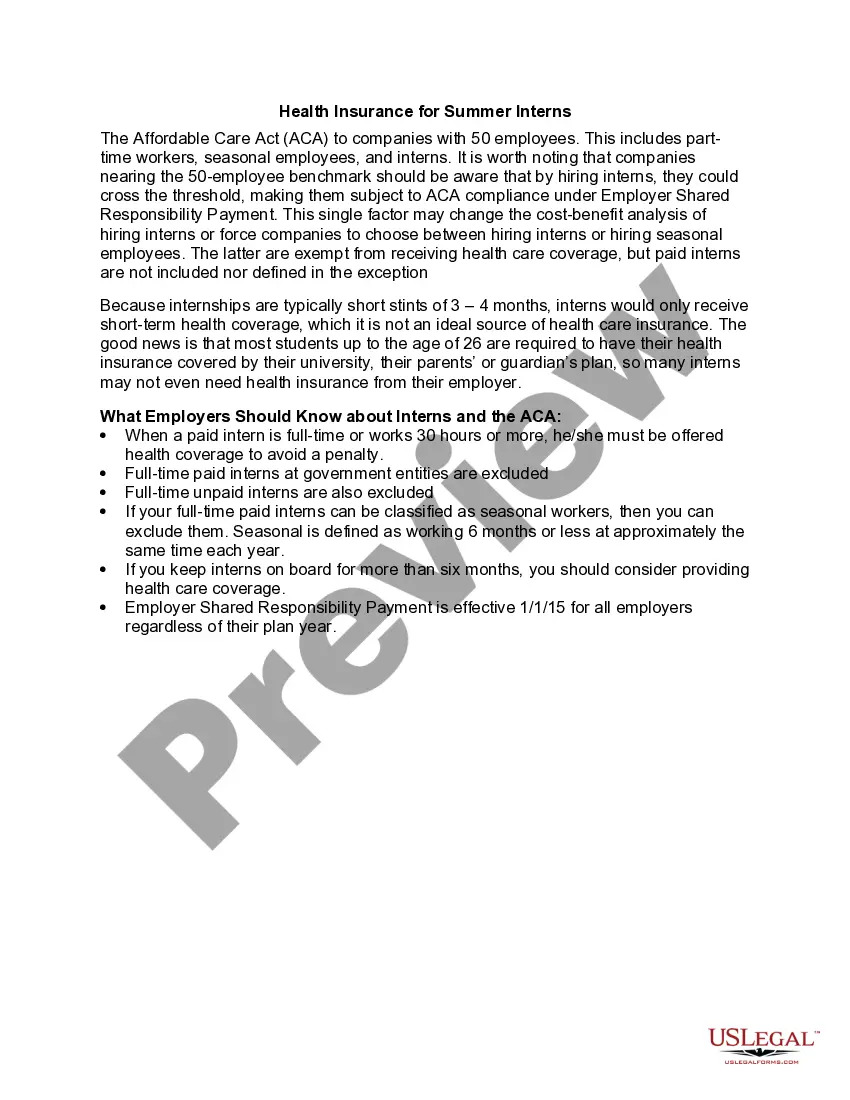
- Employers must assess whether interns meet ACA coverage criteria.
- Coverage is compulsory only for paid interns who qualify as full-time employees.
- Employers can face penalties for not adhering to ACA obligations.
- Clear documentation and understanding of intern classifications are vital for compliance.
Looking for another form?
Form popularity
FAQ
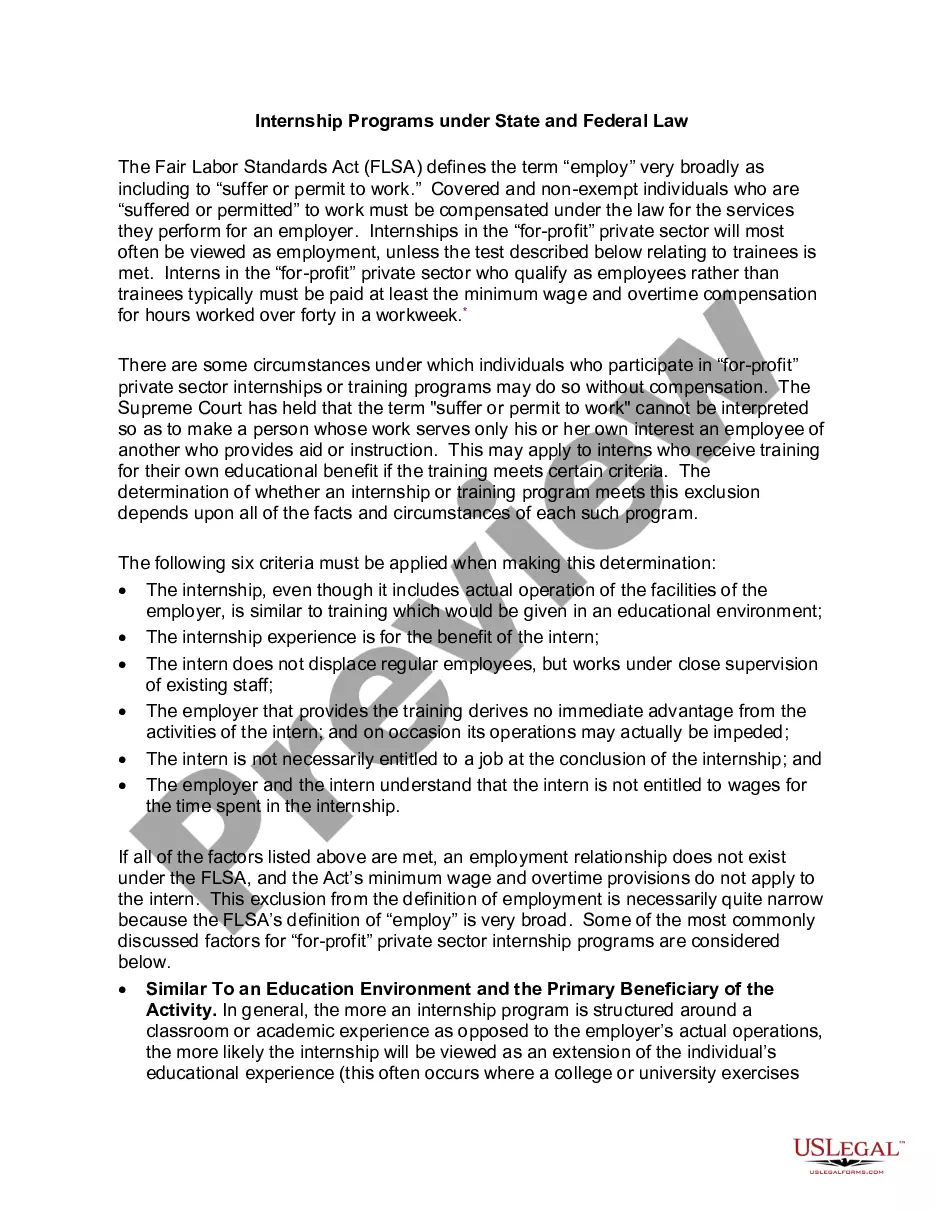
Unless all of the following criteria are met, the intern is legally an employee, who must be paid the minimum wage, earn overtime, and receive all of the other protections guaranteed by state and federal employment laws: Interns cannot displace regular employees.
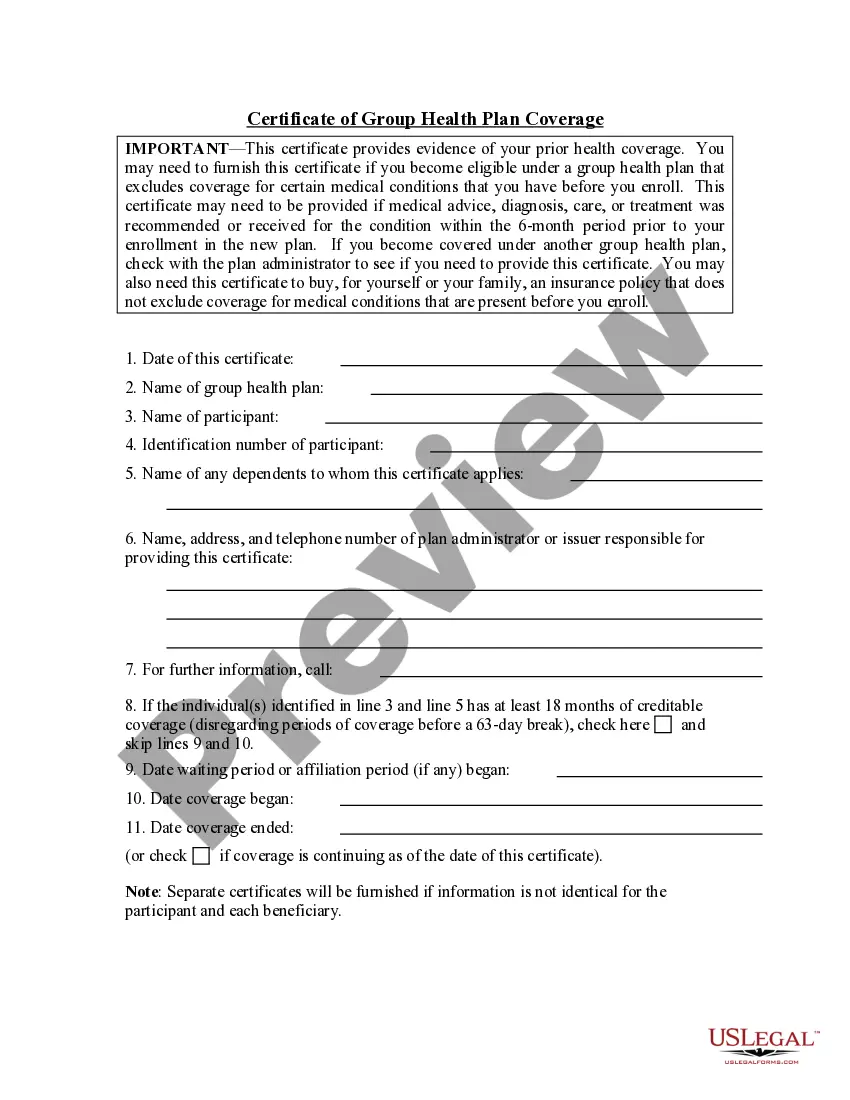
The health care law requires the following organizations and some other parties to report that they provide health coverage to their employees: Certain employers, generally those with 50 or more full-time and full-time equivalent employees. Health insurance companies. Self-insuring employers of any size.
A Qualifying Offer is an offer that satisfies all of the following criteria: It is an offer of coverage that provides minimum value; The employee cost for employee-only coverage for each month does not exceed 9.5% (as adjusted) of the mainland single federal poverty line divided by 12; and.
A set of 10 categories of services health insurance plans must cover under the Affordable Care Act. These include doctors' services, inpatient and outpatient hospital care, prescription drug coverage, pregnancy and childbirth, mental health services, and more.
Affordable coverage under the ACA means that the employee's required contribution for self-only coverage (meaning the amount to acquire coverage for only oneself, and not the cost for dependents) does not exceed a certain percentage of their household income.
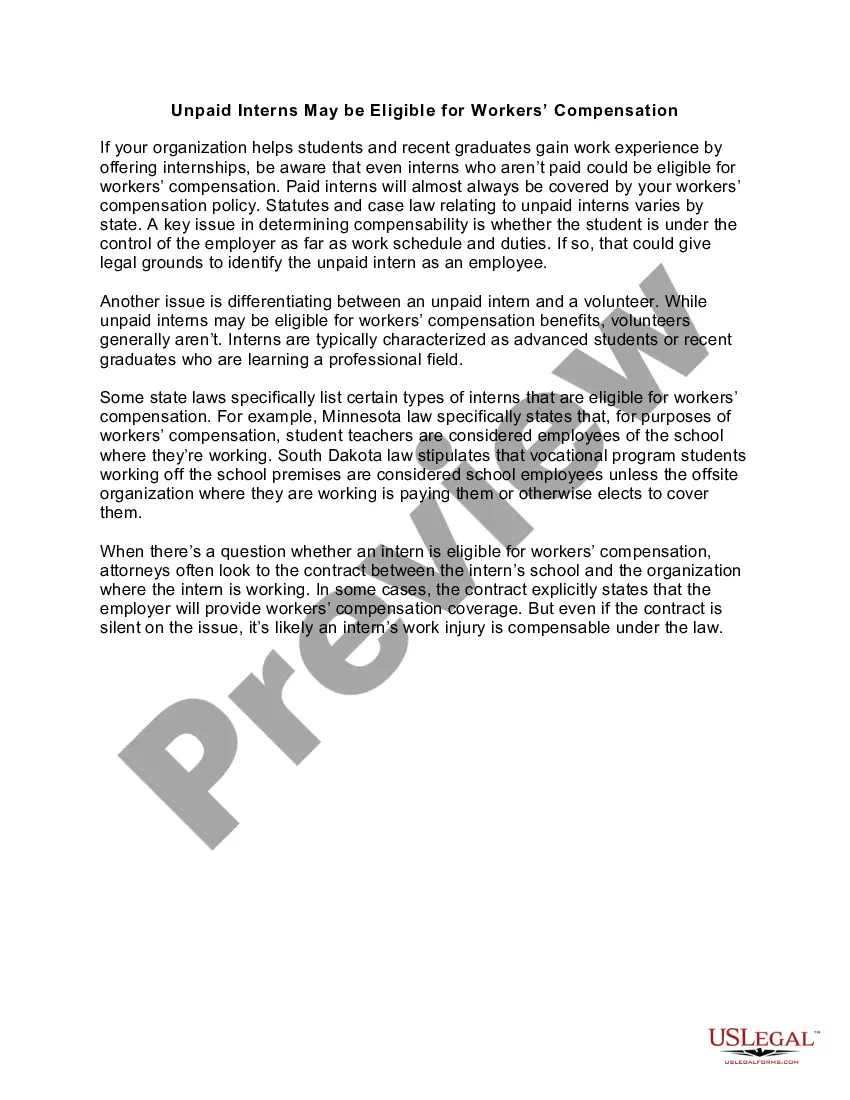
Interns May Be Considered Covered Employees If a paid intern works more than 30 hours per week, they may be considered an eligible employee whom the company must cover.Interns who have worked less than 30 hours a week on average for the last 12 months.
Job experience. Research experience. Access to a variety of tasks and departments. Mentorship. Help guide career goals. Create a professional network. Build a strong resume. Secure good references and recommendations.
29. What counts as an offer of coverage under the employer shared responsibility provisions? In general, an ALE makes an offer of coverage to an employee if it provides the employee an effective opportunity to enroll in the coverage (or to decline that coverage) at least once for each plan year.
Under the ACA, employers with 50 or more full-time equivalent employees are required to offer coverage to their employees and to their employees' children, but not to spouses although it's still relatively rare for companies to exclude spouses.