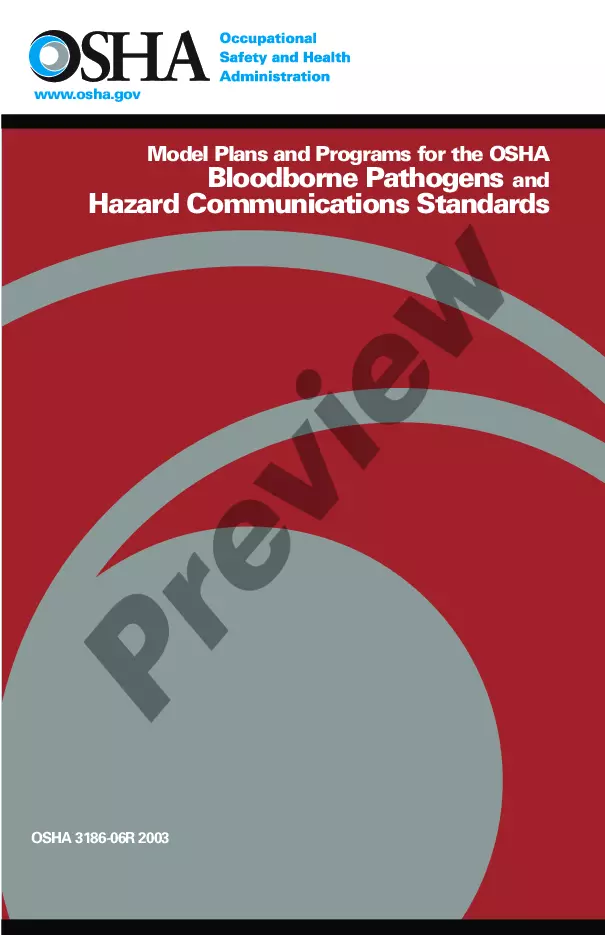
Model Plans and Programs for the OSHA Bloodborne Pathogens and Hazard Communications Standards
Understanding this form
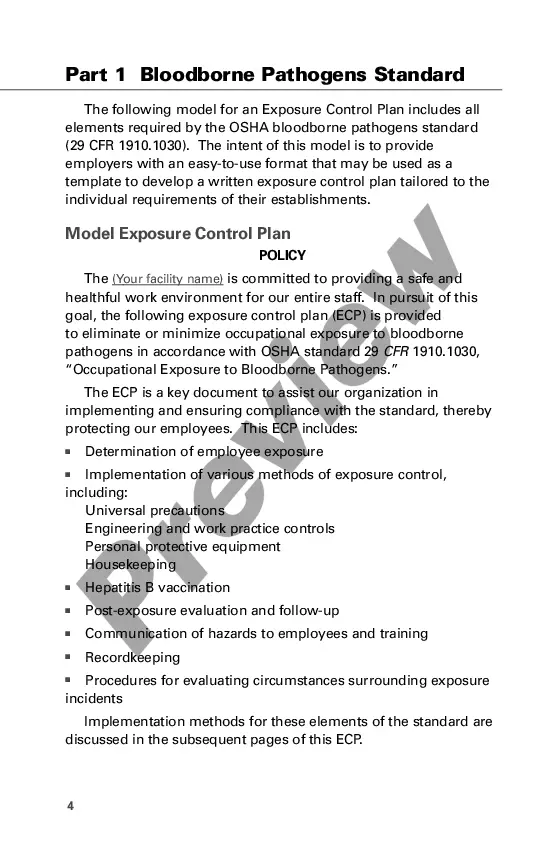
This form is a Model Exposure Control Plan designed to help employers comply with the Occupational Safety and Health Administration (OSHA) Bloodborne Pathogens Standard and the Hazard Communications Standard. This structured document outlines safety measures, training requirements, and procedures aimed at reducing the risk of exposure to bloodborne pathogens and hazardous chemicals within the workplace. Unlike generic safety guidelines, this form provides a specific framework tailored to meet legal compliance and safeguard employee health in various work environments.
Key components of this form
- Policy statement outlining the commitment to a safe work environment.
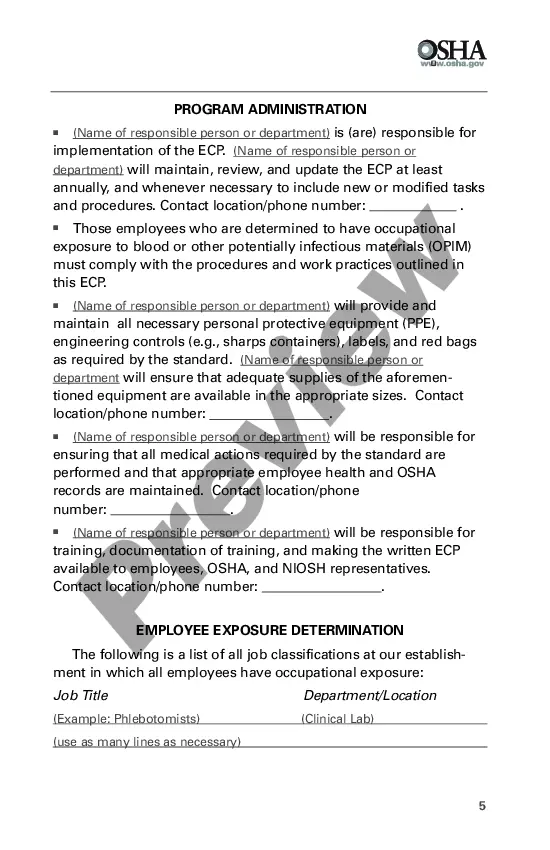
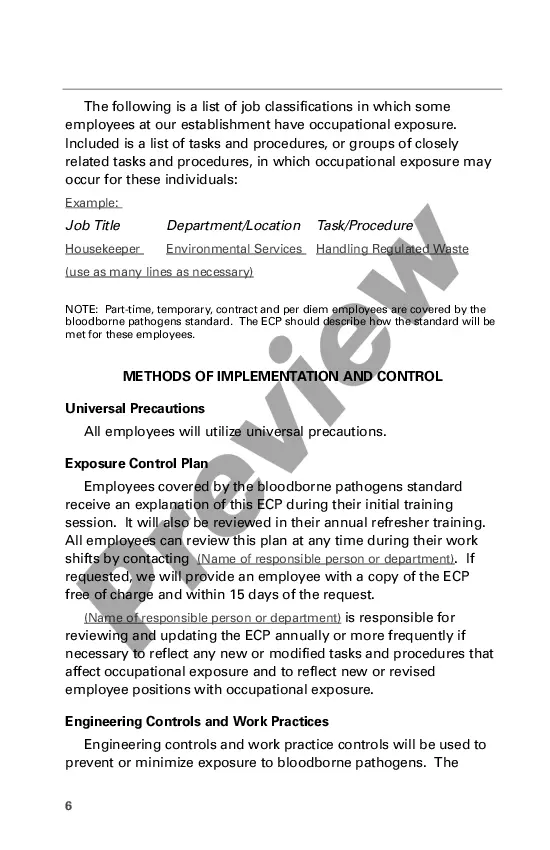
- Employee exposure determination section identifying personnel at risk.
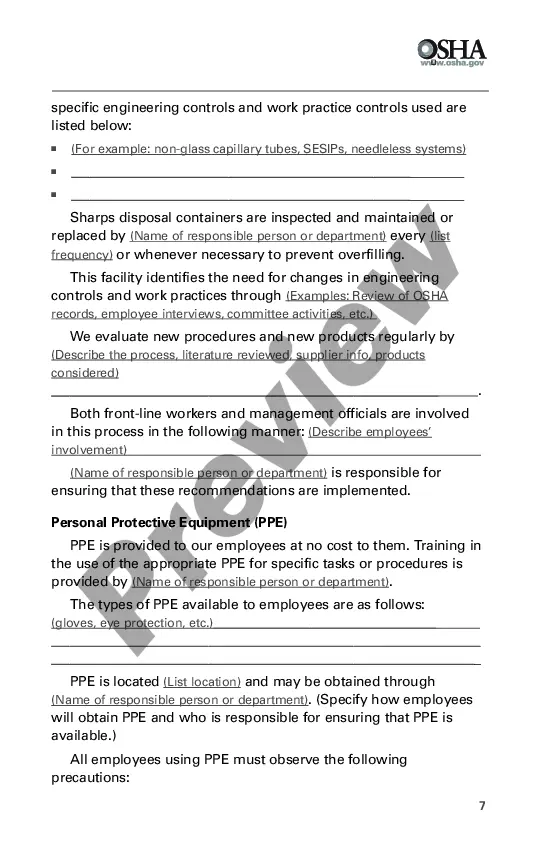
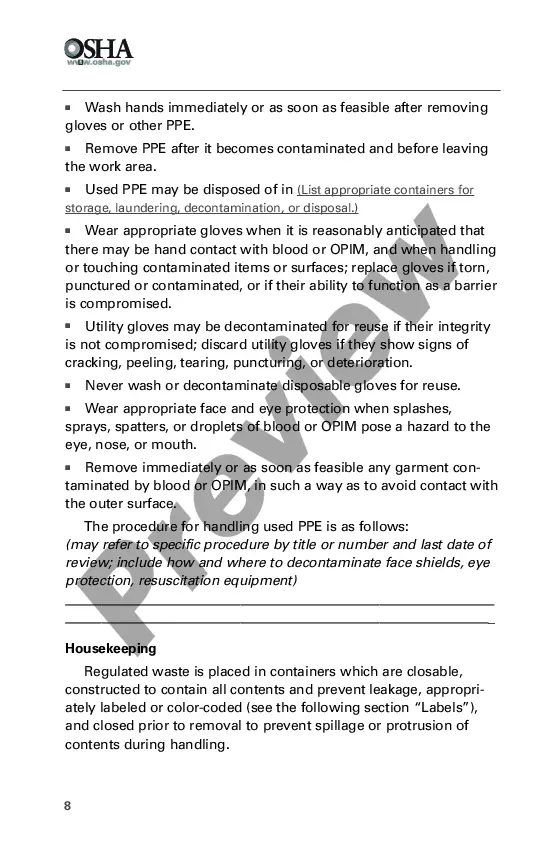
- Implementation methods for engineering controls and personal protective equipment (PPE).
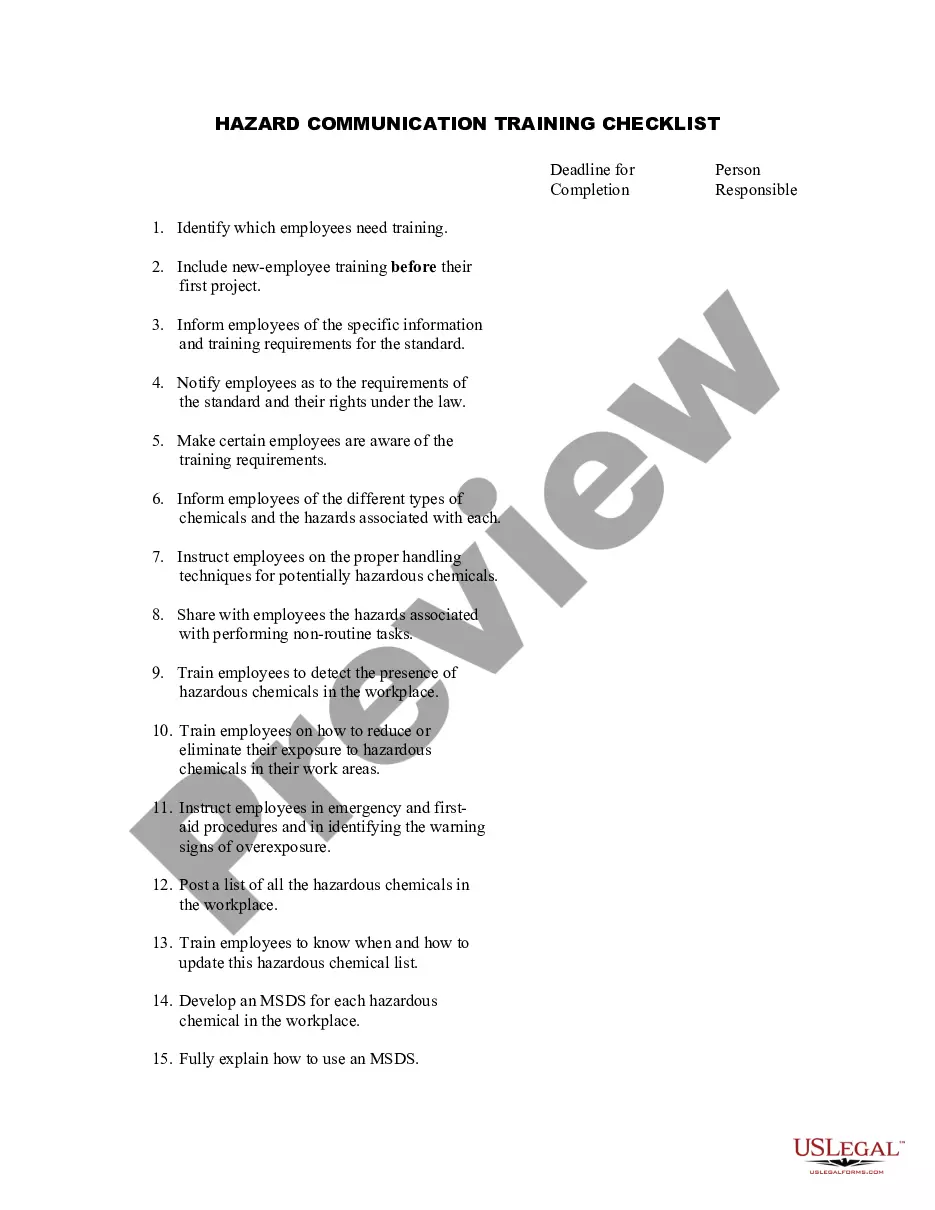
- Training and communication protocols for employees on hazardous exposure.
- Documentation requirements for exposure incidents and post-exposure follow-ups.
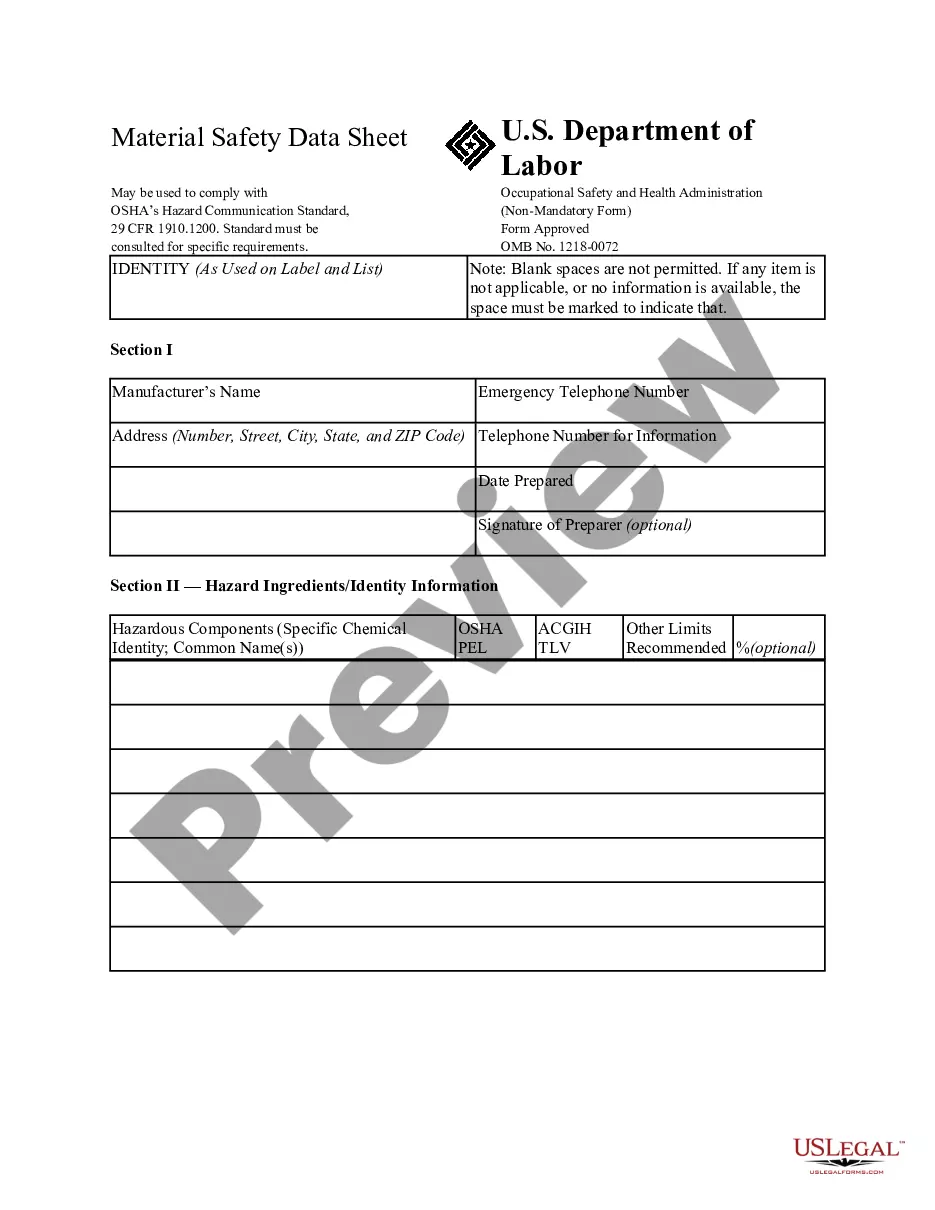
- Model Hazard Communication Program detailing handling and labeling of hazardous materials.

Common use cases
This form should be used by employers in industries where there is potential exposure to bloodborne pathogens or hazardous chemicals. It is necessary when establishing or revising workplace safety protocols, conducting employee training, or preparing for an OSHA inspection. This form is especially relevant for healthcare facilities, laboratories, or any organization handling biological or chemical hazards.
Who should use this form
- Employers responsible for maintaining workplace safety and compliance with OSHA regulations.
- Safety officers tasked with developing and implementing health policies.
- Human Resource managers overseeing employee training and safety documentation.
- Employees at risk of exposure to bloodborne pathogens or hazardous materials.
Completing this form step by step
- Identify your facility name and include it in the policy statement section.
- Determine job titles and employees who have occupational exposure to blood or hazardous materials.
- List the specific procedures and engineering controls implemented to minimize exposure risk.
- Develop a training schedule detailing the safety protocols and requirements for employees.
- Establish a system for maintaining documentation of training and exposure incidents.
Does this document require notarization?
This form does not typically require notarization unless specified by local law. However, it is important to consult with legal counsel or your local OSHA office to ensure compliance with regional requirements.
Get your form ready online
Our built-in tools help you complete, sign, share, and store your documents in one place.
Make edits, fill in missing information, and update formatting in US Legal Forms—just like you would in MS Word.
Download a copy, print it, send it by email, or mail it via USPS—whatever works best for your next step.
Sign and collect signatures with our SignNow integration. Send to multiple recipients, set reminders, and more. Go Premium to unlock E-Sign.
If this form requires notarization, complete it online through a secure video call—no need to meet a notary in person or wait for an appointment.
We protect your documents and personal data by following strict security and privacy standards.

Make edits, fill in missing information, and update formatting in US Legal Forms—just like you would in MS Word.

Download a copy, print it, send it by email, or mail it via USPS—whatever works best for your next step.

Sign and collect signatures with our SignNow integration. Send to multiple recipients, set reminders, and more. Go Premium to unlock E-Sign.

If this form requires notarization, complete it online through a secure video call—no need to meet a notary in person or wait for an appointment.

We protect your documents and personal data by following strict security and privacy standards.
Mistakes to watch out for
- Failing to regularly update the exposure control plan based on new procedures or employee positions.
- Not providing adequate training to all employees who may be exposed to bloodborne pathogens or hazardous materials.
- Neglecting to keep records of training sessions and exposure incidents.
- Using a one-size-fits-all approach without tailoring the plan to specific workplace conditions.
Benefits of completing this form online
- Easy access to a reliable and comprehensive framework specifically designed for OSHA compliance.
- Convenience of downloading and editing the document to meet your organization's unique needs.
- Structured format ensures all essential elements are included to promote workplace safety.
- Time-efficient management of safety protocols with clear guidelines and requirements.
Looking for another form?
Form popularity
FAQ
Policy or goals statement. List of responsible persons. Hazard identification. Hazard controls and safe practices. Emergency and accident response. Employee training and communication. Recordkeeping.
Protections Provided by OSHA's Bloodborne Pathogens Standard. All of the requirements of OSHA's Bloodborne Pathogens standard can be found in Title 29 of the Code of Federal Regulations at 29 CFR 1910.1030.
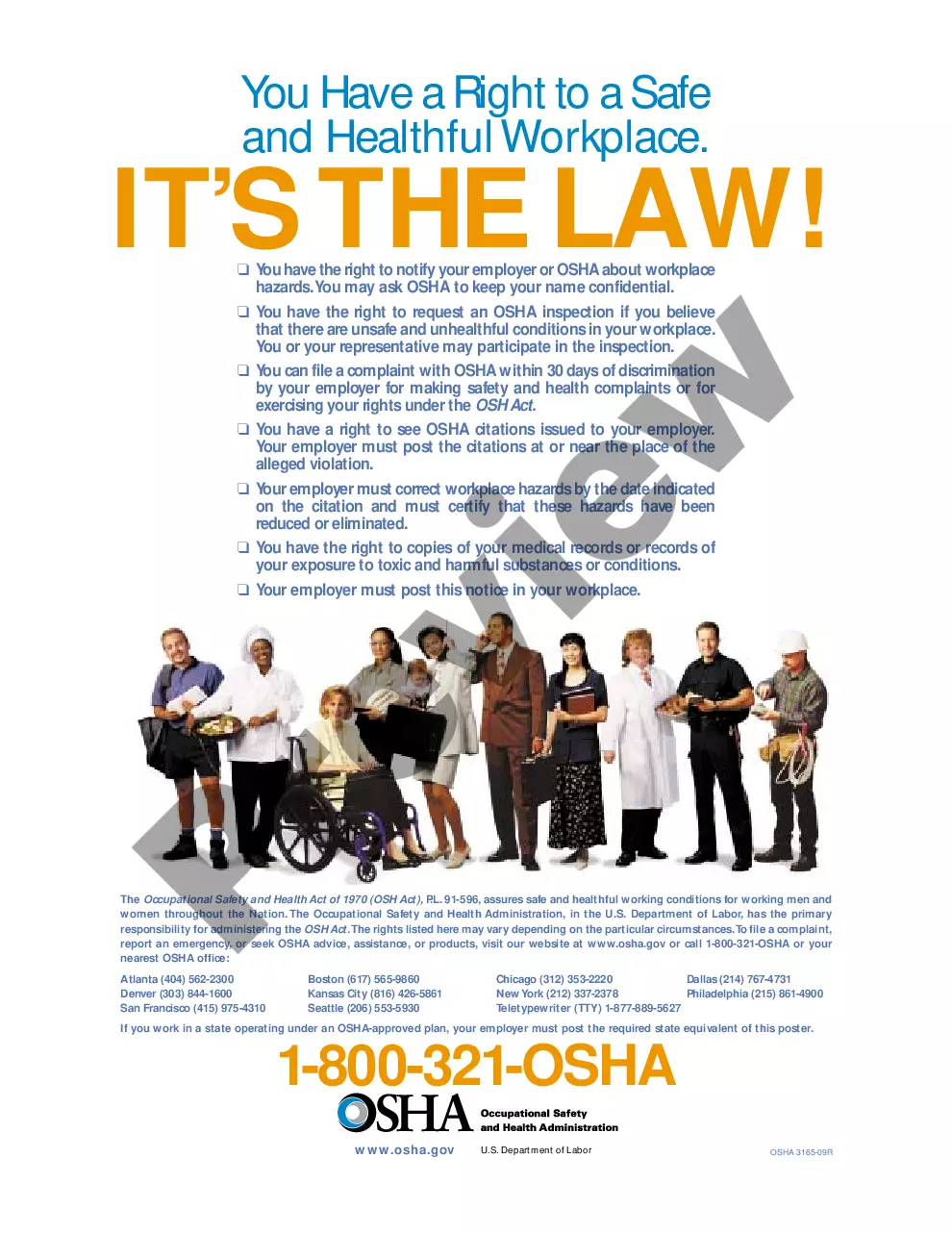
OSHA's Bloodborne Pathogens Standard (29 CFR 1910.1030) as amended pursuant to the 2000 Needlestick Safety and Prevention Act, is a regulation that prescribes safeguards to protect workers against health hazards related to bloodborne pathogens.
Medical records for employees with occupational exposure to bloodborne pathogens include the employee's name, social security number, and hepatitis B vaccination status, including dates of hepatitis B vaccination and any medical records relative to the employee's ability to receive the vaccination.
A description of the device being used (including type and brand) Protective equipment or clothing that was used at the time of the exposure incident (gloves, eye shields, etc.) Location of the incident (O.R., E.R., patient room, etc.) Procedure being performed when the incident occurred.
1-201(d). Under OSHA's bloodborne pathogens standard, employers having employees with exposure to blood or other potentially infectious materials (OPIM) must train employees annually regardless of the employees' prior training or education.
The Bloodborne Pathogens standard (29 CFR 1910.1030) and CDC's recommended standard precautions both include personal protective equipment, such as gloves, gowns, masks, eye protection (e.g., goggles), and face shields, to protect workers from exposure to infectious diseases.
Among the safety methods listed in the OSHA standard are mandatory Hepatitis B vaccination, training on the hazards of bloodborne pathogens and universal precautions, follow-up procedures after an HIV or HBV exposure incident, mandatory use of personal protective equipment (PPE)--gloves and gowns--where there is