Revocation of Will
Overview of this form
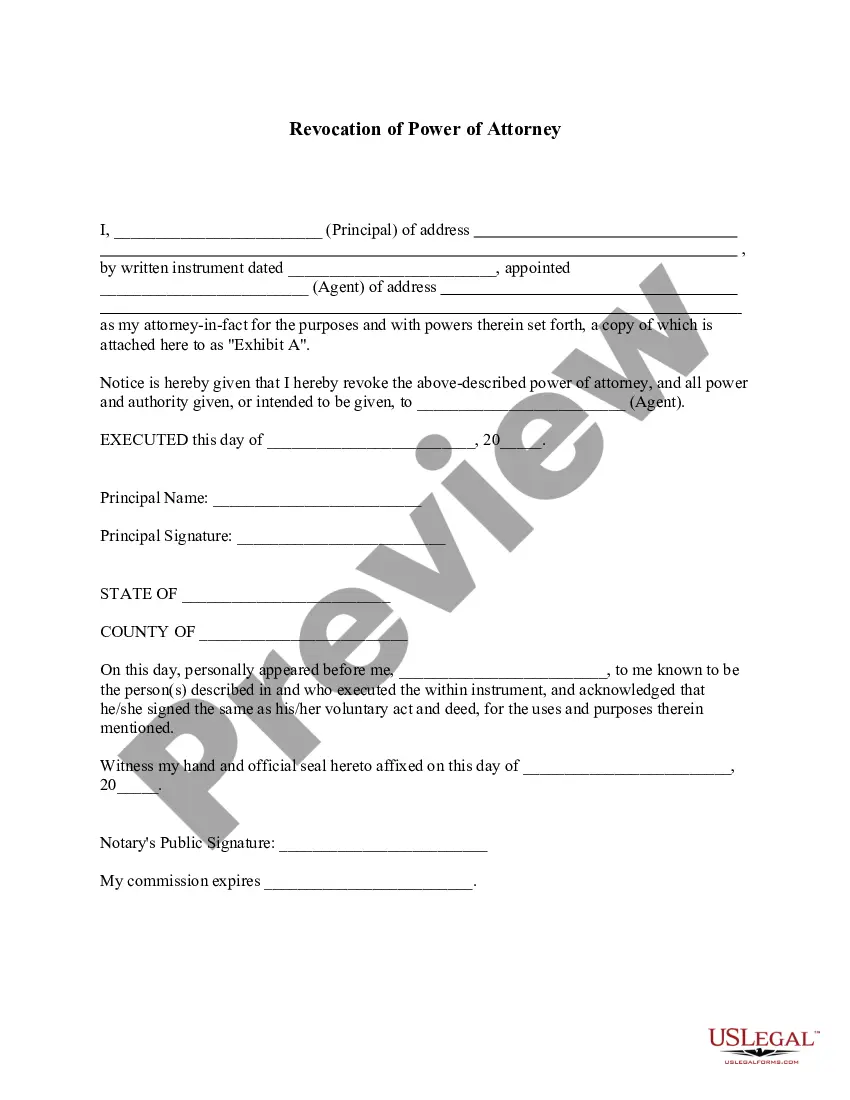
The Revocation of Will is a legal document used to officially cancel an existing will. This form is essential when an individual wishes to invalidate their previous will, often due to changes in personal circumstances, such as a divorce, remarriage, or alterations in beneficiaries. Unlike other estate planning documents, the Revocation of Will specifically addresses the cancellation of a prior will, ensuring that any previous wishes outlined in that document are no longer in effect.
What’s included in this form
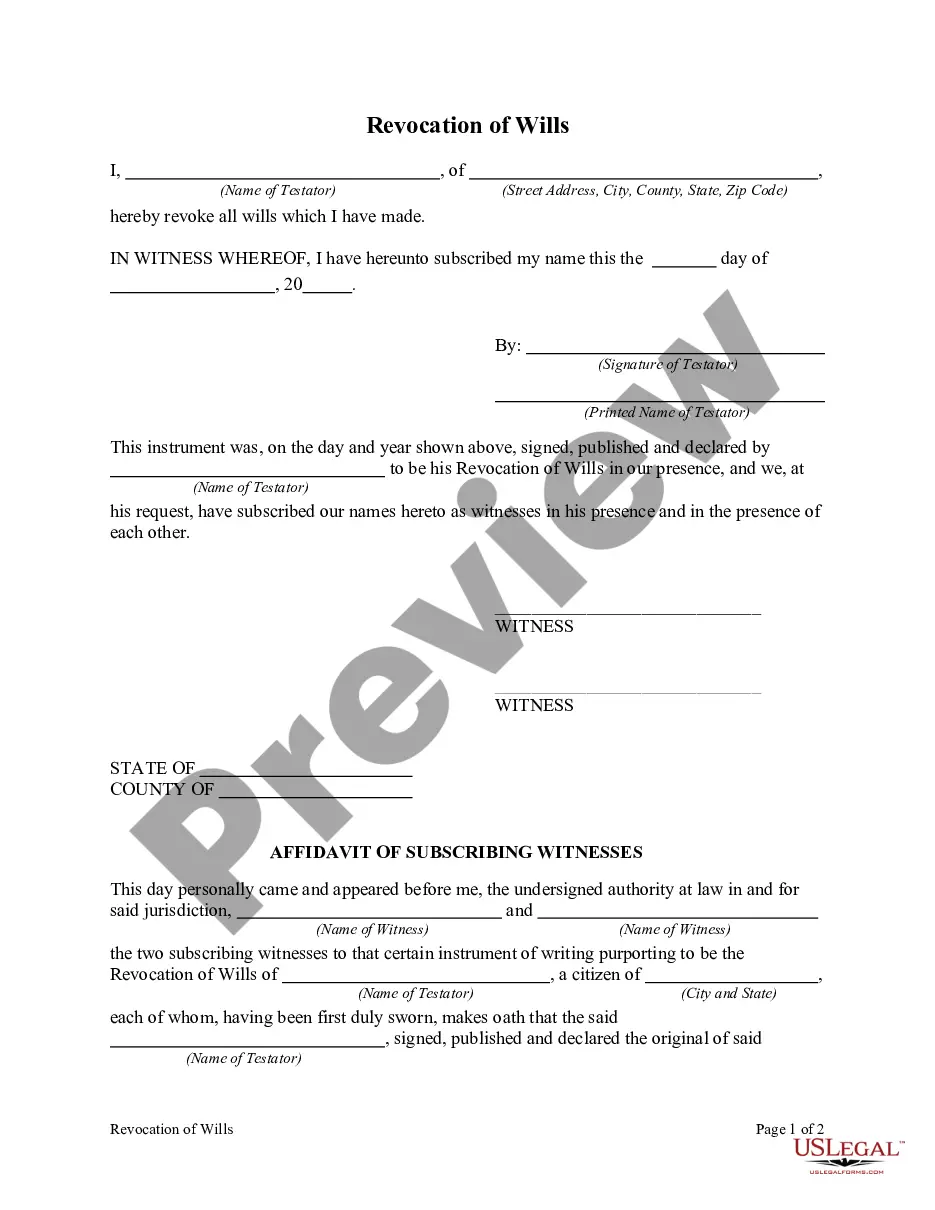
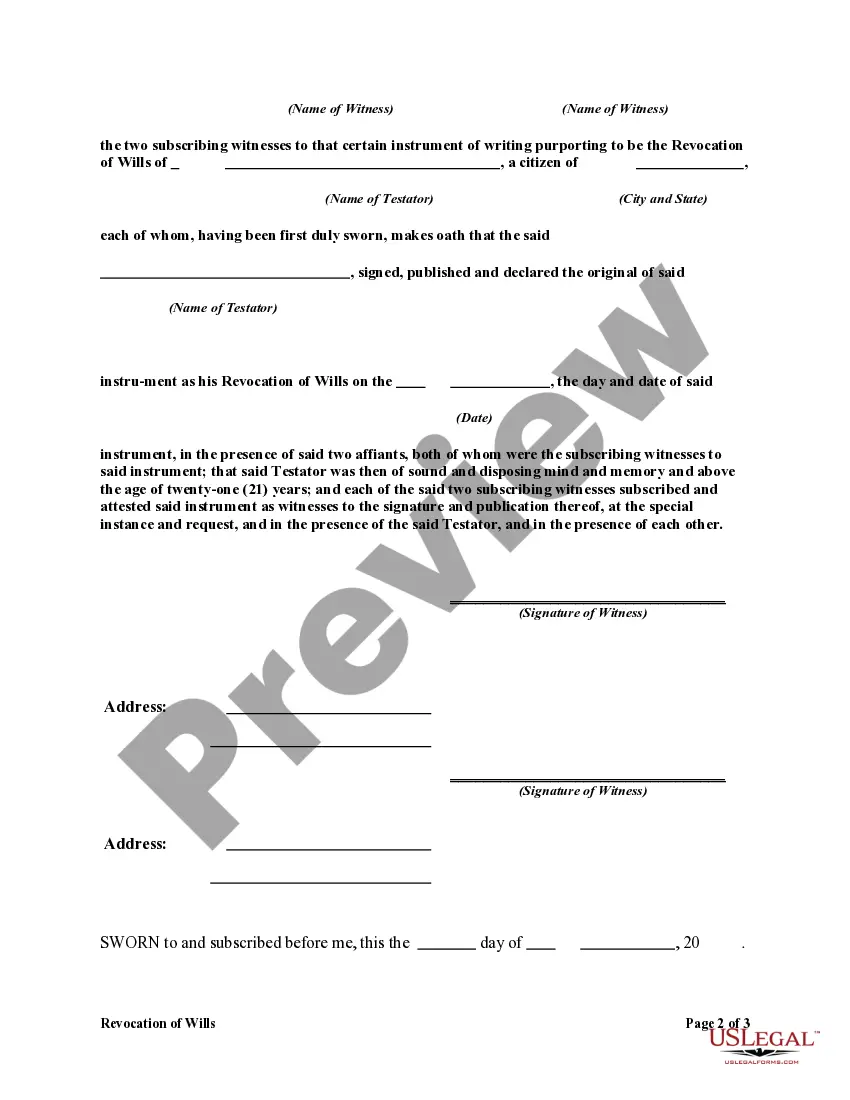
- Identification of the testator: Name and details of the individual revoking the will.
- Statement of revocation: Clear declaration that the previous will is revoked.
- Date of execution: The date on which the revocation is signed.
- Signature of the testator: The individual must sign the document to make the revocation valid.
Common use cases
The Revocation of Will is typically used in several scenarios, including:
- After experiencing a divorce, where the previous spouse is no longer considered a beneficiary.
- Upon remarriage, necessitating changes in the distribution of assets.
- When a significant life event occurs, such as the birth of a child, prompting a rethink of beneficiaries in the will.
- If the testator simply wishes to revise their estate plan entirely for personal or financial reasons.
Who this form is for
- Individuals who currently have a will that they wish to revoke.
- Anyone undergoing major life changes that impact their estate planning decisions.
- Individuals seeking to ensure their current intentions regarding asset distribution are reflected in their legal documents.
Instructions for completing this form
- Identify the testator by entering their full name and address at the top of the form.
- Clearly state the intent to revoke the existing will by including a declaration.
- Enter the date on which the revocation is made.
- Have the testator sign the document in the designated area.
Does this document require notarization?
In most cases, this form does not require notarization. However, some jurisdictions or signing circumstances might. US Legal Forms offers online notarization powered by Notarize, accessible 24/7 for a quick, remote process.
Get your form ready online
Our built-in tools help you complete, sign, share, and store your documents in one place.
Make edits, fill in missing information, and update formatting in US Legal Forms—just like you would in MS Word.
Download a copy, print it, send it by email, or mail it via USPS—whatever works best for your next step.
Sign and collect signatures with our SignNow integration. Send to multiple recipients, set reminders, and more. Go Premium to unlock E-Sign.
If this form requires notarization, complete it online through a secure video call—no need to meet a notary in person or wait for an appointment.
We protect your documents and personal data by following strict security and privacy standards.

Make edits, fill in missing information, and update formatting in US Legal Forms—just like you would in MS Word.

Download a copy, print it, send it by email, or mail it via USPS—whatever works best for your next step.

Sign and collect signatures with our SignNow integration. Send to multiple recipients, set reminders, and more. Go Premium to unlock E-Sign.

If this form requires notarization, complete it online through a secure video call—no need to meet a notary in person or wait for an appointment.

We protect your documents and personal data by following strict security and privacy standards.
Common mistakes
- Not including a clear statement of revocation, leading to ambiguity.
- Failing to sign the document, which makes it invalid.
- Using outdated templates that may not comply with current state laws.
Why use this form online
- Convenience of accessing and completing the form from anywhere.
- Editable templates allow for easy updates and modifications.
- Reliable legal forms drafted by licensed attorneys ensure compliance.
What to keep in mind
- Use the Revocation of Will form to cancel any existing will.
- Clearly identify the will being revoked to avoid confusion.
- Ensure you follow state-specific requirements for legal validity.
Looking for another form?

Form popularity
FAQ
Creating a Holographic Will. A holographic will is a handwritten will without any witnesses. Not Having the Proper Witnesses. Not Destroying Previous Wills. Insufficient Testamentary Capacity. Not Following Your State's Will Provisions. Fraud or Undue Influence.
There are a few ways to destroy a will completely. Rewriting a will and clearly expressing your intent to terminate the former completely revokes the first will. Also, physically destroying the will by burning or shredding or any other act that destroys the will's physical form will cancel it.
A common way to revoke a will is to utterly destroy it. You can burn it, tear it, or shred it to pieces, so long as you intend to destroy the will. This applies to whether you actually destroy it, or whether someone else destroys it, at your request, and in your presence.
You may change your Will at any time during your lifetime, provided you are competent to contract (i.e., of sound mind) either by executing a codicil to your last Will or by making a fresh Will and revoking your previous Will.Also, it may be advisable to destroy your previous Will to avoid confusion.
When a person (the 'Testator') makes a valid Will, section 20 of the Wills Act 1837 states that it can only be revoked in three ways: by the Testator making another Will or codicil; by them signing a revocation provision (a professionally drafted Will will always include this provision) or by destruction.
Alberta Wills can be changed at any time simply by visiting your lawyer.In some situations, wills are automatically revoked, such as when you get married. Consider making an entirely new will when you need to make major changes and using a codicil for small changes.
The Testator themselves may revoke a previous will by their own declaration in writing. One may also chose to revoke their will by destroying their copy but this action must be made clear of its intentions.
A testator who wishes to revoke his original Will which is made by him on a specified date and time, he can make revocation of the will himself by writing a subsequent Will or codicil duly executed and by destruction of the previous will.
1Revocation by another will or codicil. Most wills have a clause revoking prior wills, such as I revoke all former testamentary dispositions.2Revocation by declaration in writing.3Revocation by destruction.4Revocation by marriage.5Revocation by divorce.