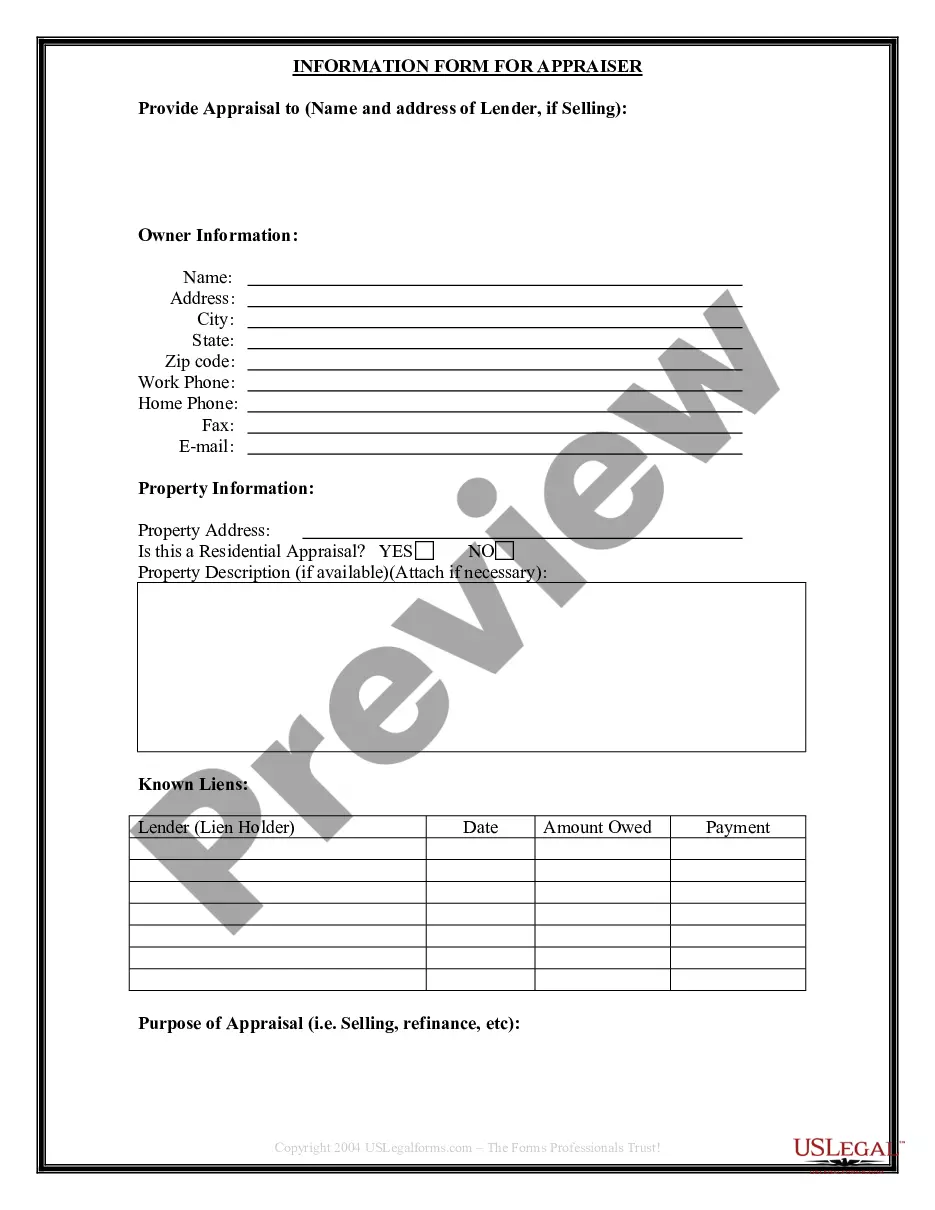
Sample Franchise Agreement
About this form
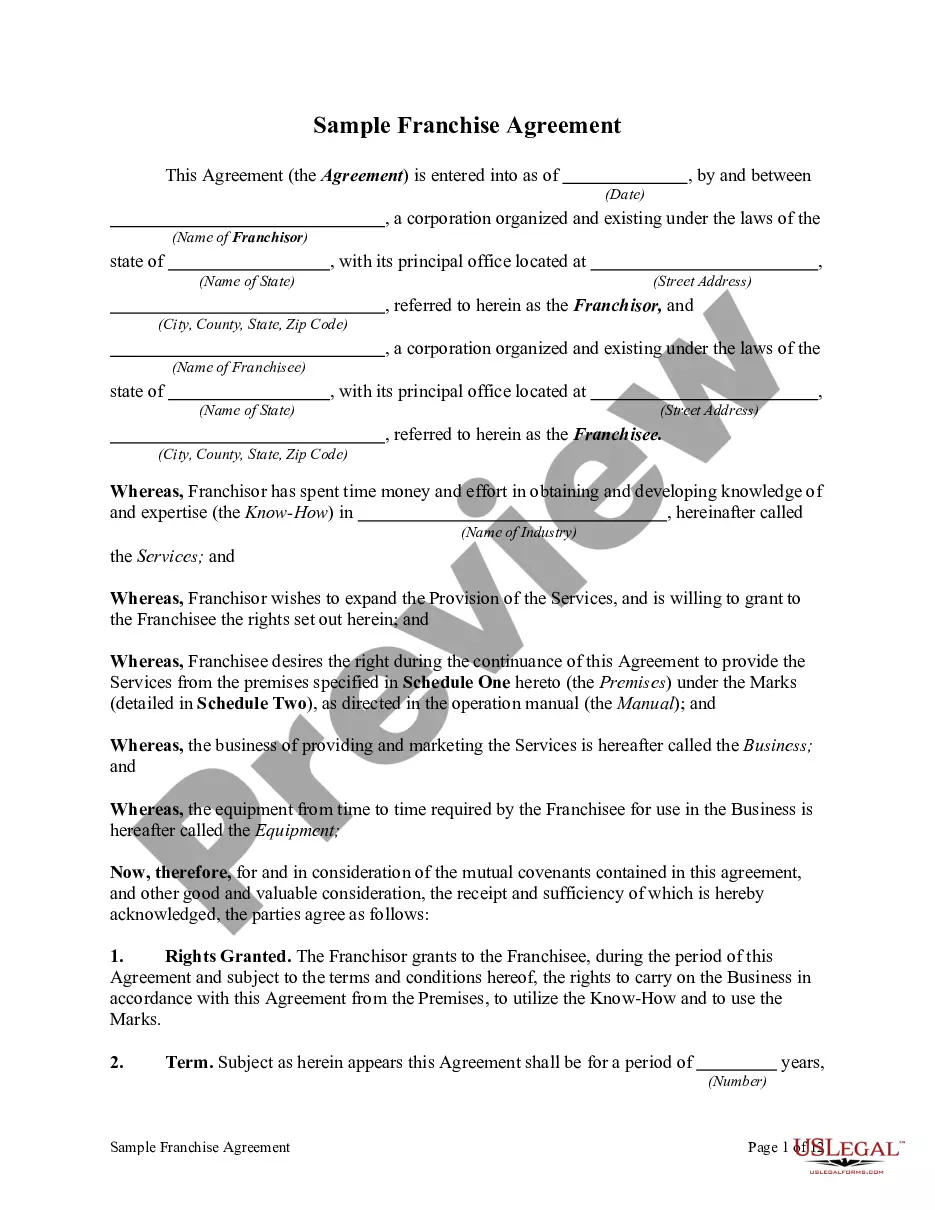
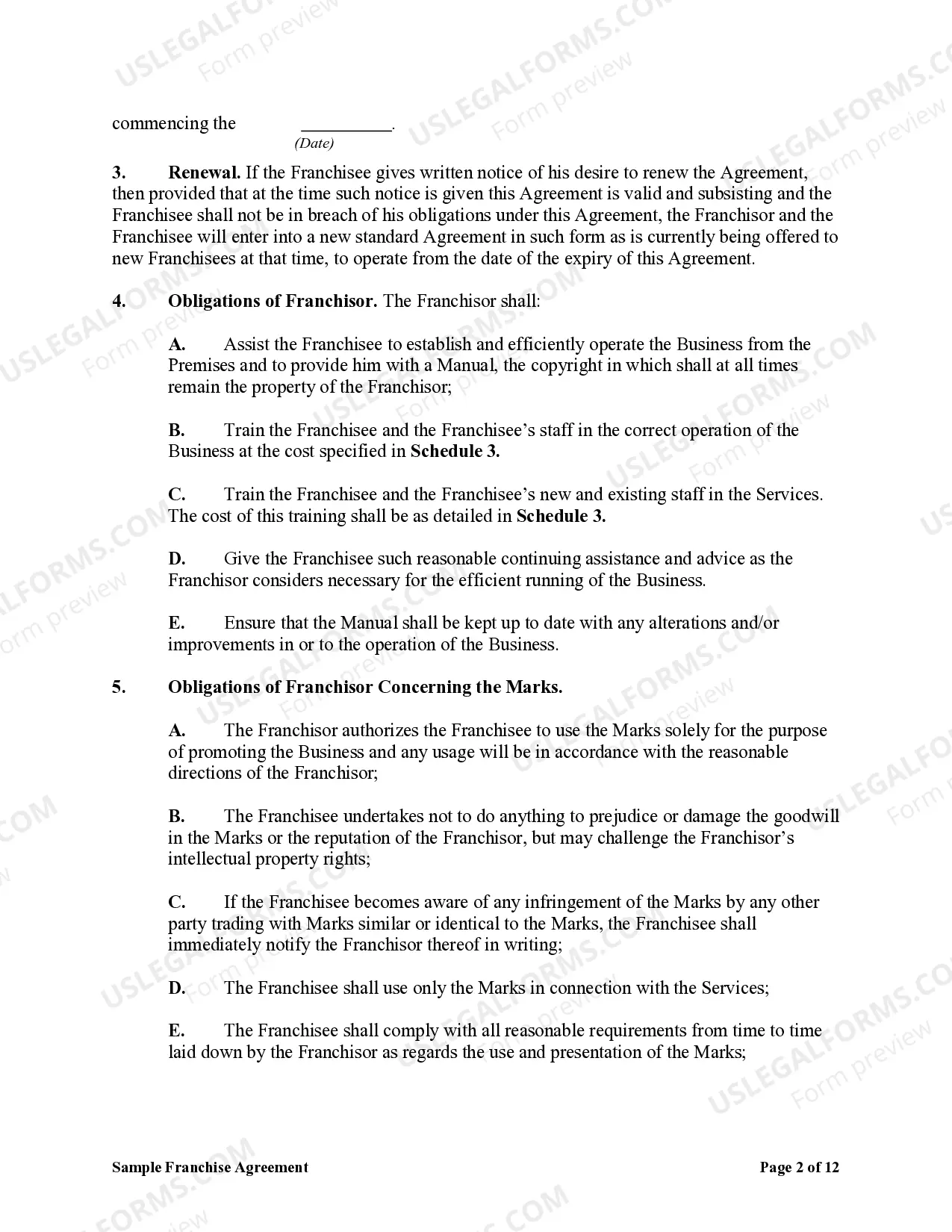
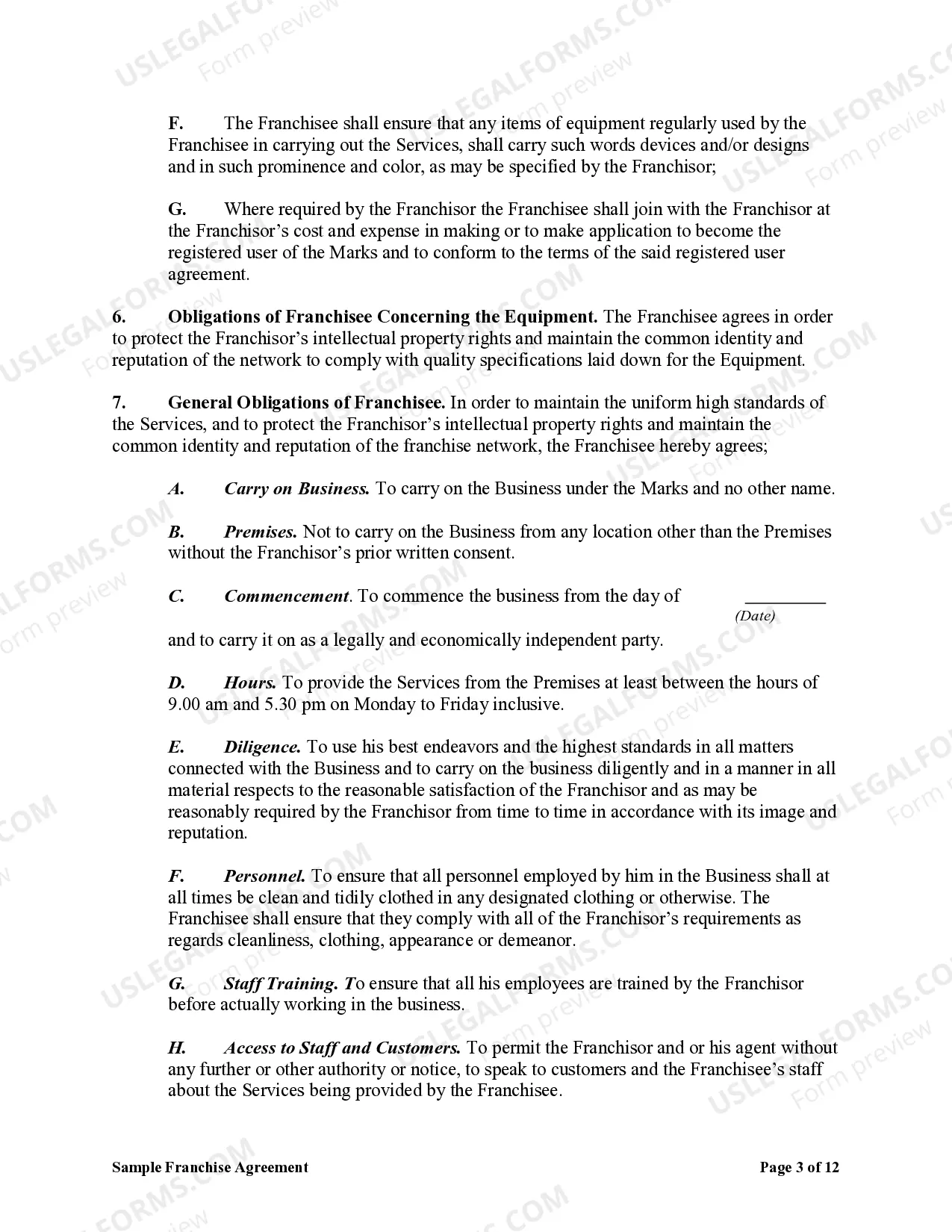
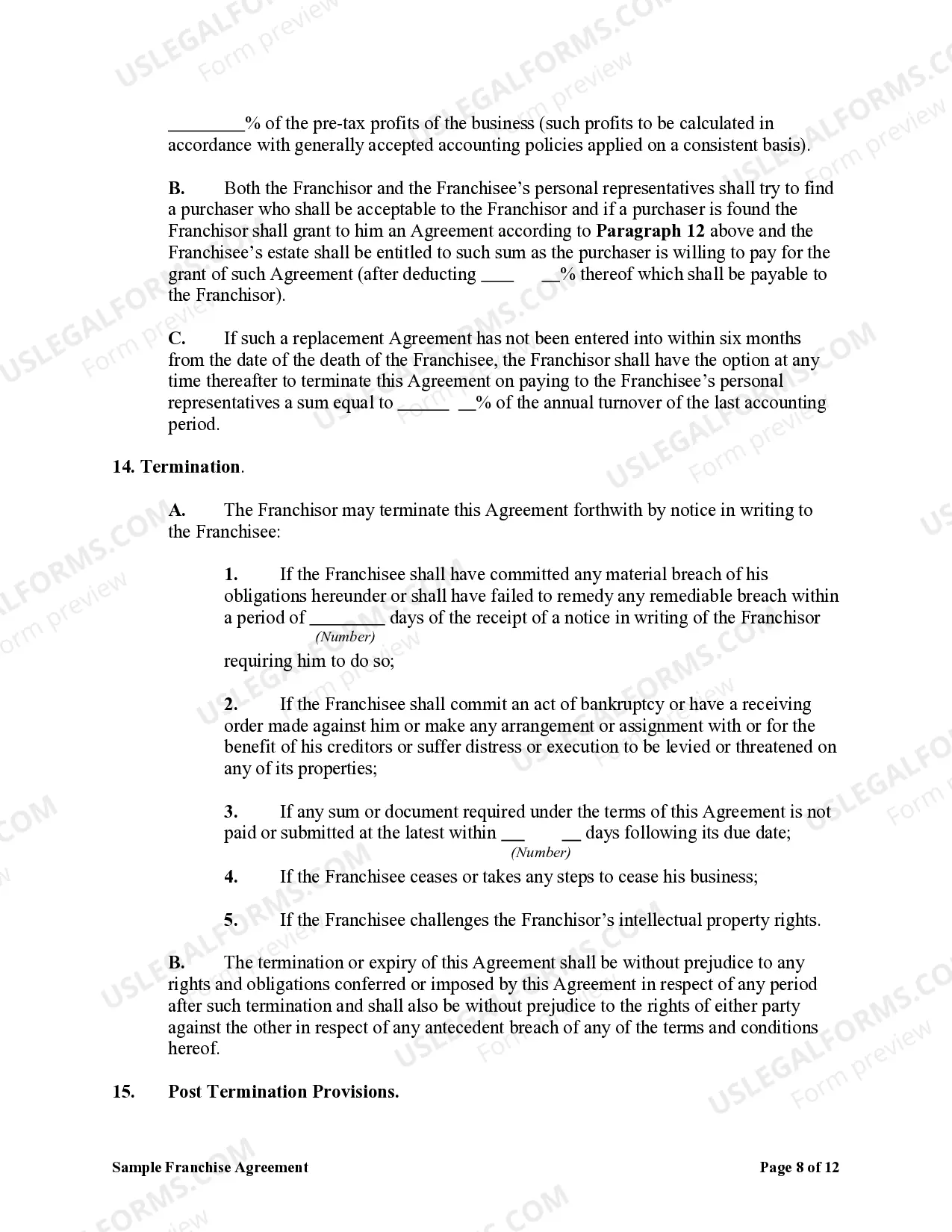
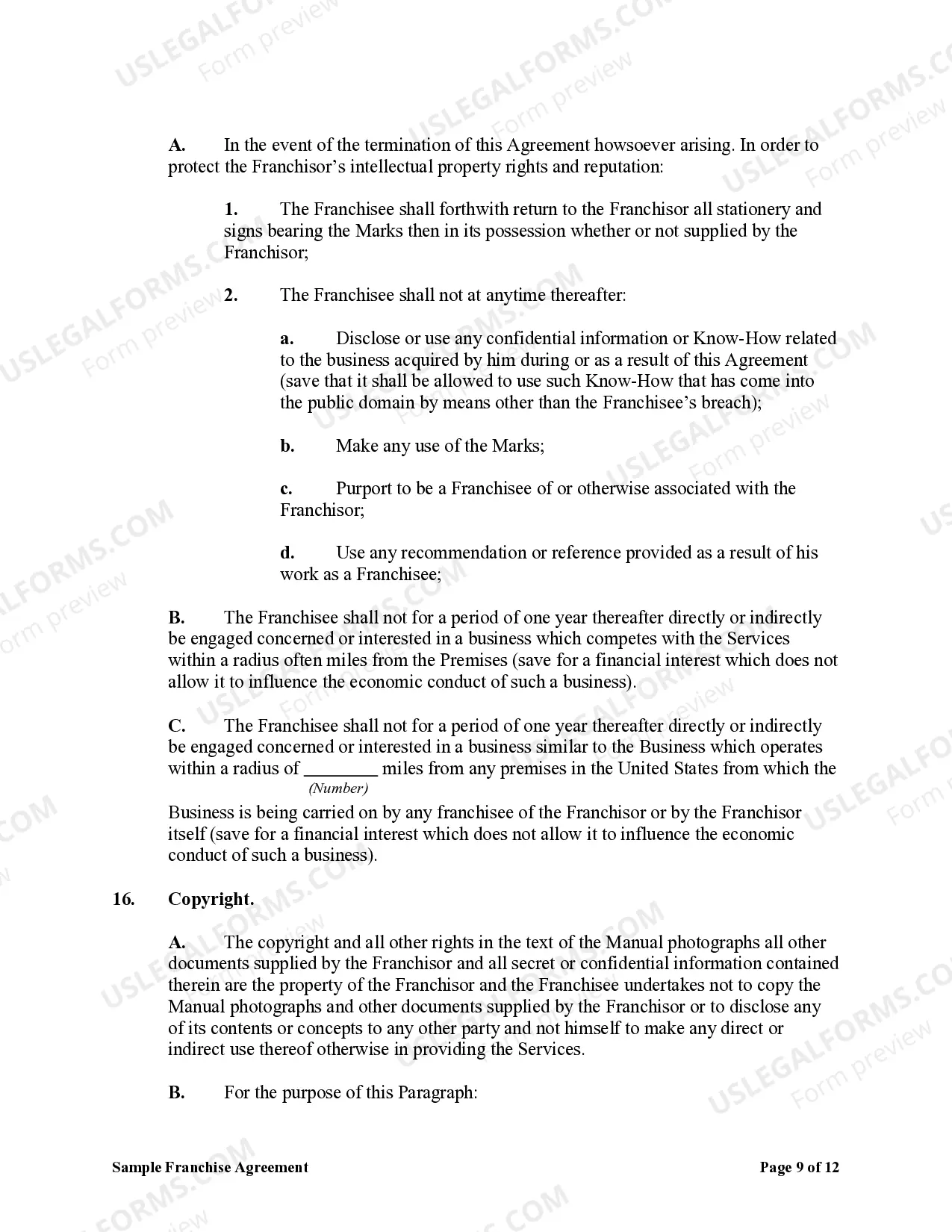
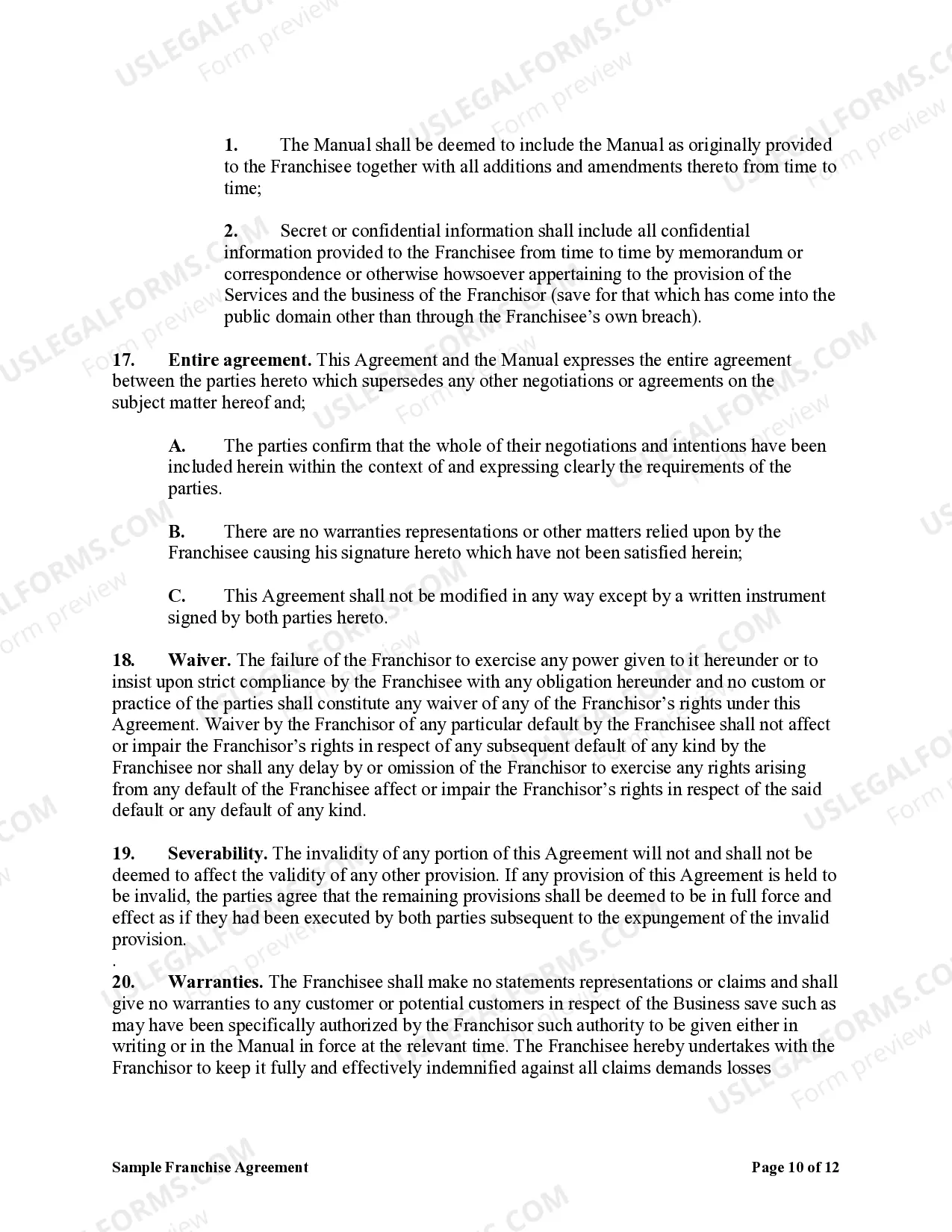
This Sample Franchise Agreement is a legal document that outlines the rights and responsibilities of a franchisor and a franchisee. It serves as an essential framework for establishing a franchise relationship, defining the terms of the business operation, and ensuring compliance with the franchise system. This agreement differs from other contracts by specifically detailing the operational aspects and obligations related to franchise ownership.
Key components of this form
- Definitions of key terms related to the franchise operation.
- Obligations of the franchisor and franchisee regarding training, support, and equipment.
- Details on the use and protection of trademarks and branding.
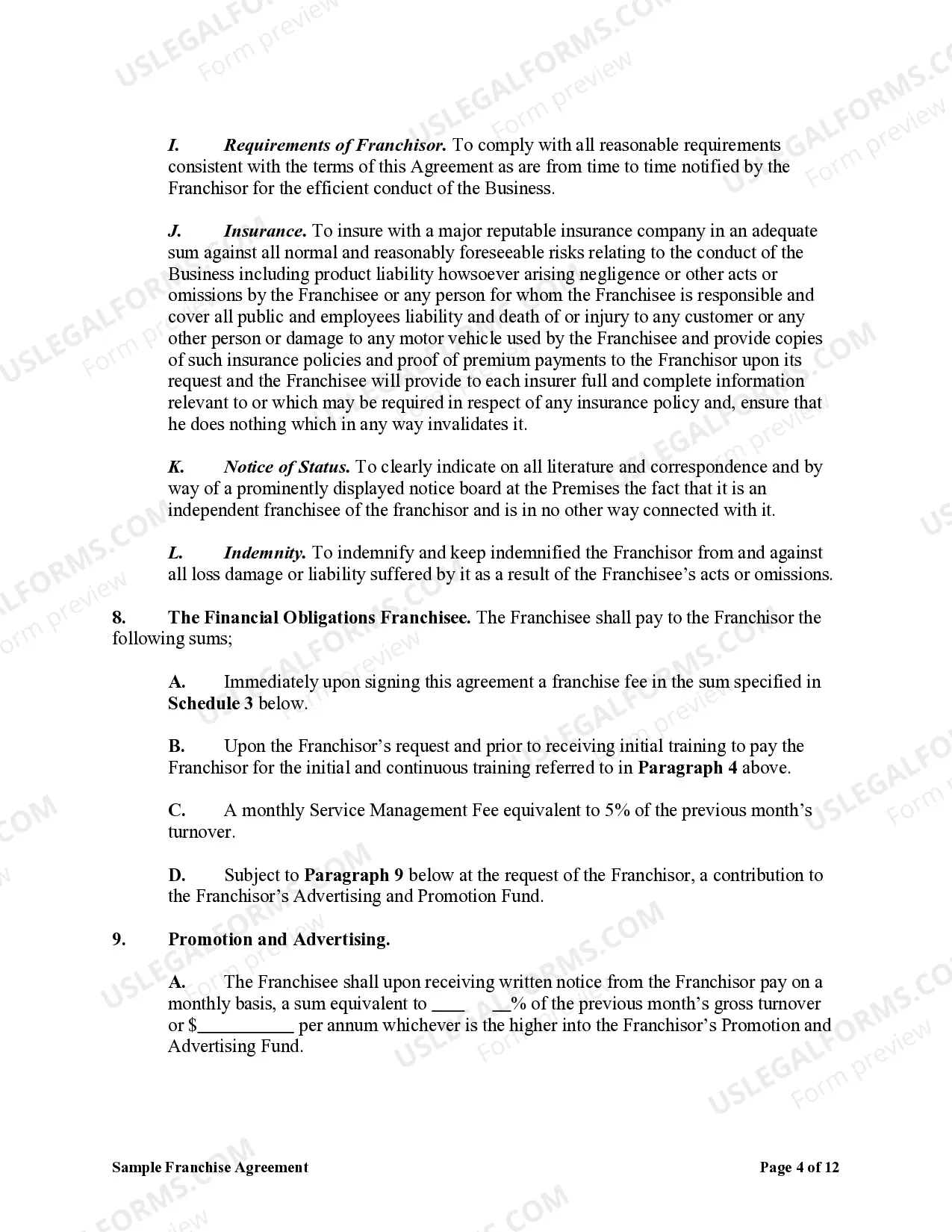
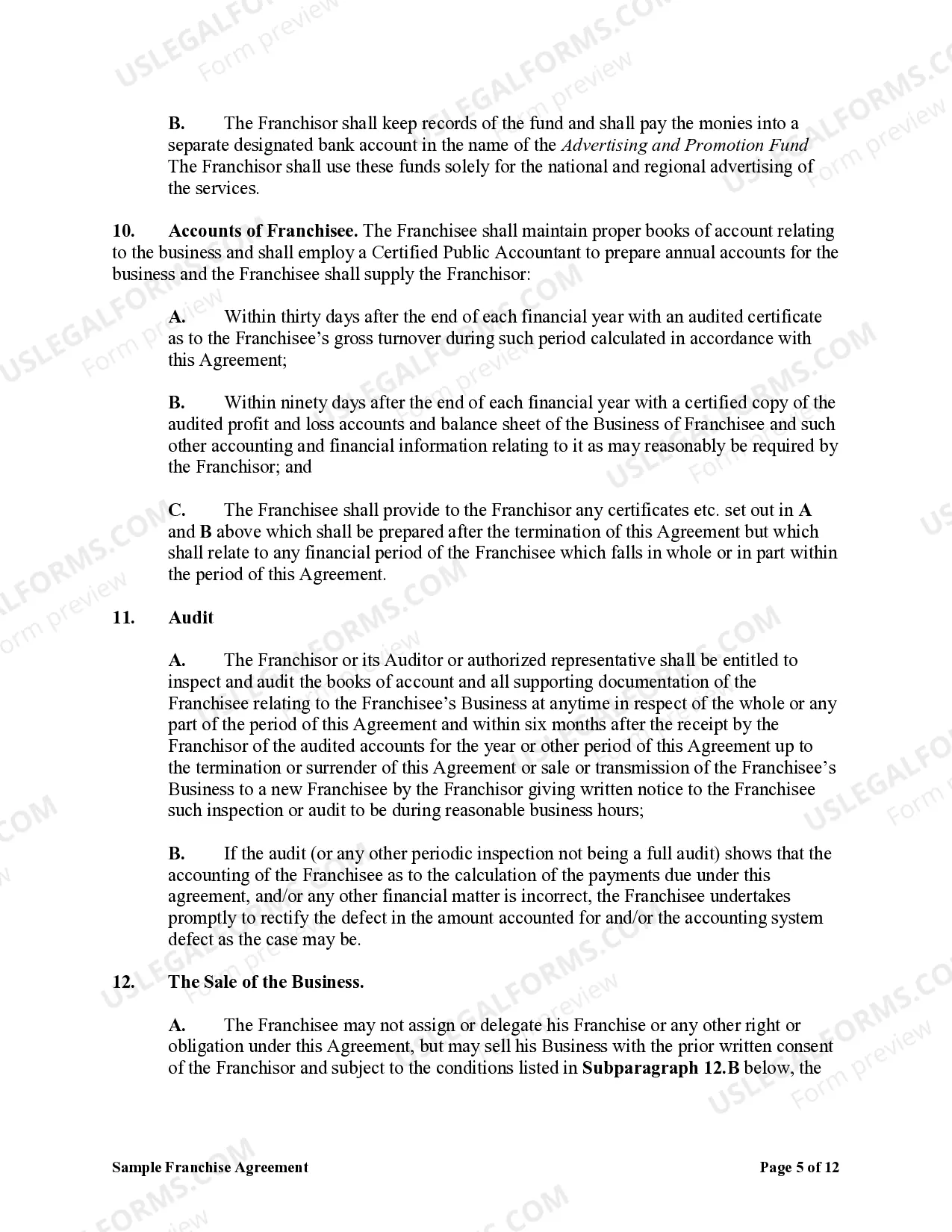
- Financial responsibilities including franchise fees and royalty payments.
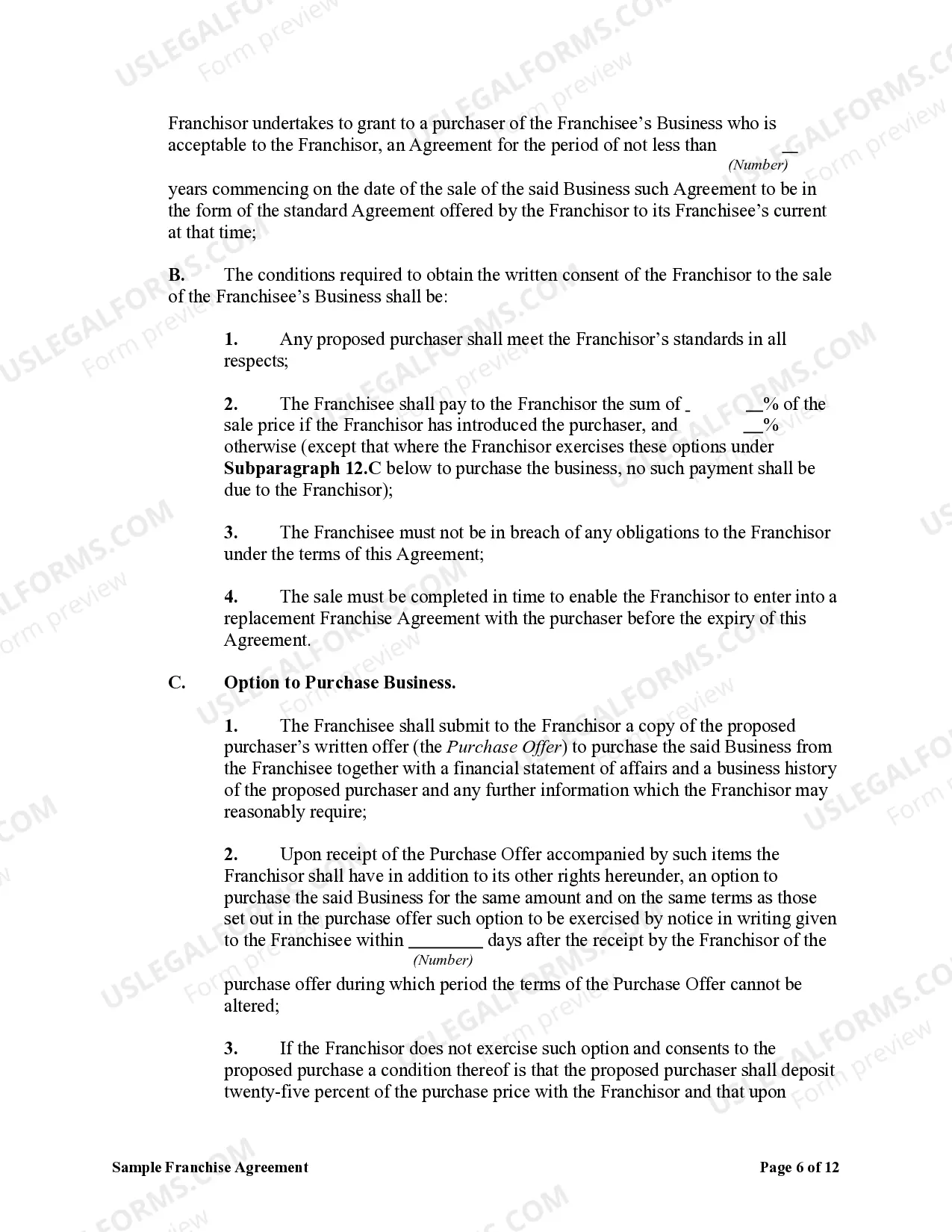
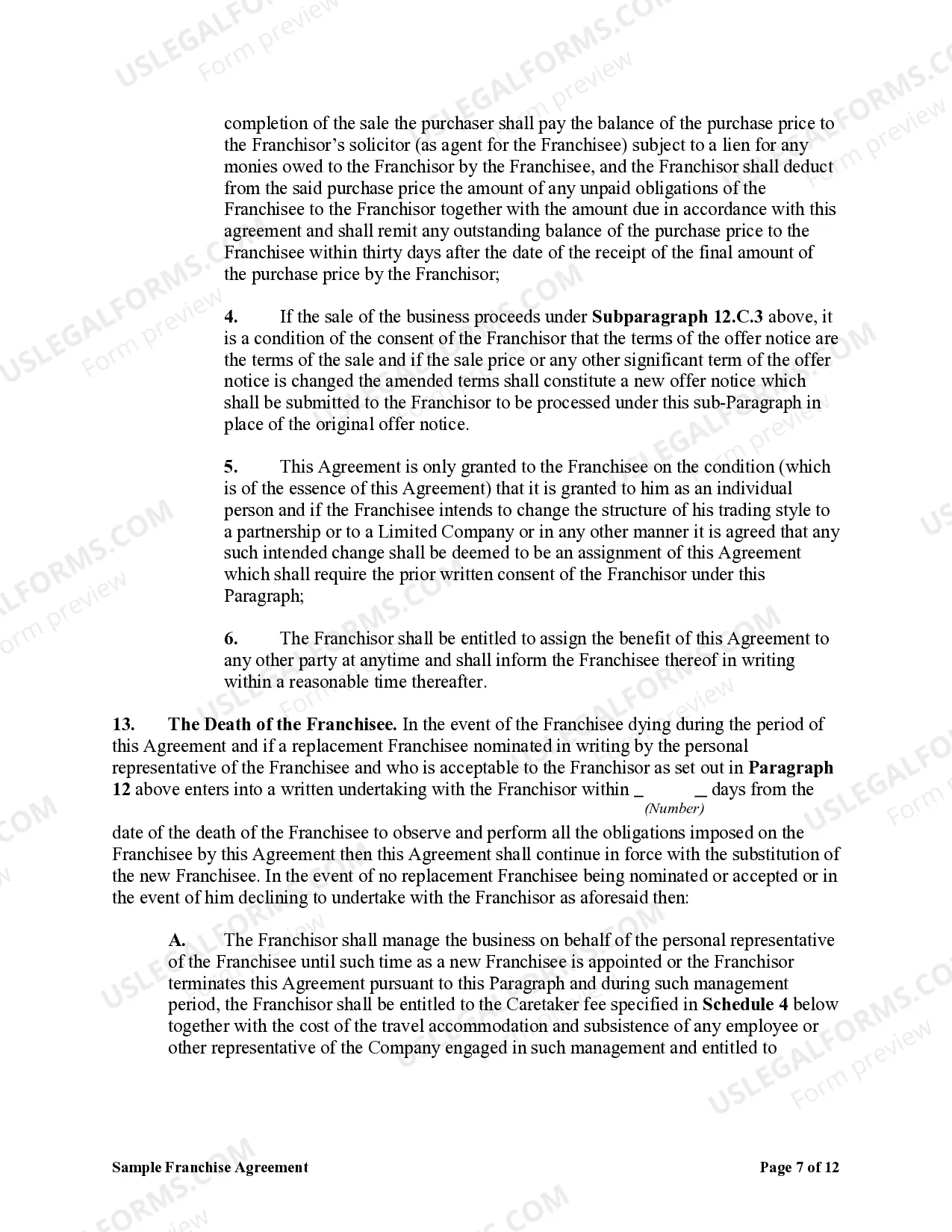
- Conditions for selling the franchise and post-termination obligations.
- Arbitration clauses for dispute resolution.

When to use this document
This form should be used when a business owner (franchisee) wishes to enter into a franchise agreement with a franchisor. It is needed to legally formalize the partnership and set clear expectations and obligations for both parties. Use this agreement when establishing a franchise operation in various sectors, such as food service, retail, or hospitality.
Who should use this form
- Business owners looking to buy into a franchise opportunity.
- Franchisors who are defining the terms of a franchise relationship.
- Individuals seeking to operate under a recognized brand while adhering to the stated business practices.
How to prepare this document
- Identify and fill in the names and addresses of the franchisor and franchisee.
- Specify the business premises and the services to be offered under the franchise.
- Detail the obligations regarding training and operational standards.
- Outline financial terms including franchise fees and ongoing royalties.
- Include all necessary signatures and dates to formalize the agreement.
Does this document require notarization?
This form does not typically require notarization unless specified by local law.
Get your form ready online
Our built-in tools help you complete, sign, share, and store your documents in one place.
Make edits, fill in missing information, and update formatting in US Legal Forms—just like you would in MS Word.
Download a copy, print it, send it by email, or mail it via USPS—whatever works best for your next step.
Sign and collect signatures with our SignNow integration. Send to multiple recipients, set reminders, and more. Go Premium to unlock E-Sign.
If this form requires notarization, complete it online through a secure video call—no need to meet a notary in person or wait for an appointment.
We protect your documents and personal data by following strict security and privacy standards.

Make edits, fill in missing information, and update formatting in US Legal Forms—just like you would in MS Word.

Download a copy, print it, send it by email, or mail it via USPS—whatever works best for your next step.

Sign and collect signatures with our SignNow integration. Send to multiple recipients, set reminders, and more. Go Premium to unlock E-Sign.

If this form requires notarization, complete it online through a secure video call—no need to meet a notary in person or wait for an appointment.

We protect your documents and personal data by following strict security and privacy standards.
Common mistakes to avoid
- Failing to define key terms clearly, leading to misunderstandings.
- Omitting financial obligations or details about royalty structures.
- Not specifying conditions for the termination of the agreement.
- Neglecting to update the manual referenced for franchise operations.
Why use this form online
- Convenience of downloading and accessing the form from anywhere.
- Editability allows customization to specific business needs.
- Easy storage and retrieval compared to physical documents.
Legal use & context
- The Sample Franchise Agreement is legally binding upon signatures from both parties.
- It is enforceable in a court of law, provided it is compliant with state regulations.
- Offers a structured mutual understanding of roles and responsibilities within the franchise relationship.
Summary of main points
- The Sample Franchise Agreement establishes clear roles for franchisors and franchisees.
- Understanding the financial obligations is crucial for both parties.
- Adhering to state-specific regulations can ensure the agreement's enforceability.
Looking for another form?

Form popularity
FAQ
Location/territory. Operations. Training and ongoing support. Duration. Franchise fee/investment. Royalties/ongoing fees. Trademark/patent/signage. Advertising/marketing.
Franchising is a business relationship between two entities wherein one party allows another to sell its products and intellectual property. For example, several fast food chains like Dominos and McDonalds operate in India through franchising.
Some of the most successful franchise businesses in the United States include Subway, McDonald's, Pizza Hut, Burger King, and Dunkin' Donuts; but restaurants are not the only kind of franchise businesses available. Some business types are more appropriate for franchising than others.
Within a franchise agreement the franchisee is granted the legal right to establish a franchised outlet and operation wherein the franchisee, among other things, obtains the license and right to utilize the franchisors trademarks, trade dress, business systems, operations manual and sources of supply in offering and
3. Length of the Franchise Agreement. The typical duration of a franchise agreement is usually 10 or 20 years. This part of the contract will also spell out the conditions under which the franchise can be sold to someone else, which can be stringent to make sure that any future franchisee is qualified to be an owner.
Franchisor-Franchisee Relationship. In the first place, the relationship of the franchisor and the franchisee is outlined. Duration of the Agreement. Franchise Fee. Business Operations. Site Selection and Development. Training and Support. Use of Intellectual Property.
According to Goldman, three elements must be included in a franchise agreement: A franchise fee. Some amount of money must be paid by the franchisee to the franchisor. A trademark or trade name.
This document spells out the expectations, obligations, permissions and restrictions for operating the franchise. A franchise agreement also outlines a fee schedule that the franchisee pays to the franchisor, including amounts or percentages and the frequency of payments.
The franchise fee is recorded at its full present value amount. On the balance sheet, the franchise fee is listed under the assets section as an intangible asset. To record the initial franchise fee purchase cost, you debit Franchise Fee for $50,000 and credit Cash for $50,000.