Sample Letter regarding Revised Asset Purchase Agreement
Understanding this form
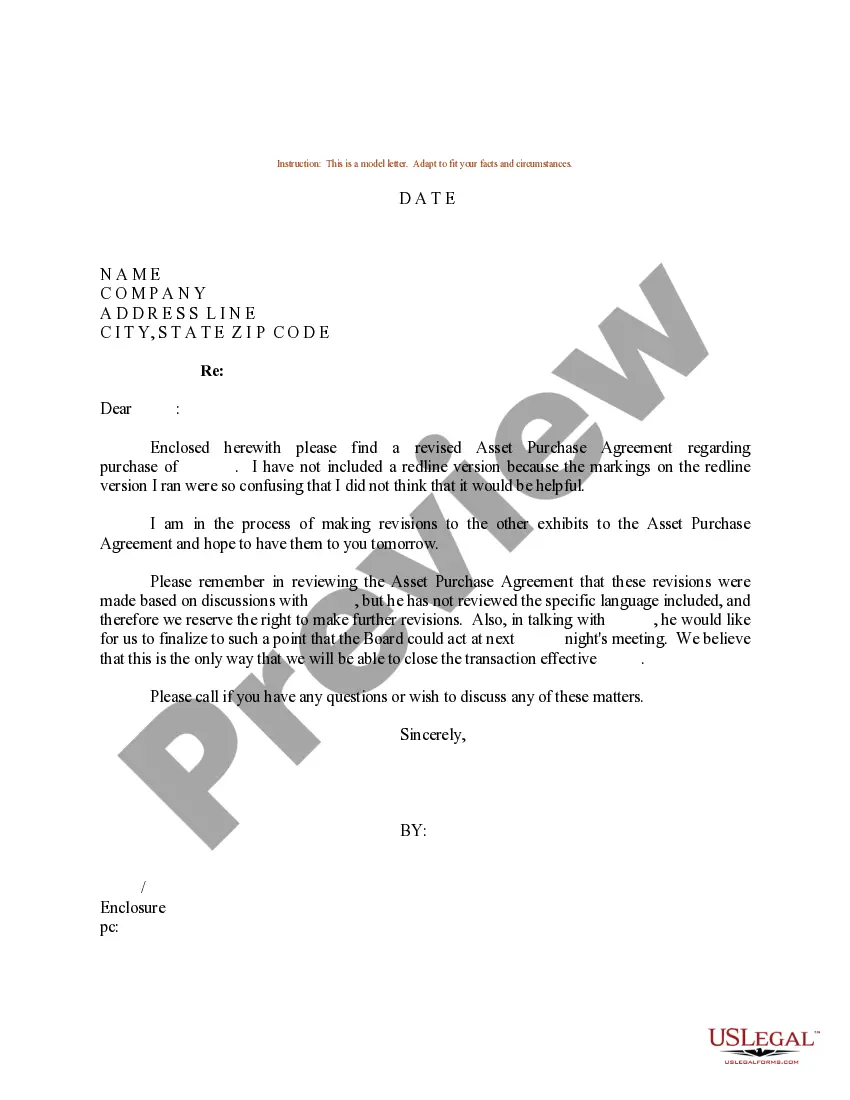
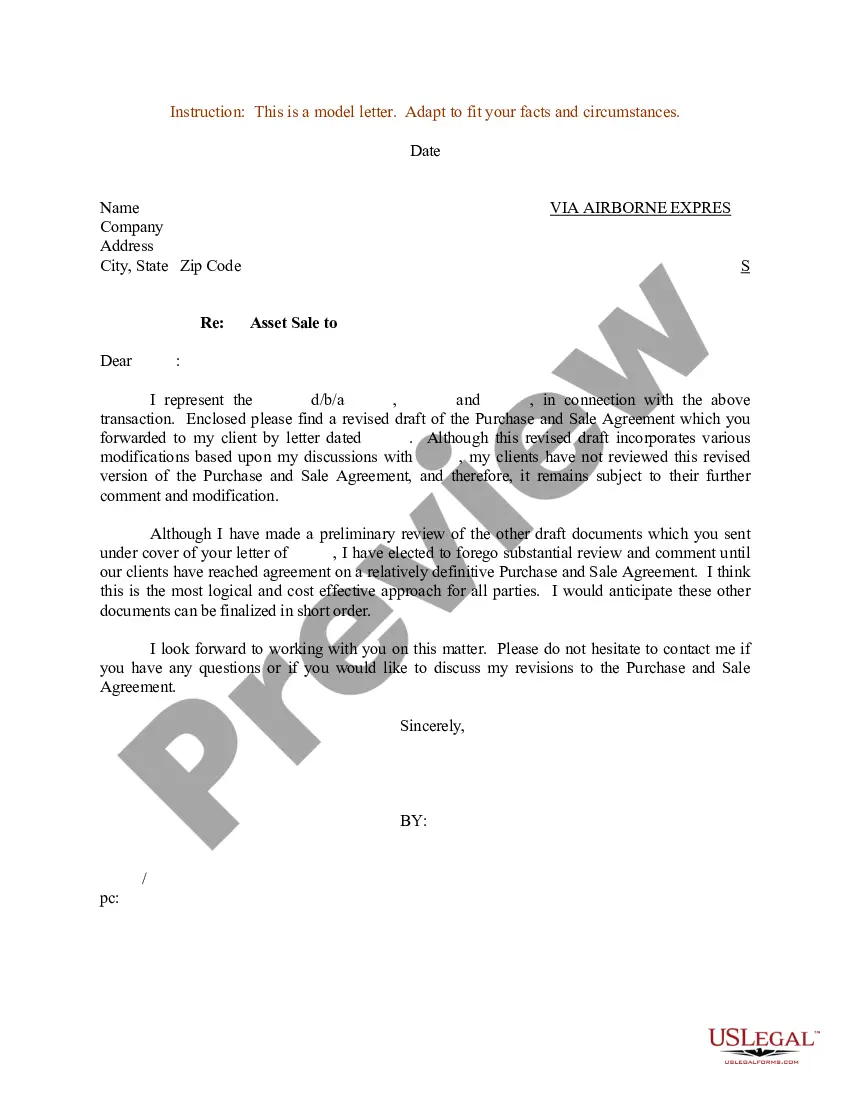
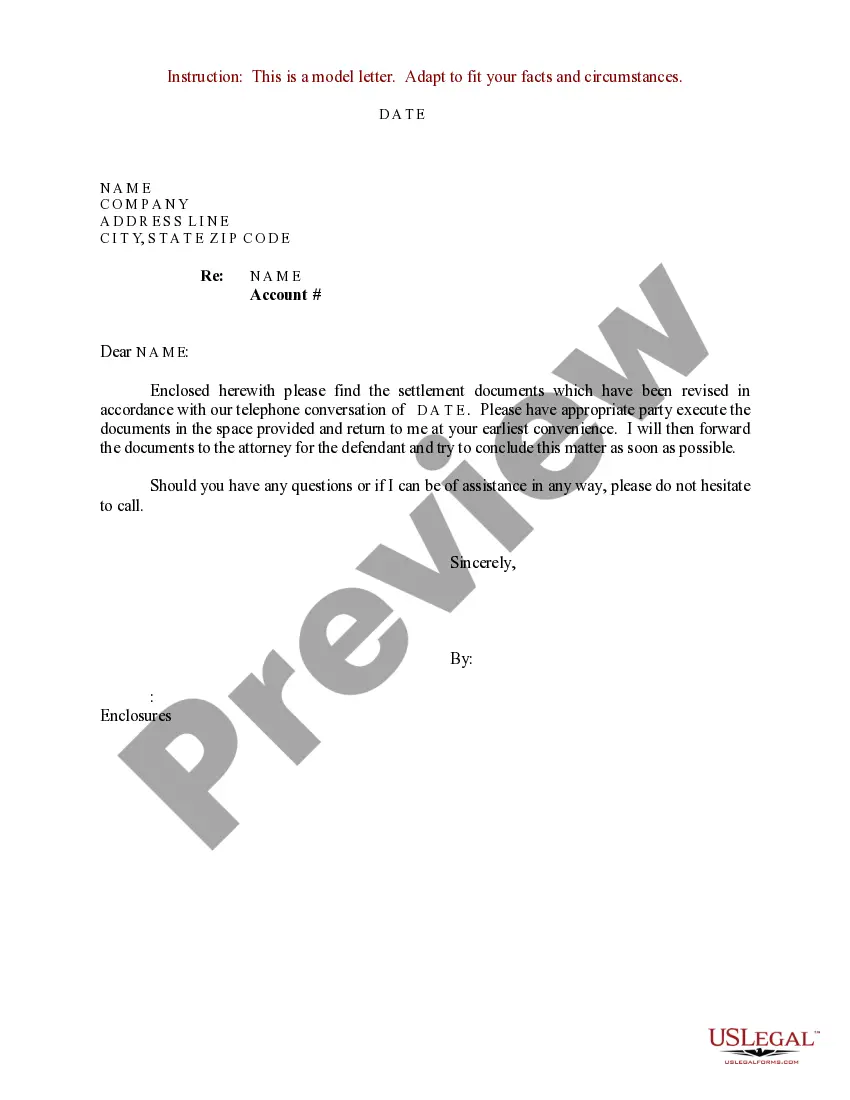
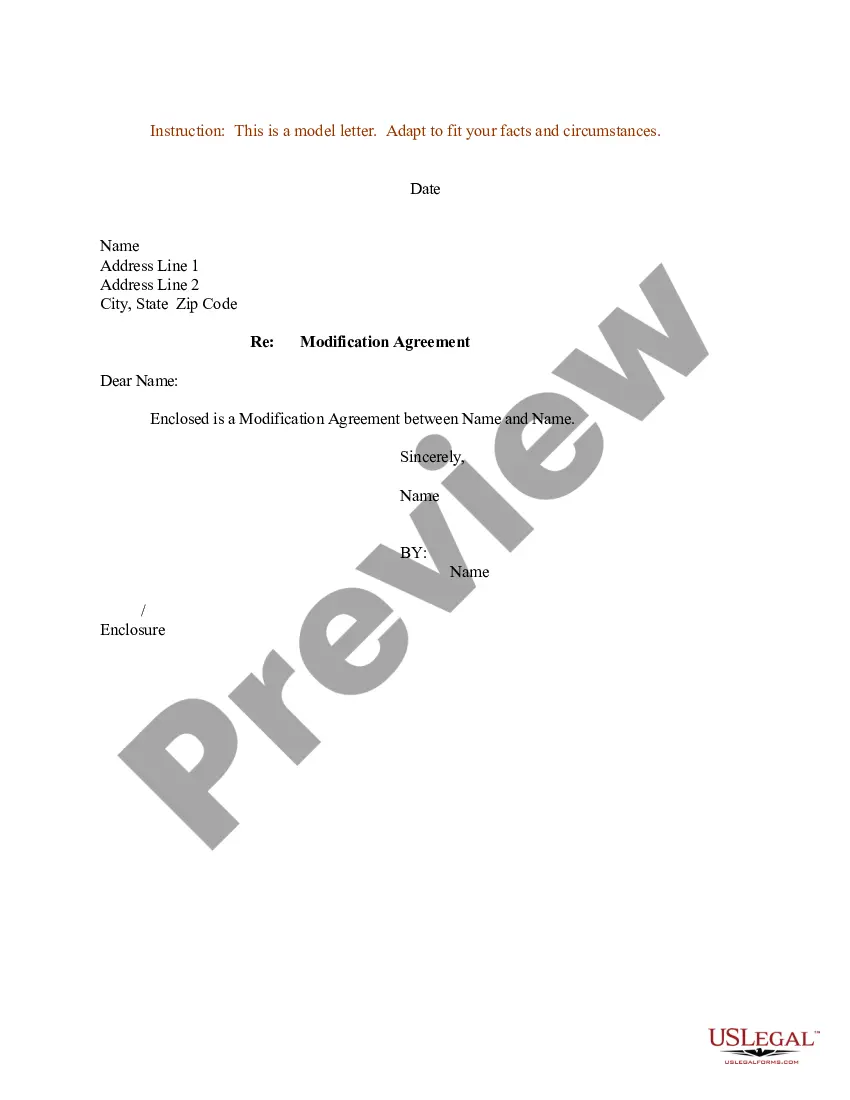
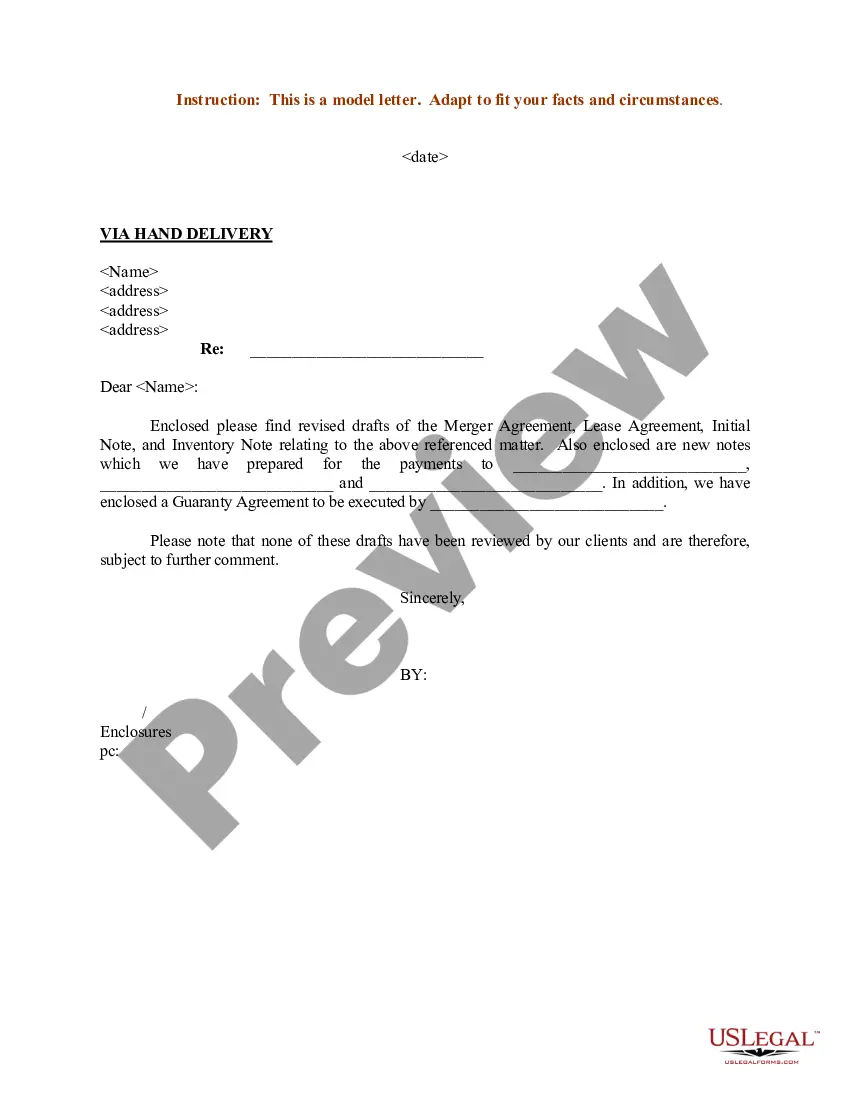
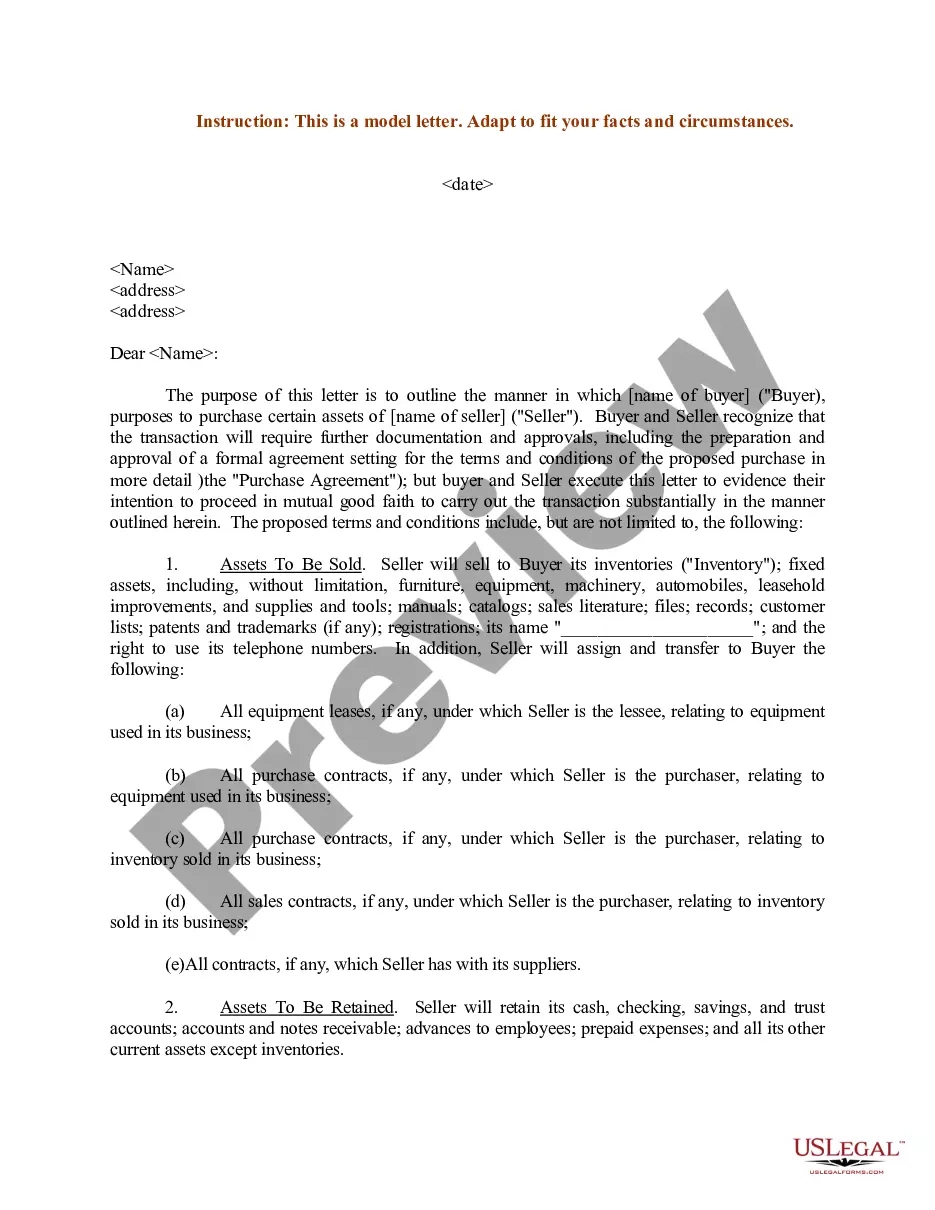
The Sample Letter regarding Revised Asset Purchase Agreement is a document used to formally communicate revisions made to an Asset Purchase Agreement. Unlike standard agreements, this letter serves as a notice detailing changes to associated exhibits, helping to keep all parties informed of any updates in the transaction process.
What’s included in this form
- Date: The date when the letter is being sent.
- Recipient's information: Name, company, and address of the recipient.
- Subject line: Clear indication that this letter pertains to the Revised Asset Purchase Agreement.
- Content: A statement about the ongoing revisions and expected delivery timeline.
Situations where this form applies
This sample letter is useful when you need to inform a party involved in an asset purchase agreement about revisions made to related documents. It is commonly used in business transactions to ensure transparency and maintain communication regarding changes that may affect the terms agreed upon in the original agreement.
Who should use this form
- Business owners involved in asset transactions.
- Lawyers representing clients in asset purchase agreements.
- Parties looking to document formal communications regarding changes to legal agreements.
Completing this form step by step
- Enter the date at the top of the letter.
- Fill in the recipient's name, company, and address accurately.
- Include a clear subject line indicating the letter's purpose.
- Write a brief note regarding the revisions and the estimated timeline for delivery.
- Sign the letter if necessary and ensure it is sent via a reliable method.
Notarization guidance
This form usually doesn’t need to be notarized. However, local laws or specific transactions may require it. Our online notarization service, powered by Notarize, lets you complete it remotely through a secure video session, available 24/7.
Get your form ready online
Our built-in tools help you complete, sign, share, and store your documents in one place.
Make edits, fill in missing information, and update formatting in US Legal Forms—just like you would in MS Word.
Download a copy, print it, send it by email, or mail it via USPS—whatever works best for your next step.
Sign and collect signatures with our SignNow integration. Send to multiple recipients, set reminders, and more. Go Premium to unlock E-Sign.
If this form requires notarization, complete it online through a secure video call—no need to meet a notary in person or wait for an appointment.
We protect your documents and personal data by following strict security and privacy standards.

Make edits, fill in missing information, and update formatting in US Legal Forms—just like you would in MS Word.

Download a copy, print it, send it by email, or mail it via USPS—whatever works best for your next step.

Sign and collect signatures with our SignNow integration. Send to multiple recipients, set reminders, and more. Go Premium to unlock E-Sign.

If this form requires notarization, complete it online through a secure video call—no need to meet a notary in person or wait for an appointment.

We protect your documents and personal data by following strict security and privacy standards.
Mistakes to watch out for
- Failing to include correct recipient details.
- Not indicating the specific changes made to the Asset Purchase Agreement.
- Neglecting to sign the letter when required.
Why use this form online
- Convenient access to a well-structured template that saves time.
- Editability allows for personalized adjustments to fit specific needs.
- Reliable format drafted by professionals ensuring legal compliance.
Looking for another form?
Form popularity
FAQ
The identity of the buyer and seller. A description of the property being purchased. The purchase price. The terms as to how and when payment is to be made. The terms as to how, when, and where the goods will be delivered to the purchaser.
Provisions of an APA may include payment of purchase price, monthly installments, liens and encumbrances on the assets, condition precedent for the closing, etc. An APA differs from a stock purchase agreement (SPA) where company shares, title to assets, and title to liabilities are also sold.
These will include the purchase price, of course, and bills of sale, assignment and assumption agreements, intellectual property assignments, real property transfer documents and so on, as well as any legal opinions, employment agreements, escrow agreement and other ancillary documents.
A Letter of Intent is a legal document that is proposed by the business buyer and ultimately signed by the seller. The LOI is drafted in the form of a business letter which includes a space on the last page of the document where the business seller would acknowledge their acceptance.
The full names of the buyer and the seller. The complete address of the property. The agreed-upon purchase price. The agreed-upon earnest deposit. The date of signing the SPA. The terms and conditions that surround the earnest deposit.
An asset acquisition is the purchase of a company by buying its assets instead of its stock.The terms "stock", "shares", and "equity" are used interchangeably.. In most jurisdictions, an asset acquisition typically also involves an assumption of certain liabilities.
Buying a Business: Asset Purchase vs. Share Purchase.An asset purchase requires the sale of individual assets. A share purchase requires the purchase of 100 percent of the shares of a company, effectively transferring all of the company's assets and liabilities to the purchaser.
In an asset purchase, the buyer agrees to purchase specific assets and liabilities. This means that they only take on the risks of those specific assets. This could include equipment, fixtures, furniture, licenses, trade secrets, trade names, accounts payable and receivable, and more.
Generally, in an asset purchase, the purchasing company is not liable for the seller's debts, obligations and liabilities. But there are exceptions, such as when the buyer agrees to assume the debts, obligation or liabilities in exchange for a lower sales price, for example.