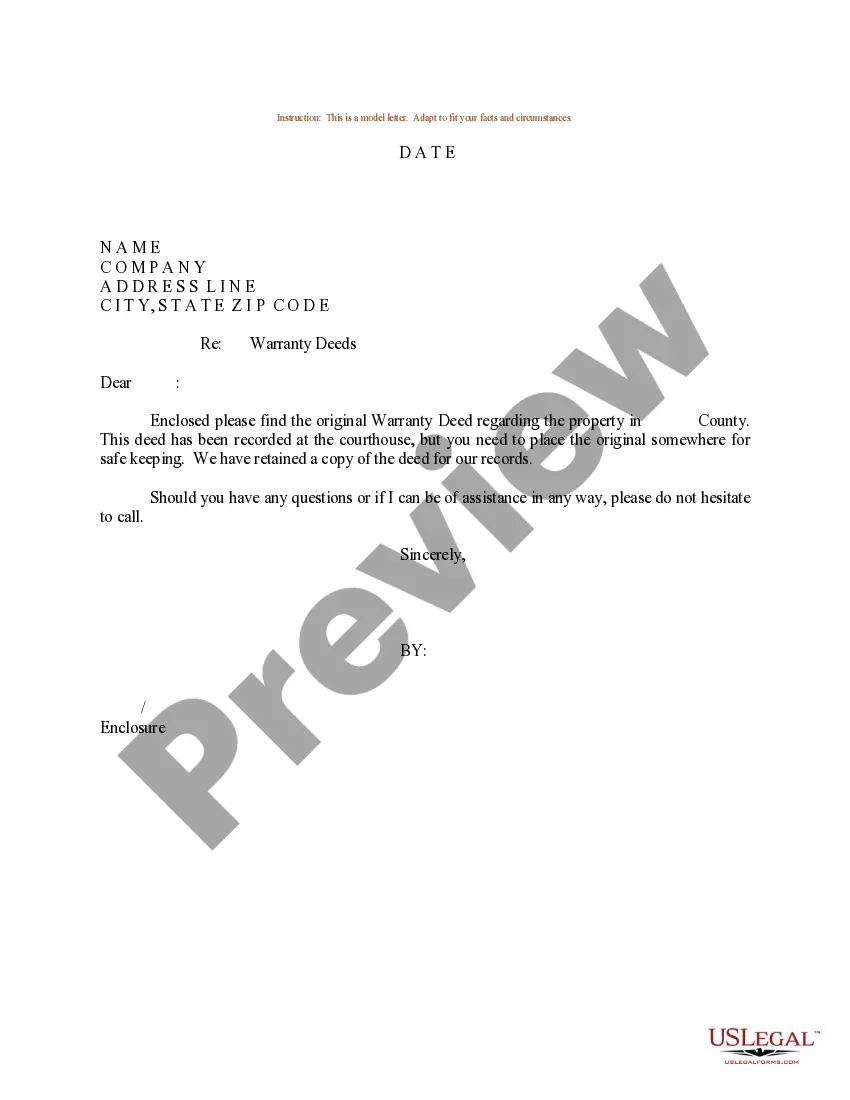
Sample Letter for Warranty Deed - Recordation in Courthouse
Understanding this form
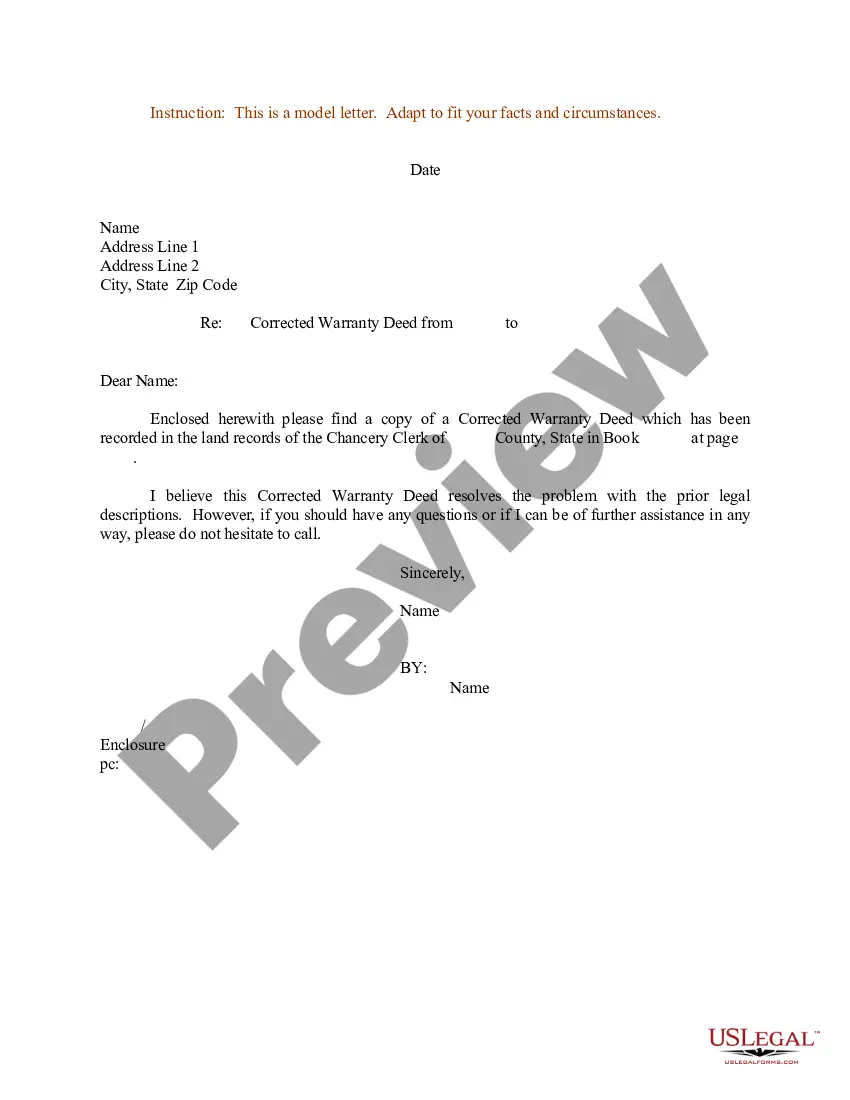
The Sample Letter for Warranty Deed - Recordation in Courthouse is a template letter designed to accompany a warranty deed when it is submitted for recordation at a courthouse. This form serves the specific purpose of notifying relevant parties about the deed's recording, ensuring compliance with legal requirements. Unlike other forms related to property transfer, this letter facilitates the formal process of recording a warranty deed, which protects the interests of the property owner.
What’s included in this form
- Date of the letter
- Sender's name and address
- Subject line indicating the purpose (Warranty Deeds)
- Recipient information (courthouse details)
- Body content outlining the intention to record the warranty deed

When to use this form
This letter should be used when an individual or entity has completed a warranty deed transfer and is ready to officially submit it to the courthouse for recordation. Utilizing this letter helps to streamline the submission process and ensures that the courthouse staff has all necessary information upfront, reducing delays in processing.
Who this form is for
- Property owners transferring property ownership
- Real estate agents facilitating property sales
- Attorneys representing clients in property transactions
- Any individual or entity needing to record a warranty deed
How to prepare this document
- Enter the date of the letter at the top.
- Fill in your name and address as the sender.
- Specify the recipient courthouse's name and address.
- Clearly state the subject regarding Warranty Deeds.
- Draft the body to include a statement of intent to record the warranty deed.
- Sign and date the letter before submission.
Is notarization required?
This form does not typically require notarization unless specified by local law. However, it is always advisable to check local regulations to ensure compliance and legal validity.
Get your form ready online
Our built-in tools help you complete, sign, share, and store your documents in one place.
Make edits, fill in missing information, and update formatting in US Legal Forms—just like you would in MS Word.
Download a copy, print it, send it by email, or mail it via USPS—whatever works best for your next step.
Sign and collect signatures with our SignNow integration. Send to multiple recipients, set reminders, and more. Go Premium to unlock E-Sign.
If this form requires notarization, complete it online through a secure video call—no need to meet a notary in person or wait for an appointment.
We protect your documents and personal data by following strict security and privacy standards.

Make edits, fill in missing information, and update formatting in US Legal Forms—just like you would in MS Word.

Download a copy, print it, send it by email, or mail it via USPS—whatever works best for your next step.

Sign and collect signatures with our SignNow integration. Send to multiple recipients, set reminders, and more. Go Premium to unlock E-Sign.

If this form requires notarization, complete it online through a secure video call—no need to meet a notary in person or wait for an appointment.

We protect your documents and personal data by following strict security and privacy standards.
Avoid these common issues
- Not including the correct recipient courthouse address.
- Failing to sign the letter before submission.
- Leaving out the date, which can lead to confusion about the timing of the request.
- Neglecting to specify all pertinent details regarding the warranty deed.
Advantages of online completion
- Easy access to a professionally drafted form that saves time.
- Customizable template to fit specific needs and details.
- Ensures compliance with legal formatting and language for recordation.
- Convenient download options for immediate access.
Looking for another form?

Form popularity
FAQ
Fill out the "grantor" section of the warranty deed. The grantors are the givers, or current owners, of the property. Use the legal name of each grantor and insert current addresses after each grantor's name.
Let's start with the definition of a deed: DEED: A written instrument by which one party, the Grantor, conveys the title of ownership in property to another party, the Grantee. A Warranty Deed contains promises, called covenants, that the Grantor makes to the Grantee.
Print a grant deed from an online source. Sign the document in the presence of a notary public. Take the deed to the recorder's office in the county where the property is located.
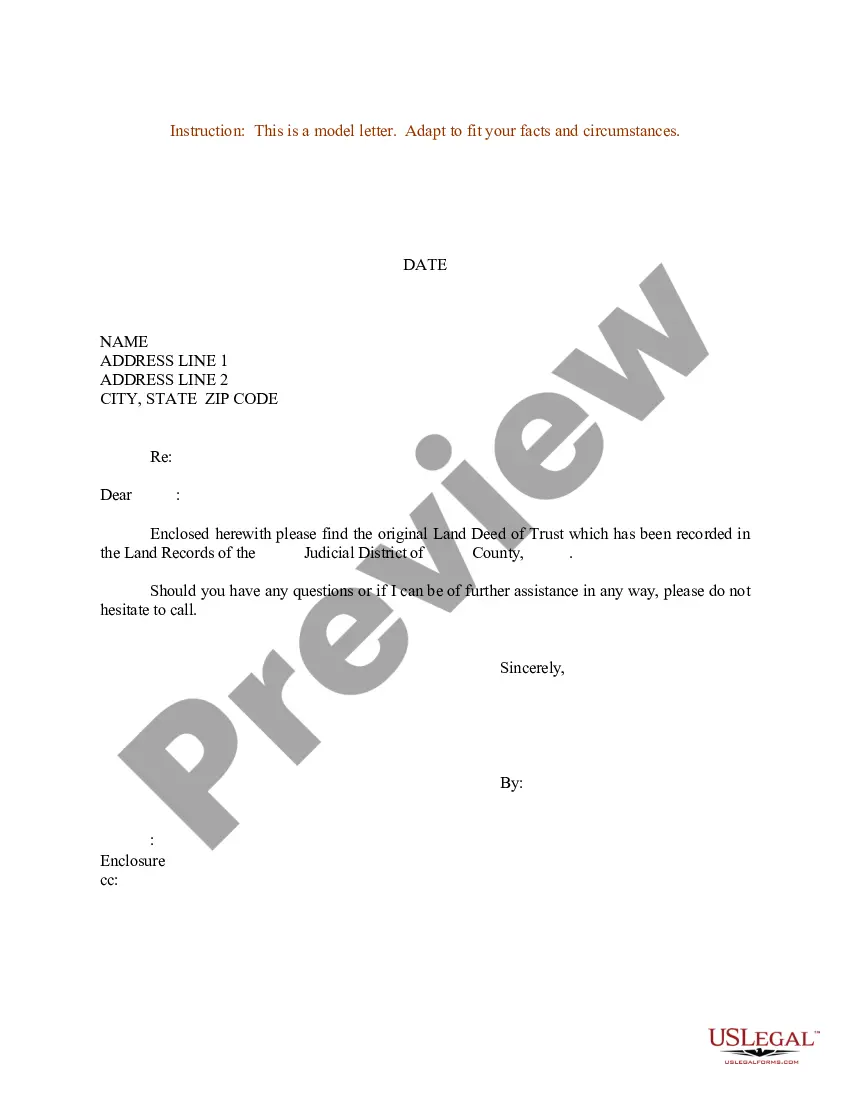
Typically, the lender will provide you with a copy of the deed of trust after the closing. The original warranty deeds are often mailed to the grantee after they are recorded. These are your original copies and should be kept in a safe place, such as a fireproof lockbox or a safe deposit box at a financial institution.
Failure to record a deed effectively makes it impossible for the public to know about the transfer of a property. That means the legal owner of the property appears to be someone other than the buyer, a situation that can generate serious ramifications.
It's important to note that a warranty deed does not actually prove the grantor has ownership (a title search is the best way to prove that), but it is a promise by the grantor that they are transferring ownership and if it turns out they don't actually own the property, the grantor will be responsible for compensating
A warranty deed guarantees that: The grantor is the rightful owner of the property and has the legal right to transfer the title.The title would withstand third-party claims to ownership of the property. The grantor will do anything to ensure the grantee's title to the property.
The answer is yes. Parties to a transaction are always free to prepare their own deeds. If you do so, be sure your deed measures up to your state's legal regulations, to help avert any legal challenge to the deed later.
Grantor's name. Grantee's name and address. Description of grantee (ex: unmarried man, husband and wife, joint tenants) Person who requested grant deed. Address of real estate that is being transferred. Legal description of property (lot number) Original title order number for property.