Checklists - Worker's Compensation Claims
What is this form?
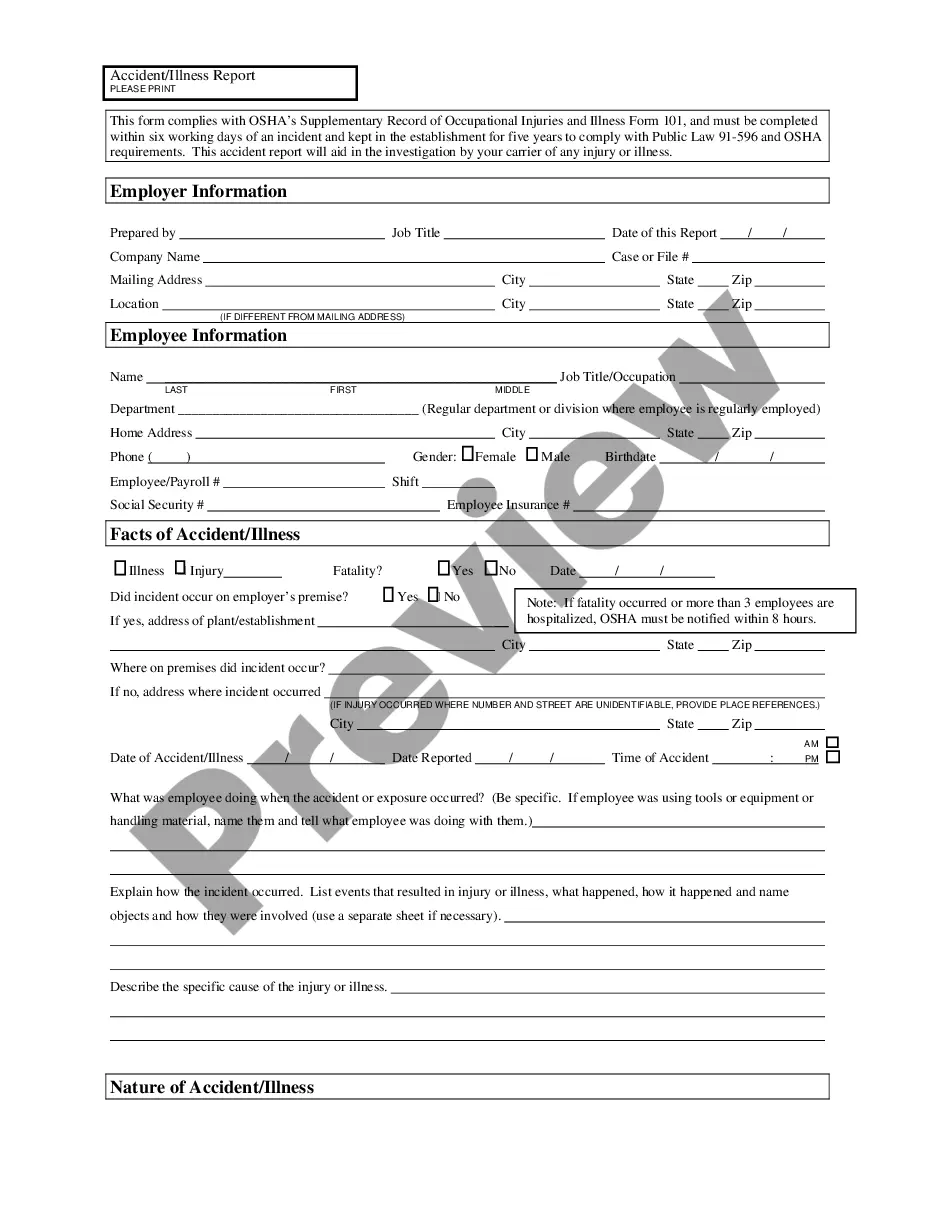
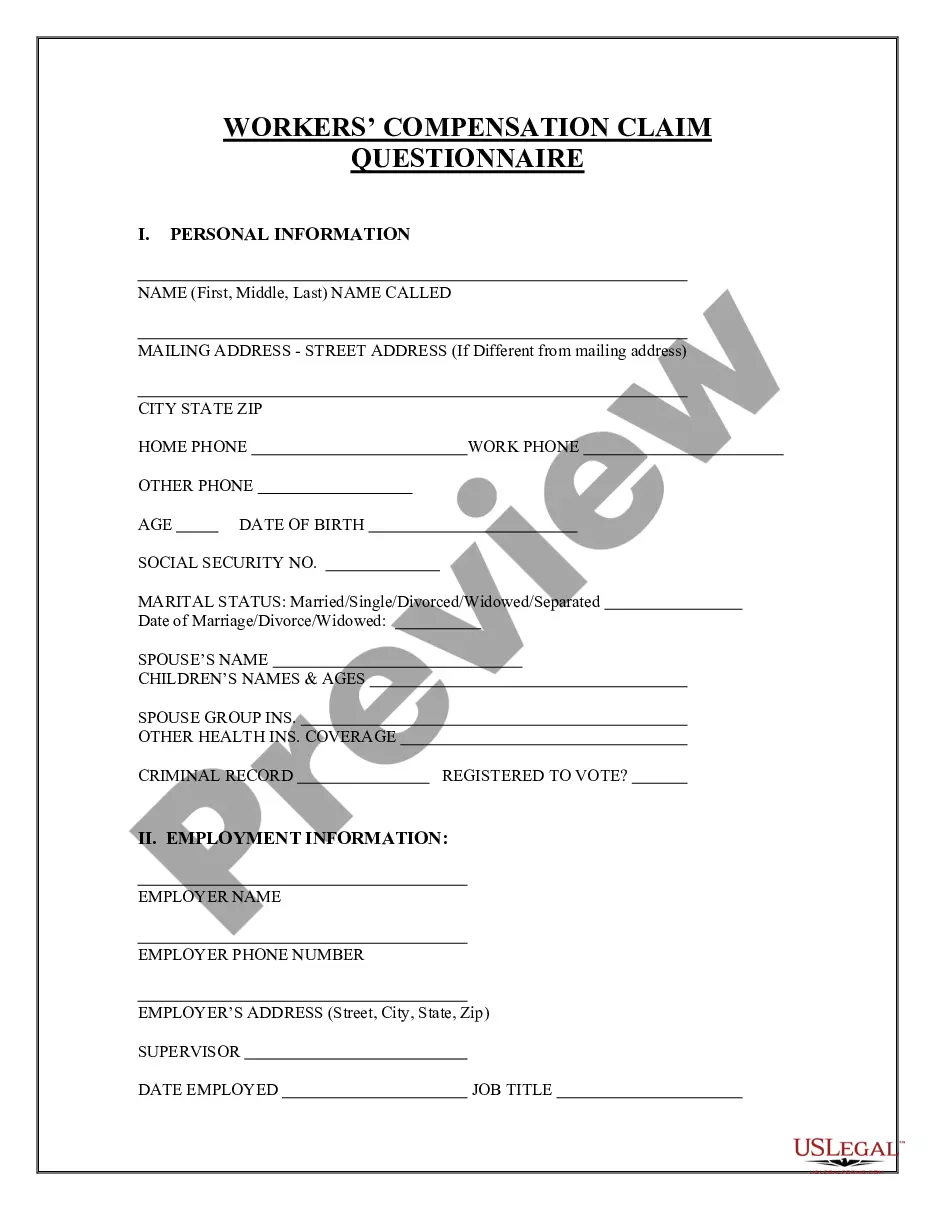
The Checklists - Worker's Compensation Claims form helps employees document their work-related injuries or illnesses to apply for workers' compensation benefits. This form is essential for ensuring that you receive the medical expenses, lost wages, and other benefits entitled to you under state workers' compensation laws. Unlike other general injury forms, this checklist specifically addresses the criteria and information needed for filing a worker's compensation claim, making it a valuable tool for employees facing work-related injuries.
Key parts of this document
- Full name and complete address of the employee and employer.
- Date, time, and place of the injury.
- Occupation and actual work being done at the time of injury.
- Brief description of the accident and the injury's nature and extent.
- Employer's insurance details and the allegation of coverage.
- Notice of the injury to the employer, along with requested benefits.
When this form is needed
This form should be used when an employee suffers a work-related injury or illness and needs to initiate a claim for workers' compensation benefits. It is especially relevant in situations involving medical expenses, lost wages due to workplace incidents, or when seeking death benefits for a deceased employee who suffered work-related injuries. Using this form helps ensure that you have documented the necessary information to support your claim effectively.
Who needs this form
- Employees who have sustained an injury on the job.
- Employers required to respond to workers' compensation claims.
- Legal representatives assisting clients with workers' compensation cases.
- Human resources personnel managing employee injury documentation.
Completing this form step by step
- Identify the employee and employer details, including full names and addresses.
- Document the date, time, and place of the injury accurately.
- Describe the type of work being performed at the time of the injury along with the nature of the injury.
- Provide a brief but detailed statement about how the injury occurred.
- Include necessary information related to insurance coverage pertaining to the employer.
- Specify the benefits being requested based on the injury.
Notarization requirements for this form
Notarization is generally not required for this form. However, certain states or situations might demand it. You can complete notarization online through US Legal Forms, powered by Notarize, using a verified video call available anytime.
Get your form ready online
Our built-in tools help you complete, sign, share, and store your documents in one place.
Make edits, fill in missing information, and update formatting in US Legal Forms—just like you would in MS Word.
Download a copy, print it, send it by email, or mail it via USPS—whatever works best for your next step.
Sign and collect signatures with our SignNow integration. Send to multiple recipients, set reminders, and more. Go Premium to unlock E-Sign.
If this form requires notarization, complete it online through a secure video call—no need to meet a notary in person or wait for an appointment.
We protect your documents and personal data by following strict security and privacy standards.

Make edits, fill in missing information, and update formatting in US Legal Forms—just like you would in MS Word.

Download a copy, print it, send it by email, or mail it via USPS—whatever works best for your next step.

Sign and collect signatures with our SignNow integration. Send to multiple recipients, set reminders, and more. Go Premium to unlock E-Sign.

If this form requires notarization, complete it online through a secure video call—no need to meet a notary in person or wait for an appointment.

We protect your documents and personal data by following strict security and privacy standards.
Typical mistakes to avoid
- Failing to include complete and accurate employer and employee information.
- Not providing a detailed description of the injury or accident.
- Missing the required notice to the employer about the injury.
- Overlooking average weekly wage calculations at the time of injury.
- Neglecting to specify the requested benefits clearly.
Advantages of online completion
- Convenient access to downloadable forms from anywhere.
- Edit and fill out forms easily for accuracy and completeness.
- Reliable templates drafted by licensed attorneys to ensure validity.
- Fast and secure downloading process, saving time and effort.
Looking for another form?

Form popularity
FAQ
Payroll journal and summary. Your check book (if it's your only means of keeping records. Federal Tax Report- 941's that cover the period. State Unemployment Tax reports or individual earnings records. All overtime payroll records (charged at reduced rates)
Be factual with the information you provide. Be concise with the information you provide. Keep descriptions simple and to the point. Be sure to monitor your audit results.
Reporting the injury. filing the actual claim with your employer, and. filing an application for adjudication of claim with the Workers' Compensation Appeals Board (WCAB).
At the end of your annual policy period, a final premium audit is conducted to determine if you paid the appropriate amount for your workers' compensation insurance. Your final premium audit is based on actual payroll, operations and job classifications for the expired coverage period.
The cancellation of any current workers compensation coverage. If an employer is not compliant with their audit the insurance company will take that as a sign of being uncooperative and will cancel or set for non-renewal their current policy. The application of a monetary penalty.
Payroll Journal and Summary. Your Check Book. Federal Tax Reports 941's that cover the audit period.
What are the three approaches for settling workers' compensation claims? Direct settlement, agreement settlement, and public hearing.
Your workers' comp policy requires audits to verify your estimated payroll. These audits help make sure you're paying the right amount for the right coverage. Depending on your state, workers' compensation audits can also be a legal requirement.
What is a workers comp audit? A workers comp audit is an annual review of records at the request of an insurance company.Work comp audits determine if the payroll and class codes quoted at inception accurately reflect the actual payroll and scope of work performed during the policy period.