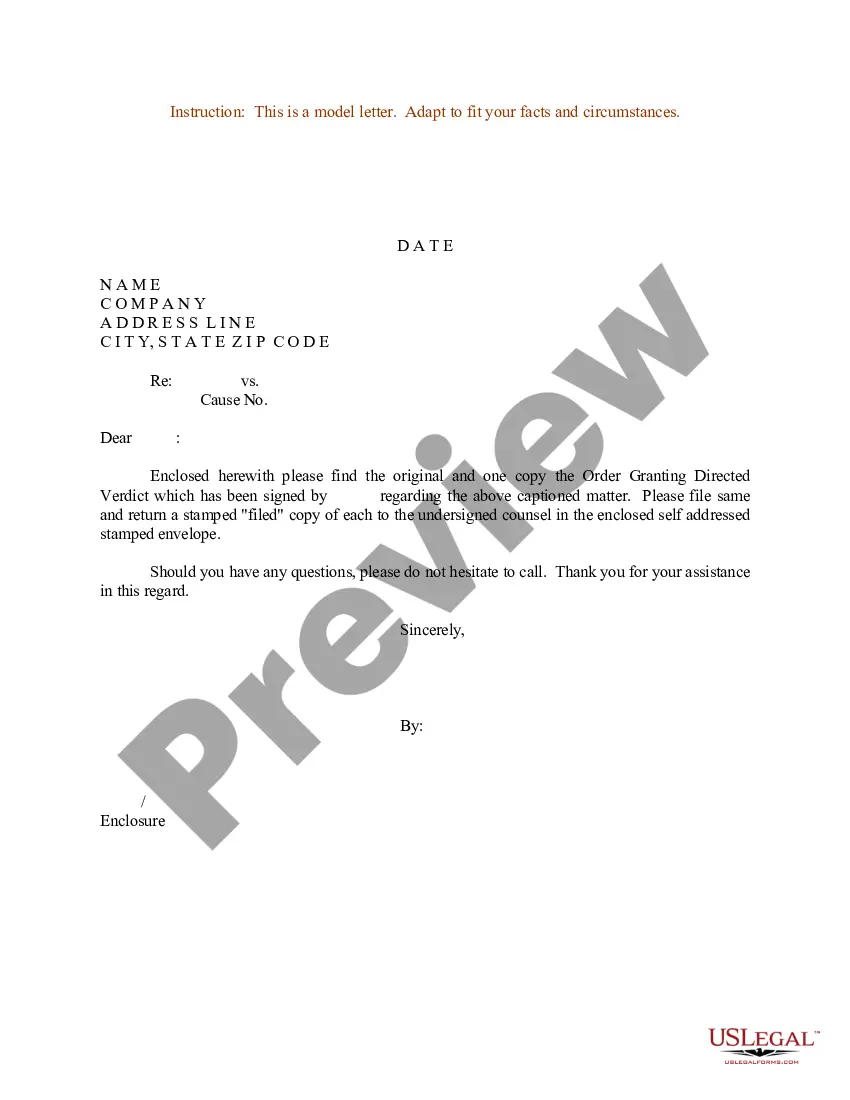
Sample Letter for Order Granting Directed Verdict
What this document covers
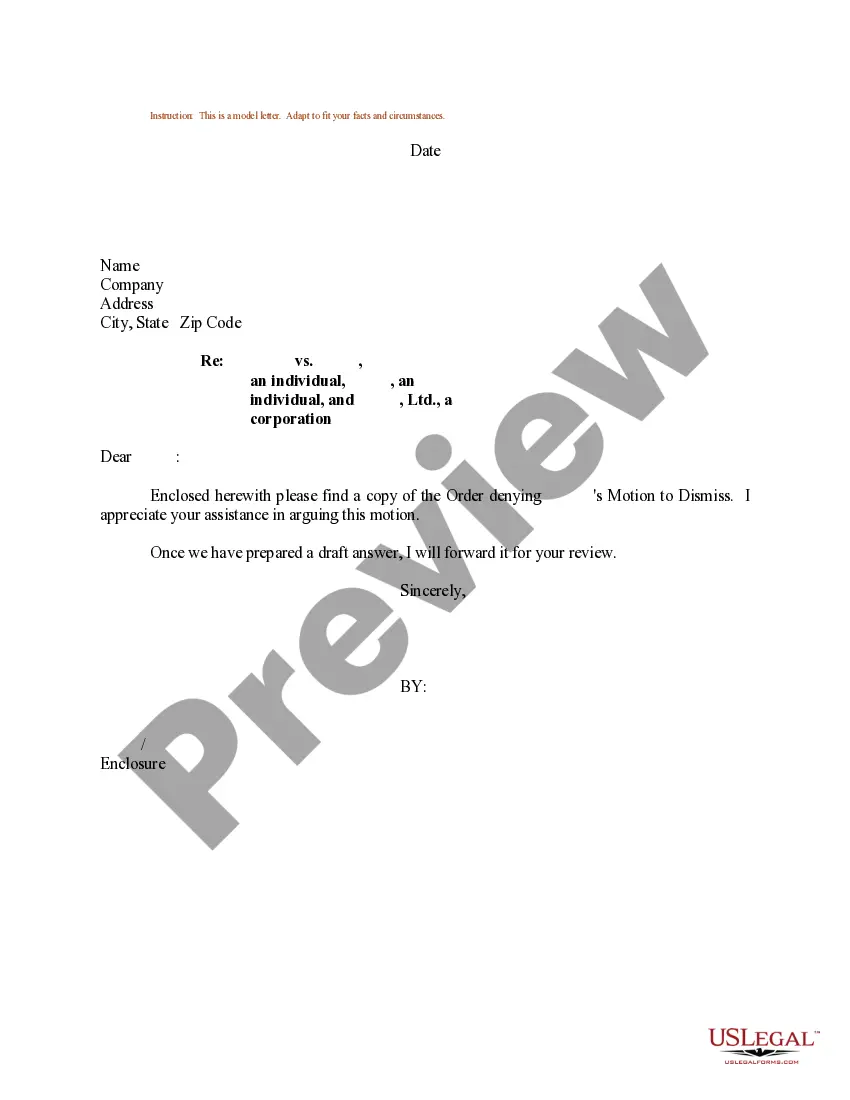
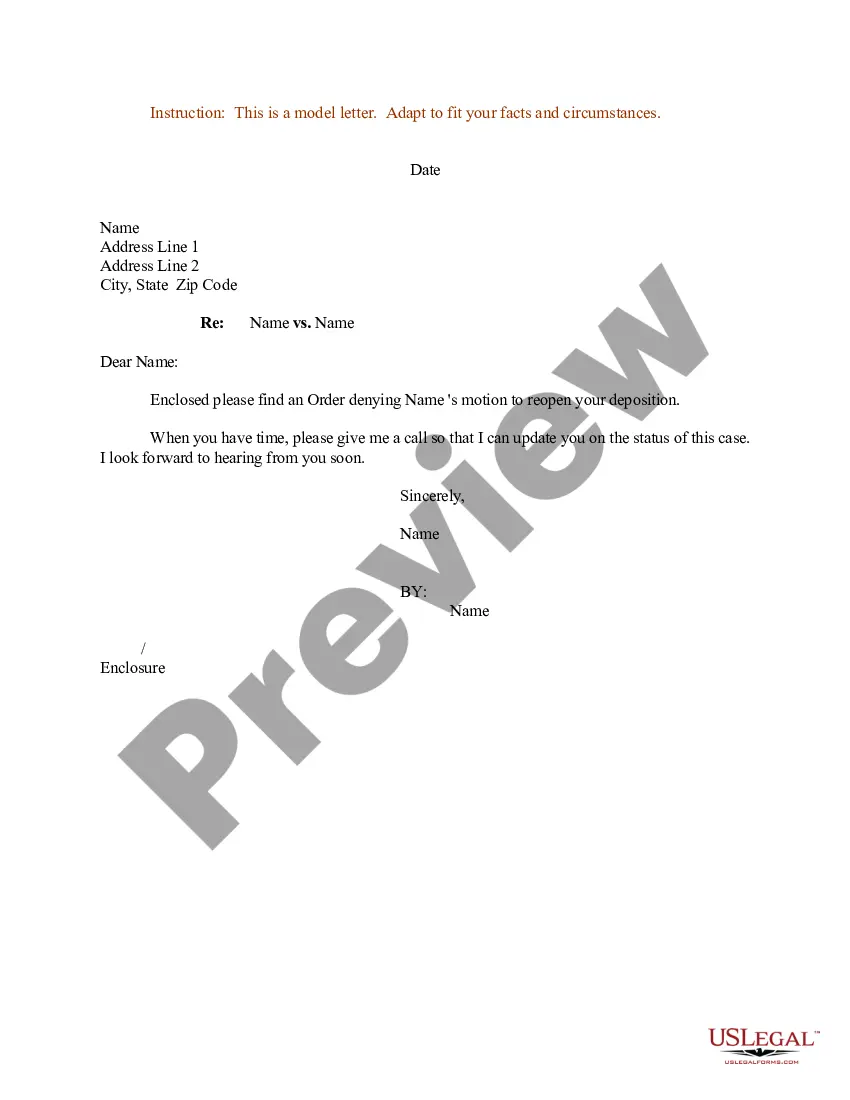
This form is a sample letter for an order granting a directed verdict. It serves as a template to assist attorneys or parties involved in a legal proceeding where a directed verdict is requested. Unlike other legal letters, this sample is specifically focused on articulating a request for a directed verdict based on the evidence presented during a trial.
Key parts of this document
- Date of the letter
- Recipientâs name and address
- Body of the letter outlining the request for the directed verdict
- Signature line for the sender
- Contact information for follow-up questions
Common use cases
Who should use this form
This form is intended for:
- Attorneys representing clients in civil or criminal cases
- Self-represented litigants who need to file a request for a directed verdict
- Law firms preparing documents for trial proceedings
Steps to complete this form
- Begin by entering the date at the top of the letter.
- Fill in the recipientâs name and complete address.
- Clearly state the request for the directed verdict in the body of the letter.
- Include your contact information for any follow-up.
- Sign the letter at the bottom to authenticate your request.
Notarization requirements for this form
This form does not typically require notarization unless specified by local law. However, it is advisable to check with your jurisdiction to ensure compliance with specific requirements.
Get your form ready online
Our built-in tools help you complete, sign, share, and store your documents in one place.
Make edits, fill in missing information, and update formatting in US Legal Forms—just like you would in MS Word.
Download a copy, print it, send it by email, or mail it via USPS—whatever works best for your next step.
Sign and collect signatures with our SignNow integration. Send to multiple recipients, set reminders, and more. Go Premium to unlock E-Sign.
If this form requires notarization, complete it online through a secure video call—no need to meet a notary in person or wait for an appointment.
We protect your documents and personal data by following strict security and privacy standards.

Make edits, fill in missing information, and update formatting in US Legal Forms—just like you would in MS Word.

Download a copy, print it, send it by email, or mail it via USPS—whatever works best for your next step.

Sign and collect signatures with our SignNow integration. Send to multiple recipients, set reminders, and more. Go Premium to unlock E-Sign.

If this form requires notarization, complete it online through a secure video call—no need to meet a notary in person or wait for an appointment.

We protect your documents and personal data by following strict security and privacy standards.
Common mistakes to avoid
- Not clearly stating the basis for the directed verdict.
- Forgetting to include relevant dates and case details.
- Using incorrect legal terminology or jargon.
- Neglecting to proofread for spelling and grammatical errors.
Benefits of using this form online
- Convenience of downloading and editing the form as needed.
- Access to templates drafted by licensed attorneys, ensuring legal validity.
- Time-saving option that eliminates the need to create a document from scratch.
Summary of main points
- This form is a sample letter for requesting a directed verdict during a trial.
- It is essential for attorneys and litigants to properly complete this form to ensure clarity and compliance with legal standards.
- Review state-specific requirements to ensure accuracy and compliance.
Looking for another form?
Form popularity
FAQ
Definition. A jury's findings or conclusions on the factual issues presented by a case. Sometimes, the term also refers to the judge's resolution of issues in a bench trial.
Rule 49 identifies three kinds of jury verdicts: general, special, and general with interrogatories. The general verdict asks the jury one (or two) questions going to the ultimate issues ("do you find for the plaintiff or the defendant? or "do you find the defendant guilty or not guilty?").
Verdicts are of several kinds, namely, privy and public, general, partial, and special. 3.
A directed verdict is a ruling entered by a trial judge after determining that there is no legally sufficient evidentiary basis for a reasonable jury to reach a different conclusion. The trial court may grant a directed verdict either sua sponte or upon a motion by either party.
A verdict in which the jury decides which party should win the case, without listing its specific findings on any disputed issues.
Directed Verdict a) After Plaintiff201fs evidence or after the close of all the evidence, a party may move for a directed verdict in its favor. Standard: If the non-moving party201fs evidence is insufficient as a matter of law to go to a jury, the Court should grant a directed verdict for the moving party.
Possible verdicts in criminal cases are guilty or not guilty. In a civil suit, the jury will find for the plaintiff or the defendant. If the jury finds for the plaintiff, it will also usually set out the amount the defendant should pay the plaintiff for damages, often after a separate hearing concerning damages.
JMOL is also known as a directed verdict, which it has replaced in American federal courts.Judgment on the pleadings is a motion made after pleading and before discovery; summary judgment happens after discovery and before trial; JMOL occurs during trial.
Motion for Directed Verdict/Dismissal In effect, in both kinds of cases, the lawyer asks the judge to direct a verdict for the defendant. The judge will either grant or deny the motion. If it is granted, the case is over and the defendant wins.