Complaint for Forcible Entry and Detainer - Defendant Refuses to Surrender Premises on Demand
About this form
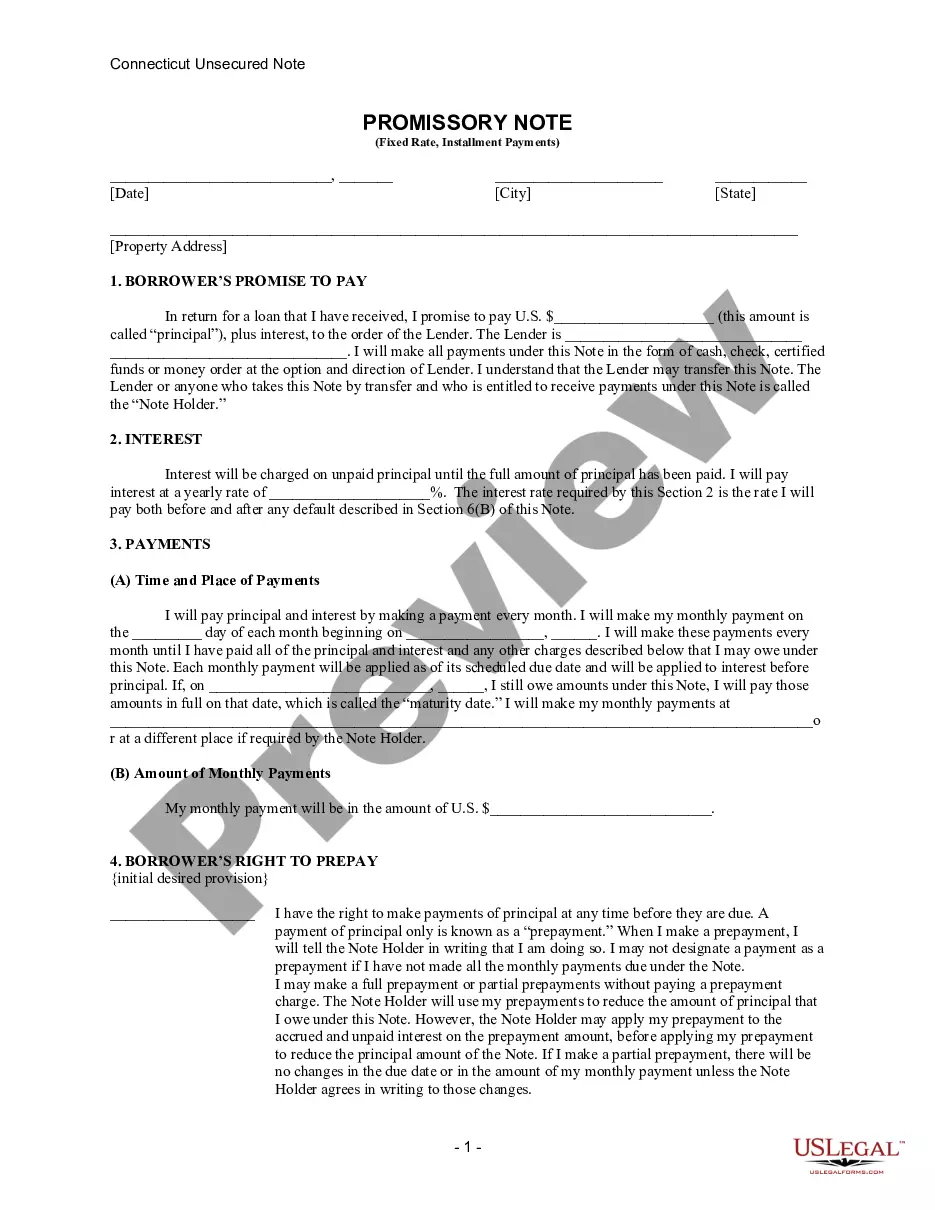
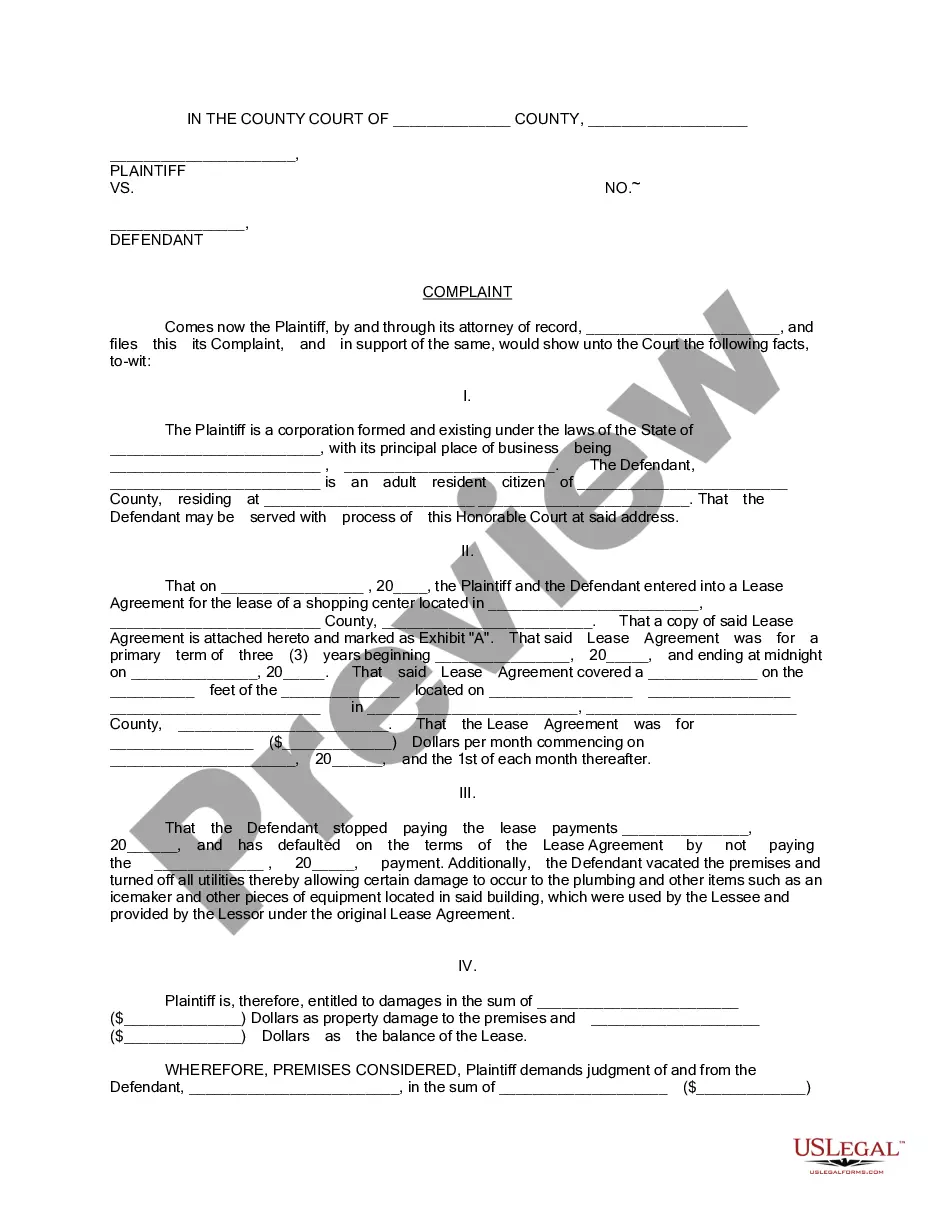
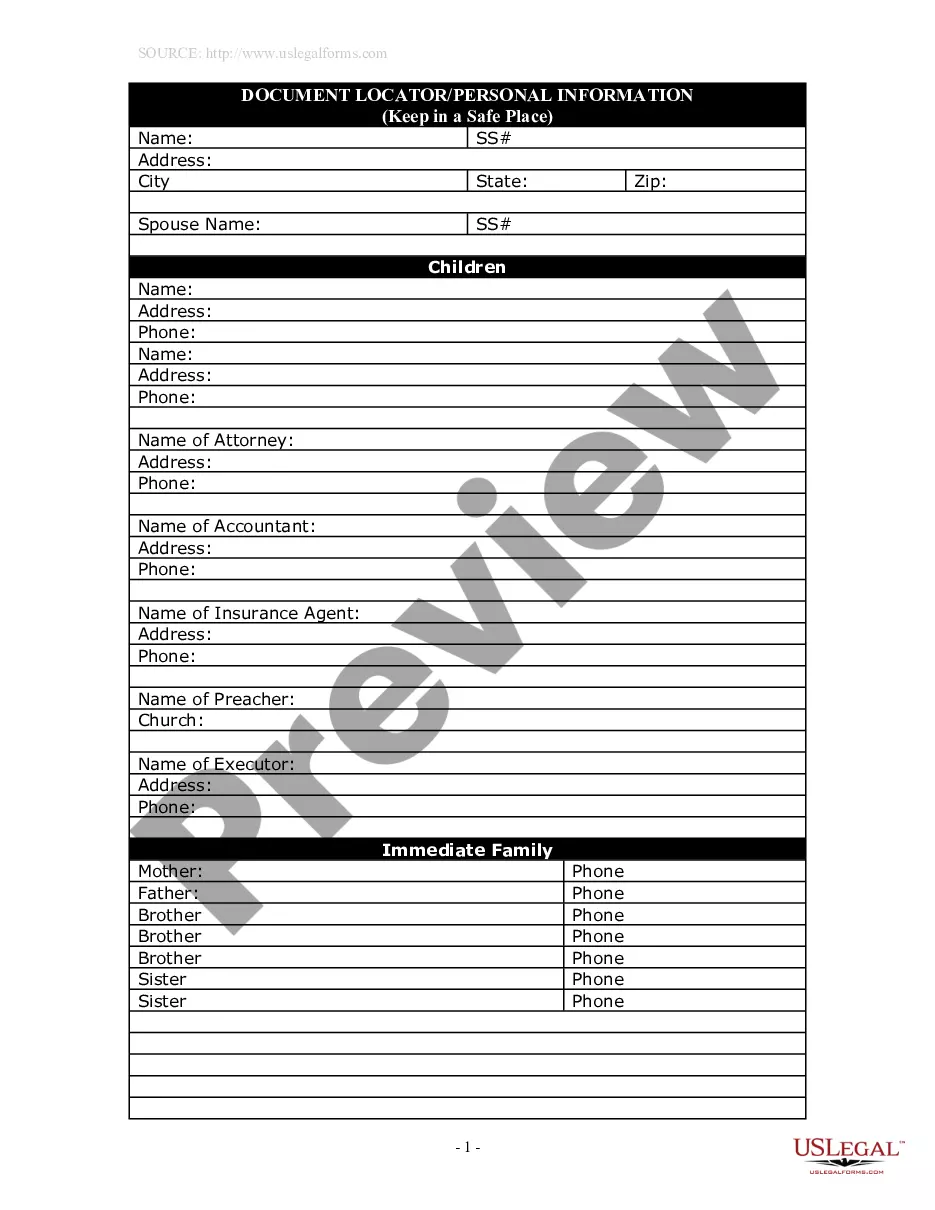
The Complaint for Forcible Entry and Detainer is a legal document used to initiate a civil action against a defendant who refuses to surrender possession of real property upon demand. Unlike unlawful entry, which involves entering property without consent, this form specifically addresses situations where a tenant or occupant has been wrongfully detained after initially occupying the premises legally. This form outlines the plaintiff's claim and requests the court for restitution and damages.
What’s included in this form
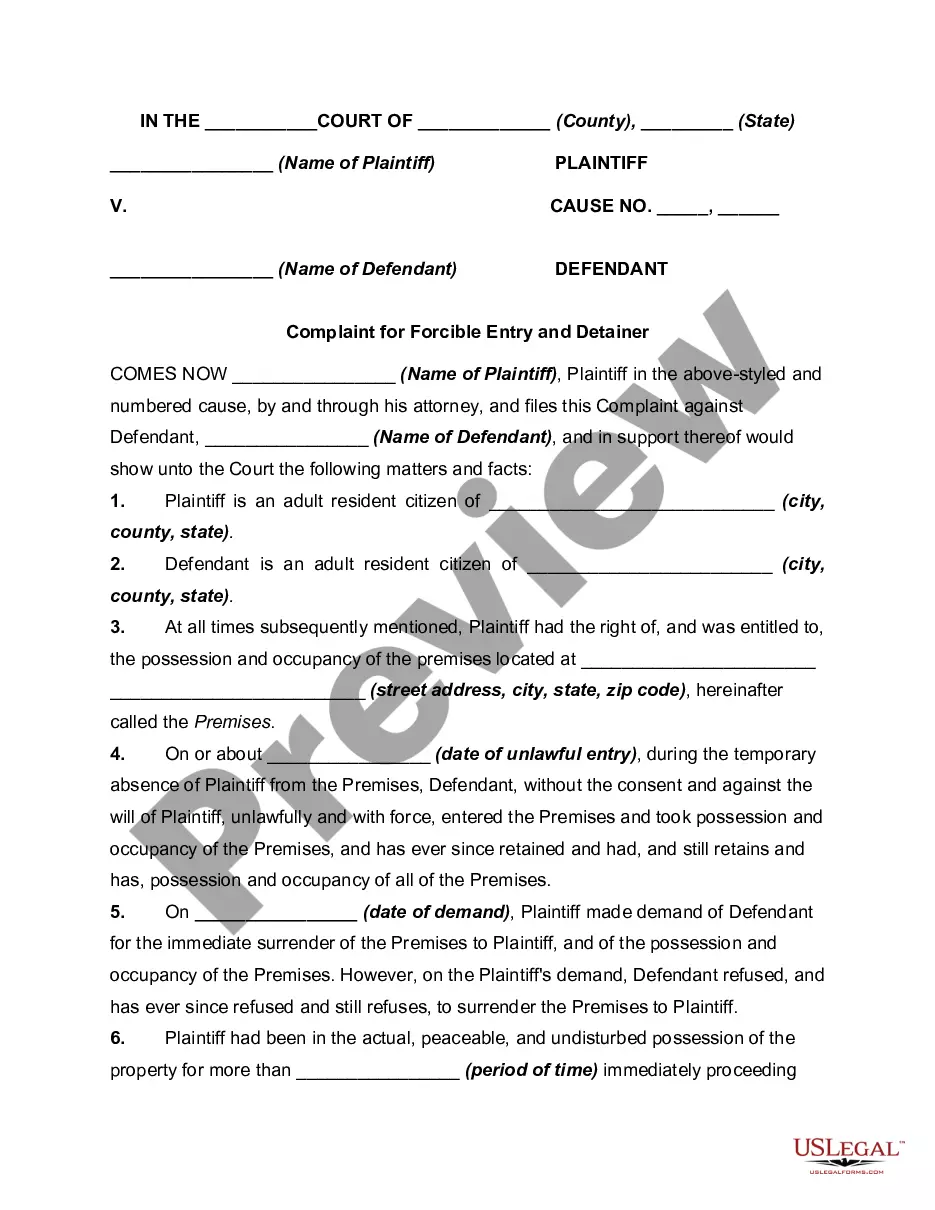
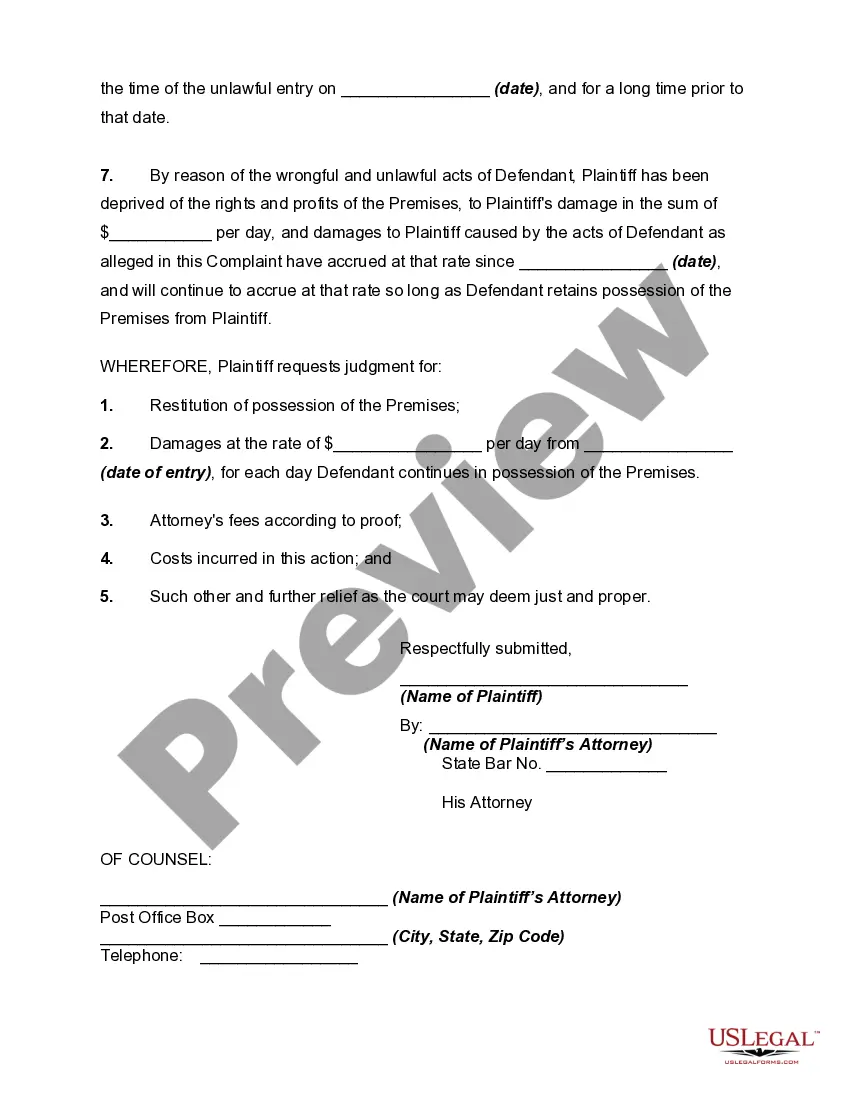
- Identification of plaintiff and defendant.
- Claims regarding the right to possess the property in question.
- Details of the unlawful entry date and circumstances.
- Demand for the surrender of the premises.
- Request for damages incurred due to the unlawful detention.
- Legal representation details, including attorney information.
Common use cases
This form is necessary when a property owner or landlord needs to reclaim possession of their property from someone who is unlawfully occupying it. It is commonly used in cases where tenants refuse to vacate after an eviction notice, or in situations involving unauthorized occupants who have entered the premises without permission. Using this form helps expedite the legal process of regaining control of the property.
Who should use this form
- Landlords seeking to evict tenants who refuse to vacate.
- Property owners dealing with unauthorized occupants.
- Individuals who have been wrongfully displaced from their premises and need legal recourse.
- Attorneys representing clients in forcible entry and detainer cases.
Completing this form step by step
- Identify and fill in the names of the plaintiff and defendant.
- Provide the address of the property in dispute.
- Specify the dates related to the unlawful entry and the demand for surrender.
- Detail the duration of possession prior to the unlawful entry.
- State the amount of damages incurred.
- Include the attorneyâs information and signature, if applicable.
Does this document require notarization?
This form does not typically require notarization unless specified by local law. However, it's important to verify any additional requirements based on your jurisdiction's regulations before submission.
Get your form ready online
Our built-in tools help you complete, sign, share, and store your documents in one place.
Make edits, fill in missing information, and update formatting in US Legal Forms—just like you would in MS Word.
Download a copy, print it, send it by email, or mail it via USPS—whatever works best for your next step.
Sign and collect signatures with our SignNow integration. Send to multiple recipients, set reminders, and more. Go Premium to unlock E-Sign.
If this form requires notarization, complete it online through a secure video call—no need to meet a notary in person or wait for an appointment.
We protect your documents and personal data by following strict security and privacy standards.
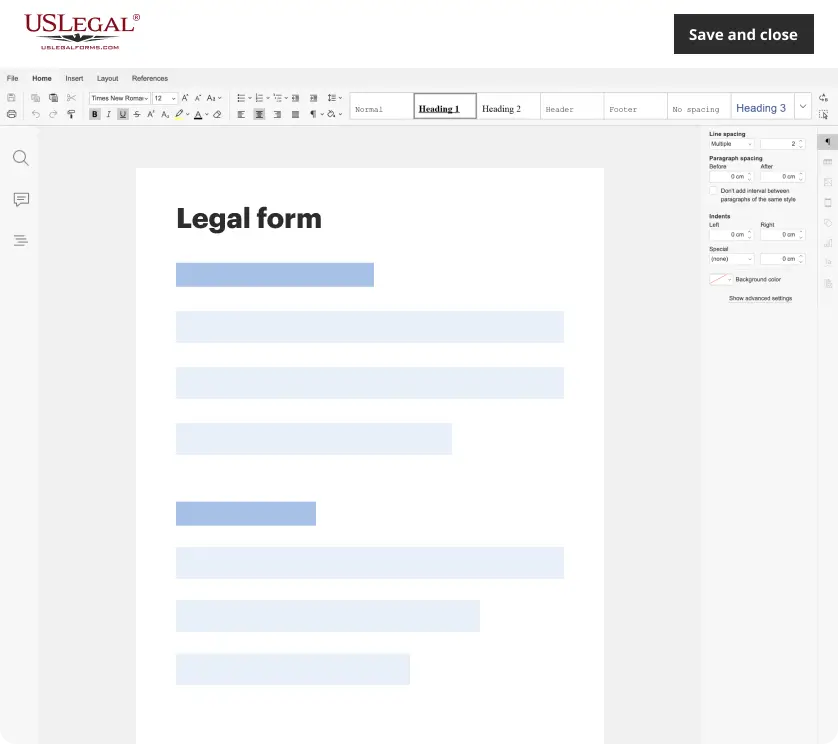
Make edits, fill in missing information, and update formatting in US Legal Forms—just like you would in MS Word.
Download a copy, print it, send it by email, or mail it via USPS—whatever works best for your next step.
Sign and collect signatures with our SignNow integration. Send to multiple recipients, set reminders, and more. Go Premium to unlock E-Sign.

If this form requires notarization, complete it online through a secure video call—no need to meet a notary in person or wait for an appointment.

We protect your documents and personal data by following strict security and privacy standards.
Typical mistakes to avoid
- Failing to clearly state the basis for unlawful entry.
- Omitting the correct address of the premises involved.
- Not specifying the amount of damages sought.
- Inaccurate identification of parties involved.
- Neglecting to include necessary dates for entry and demand.
Why complete this form online
- Access and download the form easily at any time.
- Edit the form to tailor it to your specific legal situation.
- Ensure the use of clear and accurate language tailored for legal requirements.
- Save time compared to drafting a complaint from scratch.
Looking for another form?



Form popularity
FAQ
If you do not vacate by the day in the notice, the landlord can then apply to the NSW Civil and Administrative Tribunal (NCAT) for a termination order. A termination order ends the tenancy and specifies the day by which you must give vacant possession.
If you file an eviction (unlawful detainer) case and you decide you do not want to move forward, you can ask the court to dismiss the case.You included more than one tenant in your eviction case but have decided you only want to evict one or some of them, so you dismiss the case as to the others.
Detainer Warrant is the leading process of General Sessions Court, used by a plaintiff in order to regain possession of his/her real property from a defendant, usually one who has failed to pay rent. This warrant has a 30-day limit and the Court date is to be set at least six days from the date of service.
A summary proceeding to recover possession of land that is instituted by one who has been wrongfully ousted from, or deprived of, possession. Even if it is unlawful, peaceable possession cannot be terminated by violence.
After the Landlord and Tenant Board makes an order to evict a tenant, a court official called the Sheriff is in charge of enforcing or carrying out the order. If you have not moved out by the date the eviction order says you must move, the Sheriff can make you leave and let your landlord change the locks.
If you have an eviction record on your background, you can petition the court in the county where the case was filed to have the record expunged, or sealed. This typically requires filing a petition with the court and paying a filing...
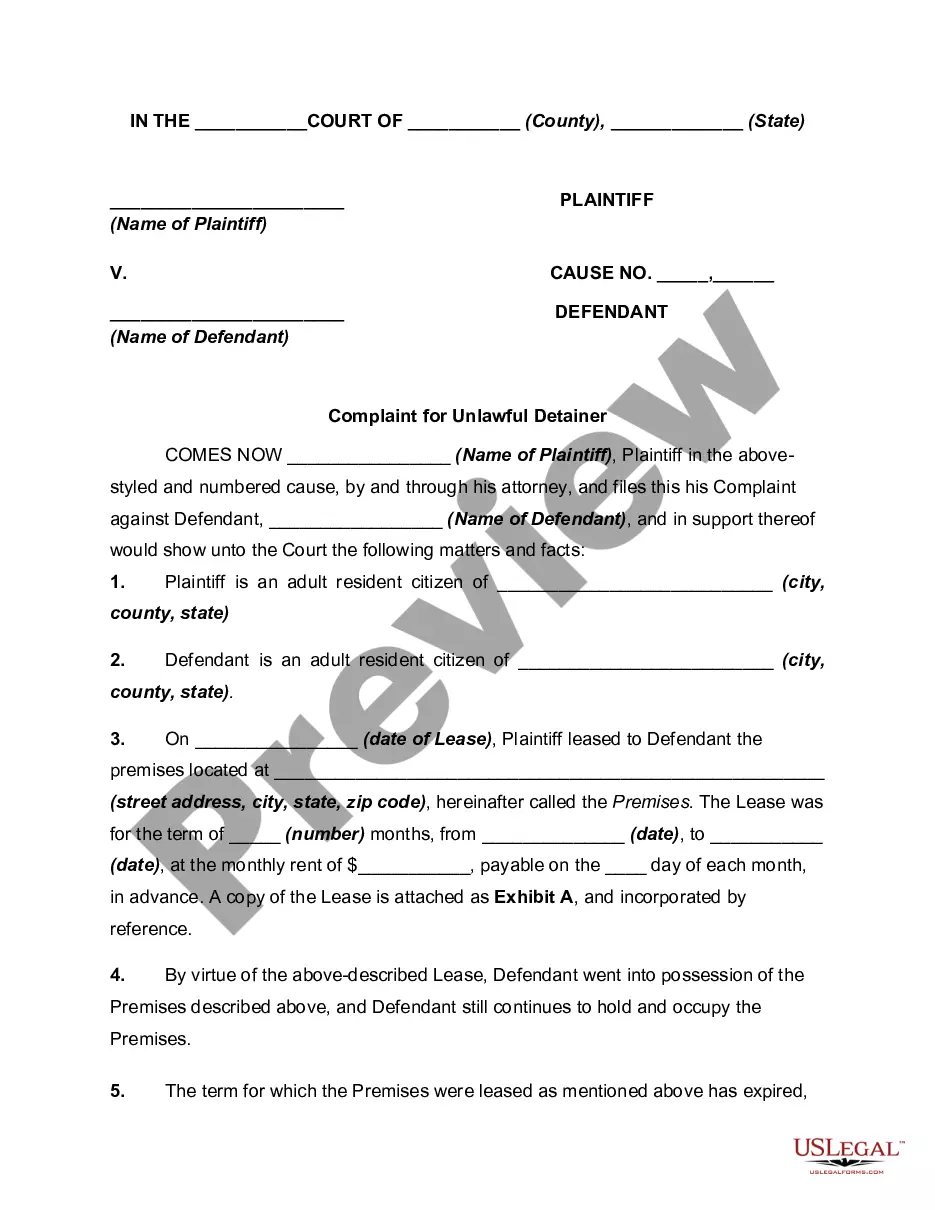
An unlawful detainer is a legal way for a landlord to evict a tenant. It requires a special court process and can move quickly through the court system. Unlawful detainer cases are often used if one of the following occurs: The tenant does not leave after the lease ends. Rent is not paid.
If you win an eviction hearing, the court will pass a judgment in your favor. This judgment allows you to get a writ of possession.Even with this winning judgment, there are cases where tenants may still refuse to leave the property. As if the hearing never happened, they continue to live in your house.