Scrivener's Error Corrective Affidavit to Correct Clerical Error in Deed
What is this form?
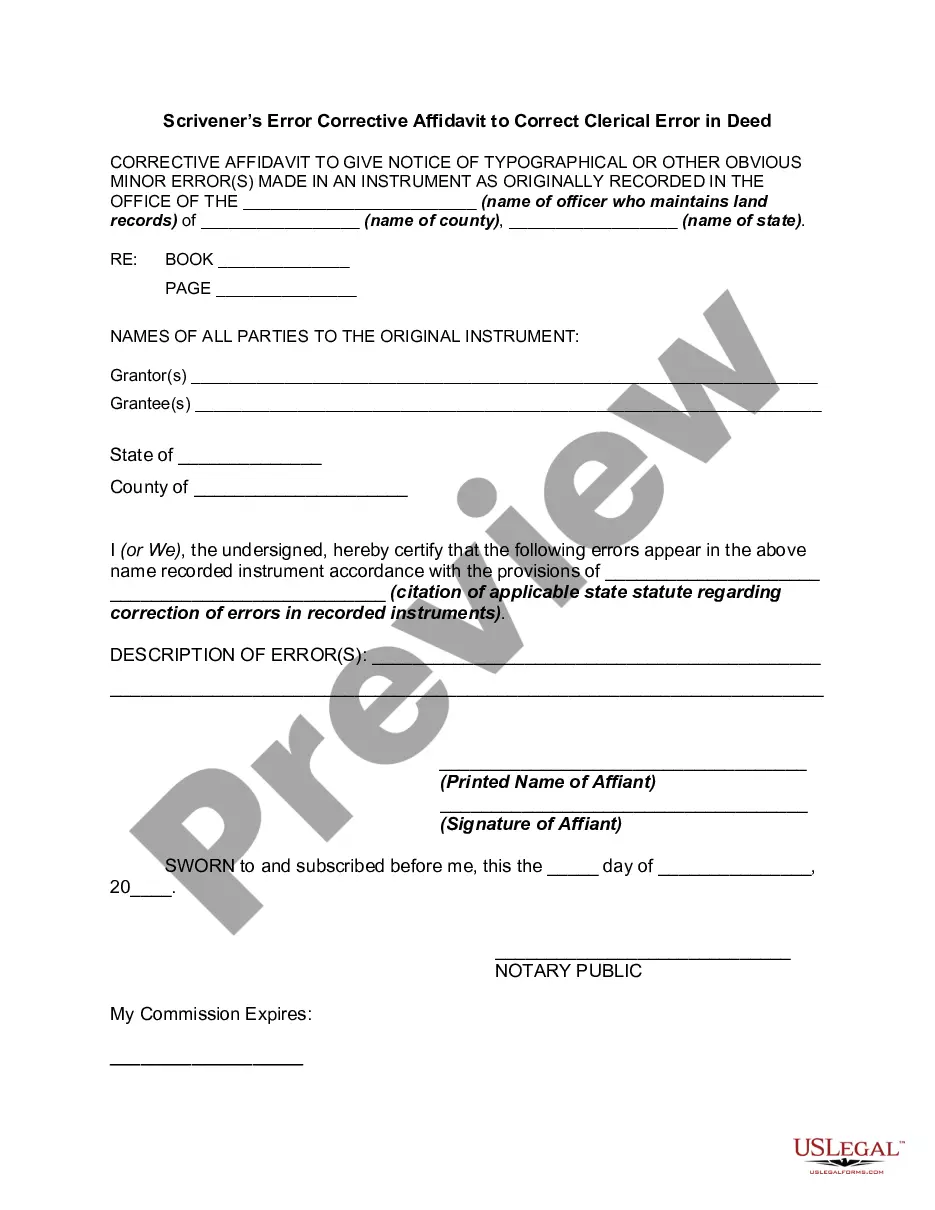
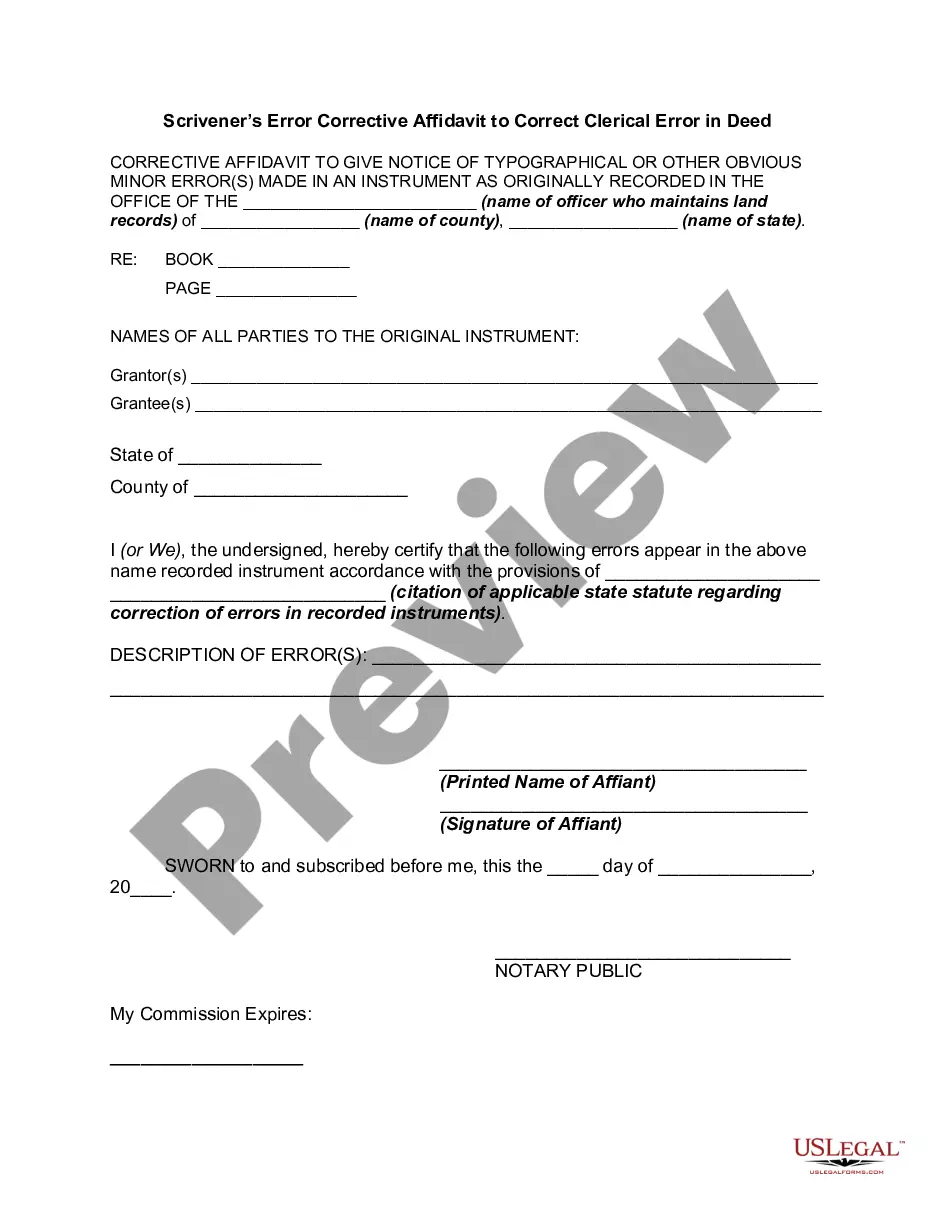
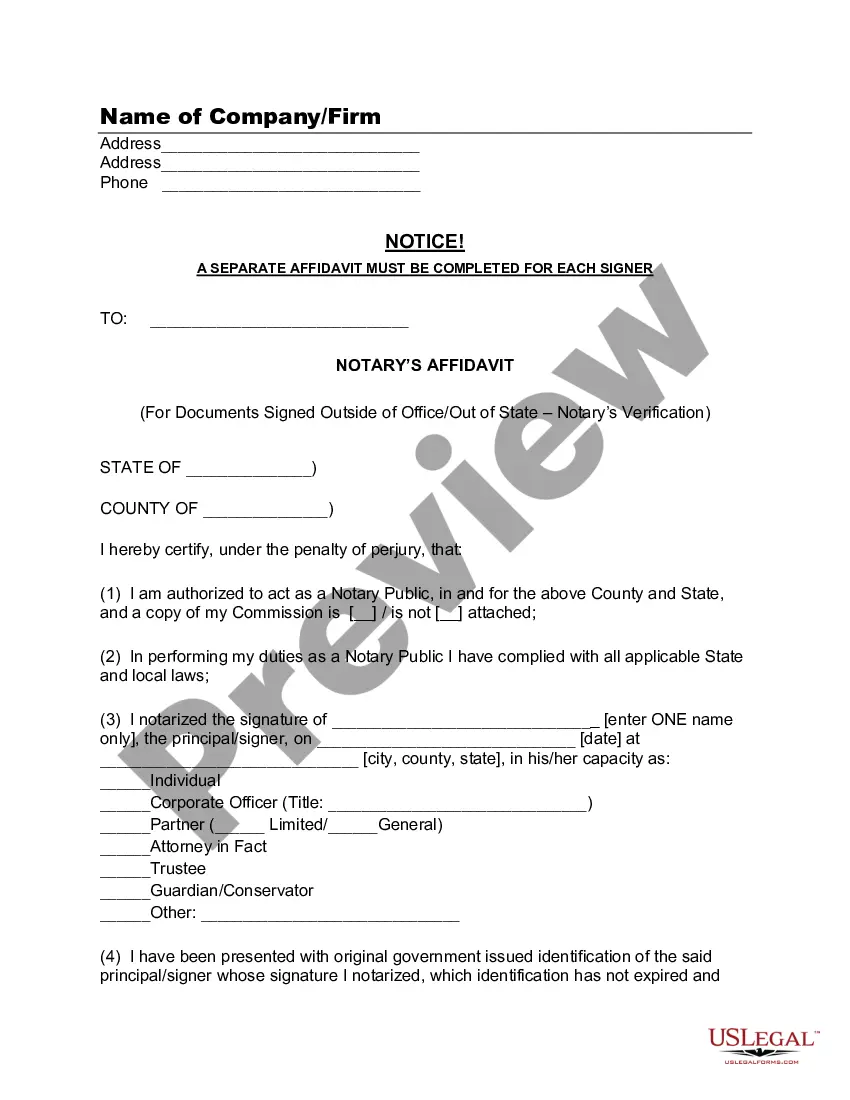
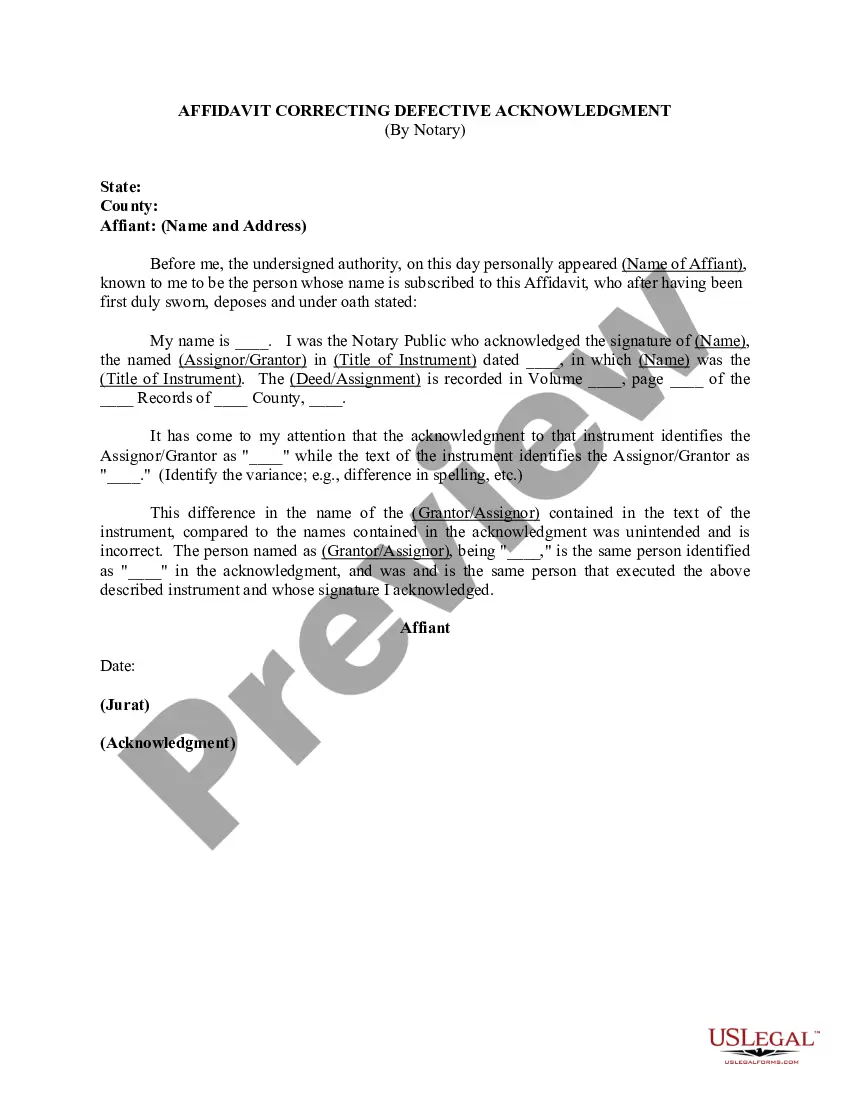
A Scrivener's Error Corrective Affidavit is a formal legal document used to correct minor clerical mistakes in a previously recorded deed. Unlike other affidavits, this form specifically addresses typographical errors or other obvious mistakes in legal instruments, affirming that the corrections are accurate and necessary for proper documentation. This affidavit is crucial for ensuring the validity and clarity of property records.
Key parts of this document
- Name of the officer maintaining land records and the respective county and state.
- Reference to the recorded instrument including book and page numbers.
- Names of all parties involved in the original deed.
- Description of the clerical errors being corrected.
- Signature and printed name of the affiant, along with notarization details.
Common use cases
This affidavit should be used when minor clerical errors, such as typographical mistakes or incorrect names, are found in a recorded deed or related legal documents. It is essential when these mistakes could lead to confusion in property transactions or ownership rights. Correcting these errors preserves the integrity of the document and prevents potential legal disputes.
Intended users of this form
This form is intended for:
- Property owners who discover clerical errors in their recorded deeds.
- Real estate professionals or agents managing property transactions.
- Attorneys assisting clients with property documentation corrections.
- Anyone needing clarification of legal ownership due to clerical mistakes in documentation.
How to complete this form
- Identify and enter the names of the officer responsible for land records along with the county and state.
- Fill in the reference details, including the book and page number of the recorded instrument.
- List the names of all parties involved in the original document.
- Clearly describe the clerical errors that need correction.
- Sign and date the affidavit in the presence of a notary public.
Does this document require notarization?
Notarization is required for this form to take effect. Our online notarization service, powered by Notarize, lets you verify and sign documents remotely through an encrypted video session, available 24/7.
Get your form ready online
Our built-in tools help you complete, sign, share, and store your documents in one place.
Make edits, fill in missing information, and update formatting in US Legal Forms—just like you would in MS Word.
Download a copy, print it, send it by email, or mail it via USPS—whatever works best for your next step.
Sign and collect signatures with our SignNow integration. Send to multiple recipients, set reminders, and more. Go Premium to unlock E-Sign.
If this form requires notarization, complete it online through a secure video call—no need to meet a notary in person or wait for an appointment.
We protect your documents and personal data by following strict security and privacy standards.

Make edits, fill in missing information, and update formatting in US Legal Forms—just like you would in MS Word.

Download a copy, print it, send it by email, or mail it via USPS—whatever works best for your next step.

Sign and collect signatures with our SignNow integration. Send to multiple recipients, set reminders, and more. Go Premium to unlock E-Sign.

If this form requires notarization, complete it online through a secure video call—no need to meet a notary in person or wait for an appointment.

We protect your documents and personal data by following strict security and privacy standards.
Typical mistakes to avoid
- Failing to accurately describe the clerical errors.
- Not providing complete names of all parties involved.
- Missing the notary signature, which invalidates the affidavit.
- Entering incorrect reference details for the recorded instrument.
Benefits of using this form online
- Convenience of downloading and completing the form at your own pace.
- Editability allows you to ensure all information is correct before submission.
- Access to templates created by licensed attorneys, ensuring legal compliance.
- Quick access to notarization services if needed, without the hassle of travel.
Main things to remember
- The Scrivener's Error Corrective Affidavit is essential for correcting clerical errors in recorded deeds.
- Accurate details and notarization are crucial for legal validity.
- This form aids in ensuring that property records remain accurate and enforceable.
Looking for another form?
Form popularity
FAQ
This form is a Scrivener's Error Corrective Affidavit used to fix minor clerical mistakes in a previously recorded deed, ensuring the record remains accurate. It identifies the land records officer and county/state, references the recorded instrument (book and page), lists the original deed parties, describes the errors being corrected, and includes the affiant’s notarized signature.
Typically, the affidavit is filed with the land records office to reflect the corrections in the public deed record. Filing with the county recorder may be required or advised by local rules, so check the jurisdiction and, if in doubt, consult a licensed attorney.
A Scrivener's error is a clerical mistake in a deed or related document that this form is designed to correct. It often involves typographical errors or obvious inaccuracies that affect the accuracy or clarity of the recorded instrument.
By executing the Scrivener's Error Corrective Affidavit to Correct Clerical Error in Deed and submitting it to the land records office. The affiant describes the error, specifies the correction, and the document must be signed and notarized.
Examples include typographical mistakes or misnamed parties in the deed, or an incorrect date or inaccurate legal description in the recorded instrument. The affidavit captures these errors and specifies the exact corrections needed to reflect the intended information.
A clerical error is a broad term for simple mistakes in a document, while a Scrivener's error is a specific label for such mistakes in drafted or recorded deeds. This form is designed to correct Scrivener's errors in a deed and update the land records accordingly.