California Complaint for Wrongul Eviction
About this form
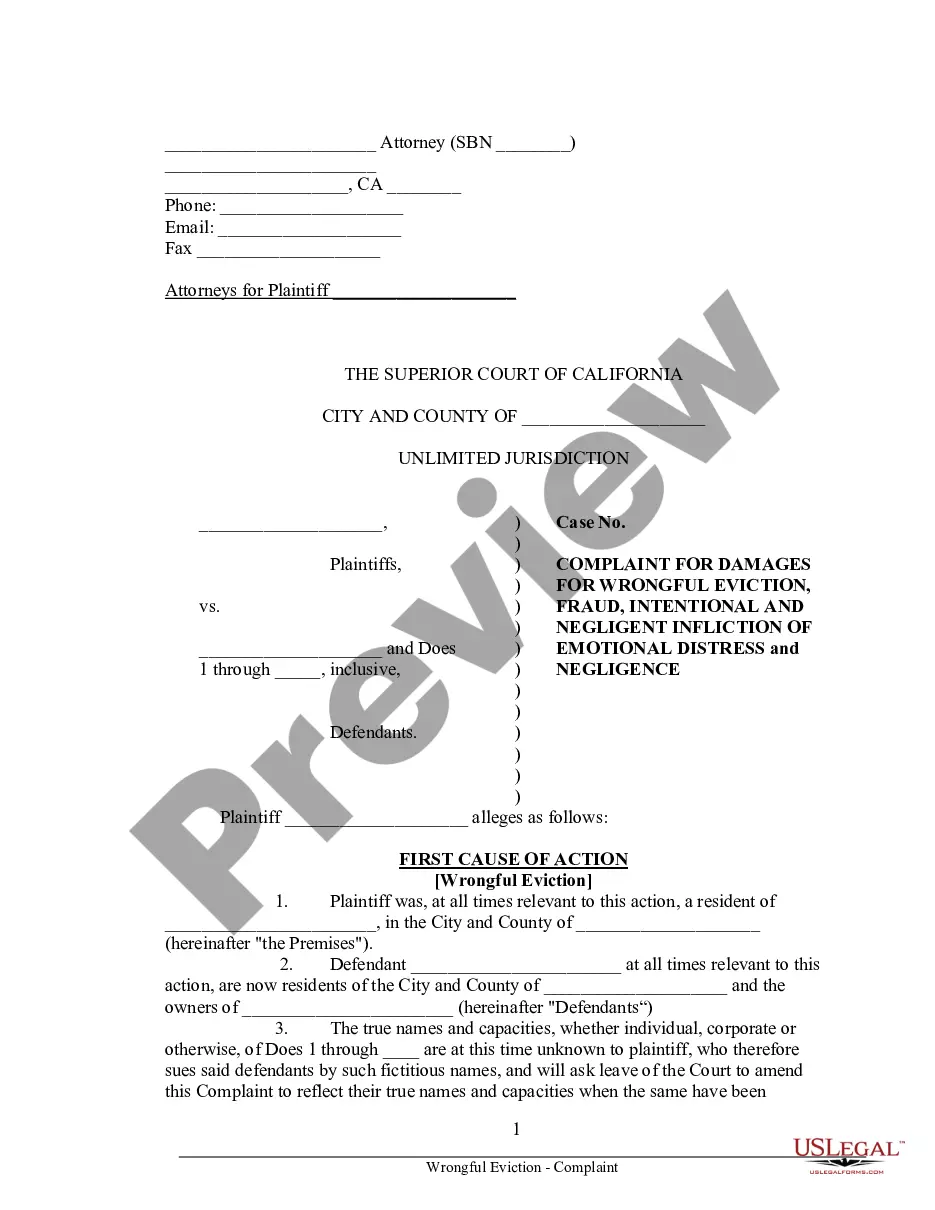
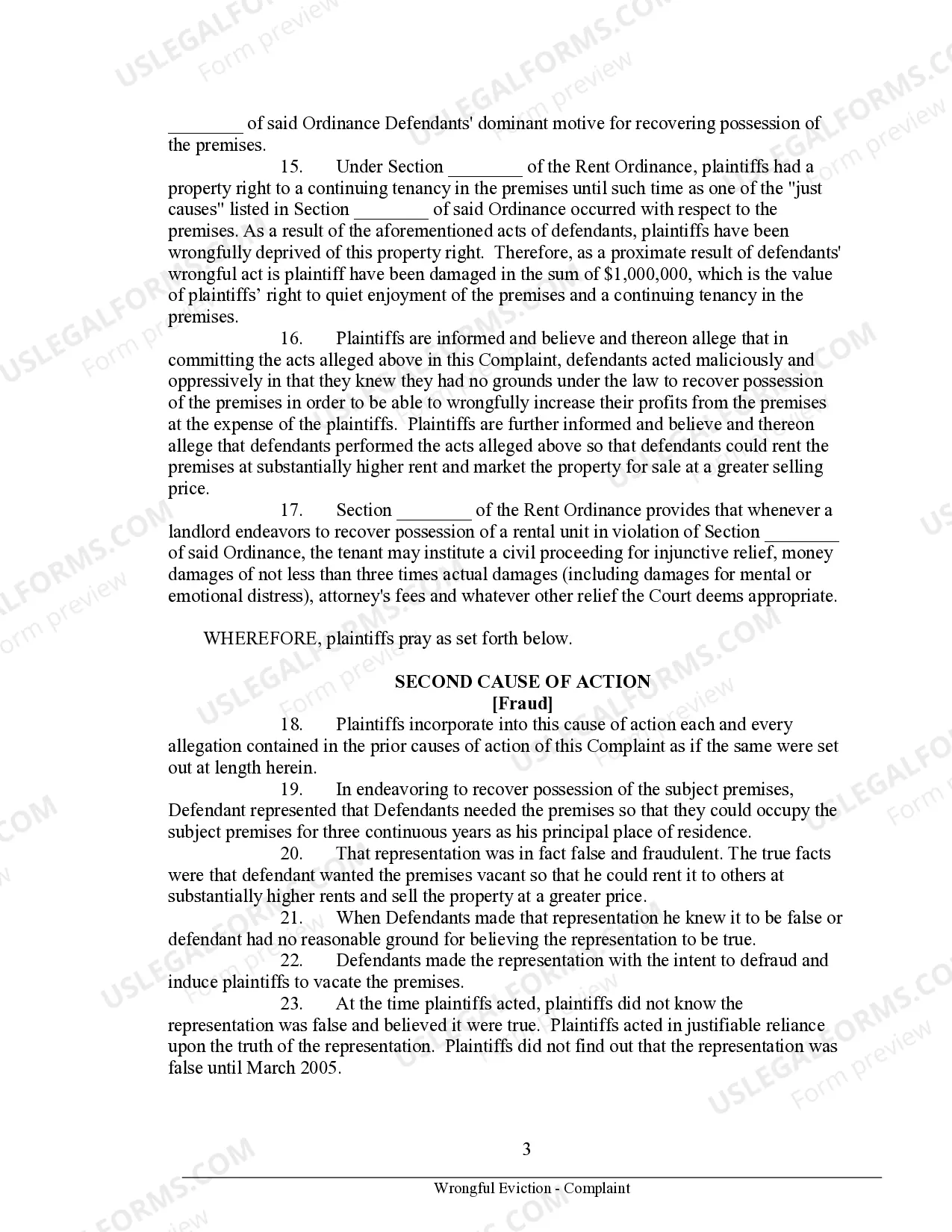
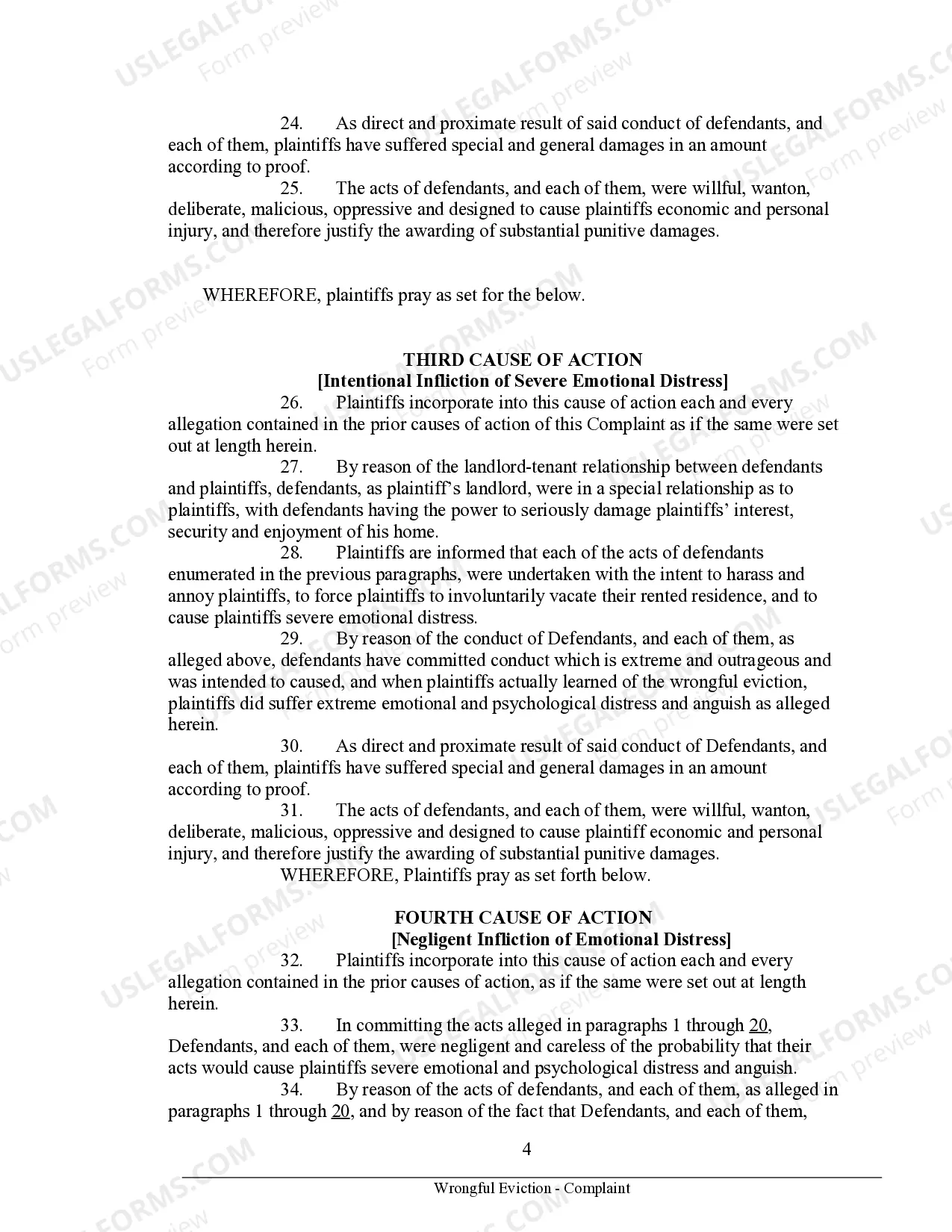
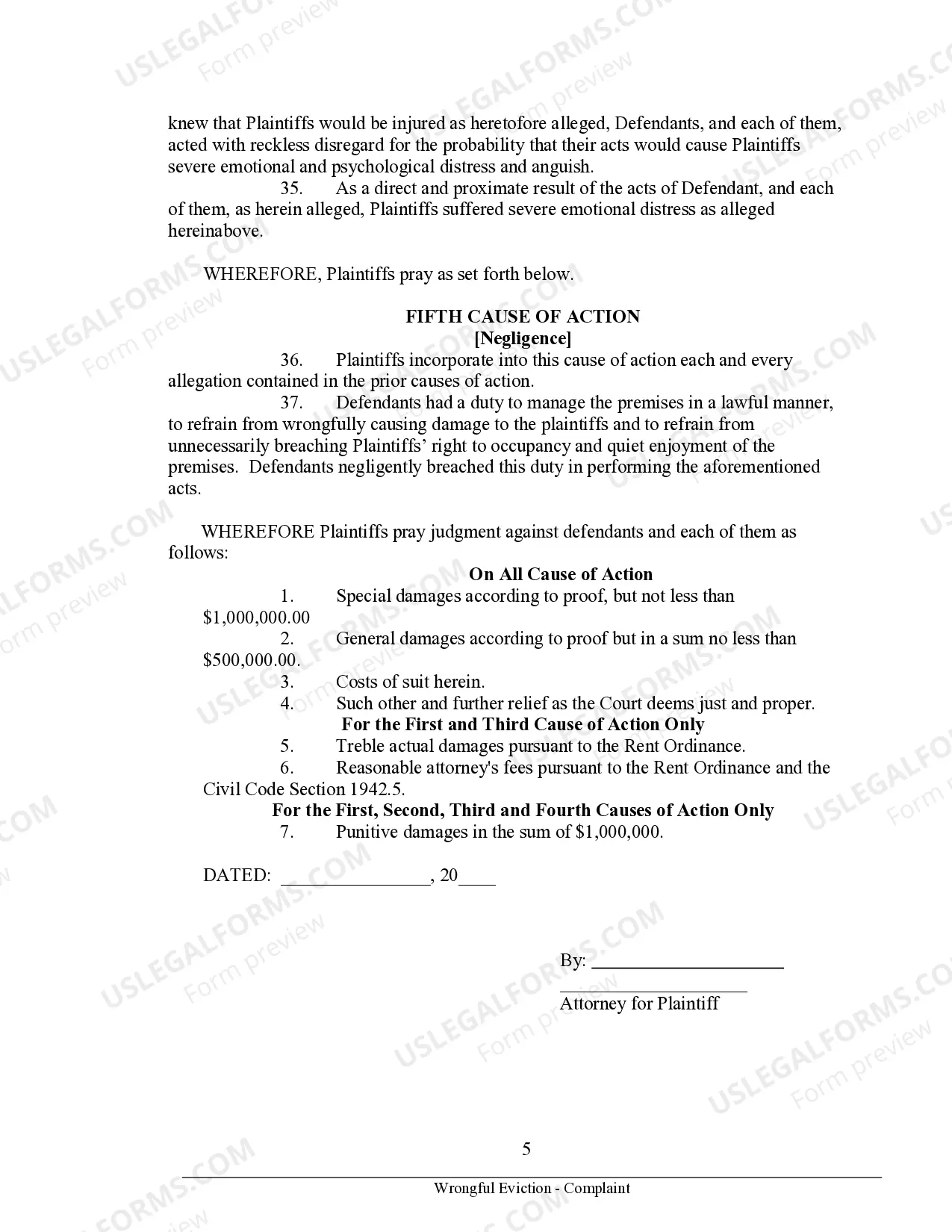
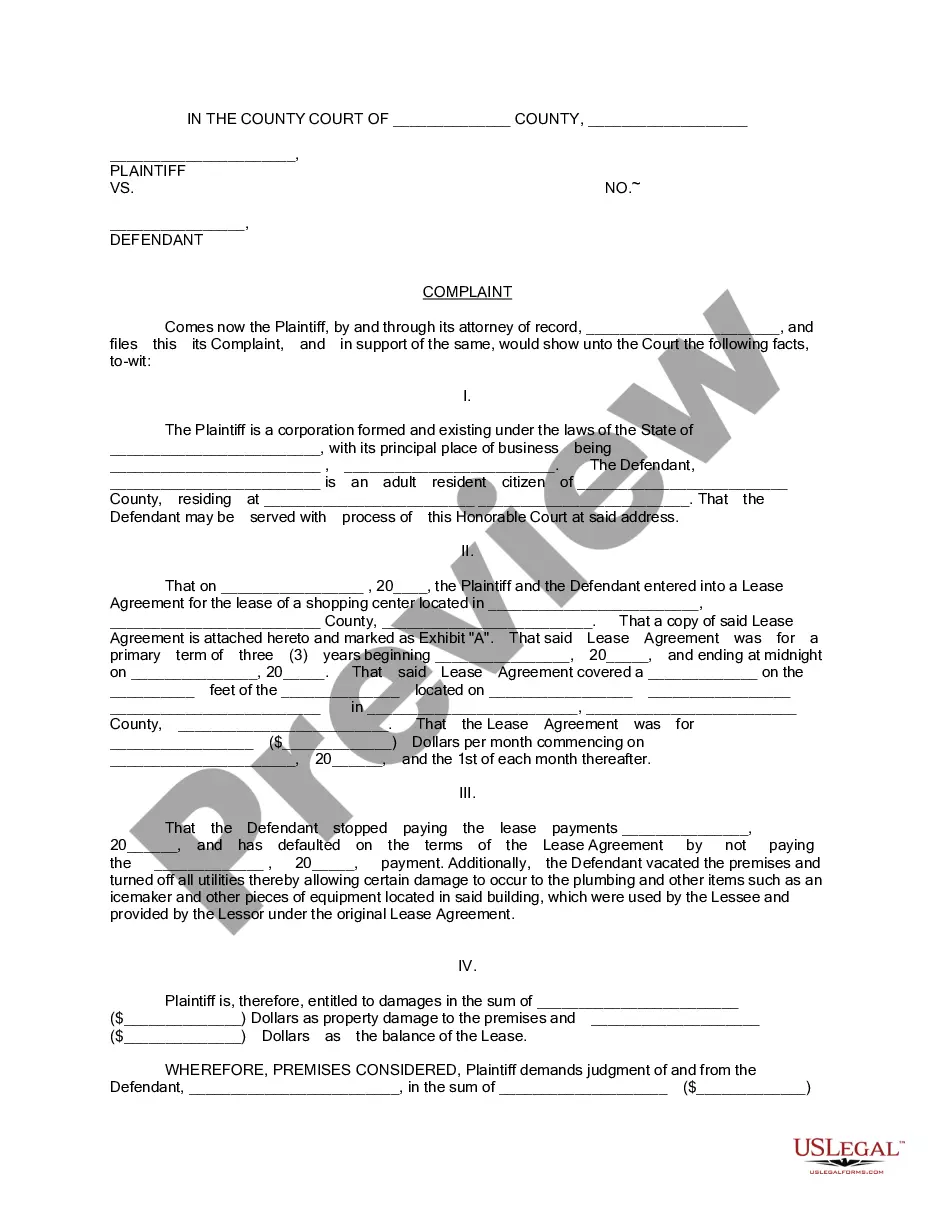
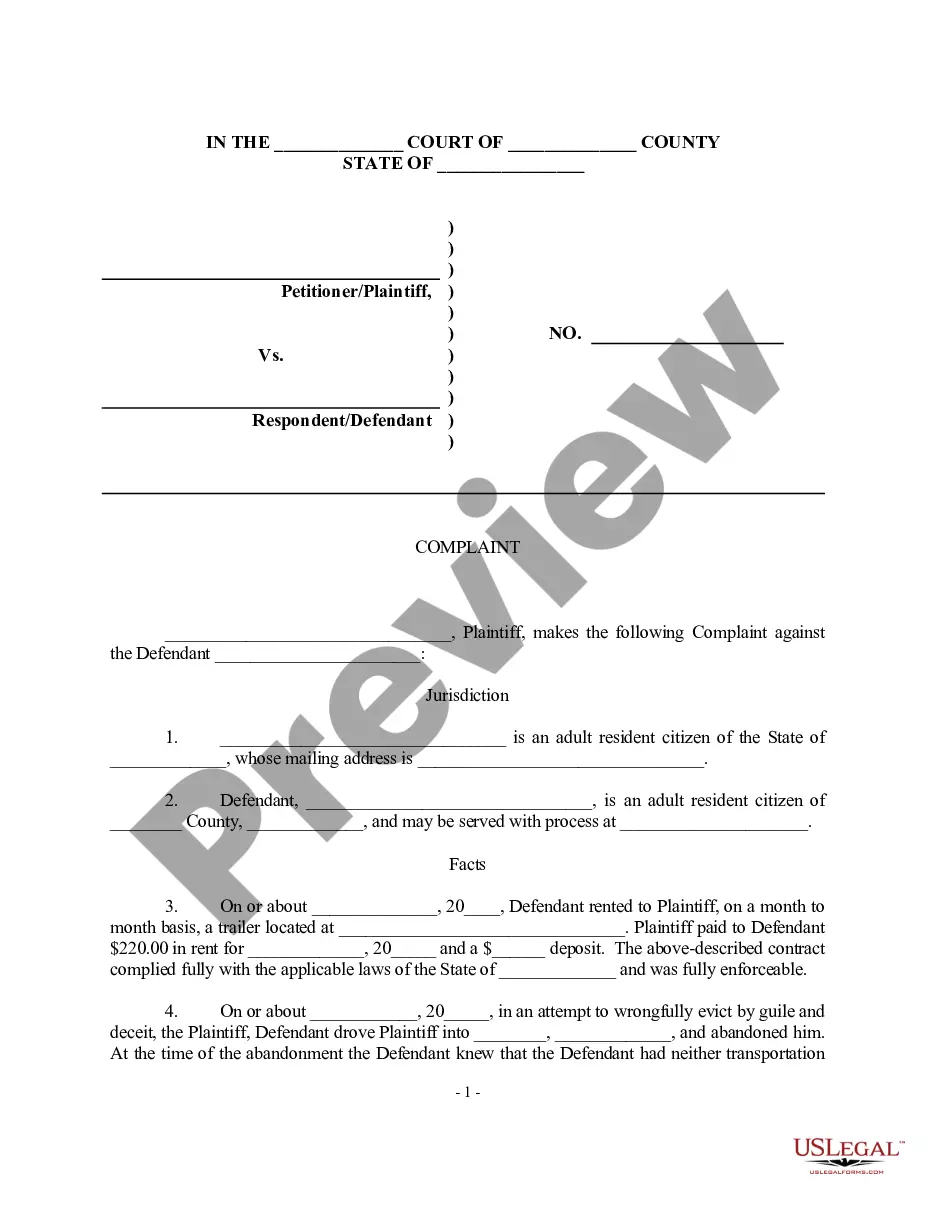
The Complaint for Wrongful Eviction is a legal document used by tenants who believe they have been unfairly evicted from a rental property. This form allows the tenant (plaintiff) to file a claim against their landlord (defendant) for wrongful eviction, fraud, emotional distress, and negligence. It is essential for tenants under local rent stabilization ordinances who seek to hold landlords accountable when evictions do not adhere to legal requirements, ultimately seeking monetary damages for their losses.
Key parts of this document
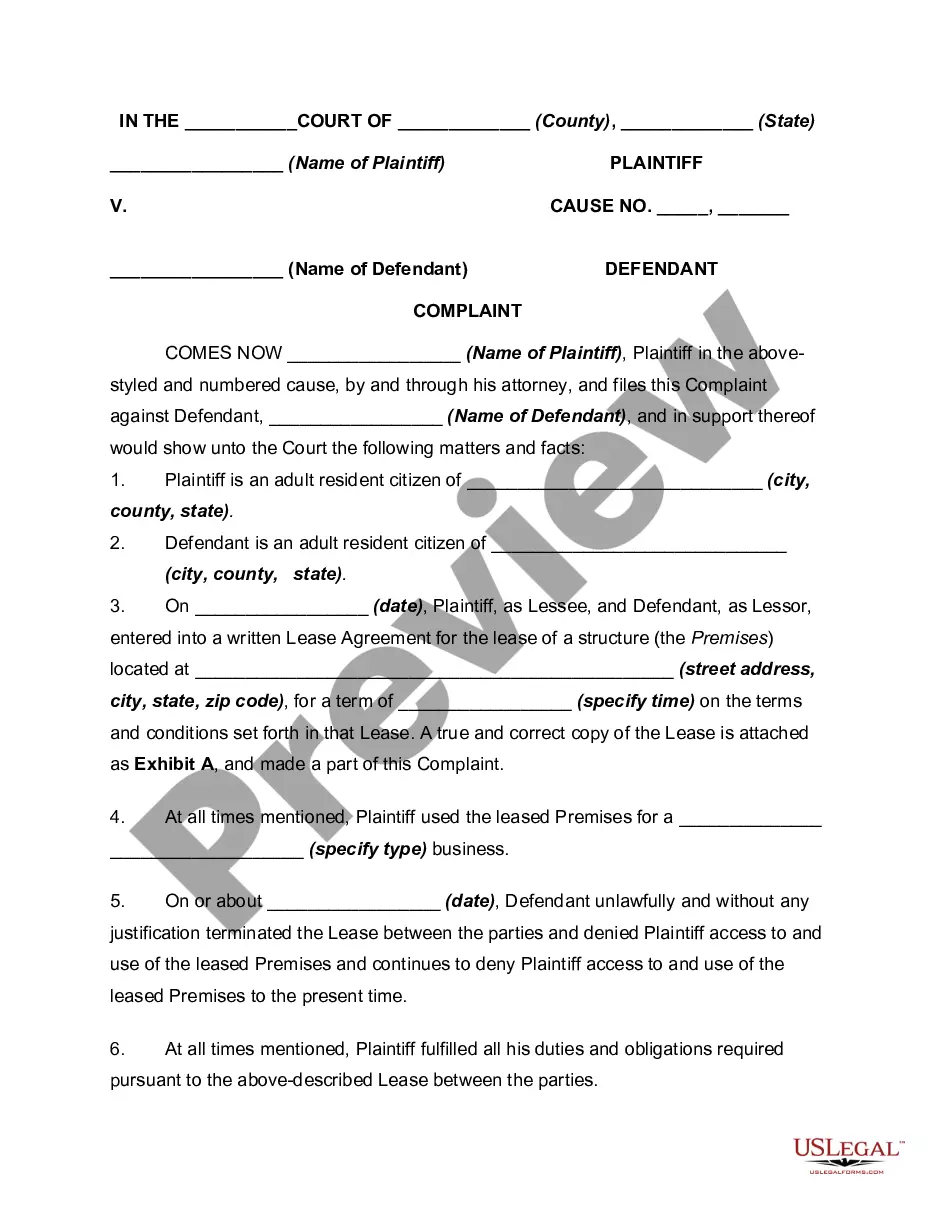
- Identification of the parties involved (plaintiff and defendants)
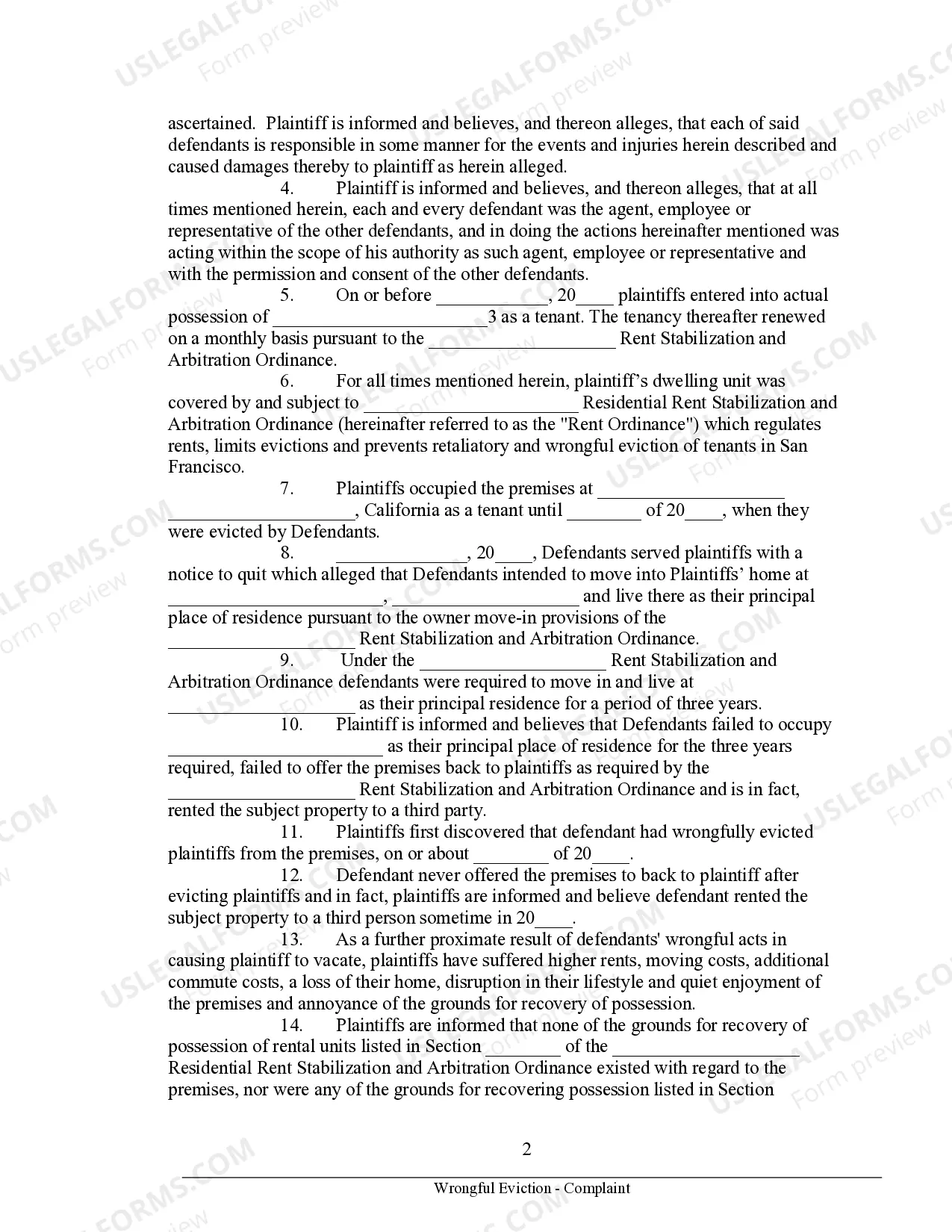
- Allegations of wrongful eviction with specific dates and circumstances
- Claims of fraud and emotional distress due to landlord actions
- Details on local rent stabilization regulations affecting the case
- Requests for specific damages and relief from the court
Situations where this form applies
This form should be used when a tenant believes they have been wrongfully evicted from a rental property. Scenarios for using this form include instances where a landlord has failed to follow legal eviction procedures, provided false reasons for eviction, or failed to honor tenant rights under local rent stabilization laws. It is crucial for tenants who have suffered financially or emotionally due to such actions to document their claims formally.
Intended users of this form
- Tenants who have been evicted or threatened with eviction
- Individuals who believe their eviction was unjustified or illegal
- Those seeking to recover damages resulting from emotional distress related to eviction
- Residents covered under local rent stabilization ordinances
How to complete this form
- Identify the plaintiff and defendants by filling out their names and contact details.
- Specify the property address from which the eviction occurred.
- Outline the dates and details surrounding the eviction notice.
- Include claims related to wrongful eviction, fraud, and emotional distress as applicable.
- State the amount of damages being sought and any other relief requested from the court.
Does this form need to be notarized?
This form does not typically require notarization unless specified by local law. However, if you wish to have a formal record of your claim, it can be beneficial to have it notarized as an additional step in the legal process.
Get your form ready online
Our built-in tools help you complete, sign, share, and store your documents in one place.
Make edits, fill in missing information, and update formatting in US Legal Forms—just like you would in MS Word.
Download a copy, print it, send it by email, or mail it via USPS—whatever works best for your next step.
Sign and collect signatures with our SignNow integration. Send to multiple recipients, set reminders, and more. Go Premium to unlock E-Sign.
If this form requires notarization, complete it online through a secure video call—no need to meet a notary in person or wait for an appointment.
We protect your documents and personal data by following strict security and privacy standards.

Make edits, fill in missing information, and update formatting in US Legal Forms—just like you would in MS Word.

Download a copy, print it, send it by email, or mail it via USPS—whatever works best for your next step.

Sign and collect signatures with our SignNow integration. Send to multiple recipients, set reminders, and more. Go Premium to unlock E-Sign.

If this form requires notarization, complete it online through a secure video call—no need to meet a notary in person or wait for an appointment.

We protect your documents and personal data by following strict security and privacy standards.
Common mistakes
- Failing to include all required information about the parties and property.
- Not clearly stating the grounds for wrongful eviction.
- Omitting specific dates related to eviction notices and events.
- Neglecting to request specific damages or relief in the complaint.
Why complete this form online
- Convenient access to necessary legal documents at any time.
- Edit and customize the form to fit your specific situation easily.
- Assurance that the forms are drafted in accordance with current legal standards.
- Streamlined process that saves time compared to traditional legal services.
Looking for another form?
Form popularity
FAQ
Yes, you can appeal an eviction in California if you believe the decision made in the lower court is unjust. To do this, you should file an appeal within a specific timeframe after the judgment. A California Complaint for Wrongful Eviction can serve as a basis for your appeal, helping you argue your case effectively. Utilizing comprehensive legal resources like US Legal Forms can support you in preparing the appeal documents.
Yes, you can potentially overturn an eviction notice by filing a California Complaint for Wrongful Eviction. This process involves presenting your case in court, where you can argue that the eviction notice was issued improperly. It's essential to gather documentation and evidence supporting your claim. Consulting with a legal professional can help you navigate this complex situation effectively.
The term for illegal eviction is 'wrongful eviction.' This occurs when a landlord removes a tenant without proper legal justification or due process. If you believe you have faced wrongful eviction, filing a California Complaint for Wrongful Eviction can help you reclaim your rights and seek appropriate remedies.
To sue a landlord for wrongful eviction, you should gather documentation, including the lease agreement and any correspondence related to the eviction. File a California Complaint for Wrongful Eviction at your local court and ensure you follow all legal procedures to increase your chances of success. It's advisable to consult with a legal professional to navigate the complexities of your case.
When speaking to a judge about eviction, clearly state your reasons for contesting the eviction and present any supporting evidence. Highlight any irregularities in the eviction process and the protections provided by California tenancy laws. Presenting a well-structured California Complaint for Wrongful Eviction can significantly strengthen your position in court.
Yes, tenants can challenge an eviction notice in California by presenting a defense in court. It's important to understand the grounds for the eviction and be prepared with evidence. Filing a California Complaint for Wrongful Eviction can help you assert your rights and possibly delay or dismiss the eviction process.
Wrongful entry or eviction occurs when a landlord unlawfully removes a tenant from a rental property without following the legal procedures. It can include forceful removal or simply changing the locks without consent. To address this, you can file a California Complaint for Wrongful Eviction to protect your rights and seek justice.
To file an eviction lawsuit in California, you first need to prepare a California Complaint for Wrongful Eviction. This document outlines your case and the grounds for the eviction. You must then file the complaint with your local court and ensure that you follow proper procedures to serve the paperwork to the tenant. For a seamless experience, consider using US Legal Forms to access templates and guidance tailored specifically for California eviction laws.
To fight a wrongful eviction in California, gather all documentation related to your tenancy and the eviction notice. It is beneficial to consult a legal expert to guide you through the process. Filing a California Complaint for Wrongful Eviction will initiate your legal challenge, helping you seek justice and potentially recover damages.
To contest an eviction notice in California, respond promptly by filing an answer with the court. Clearly outline your reasons for contesting and provide evidence to support your case. A timely response, along with a California Complaint for Wrongful Eviction, can help you challenge the eviction process effectively.